Search This Blog

Wednesday, September 12, 2018

It’s About TIME: Raising Awareness of Sepsis


What is sepsis and why is it so dangerous?

The definition of sepsis that was agreed upon a couple of years ago by critical care physicians is that sepsis is life-threatening organ dysfunction caused by a dysregulated host response to infection. There are several parts to this.
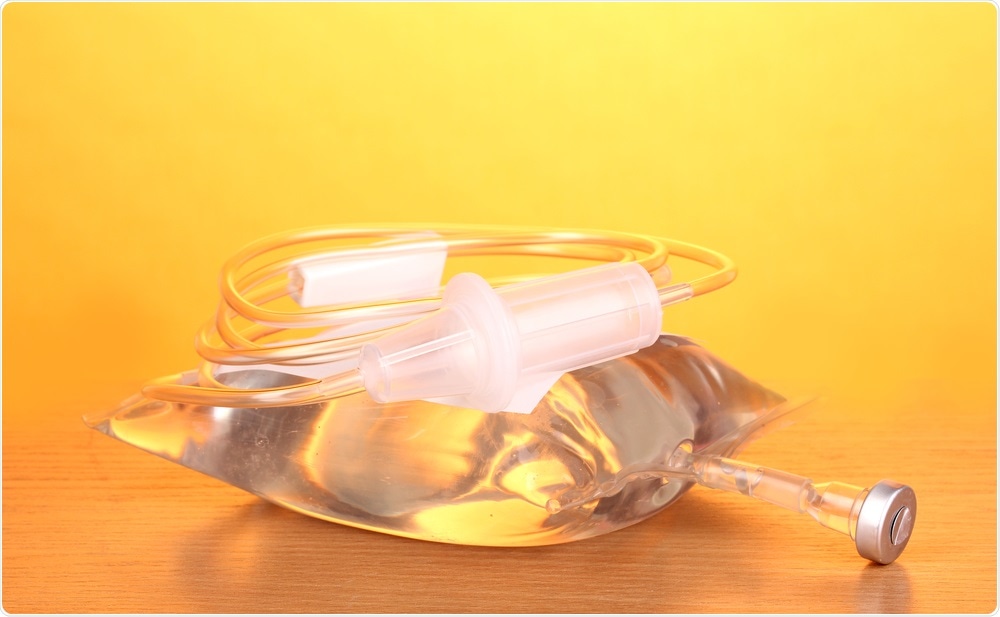
Bag of intravenous antibiotics on table topIntravenous antibiotics and fluids save lives in sepsis. Image Credit: Africa Studio / Shutterstock
The simple part is that sepsis must be caused by an infection, or it isn’t sepsis. However, the host response to this infection must also be dysregulated. This means that at certain times in sepsis you have overabundant innate immunity, and at other times your immune system becomes compromised.
We believe that many people who die from sepsis may have started off with this overabundant immune response, but later became immunocompromised, having depleted their immune system, making them unable to fight off the overall condition.
An infection requires an immune response, but, when it becomes uncontrollable, it can lead to organ damage and septic shock. We know this because people who don’t respond well to bacteria die with great frequency when they get infected.
One of the things that makes sepsis dangerous is that it’s not well recognized by physicians and is not at all recognized by most members of the public who develop sepsis. This is a problem because it means that patient’s often delay coming to medical attention, as they think it’s just a cold or the flu when, in fact, their organs are being damaged. The later you show up for care, the more likely it is to be deadly.

Why is it important to raise awareness of the signs and symptoms of sepsis?

It’s important because most people are not aware of the signs and symptoms of sepsis. Sepsis Alliance does surveys every year which have two components.
One component says, “Have you ever heard this word sepsis before?” – This bit of awareness is going up over time, and now, around 60% of the population have heard the word sepsis.
However, when we push them and say, “Okay, tell us what you know about sepsis. Tell us whether you would know if you had it,” it’s almost 0%.  As I said before, delays in diagnosis coupled with delays in treatment lead to worsening organ dysfunction, shock, and death.
For example, we know that the sooner you get your antibiotics, the more likely you are to survive. If you have a septic shock, for example, between 7-8% more people will die per hour from the onset of shock to the administration of antibiotics.
Some of my research here at the University of Kansas demonstrated that if you show up to the emergency room with severe sepsis and your antibiotics are delayed, 8% of people per hour will go on to develop shock and 5% per hour will ultimately die.
This relates to patients who don’t show up with shock but show up with an infection and acute organ dysfunction.
It’s exceedingly important that people learn to recognize the signs and symptoms of sepsis so that they can call for medical attention as soon as possible.

Microbial growth on agar plate showing causative agent of sepsisMicrobial analysis forms part of the diagnosis in sepsis. Image Credit: BlurryMe / Shutterstock

What should you do if you suspect that someone you know has septicemia?

There are two key parts to this. The first one is to recognize that sepsis is an emergency. If you think somebody is suffering from sepsis, you need to treat it as an emergency, the same way as you would if someone was having a heart attack.
Many people will not think they are sick due to a change in their mental status, so it is imperative that you get them to the emergency room.
The second part is that when you get to the emergency room, tell the doctor you are concerned about sepsis and ask “Could this be sepsis?”.
You must say the words because when you work in an emergency room, people come through the doors with all sorts of signs and symptoms, so putting sepsis at the forefront of the clinician’s mind is important.

What is the “It’s About TIME” initiative?

It’s About TIME is a national public awareness campaign sponsored by Sepsis Alliance. We use the acronym, “It’s About TIME”, because, frankly, getting treatment and surviving sepsis is about time, but TIME is also an acronym.
TIME stands for Temperature, Infection, Mental decline and Extremely ill.
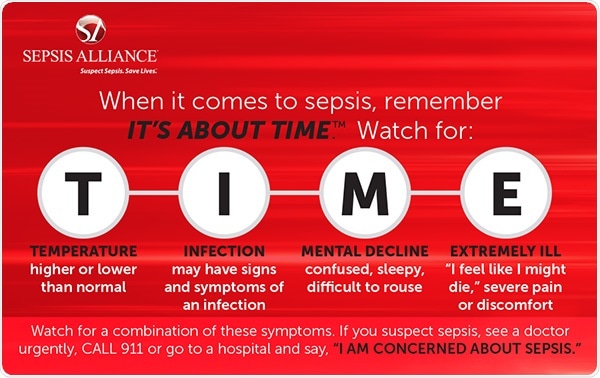
It's About TIME campaign meaning from the Sepsis Alliance
These are not the only signs and symptoms of sepsis, of course, but these are the most common symptoms that people are able to recognize.
For example, it is not unusual for a septic person who is having a mental status change to be brought to the emergency room by a spouse who thinks they’re having a stroke. While yes, it is fantastic that people think about strokes because they have to be treated quickly, there is a complete lack of awareness that what may be causing this mental change is sepsis.
The campaign aims to raise awareness of the signs and symptoms of sepsis and give people the knowledge to suggest sepsis to their doctor when they arrive at the emergency room.

Who is Angelica Hale, and how is she involved in the “It’s About TIME” initiative?

Angelica Hale is a young girl who was a finalist in an American television show called ‘America’s Got Talent.’ She was highly popular on the show and has since started a career in singing. What many people don’t know is that Angelica developed a severe case of sepsis at the age of four, which spread to both lungs and caused her to be on a mechanical ventilator.
The infection very nearly killed her. I have no idea what her memories of that must be like, but I know that her parents, of course, were traumatized by it. Now, aged 11, she wants to use her position to increase public awareness of sepsis and the importance of early medical intervention.
We teamed up with Angelica for the It’s About TIME campaign as the main proportion of her fans, and social media are young people. The idea is that we will get the message into the minds of children while they are still young, and they will carry it with them throughout their lives.
I’m using my voice to spread awareness of sepsis, so everyone will be able to recognize the signs and symptoms and get treatment right away. Remember when it comes to sepsis, It’s about T.I.M.E.”
Angelica Hale, Sepsis Celebrity Advocate

How can people get involved in the campaign?

There are lots of things you can do! The first is to go to the Sepsis Alliance website and learn more about the TIME acronym and sepsis itself. The second is to communicate what you learn with your loved ones and friends.
Finally, Sepsis Alliance is a charitable organization. We exist thanks to the generosity of individuals and companies who donate to us. Every dollar helps save a life, so the final way of getting involved has to be fundraising.
The easiest way to do this is on your social media. During Sepsis Awareness Month (September) of last year, I put a donate button on my Facebook profile, with a simple message about sepsis. After a few weeks, the post had raised several hundred dollars for the organization.

What’s next for Sepsis Alliance?

The next event in the calendar is an annual fundraising event in New York City called Sepsis Heroes, which takes place every September during Sepsis Awareness Month.
This event brings together individuals from across the nation and helps recognize the extraordinary work that they do; from health system initiatives that reduce the number of deaths from sepsis, to individuals who go the extra mile to educate others about the signs and symptoms of sepsis.
Another initiative we are involved in is helping hospitals to develop a Sepsis Coordinator Network (SCN), an online network that provides healthcare professionals with evidence-based best-practice resources and guidance to improve outcomes for patients with sepsis.
This is a brand-new initiative with the aim of making sure every hospital has a central coordinator for sepsis and is free to join.
Since launching in May, more than 1,000 members from all 50 states have joined the SCN. These members come from more than 1,000 hospitals and cover over 300,000 hospital beds.
We also have some international members. The hope is that if representatives come together and speak as a unified voice, it could result in measures being put into place that reduce the number of deaths from sepsis.

Where can readers find more information?

Simple screening tool evaluates online health ads for deception


The internet is rife with ads for health products, from weight-loss systems to arthritis cures–but whether they actually work can be difficult to discern. Now, experts at the University of British Columbia have devised a simple screening tool to evaluate if the products popping up on your newsfeed are likely to be scams.
The Risk of Deception Tool assigns points based on the type and number of persuasion techniques used in the ad. If the ad includes a celebrity endorsement, it gets one point; if it uses pseudo-technical language, it gets another point. More points are added if the ad uses “mystical” language or claims that the product is very rare or in short supply. The higher the overall score, the greater the probability that the ad is a scam.
The system was devised by a team of two nurses, two doctors, two physiotherapists, a pharmacist and a social worker, all from UBC.
“We were exploring internet health ads and found, not surprisingly, that the internet provided a massive market for people to promote, in some cases, completely deceptive products that are not based on any scientific evidence,” said lead researcher Bernie Garrett, an associate professor in the school of nursing.
Researchers analyzed advertisements targeting 112 different health concerns. They found that the most common deceptive ads were those promoting bodybuilding and weight loss, followed by medicinal products, which claim to treat pain, asthma or other conditions, and lifestyle products, which include anti-aging or sexual enhancement remedies.
“We also found a high number of advertisements from alternative health practitioners that made claims that were well outside what their therapies could reasonably achieve,” said Garrett.
Most of the scams identified originated in the United States.
“There were many wacky and weird ones,” said Garrett. “The one that surprised us the most was a video course that claimed to teach individuals how to repair their own DNA to achieve healing and spiritual changes.”
Misleading health ads on the internet are concerning because consumers may end up self-medicating, say researchers.
“Research shows that only about one per cent of people exposed to fraudulent offers eventually lose money to them,” said Garrett. “However, even if the worst outcome is that consumers are losing money, we should still be concerned. People may take these as actual therapeutic options for their own illnesses, rather than seek proper medical advice.”

J&J: Quality of Life Maintained With Med Added to Prostate Cancer Therapy


The Janssen Pharmaceutical Companies of Johnson & Johnson today announced the publication of new patient-reported outcomes (PRO) data demonstrating that adding ERLEADA(R) (apalutamide) to androgen-deprivation therapy (ADT) in patients with non-metastatic castration-resistant prostate cancer (nmCRPC) who were at high-risk for development of metastases did not have a significant impact on individuals’ overall health-related quality of life (HRQoL). These data from the pivotal SPARTAN study, in which ERLEADA significantly prolonged median metastasis-free survival (MFS), while preserving HRQoL, and delaying the decrease in HRQoL associated with symptomatic progression, were published today in The Lancet Oncology.[1]
“Prostate cancer treatment can often result in unwelcomed side effects that can impact or disrupt patients’ everyday lives,” said Fred Saad, M.D., FRCS, Professor and Chairman of Urology, University of Montreal Hospital Center, and SPARTAN investigator and author of the study. “As clinicians, we want to monitor and measure the impact of new treatments to see if there is an effect on patients’ overall health and well-being. The fact that a treatment such as apalutamide can be added to current standard of care, prolonging metastasis-free survival without significantly impacting HRQoL, is a significant advance for patients with nmCRPC and for clinicians who treat them.”
In February 2018, ERLEADA received U.S. Food and Drug Administration approval for the treatment of patients with nmCRPC, making it the first androgen receptor inhibitor approved for patients with this disease state in the U.S.2 The SPARTAN study was a Phase 3, randomized, double-blind, placebo-controlled multicenter study conducted in 1,207 patients with nmCRPC and a prostate-specific antigen (PSA) doubling time 10 months during continuous ADT.1 Patients were randomized 2:1 to receive ERLEADA in combination with ADT or placebo in combination with ADT.1 All patients received a concomitant gonadotropin-releasing hormone (GnRH) agonist or had a bilateral orchiectomy. The primary endpoint of this study was MFS.1
The Lancet Oncology publication includes prospective data from the treatment phase and the post-progression follow-up phase for the PRO exploratory endpoints as measured by the Functional Assessment of Cancer Therapy-Prostate (FACT-P) and the EuroQol five-dimension, three-level (EQ-5D-3L) questionnaires.1 The FACT-P PRO questionnaire assessed prostate cancer symptoms, pain-related symptoms and overall HRQoL.1 The EQ-5D-3L questionnaire evaluated mobility, self-care, usual activities, pain, discomfort, anxiety or depression and health-state.1
“Men with non-metastatic castration-resistant prostate cancer are at significant risk for developing metastases and dying from the disease. To date, this patient population has been understudied, and data on health-related quality of life in such men are scarce,” said Andree Amelsberg, M.D., Vice President, Oncology Medical Affairs, at Janssen Scientific Affairs, LLC. “Patient-reported outcomes data are gaining importance as healthcare systems place greater emphasis on patient experience with treatment. Amongst men in this patient population, maintaining quality of life is an important endpoint. In this exploratory analysis of the SPARTAN results, we are pleased to see that patients reported they did not experience notable disruptive changes after ERLEADA was added to their standard of care.”

Cipla: New triple-combination antiretroviral drug OKd


The South African Health Products Regulatory Authority (SAHPRA) has approved Cipla’s latest first-line triple-combination antiretroviral (ARV) treatment for HIV.
In future, TLD will be manufactured at Cipla’sfacilities in Durban and Uganda, reinforcing Cipla’s commitment to produce medicines in Africa for Africa and ensuring more affordable treatment for patients.
Head of Manufacturing for Cipla South Africa, Ajay Kumar Pal, said the reason for the new formulation complexity related to the three different processes required for the three active pharmaceutical ingredients (APIs). In addition to the considerable technology and infrastructure investment of more than R48m (including a machine worth R16m), there are also additional complexities pertaining to the double coating and compression of the tablet, and the product also undergoes exhaustive testing at different stages of manufacturing.
Cipla’s investment in infrastructure aligns with the government’s request to support local industries to stimulate economic growth. Manufacturing and investment in infrastructure have been identified by the World Bank, and in the United Nations Sustainable Development Goals, as the multiplier for job creation, as well as economic growth and development in any country. Cipla continues to work closely with government in this regard and to ensure that people have access to affordable treatment.
Cipla has a legacy of pioneering affordable ARVs: in 2001, it produced the world-first three-in-one fixed combination drug, available at less than $1 per day, thereby enabling countless more patients to have access to life-saving medication. This new fixed-dose combination – an addition to Cipla’s comprehensive portfolio of HIV medication – is recommended by the World Health Organisation (WHO) as a preferred first-line regimen.
Cipla South Africa CEO, Paul Miller, said: “We’re always focused on ensuring that patients benefit by having access to quality, affordable ARVs. DTG is considered a best-in-class medicine providing many clinical benefits for people living with HIV. With DTG replacing efavirenz (EFV) in the first-line fixed dose combination treatment thereby reducing the likelihood of treatment failure, TLD has the potential to reduce overall treatment costs.”
According to UNAIDS, “antiretroviral therapy using dolutegravir has several advantages over other regimens, including clinical superiority, improved side-effect profile, and reduced risk of viral resistance”.

Novartis Reports Study on Benefit of MS Med in Youth

Novartis (NYSE: NVS) today announced that The New England Journal of Medicine (NEJM) has published full results from the landmark Phase III Gilenya® (fingolimod) PARADIGMS study, the first-ever global, completed, controlled, randomized study specifically designed for children and adolescents (aged 10 to 17) with relapsing forms of multiple sclerosis (RMS). Children and adolescents with MS experience more frequent and often more severe relapses than those seen in adults with MS2.
PARADIGMS met the primary endpoint of significantly reducing the rate of relapses when compared to interferon beta-1a intramuscular injections over a period of up to two years3. The study also met several secondary clinical and imaging endpoints3. While adverse events (AEs) were more common in the interferon beta-1a group, severe AEs were more frequent in Gilenya-treated patients3.
Results from PARADIGMS show that, compared to interferon beta-1a, Gilenya3:
  • Significantly reduced annualized relapse rates by 82% (p<0.001) over a period of up to two years compared to interferon beta-1a intramuscular injections
  • Significantly reduced the number of new or newly enlarged T2 lesions up to 24 months by 53% (p<0.001). Also, it significantly reduced the average number of gadolinium-enhancing T1 (Gd+) lesions per scan at 24 months by 66.0% (p<0.001). The number and volume of lesions are associated with increased relapse rates
  • The safety profile of Gilenya in this study was overall consistent with that seen in previous adult patients
  • While more adverse events (AEs) were reported in the interferon beta-1a group, severe AEs were reported at a higher frequency in Gilenya-treated patients
  • Cases of seizures were reported in 5.6% of Gilenya-treated patients and 0.9% of interferon beta-1a-treated patients
"I'd like to thank all the children who participated in the PARADIGMS study, and their families, who have helped transform the outlook for pediatric patients living with relapsing MS," said Dr. Tanuja Chitnis, Principal Investigator for PARADIGMS and Director of the Partners Pediatric Multiple Sclerosis Center, Massachusetts General Hospital, Boston, US, and Scientist, Ann Romney Center, Brigham and Women's Hospital, Boston, US. "These data, published today, will go a long way in helping to advance knowledge and understanding amongst the MS community of how to evaluate and treat pediatric patients with MS."
"We are proud of this landmark study and appreciate the dedication of the young patients and their families who participated," said Fabrice Chouraqui, President of Novartis Pharmaceuticals Corporation. "This progress was made possible through collaboration with the community, and reflects our steadfast commitment to advancing MS treatment, which has spanned the last two decades."
Gilenya is a well-established treatment for MS in the adult population, having been used to treat more than 255,000 patients globally, in both clinical trials and the post-marketing setting, with approximately 566,000 years of patient experience.
https://www.streetinsider.com/FDA/Novartis+%28NVS%29+Reports+Publication+of+Landmark+PARADIGMS+Study+Demonstrating+Significant+Benefit+of+Gilenya/14602788.html

Vanda says study shows sleep aid med did not impair driving performance


Vanda Pharmaceuticals announced the results of a HETLIOZ driving study to measure next day performance. Tasimelteon did not impair measures of driving performance, whereas the active control, zopiclone, showed significant impairment. In this triple crossover study, 48 healthy volunteers drove 100 km in a validated driving simulator the morning after taking a bedtime dose of either tasimelteon 20 mg, zopiclone 7.5 mg or placebo. The volunteers were instructed to operate the driving simulator for approximately 1 hour with a speed of 55 mph while maintaining lane position. Treatment with tasimelteon 20 mg at bedtime demonstrated no next day driving impairment compared to placebo. Treatment with zopiclone 7.5 mg dosed at bedtime was associated with a meaningful and significant increase in Standard Deviation of Lateral Position, a measure of lane weaving, compared to the placebo treatment. A secondary analysis of the paired differences between treatments confirmed that tasimelteon did not impair next day driving while there was an impairment with zopiclone. A difference of 4.4 cm is considered equivalent to the driving impairment associated with a blood alcohol level of 0.05%, a level associated with increased crash risk. “Compared to other sleep agents where we’ve investigated next-day residual effects on driving, tasimelteon demonstrated no impairment when evaluated 9 hours after dosing,” said Gary G. Kay, Ph.D., President of Cognitive Research Corporation, the contract research organization who ran the study.
https://thefly.com/landingPageNews.php?id=2789689

Hospital operating margins slide 39% after ObamaCare expansion

The three-year stretch between 2015 to 2017 saw widespread income deterioration along with declining operating margins, according to a new study.

Both nonprofit and for-profit health systems suffered significant operating margin declines associated with the expansion of the ACA between 2015 and 2017, according to a Navigant study released Wednesday morning.
Average operating margins declined 39% overall, including 34% for nonprofits and 39% for for-profits, while 47% of hospitals saw “significant deterioration of operating earnings” and 22 systems experienced three-year operating income declines of more than $100 million.
The study found multiyear reductions in topline operating revenue growth along with uncontained expenses were to blame, falling from 7% from 2015 to 2016 down to 5.5% from 2016 to 2017.
Additionally, 65% of systems experienced operating income declines totaling $6.8 billion, a 44% reduction over that three-year span. These declines were primarily experienced by systems in the West and South, regions with some of the fastest growing populations in recent years.
Most states in these areas decided not to expand their Medicaid programs under the ACA and now find themselves providing care to a larger population without the increased government reimbursements to compensate for costs.

Navigant analyst Jeff Goldsmith told HealthLeaders that systems have responded to declining margins by focusing primarily on cost-cutting measures, such as freezing capital expenditures, spending on travel or board education. Goldsmith added that some of the most positive operating income performances in 2016 can be attributed to systems who struggled in 2015 and corrected course to deal with the financial challenges facing them.
The financial challenges facing systems have also arrived in waves, according to Goldsmith, with regional Catholic systems experiencing the brunt of operating declines in 2016 while investor-owned systems struggled throughout 2017. Despite the confluence of unfavorable financial circumstances, Goldsmith said there are four areas of opportunity for CFOs to effectively curb the issues they face.

1. RATIONALIZING CONTRACTS WITH VENDORS

  • Goldsmith listed services that are commonly contracted out of system as areas where hospital leaders can recoup costs.
  • These include administrative support services, housekeeping and food services, consulting, as well as physician staffing contracts for major units like the ICU.

2. ‘ATTACKING THE LAYERS OF MANAGEMENT’

  • Goldsmith described this as the distance betweent the patient and the CEO, pointing to the effectiveness of corporate systems delegating what specific functions are tiered between the national, regional, and local levels of the institution.

3. PRUNING THE PORTFOLIO

  • Some multi-hospital systems like Tenet and CHS have already begun the process of reexaming their portfolio of facilities and services that they operate.
  • Though this leads to operating revenue being dashed because of selling facilities or closing hospitals, Goldsmith said systems have begun to look at what is core to their operations.
  • The same goes for service line rationalization, according to Goldsmith, where hospitals are deciding to pull out of areas where there are multiple hospitals competing for the same population or offering duplicate programs.

4. PHYSICIAN SPEND

  • Goldsmith clarified the aim is not to deal with the cost of large physician groups but rather the service contracts that require 24-hour call at the hospital, clinical directorships, and other forms of physician subsidy.
  • Often, Goldsmith said, there have been instances of hospitals paying for physician-related services at well above their operating revenue growth rate, which puts additional financial pressure on the system.
“I think, to be optimistic about it, that there are a lot of levers to pull here, that’s the good news,” Goldsmith said. “The bad news is a lot of those levers are attached nerve endings, and ultimately, it’s going to take a change in the operating culture of these places to really put them on a sustainable footing.”