Search This Blog

Sunday, September 16, 2018

4 Who Predicted Global Financial Crisis; What They Think Causes The Next One

A different kind of hurricane slammed into the American East coast, the nation and ultimately the world ten years ago today.
Amidst the multiple introspective columns and soul searching that naturally occurred this week, which looked back on the missed warning signs behind the 2008 financial collapse exactly a decade ago this weekend, there is a small group of people whose opinions are actually worth paying attention to.
Though arguably no single individual accurately called all aspects of the crisis in its entirety, precipitated by the implosion of Lehman Brothers, some did very publicly predict key facets with prophetic clarity. As Market Watch’s Howard Gold explains in his profile of four analysts the world should have been listening to: “People warned about subprime mortgage loans, derivatives, and too much leverage, but nobody, to my knowledge, said a bursting housing bubble would cause a global crisis that would lead to the demise of venerable financial firms, require trillion-dollar taxpayer bailouts, and cause a recession that rivaled only the Great Depression in its magnitude.”
Trouble is like many religious prophets of ancient history, they were rejected at the time, cast as dour harbingers of gloom and doom.
Clockwise from upper left: Gary Shilling, Jim Stack, Raghuram Rajan and John Mauldin. Via MarketWatch
Here are four names and their very public warnings that attempted to jolt the financial and banking sectors out of their sleepy stroll toward the abyss before 2008, as well as their predictions for the next big one, and what to look out for.
Howard Gold interviewed each, and laid out the key quotes summarizing then and now…
Economist A. Gary Shilling
President of consultancy A. Gary Shilling & Co., he started writing about a housing bubble in the early 2000s which Greg Lippmann (of “The Big Short” fame), credits with giving him the idea to bet against subprime mortgages. Describes Gold, “he warned his newsletter subscribers about a housing bust and wholesale deleveraging of household debt that would hobble the economy for years.”
And this epic anecdote from the interview:
John Paulson contacted Shilling in August 2006. “He talked about credit default swaps. I didn’t know what they were,” Shilling recalled.
Shilling did some consulting for Paulson’s hedge fund and even invested what “was for the Shillings a major piece of money in this.” Paulson, of course, loaded up on CDS’s and made $4 billion in what has been called “the greatest trade ever.” “We made 15 times our money,” Shilling says.
His predictions pre-2008:
“Subprime loans are probably the greatest financial problem facing the nation in the years ahead.” —January 2004
“The [speculative housing] bubble’s break will cause widespread pain…and be much worse economically than the 2000-2002 bear market.”—June 2006
“We continue to forecast a 25% fall in median single-family house prices nationwide.” —November 2006.
What he says now: 
“The ultimate thing that brings down financial markets is excess leverage … So, you look where’s the big leverage, and right now I think it’s in emerging markets.”
Shilling is particularly worried about the $8 trillion in dollar-denominated emerging-market corporate and sovereign debt, especially as the U.S. dollar rises along with interest rates. “The problem is as the dollar increases,” he said, “it gets tougher and tougher for them to service [that debt] because it takes more and more of their local currency to do so.” Of that, $249 billion must be repaid or refinanced through next year, Bloomberg reported.
* * *
Money manager Jim Stack
President of Stack Financial Management, which manages $1.3 billion, and InvesTech Research, a newsletter he launched in 1979, Jim Stack as a young analyst first gained some notoriety for calling the 1987 stock market crash. Describes Gold, “As housing prices kept rising, Stack built a proprietary tool called the Housing Bellwether BarometerHe called housing a bubble a year before it peaked and warned of bigger problems ahead for the economy and the markets.”
His predictions of a new bear market coming were issued even as stocks were hitting all-time highs.
His predictions pre-2008:
“We are officially calling it a dangerous bubble…I see a trillion+-dollar government bailout of the mortgage industry at some point over the next decade.”—July 2005
“Our Housing Bubble Index has dropped into a freefall that rivals the dot-com bust of the late 1990s… We are moving to a full bear market defensive mode.”—July 2007
“We are nowhere near the bottom…It’s only a matter of time…until the housing debacle and credit crisis adversely impact the overall economy, increasing the likelihood of a recession.”—Interview with Equities magazine, November 2007
What he says now:
That housing-related stocks “saw a parabolic run-up” in 2016-17, but in January his index “peaked and now it’s coming down hard.” And this spells “bad news on the housing market looking 12 months down the road.”
Per Howard Gold’s interview:
But the biggest danger, Stack told me, is from low-quality corporate debt. Issuance of corporate bonds has “gone from around $700 billion in 2008 to about two and a half times that [today].”
And, he added, more and more of that debt is subprime. Uh-oh.
In 2005, he pointed out, companies issued five times as much high-quality as subprime debt, but last year “we had as much subprime debt, poor quality-debt issued, as quality debt on the corporate level,” he said, warning “this is the kind of debt that does get defaulted on dramatically in an economic downturn.”
Banker Raghuram Rajan
Previously the IMF’s chief economist and former head of the Reserve Bank of India, Rajan famously presented a paper at the Federal Reserve Bank of Kansas City’s annual retreat at Jackson Hole, in August 2005. To illustrate the general obsequiousness and self-congratulatory atmosphere of those times, Rajan recalled that some papers at the conference “focused on whether Alan Greenspan was the best central banker in history, or only among the best.”
Per Howard Gold:
Rajan turned out to be a party pooper, questioning whether “advances” in the financial sector actually increased, rather than reduced, systemic riskFormer Treasury Secretary Larry Summers called him a Luddite. “…I felt like an early Christian who had wandered into a convention of half-starved lions,” he wrote. But though delivered in genteel academic lingo, his paper was powerful and prescient.
His predictions pre-2008:
“Managers…have greater incentive to take risk…because the upside is significant, while the downside is limited.”
“Moreover, the linkages between markets, and between markets and institutions, are now more pronounced. While this helps the system diversify across small shocks, it also exposes the system to large systemic shocks…”
“The financial risks that are being created by the system are indeed greater… [potentially creating] a greater (albeit still small) probability of a catastrophic meltdown.”
What he says now:
“There has been a shift of risk from the formal banking system to the shadow financial system.” He also told me the post-crisis reforms did not address central banks’ role in creating asset bubbles through accommodative monetary policy, which he sees as the financial markets’ biggest long-term challenge.
“You get hooked on leverage. It’s cheap, it’s easy to refinance, so why not take more of it? You get lulled into taking more leverage than perhaps you can handle.”
And what might be coming:
Rajan also sees potential problems in U.S. corporate debt, particularly as rates rise, and in emerging markets, though he thinks the current problems in Turkey and Argentina are “not full-blown contagion.”
“But are there accidents waiting to happen? Yes, there are.”
* * *
Writer John Mauldin
Best known for his free weekly e-letter “Thoughts from the Frontline,” the Dallas-based chairman of Mauldin Economics, John Mauldin began worrying about housing very early, sometimes featuring commentary from Gary Shilling during the run-up to the crisis. Described by Gold, he “said a housing bust would lead to a drop in consumer spending, a bear market, and a recession (though at first he thought it would be a mild one), and that credit default swaps (CDSs) posed a systemic risk.”
His predictions pre-2008:
“A slowing of the housing market, and thus the economy, is in our future… This in turn suggests that as growth in consumer spending slows, a bear market in equities is a high-probability outcome.”—March 2006
“…The stock market is going to be under considerable pressure next year. The average drop of the markets is about 40% before and in a recession….Dow 9,000 is a real possibility, if not probability”—December 2006. (The Dow bottomed at 6,547.05 in March 2009.)
“The one true risk that is simply not knowable at this point is in the Credit Default Swap (CDS) market….The CDS market is huge, in the hundreds of trillions of dollars and growing dramatically… There is no agency overseeing counter-party risk. This is the one true systemic risk that I see.”—July 2007.
What he says now:
“I think the choice of Europe is… going to have to put [all the debt] on the balance sheet of the European Central Bank. If they don’t, then the euro zone breaks apart and we’re going to get a 50% valuation collapse.”
“Greece…is a rounding error. Italy is not…. And Brussels and Germany are going to have to allow Italy to overshoot their persistent debt, and the ECB is going to have to buy that debt.”
“If it doesn’t happen, the debt triggers a crisis in Europe, [and] that triggers the beginning of a global recession” but… “there are so many little dominoes, if they all start falling, one leads to the next.”
Comments Howard Gold,
Mauldin estimates the world has almost “half a quadrillion dollars,” or $500 trillion, in debt and unfunded pension and other liabilities, which he views as unsustainable.
But the flashpoint for the next crisis is likely to be in Europe, especially Italy, he maintains.

Wall Street fantasy NFL game lets users trade athletes like stocks


  • Founded by longtime options traders Eric Wilkinson and Wesley Harr, Draft Hedge offers users a cross between fantasy sports and financial markets.
  • “Whether it’s an e-gaming event or whether it’s football or soccer, or baseball – as long as there’s a quantifiable value, we can create futures around that,” Wilkinson said.
Two traders have developed a futures market to appeal to fantasy sports junkies and Wall Street lifers who want to bet on professional athletes.
Founded by longtime options traders Eric Wilkinson and Wesley Harr, Draft Hedge is a mobile app that offers users a cross between fantasy football and financial markets.
The futures pricing is loosely based on fantasy valuations, with players earning points depending on their performance in each game. Users can buy or sell-short athletes at any time, including the off-season.
“Whether it’s an e-gaming event or whether it’s football or soccer, or baseball – as long as there’s a quantifiable value, we can create futures around that,” Wilkinson told CNBC.
“Analysts are doing the same thing,” he said. “They’re going ‘OK: he’s going to score two touchdowns and 150 yards, and I think this is what his scores are going to be,'” he added. “The overall market probably has a better idea as to what that value is.”
Known as “The Wolfman” around the Chicago Board of Trade, Wilkinson has been trading financial futures, commodities, stocks and options on a variety of products for about 25 years. CNBC viewers may recognize him as the trader who stood next to CNBC’s Rick Santelli during many of his lively appearances from the CME floor.
The CNBC regular also commented on the U.S. Supreme Court’s recent decision to strike down a 1992 federal law that effectively banned commercial sports betting in most states. The ruling sets the stage for the gradual legalization of the millions of dollars of illicit wagers on professional sports Americans make each year.
The trader said that he and Harr were initially worried about the game appearing too much like gambling, and then the court decision came out.
“It was a really big deal for us because we were always thinking that we landed in between financial and betting,” he said. “We were originally worried about our lexicon, whether we ever said betting and things of that nature whereas now we can say whatever we want.”

FDA keeps warning about kratom, but companies keep deceptively selling it


The U.S. Food and Drug Administration has issued warnings to two additional companies selling the controversial supplement kratom, signaling that the agency’s crackdown on the substance continues to face challenges nearly one year later.
Chillin Mix Kratom, one of the companies, advertises cheap prices and wholesale quantities of the supplement — it sells more than two pounds of powdered kratom for just $65, according to its website — while the other, Mitra Distributing, runs another website selling kratom wholesale.
Both illegally claim that their products can be used as a treatment or cure for opioid addiction and withdrawal symptoms, according to the FDA’s warningletters to them, which were dated Sept. 4 and made public on Tuesday.
Those have been common assertions made about kratom, which comes from an Asian plant and has been made available in pill, powder and other forms.
But the FDA determined earlier this year that kratom shouldn’t be used for any of those conditions, since there’s no evidence that it is safe and effective; the regulator has also concluded that the supplement contains addictive opioids.
The FDA has warned about the product and safety concerns associated with it several times since last fall, including a statement earlier this year that 44 deaths had been associated with the product.

“Simply, selling these unapproved kratom products with claims that they can treat opioid withdrawal and addiction and other serious medical conditions is a violation of federal law,” the FDA said in a Tuesday statement. “Yet despite our warnings and previous regulatory and enforcement actions, we continue to find marketers actively selling kratom with unsubstantiated claims.”
The two companies in question, Chillin Mix Kratom and Mitra Distributing, also claimed that their kratom products could treat conditions like obesity, depression, alcoholism and high blood pressure, according to the FDA.
The U.S. has been in the depths of an opioid epidemic for many years, with opioid overdoses claiming more than 600,000 lives between 1999 and 2016, according to the Centers for Disease Control and Prevention.
Even so, public health experts warn that many barriers, including financial ones, continue to make it difficult to access opioid treatments. There has also been little progress made on developing a better pain medication.

U.S. agencies are working to improve access to FDA-approved treatments for opioid addiction, according to the FDA’s statement, and regulators cannot allow kratom products to prevent affected individuals from getting medication that has been proven to work.

Bacteria in the gut found to produce electricity


Researchers at the University of California, Berkeley have discovered hundreds of bacterial species, including those in the human gut, that can generate electricity.
Blue electric boltImage Credit: Martin Capek / Shutterstock
While scientists already knew that bacteria in exotic environments such as mines and lakes can produce electricity, they had not known that bacteria such as the common diarrhea-causing Listeria monocytogenes are also electrogenic.
The study found that this bacterium and hundreds of others produces electricity using a completely different process to the one that known electrogenic bacteria use.
Many of these bacterial species are found in the gut microbiome and many of them are pathogenic such as the Clostridium perfringens bacteria that causes gangrene and some disease-causing streptococcus bacteria.
The fact that so many bugs that interact with humans, either as pathogens or in probiotics or in our microbiota or involved in fermentation of human products, are electrogenic – that had been missed before. It could tell us a lot about how these bacteria infect us or help us have a healthy gut.”
Dr, Dan Portnoy, Study Author
Bacteria produce electricity to remove the electrons generated during metabolic processes and to support the production of energy.
In animals and plants, electrons are transferred to oxygen inside the mitochondria of cells, but bacteria in environments without oxygen (including the human gut) have to find an alternative electron acceptor.
In some environments, that electron acceptor has been a mineral such as iron.
The transfer of electrons to a mineral involves a series of chemical reactions referred to as the electron transfer chain, which some scientists have tapped to generate electricity and make batteries.
The new electron transfer system discovered by Portnoy and colleagues is simpler than this known system and seems to only be used by bacteria when necessary such as when there is a poor oxygen supply.
So far, the new system has been found in gram-positive bacteria that live in flavin-rich environments.
It seems that the cell structure of these bacteria and the vitamin-rich ecological niche that they occupy makes it significantly easier and more cost effective to transfer electrons out of the cell.
Dr. Sam Light, First Author
“We think that the conventionally studied mineral-respiring bacteria are using extracellular electron transfer because it is crucial for survival, whereas these newly identified bacteria are using it because it is ‘easy’,” he added.
To test how robust this system is, Light and colleagues used an electrode to measure the electric current generated by the bacteria.
They found the bacteria produced up to 500 microamps and that they make about the same amount of electricity as known electrogenic bacteria.
The finding, which is published in the journal Nature, will be welcome news to people interested in “green” technologies and the possibility of creating living batteries from microbes, for example.
Source:

Sepsis Complications and Prevention


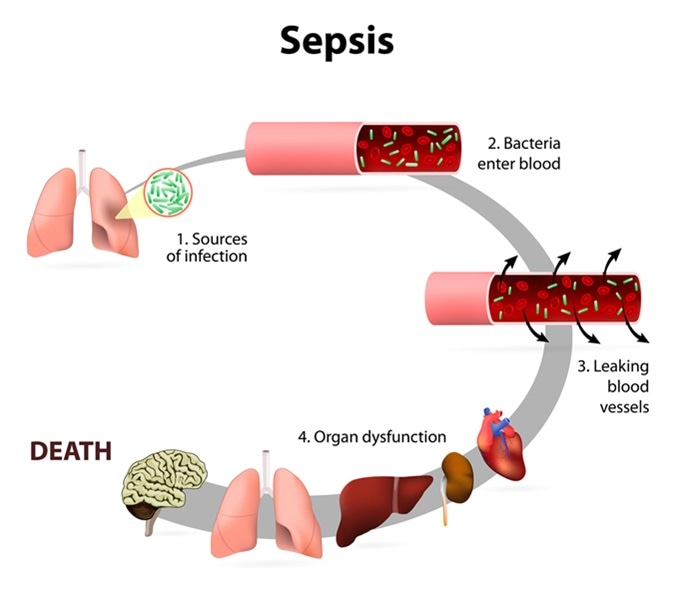
Sepsis is a condition brought on by infection of a pathogen, wherein the body reacts in such a way that it harms itself. This can be by overreacting to the infection, imbalances between the proinflammatory and anti-inflammatory responses, and the action of various mediators of the immune system.
Sepsis can be deadly, with severe complications including multiple organ failure and amputations. Despite the presence of sepsis being traced back to Roman times, sepsis is still one of the hardest conditions to treat and is responsible for thousands of hospital deaths every year.
Sepsis or septicaemia is a life-threatening illness. Presence of numerous bacteria in the blood, causes the body to respond in organ dysfunction. Image Credit: Designua / Shutterstock

Severe Sepsis

There are different conditions of varying severity within the sepsis disease.. Sepsis itself is defined as known or suspected infections along with symptoms of systemic inflammatory response syndrome (SIRS). Severe sepsis is a complication of sepsis, wherein in addition to sepsis there is acute organ dysfunction. Such dysfunction can include hypoperfusion (decreased blood flow through organs) and hypotension (low blood pressure), which are commonly implicated in sepsis and severe sepsis.
Severe sepsis is the middle stage, between sepsis and septic shock. It is estimated that 20-50% of patients who develop severe sepsis die as a result. Improvements have decreased the proportional fatality rates, but the number of people dying from sepsis at any stage increases due to increased cases. Therefore, preventing sepsis is of increased focus.

Complications

The chances of developing complications of severe sepsis can depend on the type of infection and its location. Septic patients with respiratory infections are at higher risk of developing respiratory organ dysfunction, including complications such as acute respiratory distress syndrome (ARDS). The exact causes of organ dysfunction are not fully elucidated, but link partially to lack of oxygen. Impaired tissue oxygenation is caused by various factors including low blood pressure, reduced red blood cell deformability, and microvascular thrombosis. Reduced red blood cell deformability refers to the blood cell’s ability to change shape under stress without rupturing. Reduced deformability contributes to decreased stress resistance. Microvascular thrombosis refers to blood clotting, which during sepsis, occurs within blood vessels and can therefore block them.
Intracellularly, mitochondrial damage impairs oxygen use once oxygen arrives at tissues and cells. This is caused by the oxidative stress the mitochondria experiences during sepsis complication leading to severe sepsis. Injured mitochondria also release alarmins, a type of danger signal, into the extracellular environment. These alarmins can include mitochondrial DNA (mtDNA) and formyl peptides. The alarmins activate neutrophils, which cause tissue damage.
In serious severe sepsis cases, the brain can be injured as a complication of sepsis. During severe sepsis the brain is often the first organ to fail and up to 70% of sepsis patients experience disturbances in brain function as a result of the immune reaction. Nitric oxide, produced during the immune reaction in sepsis, affects the brain and the aforementioned mitochondrial function. Because it is easily diffusible, it can cross the blood-brain barrier and form oxygen radicals. The following oxidative stress in brain tissue encumbers function.

Prevention

Sepsis is caused by the body’s reaction to infectious pathogens. Therefore, preventative treatment focuses on eliminating infections that would trigger that kind of reaction from your body. Basic hygiene, such as good handwashing habits and cleaning of wounds, is one of the easier courses of action. This includes using antibiotic creams or sanitizers on wounds and hands, covering wounds from exposure, and not breaking blisters.
Vaccinations against viral diseases form an effective preventative treatment against sepsis. Once a vaccination has been administered, the body has dealt with the weakened form of the virus and becomes immune. This prevents the onset of a big immune reaction if the virus is encountered again, thereby not causing the cascade leading to sepsis. Some people, such as those who are immunocompromised or allergic to vaccination ingredients, may not be able to get vaccinated against certain diseases. These will have to rely on herd immunity, where the rest of the population is vaccinated to such a degree that viral diseases cannot be carried in the population and will therefore not reach the person in question.
Other demographics are harder to protect from sepsis. Newborn babies, infected with a pathogen within one month of life, pose one such group in which prevention methods are not immediately obvious. Maternal immunization can help; however, this is often poorly advertised and not always available in poorer countries. During delivery, the cleanliness of the facility and people involved have been shown to affect occurrence of neonatal sepsis. Similarly, post delivery, the nurses and associated people’s cleanliness is important. There is some evidence suggesting cleaning of the umbilical stump with antiseptics can reduce sepsis instances, particularly in poorer settings.

Further Reading

Lung cancer risk factors


Smoking remains the biggest risk to developing lung cancer, and is responsible for more than 85% of cases. Without smoking, it is believed that lung cancer would be a rare disease. However, there are many other risk factors associated with increased lung cancer incidence.

Age

Lung cancer is more common in older people. Lung cancer is rare in those under 40, and about 80% of lung cancers are found in people over the age of 60.
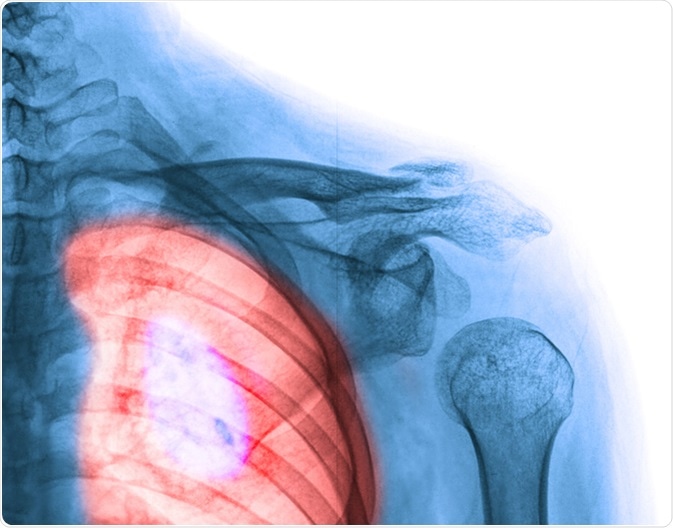
Lung cancer. Image Credit: Wonderisland / Shutterstock

Gender

There is evidence that women are more susceptible to the carcinogenic effects of tobacco smoke, but women’s lung cancer survival rates are better than men’s, when compared stage by stage. There is evidence that estrogen may play a role in lung cancer development, and molecular differences have been found when comparing the tumours of men and women.

Ethnicity and Race

Geographically there is a lot of variation in lung cancer risk, both globally and within nations. A particular high-risk population is currently Chinese men, due to the large population in China and the increased trend of cigarette smoking. Lung cancer burden between developed and developing countries was nearly equal in 2002, and this concentration of lung cancer burden is thought to increase further in developing countries in the future.

Genetics

Although the main causes of lung cancer stems from environmental factors, the evidence for genetic susceptibility to lung cancer is compelling as genome-wide association studies have shown several regions associated with cancer risk and accumulation of familial cases have been observed in clinical studies. However, knowledge in this area is still lacking because environmental factors often cover or confuse results in familial lung cancer studies. Studies have shown that the risk of lung cancer is increased by approximately 50% in those with a family history of lung cancer in first-degree relatives, when compared with those without a family history. Hereditary predisposition is attributed to 10-15% of cancer cases, not limited to lung cancer.
Chromosomal abnormalities have also been identified in lung cancer. These include:
  • Allelic loss
  • Isochromosomes
  • Unbalanced translocation
  • Loss of heterozygosity
  • Extensive aneusomy.

Diet

Smokers have been advised not to take beta-carotene supplements as studies have shown an increased risk of lung cancer associated with this dietary supplement. Alcohol consumption has also been linked to increased lung cancer risk.

Lifestyle

Smoking
There are over 60 different toxic substances in tobacco smoke, and can lead to lung cancer developing. This risk increases with the duration and amount of smoking, but duration has the biggest effect on lung cancer risk. Starting smoking at a younger age increases risk of lung cancer. Using other types of tobacco including cigars, pipe tobacco, snuff or chewing tobacco also poses increased risks of developing lung cancer, mouth cancer and oesophageal cancer.
Cannabis also contains substances that can cause cancer. Smokers will often mix cannabis with tobacco and inhale for longer and deeper than when smoking regular cigarettes.
Environmental tobacco smoke (ETS)
ETS, otherwise known as passive smoking or second-hand smoking, where smoke is inhaled from someone else’s cigarette, pipe, or cigar, can increase the risk of developing lung cancer even though you are not smoking yourself. People exposed to ETS who have never smoked before are believed to have a lung cancer risk 31% higher than those who have never smoked and were not exposed to ETS.
There are several statistics that show the benefits of quitting smoking in regards to lung cancer. 15.9% of men who have smoked all their lives die from lung cancer by age 75 versus 9.9% of men who stop smoking by age 60. This reduces to 6% if a person quits by age 50, 3% by age 40 and 1.7% by age 30. With women, 9.5% of women who have smoked all their lives die from lung cancer by age 75, versus 5.3% of women who stop by age 60 and 2.2% by age 50.

Environmental Factors

Radon
Radon is a naturally occurring radioactive gas that is found in rocks and dirt and can be present in buildings. It doesn’t present any visible traces, nor can it be tasted or smelled. Homes can be tested for the presence of radon and measures undertaken to reduce the amount of radon present in homes.
Diesel fumes
Long term exposure to high levels of diesel fumes may increase the risk of developing lung cancer by 50%.

Occupational Exposure

There are a number of materials people will regularly come into contact with through their work that may increase lung cancer risk. These materials include:
  • Arsenic (naturally occurring element sometimes found in drinking water, i.e from private wells)
  • Asbestos in all forms (naturally occurring fibrous minerals found in building materials, friction products such as car clutches and brakes, as well as some fabrics)
  • Beryllium and its compounds
  • Cadmium and its compounds
  • Coal and coke fumes
  • Silica
  • Nickel.

Further Reading

Cost-Effective to Expand Age Base for Hep C Screening?


Compared with currently recommended birth cohort screening, universal one-time screening for hepatitis C virus (HCV) for U.S. adults would be highly cost-effective, resulting in an expenditure of $11,378 per quality-adjusted life year (QALY) gained, researchers reported
The findings support broadening the current age cohort for one-time screening to all U.S. adults, concluded Mark H. Eckman, MD, of the University of Cincinnati, and colleagues. “A recommendation for HCV testing of all adults will support the national response to the epidemic of HCV infection among young persons in the United States.”
Their study aimed to determine the prevalence of HCV antibody above which one-time HCV testing for all U.S. adults 18 years and older is cost effective. Using a Markov state transition model, the team found that a threshold prevalence of HCV antibody above 0.07% in the general adult population outside of the 1945-1965 cohort would cost less than $50,000/QALY compared with no screening. But compared with cohort testing, universal screening and treatment would cost $11,378 per QALY gained.
The analysis was based on healthcare system expenditures using 2017 U.S. dollars and factored in the toll taken by fibrosis, cirrhosis, hepatocellular carcinoma, and liver transplantation, as well as the impact of excess mortality, and also addressed patient quality of life and the cost of treatment with direct-acting antivirals. The researchers calculated a mean age of 40.85 for the expanded-base cohort versus the 61.85 years for referent birth cohort.
Asked for his perspective, Jagpreet Chhatwal, PhD, of Harvard Medical School, who was not involved in the study, said it “provides the compelling evidence needed to update HCV screening guidelines in the United States.”
“The current screening guidelines predate the availability of all-oral direct-acting antivirals, now the current standard of care. This study shows that universal one-time screening will further reduce HCV-associated burden, will be cost-effective, and will bring us closer to the goal of HCV elimination by 2030.”
Broader-based recommendations are needed, since the incidence of acute HCV infection rose almost three-fold in the period 2010-2015, an increase associated with more widespread injection drug use and was most pronounced in persons younger than 40. Furthermore, the new generation of potent, non-interferon-based, direct-acting oral regimens with fewer side effects and shorter treatment courses has altered the discussion around screening.
The authors noted that the estimated prevalence of HCV in the 1945-1965 cohort is 2.6% and 1.0% in the general population, while the calculated prevalence in adults outside the 1945-1965 cohort is 0.29%. “Our estimate for the prevalence of HCV antibody positivity in adults who are not part of the cohort of adults born between 1945 and 1965 is likely low, as it is based on estimates made prior to the steep rise in new cases of HCV infection associated with the opioid epidemic,” they wrote.
Another recent analysis also found an age-expanded strategy of one-time testing of all adults ages 18 and older to be cost effective at $28,000/QALY versus birth cohort-based screening. Those authors noted that targeted screening is not cost effective in very low-risk subgroups, such as Caucasian women ages 20 to 59 with no or only one lifetime sexual partner and no history of drug use or other HCV risk factors, as well as Caucasians older than age 60 with no history of blood transfusions before 1992 and no other HCV risk factors.
The study was supported in part by the National Foundation for the Centers for Disease Control and Prevention.
Eckman reported grant support from Merck; other co-authors reported financial relationships with AbbVie, Bristol-Myers Squibb, Gilead, Inovio, Intercept, MedImmune, Abbott, Merck, Watermark, and Pace.
Chhatwal reported having no relevant conflicts of interest related to his comments.
LAST UPDATED