South Korean President Lee Jae-myung is set to meet US President Donald Trump for the first time next week, seeking to dispel doubts in Washington about his progressive government’s commitment to strengthening their military alliance.
“The summit is an opportunity for President Lee to dispel lingering doubts in Washington about his government’s commitment,” said Cho Han-bum, a senior analyst at the Korea Institute for National Unification.
Lee’s spokeswoman, Kang Yu-jung, described the summit as a step towards “a future-oriented, comprehensive strategic alliance” amid a rapidly evolving global security and economic landscape.
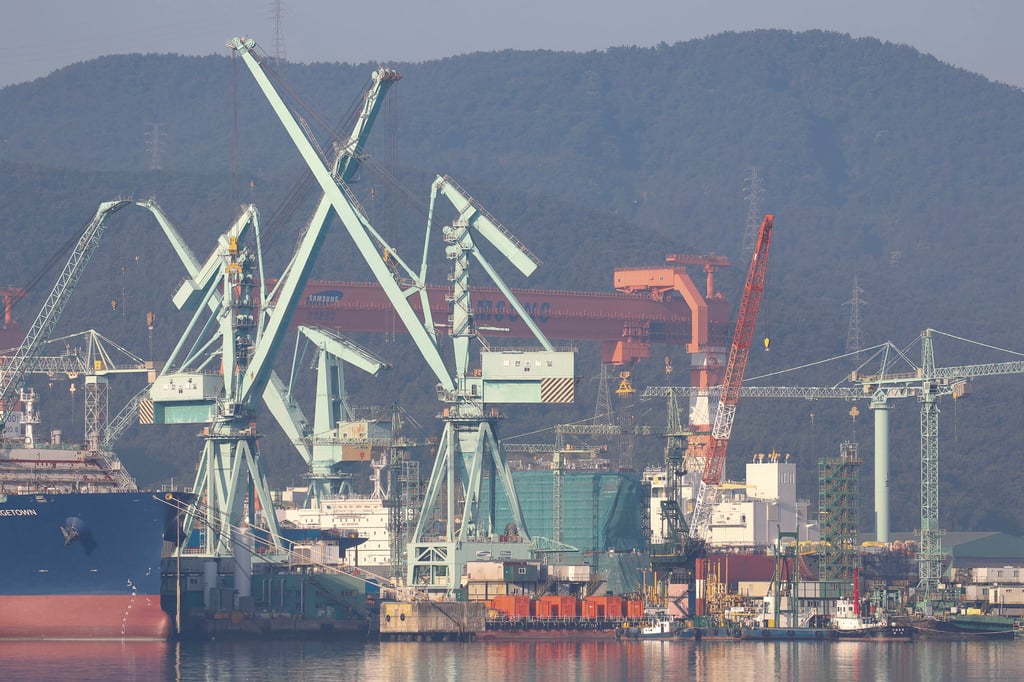
Lee is reportedly preparing to present Trump with a model “turtle ship” – a type of heavily armoured warship dating back to the 15th century – in a tribute to Korea’s centuries-old naval heritage and its modern shipbuilding capabilities.
The US “needs Korea’s shipbuilding expertise to help revitalise its naval strength in response to China’s growing presence at sea”, Cho told This Week in Asia
“There is ample room to expand both security and economic cooperation,” he added.
“President Lee intends to make clear in Washington that his administration is steadfast about reinforcing the trilateral framework with the United States and Japan.”
“The priority for South Korea will be clarifying the implementation schedule for lowering tariffs on Korean exports,” said Doo Jin-ho, a senior researcher at the Korea Research Institute for National Strategy think tank.
Industrial cooperation is set to be a major theme, according to Kang, with talks expected to cover semiconductors, batteries and critical minerals in addition to shipbuilding.
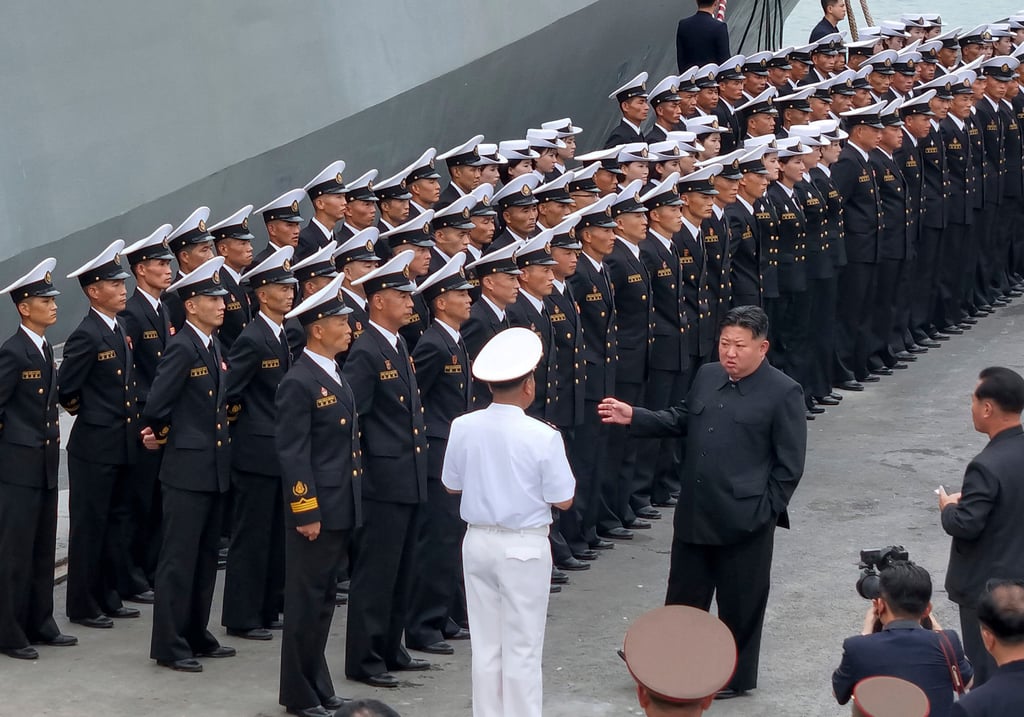
Denuclearisation of North Korea and the continued strengthening of joint deterrence are also expected to be major topics of discussion.
Cho said the US saw South Korea as “an indispensable forward base in the Indo-Pacific”, while Seoul depended on being under the so-called nuclear umbrella of the US to counter North Korea’s advancing arsenal.
Asked on Monday if Washington was pressing Seoul for a response, Cho replied: “It is true that some voices in the US have raised the issue. But the US government has neither formally conveyed such a request nor engaged us in negotiations on it.”
Building rapport
Analysts say the personal relationship between the two leaders will be crucial.
“First impressions can frame high-level relationships,” said political scientist Patrick M. Cronin, Asia-Pacific Security chair at the Hudson Institute think tank in Washington, adding that it would be important for Lee “to prepare carefully for this inaugural visit to the White House”.
The Trump administration would likely push for greater South Korean contributions on defence and regional security, Cronin said. “Washington is pressing for Seoul to shoulder greater responsibilities and costs, while acknowledging the need for US forces on the peninsula to be available for other regional contingencies.”
North Korea, for its part, has been dismissive of Seoul’s outreach under Lee. Kim Yo-jong, sister of North Korean leader Kim Jong-un, on Wednesday characterised the South’s president as “not a great man”, saying in a statement that the “confrontational ambitions” of its neighbour “have been passed down without the slightest change” from the previous administration.
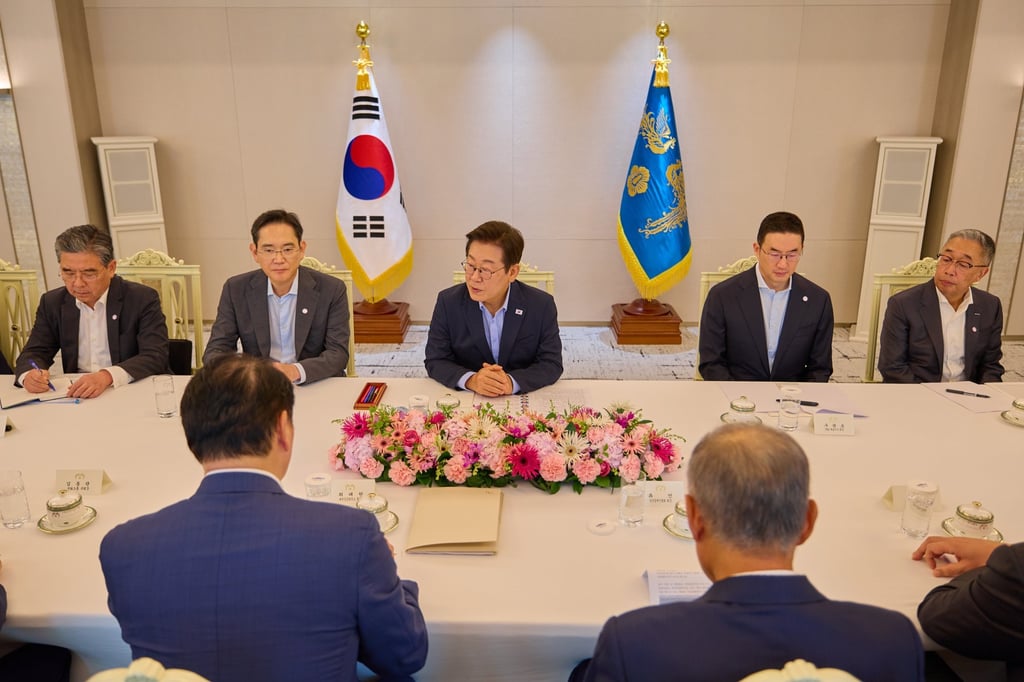
Former US officials say the summit will involve some delicate diplomatic choreography.
“One can imagine President Trump saying publicly that he expects further cooperation from and with South Korea on the China issue,” said Sydney A. Seiler, a former intelligence officer at the US National Intelligence Council, though he described this as a so-called black swan scenario – unlikely, but potentially with severe consequences.
Seiler said Trump had recently been more “restrained” in his remarks on China and would benefit little from putting “Lee in an uncomfortable position” during their first summit.
He further predicted that “all of the debate on Taiwan scenarios, South Korea’s potential contributions, USFK strategic flexibility and mission reorientation” would be handled in working-level discussions.
Doo agreed that discussions on increased cost-sharing for the 28,500 USKF troops deployed to South Korea and its growing defence budget “are more likely to be deferred to working-level negotiations”.
Meanwhile, trade policy expert William Alan Reinsch, a senior adviser at the Centre for Strategic and International Studies, said the Trump administration would likely seek “more specificity on the shipbuilding, what the money means, [and] what’s actually going to happen.”
No comments:
Post a Comment
Note: Only a member of this blog may post a comment.