As GLP-1 receptor agonists move into wider use for diabetes and weight management, many primary care clinicians are discovering that prescribing the medication is only half the challenge. The other half lies in the conversation.
The number of scripts for GLP-1 medications such as semaglutide and tirzepatide have surged. There was nearly a 600% increase between 2020 and 2023, based on data collected by IQVIA, a global healthcare analytics and research company that aggregates prescriptions, claims, and patient-level information from pharmacies, insurers, and healthcare systems across more than 100 countries. Yet even as access expands, stigma around weight and obesity continues to shape how both clinicians and patients talk about these drugs and whether patients feel comfortable starting or staying on them.
When it comes to discussing GLP-1s at the primary care level, weight management experts said that subtle shifts in tone, framing, and follow-up can make a measurable difference in adherence and trust. Bariatric medicine professionals are passionate about providing their colleagues who often have the first point of contact with these patients with actionable tools to better manage the conversations around weight and the new tools available to help manage it.
Why Stigma Persists
The American Medical Association formally classified obesity as a disease in 2013, and The Obesity Society has emphasized that biological, genetic, and environmental factors all play roles in its development. Despite these major professional societies dictating that obesity is a chronic, relapsing disease, the narrative in many exam rooms still centers on personal responsibility and appearance, according to Evan Nadler, MD, MBA, founder of ProCare Consultants and TeleHealth.
“A clinician may assume that someone wanting help for their weight, or a GLP-1 prescription, is looking for ‘an easy way out,’” said Nadler, who until 2 years ago ran the childhood obesity program at Children’s National Hospital in Washington, DC, and left his practice there to write his forthcoming book, Obesity Explained: The Truth About Obesity, Simplified, and start a podcast of the same name. “That assumption usually reflects the provider’s own bias and a lack of understanding about the complexity of obesity as a disease.”
Attitudes like this create a negative environment in a situation where the patient may already be experiencing less-than-positive feelings, said Michael Snyder, MD, medical director of the Bariatric Surgery Center at Rose Medical Center in Denver and an in-house obesity specialist at FuturHealth.
“Everyone who has weight concerns comes in with a baseline of blame and shame,” Snyder said. “Virtually everyone — including medical professionals — still believes notable weight issues are due to ‘sin and sloth.’ The science doesn’t bear that out. At a certain weight level, it’s truly an epigenetic phenomenon, influenced by genetics and environment. Once you understand that, judgment begins to fade.”
Patients notice these biases from the moment they walk in, according to Carolyn Jasik, MD, associate chief clinical officer at Verily, Alphabet Inc.’s life sciences and precision health company.
“My patients have shared that from the moment they enter a hospital, there’s a subliminal whisper calling them out for being overweight,” she said. “It starts with the physical environment: exam-table and chair sizes, gowns, imaging equipment. Even when they’re seen for something unrelated, such as knee pain, the conversation quickly shifts to weight.”
Jasik added that these seemingly small interactions can lead to missed diagnoses and reinforce the message that weight is the only health concern worth addressing.
Real-World Impact
The consequences of stigma are far from abstract. Weight-related bias in healthcare has been linked to delayed preventive care, poorer metabolic control, and diminished trust between patients and clinicians. In a survey published in the September 3, 2023, issue of Obesity journal, nearly half of the adults with overweight or obesity reported avoiding medical appointments because of prior experiences of judgment or negative comments about their weight.

The broader context is striking: More than 42% of US adults are living with obesity, according to the CDC. Despite the prevalence of the diagnosis, fewer than 1 in 10 receive any form of evidence-based treatment, reflecting ongoing barriers in access, coverage, and clinician communication.
“When people hear about celebrities rapidly losing a ton of weight with these drugs (GLP-1s), it gives the impression of a quick fix,” said Snyder. “That perception ignores the underlying science and the medical guidance required for success.”
Nadler said the misconception also reflects gaps in medical education.
“The genetic and epigenetic drivers of obesity are complex,” he said. “It’s easier to blame food choices or willpower than to study metabolism. We need mandatory obesity curricula in medical schools. Forty percent of the adult population has obesity, yet most physicians have never been taught how to treat it.”
Jasik agreed that the rapid results of GLP-1s have contributed to confusion.
“These medications work quickly and better than anything we’ve had before,” she said. “So it’s understandable that people think of them as quick fixes. But just as quickly as the weight comes off, it can come back on if patients don’t embrace lifestyle changes. Before starting a GLP-1, patients need education about what those changes look like.”

Jennifer Brown, MD, based in Lewisburg, West Virginia, is board certified in both obesity medicine and family medicine and provides services through MyObesityTeam while seeing patients remotely through Amwell. Brown said that one thing that helps reframe the “shortcut” conversation is making sure patients understand that GLP-1s are an ongoing commitment.
“In my experience, patients struggle with the concept that GLP-1 therapy is long term. Many come to my clinic with the thought that they can take a GLP-1 for a few months, lose their excess weight, and then stop taking them,” Brown said. “The problem is, evidence shows that once patients stop taking GLP-1s, their weight usually returns. It’s essential that healthcare providers have the conversation about GLP-1s as a long-term treatment for obesity before prescribing them.”
Changing the Conversation
Brown, who until September worked at Rainelle Medical Center, a federally qualified health center in Rainelle, West Virginia — which she pointed out is the most obese state in the nation — said the “language of care” around obesity begins with the people around the clinician.
“Staff training is essential: One insensitive comment about weight from a nurse can cause a patient to feel offended. I’ve seen patients leave a practice because of an unintentional, insensitive remark from a staff member,” Brown said.
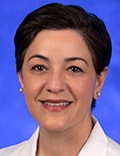
Taraneh Soleymani, MD, a family medicine doctor and director of obesity medicine at Penn State Health Medical Group, who practices in Middletown, Pennsylvania, highlighted some of the top ways she has observed that stigma shows up in clinical conversations when patients ask for GLP-1s.
“Healthcare providers unintentionally use terminologies like obese or fat when discussing the patient’s overweight or obesity with them or ask patients to try harder by further modifying their diet and exercise plan,” she said. “They’re not discussing weight-loss medications as an effective obesity treatment and attributing all of patient’s symptoms to their overweight and obesity.”
Nadler often validates their experiences by saying, “Your experience is common among the people I see,” which normalizes their struggle without minimizing it.
From there, Brown said that she clearly establishes that the conversation is driven by physiology and health rather than appearance.
“I always frame obesity in the same way that I do diabetes or hypertension — as a chronic metabolic disease that requires treatment,” Brown said.
Resources such as the Obesity Action Coalition’s People-First Language guide and the CDC’s guidance on weight-neutral communication encourage clinicians to focus on behavior, biology, and partnership rather than blame.
Looking Ahead
As insurance coverage and public awareness of GLP-1 therapies expand, clinicians will increasingly set the tone for how these medications are perceived — not just by patients but across the broader healthcare system. A 2024 commentary in Health Affairs argued that improving obesity care requires confronting bias at every level — from medical education to payer policies — and ensuring that language in guidelines, insurance documentation, and clinical settings reinforces obesity as a chronic disease rather than a personal failing.
“Equity begins with realizing that obesity and metabolic disease are not evenly distributed,” Snyder said. “They’re deeply connected with socioeconomic status, race, gender, and access to care. Clinically, we have to make sure prescribing practices are based on need, not appearance.”
“If one GLP-1 pill could replace your blood pressure pill, your cholesterol pill, and your kidney pill, we’d talk about it the same way we talk about statins,” Nadler said, citing normalization as an issue in reaching equity for these medications in reducing stigma.
Then there is the issue of cost. Even though the prices of these medications have come down in recent months, they are still prohibitive for many. Jasik cites that as a significant factor that currently inhibits progress.
“Once the price drops below $150-$200, we’ll see huge changes in the stigma surrounding obesity,” she said. “When access is no longer scarce, empathy and understanding will follow.”
Soleymani said no one factor is the “silver bullet” with regard to putting an end to the stigma surrounding GLP-1s.
“Creating real change in how we address the stigma surrounding obesity and ensuring equitable access to treatment will require a united effort,” she said. “Patients, physicians, policymakers, employers, and pharmaceutical companies all have a role to play in building a culture of empathy, science-based obesity care, affordable care, and inclusion.”
Brown reported consulting for Amwell and MyObesityTeam and having a financial relationship with those companies. Jasik reported being employed by Verily and having a financial relationship with the company and holding stock from a former employer, Omada. Nadler reported having no disclosures. Snyder reported serving as a consultant for FuturHealth and having a financial relationship with the company in such capacity. Perrault reported receiving personal fees for consulting and/or speaking from Novo Nordisk, Eli Lilly and Company, Boehringer Ingelheim, and Ascendis Pharma. Soleymani reported receiving honoraria from Novo Nordisk for speaking engagements.
https://www.medscape.com/viewarticle/breaking-through-stigma-access-expands-glp-1s-2025a1000zte
No comments:
Post a Comment
Note: Only a member of this blog may post a comment.