by Jenna McCarthy via Jenna's Side Rocks,
Dear ICE Protestors,
It’s been a rough few months out there. You’ve shown up. You’ve resisted. You’ve rallied. You’ve organized. You’ve made signs. So. Many. Signs. You’ve launched illegal fireworks, damaged property, blocked traffic, broken the law, bashed in windows, assaulted agents, and berated scores of strangers simply for doing their jobs. You must be exhausted. I see you. I feel you. I am in awe of your stamina.
So let’s pretend, for argument’s sake and to give you a desperately-needed break, you win.
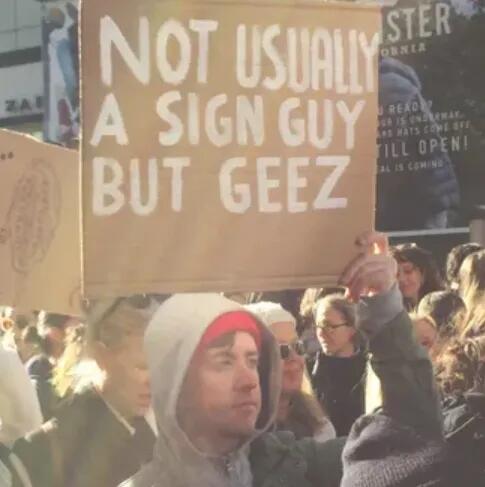
Let’s pretend all the chanting, the honking, the whistling, the street-blocking, the papier-mâché puppets, the Sharpie signs, the interpretive screaming, and the celebrity Instagram threats finally break the will of the federal government and ICE collapses under the sheer weight of your moral outrage.
Congratulations. Please enjoy a festive evening of vegan hors d’oeuvres, pronoun-affirming drum circles, and self-congratulatory chanting. You’ve earned it.

Go on, party it up!
After you shake the ethically-sourced, biodegradable confetti out of your hair, I just have one question: Now what?
No, seriously. What’s your plan?
Because tragically, our towns are teeming with dangerous, law-breaking repeat offenders—many of them wanted for horrific, unspeakable crimes here and in other countries. Blaming ICE for trying to remove them would be like blaming the home inspector for finding asbestos in the dream house you just fell in love with.
These bad actors are here. You don’t have to like it, but you do have to accept it. (I know! Objective reality isn’t really your thing. But try.) So what do we do about them? Do we ask a bunch of fugitives to kindly turn themselves in to the nearest Department of Feelings & Hugs? Do we hand big red “PLEASE STOP, YOU’RE BEING NAUGHTY” paddles to community volunteers? Do we just leave the child rapists, domestic abusers, drug smugglers, home invaders, human traffickers, carjackers, murderers, and violent felons exactly where they are and hope they find God without a map or a moral compass?

Hahahaha, I mean, okay.
Because here’s the part you seem to have left out of the ICE-free utopia you imagine: federal immigration officers aren’t hunting down gardeners, grandpas, or the kid who overstayed her student visa because she adopted a Labradoodle. In one 24-hour period alone this week, ICE arrested five illegal immigrants charged with heinous crimes including rape by force, aggravated assault, and sodomy of a minor. You know, the sort of atrocities Netflix makes eight-part documentaries about.
And you’re… protesting that?
Let’s run your victory scenario one more time: You kick ICE to the curb. Strip the agency of every drop of federal funding. Fire every last evil, horrible, power-hungry agent. Finally! Nobody is arresting or removing violent offenders anywhere in the country. Phew! Except… now those violent offenders stay in your city. In your neighborhoods. Near your kids. Near your friends. Near you. What happens when one of them abducts a toddler from the preschool playground? Or robs you at knifepoint in the Trader Joe’s parking lot. Or breaks into your neighbor’s home and murders a mother of three. Who do you call? Katy Perry? The police? Oh, wait. You want to defund them, too.

You’re probably not a regular reader of my column, so you may not know that immigration enforcement isn’t even a Trump invention. Nope. It’s happened under every administration since presidents wore wigs. In fact, your boy Barack deported more illegals than any American leader in history.
(Go ahead. Go lie down for a spell. It’s not your fault CNN never told you that.)
Look, I get it. ICE has terrible branding. The name sounds like a villain straight out of a Marvel movie. Truly, someone at DHS should have workshopped it harder. If they had called it the Department of Removing Child Predators and Machete-Wielding Lunatics From Your Neighborhood, you’d all be crocheting them honorary sashes. But because the acronym sounds cold, or mean, or insufficiently infused with social-justice aromatherapy, thousands of you are sprinting around Minneapolis hurling rocks at officers who just removed a convicted child rapist from an elementary school’s zip code.
I realize that there have been two extremely high-profile deaths involving ICE recently. In fact, since Trump deployed the agency last year, there have been five lost lives—each of them tragic (and arguably avoidable). Shockingly—not—most states don’t record immigration status in arrest or conviction data. And mainstream media is historically allergic to reporting on violent migrant crime. Social media, however, is not.
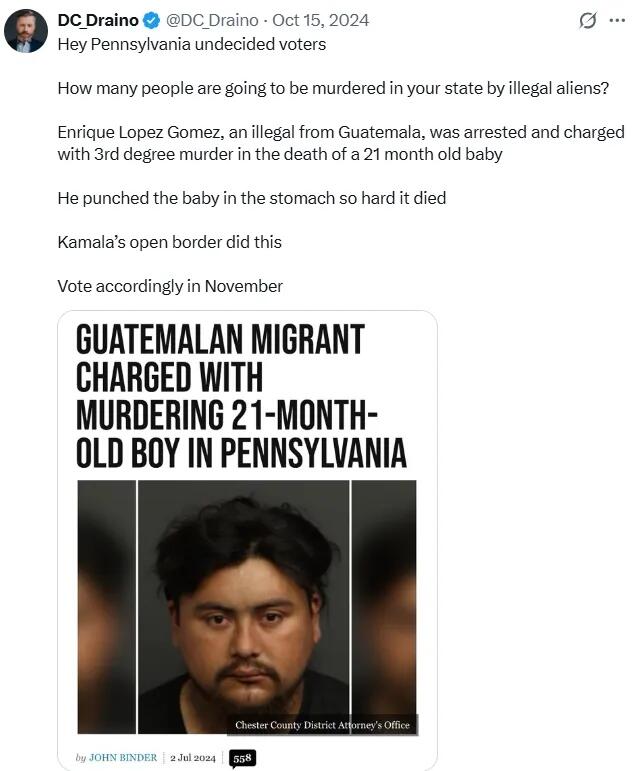
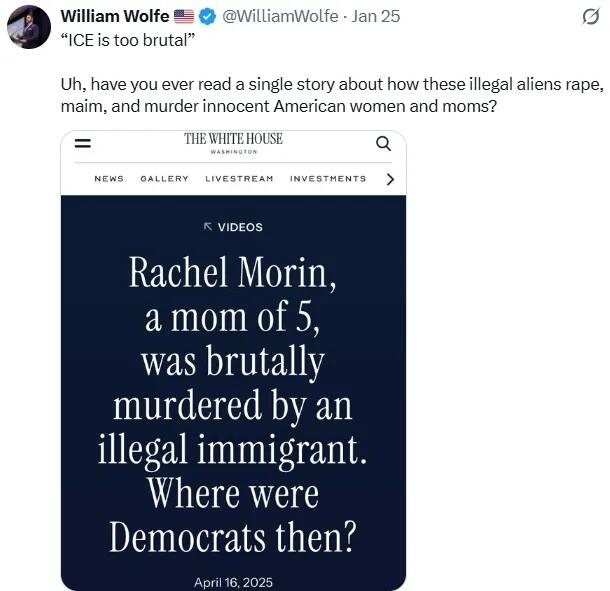
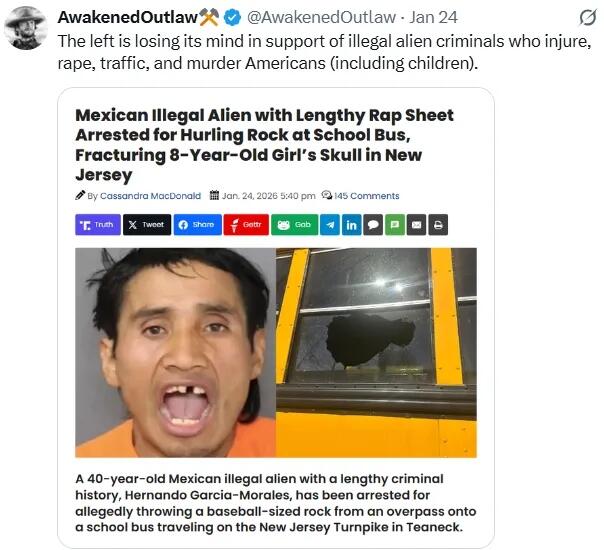
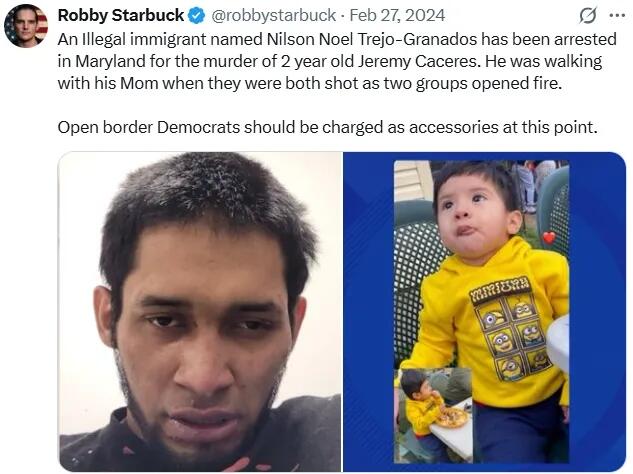
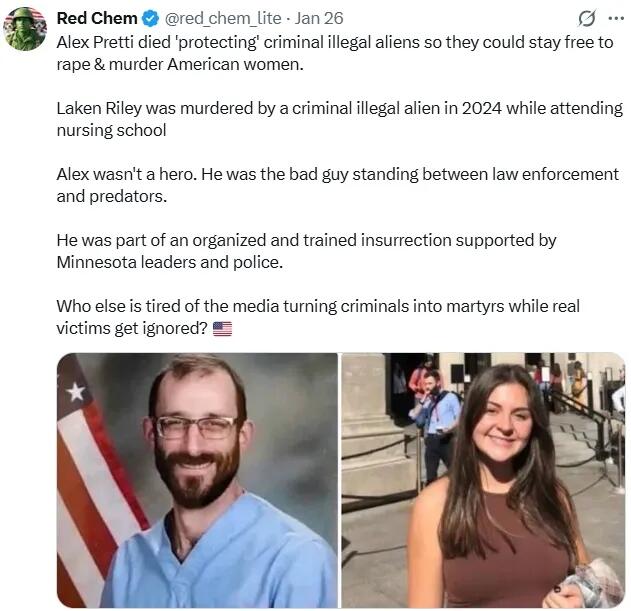
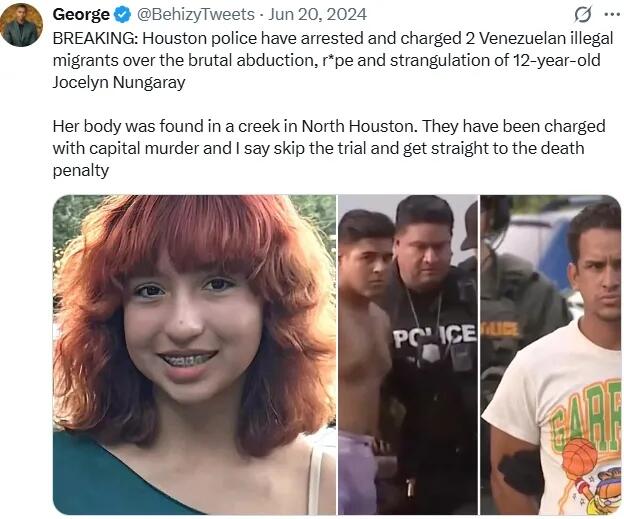
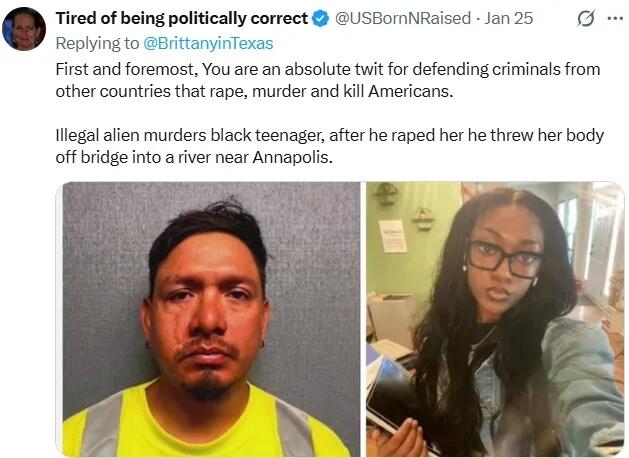
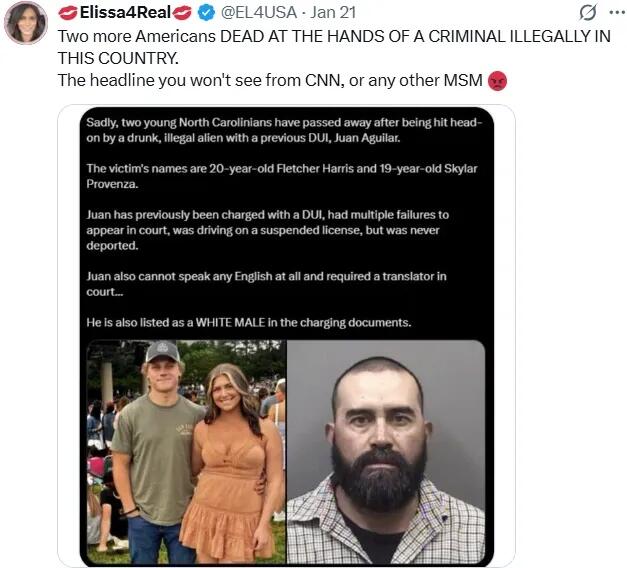
There are so, so many more, but I suspect you get the gist.
“We are Renee Good,” you chant. Yes, yes you are. You swarm the streets, interfere with lawful operations, ignore police orders, and charge at armed federal agents, and then everyone around you is shocked—I’m talking downright flabbergasted—when you get hurt. Exactly what, respectfully, did you think was going to happen? There’s a reason the saying isn’t, “If you play with fire, you’ll come out refreshed and rejuvenated.”
“But illegal immigrants statistically commit fewer crimes than white Americans,” you insist. And rattlesnakes kill exponentially fewer people than cobras do… but I’m still calling animal control if I find one curled up on my pillow. (Also, and I know you hate hearing it, but we’re talking about people who are in violation of U.S. law before the story even begins here. Sorry, but that part matters.)
I can concede that our current immigration enforcement system is far from perfect; can you concede that something needs to be done? Can you muster an ounce of sympathy for the souls whose lives have been destroyed or taken at the hands of monsters who are here unlawfully? Or do they not matter to you because there’s no colorful I STAND WITH VICTIMS OF FOREIGN PREDATORS ring you can put around your Facebook photo?

If you really want that warm, fuzzy, ethically-superior glow, here’s a wild idea: channel your rage into something that’s remotely productive. By all means, push for greater accountability. Demand body-cams, clearer use-of-force rules, unbiased investigations, and better training. Drop off kombucha for the oversight committee. Knit them a throw. Truly, knock yourselves out. But “ABOLISH ICE” isn’t a reform; it’s a tantrum. If you want your activism to actually protect people instead of endangering them, try aiming at their flaws instead of their existence. It’ll give you the same dopamine hit with far fewer funerals.
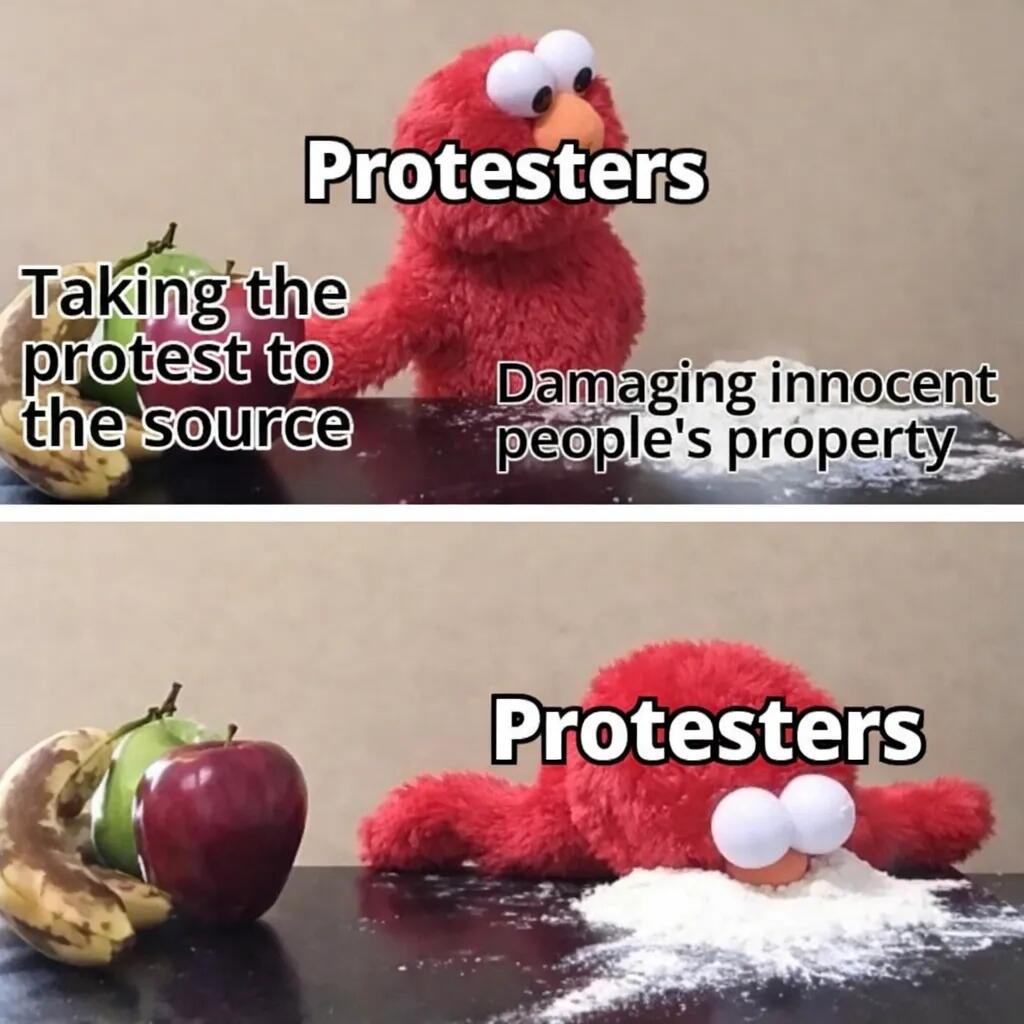
I know. Smashing things and yelling obscenities is so much more satisfying. But until your side comes up with an alternative that magically removes ruthless foreign criminals from American cities without ICE having to do it, your entire movement amounts to: “We hate this necessary thing because Trump.”
And that’s not public policy. That’s group therapy with a banner budget.
I look forward to your thoughtful reply,
Jenna 💋
https://www.zerohedge.com/political/dear-ice-protestors-we-need-talk


