Search This Blog

Sunday, November 10, 2019

Healthcare Startup Solv’s Mobile App Helps Consumers Navigate Insurance

San Francisco-based Solv, a digital startup that helps its customers book same-day urgent care appointments, announced Tuesday that it has launched a mobile app that can help consumers not only book appointments but navigate their health insurance as well.
“Millennials find their healthcare insurance more confusing than their taxes,” says Heather Fernandez, CEO and cofounder of the company.
When consumers download the app, now available for iOS and coming to Google Play later this year, they’ll be given the opportunity to upload their health insurance information into it. Once that’s done, they’ll be able to see at a glance how much of their deductible they’ve used, what expenses they can anticipate for an upcoming appointment and other aspects of their coverage. The app also highlights discounts for things like gym memberships that are available through their insurance.
The app also incorporates the company’s Web functionality—meaning that if consumers face a need for urgent care, the app will let them find a conveniently located center they can book for same-day appointments and determine whether that care is covered by insurance. That’s important, says Fernandez, because according to a survey Solv commissioned about consumer interaction with healthcare, 56% of people have skipped visiting the doctor over a health concern because it was inconvenient to book an appointment.

Fernandez and her cofounder, Daniele Farnedi, are no strangers to bringing digital convenience to older industries. Before founding Solv, both were executives at real estate startup Trulia. After Trulia was acquired by Zillow in 2015, the two decided to take their expertise to healthcare, founding Solv in 2016. “It was a different category but a very similar insight: The consumer experience is terrible,” Fernandez says. The company has raised over $21 million in venture funding from backers such as Greylock and Benchmark ventures.
The company may have struck a chord with consumers. According to Fernandez, more than 8 million people have booked urgent care appointments through Solv this year, up from 2.7 million in the prior year. Last year, it also launched a product that allows people to pay their medical bills from their mobile phones. According to the survey the company commissioned, 14% of its customers would have taken a much more costly trip to the ER rather than urgent care if it hadn’t been for Solv. The company estimates this represents $200 million in saved costs to patients.
For consumers, there’s no cost to using Solv. The company earns its revenue directly from healthcare providers, whom it works with on software, digital communications, bill pay and other services. Looking forward, Fernandez says that the company will expand its offerings still further, enabling consumers to manage more of their healthcare through the platform.
“What we have done as part of our growth is to expand more of our services,” says Fernandez. “More and more people are focused on access to consumers and cost savings.”


Rare Form Of Tick-Borne Illness Led To Senator’s Death

Former U.S. Senator Kay Hagan passed away at the age 66 last month in her home in Greensboro, North Carolina. She had suffered from acute brain inflammation, or encephalitis, in 2016, and since then had been dealing with associated complications such as pneumonia and neurologic decline.
While initially the cause of her encephalitis was not revealed, it was later determined to be caused by the Powassan virus, a rare virus carried by infected ticks. While the virus is rare, there has been a slight increase in cases of Powassan-encephalitis over the past few years, possibly due to increasing numbers of ticks.
Many folks who are bitten by an infected tick are not aware of being bitten, and symptoms of Powassan virus infections may go dormant for days to weeks. Initial symptoms may include those similar to a run-of-the-mill viral illness, such as headache, vomiting, weakness and fever. This can progress to confusion, loss of muscle function, difficulty speaking and seizures. The diagnosis may be difficult to make, as there is often no known history of having been bitten by an infected tick. If there is a possible history of tick exposure, blood and spinal fluid samples can be assessed to detect Powassan viral antibodies. One in ten people will die from the disease, and many will suffer sustained challenges, as did Senator Hagan, eventually leading to her demise three years after her acute illness. There is no vaccine to prevent Powassan virus infection, nor is there specific treatment to combat the illness, aside from supportive care based on a patient’s specific symptoms.
The viral transmission from ticks to humans occurs after ticks bite rodents infected with the virus and later bite humans. While Powassan virus remains quite rare, the incidence risen steadily in recent decades. As ticks tend to thrive in warm environments, some of the “uptick” in cases may be due to climate change. Because of several warm winters over the past few years, tick populations are rising as temperatures climb.
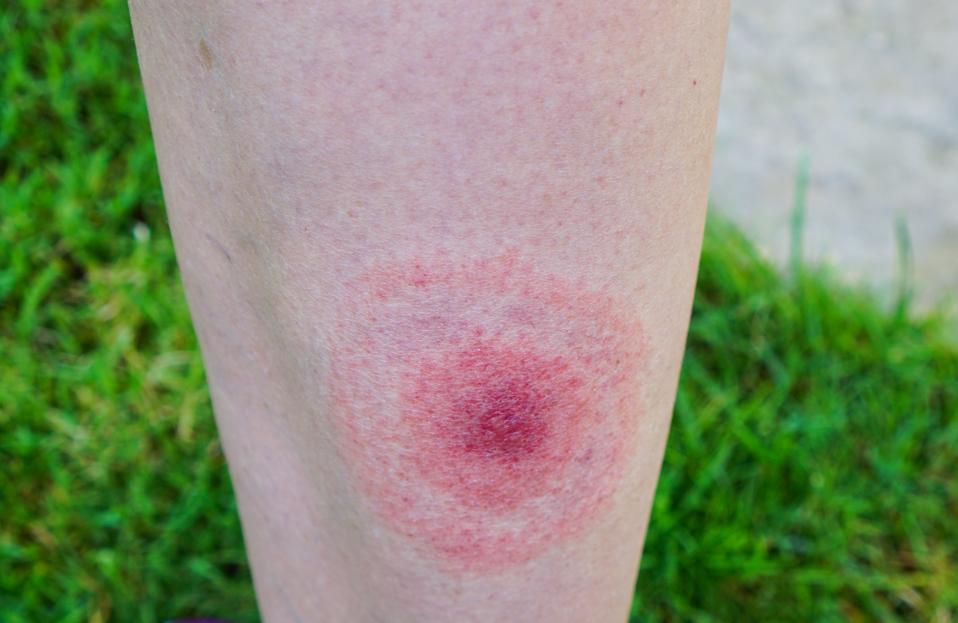
Traditionally, one thinks of ticks as those pesky bugs carrying Lyme disease, a bacterial illness transmitted by tick bites, causing symptoms ranging anywhere from a tell-tale “bulls eye” rash to more severe symptoms such as fevers, chronic fatigue, joint pain, neurologic, and cardiac complications. Annual incidence of Lyme disease is approximately 30,000. Some believe it might even be ten times that. Powassan infections, on the other hand, remain in the range of 20-30 cases per year.
The path of the virus via ticks and rodents has a somewhat extended route, much of which is based on one or two winter seasons prior to emergence of a large population of ticks. Typically, the tick population is highest in the summer months, and most commonly seen in the Northeast and Great Lakes regions. However, due to exceedingly warm winters, the ticks have spread their wings a bit. Or at least these wingless creatures have stretched their legs. For instance, the tick season of 2017 was already a known possibility in 2015, as that warm winter led to a surge of acorn tree growth. This, in turn, led to a surge in well-fed mice, living longer and producing more healthy, well-fed mice. More mice meant more ticks to feed on them and, in turn, a rise in tick populations.
But all is not doom and gloom, even in the setting of increasing numbers of ticks each season. While tick bites themselves are becoming more and more common, the likelihood of a tick carrying either the Powassan virus or even the bacteria causing Lyme disease remains relatively low. If you do get a tick bite, and it’s removed within 24 hours, it’s much less likely that either disease will be transmitted. Tick removal should be performed with a fine-tipped tweezers, grabbing the tick as close to the skin’s surface as possible, and pulling up steadily and evenly away from the skin. The tick should not be twisted, crushed or painted with nail polish as a means of removal. After the tick is off, cleaning the skin with rubbing alcohol or soap and water is recommended.
As with many concerning illnesses, prevention always is a first-choice option. For tick protection, insect repellents containing DEET, even for children, help keep ticks away. The American Academy of Pediatrics has approved up to 30% DEET to be safe and effective for children. During high tick seasons, it’s wise to do a full-body tick-check after being outside, as early removal minimizes risks of tick-borne illnesses. Clothing that’s been worn in high-risk tick areas can be placed in the dryer, as the heat of the dryer will kill any ticks remaining on clothes. Wearing long sleeves, long pants and hats while being out in wooded areas may help, and pre-treating clothing items with permethrin may create an added layer of tick protection.
While Senator Hagan did not succumb acutely to viral encephalitis, she suffered many setbacks in the coming years, in large part due to the initial neurologic damage that the virus caused. While most equate ticks with Lyme disease, the Powassan virus, although rare, is becoming a better-known entity to look out for in those suffering from tick-borne illnesses.

New weapon in fight against lethal Candida fungi

  • Monash University researchers have gained insights into how nanoparticles could develop a biosensor to prevent deadly diseases contracted on medical equipment, such as catheters.
  • Candida albicans can become a serious problem for people who are seriously ill or immune-suppressed.
Researchers at Monash University have gained insights into how nanoparticles could be used to identify the presence of invasive and sometimes deadly microbes, and deliver targeted treatments more effectively.
This study was conducted as an interdisciplinary collaboration between microbiologists, immunologists and engineers led by Dr Simon Corrie from Monash University’s Department of Chemical Engineering and Professor Ana Traven from the Monash Biomedicine Discovery Institute (BDI). It was recently published in the American Chemical Society journal ACS Applied Interfaces and Material.
Candida albicans, a commonly found microbe, can turn deadly when it colonises on devices such as catheters implanted in the human body. While commonly found in healthy people, this microbe can become a serious problem for those who are seriously ill or immune-suppressed.
The microbe forms a biofilm when it colonises using, for example, a catheter as a source of infection. It then spreads into the bloodstream to infect internal organs.
“The mortality rate in some patient populations can be as high as 30 to 40 per cent even if you treat people. When it colonises, it’s highly resistant to anti-fungal treatments,” Professor Traven said.
“The idea is that if you can diagnose this infection early, then you can have a much bigger chance of treating it successfully with current anti-fungal drugs and stopping a full-blown systemic infection, but our current diagnostic methods are lacking. A biosensor to detect early stages of colonisation would be highly beneficial.”
The researchers investigated the effects of organosilica nanoparticles of different sizes, concentrations and surface coatings to see whether and how they interacted with both C. albicans and with immune cells in the blood.
They found that the nanoparticles bound to fungal cells, but were non-toxic to them.
“They don’t kill the microbe, but we can make an anti-fungal particle by binding them to a known anti-fungal drug,” Professor Traven said.
The researchers also demonstrated that the particles associate with neutrophils – human white blood cells – in a similar way as they did with C. albicans, remaining noncytotoxic towards them.
“We’ve identified that these nanoparticles, and by inference a number of different types of nanoparticles, can be made to be interactive with cells of interest,” Dr Corrie said.
“We can actually change the surface properties by attaching different things; thereby we can really change the interactions they have with these cells – that’s quite significant.”
Dr Corrie said while nanoparticles were being investigated in the treatment of cancer, the use of nanoparticle-based technologies in infectious diseases lags behind the cancer nanomedicine field, despite the great potential for new treatments and diagnostics.
“The other unique thing in this study is that rather than using cells grown in culture, we’re also looking at how particles act in whole human blood and with neutrophils extracted from fresh human blood,” he said.
Professor Traven said the study had benefited greatly from interdisciplinary collaboration.
“We’ve brought together labs with expertise in infection, microbiology and immunology with a lab that has expertise in engineering, to do state-of-the-art experiments,” she said.
###
First author in the study, PhD student Vidhishri Kesarwani, co-supervised by Dr Corrie and Professor Traven, crossed disciplinary boundaries highly effectively and was instrumental in the study. Professor Stephen Kent from the Department of Microbiology and Immunology at the University of Melbourne developed the assays to investigate the association between nanoparticles and immune cells from fresh human blood.
Read the full paper in ACS Applied Interfaces and Materials, titled Characterization of Key Bio-Nano Interactions between Organosilica Nanoparticles and Candida albicans.

Court halts New York nursing home cuts for now

A state judge has put a halt to Medicaid cuts facing nursing homes across New York.
The judge’s decision Thursday puts a temporary injunction on Medicaid formula changes that nursing home advocates say would jeopardize $352 million in state and federal funding.
A Department of Health spokeswoman says it’s reviewing the decision. Health officials argue lawmakers approved the change in the budget.
But the judge says nursing homes have showed the cuts could cause irreparable harm. The judge also said it is likely nursing homes will win arguments that officials violated lawmakers’ instructions in the budget.
The budget said the Medicaid formula couldn’t change before June 30, when nursing home experts faced a deadline to weigh in. The lawsuit says the state “ignored” the workgroup’s warnings and moved forward with cuts.

Hundreds scramble for free hep A shots in NJ

Hundreds of people waited outside the Somerset (N.J.) County Department of Health for a free hepatitis A shot Nov. 6, forcing the county to close the walk-in clinic early due to an “overwhelming public demand,” according to NJ.com.
The health department offered free vaccinations after a local deli worker with the virus handled food at a grocery store in Somerville, N.J.
The county administered 550 hepatitis A shots Nov. 6, Nancy Weinman, an administrative assistant for the health department, told NJ.com. The clinic offered free shots again Nov. 7.
New Jersey has reported 541 hepatitis A cases since Dec. 1, 2018, compared to just 67 cases reported in the previous year, according to a Nov. 2 update from the state’s health department. Six people have died in the outbreak. Of 398 cases with available data, 337 required hospitalization.
Twenty-eight states are experiencing hepatitis A outbreaks, the CDC reports. Kentucky has been hit the hardest, reporting 4,958 cases and 61 deaths as of Oct. 19.

Saturday, November 9, 2019

New survey casts doubt on severity of physician shortage

Most patients are not struggling to schedule new visits with generalists and specialists, new survey finds.


KEY TAKEAWAYS

In a new survey, only 19% of patients struggled to have a new visit with a generalist.
The survey found only 15% of patients struggled to set a new visit with a specialist.
Despite the patient visit data, most generalist and specialist physicians expect doctor shortages to worsen over the next five years.
The U.S. physician shortage may not be as dire as previously predicted, according to a new survey report commissioned by the Houston-based Texas Medical Center Health Policy Institute.
The Association of American Medical Colleges has published alarming estimates of the country’s physician short. Earlier this year, AAMC forecast that the physician shortage could expand to nearly 122,000 clinicians by 2032, including a shortfall of about 55,000 primary care physicians. In 2017, the AAMC estimated the overall physician shortage at 20,400 clinicians.
The new survey report, which is based on data collected from 2,000 patients and 750 physicians, says the AAMC’s physician shortage estimate could be overstated. In particular, the survey report found that only 19% of patients struggled to have a new visit with a generalist and only 15% struggled to set a new visit with a specialist.
“The best way to tell if we have a doctor shortage is by asking patients whether they can easily get an appointment. For now, they overwhelmingly say ‘yes,'” Arthur “Tim” Garson Jr., MD, MPH, director of the Texas Medical Center Health Policy Institute, said in a prepared statement.
The survey, which quizzed patients and physicians on a range of healthcare issues, was conducted this year in June and July.
Despite the positive finding on patients’ ability to schedule new visits, physicians surveyed are bracing for doctor shortages:
  • 90% of generalist physicians predict there will be a shortage of generalists within five years
  • 78% of specialist physicians predict there will be a shortage of specialists within five years

EASING PHYSICIAN SHORTAGES

The survey report highlights four approaches to address future physician shortages if they worsen.
1. Nurse practitioners: Both generalist and specialist physicians expect nurse practitioners to ease their workloads over the next five years: 77% of generalists and 70% of specialists said they expected to see fewer patients as nurse practitioners saw more patients.
2. Postponing of retirement: About 4 in 5 of physicians said they would consider postponing retirement under certain conditions. The top condition was doubling the amount of time available to spend with each patient, with 34% of generalists and 30% of specialists saying more time with patients could delay retirement. The second-highest condition cited was a 10% increase in income, with 21% of generalists and 20% of specialists saying that the higher compensation could delay retirement.
3. Service requirement in underserved areas: There was a significant measure of enthusiasm for a graduation requirement that medical degree students serve two years in an underserved area before their residency training. Among generalists and specialists, 45% said they were either very enthusiastic or somewhat enthusiastic about the graduation requirement.
4. Education reform: Nearly half of the physicians surveyed said the United States Medical Licensing Examination does not test candidates for what is required to be a practicing physician: 45% of generalists and 40% of specialists.

What’s driving 30-day readmission declines?

A Harvard study offers an alternative explanation for declines in hospital readmissions.


KEY TAKEAWAYS

CMS’ Hospital Readmissions Reduction Program gets credit for declining readmissions.
However, Harvard researchers say the drop in readmissions is being driven by an overall decline in all hospital admissions.
The study calls into question the value of using readmissions as a quality metric with financial penalties.
There’s no arguing that 30-day readmissions for certain conditions targeted by a federal initiative to improve quality of care are on the decline.
The Centers for Medicare & Medicaid Services’ Hospital Readmissions Reduction Program is getting a lot of credit for the decline. Since 2010, the program had dinged hospital Medicare reimbursement for a range of preventable readmissions for conditions such as pneumonia and heart failure.
However, in a study this month in Health Affairs, researchers at Harvard Medical School are offering an alternative explanation that the drop in readmissions is being driven by an overall decline in hospital admissions.
“The decline in readmission rates looked like the silver lining of pay-for-performance, but it seems to have lost its luster,” said study lead author J. Michael McWilliams, the Warren Alpert Foundation Professor of Health Care Policy in the Blavatnik Institute at Harvard.
“Our study makes a strong case that what looked like achievements of the program may have been a byproduct of factors driving a broader decrease in hospitalizations across the board,” McWilliams said.
McWilliams spoke with HealthLeaders about they study findings, and the use of readmissions as a quality metric. The following transcript has been edited for length and clarity.
HLM: What prompted this study?
McWilliams: This decline in admission rates had gone largely unnoticed in the literature on the HRRP. So that prompted us to do the to do the study, particularly in the wake of other studies interpreting the decline of readmissions as a causal effect of the program. It seemed worth pointing out that there was this other broader trend going on nationwide.
HLM: So, the simplest explanation is the correct one?
McWilliams: Yeah. Occam’s Razor. As a physician and health policy researcher, I’m not sure that’s always true. It seems like things can get really complicated sometimes. But in this case, the falling rate of admissions is a pretty clear explanation for at least much of the decline in readmissions.
It’s just because of this simple statistical relationship between the two. If there were fewer admissions per patient, and readmissions are largely independent events, simply other admissions that happened to fall within 30 days of another, then statistics tell us that as the number of admissions per patient falls, the probability that one admission falls close to another is lower.
HLM: Does this mean that efforts to reduce 30-day readmissions are a waste of time?
McWilliams: That’s a good question. I don’t think we can say it’s a waste of time. We can certainly say that, whatever response has been elicited by the program, those efforts to reduce readmissions either have not been very effective, or it’s possible that those efforts did prevent some readmissions, but at the same time, a lot of the efforts which involved outreach to patients may have also increased readmissions.
One interpretation–although this is speculative because it’s very hard to sort out which are the prevented and which are the increased readmissions–might be that the quality of care may have gotten somewhat better. It’s just not reflected in the measure.
HLM: What do your findings suggest about using readmissions as a quality metric?
McWilliams: Any utilization-based quality measure is really problematic because it begs the question, what’s the right level of utilization? This is true of so-called preventable admissions as well as hospitalizations for ambulatory care-sensitive conditions. Obviously, the right amount of admissions and readmissions is not zero. So it’s very hard to know if we provide optimal care what proportion of patients would be admitted or readmitted.
HLM: Based on your findings, should Medicare eliminate the financial penalties for 30-day readmissions?   
McWilliams: For any given hospital, it’s hard to know whether it’s merited or not. There’s been a lot of research in this area that has demonstrated that, while it’s not clear that the program has reduced readmissions much if at all, what it has certainly done is transferred resources away from providers serving sicker and poor patients to the hospital serving the healthier, wealthier patients and in ways that are not merited, that are not do differences in quality, but rather just due to differences in the populations that they serve.
We’d be better off without the program for that reason, and there is ongoing debate about whether the program should be scrapped altogether, whether it can be refined in a way that it could achieve its objective.
I tend to be quite skeptical of programs like this, that fall in the category of pay for performance, because they’re just a lot of intractable problems with this approach to quality improvement of trying to bake it into the payment system.
HLM: What should be done with your study findings?
McWilliams: A good use would be to take a step back and reassess the merits of this program and other programs like it. This is not the first pay-for-performance program we’ve found to have minimal benefits and lots of unintended consequences. The research on the Value-based Payment Modifier, which was the precursor to the MIPS, is very similar, as is the Hospital Value-based Purchasing Program.
The best use of the findings is to take a step back and to really have a new conversation where we start thinking about ways to improve quality that is not by linking incentives to performance on measures, but just thinking about what interventions and strategies help improve quality.
Sometimes we forget that the ultimate goal is quality improvement when we are so focused on measures and how they should fit into the payment system. Once we figure out how to improve quality, there’ll be demand from patients for it and providers are interested in providing better quality care.