Search This Blog

Thursday, February 6, 2020

Super Bowl Brain Summit Tackles Athletes’ Medical, Mental Health Issues

Difficulty with simple math, slow and abnormal gait, irrational outbursts, forgetting your child’s name or how to tie your shoelaces. Sounds like a 72-year-old nursing home resident, right?
Not quite. Try a 38-year-old former football player.
“I was told, ‘After your career, you’re going to struggle with memory loss, anxiety, concentration and depression.’ Why didn’t I know this earlier??”
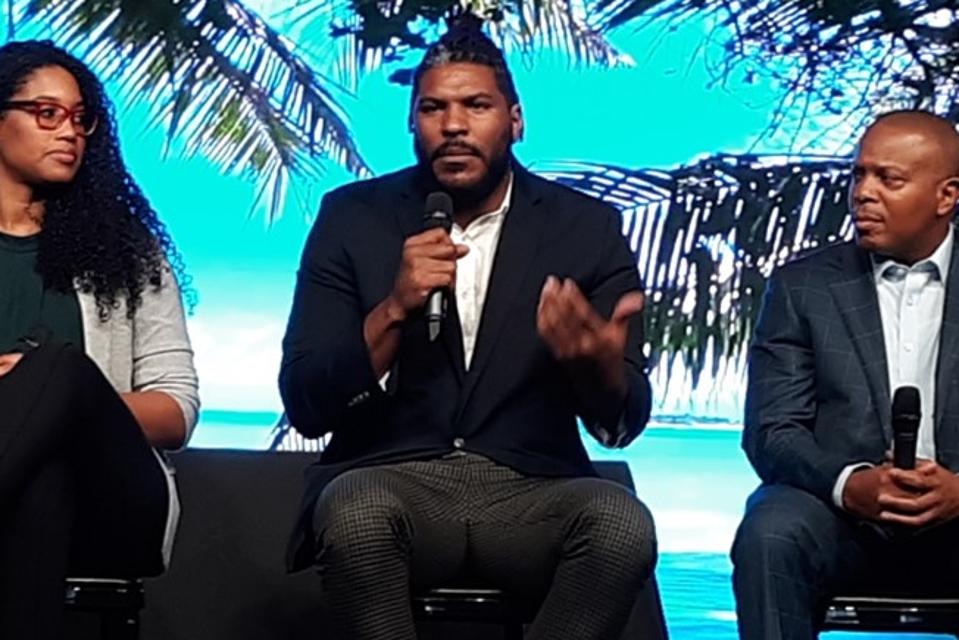
Julius Thomas, former professional athlete, National Football League
The Brain Health Summit was the premier lead-in event to this year’s 33rd Annual Super Bowl Party. Organized by super-agent, Leigh Steinberg (a.k.a. the “real Jerry McGuire”), and human rights activist, Nicole Fisher, the event brought together an interdisciplinary group of experts and professional athletes to discuss sports, health and wellness.
Fisher, moderator and Forbes contributor, started off the event in a collaborative spirit. “We wanted to bring together the best in medicine, science, research, professional sports and community advocacy.”

Advocating for Athletes
Steinberg and Fisher had been planning this Summit for years, combining their networks and different areas of expertise to create an event that signified their shared vision about brain health.
“When Leigh and I created the Brain Health Summit, we knew the first few years were going to be difficult,” said Fisher, founder of HHR Strategies. “Our partnership is truly a special one that puts people first.”

Steinberg, who has been open about his recovery from alcohol addiction since 2010, is deeply passionate about athletes’ health. “I had a crisis of conscience: I was representing players in the ‘80s who were suffering from TBIs.” The founder of Steinberg Sports and Entertainment added, “We now know that this is a worldwide problem. The brain is the last frontier for breakthroughs in science.”
“I feel a responsibility to these players,” added Mr. Steinberg.
Complex Neurobiology
We now know that traumatic brain injuries (TBI), particularly concussions, are very common among football players. Symptoms of mild TBI include headache, confusion, nausea, dizziness, memory and mood changes, and a brief loss of consciousness. Moderate-to-severe TBI symptoms can include persistent headaches, repeated vomiting, convulsions, agitation, slurred speech and brain infections such as meningitis. Additional complications of TBIs include addiction, mental illness, coma and brain death.

Despite the dire consequences of brain disease, there was reason for optimism.
“We’re at an exciting time,” according to TBI expert, Ross Zafonte, D.O. But he said we need to frame the discussion of athlete brain health based on childhood experiences. “Who did you used to be? What were you like as a child? What exposures did you have?” were sample questions posed by Dr. Zafonte, Chief of Physical Medicine and Rehabilitation, Massachusetts General Hospital.
Panelist and neuroscientist, Natalie King, PhD, emphasized the need to incorporate mental wellness into everyday experiences. “A holistic, interdisciplinary approach must take cultural issues into account.” Dr. King added, “Resources including rehabilitation services, which improve overall wellbeing, need to be both available AND accessible.”
Pro Athletes’ Perspectives
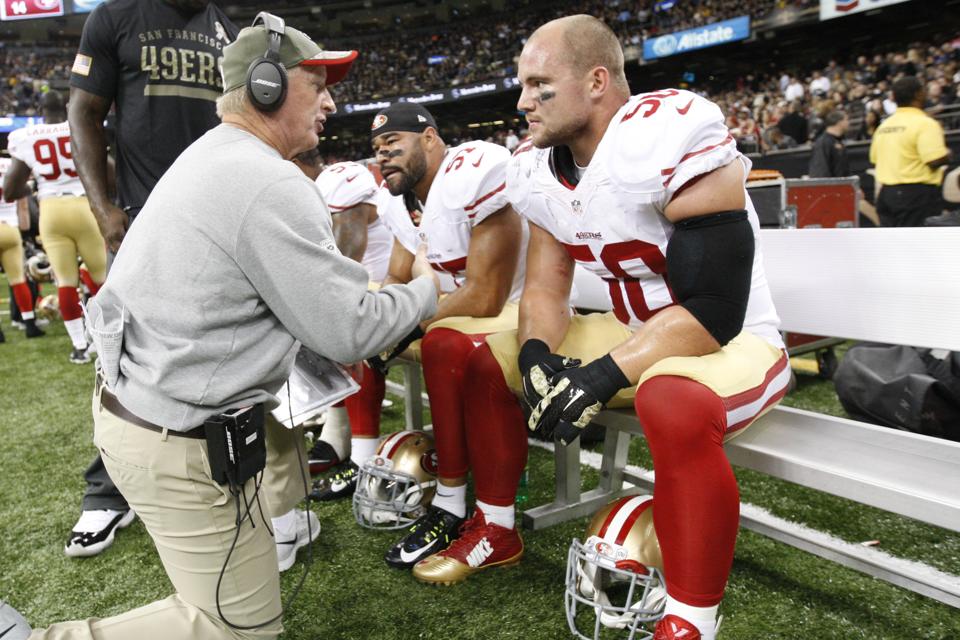
Former NFL linebacker and panelist, Chris Borland, experienced his first concussion at age 13. Today, he is working with the Center for Healthy Minds at the University of Wisconsin-Madison. “We’re teaching our athletes about meditation,” which Borland feels has made him calmer and more aware of his emotions. As a physician who practices AND preaches mindfulness, daily meditation has certainly transformed my perspective and improved my mental clarity.
Julius Thomas, former NFL tight end, is pursuing a doctorate in psychology in order to help other athletes with brain-related health issues. “Anxiety and depression are issues that can be addressed now. We need to educate players about problems *above* the shoulders.”
Thomas also urged inclusion of players in the conversation. “We need to ask them, ‘What do you need? How can we help you?’
Community Engagement and Empowerment
Fisher knew that the obstacles to discussing sensitive topics such as neurologic and behavioral problems in America’s beloved sport of football: “Many people in and around sports weren’t willing to have the tough conversations that were necessary regarding brain injury, mental health and those contextual factors that influence emotional and physical wellbeing.” So she invited Morris Copeland, Director of the Miami-Dade County Juvenile Services Department, to discuss those “contextual factors” – namely strategies to mitigate at-risk youth from entering and/or re-entering the criminal justice system.
“We’ve started programs that significantly reduced arrests among young people,” said Copeland, a former probation officer. “This process needs to start well before football. Prevention strategies work. ”
Brains Get Hurt in Other Sports, Too

Brain injuries are not exclusive to football. As a Torontonian, I grew up watching hockey. One of the greatest players in the National Hockey League, Sidney Crosby, has missed over a 100 games as a result of repeated concussions. Soccer and head injuries also go hand-in-hand – particularly in women. According to a study in the journal Pediatrics, female soccer players are at nearly the same risk for traumatic brain injuries as boys who play football.
***
As a doctor, public health advocate, sports fan and storyteller, I found this event fascinating. Primarily, perhaps, because I find the brain itself fascinating. And who wouldn’t? As much as I love my heart, liver and pancreas, the brain is the only organ that is responsible for roles as varied as concentration, memory and mood swings to sleep, speech and vision. The brain is the most complex machine known to human kind. And yet we understand at best 10% of how it functions. Perhaps its association with the most human of qualities – love, anger, sorrow and hope – explains why brain diseases such as addiction and mental illness are the most stigmatized social problems in the world. We need FAR more events like this that break down silos and unite the best in medicine, sports, research, law, entertainment, finance and policy. I believe that science, storytelling and collaboration will reduce shame and increase access to evidence-based treatment and care for people with brain injuries. It’s long overdue.
https://www.forbes.com/sites/lipiroy/2020/02/04/fragility-of-football-super-bowl-brain-summit-tackles-medical-and-mental-health-issues-impacting-athletes/#785fc2146991

Merck to Spin Off $6.5 Billion In Products

Drugmaker Merck & Co. will spin off $6.5 billion in assets, including women’s-health products and cholesterol treatments that have lost patent protection, that are equal to 15% of its prescription drug sales.
The move to shed the products will allow Merck to focus on faster-growing cancer drugs, vaccines and animal-health items, Merck Chief Executive Ken Frazier said.
“We’re thinking about, as we look forward, what are the right steps that we can do to position the company for the long-term,” Mr. Frazier said in an interview.
Other drugmakers in recent years have hived off lower-margin segments to recapture heady sales growth from cancer drugs and others. Most notably, Pfizer Inc. is merging its off-patent drugs with Mylan NV. Also, Pfizer and GlaxoSmithKline PLC combined their over-the-counter drugs.
By getting rid of legacy medicines with sagging sales, the big drugmakers are hoping to see faster sales growth from newer drugs. But the strategy deprives companies of the steady cash flow from older products and requires them to see risky experimental therapies gain approval by regulators.
Under its plan, Merck will spin off nearly 90 products into a new company, which will be publicly traded. The products will generate $6.5 billion in sales this year, according to Merck.
The products include some former big sellers, like the cholesterol drugs Zetia and Vytorin. Other products Merck will divest are contraceptives NuvaRing and Nexplanon, which combined for $1.3 billion in sales through the first nine months of last year.
Mr. Frazier said that dividing the products into two companies, each focused on maximizing its own portfolio, is the best way for their sales to grow.
The deal will lead to more than $1.5 billion in savings by 2024 for Merck and reduce the company’s manufacturing footprint by about 25%, the company said. The transaction is intended to be completed during the first half of next year.
The new company, which hasn’t yet been named, will have more than 10,000 employees and be based in New Jersey. It will be led by Kevin Ali, a Merck veteran and current head of enterprise portfolio strategy who answers to Mr. Frazier.
The board chairman will be Carrie Cox, a former executive of Schering-Plough, which merged with Merck about a decade ago.
The split will leave Merck, which had $46.8 billion in 2019 sales, even more dependent on cancer therapy Keytruda, which generated about $11 billion in sales last year.
Some analysts and investors have expressed concern that Merck may become too dependent on Keytruda. By 2024, Merck’s $20 billion in cancer-drug sales will be nearly 40% of company revenue, JPMorgan Chase & Co. projects.
But Keytruda sales are growing rapidly, and analysts estimate it could become the top-selling prescription drug of all time.
Mr. Frazier said Merck considered other options for the assets that it will spin off, including housing them in a wholly-owned subsidiary. He said Merck didn’t “try to sell off pieces of this portfolio.”
Mr. Frazier said several products will lose, or recently lost exclusivity, in the short-term but the new company will achieve percentage growth in the low single digits. About 75% of the company’s sales will come outside the U.S., while the majority of American sales will come from patent-protected drugs.
The new company will also include its biosimilars, which are lower-price copies of branded biologic drugs. Merck sells three biosimilars through its partnership with Samsung Bioepis Co. Sales were about $250 million last year, according to Merck.
Biosimilar sales and prescriptions have been slower in the U.S. as compared with in Europe. Women’s health products have also faced challenges. Allergan PLC explored selling its women’s health segment but didn’t strike a deal before it agreed last year to be acquired by AbbVie Inc.
Merck also reported earnings for the fourth quarter on Wednesday. The company recorded a net income of $2.4 billion, or 92 cents a share, compared with $1.8 billion, or 69 cents a share, a year earlier. Excluding one-time items, the company reported earnings of $1.16 a share, compared to the $1.15 a share analysts were expecting.

https://www.marketscreener.com/MERCK-AND-COMPANY-13611/news/Merck-to-Spin-Off-6-5-Billion-In-Products-WSJ-29949930/

China’s Virus Outbreak Prompts Patients to Scramble for Remedies

Desperate for a cure for the new coronavirus spreading quickly across the country, Chinese families are flocking online to search for experimental remedies that may be effective against the virus, despite government warnings that no proven treatment has been found.
Among the most sought-after drugs is Kaletra, an antiretroviral for HIV made by U.S. pharmaceutical giant AbbVie Inc. that blocks the enzymes some viruses need to replicate.
Relatives of Chen Ruoping joined a scramble for the drug, known in Mandarin as Kelizhi, after the 57-year-old developed a fever and was diagnosed with a lung infection last month. Mr. Chen, who lives at the epicenter of the outbreak in the central Chinese city of Wuhan, was turned away at overrun hospitals that had run out of diagnostic kits for the coronavirus, pushing his son online for help.
“Does anyone in Wuhan have Kelizhi?” the younger Mr. Chen wrote on China’s Twitter-like Weibo social-media platform. “I’m begging everyone. I will be responsible for all the consequences.”
The outbreak has infected more than 24,000 people and killed at least 490, the vast majority in Hubei province, of which Wuhan is the capital. Chinese medical researchers are optimistic about Kaletra’s potential to treat the coronavirus in part because it was previously effective in combating severe acute respiratory syndrome, or SARS, also caused by a coronavirus that originated in China. Registry records show that researchers in China have applied to test more than 10 drugs on virus patients, including the antimalarial chloroquine, HIV antiretroviral darunavir and several flu medicines.
Wuhan has designated roughly two dozen hospitals for the treatment of the coronavirus and has rushed to build or repurpose several other facilities to treat the most severe cases. That still leaves thousands of confirmed and suspected patients in self-quarantine either at home or in hotels, with limited access to doctors. And with the city’s hospitals overcrowded and short on experimental drugs, some who suspect they may be infected are now taking their treatment into their own hands.
It isn’t unusual for ailing people in China to turn to black or gray markets for drugs. As in the U.S., the prices of many cutting-edge medications such as cancer drugs are out of reach for regular patients, leading some to try to seek out cheaper generics through unapproved channels, or even to mix their own from raw materials purchased online.
As the Wuhan outbreak picked up speed in late January, China’s National Health Commission warned that no antiviral medications had been found to be effective, but nevertheless suggested a mix of the antiretroviral drugs lopinavir and ritonavir, the same combination used in Kaletra.
The following day, Wang Guangfa, a respiratory specialist at Peking University First Hospital, said he took the two drugs after becoming infected with the new virus while treating patients in Wuhan.
“Many patients generally need more than a week or two weeks for their condition to improve,” Dr. Wang told state media. His temperature began to drop within a day of taking the Kaletra mix, he said.
Taking powerful medication without a doctor’s supervision is dangerous, but the reports of Dr. Wang’s success convinced the Chen family to risk it. Mr. Chen had recently undergone 12 rounds of chemotherapy for rectal cancer. The new coronavirus has been particularly fatal for older men with other medical conditions.
“My dad is very weak. Chemo destroyed his immune system,” said his son, who declined to give his name.
The challenge was finding the drug. China’s government typically only supplies Kaletra to HIV patients with a doctor’s prescription. Chicago-based AbbVie said last month that it had donated about $2 million worth of the drug as an “experimental option” in response to a request by Chinese health authorities. But access was limited even inside Wuhan hospitals.
Another Wuhan resident with the surname Chen, who is unrelated to Chen Ruoping, said her 32-year-old husband who was treated for the virus at Wuhan No. 9 Hospital was denied the drug.
“We requested Kaletra but doctors told us it was under strict controls,” she said.
A worker answering the phone at the hospital’s pharmacy said Wednesday that its stock of Kaletra was small and that it was only being administered to patients with severe symptoms.
Asked to comment, AbbVie referred to an earlier statement from last week promising to supply enough Kaletra for both the national HIV/AIDS program and the fight against the new coronavirus. The National Health Commission didn’t immediately respond to a request for comment.
For many virus patients, unofficial channels are the only option.
One supplier is an HIV patient based in the city of Zhengzhou, known online as “Brother Squirrel,” who runs a platform for fellow HIV-positive people to discuss medications. After seeing news that the drug could have the potential to treat the Wuhan virus, he said he called on users to donate extra supplies.
“I didn’t know there was such a huge demand,” said the supplier, who only gave his surname, Li. Within a week, Mr. Li said, he had collected enough for 100 patients and was giving it away free, with priority given to infected doctors.
Selling prescription drugs without a license is illegal in China, but donating them isn’t, Mr. Li explained. He said he recently ordered 428 packs of the generic version from India, where prices are rising quickly.
Sellers have been offering Kaletra for between 1,000 and 5,000 yuan ($142-$714) for each pack of 120 pills on Xianyu, a secondhand online marketplace owned by e-commerce giant Alibaba Group Holding Ltd., equal to about one month’s treatment.
Xianyu removed the listings shortly after The Wall Street Journal contacted Alibaba for comment. “The Xianyu marketplace strictly prohibits illicit and illegal behavior by third-party sellers on its platforms,” a Xianyu spokesman said in a statement. “We will also continue to take action against sellers who violate laws or our product-listing policy.”
HIV patients can get Kaletra free at designated HIV/AIDS hospitals, or for around $100 a pack with a prescription, according to Mr. Li.
Bai Hua, the director of a Beijing-based nonprofit advocacy group for people living with HIV, said he was preserving his supplies of the drug for HIV patients but gave in to one request from a coronavirus patient in Hubei.
“He begged so much, it was almost like he was kneeling down in front of me, so I gave him a pack,” Mr. Bai said.
People tend to rush to hoard any medical treatment mentioned in the state media, Mr. Bai said.
A similar dynamic has swirled around shuanghuanglian, a traditional Chinese cold remedy that China’s official Xinhua News Agency, citing experts, said was effective in curbing growth of the new virus. Within hours, photos proliferated on social media of people standing in long lines to buy the herbal liquid, made with honeysuckle, forsythia and a type of flowering mint known as skullcaps.
The following day, the Communist Party’s mouthpiece newspaper, the People’s Daily, tried to calm the frenzy, saying on its official Weibo account that the remedy wasn’t a cure or treatment for the virus. But by then the country’s inventory had already been sold out.
Health authorities are likewise trying to damp enthusiasm for Kaletra and its generic equivalents, pointing to possible side-effects like liver damage and allergic reactions.
On Monday, Chen Ruoping secured a donation of 30 Kaletra pills, enough for seven days, from a kindhearted stranger in Wuhan, his son said. Following a suggestion the family read about in a news story online, Mr. Chen combined the dosage of Kaletra with the influenza medication Tamiflu.
After one day on the cocktail, the younger Mr. Chen said, his father’s blood-oxygen level had risen to 80 from 70 — still below normal, but at least an improvement.
https://www.marketscreener.com/ABBVIE-INC-12136589/news/China-s-Virus-Outbreak-Prompts-Patients-to-Scramble-for-Remedies-29946699/

Sanofi eyes more EPS growth this year as it narrows focus

Sanofi said on Thursday its earnings per share were likely to rise by around 5% in 2020, weeks after it promised to focus on vaccines and key treatments including eczema medicine Dupixent until 2022.

The French drugmaker, long viewed as an industry laggard, has changed its chief executive, its chief financial officer and its head of research over the last two years, and is hoping to shine again thanks to a pipeline shake-up and new cost cuts.
It previously set a target of reaching a core operating margin of 30% by 2022, up from 27% last year.
Sanofi said net income rose 18.4% to 1.68 billion euros ($1.85 billion) in the fourth quarter of last year thanks to double-digit growth sales at its specialty care business Genzyme and its vaccines unit.
Revenue from Dupixent, also prescribed for other inflammatory diseases and developed with U.S firm Regeneron, was up 135% at 679 million euros.
Like rivals including Britain’s GlaxoSmithKline and Switzerland’s Novartis, Sanofi, which announced cost savings targets last month, is trying to zoom in on potential blockbuster treatments and has stopped several unsuccessful programs.
https://www.marketscreener.com/REGENERON-PHARMACEUTICALS-10649/news/Sanofi-eyes-more-EPS-growth-this-year-as-it-narrows-focus-29949527/

Rally goes on as China cuts U.S. tariffs

Fresh records on Wall Street are set to continue after China said it would halve tariffs on $75B of U.S. imports as part of its efforts to implement a recently signed ‘phase one’ trade deal.
The tariff relief adds to hopes the global economy may be able to avoid a major shock from China’s rapidly-spreading coronavirus, with DJIA futures pointing to opening gains of 200 points after soaring nearly 500 points on Wednesday.
The gains weren’t limited to the U.S. The overnight session in Asia saw the Nikkei rise 2.4%, Shanghai advance 1.7% and Hang Seng climb 2.4%, while Europe opened in the green with the Euro Stoxx 50 up 0.6%.
https://seekingalpha.com/news/3538987-rally-goes-on-china-cuts-u-s-tariffs

Sanofi EPS beats by €0.06, misses on revenue

Sanofi (NASDAQ:SNY): Q4 Non-GAAP EPS of €1.34 beats by €0.06; GAAP EPS of -€0.01.
Revenue of €9.61B (+6.8% Y/Y) misses by €40M.
https://seekingalpha.com/news/3538983-sanofi-eps-beats-0_06-misses-on-revenue

Wednesday, February 5, 2020

Vaping execs tell lawmakers e-cigarettes are not meant for young people

Executives from the five largest e-cigarette companies defended their products on Wednesday as House lawmakers pressed them about rising youth nicotine addiction.
The company leaders appeared for a hearing before a subpanel of the House Energy and Commerce Committee just one day before the Trump administration’s limited vaping ban will take effect.
Executives from Juul, Reynolds American, NJOY, Logic and Fontem told lawmakers that they did not deliberately market to young people.
“I fully recognize that the opportunity for the millions of adult smokers who still use combustible cigarettes to have an alternative is at risk if we don’t address this issue,” said K.C. Crosthwaite, Juul’s CEO. “We are focused on combating underage access because I know it puts it all at risk if we don’t make progress here.”
Rep. Frank Pallone Jr. (D-N.J.), chairman of the full House Energy and Commerce Committee, cast doubt on the companies’ assurances that they did not intentionally target young people.
“I heard all of you over and over again say you are responsible men, men of integrity. That is not true,” Pallone said. “If you wanted to be men of integrity and responsible men, you would not be selling this product, you’d be doing something else.”
Under questioning from Rep. Diana DeGette (D-Colo.), the oversight subcommittee chairwoman, the executives admitted that nicotine is addictive and that using their products can lead to nicotine addiction.
After the hearing, DeGette said she was glad the executives were able to acknowledge that nicotine is addictive. However, she said they needed to be more open.
“I was really disturbed when they refused to answer the questions about the very real health risks of nicotine,” DeGette told reporters. “And this is what has been happening … is the main manufacturers have been trying to convince people, and they’ve convinced many teenagers, that nicotine is not harmful if it’s delivered through e-cigarettes, and that’s just inaccurate.”
However, the executives repeatedly said that the U.S. Food and Drug Administration (FDA) should have ultimate regulatory authority, not Congress.
By May 2020, companies that want to sell e-cigarettes in the U.S. will have to receive approval from the FDA to determine whether they’re allowed to stay on the market. The companies will have to prove their products benefit public health.
“Looking forward, FDA’s Premarket Tobacco Application process provides a pathway for vapor products aligned with public health priorities. We believe vapor products can be manufactured and marketed responsibly within this framework,” said Ricardo Oberlander, president and CEO of Reynolds American.
Democrats also hammered the Trump administration’s vaping policy, arguing it is full of loopholes that make it ineffective. Disposable e-cigarettes, open tank systems and e-liquids of any flavor, including those mixed in vape shops, will all remain available under the policy.
NJOY, Fontem and Logic all make disposable products. NJOY Daily — the company’s disposable e-cigarette — comes in flavors such as “tropical twist,” “blue + black berry” and “apple melon.”
Fontem U.S. President Antoine Blonde came under fire from lawmakers for his company’s marketing of disposable products with flavors like “vivid vanilla” and “cherry blast.”
NJOY will stop distributing flavored versions of their products on Thursday, the effective date of the FDA vaping guidance.
However, both Blonde and NJOY CEO Ryan Nivakoff said they don’t think their disposable products are being used by large numbers of young people.
“We are not aware of any current issue caused by our disposable flavored and the fact that the FDA excluded the disposables from the guidance completely,” Nivakoff said.
https://thehill.com/policy/healthcare/481716-vaping-executives-tell-lawmakers-e-cigarettes-are-not-intended-for-young