Search This Blog

Sunday, February 16, 2020

China battery recycler GEM to make disinfectants in virus epicenter

China’s GEM Co Ltd, best known as a recycler of batteries for electric vehicles and producer of cobalt chemicals used in them, said on Sunday it had been given a four-month license to make disinfectant in coronavirus-hit Hubei province.
The surprise addition to the product portfolio of GEM, which has a factory in Jingmen in central Hubei, comes amid tight disinfectant supply after the virus outbreak that has killed more than 1,600 people in China, the company said in a Shenzhen Stock Exchange filing.

The government in Hubei, the epicenter of the outbreak, last week pushed back the date for businesses in the province to resume work to Feb. 21 and reiterated on Sunday that firms could not restart without permission.
GEM’s license to produce liquid disinfectants in Jingmen, however, is valid from Feb. 15 to June 14 this year, the filing said.

The company, which buys cobalt hydroxide as a raw material from Glencore, had previously planned to resume work on Feb. 14. It was not immediately clear if it would be allowed to produce other products straightaway as well as disinfectants.
A survey of 16 Chinese cobalt smelters – excluding GEM’s Jingmen facility – by the cobalt branch of the China Nonferrous Metals Industry Association last week showed that six had not restarted production as of Feb. 12 after an extended Lunar New Year holiday, while two more were operating at less than 50%.
GEM, which bought around 21,000 tonnes of cobalt last year, has been unable to receive shipments at the port of Jingzhou in Hubei in the wake of the outbreak.
https://www.reuters.com/article/us-china-health-disinfectants/china-battery-recycler-gem-to-make-disinfectants-in-virus-epicenter-idUSKBN20A0BA

Coronavirus prompts more stimulus in China

There will continue to be “targeted and phased” measures in cutting taxes and expenses to help companies, Finance Minister Liu Kun wrote in the Communist Party’s flagship magazine.
Policies include reducing or exempting value-added taxes for firms providing essential goods or logistics, and more funds for provincial authorities.
However, while the outbreak is putting pressure on price stability, PBOC Deputy Governor Fan Yifei said it will not lead to large-scale inflationary pressures and the central bank’s monetary stance remains unchanged.
https://seekingalpha.com/news/3542434-coronavirus-prompts-stimulus-in-china

Saturday, February 15, 2020

Goodbye, Benadryl — It’s time to retire the old-line antihistamine

Sometimes, old ideas and time-tested treatments remain the best. Newer doesn’t always mean better. Except in the case of one of our oldest antihistamines, tried-and-true Benadryl. It is time for that old drug to be retired, sent off to pasture, and never used again. Goodbye, Benadryl. Fare thee well, adieu, and don’t let the door hit you on the way out.
Benadryl (diphenhydramine) was introduced in 1946. The top single that year was Perry Como’s “Prisoner of Love,” and, with all due respect, neither has aged well. Back in 1946, medicines like Benadryl didn’t have to pass the stringent safety and efficacy standards now required. And there’s zero chance, today, it would have been approved for over-the-counter sale. Even if it made it as a prescription medicine, it would be plastered with warning labels.
Now, there are still niche uses for diphenhydramine. It’s the only commonly available antihistamine that can be used IM or IV. It’s useful for extrapyramidal reactions, and (maybe) motion sickness and as a sedative. (Though honestly there are better choices, but let’s not go there right now.) What I’m talking about here is by far the most common use of Benadryl, as an antihistamine to treat allergic symptoms. For this use, it’s a poor choice.
Benadryl isn’t safe
Benadryl causes significant sedation. One study in a driving simulator showed an ordinary adult dose of Benadryl caused worse driving than a blood alcohol level of 0.1 percent (that’s between buzzed-drunk and frat-party drunk). Ordinary doses of Benadryl can also cause urinary retention, dizziness, trouble with coordination, dry mouth, blurry vision, and constipation. Especially in older individuals, diphenhydramine can cause delirium and contribute to long term dementia.
In an overdose, Benadryl becomes very dangerous. It has caused respiratory depression, coma, heart arrhythmias, and death in children and adults, and in doses that aren’t super-high. This is not safe stuff to have in the house with an exploring toddler, a teenager who might help themselves to whatever is in the medicine cabinet, or anyone who’s already juggling a handful of various pills. Combining Benadryl plus any other anticholinergic is asking for trouble – and here we’re talking a lot of common medicines, including many that treat common conditions like overactive bladder, COPD, and irritable bowel syndrome.
Newer alternatives are much safer
In the 1980s, newer-generation antihistamines were introduced. At first, they required a prescription and were crazy-expensive; now, the best of these are cheap, generic, and easily available OTC.
These medicines were developed to address the serious safety concerns of Benadryl and other older antihistamines. They do not cross the “blood-brain barrier,” cause minimal if any sedation, and don’t cause nearly as many of the other side effects. And, bonus, they’re not very dangerous even in massive overdoses. A recent review quoted that there has never been a death even in instances of up to 30 times the recommended dosing.
Newer alternatives are more effective, act more quickly, and last longer
In a serious allergic reaction, we want a treatment that’s quick and effective. Keep in mind that in the case of anaphylaxis, the most serious allergic reaction, antihistamines are NOT the correct, first-line treatment. Anyone experiencing an anaphylactic reaction, which can include a loss of consciousness, trouble breathing, and widespread hives and flushing, should immediately and without hesitation be given epinephrine by injection. Epinephrine should never be delayed while looking for or preparing an antihistamine. Antihistamines do not save lives. Epinephrine does. Keep your eye on the ball.
But for more-mild allergic reactions, like simple hives, an antihistamine is a good idea. And some docs still prefer Benadryl, since it’s been around forever. But the newer drugs are much more effective. They begin working more quickly, they are more effective at controlling symptoms, and they last much longer – so symptoms are less likely to return. And, since side effects are minimal, doctors can safely prescribe regimens even up to four times the labeled doses for specific indications (this has been studied extensively). For routine use, follow the label instructions – talk to your doctor if that’s not working, or if you think a higher dose is needed.
Benadryl and its generics (diphenhydramine and many combo meds) are very popular sellers, and many docs and nurses still recommended it for allergies. I suspect this is just habit and inertia. Benadryl is no longer recommended as the first-line treatment for any allergic condition (including allergic rhinitis and urticaria) by any recent U.S. or international guideline. It’s not 1946. The time has come for Benadryl to retire.
https://www.medpagetoday.com/blogs/kevinmd/84872

Q&A: Daniel Schneider From Netflix’s ‘The Pharmacist’

In the docuseries “The Pharmacist,” Daniel Schneider’s story starts with the gut-wrenching search for his son’s killer. Through twists and turns, the story morphs into a picture of the current opioid crisis through the lens of a pharmacist near New Orleans, Louisiana.
Today, Schneider is an advocate for education and treatment for prescription drug addiction. He talked with MedPage Today about his story and the impact it’s had in just the little over a week since the explosive series’ release on Netflix. (The interview has been edited for length and clarity.)
What is it that you hope viewers take away from “The Pharmacist?”
Schneider: The main message is don’t turn a blind eye. Be alert. Pay attention to what’s wrong that’s going on around you and try to correct it. And for me, that was when I was a pharmacist seeing some of these prescription drugs. You knew something was wrong with the doctor, right? Young people taking high-powered opiates. You knew something was wrong with that. Yet most pharmacists are busy and they just turn ahead. And after my son’s death, I decided to step up and you might say I’ve become an advocate.
What should the medical community be doing in response to the opioid epidemic?
Schneider: Doctors have to be more on the alert. Pharmacists have to be on alert. And we actually have to try to motivate the politicians and all to step up and take action for treatment. We’ve got to remove the stigma that’s associated with [opioid addiction] so that we can treat these people as if it was a disease. So that’s a big part of what the medical community has to do, and the medical community is also busy and they have a tendency too to just do their job and not take that extra step. We’ve got to start taking some extra steps because we lost 400,000 people in this period of time that I’ve been working on this since my son died.
That docuseries documents the agony that my family went through. And a lot of people were shocked by that. And they give me great admiration for displaying that, but on the other hand, I want to point out that I represent only one family. There’s 400,000 families like me. And so we’ve all got to pitch in and do something. Medical community first, the general public after.
How would you say the opioid crisis has changed over time?
Schneider: Well, things have changed, as far as prescriptions and prescription deaths, opiate deaths. They are finally on the decline. The amount of opiate prescriptions written, by the way, is still a long way to go, and there are still pill-mill doctors out there, but it’s greatly reduced from what it was. They’re starting now to come down on doctors, in some cases prosecuting them, suspending their licenses. That’s happening more often. They’re more cautious to opiates in general. And so that’s a real, real plus.
But on the other hand, what about these people who have become addicts over the past 10 years with the opiate crisis? They’re drug addicts, and if they can’t get their prescription, they’re now turning to heroin. And then the heroin is laced with fentanyl. And that’s just as deadly.
And what I’d like to say about that is some people say, “oh, jeez, you battled to try to get the prescriptions reduced and now they’re doing heroin. Did you accomplish anything or did you get unintended consequences?” Well, I actually kinda knew that was going to happen. And it’s sad, OK, that they’re turning to heroin because it’s so cheap and easy to get. But what I say about that is the profit that filled up the basin was the prescription drug opiates. And once that filled up, now we have to work on that basin and we’ve got to have treatment. We’ve got to turn that faucet off, because if they keep refilling it, we’re going to have a constant supply of addicts that are eventually gonna turn to heroin.
What are your ideas for next steps in the fight against opioid addiction?
Schneider: I do believe we’ve got to focus a great deal on education. I’m an advocate for creating some sort of credit course in high school, maybe ninth grade, where we actually teach people about addiction and we teach people about social responsibility, personal responsibility, maybe bullying, and the effects that drugs can have on a family — give them a real education and actually test them on it. It’d be a credit course where if they don’t pass, they don’t graduate.
I want to be an advocate to try to get people to understand that this is not just the people that are addicted and the drug companies. This is not just the doctors. It’s all of us, public included. We need money directed at the problem. That means maybe even paying more taxes or devoting more resources.
[The opioid crisis] is costing us a fortune. This drug problem, it clogs up the hospitals with people with overdoses. Most of them don’t have insurance. Car insurance is more because there’s car accidents, homeowners’ insurance is more because houses burn down with these drug addicts in them. And so we are all paying for this.
What has changed for you since you appeared on “The Pharmacist?”
Schneider: For years I would talk about my son’s tragedy. That’s how I got into advocacy and education in the schools. I would even talk to politicians sometimes because when I mentioned my son died, everybody was willing to listen. But they also didn’t pay much attention. They saw a grieving father. They thought I was exaggerating the problem. So I didn’t really get the attention.
All that has changed this past week. I’ve been dealing with people calling me and wanting to know my opinion. And they actually listen to me, so instantaneously with this exposure and with this heartfelt story, I’m instantaneously some sort of expert, which I’m not a real expert, but I do have some ideas and at least I can get my ideas out there and maybe, maybe I can help affect greater change.
“The Pharmacist” is now available to stream on Netflix.
https://www.medpagetoday.com/publichealthpolicy/opioids/84909

Bayer, BASF Ordered to Pay $265 Million in Weedkiller Crop-Damage Suit

A jury ruled against Bayer AG and BASF SE in a crop-damage case, awarding $265 million to a Missouri peach farmer who claimed the companies encouraged farmers to irresponsibly spray a hard-to-control weedkiller.
Peach farmer Bill Bader sued the pesticide-and-seed makers after he said thousands of his fruit trees sustained damage in 2015 and 2016. The damage, he alleged, was caused by a herbicide called dicamba that drifted from neighboring cotton fields, planted with dicamba-resistant biotech seeds developed by Bayer and BASF.
The legal battle over dicamba deepens Bayer’s legal troubles over its top-selling herbicides. The Bader Farms Inc. case was the first involving dicamba to go to trial and a bellwether for about 35 similar lawsuits filed by farmers seeking damages in Illinois, Arkansas, Missouri and other states.
The ruling in a federal court in Missouri on Saturday comes as the Environmental Protection Agency is set to decide by the end of this year whether farmers will continue to be allowed to spray the companies’ dicamba-based herbicides on crops.
Bayer separately is fighting more than 42,000 plaintiffs claiming its biggest-selling herbicide, Roundup, caused their cancer. The company has argued that decades of scientific research, as well as reviews by regulators including the EPA, prove Roundup’s safety. Bayer has lost the first three cases to go to trial, and is appealing those rulings.
A Bayer spokesman said that the company planned to appeal the Bader Farms verdict, and that dicamba remains a valuable tool for farmers that can be used safely. A BASF spokeswoman said the company would consider its legal options and keep working with farmers to mitigate dicamba-related crop damage.
Lawyers for Mr. Bader had no immediate comment. Don Downing, an attorney with law firm Gray, Ritter & Graham P.C. who is representing other plaintiffs suing the companies over dicamba damage, said the verdict will encourage other farmers to file lawsuits.
The judgment awarded to Mr. Bader represented $15 million in damages to compensate Mr. Bader for losses sustained from dicamba damage and $250 million in punitive damages.
BASF and Monsanto Co., the biotech seed giant Bayer acquired for $63 billion in 2018, developed their dicamba-based herbicides and related biotech seeds to help make up for Roundup’s waning power to kill some weeds. Monsanto’s introduction in the 1990s of biotech crops engineered to withstand Roundup made it the default weed spray for Midwestern farmers, but also led weeds to evolve to survive it. That forced farmers to eventually supplement Roundup with other, more potent herbicides.
Dicamba has been shown in university field trials and farm research to be prone to evaporating off fields where it is sprayed and drifting, posing a threat to nearby crops, trees and residential gardens. Bayer and BASF have said their new formulations of the herbicide, called XtendiMax and Engenia, hold better to where they are sprayed.
The companies began marketing dicamba-resistant seeds in 2015, before the EPA had approved the companies’ related herbicides, according to Mr. Bader’s complaint. Mr. Bader alleged that by selling those seeds before regulators approved the new dicamba herbicides, Bayer and BASF knowingly gave farmers an incentive to illegally spray the dicamba-resistant crops with older forms of dicamba, which more easily evaporate and drift.
“Monsanto took numerous steps to mitigate, and warn about, potential risks associated with its products,” a Bayer spokesman said.
Mr. Bader runs what he estimated in court documents to be Missouri’s biggest peach farm, producing some 5 million pounds of the fruit annually. Damage to his trees from nearby spraying cost him hundreds of thousands of dollars in lost sales, and lab tests by state agricultural officials confirmed dicamba symptoms, he alleged.
Bayer and BASF contested those claims, arguing that crop disease, severe weather and other herbicides caused the damage, in addition to Mr. Bader’s own mismanagement. Bayer officials have attributed most dicamba damage complaints in recent years to farmers’ own spraying errors.
Farmers and weed scientists over the past four years have blamed XtendiMax and other dicamba-based herbicides for damaging millions of acres of soybeans and other crops.
Steve Smith, senior director of agriculture for Indiana tomato company Red Gold Inc., for years has sought tighter dicamba restrictions and testified on Mr. Bader’s behalf in the Missouri trial, saying that Bayer and BASF ignored the risks of their dicamba-based crop systems.
“I hope that the regulatory agencies will take a look at what was proved in this case and react,” Mr. Smith said.
Despite some farmers’ complaints, the EPA in 2018 reapproved Bayer and BASF’s dicamba herbicides for a two-year period, while tightening rules for how they can be sprayed.
https://www.marketscreener.com/BAYER-AG-436063/news/Bayer-BASF-Ordered-to-Pay-265-Million-in-Weedkiller-Crop-Damage-Suit-30003920/?countview=0

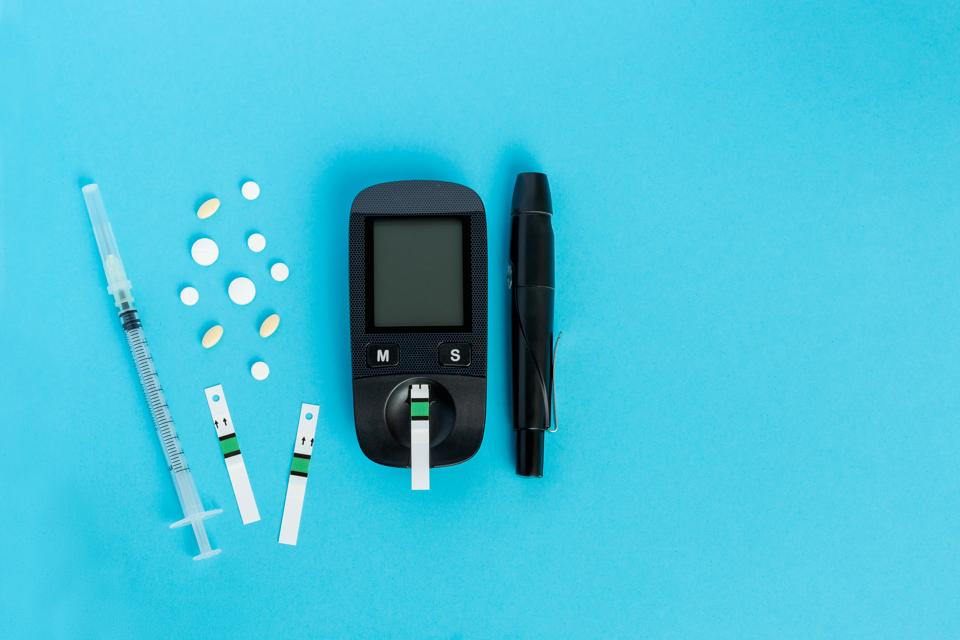
Wearable Technology For Diabetes Management

Diabetes is a prevalent illness. The World Health Organization reports that the number of people affected by diabetes “has risen from 108 million in 1980 to 422 million in 2014.” Medical technology companies are privy to the market opportunity behind this disease, and are racing to create affordable, easy-to-use wearables for diabetics to better manage their care. Namely, there have been numerous efforts to perfect a variety of devices in this ecosystem, including in tracking blood sugar patterns, general lifestyle management, and even in customized medication management. The race and standards are the same as with any endeavor that involves healthcare hardware: build a product which is as non-invasive as possible, accurate, affordable, scalable to the public masses, and most importantly, is valuable to both physicians and patients alike. Market economics of medical devices aside, if these devices indeed deliver results as promised, the sheer value of the data they can provide to physicians and patients is incredible.
One of the most important applications is continuous and long-term blood sugar monitoring. To accurately gauge a patient’s diabetes status, physicians often use the Hemoglobin A1c (HbA1c), a test that provides a summary of a patient’s blood sugars over a 3 month time period. This information is valuable as it distinguishes momentary anomalies in blood sugar spikes from true, long term patterns. While this test has been the gold standard for diagnosing diabetes, wearable technology that offers continuous blood sugar monitoring and can drill down to weekly, daily, or even hourly blood sugar patterns would be a significant addition to the standard blood HbA1c test. This is because variables such as a patient’s blood sugar highs and lows during a given day, how a patient’s sugar levels change after a taking a certain dose of medication, or even how blood sugar levels change during sleep, are all extremely important factors that physicians must deal with on a daily basis. The ideal medical management of diabetes is based on finding the perfect balance of medication to keep the patient’s blood sugar in the perfect range: if the blood sugar is too high, there are significant risks of vascular complications, such as vision problems and kidney disease; if the blood sugar is too low, it can lead to morbid outcomes, including fainting, seizures, or even death. Therefore, these devices can significantly improve a physician’s efforts in providing the perfect combination of medication to keep patients at a stable blood sugar rate and prevent long term complications.
Further recognizing the importance of this constant balance in maximizing patient quality of life, device makers have recently started venturing into another area: creating “Closed Loop Systems” that can essentially monitor a patient’s blood sugar levels real-time and modify medication delivery accordingly. Traditional diabetic management for those with severe disease has entailed the use of insulin pumps, which deliver a steady rate of medication to control blood sugar levels. With these traditional pumps, a patient can manually change the level of medication injected: if he/she expects to have an especially sugar/ carbohydrate rich meal, an increased level of medication can be delivered to maintain steady blood sugar levels. The development of recent closed loop technology is a promising step in automating this process. These systems can use sensors to continuously monitor sugar values based on real-time variables, including food intake, exercise, and activity level, and automatically change the amount of medication delivered according to the given situation. The value behind this real-time monitoring is immense, as it can curate the delivery of insulin according to a patient’s unique situation. Once perfected, these systems can potentially ease the difficulties that diabetics face on a daily basis in trying to monitor their own blood sugar and manually titrating their insulin regimen accordingly.
Device makers are also attempting to improve the lifestyle and behavioral aspects of diabetes management. Famous medical device maker Medtronic recently purchased Klue, a startup which focuses on behavior tracking software. Specifically, “Klue has developed fine motor artificial intelligence software that can detect meals and provide insights into user eating behaviors. Because food consumption is intrinsically related to insulin requirements for people living with diabetes, the ability to automate meal identification along with the corresponding insulin delivery is an unmet need that could greatly simplify living with this disease.” This will potentially provide significant respite to diabetics in monitoring their lifestyle and dietary habits.
Ultimately, there is immense hope for technology to revolutionize diabetic care worldwide. As companies are continuing to invest heavily into research and development in this area, one thing is certain: organizations that can deliver convenient, less invasive, and agile methods for diabetics to better manage their disease will greatly alleviate the pains that are concomitant with this illness.
https://www.forbes.com/sites/saibala/2020/02/14/the-promising-outlook-of-wearable-technology-for-diabetes-management/#7526bb001bec

You Can Still Fly U.S. To China If You Need To Go

American, Delta and United have all suspended flights to China and Hong Kong until at least late April, but it remains possible to fly from the U.S. to China if you need to get there.
Airline data provider OAG says 20 flights will operate between China and the U.S. on Friday, including service from the U.S. to Beijing on Air China, to Shanghai from JFK and LAX on China Eastern and to Qingdao on Xiamen, while Cathay Pacific will fly to Hong Kong from Boston and Newark.
The U.S.-China passenger count has declined an estimated 86% since January 20, OAG said. But four Chinese carriers, Cathay Pacific and Singapore Airlines are still serving home markets.
On Thursday, eight flights operated between the U.S. and Hong Kong, while two operated between the U.S. and mainline China. Thursday was lightly scheduled. On Saturday, 14 flights will operate between the U.S. and Hong Kong, with five betwen the U.S. and China. On Sunday, 14 flights are scheduled in the U.S.-Hong Kong market along with two flights to China.
“While some might currently have a natural reluctance to travel to China, for students and family there may be pressing reasons to return,” said John Grant, senior analyst for airline data provider OAG.
“For those people, there are both direct services available and a number of options via hub airports such as Incheon and both Tokyo locations,” Grant said.
“For people thinking of travelling for business related reasons, delaying travel is wise but rescheduling meetings even wiser,” Grant said. “In China, relationships and commitment are very important in trade partnerships, and local Chinese companies will be recognizing those who have been supportive rather than building barriers. When the market bounces back, as it inevitably will, the Guanxi culture of China means there will be real opportunities for those partners who adopted a ‘business as usual’ approach.”
However, aviation consultant Bob Mann said it is wise to avoid China travel for the time being.
“The long, 14-day coronavirus dormancy period, the apparent ability to transmit the disease without showing symptoms, and the inability to determine to a high degree of certainty whether aircraft and crew operating from China are being adequately screened, given the possibility of asymptomatic spread, are all concerns,” Mann said.
Airlines have been cutting U.S. China service since Jan. 17, when the U.S. Centers for Disease Control and Prevention said it would begin screening passengers at Los Angeles, San Francisco and New York Kennedy airports. On Jan. 28, the CDC expanded screening to 20 airports.
Remaining flights include Air China four-day a week service from Beijing to Los Angeles and four-day-a-week service to New York Kennedy. Those flights continue on to San Francisco and Washington, D.C. respectively.
Previously Air China flew daily from Beijing to LAX And JFK. The flight suspensions, which took effect Feb. 11, are currently in effect through Feb. 28. The airline has said it will continue to “meet the needs of passengers who need to travel between China and the US, as well as maintain flight operations to major cities in the US”.
China Eastern Airlines continues to fly Shanghai to LAX and JFK, while China Southern Airlines continues to fly Guangzhou to LAX and JFK.
However, The South China Post reported last week that China Southern and Hainan Airlines put all of its foreign pilots on unpaid leave.
“With the coronavirus crisis forcing airlines to slash flights, several hundred foreign pilots have seemingly become surplus overnight,” the newspaper said, citing a memo to the carrier’s foreign pilots that read.  “All foreign pilots, including those who have applied for leave exemption and those who have not, shall start a non-fixed term leave without pay as soon as possible.”
Xiamen Airlines along with Hainan Airlines, Tianjin Airlines and Beijing Capital Airlines (BCA), all owned by HNA Group, also put foreign crew on unpaid leave, The South China Post said.
Xiamen continues to operate a Fuzhou to JFK flight as well as Qingdao to LAX. Singapore Airline operates Hong Kong-San Francisco daily, while Cathay Pacific serves six cities from Hong Kong.
https://www.forbes.com/sites/tedreed/2020/02/13/you-can-still-fly-us-to-china-if-you-need-to-go/#58080f27637f