Search This Blog

Friday, August 7, 2020

Biogen up on FDA acceptance of aducanumab Alzheimer’s application

Under Priority Review status, the FDA has accepted Biogen’s (NASDAQ:BIIB) marketing application seeking approval of aducanumab for the treatment of Alzheimer’s disease (AD).
The agency’s action date is March 7, 2021, although it may act earlier.
If approved, it will be the first authorized medicine to reduce the clinical decline of AD and the first to show that removing amyloid beta resulted in improved clinical outcomes.
The company is optimistic for an FDA nod based on the totality of the data. Results from two Phase 3 studies were uneven. In the EMERGE trial. the high-dose arm met the primary and two secondary endpoints at week 78 but the low-dose arm missed all endpoints. In the ENGAGE study, both the high-dose and low-dose arms failed to achieve the primary or secondary endpoints.


Pfizer to manufacture COVID-19 med remdesivir

Pfizer (NYSE:PFE) inks a multiyear agreement with Gilead Sciences (NASDAQ:GILD) to provide contract manufacturing services at its McPherson, KS facility to produce and supply COVID-19 antiviral Veklury (remdesivir).
CEO Albert Bourla says the action is part of the company’s five-point plan to commit resources to address the pandemic.
Financial terms are not disclosed.
PFE and GILD are both up 1% premarket on light volume.

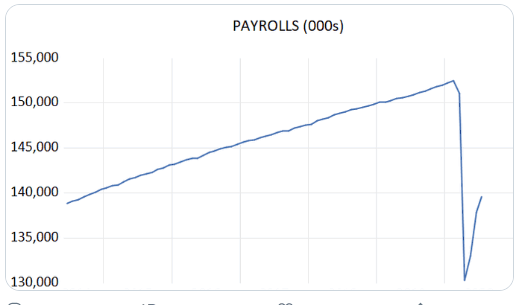
July payrolls up 1.76M; unemployment rate falls to 10.2%

July nonfarm payrolls: +1.763M vs. +1.6M consensus, 4.791M previous (revised from +4.800M).
Unemployment rate: 10.2% vs. 10.5% consensus and 11.1% previous.
Reflects continued resumption of economic activity that had been curtailed due to the coronavirus pandemic and efforts to contain it.
Notable job gains occurred in leisure and hospitality, government, retail trade, professional and business services, other services, and health care.
The labor force participation rate, at 61.4%, changed little in July, following increases in May and June.
That makes the July nonfarm employment lower than the February level by 12.9M, or 8.4%, points out RSM US Chief Economist Joseph Brusuelas. “There just are not enough jobs for the unemployed to return and should inform the urgency of another round of fiscal aid,” he writes via Twittter.
Average hourly earnings for all employees on private nonfarm payrolls rose by 7 cents to $29.39, following large changes in recent months.
Average hourly  earnings of private-sector production and nonsupervisory employees decreased by 11 cents to $24.63 in July.
Change in total nonfarm payroll employment for May was revised up by 26K to +2.725M and for June was revised down by 9K.

Thursday, August 6, 2020

Covid-19 Risk Among Airline Passengers: Should the Middle Seat Stay Empty?

Arnold Barnett

Alcoholism treatment is potentially effective against COVID-19

A team of chemists from HSE University and the Zelinsky Institute of Organic Chemistry used molecular modelling to find out that two medications that have been known for a long time can be used to fight SARS-CoV-2. These are disulfiram, which is used to treat alcoholism, and neratinib, an experimental drug being used to treat breast cancer. The paper about the discovery has been available online since August 4, 2020, in the 4th issue of Mendeleev Communications journal. https://www.sciencedirect.com/science/article/pii/S095994362030170X
The structural elements of the virus that are less subject to mutation during its evolution should be chosen as a target for the potential treatment. Otherwise, a medication effective against one strain would no longer be effective against another. The best candidates for this are conservative proteins, such as the SARS-CoV-2 virus main protease M pro. In addition to being resistant to mutations, M pro plays a major role in coronavirus replication, which means that its inhibition (blocking its function) is able to slow down or even completely stop its reproduction inside the body.
Usually, the process of docking, as with a port dock and a ship entering it, is used for molecular modelling in simple cases. Two molecules participate in docking. One is called a ‘ligand’ (here, it is a medicine), and the other one is ‘receptor’ (or active site) of the target protein, such as Mpro, which can be used to ‘dock’. An effective drug docks with the active site, by covalent links, which makes the enzyme dysfunctional or destroys it. But classical docking does not work in SARS-CoV-2.
To overcome this problem, chemists from HSE University and the Zelinsky Institute decided to use ‘on-top docking’, which they came up with shortly before the pandemic.
‘We decided not to focus on the previously described active site, but to investigate the whole surface of M pro protein with many medications, hoping that the big calculation powers would return useful “dockings”,’ – says Igor Svitanko https://www.hse.ru/en/org/persons/219432788 the author of the article, Professor at the HSE Joint Department of Organic Chemistry with the RAS Zelinsky Institute of Organic Chemistry.
The researchers used the spatial model of SARS-CoV-2 Mpro created in January 2020 from PDB database (ID 6LU7). The potential drugs were taken from the database of medications approved by the United States Food and Drug Administration (FDA). The research team’s own algorithms were used for modelling.
The modelling data demonstrated that sulphur-containing drugs show unusually high ligand efficiency at the active centre of SARS-CoV-2 main protease Mpro, but only disulfiram 4 retains stable interactions.
Today, it is most commonly used for treating alcoholism. Disulfiram fights SARS-CoV-2 in two ways. First, as previously demonstrated in vitro with SARS and MERS coronaviruses, it is a covalent inhibitor. In addition, it fights COVID-19 symptoms such as the significant decrease in reduced glutathione, which is an important antioxidant. This deficiency may lead to severe manifestations of the disease.
In addition to disulfiram, the Russian chemists were the first to predict the potential efficiency of neratinib, an irreversible tyrosine kinase inhibitor, against SARS-CoV-2. Just recently, in 2017, FDA approved neratinib as an adjuvant treatment of breast cancer.
Modelling has shown that both potential inhibitors of the main coronavirus protease (M pro) are, presumably, covalent. For example, disulfiram can probably block the M pro enzymatic activity by thiol-disulfide exchange reaction, while neratinib binding suggests the possibility of covalent interaction similarly to covalent peptide inhibitors.
The tests that were performed on July 27, 2020 at Reaction Biology Corp., a certified laboratory in the U.S., demonstrated that disulfiram really inhibits M pro in 100 nm concentration, which confirmed the results of the modelling. Unfortunately, the second substance – neratinib – demonstrated activity on M pro, but it was insufficient for clinical use.
Meanwhile, the main achievement is the demonstration that the ‘on-top docking’ approach is working and returns quite realistic and controllable results. The team’s plans for late 2020 and 2021 include molecular modelling of treatments for diseases that have demonstrated their harmfulness but have not yet spread over the world.
###
More information on IQ.HSE https://iq.hse.ru/en/news/384375668.html

‘Initial hit’ in developing drug to treat COVID-19

When the coronavirus pandemic hit, almost everyone at the University of California, Irvine—and colleges across the nation—had to abandon campus. But James Nowick, professor of chemistry, was not a part of that exodus. That’s because his lab, which designs and constructs chemical molecules, had the right equipment to help in the global push to find treatments for COVID-19.
Nowick’s team set to work in April, and now, on the preprint server bioRxiv, they describe the development of a ring-shaped molecule called a macrocycle that’s designed to gum up the machinery of the by blocking the action of an enzyme essential for it to reproduce.
Adam Kreutzer, a project scientist in Nowick’s group, spearheaded the effort to design and produce the new molecule. “We didn’t know for sure if we could synthesize the macrocycle, because sometimes macrocycles can be difficult to synthesize,” Nowick said.
But Kreutzer succeeded on his first try with the macrocycle the team thought might work. “It’s a novel molecule that’s never been made before,” he said.
The researchers then tested the macrocycle to see if it could block the action of the coronavirus enzyme. The macrocycle binds to an enzyme molecule called the main that’s necessary for the virus to function. The protease cleaves long strings of proteins that the virus forces its to make into separate components, which the virus then uses to keep replicating.
The new macrocycle, Kreutzer said, “sits there in the active site of the enzyme and makes it nonfunctional.”
The research goes hand-in-hand with work in the lab of Rachel Martin, also a UCI professor of chemistry, who is determining the range of shapes that the coronavirus’s main protease can take. Identifying these various structures is what allowed Nowick’s lab to design a macrocycle that can lock onto the .
This strategy for stopping the protease, Nowick noted, is the same employed in a key class of drugs for treating . But because the viruses are so different, the same inhibitors can’t be used for both.
Nowick and his team named the macrocycle University of California, Irvine Coronavirus Inhibitor-1, or UCI-1, to indicate that it’s the first molecule in what will still be a long journey to create a drug to treat or prevent COVID-19.
Now that Nowick’s lab has a prototype called an “initial hit,” researchers need to make additional that are more effective in blocking the protease. Then they must figure out how to actually deliver the best molecule to infected cells.
This means that, while the new is a promising first step, Nowick said, “people need to understand that it’s a long way from a drug candidate.”
More information: Adam G. Kreutzer et al. Structure-Based Design of a Cyclic Peptide Inhibitor of the SARS-CoV-2 Main Protease, (2020). DOI: 10.1101/2020.08.03.234872

COVID Antigen Tests: Coming to Case Counts Near You?

Revised guidance on COVID-19 tests from the Council on State and Territorial Epidemiologists (CSTE) expected next week could pave the way for dramatically expanded statewide COVID-19 case counts across the country.
The group will emphasize that positive rapid antigen tests should be counted in daily tallies, which many states such as Texas and California currently do not include.
They can be included with counts of either probable or confirmed cases, at states’ discretion — but they should be counted, said Jeffrey Engel, MD, the CSTE’s senior advisor on COVID response, and its past executive director.
“Our statement will be very clear that both probable and confirmed cases should be reported to the CDC and counted in a universal way,” Engel told MedPage Today.
The council’s 10 board members voted on the guidance earlier this week.
“A (positive) antigen test will be counted as a probable, and a PCR test will be counted as confirmed,” he said. Engel added that states can decide whether to lump them together or separate them out as “confirmed” or “probable,” but the council’s advice will be to include them one way or another.
“States that don’t choose to do that I think are going to put themselves in a lot of risk for not being transparent. And I think it will cause more confusion,” he said.
Big states like California, he said, “I expect will begin to pivot and report these probable cases.” Engel said that the CDC has agreed to the new reporting protocols.
In a follow-up call, Engel said that if a state decides not to report probable antigen tests in its case counts, it should explain its reasons why. It may be that they don’t trust the tests’ accuracy. But he expects most states, like California and Texas which do not include these cases in daily counts now, “will pivot and report these probable cases.”
Proportion of Rapid Tests Growing
Two rapid antigen tests — promising on-the-spot results in minutes, rather than hours or (more frequently) days — have received emergency use authorization (EUA) from the FDA for people with symptoms: the Sofia Sars Antigen FIA by Quidel and the BD Veritor System by Becton Dickinson.
Both are now rapidly being adopted around the country for fast, point-of-care use. Quidel, for instance, promotes its rapid test for groups such as healthcare workers and first responders.
Some public health officials have urged that they be used more widely, in response to problems with traditional PCR tests that now may take more than a week for results to come back. The painfully slow turnaround is hindering individual patient management and contact tracing as well as preventing public health officials from getting a clear picture of their rapidly evolving situations.
Engel declined to say how much he thinks daily case counts from states will grow when the guidance is adopted, because it depends on how many machines are available. “It’s growing all the time,” he said, with shipments often handled by the Department of Health and Human Services.
The council’s initial guidance on laboratory criteria for reporting cases of SARS-CoV-2, issued in early April, included a recommendation to count as cases positive results from clinical specimens that use viral molecular amplification as well as those that detected specific antigen, a protein from the virus.
But in routine calls to the states, Engel said, the council made it clear that April guidance applied only to tests performed on autopsy tissue “in the early days of March and April when people were dying at home or dying in emergency departments before they could get care.”
Tests weren’t widely available, particularly in New York City, he said, where death counts were rapidly rising.
While the tests have EUAs, they are far from perfect compared with PCR tests.
“It depends on the setting, but (antigen tests) can be as high as a 50% false negative,” said Engel, meaning that it will miss a lot of infected patients.
However, it has a much better reliability when an antigen test comes back positive.
“At the bedside, if you’re a physician and you suspect a person to have COVID-19, if their antigen test is negative it’s recommended, even in the package insert, to do a PCR test,” Engel said.
The antigen tests provide a less invasive way of obtaining a specimen, with a simple nasal swab instead of the deep nasopharyngeal probe. Many infectious disease experts welcome them as a way to rapidly test large populations at risk, such as students, sports teams or even members of a faith congregation, before they enter a building.
Geoffrey Baird, MD, PhD, interim chair of laboratory medicine at the University of Washington in Seattle, a hospital that does not do antigen testing, is realistic about the utility of these rapid assays.
“Their positive predictive value is quite high, especially in an area where there’s a lot of prevalence in the community, there’s a higher chance that a positive test is a real positive,” Baird said.
But Baird wondered how well it will work “when you bring this into the real world. Because one of these problems with these (antigen) tests is false negatives. How good of an idea do you think it is to tell a college student that they’re negative?” he asked. “Are you really sure of that answer, or are you only 80% sure?”
Six Months In, So Much Confusion
It also depends on what part of the body the virus has infected. It may be that in some people, the virus and the proteins that the antigen test measures, are “chock full in the lungs, but not in the nose.” That’s going to be the case when you test that person repeatedly, and “you’re going to miss it.”
The other “real world” problem, Baird said, “is that the Holy Grail [for] a lab test is that it’s cheap, fast and accurate. The problem is for any given test you can only have just two of those. You can pick which two, but it makes the other unachievable.”
Ravina Kullar, PharmD, of the David Geffen School of Medicine at UCLA, acknowledged that so many people, including health professionals, are confused about the topic.
“I’m on the front lines, seeing patients in nursing home settings for infection control,” and some of those facilities had outbreaks. It’s taking a week, and sometimes longer, to get a result from a PCR test for COVID-19 in their residents, during which everyone, including the staff, is worried, she said. A rapid test would be so much more helpful.
“It’s so unfortunate that we’re six months into this epidemic, and there’s so much confusion, we don’t know what to do,” and that confidence in antigen test accuracy is just not there yet, she said.
But when antigen tests are ultimately embraced around the country, Kullar said, “I think workplaces, in sports, maybe perioperative care as well, those settings will be able to use it.”
Engel acknowledged that many states are under a lot of pressure right now and that “they have no idea what their political leadership is going to do.”
Asked if he fears that some states may choose not to report antigen positive test results for COVID-19 in their case counts because it won’t make their state look good, Engel replied: “I suppose that’s possible but we’ll deal with that one state at a time.”