Search This Blog

Sunday, February 14, 2021

Guidelines in the Works as 'Long-Haul' Patterns Emerge in COVID

 Long-term COVID-19 recovery, aka COVID "long-hauler" syndrome, continues to challenge both clinicians and patients, with evidence on how best to manage the most common symptoms based primarily on cross-sectional studies and anecdotal reports.

Until a clearer picture emerges from larger, prospective, and multicenter studies, experts shared what is known and what evidence remains elusive in a February 12 media briefing sponsored by the Infectious Diseases Society of America.

To be considered post-COVID-19 syndrome, symptoms should persist for at least 4 weeks after acute SARS-CoV-2 infection. Many patients, however, experience symptoms lasting 2 to 6 months or longer.

Fatigue appears to be most common, followed by dyspnea and other pulmonary complications, Allison Navis, MD, assistant professor in the Division of Neuro-Infectious Diseases at the Icahn School of Medicine at Mount Sinai in New York City, said during the briefing.

Dr Allison Navis

Neurologic symptoms, particularly "brain fog" and numbness or tingling throughout the body, as well as mental health challenges including post-traumatic stress disorder (PTSD), also have been reported anecdotally, she said.

Symptoms of post-COVID-19 syndrome can be similar to those experienced during acute infection.

Symptomatic Infection Precedes Most Cases

People who experienced asymptomatic SARS-CoV-2 infection rarely appear to progress to persistent post-COVID syndrome, said Kathleen Bell, MD, Kimberly Clark Distinguished Chair in Mobility Research at UT Southwestern Medical Center in Dallas.

Dr Kathleen Bell

However, "we are certainly seeing people who were not hospitalized who were acutely ill and managed it at home" present with post-COVID syndrome, said Bell, who is also professor and chair of the Department of Physical Medicine and Rehabilitation at UT Southwestern.

Navis agreed that in her experience most people with long-term effects either managed acute infection at home or were hospitalized. "There were maybe one or two people who probably had asymptomatic infection and came in with a mild long-COVID syndrome," she said.

Hazards Linked to Hospitalization

For some patients, being hospitalized for COVID-19 in and of itself can lead to long-term recovery issues. For example, inpatients who spend a high proportion of time in a prone position could be more likely to experience peripheral neuropathy, Bell said. The associated arm and leg weakness can be particularly important in people with diabetes.

Furthermore, a long-term hospital stay can trigger adverse mental health outcomes. "We have people in the hospital for 3 months, and in a large percentage we are seeing mental health symptoms including PTSD, anxiety and depression," Bell said. These adverse effects are not unique to COVID-19 but are also reported in other people who spend weeks or months in critical care, she added.

Some people with mild mental health concerns might have been compensating well before their experience with COVID-19, but the stress of acute infection and hospitalization exacerbates their condition, Bell explained.

A local outbreak can also increase risk for mental health issues. The spike of cases in March and April 2020, for example, "was a very scary time here in New York City," Navis said.

"Some people were isolated in their apartments, hearing the sounds of ambulances and sirens, and were concerned about their own health and survival," she said, adding that it also triggered anxiety, depression, or PTSD for some.

Consensus and Guidelines in the Works

The World Health Organization issued updated treatment guidance for COVID-19, including for people with persistent symptoms, on January 26.

The Centers for Disease Control and Prevention is working on guidelines for diagnosis and management of people with post-COVID syndrome, "which is very exciting," Bell said. The recommendations are expected to emerge from an event about 3 or 4 weeks ago in which the agency brought experts together to share their models of care.

The National Institutes of Health is also interested in developing protocols, Navis said.

Many specialized teams and clinics have emerged to address the growing population of COVID-19 "long-haulers."

Interestingly, although many centers initially drafted their own protocols for treating this patient population, "we are starting to look alike," Bell said.

The COVID-19 recovery clinics at Bell's and Navis' institutions focus on multidisciplinary collaboration, including general medical care and specialists such as pulmonologists, cardiologists, and psychiatrists, as well as rehabilitation specialists, to address specific symptoms.

Remaining Questions

It's unknown what proportion of people with COVID-19 will progress to post-COVID syndrome. "The expectation would be that it's likely that most people will get better over weeks to months, and approximately 10% to 15% will have longer-standing problems," Bell said. Larger studies should help clarify the figures.

Although it's generally accepted that more men than women develop COVID-19 and die, it remains to be seen if the risk for long-term effects differs among men and women. Navis reported a fairly equal distribution of cases by gender in her experience.

How vaccination might prevent or mitigate post-COVID syndrome also remains an open question. The vaccines "are so new, that would be a crystal-ball question," Bell said.

Bell predicted it will take about 6 months for answers to these and other unknowns about post-COVID syndrome to emerge from larger, prospective studies.

https://www.medscape.com/viewarticle/945785

Women better at reading minds than men: study

 Psychologists at the University of Bath, Cardiff, and London have developed the first ever 'mind-reading questionnaire' to assess how well people understand what others are really thinking.

A new approach to '' has been developed by researchers at the University of Bath, Cardiff, and London to improve how well we understand what others are thinking. And it transpires that women are much better than men at putting themselves in someone else's shoes.

Mind-reading, sometimes referred to in psychology as 'mentalising', is an important ability enabling us to pick-up on subtle behavioural cues that might indicate that someone we are speaking to is thinking something that they are not saying (e.g. being sarcastic or even lying).

The researchers say that we all have different mind-reading abilities, with some of us inherently better than others. The fact that not all of us are good at mind-reading can cause challenges—in particular for people with autism where it can lead to social struggles in building or maintaining relationships.

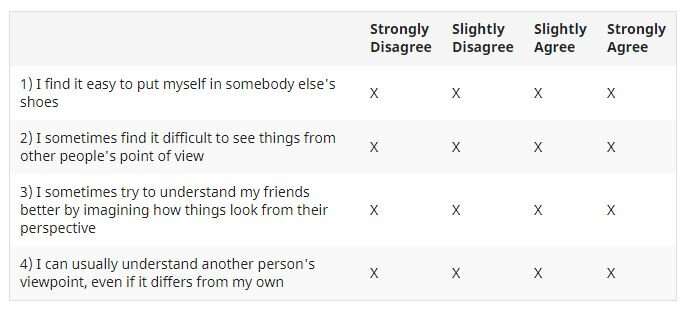
To identify those people who have difficulties and to provide them with appropriate support, the team at Bath designed a new mind-reading test, which draws on data from over 4,000 autistic and non- in the UK and US.

Results from their simple, four-step questionnaire were scored, ranging from 4 to 16 (with 4 indicating poor mind-reading abilities; 16 indicating excellent abilities). The average score for their questionnaire was between 12 and 13. After statistically confirming that the test was measuring the same thing in men and women, they found that females reported better mind-reading than males, whilst also confirming some of the well-reported social challenges faced by the autistic community.

Women better at reading minds than men, new study finds
Mind-reading questionnaire developed by researchers at the University of Bath.

Their method, which uses just four questions to assess individuals, is published today, along with their research findings, in the journal Psychological Assessment.

Dr. Punit Shah, senior author of the study and leading expert on social cognitive processing at the University of Bath's Department of Psychology explained: "We will all undoubtedly have had experiences where we have felt we have not connected with other people we are talking to, where we've perceived that they have failed to understand us, or where things we've said have been taken the wrong way. Much of how we communicate relies on our understanding of what others are thinking, yet this is a surprisingly complex process that not everyone can do.

"To understand this psychological process, we needed to separate mind-reading from empathy. Mind-reading refers to understanding what other people are thinking, whereas empathy is all about understanding what others are feeling. The difference might seem subtle but is critically important and involves very different brain networks. By focussing carefully on measuring mind-reading, without confusing it with empathy, we are confident that we have just measured mind-reading. And, when doing this, we consistently find that females reported greater mind-reading abilities than their male counterparts."

Lead researcher, Rachel Clutterbuck, emphasised the clinical importance of the questionnaire. She said: "This new test, which takes under a minute to complete, has important utility in clinical settings. It is not always obvious if someone is experiencing difficulties understanding and responding to others—and many people have learnt techniques which can reduce the appearance of social difficulties, even though these remain.

"This work has great potential to better understand the lived experience of people with mind-reading difficulties, such as those with autism, whilst producing a precise quantitative score that may be used by clinicians to identify individuals who may benefit from interventions."

Dr. Shah added: "This research has been about understanding more about our mind-reading abilities and providing solutions to those who might struggle, particularly the autistic community. We have created a freely available questionnaire which we hope can help identify people who are experiencing mental difficulties relevant to social situations."

More information: Rachel A. Clutterbuck et al, Development and validation of the Four-Item Mentalising Index., Psychological Assessment (2021). DOI: 10.1037/pas0001004

https://medicalxpress.com/news/2021-02-women-minds-men.html

PSA's Competition for Prostate Cancer Screening

 MRI screening detected more clinically significant prostate cancers than did prostate-specific antigen (PSA) testing alone in the IP1-PROSTAGRAM study -- and overdiagnosis of clinically insignificant cancers was not increased with the imaging approach.

The prospective, population-based study invited 2,034 men from seven primary care practices and two imaging centers in Great Britain to undergo prostate cancer screening. Of those invited, 408 men underwent screening MRI, ultrasonography, and PSA test; 310 had the tests on the same day. PSA of 3 ng/mL was the cutoff for positive results.

More men had positive MRI (score 3-5 on a five-point scale of suspicion) than had positive PSA test results (17.7% vs 9.9%; P<0.001), reported David Eldred-Evans, MBBS, of Imperial College London, and colleagues in JAMA Oncology.

As well, more men also had positive ultrasonography results (score 3-5) than positive PSA results (23.7%; P<0.001). When using a higher threshold of suspicion with a score of 4-5, the proportion of positive MRI results and ultrasonography results was similar to the proportion with positive PSA results.

"This study suggests that when screening the general population for prostate cancer, MRI using a score of 4 or 5 to define a positive test result, compared with PSA testing alone at a level of 3 ng/mL or higher, might lead to more men being diagnosed with clinically significant cancer," Eldred-Evans and colleagues wrote.

"The IP1-PROSTAGRAM study lays the groundwork for future trials to examine the role of imaging in population-based prostate cancer screening," commented Susanna I. Lee, MD, PhD, and Aileen O'Shea, MBBCh, both of Harvard Medical School in Boston, in an accompanying editorial.

Eldred-Evans and colleagues also looked at the number of clinically significant cancers -- defined as any Gleason score of 3+4 of higher -- along with insignificant lesions detected with each test used exclusively. MRI was associated with the detection of about twice as many clinically significant cancers; ultrasonography did not substantially outperform PSA testing.

PSA testing with the 3-ng/mL cutoff detected seven clinically significant cancers. In comparison, MRI with score 3-5 as cutoff detected 14 significant cancers; MRI with score 4-5, 11 significant cancers; ultrasonography with score 3-5, nine significant cancers; and ultrasonography with score 4-5, four significant cancers.

Insignificant cancers were diagnosed by PSA in four cases; MRI with score 3-5, seven cases; MRI with score 4-5, five cases; ultrasonography with score 3-5, 13 cases; and ultrasonography with score 4-5, seven cases.

Editorialists Lee and O'Shea commended the researchers on their efforts to measure reader agreement of MRI. In the study, results were reported by an experienced radiologist at one of two study sites. Readers were blinded to all other study data. In addition, 20% of the MRIs were randomly selected for review by a third reader. Interreader agreement was fair with the percentage agreements for MRI (score 3-5) of 61.5%, MRI (score 4-5) 70.5%, ultrasonography (score 3-5) 76.9%, and ultrasonography (score 4-5) 65.4%.

"If MRI is to be developed for use as a screening tool, additional efforts will need to be directed toward standardizing the imaging procedures for more reproducible results," Lee and O'Shea noted.

They were also pleased that the study used a direct-to-community recruitment strategy to enroll a more diverse patient population than typically seen in population-based prostate cancer screening studies: 38% white, 32.4% Black, 23.0% Asian, 4.4% other, and 2.2% mixed race.

"Given that Black men are diagnosed with prostate cancer more often and at a younger age while Asian and Hispanic men are at lower risk of the disease," Lee and O'Shea wrote, "the racial/ethnic composition of the cohorts of all prostate cancer screening trials should be scrutinized for generalizability."

Disclosures

Eldred-Evans reported receiving equipment support from SuperSonic Inc. One co-author reported relationships with industry entities including makers of imaging instruments.

Lee and O'Shea declared no conflicts of interest.

Biotech week ahead, Feb. 15

 Biotech stocks advanced in the week ended Feb. 12, thanks to broader market strength and company-specific catalysts. Small and mid-cap earnings, multiple conference presentations, data readouts and a slew of IPOs were all part of the week's news flow.

Regeneron Pharmaceuticals Inc REGN 1% received two FDA approvals during the week. Immunotherapy Libtayo, which the company co-developed with Sanofi SA SNY 0.27%, got a label expansion as a treatment option for basal cell carcinoma. Regeneron also received the nod for its Evkeeza, as an adjunctive treatment option for ultra-rare cholesterol disease.

Ocugen Inc OCGN 6.46% and Kalvista Pharmaceuticals Inc KALV 5.24% were among the best performing stocks of the week. The former moved on momentum gathered on the back of a U.S. COVID-19 vaccine deal with Bharat Biotech and the news of an offering priced at a premium. Kalvista gained on a positive data readout.

Conferences

BIO CEO & Investor Digital Conference: Feb. 16-18

PDUFA Dates

The FDA is set to rule on G1 Therapeutics Inc's GTHX 5.22% new drug application for trilaciclib as a treatment option for mitigating the impact of chemotherapy in small-cell lung cancer. The PDUFA date by which the verdict has to be issued is Monday, Feb. 15.


Earnings

Monday

Medpace Holdings Inc MEDP 0.54%

Tuesday

Zoetis Inc ZTS 1.05% (before the market open)
EXACT Sciences Corporation EXAS 5.68% (after the market close)

Wednesday

Royalty Pharma plc RPRX 1.42% (before the market open)
Ironwood Pharmaceuticals, Inc. IRWD 1.28% (before the market open)
Blueprint Medicines Corp BPMC 3.33% (before the market open)
10X Genomics Inc TXG 3.55% (after the close)
Invitae Corp NVTA 1.55% (after the close)
Globus Medical Inc GMED 1.26% (after the close)
Shockwave Medical Inc SWAV 2.21% (after the close)
Veracyte Inc VCYT 1.08% (after the close)
Viking Therapeutics Inc VKTX 3.67% (after the close)

Thursday

West Pharmaceutical Services Inc. WST 1.14% (before the market open)
Syneos Health Inc SYNH 0.69% (before the market open)
Avanos Medical Inc AVNS 1.61% (before the market open)
Integra Lifesciences Holdings Corp IART 0.6% (before the market open)
Emergent Biosolutions Inc EBS 1.27% (after the close)
Quidel Corporation QDEL 0.64% (after the close)
Opko Health Inc. OPK 1.63% (after the close)

https://www.benzinga.com/general/biotech/21/02/19644551/the-week-ahead-in-biotech-fda-decision-on-g1-therapeutics-earnings-in-the-mix-for-light-calendar-

Sanofi's mRNA COVID-19 vaccine candidate not ready this year: CEO

 A COVID-19 vaccine candidate developed by Sanofi and U.S. group Translate Bio “will not be ready this year,” the French drugmaker’s chief executive told Le Journal du Dimanche newspaper.

Clinical trials of this vaccine, which will be based on a technology known as mRNA -- on which lean approved vaccines of Pfizer/BioNTech and Moderna --, are expected to start this quarter.

In December last year, Sanofi had said it was targeting “earliest potential approval” of the shot in the second half of 2021, following positive preclinical data.

“This vaccine will not be ready this year, but it could be of use at a later stage all the more if the fight against variants was to continue,” Paul Hudson was quoted as saying.

The CEO gave no other details. Officials at Sanofi were not available for comment.

The news could mark another blow for Sanofi, already embattled with a delay for another COVID-19 vaccine candidate it hopes to bring to patients and for which the company has teamed up with Britain’s GlaxoSmithKline.

The two groups stunned investors last year by warning their traditional, protein-based COVID-19 jab showed an insufficient immune response in older people, delaying its launch towards the end of 2021.

To appease critics, Sanofi said last month it had agreed to fill and pack millions of doses of the Pfizer/BioNTech vaccine from July.

Some 108 million people have been reported to be infected by the novel coronavirus globally and more than 2.4 million have died since first cases were identified in China in December 2019, according to a Reuters tally.

Countries worldwide have since the beginning of the year embarked on mass vaccination programmes, with mixed results, and are now confronted with the emergence of several variant strains which forces them to move even more quickly.

https://www.reuters.com/article/us-health-coronavirus-sanofi-vaccines/sanofis-mrna-covid-19-vaccine-candidate-not-ready-this-year-ceo-says-idUSKBN2AD0PR

In first, Japan Health Ministry approves Pfizer's COVID-19 vaccine

 Japan’s Health Ministry said on Sunday it has officially approved Pfizer Inc’s COVID-19 vaccine, the first such approval in the country as it steps up efforts to tame a third wave of infections in the run-up to the Summer Olympic Games.

The move had been widely expected after a government panel recommended approval on Friday, at which point Health Minister Norihisa Tamura said Japan would give its final approval as soon as possible.

Prime Minister Yoshihide Suga has said vaccinations will begin from the middle of next week, starting with some 10,000 health workers. The government hopes to secure enough supplies for the whole populace - some 126 million people - by mid-year.

Much of Japan is still under a state of emergency after its third and most deadly wave of the virus hit late last year. Cases and fatalities have trended lower in the past couple of weeks and Tokyo logged just under 400 cases in the capital on Sunday.

Japan has so far recorded about 410,000 coronavirus cases nationally and 6,772 deaths. The Olympic Games are due to start July 23.

https://www.reuters.com/article/us-health-coronavirus-japan-vaccine/japan-health-ministry-says-it-has-approved-pfizers-covid-19-vaccine-idUSKBN2AE083

Thailand defends decision not to join COVAX vaccine alliance

 The Thai government on Sunday defended its decision not to join the WHO-sponsored coronavirus vaccine programme, saying that to do so would risk the country paying more for the shots and facing uncertainty about delivery times.

The government has been criticised by opposition politicians and protesters for lacking transparency and being too slow in procuring vaccines. While the country of 66 million people has had low numbers of cases and deaths, it is dealing with a second wave of infections.

Frontline health workers are to begin receiving 2 million imported Chinese Sinovac shots within a month, but mass vaccinations for the general population are not due to begin until locally produced AstraZeneca doses are ready in June.

Government spokesman Anucha Buraphachaisri, responding to media reports that Thailand is the only Southeast Asian country to skip the WHO’s COVAX scheme, said that as a middle-income country Thailand is not eligible for free or cheap vaccines under the programme.

“Buying vaccines directly from the manufacturers is an appropriate choice... as it’s more flexible,” Anucha said.

“If Thailand wants to join the COVAX program, it will have to pay for vaccines itself with a high budget and there is also a risk,” he said, adding the country had to make an advance payment without knowing the source of vaccines and delivery dates. He did not specify the costs.

In all, 190 countries including have joined COVAX, which aims to ensure equitable access to vaccines during the pandemic. The scheme is jointly run by the GAVI alliance, the WHO, the Coalition for Epidemic Preparedness Innovations and UNICEF.

Thailand so far has not received or produced any vaccines, even as many of its neighbours have started inoculations.

Thailand reported 166 new coronavirus cases on Sunday, taking its total of infections to 24,571, with a death toll of 80.

https://www.reuters.com/article/us-health-coronavirus-thailand/thailand-defends-decision-not-to-join-covax-vaccine-alliance-idUSKBN2AE0CZ