Search This Blog

Friday, April 9, 2021

Ginkgo Bioworks, Which Prints DNA, Creates Genetically Modified Food, Eyes SPAC

 One of the largest SPACs seeking a target could be nearing a $20 billion deal to bring one of the largest privately-held biotechnology companies public.

The SPAC Rumor: Bloomberg reports Ginkgo Bioworks is in talks with Soaring Eagle Acquisition Corp SRNGU 5.96%, a SPAC led by Harry Sloan and Jeff Sagansky. The duo has completed several SPAC deals including DraftKings Inc DKNG 1.96% and Skillz Inc SKLZ 0.12%.

Ginkgo was valued at $4 billion in a 2019 funding round, according to Bloomberg. Soaring Eagle raised over $1.5 billion in its offering and currently trades as units.

About Ginkgo: Ginkgo operates in several business segments that could offer growth in many fields. The company was founded in 2009 by a group of MIT scientists. Ginkgo was started as a company that prints DNA that can be used to kill antibiotic-resistant germs, produce artificial sweeteners, create genetically modified food and create cheaper perfume.

Ginkgo is a biology by design company, according to its website.

“We program cells to make everything from food to materials to therapeutics,” the company said.

Ginkgo Bioworks was featured in a "60 Minutes" segment showing the company optimizing the manufacturing process for RNA, a key ingredient in COVID-19 vaccines from Pfizer Inc PFE 1.86%, BioNTech SE BNTX 6.68% and Moderna Inc MRNA 5.26%.

Concentric by Ginkgo is a public health and biosecurity segment. The business segment is actively supporting several COVID-19 response efforts including community testing, tracing and vaccine developments. Concentric is offering pooled testing for over 800 schools in the U.S. currently with plans to grow.

Joyn Bio is a joint venture with Bayer. The companies launched a $100 million partnership in 2017. Together the companies are looking to synthesize microbes to allow crops like corn, wheat and rice to produce their own fertilizer. The fertilizer market is $250 billion, according to the companies. The joint venture leverages Bayer’s expertise in plant biologics and Ginkgo’s foundry advantage to revolutionize agriculture.

Motif Foodworks was launched in 2017 after seeing the success of Impossible Foods, Ginkgo CEO Jason Kelley said. Motif is seeking to change the future of food with plant-based food, meat alternatives and dairy alternatives. Motif operates as a separate company that has found outside investors. Scientists estimate the world population will rise to 9.6 billion people by 2050 which could lead to an increase of 70% more food consumed.

Gingko has partnerships with Twist Bioscience Corp TWST 0.07%, Berkeley Lights Inc BLI 3.75%, Roche and Cronos Group Inc CRON 1.02%.


Strong Investors: Among the investors in Ginkgo Bioworks are T Rowe Price and Bill Gates. Baillie Gifford and Illumina Inc ILMN 0.09% are also investors in Ginkgo.

The company’s Motif Foodworks subsidiary saw some strong investors in 2017 from a Series A round. Breakthrough Energy Ventures invested in the round. Members of Breakthrough Energy Ventures include Bill Gates, Jeff Bezos, Michael Bloomberg, Richard Branson, Ray Dalio, Reid Hoffman, Jack Ma and Masayoshi Son.

https://www.benzinga.com/m-a/21/04/20559422/ginkgo-bioworks-which-prints-dna-and-creates-genetically-modified-food-exploring-spac-deal-report

BofA Remains Bullish On Clover Health On Improving Visibility Into Growth

 Clover Health Investments Corp 

CLOV 7.23% has been chosen by the Centers for Medicare and Medicare Services (CMS) to participate in Direct Contracting (DC) across 10 states.

While the news is not surprising, the program’s official launch is positive for the company, according to BofA Securities.

The Clover Health Investments Analyst: Kevin Fischbeck maintained a Buy rating for Clover Health Investments, with the price target unchanged at $15.

The Clover Health Investments Thesis: Clover’s participation in 10 states implies that “the model is resonating with physicians across the country and adds some credibility to their forecasts,” Fischbeck said in the note.

Although the CMS program is in early stages and there is no hard data on membership, the company is “uniquely positioned to capitalize on the Direct Contract opportunity given the scalability of Clover assistant and its proven track record of managing open networks through its PPO plans,” the analyst wrote.

“We are particularly encouraged by the fact that CLOV is operating Direct Contracting in 4 new states where it doesn’t have MA membership, a bullish sign that doctors are willing to do DC without a prior relationship with CLOV, and a fact which should help CLOV expand MA plans into these states over time,” he added.

https://www.benzinga.com/analyst-ratings/analyst-color/21/04/20556860/bofa-remains-bullish-on-clover-health-with-improving-visibility-into-growth

Genmab CEO discusses repurposing cancer treatments

 Genmab’s CEO Jan van de Winkel has said he would consider spinning out a smaller autoimmune diseases biotech, while ruling out any interest in a merger with big pharma. 

In an interview with pharmaphorum, van de Winkel noted that the company’s drugs could be used for diseases outside of cancer, where Copenhagen-based Genmab first made its mark.

A drug it originally developed to treat leukaemia has been repurposed by Novartis as a treatment for multiple sclerosis.

Originally developed with GlaxoSmithKline, ofatumumab was first approved by regulators to treat chronic lymphocytic leukaemia under the brand name Arzerra.

But after acquiring the drug through an asset-swap deal with GlaxoSmithKline in 2015, Novartis exploited the drug’s ability to target B-cells and turned it into an MS therapy under the brand name Kesimpta.

It was approved by in Europe in late March, after the FDA okayed it for the US market last year.

In an interview with pharmaphorum, van de Winkel said he would consider spinning out a specialist firm focused on therapies for autoimmune diseases.

He said: “Some of our drugs are well usable for other fields such as autoimmune diseases, we could maybe spin out an arm of the company focused on another disease area.”

But the overarching strategy is about keeping Genmab as a standalone entity that partners with big pharma rather than pursuing a merger, he said.

Van de Winkel praised the work of Genentech, the US biotech that was bought by Roche in 2009 for nearly $47 billion, but said he intends to keep Genmab as an independent company.

According to van de Winkel California-based Genentech is “fabulous at developing medicines, with a very informal leadership and academic atmosphere. I really admire them for what they have done.”

But he added: “Our ambition is to build an innovation powerhouse on our own. We will build more value by ourselves building an iconic biotech.”

This would also help to counter the imbalance of power in the life sciences world, which is still quite US-centric.

“It would be so good for Europe to have an independent (biotech) company,” said van de Winkel.

https://pharmaphorum.com/news/genmab-could-spin-out-autoimmune-disease-unit-says-ceo-goes-with-feature/

Delays look like the best-case scenario for Provention teplizumab

 The US FDA has left the door open for Provention Bio’s teplizumab as a way to delay or prevent type 1 diabetes – but vague hopes for the future were not enough to prevent a 40% slide in Provention’s value yesterday. 

The agency said it had identified “deficiencies” in the group's BLA that preclude discussion of labelling and post-marketing requirements for the anti-CD3 MAb “at this time”. Provention was quick to point out that this was not the FDA’s final word on the review. But pharmacokinetic inconsistencies are also worrying, and could spell a regulatory delay, if not a rejection.  

It might not bode well for Provention that the wording used by the FDA is very similar to that employed by the agency during its review of another project, Acadia's Nuplazid, which recently received a complete response letter for dementia-related psychosis.

In regard to teplizumab, in addition to the undisclosed deficiencies in the BLA, the FDA also said it would need more data on the project's pharmacokinetic profile, having examined data submitted by Provention from its pharmacokinetic and pharmacodynamic bridging study.

This trial had compared the drug substance, manufactured by AGC Biologics, that Provention plans to sell, against the old product that had been made by Lilly, data on which Provention has used as part of the teplizumab BLA.

Biodissimilars

Provention says these projects are not biosimilars but equivalent antibodies produced from the same cell lines and following the same protocol, just at different manufacturing sites. 

The FDA has come to a different conclusion, telling Provention that the two substances’ pharmacokinetics are not comparable. That something like this might have been coming had been hinted at by Provention’s disclosure a few months ago that the area under the curve for the AGC project was lower than seen with Lilly's, suggesting a slightly faster clearance from the blood with the former.

The different pharmacokinetic profiles of the two antibodies is a major concern, since both are being used in the company’s ongoing Protect trial in newly diagnosed type 1 diabetes. Data from Protect are expected next year (Provention claims success where Lilly failed, June 10, 2019).

More clarity on the situation might come with teplizumab's adcom, which will proceed as scheduled on May 27. But a decision on approval could be delayed by around a year from the current Pdufa date of July 2, Leerink analysts believe.

And this is the upside scenario. Unless Provention can convince the regulator that the two antibodies have sufficiently similar pharmacokinetics after all another CRL could be in the offing

https://www.evaluate.com/vantage/articles/news/policy-and-regulation/delays-look-best-case-scenario-teplizumab

J&J says in talks with Indian government for trial of single-dose vaccine

 Johnson & Johnson is in talks with India’s government to begin a clinical trial of its single-dose COVID-19 vaccine in the country, the company said on Friday.

The U.S. drugs and healthcare giant’s vaccine is currently approved for use in the United States, the European Union and other nations including Thailand and South Africa.

The news comes as some parts of India face a shortage of vaccine supplies just as the country of 1.3 billion battles a second wave of COVID-19 infections. India’s government, however, has said there is no shortage of shots.

The Indian Express newspaper reported earlier on Friday that J&J had sent a letter to India's Central Drugs Standard Control Organisation (CDSCO) saying it would "very shortly apply for permission to conduct clinical bridging trials in India". (bityl.co/6Jif)

The CDSCO did not immediately respond to Reuters request for comment.

“We are in discussions with the (government) with the objective of starting a bridging clinical study of our Janssen COVID-19 vaccine candidate in India, subject to local regulatory approvals,” a local J&J representative said via email.

A bridging study tests the safety and immunogenicity of a vaccine, and India has indicated that any vaccine maker must conduct such a trial for a shot to be considered for its immunisation programme.

Separately, J&J has a deal with Indian firm Biological E Ltd to contract-manufacture its vaccine.

India currently has two approved vaccines in use, one developed by Oxford University and AstraZeneca and the other, a shot from local player Bharat Biotech.

There are other vaccine candidates in trials in India including Russia’s Sputnik-V and a shot developed by Cadila Healthcare Ltd.

COVID-19 infections in India rose by a record number for a third straight day on Friday, increasing by more than 130,000, while daily deaths hit their highest in five months.

https://www.reuters.com/article/health-coronavirus-india-vaccine/update-2-jj-says-in-talks-with-indian-govt-for-trial-of-single-dose-vaccine-idUSL4N2M21HV

HVAC That Keeps Precious Artwork Clean Helps Museums Fight Covid

 If you’re thinking about visiting a museum these days, you probably care about health and safety protocols like mask wearing, readily available hand sanitizer, temperature checks, and reduced capacity.

But the very air itself—and the way it circulates—is a huge factor in the coronavirus pandemic.

That’s where heating, ventilation, and air conditioning systems (HVAC) come into play, reducing the concentration of viral particles in the air and making it less likely that visitors will be exposed to airborne germs.

“Of all the measures that LACMA is implementing, HVAC is probably the most critical after social distancing and face covering,” a Los Angeles County Museum of Art spokesperson told Artnet News in an email.

Before US museums closed last March, many institutions began implementing “rigorous cleaning protocols,” putting sanitation workers into overdrive to eradicate potential fomites from high-touch surfaces.

But as scientists began to better understand the novel coronavirus and how it was transmitted, it became clear that what we should really be worried about was airborne transmission.

“Appropriate ventilation can help reduce the concentration of viral particles in indoor air. Conversely, poorly designed airflow can actually increase risk of transmission,” the American Alliance of Museums explained in a guide issued after the onset of the pandemic.

Fortunately, museums are held to pretty high air-quality standards by the American Society of Heating, Refrigerating, and Air-Conditioning Engineers, or ASHRAE, to maintain optimal conservation conditions.

“For preservation purposes with the art, there’s a very, very stringent indoor requirement in terms of temperature and humidity that needs to be maintained,” said Molly Dee, head of deep carbon reduction at the consulting firm Jaros, Baum & Bolles, which worked on the 2019 expansion of the Museum of Modern Art, and helped survey the facilities ahead of its reopening.

“The design of our air systems, which have high performance filters in place to meet preservation needs, also helps us adhere to current ventilation guidelines,” a representative of the Fine Arts Museums of San Francisco told Artnet News in an email. “We always monitor environmental conditions, especially temperature and relative humidity, closely and continuously. This allows us to detect the impact of any changes, and to make adjustments to artwork displays as needed.”

Across town, the San Francisco Museum of Modern Art is frequently pressed into service as a “breathing center” during California fire season. The museum’s lobby and public spaces offer fresh, clean air to the public when the state’s air quality hits unsafe levels.

And at the Museum in Fine Arts in Houston, the first major museum in the country to reopen, a high-tech ventilation system was always especially important because of the local climate. (The museum installed new HVAC systems in two of its three buildings only three years ago.)

“Because of the problems with humidity and the possibility of mold growth, which is pervasive in our atmosphere, ventilation is really important,” director Gary Tinterow told Artnet News. “What’s good for works of art is good for human beings also. Museum environments are exceptionally clean and healthy.”

In its official ventilation in buildings guidelines, the CDC does not recommend that businesses replace their ventilation systems to protect against COVID, but does advise that “upgrades or improvements can increase the delivery of clean air and dilute potential contaminants.”

For some museums, those improvements include increasing the frequency with which air circulates through the building.
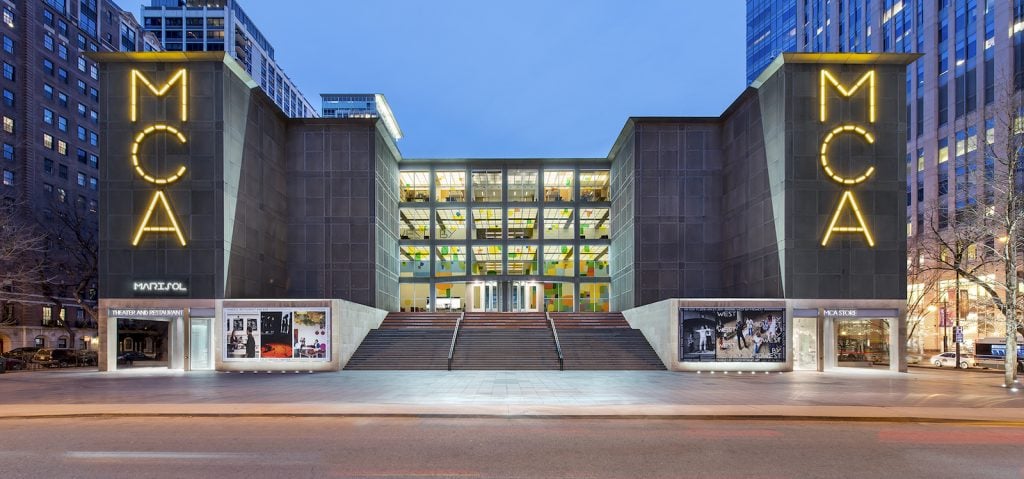
The Museum of Contemporary Art Chicago. Photo by Peter McCullough, © MCA Chicago.

The Museum of Contemporary Art Chicago. Photo by Peter McCullough, ©MCA Chicago.

At the MFAH, “in any given space the air is going to change every five to seven minutes,” Tinterow said. “We increased the amount of fresh air flow through the building during the day and at night.”

That meant turning off “demand control ventilation,” a popular energy-saving tool that limits intake of fresh air when buildings are closed so that the heating, cooling, and dehumidifying systems have less work to do.

“Many spaces have disabled that function for the time being, and have really focused on just bringing in more outdoor air more frequently,” Dee said.

Tinterow said the increased energy costs are somewhat offset because the MFAH is now open five days a week instead of six, and there is lower electricity use with some employees still working from home.

Another way museums are improving air quality is by installing more effective air filters, as measured by the Minimum Efficiency Reporting Value system. MERV ratings range from one to 20, with the highest levels, above 16, typically employed by in hospital operating rooms and other cleanroom environments. (The CDC and ASHRAE both recommend a minimum rating of MERV 13 to reduce the possibility of virus transmission.)

“We have enhanced our current systems, which have a three-stage filtration system, by upgrading to MERV 14 filters that will be changed more frequently, and achieving four to five air changes per hour,” the LACMA rep said.
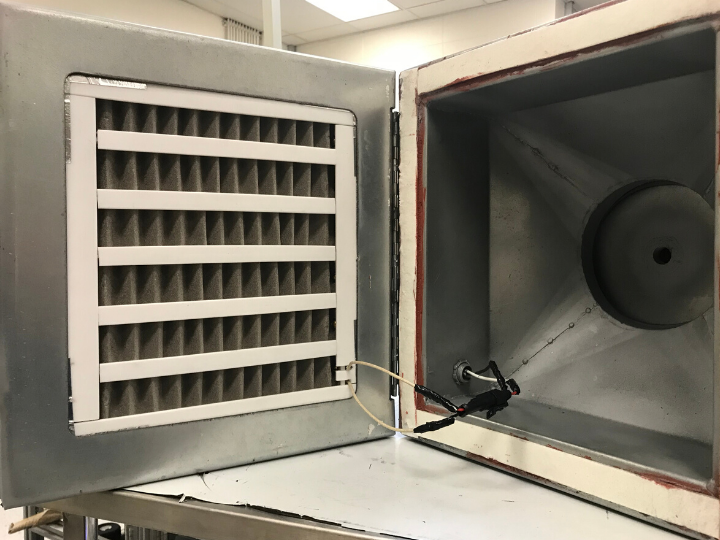
An air filter designed to trap and kill the coronavirus, invented by researchers from the University of Houston and Medistar. Photo courtesy of the University of Houston.

An air filter designed to trap and kill the coronavirus, invented by researchers from the University of Houston and Medistar. Photo courtesy of the University of Houston.

At MoMA, “our new spaces opened in 2019 with MERV-16 filters and since then, we’ve gradually upgraded filters across our campus everywhere possible to MERV-13 and MERV-16. This process was expedited with the outbreak of the pandemic and completed last summer,” a MoMA representative told Artnet News in an email.

The Museum of Contemporary Art Chicago replaced its HVAC equipment as part of its 50th anniversary building redesign in 2017. “It was state of art, and it provided additional air flow capacity,” Gwen Perry Davis, director of operations, told Artnet News.

But before reopening in July, the museum spent months evaluating the premises, including the HVAC systems, conducting an outside evaluation to ensure that there was sufficient air circulation.

“We passed that with flying colors,” Davis said.

James Turrell, <em>The Light Inside</em> (1999). Photo courtesy of the Museum of Fine Arts, Houston, museum commission, gift of Isabel B. and Wallace S. Wilson, ©James Turrell.

James Turrell, The Light Inside (1999). Photo courtesy of the Museum of Fine Arts, Houston, museum commission, gift of Isabel B. and Wallace S. Wilson, ©James Turrell.

The MFAH is also looking into using new filter technology from the University of Houston and a local company called Medistar that kills 99.8 percent of coronavirus particles. The filter is electrified, heating up to 392 degrees to zap the virus. The company has already donated one to the museum.

“We’ve installed it in our James Turrell space, which is probably the most confined space that we have in the museum,” Tinterow said.

But despite the importance of air circulation, HVAC is, of course, only part of equation when it comes to keeping museums safe in the age of COVID-19.

“We have a high-quality air system,” a Cleveland Museum of Art representative told Artnet News. “We look at it as a part of a number of activities—including limiting occupancy, social distancing, disinfecting, and temperature checks—that all work together to provide the safest environment possible.”

https://news.artnet.com/art-world/hvac-at-museums-1948244

Regeneron Covid-19 Treatment Recommended by NIH

 Regeneron Pharmaceuticals Inc.'s antibody cocktail is being strongly recommended for Covid-19 patients who aren't hospitalized in newly updated National Institutes of Health treatment guidelines, the biotechnology company said Friday.

The NIH's Covid-19 guidelines recommend that casirivimab with imdevimab, a treatment known as REGEN-COV, be used in non-hospitalized Covid-19 patients at high risk of clinical progression.

Its new guidelines are based in part on clinical data involving more than 4,500 outpatients showing that REGEN-COV significantly reduced the risk of hospitalization or death by 70% compared with a placebo, Regeneron said.

The U.S. Food and Drug Administration recently authorized updated emergency use authorization fact sheets for all authorized monoclonal antibody treatments.

Regeneron said some NIH panel members recommended REGEN-COV as the preferred antibody cocktail for Covid-19 in areas where variants are common, given the therapy's potency in vitro against variants first identified in the U.K., Brazil, South Africa, New York and California. The members acknowledged that it isn't known whether in vitro susceptibility data correlates with clinical outcomes, it said.

Although REGEN-COV isn't currently recommended for hospitalized Covid-19, the company said that the panel recommended its use should be considered for people with mild-to-moderate Covid-19 who are hospitalized for a reason other than Covid-19 but who otherwise meet emergency use authorization criteria.

REGEN-COV is a cocktail of two monoclonal antibodies that was designed to block infectivity of SARS-CoV-2, the virus that causes Covid-19. The virus-neutralizing antibodies that form the cocktail bind to the critical receptor binding domain of the virus's spike protein, which diminishes the ability of mutant viruses to escape treatment and protects against spike variants that have arisen in the human population, Regeneron said.

Under an emergency use authorization issued by the FDA, REGEN-COV is currently available in the U.S. to treat mild-to-moderate Covid-19 in adults, as well as in pediatric patients at least 12 years of age and weighing at least 40 kilograms, who have received positive results of direct SARS-CoV-2 viral testing and are at high risk for progressing to severe Covid-19 and/or hospitalization.

Regeneron said it is collaborating with Roche Holding AG to increase global supply of REGEN-COV, with Roche primarily responsible for development and distribution outside the U.S.

https://www.marketscreener.com/quote/stock/REGENERON-PHARMACEUTICALS-10649/news/Regeneron-Pharma-Covid-19-Treatment-Recommended-by-National-Institutes-of-Health-32925180/