Assertio's restructuring plan resulted in cost savings of $40.0 million in 2021. The cost savings have substantially improved net income, adjusted EBITDA, and operating cash flows despite the anticipated product sales decline.
"This quarter represents the achievement of several significant milestones in the transformation of Assertio, as our restructuring has been completed, and we have now shifted our priorities to growing the business," said Dan Peisert, President and CEO.
Adjusted EBITDA increased from 5.2 million to $15.79 million.
The Company posted EPS of $0.08, a turnaround from EPS loss of $ (0.35) a year ago and well ahead of the consensus loss of $(0.04).
It generated $4.7 million of net cash flows from operating activities and reduced its debt during Q3.
Guidance: Assertio raised FY21 sales guidance to more than $103.0 million, compared to prior guidance of $91 million - $96 million.
It expects adjusted EBITDA of more than $43 million, higher than the previous guidance of $34 million - $37 million.
The FDA expanded the approval of Exablate Neuro focused ultrasound to treat advanced Parkinson's disease patients with mobility, rigidity, or dyskinesia symptoms, device makerInsightec announcedWednesday.
With this new indication, Exablate Neuro is approved for unilateral pallidotomy in medication-refractory Parkinson's patients with moderate to severe motor complications.
The device uses MRI-guided focused ultrasound waves to target and ablate the globus pallidus, requiring no incisions or brain implants. "Movement disorder neurologists now can offer their Parkinson's patients a less invasive surgical option as part of their treatment plan," said Paul Fishman, MD, PhD, of the University of Maryland, in a statement.
Early studies suggested that focused ultrasound subthalamotomy and pallidotomy performed on one side may reduce motor manifestations of Parkinson's disease. A sham-controlled trial of patients with markedly asymmetric Parkinson's disease found that focused ultrasound subthalamotomy performed in one hemisphere resulted in improved motor scores at 4 months, but was associated with adverse events including dyskinesias and other neurologic complications.
Deep-brain stimulation (DBS) has been used to treat Parkinson's disease and predominantly has targeted the subthalamic nucleus or the internal segment of the globus pallidus, but some patients are wary of DBS surgery and hardware, noted Joel Perlmutter, MD, and Mwiza Ushe, MD, both of Washington University in St. Louis, in a New England Journal of Medicineeditorial.
Focused ultrasound "has the advantage of producing lesions without the need for craniotomy," Perlmutter and Ushe observed.
The expanded indication for Exablate Neuro was based on a pivotal randomized trial of unilateral focused ultrasound pallidotomy in refractory, advanced idiopathic Parkinson's disease.
"This expanded approval of clinical indications to treat Parkinson's disease signifies the growing understanding and acceptance of focused ultrasound as an effective treatment modality," said Maurice Ferré, MD, Insightec's chairman and CEO. "More importantly, it drives our continued efforts to help transform the lives of people living with debilitating neurological and other conditions."
A report from a purported "whistleblower" alleging that Pfizer falsified data and failed to promptly pursue reports of adverse events in its COVID-19 vaccine trial raised some eyebrows among vaccine experts.
An article published Wednesday in The BMJ claimed that Texas contractor Ventavia Research Group unblinded patients in the phase III vaccine trial that led to the vaccine's approval and employed inadequately trained vaccinators. The employee, Brook Jackson, who worked as a regional director for Ventavia, is said to have reported her concerns to the FDA.
The article said that Ventavia, who Jackson said was selected to quickly ramp up Pfizer's COVID vaccine trial, fired Jackson the same day she complained to the agency.
However, several vaccine experts familiar with COVID vaccine clinical trials questioned the article's accuracy, and advised people not to believe it outright.
"It's all this sort of vague kind of hand waving; I have no idea whether any of this is true, nor do you," Paul Offit, MD, of Children's Hospital of Philadelphia, and a member of the FDA's Vaccines and Related Biological Products Advisory Committee, told MedPage Today.
"That The BMJ published it doesn't make it any more true," Offit, who formerly sat on CDC's Advisory Committee on Immunization Practices, added. "If this whistleblower believes that they have a whistle to blow, then blow it. And then let's have the company respond."
The BMJ article said Jackson, "a trained clinical trial auditor" with 15 years of experience, "has provided The BMJ with dozens of internal company documents, photos, audio recordings, and emails," some of which document poor laboratory management.
"One photo showed needles discarded in a plastic biohazard bag instead of a sharps container box. Another showed vaccine packaging materials with trial participants' identification numbers written on them left out in the open, potentially unblinding participants," the article said.
Another prominent vaccine expert, who asked not to be quoted by name, said that many of the issues alleged by the article's main source "are things you wouldn't want to see happen, like needles and syringes and things discarded in bags. But that doesn't have to do with data integrity.
"There's a lot of stuff in there that really doesn't speak to whether the [Pfizer vaccine trial] data were recorded correctly."
The expert acknowledged that in the earliest days, there was a rush to get trials up and running with different companies in various locations around the country.
Asked for a response, Ventavia spokeswoman Lauren Foreman discredited TheBMJ article, written by investigative journalist Paul Thacker. She said Thacker's article did not include any of the evidence the accuser claims she had, and that he did not contact Ventavia for a response before publishing. (Attempts to reach Thacker were unsuccessful.)
"There's more to this," she said. "We have an attorney we're working with. And this is due to the sensitivity of this issue."
Foreman said the "accuser" Jackson was employed "for approximately 2 weeks in September 2020, and no part of her job responsibilities concerned the clinical trials at issue."
She said the same accusations "were made a year ago, at which time Ventavia notified the appropriate parties. The allegations were investigated and determined to be unsubstantiated.
"Ventavia takes research compliance, data integrity, and participant safety very seriously, and we stand behind our work supporting the development of life-saving vaccines," Foreman continued.
Foreman said that Ventavia has just under 100 employees and has been conducting clinical trial research since 2013.
In a statement, Pfizer said it was "disappointed by the recent article published by the British Medical Journal that failed to contact us prior to publication and selectively reported certain claims with the goal of undermining confidence in a vaccine that has been given to hundreds of millions of people worldwide."
Asked whether the FDA is investigating the matter, a spokeswoman for the FDA said in an e-mail, "Although the agency cannot comment further at this time in this ongoing matter, FDA has full confidence in the data that were used to support the Pfizer-BioNTech COVID-19 Vaccine authorization and the Comirnaty approval."
GlaxoSmithKline said its anaemia pill for patients with kidney disease was shown to have about the same side effect risk as the current standard treatment in two important patient groups, a key advantage in a tight race with rival drug developers.
GSK said on Friday that risk measures to determine whether its drug did not pose a higher risk than versions of the current treatment known as Epo, came in better than the predefined hurdle in two trials treating patients on dialysis and those not yet on dialysis.
In the trials, its drug daprodustat also improved or maintained haemoglobin levels, when compared to the standard of care, the company added.
Analysts have said that safety from side effects such as heart attack or stroke will be a crucial factor to differentiate daprodustat, which GSK has said could have annual sales of as much as 1 billion pounds ($1.35 billion), from competing pills under development by AstraZeneca and others.
Anaemia is characterized by a low count of red blood cells or lack of the oxygen-carrying protein haemoglobin in those cells. Patients with kidney disease - ever growing in number due to a rise in obesity, diabetes and high blood pressure - suffer increasingly from anaemia as renal function declines.
In later disease stages, particularly when depending on blood-cleansing dialysis, patients currently receive injections of a synthetic version of hormone erythropoietin, or Epo, to stimulate red-blood cell production. But the treatment raises the risk of dangerous heart attacks and strokes.
The new class of more convenient oral drugs, known as HIF-PH inhibitors, has attracted several competing drugmakers.
AstraZeneca and Fibrogen in August suffered a major setback with their drug roxadustat, part of the same HIF-PH category, when the U.S. Food and Drug Administration (FDA) in August declined approval, citing the need for an additional clinical study on safety.
Another HIF-PH inhibitor, vadadustat by Akebia and its Japanese partner Otsuka Pharmaceutical, has been under review by the U.S. FDA since June.
GSK's daprodustat is only cleared for use in Japan and GSK said it would make requests for approval with other regulators worldwide, underpinned by the new data. The company had published a short summary of the positive results in June.
The positive results come as a boost for GSK boss Emma Walmsley, whose strategy to separately list its consumer health unit has been criticized by activist investor Elliott. Daprodustat is one of a group of GSK drug candidates in late stages of development where the company sees potential for annual peak sales of more than 20 billion pounds.
Coherus BioSciences (“Coherus”, Nasdaq: CHRS), today announced that the Centers for Medicare & Medicaid Services (“CMS”) will continue to provide increased Medicare reimbursement in the 340B outpatient hospital setting through year-end 2022 for 28 drugs, biologics and devices impacted by the COVID-19 public health emergency, including UDENYCA®(pegfilgrastim-cbqv).
“We applaud CMS for continuing its support for patients, providers and hospitals impacted by the COVID-19 pandemic,” said Denny Lanfear, CEO of Coherus.
After transitional pass-through payment status expires for UDENYCA® on March 31, 2022, CMS will provide a separate payment through the end of 2022 to maintain the same reimbursement levels for UDENYCA® in the 340B outpatient hospital setting as determined through the pass-through payment program. Pass-through payment status was established by Congress to incentivize access for Medicare patients to biosimilars and other important therapeutics and devices in the hospital outpatient setting. Under the program, reimbursement for UDENYCA® in the 340B hospital outpatient setting is calculated at the CMS Average Sales Price (ASP) for UDENYCA® plus 6% of the ASP for Neulasta® (pegfilgrastim). By comparison, Neulasta® is currently reimbursed in the 340B hospital setting at the Neulasta® ASP less 22.5%.
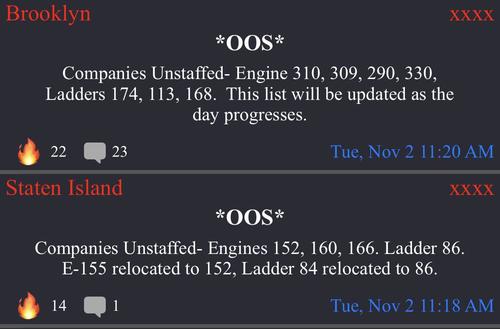
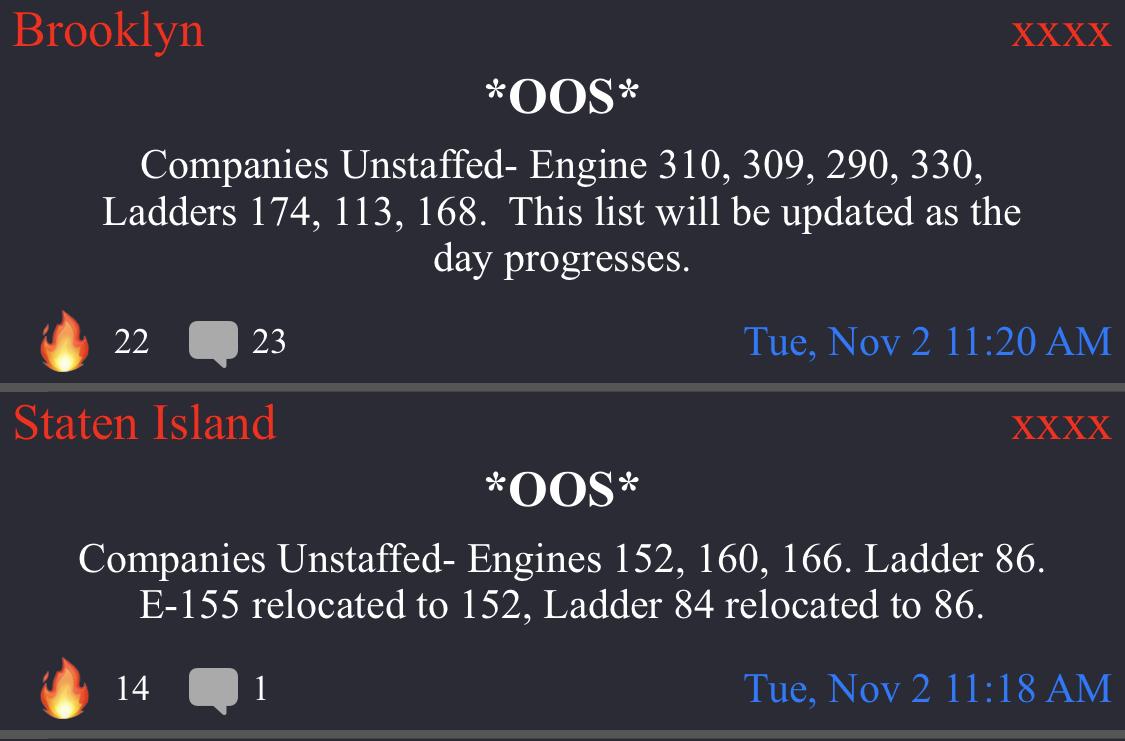
Two NYC firefighters gave The Epoch Times an update on the present situation of the FDNY under the condition of anonymity for fear of retaliation.
Most alarming was an internal document indicating that on Nov. 3, there were only 55 percent of firetrucks available. The normal number, according to him, should be about 90 percent.
A picture of an internal document showing the availability of fire trucks in New York City. (Provided to The Epoch Times)
“ENG,” short for engine, represents the firetrucks that have a water hose. “LAD,” short for ladder, represents the trucks that have a ladder.
“My engine has about 25 guys, and of that, half of the guys went home,” said the firefighter, who now has less than 30 days before termination.
A screenshot of the NYC Fire Wire App showing the fires that took place in New York City on Nov. 2. (NYC Fire Wire App)
On Wednesday, there were four fires that went above 3rd alarm in the city, according to the two firemen that the Epoch Times interviewed and the NYC Fire Wire app that gives alerts and updates on the fires in the city.
Every subsequent alarm means that a fire is getting bigger or it’s persisting to the point that members on the scene need replacement. Two of the fires went up to 4th alarm and one of them went to 5th alarm.
“It’s very unusual. It doesn’t happen often,” the firefighter said, showing the Fire Wire app.
Most of the firemen want to keep working for the FDNY, but are not allowed.
“A lot of guys are looking for a side job, some guys are looking to retire, not by will, but because they feel like they’ve been forced.
“They want to work. My company is out of service today as we speak,” he continued.
“A lot of guys have to show up every tour and say ‘we’re here ready to go and you guys sent us home.’ They’re not allowed inside the firehouse building,” the firefighter said.
He noted that he did a lot of research on his own about COVID-19 vaccines and feels that they haven’t been thoroughly tested.
“I listen to doctors. I personally don’t want to take an experimental vaccine. I already had COVID and I have the natural immunity. I also was tested for the antibodies as well. So my natural immunity is working. I got sick at least twice from last year till now and I have recovered 100 percent every time by myself without any vaccines,” he said.
Another fireman told The Epoch Times on Wednesday afternoon that “there were three multiple alarms today in the city.”
“That doesn’t normally happen. That’s a direct result of manpower shortages. So a third alarm, fourth alarm, a fifth alarm, all in 12 hours. That’s a direct result of manpower shortages. And the manpower shortages are a direct result of de Blasio’s mandate, there’s no going around it. Those fires don’t go more than a room or a mattress or anything other [than] a small fire, but now they’re [going through] entire floors of buildings.”
Some of the comments in the app blamed de Blasio’s mandates for the fire, while others asked for civility.
“According to the city, there are no firehouses closed, but they’ll leave one member in the firehouse answering the phones, answering the door if someone knocks, and that counts as a firehouse being open. The companies are closed massively throughout the city. Thirty to 50 companies every tour, which is a huge number. Around the fourth alarm in Brooklyn today there were two engines closed in the first response ticket, there was one truck closed and there were multiple engines understaffed,” the fireman said.
Mayor Bill de Blasio wrote on Twitter on Monday that no firehouses have been closed and that response times were normal.
He recently imposed a vaccine mandate on all city workers, with no testing opt-out.
The firemen were given until Monday to get the vaccine or be sent home on unpaid leave.
The FDNY had already been short of staff since the pandemic began.
About a week ago, according to the Fire Department Union leaders, about 30 to 35 percent hadn’t taken the vaccine, mostly citing natural immunity and religious objections.
In a press conference on Thursday, they updated the number: 20 percent still haven’t taken it.
But about 100 firefighters per day are now taking the vaccine, a daily 1 percent increase.
Another update from the conference was that the city finally answered the Union’s demands at 7 p.m. on Thursday, giving them one day—which the leaders said is an unreasonable amount of time—to file their religious exemption and medical exemption applications, otherwise they will be sent home unpaid.
The Union representation said that they thought that the unusually high, multiple alarms were a result of the cold season, and not related to de Blasio’s mandates. They also said that for a firehouse to be counted as open, at least four or five firemen need to be present.
GOP attorneys general in 18 states are balking against the Biden administration's coronavirus vaccine-or-test mandate for businesses that have at least 100 employees, setting up the latest legal challenge between Republicans and the White House.
Two separate coalitions of Republican attorneys general filed petitions with federal appeals courts asking for the mandate to be blocked.
One, led by Missouri Attorney General Eric Schmitt and including 10 others, filed a lawsuit in the 8th Circuit Court of Appeals, claiming that the requirement is “unconstitutional, unlawful, and unwise.”
The lawsuit alleges that the Biden administration did not have the constitutional authority to implement the mandate which “unconstitutionally infringes on the States’ powers.” It also claims that Occupational Safety and Health Administration (OSHA), which developed the rule, was not authorized to put in place such sweeping federal public health regulations.
“Its unlawful mandate will cause injuries and hardship to working families, inflict economic disruption and staffing shortages on the States and private employers, and impose even greater strains on struggling labor markets and supply chains,” the attorneys general allege in the lawsuit, which requested that the court stay the requirement pending review.
The other states that joined Missouri were Arizona, Montana, Nebraska, Arkansas, Iowa, North Dakota, South Dakota, Alaska, New Hampshire and Wyoming.
A separate coalition of Republican attorneys general also filed a petition with the 6th Circuit Court of Appeals, also arguing that OSHA has neither the constitutional or statutory authority to implement the rule.
“OSHA’s vaccination mandate represents a real threat to individual liberty,” West Virginia Attorney General Patrick Morrisey said in a statement on Friday. “As we have seen throughout the country, it is also a public policy disaster that displaces vulnerable workers and exacerbates a nationwide shortage of front-line workers, with severe consequences for all Americans.”
That coalition, which also includes the states of Kentucky, Idaho, Kansas, Ohio, Oklahoma and Tennessee, also asked for a stay on the mandate and for the emergency temporary standard to be reviewed by the court.
Both filings were submitted with appeals courts, bypassing the trial court level because they were seeking reviews of a federal agency's decision. The cases set up legal battles that will test the federal government's ability to impose sweeping public health measures and will likely reach the Supreme Court.
The wave of legal challenges comes just a day after the Biden administration published details about the mandate, which sets a Jan. 4 deadline.
An OSHA spokesperson did not immediately respond when asked for comment.
Officials from the White House, however, have previously argued that the OSHA has ample authority to implement regulations such as the vaccine one.
“The new Emergency Temporary Standard is well within OSHA’s authority under the law and consistent with OSHA’s requirements to protect workers from health and safety hazards, including infectious diseases,” a senior administration official said during a background call with reporters this week. “There is well-established legal precedent for OSHA’s authority to evaluate existing scientific evidence and apply data to develop safety and health standards.”
“OSHA has broad authority to issue and enforce health and safety standards to protect workers in staying safe and healthy on the job — like precautions against bloodborne diseases, excessive noise, and falls from dangerous heights — and now, getting vaccinated against a virus that has taken more American lives than World War One, World War Two, the Vietnam War, and 9/11 combined,” the person added.