Search This Blog

Sunday, November 7, 2021

White House faces onslaught of challenges to coronavirus vaccine rules

 The Biden administration is bracing for an onslaught of challenges to its coronavirus vaccine-or-test mandate for private sector businesses.

Administration officials insist they are on solid legal footing, but it’s not stopping business groups, religious organizations and GOP state attorneys general from filing a barrage of lawsuits or Republican lawmakers from threatening legislative actions.

The Labor Department on Thursday released the sweeping vaccine-or-test mandate, which President Biden had previously announced was coming. The requirement applies to businesses with at least 100 employees the agency set a Jan. 4 deadline for companies to comply. 

Biden has indicated he is running out of patience with Americans who refuse to get vaccinated against the coronavirus, and the rule is meant to force the issue in order to make workplaces safer.  

"Vaccination is the single best pathway out of this pandemic. And while I would have much preferred that requirements not become necessary, too many people remain unvaccinated for us to get out of this pandemic for good. So I instituted requirements – and they are working," Biden said in a statement.

Within hours of the rule's publication on Thursday, GOP governors and attorneys general promised lawsuits were forthcoming. By Friday, nearly all of them had either filed their own suit or joined an existing one. 

Republicans are framing the battle over vaccination mandates as a debate over civil liberties. 

A coalition of 11 states led by Missouri Attorney General Eric Schmitt (R), who is running for Senate, argued the Occupational Safety and Health Administration (OSHA) doesn't have the authority to put in place such sweeping federal public health regulations and that the rule unconstitutionally infringes on states' powers. 

Some businesses and organizations, including the Christian Employers Alliance and the Home School Legal Defense Association, joined Missouri's petition.

A separate group led by West Virginia Attorney General Patrick Morriesy (R) filed a similar lawsuit in the 6th Circuit, and asked for a stay of the requirement while the lawsuit is being argued. 

In the south, Alabama, Florida and Georgia joined together, as did Louisiana, Mississippi, South Carolina, Texas, and Utah. 

Despite the wave of litigation, White House officials have consistently expressed confidence that the requirements are legal.

White House deputy press secretary Karine Jean-Pierre on Friday said the administration is “very confident” the mandate can withstand legal challenges. 

“The Department of Labor has a responsibility to keep workers safe and the legal authority to do so,” she added. “We believe we have the authority to do this, the Department of Labor. And again, this is about saving people’s lives… and making sure their workplace is safe.” 

In an interview with McClatchy shortly after the rule was published, Labor Secretary Marty Walsh said state attorneys general have the right to sue, but he can't worry about the possibility that a judge could issue an injunction stopping enforcement.

"I’m not gonna really respond to hypotheticals. If that’s the route that the attorney general in Missouri or anyone takes, that’s the route they’re going to take, but the federal government has every right, every right, to put emergency temporary standards out to private businesses in the country," Walsh said. 

At the heart of the challenges is OSHA's authority to issue emergency temporary standards (ETS), which bypass the normal regulatory process and take effect immediately if the Labor secretary deems that employees are "exposed to grave danger from exposure to substances or agents determined to be toxic or physically harmful." 

Jeffrey Kopp, an employment lawyer and partner at Foley & Lardner, said the White House and OSHA has broad authority to enforce the requirements.

“OSHA did an exceptional job of validating its authority. I think in the ETS, they went to great lengths to detail the need for an emergency temporary standard,” he said. “It’s going to be a tough hill for challengers.”

But the lawsuits from conservatives argue there is no grave danger. For example, the Republican National Committee (RNC) on Friday said the administration's decision to impose a deadline two months away undermines the claim of an emergency. 

"Isn’t it interesting that this is such an emergency, this is so critical to our public health and safety, that we are going to delay it until after the holidays in January?" RNC Chairwoman Ronna McDaniel said Friday on Fox News. "It does seem politically motivated and takes away from the argument that Biden is making that it is a huge public health issue." 

West Virginia's coalition argued that OSHA's authority was limited to exposures from toxins in the workplace, and did not extend to a virus circulating widely in society. 

One potential advantage for the White House is that private businesses can give employees an option for regular testing instead of getting vaccinated.

“When you go in for an injunction, essentially you have to show that there’s irreparable harm that can’t be fixed with money. You could make the argument that if you have to be vaccinated, you’re suffering the irreparable harm. By offering the testing alternative, people still have the choice and the ability to choose to not be vaccinated,” King & Spalding employment lawyer Amanda Sonnebornshe said.

OSHA has used its ETS power nine times. Six of those were challenged, and only one withstood the scrutiny. Still, Sooneborn said the administration is in uncharted waters and there is no precedent, so it's hard to predict how different courts may rule.

“The workplace is certainly still not back to normal,” she said. “I can’t point to some other time or precedent that has been comparable. There has been challenges to OSHA ETS in the past but this one is so unique that it's almost not comparable in any way. Either way, I think both sides are going to argue that it’s an extreme situation.”

Outside of legal challenges, Republicans in Congress are also taking swipes at the new requirements. House GOP appropriators have introduced legislation that would block the administration from using federal money for enforcement.

In the Senate, Republicans led by Sen. Mike Braun (Ind.), the ranking member of a Senate committee on employment and workforce safety, are planning to use the Congressional Review Act (CRA) to force a vote on a resolution disapproving of the rule. 

It must be passed by the Senate and the House, both of which Democrats control, and be signed into law by the president. If Biden vetoes it, Republicans would need a two-thirds majority in each chamber to override it.

It's a tall task, but forcing a vote could put vulnerable incumbents in a tough spot.

While no congressional Democrats have spoken out against the rule, Democratic Kansas Gov. Laura Kelly on Friday said she doesn't think a mandate is the best solution for her Republican-leaning state.

Kelly, who is facing a difficult reelection next year, said she would seek an "alternative" plan.

https://thehill.com/homenews/administration/580340-white-house-facing-onslaught-of-challenges-to-coronavirus-vaccine

Brightest ever X-ray shows lung vessels altered by COVID-19

 The damage caused by Covid-19 to the lungs' smallest blood vessels has been intricately captured using high-energy X-rays emitted by a special type of particle accelerator.

Scientists from UCL and the European Synchrotron Research Facility (ESRF) used a new revolutionary imaging technology called Hierarchical Phase-Contrast Tomography (HiP-CT), to scan donated human organs, including lungs from a Covid-19 donor.

HiP-CT enables 3D mapping across a range of scales, allowing clinicians to view the whole organ as never before by imaging it as a whole and then zooming down to cellular level.

The technique uses X-rays supplied by the European Synchrotron (a particle accelerator) in Grenoble, France, which following its recent Extremely Brilliant Source upgrade (ESRF-EBS), now provides the brightest source of X-rays in the world at 100 billion times brighter than a hospital X-ray.

Due to this intense brilliance, researchers can view blood vessels five microns in diameter (a tenth of the diameter of a hair) in an intact human lung. A clinical CT scan only resolves blood vessels that are about 100 times larger, around 1mm in diameter.

Dr Claire Walsh (UCL Mechanical Engineering) said: "The ability to see organs across scales like this will really be revolutionary for medical imaging. As we start to link our HiP-CT images to clinical images through AI techniques, we will -- for the first time -- be able to highly accurately validate ambiguous findings in clinical images. For understanding human anatomy this is also a very exciting technique, being able to see tiny organ structures in 3D in their correct spatial context is key to understanding how our bodies are structured and how they therefore function."

Using HiP-CT, the research team, which includes clinicians in Germany and France, have seen how severe Covid-19 infection 'shunts' blood between the two separate systems -- the capillaries which oxygenate the blood and those which feed the lung tissue itself. Such cross-linking stops the patient's blood from being properly oxygenated, which was previously hypothesised but not proven.

Maximilian Ackermann MD (University Medical Center Mainz), clinical user of the technique, said: "Shortly after the beginning of the global pandemic we demonstrated that Covid-19 is a systemic vascular disease using histopathological (optical imaging of tissue) and molecular methods. However, these techniques did not adequately address the extent of the changes and clotting in fine blood vessels of whole lungs."

Danny Jonigk, Professor of Thoracic Pathology, (Hannover Medical School, Germany) said "By combining our molecular methods with the HiP-CT multiscale imaging in lungs affected by COVID-19 pneumonia, we gained a new understanding how shunting between blood vessels in a lung's two vascular systems occurs in Covid-19 injured lungs, and the impact it has on oxygen levels in our circulatory system."

Dr Paul Tafforeau, lead scientist at ESRF, said: "The idea to develop this new HiP-CT technique came after the beginning of the global pandemic, by combining several techniques that were used at the ESRF to image large fossils, and using the increased sensitivity of the new Extremely Brilliant Source at the ESRF, ESRF-EBS. This allows us to see in 3D the incredibly small vessels within a complete human organ, enabling us to distinguish in 3D a blood vessel from the surrounding tissue, and even to observe some specific cells.

"This is a real breakthrough, as human organs have low contrast and so are very difficult to image in detail with the current available techniques. ESRF-EBS has allowed us to go from deciphering the secrets of fossils to seeing the human body as never before."

Using HiP-CT to create the Human Organ Atlas

With support from the Chan Zuckerberg Initiative (CZI), the UCL-led team are using HiP-CT to produce a Human Organ Atlas, launching today. This will display six donated control organs: brain, lung, heart, two kidneys and a spleen, and the lung of a patient who died of Covid-19. There will also be a control lung biopsy and a Covid-19 lung biopsy. The Atlas will be available online for surgeons, clinicians and the interested public.

Project lead Professor Peter Lee (UCL Mechanical Engineering) said: "The Atlas spans a previously poorly explored scale in our understanding of human anatomy, which is the centimetre to micron scale in intact organs. Clinical CT and MRI scans can resolve down to just below a millimetre, whilst histology (studying cells / biopsy slices under a microscope), electron microscopy (which uses an electron beam to generate images) and other similar techniques resolve structures with sub-micron accuracy, but only on small biopsies of tissue from an organ. HiP-CT bridges these scales in 3D, imaging whole organs to provide new insights into our biological makeup."

Insights for other diseases and conditions

The researchers are confident that the scale-bridging imaging from whole organ down to cellular level could provide additional insights into many diseases such as cancer or Alzheimer's Disease.

Clinician Willi Wagner, Radiologist at University Hospital in Heidelberg said: "HiP-CT is filling a vast imaging gap in human medicine: clinical imaging provides 3D data of the body and organs but is limited to a gross scale; histopathology on the other hand provides detailed images of tissues and cells derived from small pieces of organs. It is generally limited to a small field and two dimensions. HiP-CT is bridging the organ to tissue scale, tightly linking the clinical disciplines of radiology and pathology and providing never before seen structural data of 3D tissue architecture and disease patterns."

The authors hope the Human Organ Atlas will eventually contain a library of diseases that affect organs on a range of scales, from 1 to 100s of microns to entire organs, helping clinicians as they diagnose and treat a wide range of diseases.

The team also hope to use machine learning and artificial intelligence to calibrate clinical CT and MRI scans, enhancing the understanding of clinical imaging and enabling faster and more accurate diagnosis.

The work was supported by the Chan Zuckerberg Initiative, the ESRF, the UK-MRC and the Royal Academy of Engineering. Additional support was from the German Centre for Lung Research (DZL, BREATH), the ERC, the German Registry of COVID-19 autopsies (DeRegCOVID), INSERM, University of Grenoble Alpes, Kidney Research UK, Rosetrees Trust, the Wellcome Trust, GOSH and the German Registry of COVID-19 Autopsies.


Story Source:

Materials provided by University College LondonNote: Content may be edited for style and length.


Journal Reference:

  1. C. L. Walsh, P. Tafforeau, W. L. Wagner, D. J. Jafree, A. Bellier, C. Werlein, M. P. Kühnel, E. Boller, S. Walker-Samuel, J. L. Robertus, D. A. Long, J. Jacob, S. Marussi, E. Brown, N. Holroyd, D. D. Jonigk, M. Ackermann, P. D. Lee. Imaging intact human organs with local resolution of cellular structures using hierarchical phase-contrast tomographyNature Methods, 2021; DOI: 10.1038/s41592-021-01317-x

New strategy against treatment-resistant prostate cancer

 Many patients with prostate cancer are treated with drugs that lower or block hormones that fuel tumor growth. While the drugs are effective for a time, most patients eventually develop resistance to these therapies.

A new study from Washington University School of Medicine in St. Louis has identified an RNA molecule that suppresses prostate tumors. The scientists found that prostate cancers develop ways to shut down this RNA molecule to allow themselves to grow. According to the new research -- conducted in mice implanted with human prostate tumor samples -- restoring this so-called long noncoding RNA could be a new strategy to treat prostate cancer that has developed resistance to hormonal therapies.

The study is published Nov. 5 in Cancer Research, a journal of the American Association for Cancer Research.

"The drugs that we have to treat prostate cancer are effective initially, but most patients start developing resistance, and the drugs usually stop working after a year or two," said senior author Nupam P. Mahajan, PhD, a professor of surgery in the Division of Urologic Surgery. "At that point, the options available for these patients are very limited. We are interested in addressing this need -- developing new therapies for patients who have developed resistance -- and we believe the RNA molecule we've pinpointed may lead to an effective approach."

The key protein that drives prostate tumor growth, the androgen receptor, binds to testosterone and stimulates cancer growth. Studying the stretch of DNA that codes for the androgen receptor, the researchers discovered that a section of the DNA molecule next to the androgen receptor produced a molecule called a long noncoding RNA. They found that this long noncoding RNA plays a key role in regulating the androgen receptor and vice versa. Because of its position next to the androgen receptor in the genome, the researchers dubbed it NXTAR (next to androgen receptor).

"In prostate cancer, the androgen receptor is very clever," said Mahajan, who is also a research member of Siteman Cancer Center at Barnes-Jewish Hospital and Washington University School of Medicine. "Our research shows that it suppresses its own suppressor; essentially it binds to NXTAR and shuts it down. This means that in all the prostate cancer samples that we study, we rarely find NXTAR, because it is suppressed by the heavy presence of the androgen receptor in these types of tumors. We discovered NXTAR by using a drug that my lab developed that suppresses the androgen receptor. When the androgen receptor is suppressed, NXTAR starts to appear. When we saw this, we suspected that we had discovered a tumor suppressor."

The drug, called (R)-9b, was developed to attack a different aspect of prostate cancer biology, knocking down expression of the androgen receptor overall rather than just blocking its ability to bind to testosterone or reducing overall testosterone levels in the body, as currently approved drugs do. But in this study, (R)-9b ended up serving as a tool to reveal the presence and role of NXTAR.

Studying human prostate tumor samples implanted in mice, the researchers showed that restoring NXTAR expression caused the tumors to shrink. They also showed that they didn't need the entire long noncoding RNA to achieve this effect. One small, key section of the NXTAR molecule is sufficient for shutting down the androgen receptor.

"We are hoping to develop both this (R)-9b drug and NXTAR into new therapies for prostate cancer patients who have developed resistance to the front-line treatments," Mahajan said. "One possible strategy is to encapsulate the small molecule drug and the key piece of NXTAR into nanoparticles, perhaps into the same nanoparticle, and shut down the androgen receptor in two different ways."

Mahajan worked with Washington University's Office of Technology Management to file a patent application on potential uses of NXTAR as therapeutics. In addition, the Moffitt Cancer Center in Tampa, Fla., where Mahajan was a faculty member before joining Washington University, has filed a patent application on the (R)-9b drug. The (R)-9b inhibitor has been licensed to a biotechnology startup company called TechnoGenesys. Mahajan and co-author Kiran Mahajan are co-founders of the company.

This work was supported by the National Cancer Institute (NCI) of the National Institutes of Health (NIH), grant numbers 1R01CA208258 and 5R01CA227025; the Prostate Cancer Foundation (PCF), grant number 17CHAL06; and the Department of Defense (DOD), grant number W81XWH-21-1-0202.

The (R)-9b inhibitor has been licensed to a biotechnology startup company called TechnoGenesys. Mahajan and co-author Kiran Mahajan are co-founders of the company. They also own stock and serve as consultants to TechnoGenesys.


Story Source:

Materials provided by Washington University School of Medicine. Original written by Julia Evangelou Strait. Note: Content may be edited for style and length.


Journal Reference:

  1. Ruchi Ghildiyal, Mithila Sawant, Arun Renganathan, Kiran Mahajan, Eric H Kim, Jingqin Luo, Ha X Dang, Christopher A Maher, Felix Y Feng, Nupam P Mahajan. Loss of long non-coding RNA NXTAR in prostate cancer augments androgen receptor expression and enzalutamide resistanceCancer Research, 2021; canres.3845.2020 DOI: 10.1158/0008-5472.CAN-20-3845

Multiple sclerosis drug improves memory in mice modeling Alzheimer’s disease

 Losing memory is a hallmark of Alzheimer's, a symptom of the disease that depletes a patient's quality of life. Improving memory and slowing cognitive changes caused by the disease is an ongoing challenge for researchers seeking to develop novel therapies. In a newly published paper in Frontiers in Neuroscience, researchers at the Del Monte Institute for Neuroscience at the University of Rochester found that glatiramer acetate, a prescription drug currently used to treat patients with multiple sclerosis (MS), improved memory in a mouse model of Alzheimer's disease.

"This research extends our information about glatiramer acetate's potential use in Alzheimer's disease," said M. Kerry O'Banion, M.D., Ph.D., professor of Neuroscience and senior author of the study. "This isn't a cure, but it could be a step in the right direction for a treatment to slow the symptoms of this debilitating disease."

Using a mouse model, researchers found changes in microglia -- part of the brain's immune system -- and improvements in cognitive behavior when glatiramer acetate was used. These changes were associated with less amyloid plaques and modifications to tau pathology -- a protein found in neurodegenerative diseases -- in the brain, indicating that molecular hallmarks of Alzheimer's disease had been impacted. Previous studies have found that glatiramer acetate can alter brain pathology in Alzheimer's disease mouse models, but the exact mechanisms that are impacted in the brain are still unknown.

"Overall, these findings provide further evidence that therapies that modify the immune system could be effective in the treatment of Alzheimer's disease," said Dawling Dionisio-Santos, Ph.D., a first-year resident in Neurology and graduate of the Medical Scientist Training Program and co-first author on the paper. "It adds evidence to support trials that test the use of glatiramer acetate in patients at risk for developing Alzheimer's."

Co-authors on this paper include Berke Karaahmet, Elizabeth K. Belcher, Ph.D., Laura D. Owlett, Ph.D., Lee A. Trojanczyk, and John A. Olschowka, Ph.D. The research was funded by the National Institute on Aging.


Story Source:

Materials provided by University of Rochester Medical Center. Original written by Kelsie Smith Hayduk. Note: Content may be edited for style and length.


Journal Reference:

  1. Dawling A. Dionisio-Santos, Berke Karaahmet, Elizabeth K. Belcher, Laura D. Owlett, Lee A. Trojanczyk, John A. Olschowka, M. Kerry O’Banion. Evaluating Effects of Glatiramer Acetate Treatment on Amyloid Deposition and Tau Phosphorylation in the 3xTg Mouse Model of Alzheimer’s DiseaseFrontiers in Neuroscience, 2021; 15 DOI: 10.3389/fnins.2021.758677

Surgeon general : Admin 'prepared to defend' vaccine mandate after court ruling

 Surgeon General Vivek Murthy said President Biden's administration is ready to fight for the implementation of a vaccine requirement for large businesses following a court ruling that went against the federal mandate. 

"Well look, ... the president and the administration wouldn't have put these requirements in place if they didn't think they were appropriate and necessary," Murthy said during an appearance Sunday on ABC's "This Week."

"And the administration is prepared to defend them," he added. 

An appeals court ruled on Saturday to temporarily stop the coronavirus vaccine mandate set forth by the administration, which affects businesses with more than 100 employees.

The ruling came in response to a legal challenge from Texas Attorney General Ken Paxton (R). Earlier this year, Texas Gov. Greg Abbott (R) implemented a policy banning vaccine mandates in the state. Abbott and his administration have taken criticism from Biden and public health officials for rescinding of mask mandates during the pandemic and resistance to statewide lockdown measures. 

"Let's step back a moment and look at why these are so important," Murthy said on Sunday of proposed public health measures and vaccine requirements. "Throughout our history, we have seen that we have used vaccine requirements to protect the population." 

Murthy also said that it is essential that companies and governments "take every measure possible to make our workplaces safer" for the safety of employees and customers of businesses. 

"It's good for people's health, it's good for the economy and that's why these requirements make so much sense," he said. 

https://thehill.com/policy/healthcare/public-global-health/580438-surgeon-general-says-administration-prepared-to-defend

Parents Increasingly Worried About Being Forced To Vax Young Kids As Biden Tightens Mandates

 Anybody who has been paying attention to the Biden Administration's increasingly coercive and draconian vaccination mandates for workers at nearly every company (except perhaps the smallest businesses (those with fewer than 100 employees, although that, in time, may change, too), the FT reports that American adults are facing a dilemma: whether to get their children between the ages of five and 11 vaccinated.

When the FDA and CDC (going against the advice of advisors) decided to approve the drug for children 5 to 11 to earlier this month, most American parents got the message: pretty soon, they would need to make a decision. Either submit and vaccinate their child despite the fact that most healthy children have little justification for being vaccinated against COVID, or watch as the public education and other services guaranteed their child by the American laws, and the Constitution (although judicial precedent has complicated things a bit) have systemically denied to their children, all because worried parents had concerns about the long-term impact of vaccination - particularly now that Israeli scientists have identified the SARS-CoV-2 proteins responsible for damaging difference aspects of the human anatomy.

In most cases - especially with the Moderna jab - vaccines for minors are being "reformulated" to include a lower dose of the active ingredient.

But as Pfizer releases its "miracle" COVID pill, the second COVID antiviral pill introduced by a pharma giant after Merck's Molnupiravir, and the data showing Pfizer's pill cuts hospitalizations in vulnerable patients down by 89% (compared with Molnupiravir's 50%), the Biden Admin's plan for quickly rolling out jabs to 28MM young children is meeting growing resistance from parents who are hesitant about the jab's safety, believe it to be unnecessary, or have some other reason for resisting vaccines developed through a partnership between Pharma giants and the US government.

Even some parents who have been vaccinated themselves are opposed to inoculating their five to 11 year olds as they worry about side effects that could be more impactful in younger patients (which is why several Scandinavian governments have moved to restrict who receives doses of Moderna and other mRNA vaccines).

This includes health-care workers like Narika Davis, who has reservations about vaxxing her kids, per the FT.

Narika Davis, a speech therapist from Tennessee, has been vaccinated against Covid-19 along with her husband, because as frontline workers who could be exposed to the virus they wanted to protect their families. But they have decided, for now, not to have their children inoculated as part of what she describes as a nationwide “experiment”.

"This is a new vaccine that has come out and we just feel there isn’t a lot of data yet,” said Davis, who has a four-year-old son and seven-year-old daughter.

So does Mike McDermott, a father of two, who spoke at board meeting in October.

"I’m pro-vaccine, my wife is pro-vaccine, we’re both vaccinated, but I’m not in favour of forcing our kids and my neighbour’s kids to get a vaccine just so they can receive a public education," Mike McDermott, a father of two, told the board meeting on October 20.

The US is the world's first country to deliver an EUA for the Pfizer-BioNTech jab for use in younger children, although a handful of other countries including China and Cuba have begun vaccinating minors below the age of 12 with domestically developed vaccines, per FT.

Some scientists claim that vaccinating children helps to "break the chain" of COVID transmission. However, others claim that COVID is now endemic in the world population, and that humanity will now need to worry about COVID going forward - something that vaccinating children won't change.

"We need to get the kids vaccinated to break the transmission chain," said Eric Topol, director of the California-based Scripps Research Translational Institute. "We can see from recent UK and US data that kids really drove the recent surge with the Delta variant."

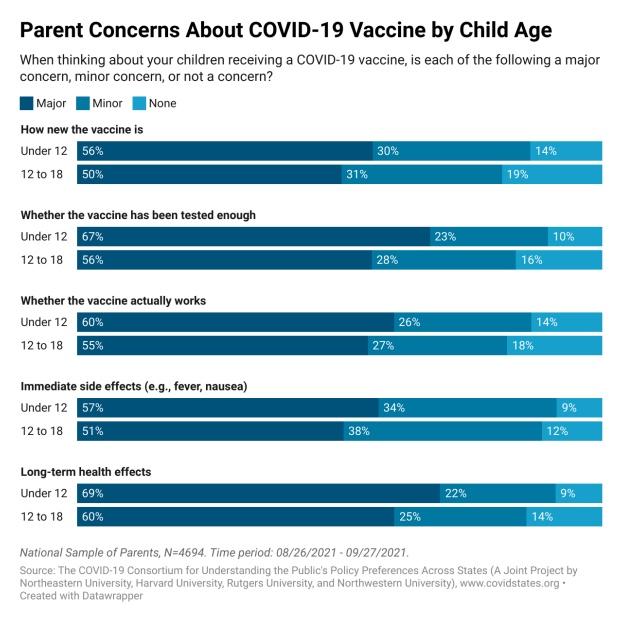
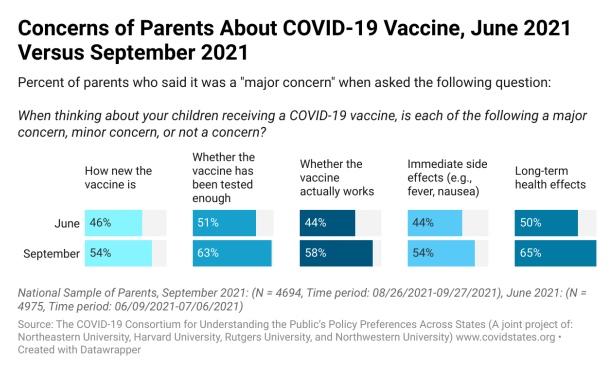
Still, other studies found that parents are concerned about vaccinating their children increased significantly between June and September, and that imposing an even broader COVID jab that could keep children out of school for long periods of time would be incredibly controversial and politically unpopular.

Of course, that has never stopped the Democrats in the past.

Read the full study below:

Covid19 Consortium Report 68 Kids 2021 by Joseph Adinolfi Jr. on Scribd

Scaled-back Dem drug pricing plan still squeezes pharma top-sellers

 Congressional Democrats' slimmed down drug pricing plan may not lower spending on pharmaceuticals by nearly as much as their most ambitious proposal would have, but it could still have a substantial effect on some of the industry's top-selling products.

Pfizer, Bristol Myers Squibb, AbbVie and Regeneron, for instance, could potentially be impacted by the legislation, which emerged this week after the Biden administration had seemingly given up on securing a place for drug pricing policy in its sweeping "Build Back Better" spending plan.

The new bill would grant the federal government power to negotiate drug prices — a long-held Democratic goal — but represents a significant compromise as its scales back the number of products eligible for negotiation to 20 older drugs. Previous legislation backed by dozens of House Democrats had sought to allow negotiation on at least 50 products.

Under the new proposal, these older drugs, defined as those no longer protected by regulatory exclusivity and lacking generic competitors, would be subject to price negotiation with the Centers for Medicare and Medicaid Services.

Initially, CMS would negotiate prices of 10 drugs in 2023, agreements that would then take effect in 2025. Drugmakers that do not come to the table would face a potentially steep excise tax — a feature the industry has fiercely objected to.

The legislation would limit eligible products to small molecule drugs that have been on the market for at least nine years and biologic drugs that have been available for at least 12 years. Small molecule drugs are typically given as pills, while biologics are infused or injected.

President Joe Biden has endorsed the plan, as have key Democratic lawmakers, and legislative language emerged late Wednesday. While it's not clear which specific drugs could be affected, drug spending data from CMS provides some clues.

The tables below include five physician-administered drugs covered by Medicare Part B as well as five self-administered drugs covered by Part D that could be the subject of negotiation in the first round, based on the criteria outlined in the legislation.

Part B drugs that could be subject to negotiation
DrugCompanyYear launched

Medicare spending, 2019 ($ millions)

EyleaRegeneron2011$2,911
ProliaAmgen2010$1,605
OrenciaBristol Myers Squibb2005$920
SolirisAstraZeneca2007$535
CimziaUCB2008$439

Source: CMS

Among physician-administered drugs, other products that could soon be subject to negotiation based on their time on the market are Merck & Co.'s Keytruda, Bristol Myers' Opdivo, and Novartis' Sandostatin LAR, the last of which has been on the market without competition for more than 20 years.

Bristol Myers and Pfizer's blood thinner Eliquis, as well as Eli Lilly and Boehringer Ingelheim's diabetes medicine Jardiance, meanwhile, might be targets in Part D.

Part D drugs that could be subject to negotiation
DrugCompanyYear launchedMedicare spending, 2019 ($m)
EliquisBristol Myers Squibb/Pfizer2012$7,306
ImbruvicaAbbVie/Johnson & Johnson2013$2,440
IbrancePfizer2015$1,826
JardianceEli Lilly/Boehringer Ingelheim2014$1,448
XtandiAstellas/Pfizer2012$1,421

Source: CMS

Other self-administered drugs that could be under pressure soon if the measure passes include Amgen's Enbrel, J&J's Invega Sustenna and Sumitomo Dainippon's Latuda.

Under the legislation, once CMS and manufacturers conclude their negotiations, their agreement will remain in place until the government decides the drug is no longer a high-cost "selected" product. That could mean the list of drugs with negotiated prices grows longer over time than the original set selected. 

Negotiation isn't the only price control measure included in the package. The federal government would also be able to impose higher rebates on drugs that have price increases that exceed the rate of a certain type of consumer price inflation.

While the legislation is significantly pared back from prior proposals, the pharma industry is still vehemently opposed. "Under the guise of negotiation, it gives the government the power to dictate how much a medicine is worth and leaves many patients facing a future with less access to medicines and fewer new treatments," Steven Ubl, CEO of the drug lobby PhRMA, said in a statement.

On an earnings conference call this week, Pfizer CEO Albert Bourla noted that, through its managed care plans, Medicare already negotiates prices on many drugs, and criticized the new proposal as more government interference in the marketplace.

"What people in some parts of the political spectrum want to see is not negotiation, [but] price fixing," he said during the call.

While likely to pass the House, the legislation's future will depend on negotiations with leaders and key moderate lawmakers in the Senate. The latter group could still oppose it based on industry objections or other factors as Congress considers a wide array of spending bills.

https://www.biopharmadive.com/news/drug-price-negotiation-democrat-pharma-impact/609436/