Search This Blog

Monday, November 8, 2021

Biotech this week, Nov. 8

Biotech stocks reversed course and closed the week ended Nov. 5 lower, squandering the gains notched early in the week.

What was good news for Pfizer, Inc. 

 (Get Free Alerts for PFE) turned out to be negative for several others engaged in COVID-19 vaccine and treatment research. Pfizer announced Friday its oral COVID-19 pill Paxlovid reduced the risk of COVID-19-related hospitalization or death by 89%.

Merck & Co., Inc. (MRK: NYSE), which also has a competing medication in the pipeline, shed close to 10% on Friday.

Stocks also reacted to the earnings, which came in thick and fast during the week. Five stocks belonging to the biotech and diagnostics spaces, debuted on Wall Street during the week.

Here are the key upcoming catalysts that biotech investors are on in the unfolding week:

Health Care Conferences:

American College of Rheumatology, or ACR, Convergence 2021: Nov. 3-9 (virtual)

  • BMO Biopharma Spotlight Series: Emerging Trends and Therapeutics in Oncology: Nov. 8 (virtual event)
  • Credit Suisse 30th Annual Virtual Healthcare Conference: Nov. 8-11 (virtual conference)
  • 14th Clinical Trial On Alzheimer's Disease, or CTAD, 2021: Nov. 9-12 (in Boston)
  • 6th Respiratory Syncytial Virus Network, or RESVINET, Conference: Nov. 10-12 (virtual meeting)
  • Society For Immunotherapy of Cancer: Nov. 10-14 (hybrid event, to be held in Washington, D.C. and to be available virtually)
  • Connective Tissue Oncology Society, or CTOS, 2021 Annual Meeting: Nov. 10-13 (virtual meeting)
  • American Academy of Ophthalmology, or AAO, 2021 Meeting: Nov. 12-13 (in New Orleans)
  • American Association for the Study of Liver Diseases, AASLD, The Liver Meeting 2021: Nov. 12-15 (virtual meeting)

Clinical Readouts/Presentations

Liver Meeting Presentations

  • Enanta Pharmaceuticals, Inc. : Phase 1b data for EDP-514 in viremic, chronic hepatitis B infected patients
  • Vir Biotechnology, Inc. : Preliminary results from a Phase 1 study evaluating a single dose of VIR-3434, a novel neutralizing, vaccinal monoclonal antibody, for hepatitis B infection (Friday, at 8 a.m.)
  • Vaccitech plc : Interim results of HBV001, a Phase 1 study evaluating therapeutic vaccination with ChAdOx1-HBV in healthy volunteers and patients with chronic hepatitis B infection; Phase 1b/2a study of heterologous ChAdOx1/MVA therapeutic vaccination combined with Bristol-Myers Squibb Company's  low-dose Opdivo in virally-suppressed patients with CHB under nucleos(t)ide analogues
  • Dicerna Pharmaceuticals, Inc. : results of a subpopulation pharmacokinetic and safety analysis from the Phase 1 trial of RG6346, which Dicerna is developing in collaboration with Roche Holding AG  for the treatment of chronic hepatitis B virus infection; interim Phase 1 data from Belcesiran in Alpha 1-antitrypsin deficiency-associated liver disease
  • Lipocine Inc. : safety And tolerability Of LPCN 1144 treatment In biopsy confirmed NASH subjects from the Phase 2 LiFT study
  • Arbutus Biopharma Corporation : data on the effects of its GalNAc-siRNA, AB-729, in chronic hepatitis B patients on nucleos(t)ide analogue therapy
  • Axcella Health Inc. : Phase 2 data for AXA1665 in overt hepatic encephalopathy and data from the Phase 2b study of AXA1125 in non-alcoholic fatty liver disease patients
  • VBI Vaccines Inc. : results from a pivotal phase 3 study of 3-antigen HBV vaccine containing pre-S1, pre-S2 and S antigens
  • CohBar, Inc. : data from the Phase 1a/1b clinical study of CB4211 in obese subjects with nonalcoholic fatty liver disease
  • Aligos Therapeutics, Inc. : data on ALG-000184 in treating chronic hepatitis B patients
  • Protagonist Therapeutics, Inc. : Phase 2 data for Rusfertide in patients with hereditary hemochromatosis. (Saturday)

CTAD Presentations

  • Alector, Inc. : Phase 1 data for AL003 in Alzheimer's disease, update on the Phase 2 study of AL001 in frontotemporal dementia patients carrying a granulin mutation
  • Annovis Bio, Inc. : positive clinical outcomes of posiphen in two phase 2a studies - Alzheimer's disease and Parkinson's disease
  • AC Immune SA : topline results from Phase 2 study of Semorinemab in Alzheimer's disease; additional Phase 2 data for ACI-24 in Alzheimer's disease
  • Biogen Inc. : topline results from TANGO, a Phase 2 study of gosuranemab in participants with mild cognitive impairment due to Alzheimer's disease
  • Cortexyme, Inc. : topline results from the Phase 2/3 study of Atuzaginstat in mild to moderate Alzheimer's disease

Related Link: Mirati Therapeutics COO, CMO Exit, Completing Management Overhaul

CTOS Meeting Presentations

  • Adaptimmune Therapeutics plc : Phase 2 data of afamitresgene autoleucel in patients with advanced synovial sarcoma or myxoid/round cell liposarcoma
  • Oncternal Therapeutics, Inc. : interim clinical data update for ONCT-216 in patients with relapsed or refractory Ewing sarcoma
  • Inhibrx, Inc. : update from the Phase 2 expansion cohort for INBRX-109 in patients with conventional chondrosarcoma

AAO Meeting Presentations

  • Graybug Vision, Inc. : Phase 2b data for GB-102 in wet age-related macular degeneration
  • Ocuphire Pharma, Inc. : Phase 2 data for oral APX3330 in diabetic retinopathy/diabetic macular edema; Phase 2 data for phentolamine ophthalmic solution and low-dose pilocarpine for treating presbyopia
  • REGENXBIO Inc. Clearside Biomedical, Inc. : two-year results from the Phase 1/2a study of subretinal RGX-314 gene therapy for treating neovascular AMD and an update on suprachoroidal trials
  • EyePoint Pharmaceuticals, Inc. : interim Phase 1 data from DAVIO trial of EYP-1901 for the potential treatment of wet AMD

SITC Meeting Presentations

  • Corvus Pharmaceuticals, Inc. : data from the Phase 1/1b trial of mupadolimab in solid tumors, as well as from the Phase 2 study of mupadolimab in human papilloma virus positive head and neck squamous cell cancers
  • Nektar Therapeutics : Phase 1b data for NKTR-255 plus cetuximab in patients with solid tumors
  • Immutep Limited : results from a Phase 2 study of eftilagimod alpha and Merck & Co., Inc.'s  Keytruda in patients with PD-L1 unselected metastatic 2nd line head and neck squamous cell carcinoma; data from Phase 2 study of eftilagimod alpha and Keytruda in patients unselected for PD-L1 expression in first line metastatic head and neck squamous cell carcinoma
  • Genmab A/S  & BioNTech SE : results of the Phase 1/2 trial evaluating investigational bispecific antibody, GEN1042 in patients with advanced solid tumors as well as Phase1/2 data for GEN1046 in solid tumors
  • Replimune Group, Inc. : data from the Phase 1 clinical trial of RP2, as a single agent and combined with Opdivo in patients with advanced solid tumors
  • Checkmate Pharmaceuticals, Inc. : final clinical data from the Phase 1b study vidutolimod, in combination with Keytruda or as a monotherapy in melanoma
  • NextCure, Inc. : preclinical data for its lead drug candidate, NC318
  • OncoSec Medical Incorporated : Phase 2b data for TAVO and Keytruda in melanoma patients
  • Kadmon Holdings, Inc. : Phase 1 clinical data for KD033 in patients with metastatic or locally advanced solid tumors

Earnings

Monday

Tuesday

  • Vericel Corporation  (before the market open)
  • Intra-Cellular Therapies, Inc.  (before the market open)
  • Haemonetics Corporation  (before the market open)
  • Epizyme, Inc.  (before the market open)
  • BioNTech (before the market open)
  • Biohaven Pharmaceutical Holding Company Ltd.  (before the market open)
  • Cardiovascular Systems, Inc.  (before the market open)
  • ChemoCentryx, Inc.  (after the close)
  • FibroGen, Inc.  (after the close)
  • Fulgent Genetics, Inc.  (after the close)
  • Inovio Pharmaceuticals, Inc.  (after the close)
  • Jazz Pharmaceuticals plc  (after the close)
  • Ligand Pharmaceuticals Incorporated  (after the close)
  • Silk Road Medical, Inc  (after the close)

Wednesday

  • Sotera Health Company  (before the market open)
  • 23andMe Holding Co.  (after the close)
  • Maravai LifeSciences Holdings, Inc.  (after the close)
  • Friday
  • AstraZeneca PLC  (before the market open)

IPOs

IPO Pricing

Dallas, Texas-based Vaxxinity NASDAQVAXX, a biotech company having a proprietary platform designed to harness the immune system to convert the body into its own drug factory, has filed for offering 6.7 million shares of its Class A common stock in an initial public offering, The offering is expected to be priced between $14 and $16. The company has applied for listing its shares on the Nasdaq under the ticker symbol "VAXX."

IPO Quiet Period Expiry

https://www.benzinga.com/general/biotech/21/11/23948350/the-week-ahead-in-biotech-nov-7-nov-13-earnings-taper-off-multiple-conference-presentations-ipos-

Rapid inactivation of SARS-CoV-2 with LED irradiation of visible spectrum wavelengths

 Riccardo De Santis 1Vincenzo Luca 1 2Jonas Näslund 3Rosina K Ehmann 4Marta De Angelis 5Eva Lundmark 3Lucia Nencioni 5Giovanni Faggioni 1Silvia Fillo 1Donatella Amatore 1Elisa Regalbuto 1Filippo Molinari 1Giancarlo Petralito 1Roman Wölfel 4Paola Stefanelli 6Gianni Rezza 6Anna Teresa Palamara 5Markus Antwerpen 4Mats Forsman 3Florigio Lista 1

doi: 10.1016/j.jpap.2021.100082

PDF: https://www.ncbi.nlm.nih.gov/pmc/articles/pmid/34729540/

Abstract

Difficulty in controlling SARS-CoV-2 transmission made the ability to inactivate viruses in aerosols and fomites to be an important and attractive risk reduction measure. Evidence that light frequencies have the ability to inhibit microorganisms has already been reported by many studies which, however, focused on ultraviolet (UV) wavelengths, which are known to induce potential injury in humans. In the present study, the effect on suspensions of SARS-CoV-2 of a Light Emitting Diode (LED) device capable of radiating frequencies in the non-hazardous visible light spectrum (VIS) was investigated. In order to evaluate the efficiency of viral inactivation, plaque assay and western blot of viral proteins were performed. The observed results showed a significant reduction in infectious particles that had been exposed to the LED irradiation of visible light. Furthermore, the analysis of the intracellular expression of viral proteins confirmed the inactivating effect of this irradiation technology. This in vitro study revealed for the first time the inactivation of SARS-CoV-2 through LED irradiation with multiple wavelengths of the visible spectrum. However additional and more in-depth studies can aim to demonstrate the data obtained during these experiments in different matrices, in mutable environmental conditions and on other respiratory viruses such as the influenza virus. The type of LED technology can decisively contribute on reducing virus transmission through the continuous sanitation of common environments without risks for humans and animals.

https://pubmed.ncbi.nlm.nih.gov/34729540/

Exploring the Mystery of COVID-19 Vaccine-Linked Heart Inflammation

 In exceptionally rare cases, people, typically young males, negatively respond to the mRNA COVID-19 vaccines manufactured by Pfizer-BioNTech and Moderna. These responses include myocarditis, the inflammation of the heart muscle, and pericarditis, which is the inflammation of the sac surrounding the heart muscle. The risk of myocarditis and pericarditis from mRNA vaccines appears mild and temporary, and lower than the risk of the same conditions from COVID-19.

Nonetheless, researchers aren’t sure why the mRNA vaccines appear to, in rare cases, cause this condition. According to the U.S. Food and Drug Administration (FDA), the risk seems higher within seven days of the second jab of the vaccines. In vaccinated individuals, it is typically mild and requires minimal treatment.

The U.S. Centers for Disease Control and Prevention (CDC) indicates that the benefits of preventing COVID-19, hospitalizations, and death from the vaccines outweigh the risks of myocarditis and pericarditis.

A study published in 1996 notes that, in North America, myocarditis is caused by viral infections “with a wide spectrum of natural history. The majority of patients recover spontaneously, but those with persistent ventricular dysfunction face a 20% one-year mortality. Myocarditis initiates as viral disease, and molecular techniques have confirmed viral persistence.”

The Mayo Clinic adds that myocarditis can result from a drug reaction or part of more general inflammatory conditions. Symptoms of myocarditis include chest pain, fatigue, shortness of breath, and rapid or irregular heartbeats.

In a study conducted by Kaiser Permanente Southern California (KPSC) and published in JAMA Internal Medicine on October 4, 2021, in a cohort of 2,392,924 members of KPSC who had received at least one dose of COVID-19 mRNA vaccines, there were 15 cases of confirmed myocarditis, two after the first dose and 13 after the second. This is an observed incidence of 0.8 cases per 1 million first doses and 5.8 cases per 1 million second doses over a 10-day observation window. All were males with a median age of 25 years.

A CDC study cites rates of about 12.6 cases per million doses of second-dose mRNA vaccine in people 12 to 39 years of age. The patients typically reported chest pain two to three days after a second dose and had elevated cardiac troponin levels. ECG was abnormal.

The authors of the study say this warrants further investigation and note that “no relationship between COVID-19 mRNA vaccination and postvaccination myocarditis can be established given the observational nature of this study.”

According to a CDC study, from March 2020 to January 2021, the risk of myocarditis was 0.146% in patients diagnosed with COVID-19 during an inpatient or hospital-based outpatient encounter and 0.009% in patients not diagnosed with COVID-19. Another way of putting it is that the risk of myocarditis was 15.7 times higher for people with COVID-19 than healthy people.

Some theories as to why the mRNA vaccines might cause myocarditis revolve around the spike protein. In the SARS-CoV-2 virus, which causes COVID-19, the spike protein helps the virus enter human cells then take over the cell’s genetic machinery to reproduce itself. The mRNA vaccines code for segments of the spike protein, which then trains the immune system to recognize the spike protein and thus recognize the virus.

Another theory, according to Biykem Bozkurt, M.D., Ph.D., a professor of medicine specializing in cardiology at Baylor College of Medicine in Houston, says there might be similarities between the spike protein and proteins in the heart muscle. This is dubbed the “molecular mimicry” theory, but it hasn’t been fully tested in people who have been vaccinated and doesn’t explain why myocarditis isn’t seen more broadly.

Jay Schneider, M.D., Ph.D., a consultant in cardiovascular medicine at the Mayo Clinic’s Jacksonville, Fla., campus, speculates that some of the mRNA in the vaccines might be taken up by cardiomyocytes, which are specialized heart cells. They then manufacture the spike protein, which could stimulate an antibody response against the cells. Schneider got heart cells to take up the Moderna vaccine in laboratory studies and then express the spike protein. Those results haven’t been published yet, and Schneider is cautious about the interpretation.

Yet another theory is that improper injection of the vaccines might be a factor. The injections should be into the deltoid (shoulder) muscle. But if the injection is accidentally into a vein, some of the vaccines might be delivered to the heart via blood vessels. A research study in Hong Kong that injected mice intravenously with the Pfizer-BioNTech vaccine resulted in both myocarditis and pericarditis in the animals.

And yet another theory focuses on the fact that myocarditis only seems to appear in male adolescents and young men. Bozkurt suggests that testosterone may play a role by increasing an inflammatory immune response. Alternately, Bozkurt notes in a study published in Circulation that underdiagnosis of cardiac disease in women may also be a factor.

Studies have hinted that the Moderna vaccine has a higher risk of myocarditis than the Pfizer-BioNTech. The difference hasn’t been confirmed, but the Moderna vaccine is given at a higher dose than the Pfizer-BioNTech vaccine, and Moderna’s chief executive officer Stéphane Bancel noted that if the difference is real, the dosing might be a factor. Some immunologists and vaccine experts have said the dose difference is probably one reason the Moderna vaccine is slightly more effective against COVID-19 with more durability than the Pfizer-BioNTech vaccine.

https://www.biospace.com/article/-exploring-heart-inflammation-in-response-to-mrna-covid-19-vaccines/

Vitamin D and Disease Prevention: Worth Another Look

 The use of vitamin D and omega-3 fatty acid supplementation was associated with a decreased likelihood of autoimmune disease in an ancillary analysis of a large randomized trial.

During 5 years of follow-up in a cohort of almost 17,000 adults, there were 123 incident cases of autoimmune disease among those who were taking vitamin D supplements daily, while there were 155 among those on placebo, for a hazard ratio of 0.78 (95% CI 0.61-1.00, P=0.045), reported Karen Costenbader, MD, of Brigham and Women's Hospital in Boston.

"I don't have to convince this audience of the burden of autoimmune diseases. These diseases affect 5% to 8% of the population, or 15 to 20 million Americans. They are among the top 10 causes of death among women under 65 in the U.S. and the second most common cause of chronic illness," she said in a plenary session at the 2021 virtual annual meeting of the American College of Rheumatology.

There currently is no means of preventing autoimmune diseases, which include conditions such as rheumatoid arthritis, polymyalgia rheumatica, and psoriasis.

Vitamin D is a pleiotropic hormone with wide regulatory actions. It binds to the nuclear vitamin D receptor and regulates an array of genes involved in innate and adaptive immune responses, she explained.

Ecological observations have demonstrated that autoimmune diseases such as inflammatory bowel disease, multiple sclerosis, and type 1 diabetes are more prevalent at northern latitudes where vitamin D levels typically are lower. In previous observational studies, high residential ultraviolet exposures have been associated with lower risks of Crohn's disease, and also with decreased rates of rheumatoid arthritis. However, no prospective trial has tested the effects of supplementation with vitamin D and the incidence of autoimmune disease over time.

Omega 3 fatty acids are abundant in fish. These compounds suppress the biosynthesis of inflammatory arachidonic acid-derived eicosanoids and regulate the inflammatory transcription factors nuclear factor kappa B and peroxisome proliferator activated receptor. Previous studies have found that higher intake of omega-3 fatty acids was associated with a lower incidence of rheumatoid arthritis and a decreased prevalence of seropositivity. To date, no prospective study has evaluated the effects of daily use of omega 3 fatty acids on the incidence of autoimmune disease.

To address these knowledge gaps, Costenbader's group analyzed data from the vitamin D and omega 3 (VITAL) trial, which included almost 26,000 men ages 50 and older and women 55 and older.

The primary analysis of VITAL was for the incidence of cancer and cardiovascular disease; no decrease in risk was observed for those conditions.

In this ancillary study, the outcome of interest was the incidence of all autoimmune diseases among the 16,956 participants who had undergone assays for 25 (OH) vitamin D and had plasma omega-3 index measurements.

First, participants were randomized to vitamin D, 2,000 IU/day (n=12,937) or placebo (n=12,937), and then in a 2 × 2 factorial design they were again randomized to omega 3 fatty acids, 1 g/day (n=6,468) or placebo (n=6,469) in the active vitamin D arm and to omega 3 fatty acids, 1 g/day (n=6,468) or placebo (n=6,469) in the placebo group of the vitamin D randomization arm.

Median follow-up was 5.3 years.

Participants' mean age was 67, and the groups were well matched on factors such as demographics, vitamin D levels and intake, and family history.

The cumulative incidence curves for vitamin D supplementation versus placebo begin to diverge after 2 to 3 years of follow-up, "which makes sense biologically and supports long-term use," she said.

For omega-3 supplementation, there were 130 confirmed cases of autoimmune disease in the active treatment group and 148 cases in the placebo group (HR 0.85, 95% CI 0.67-1.09, P=0.20). In an additional analysis comparing patients who had initially been randomized to the vitamin D placebo arm, there were 67 confirmed cases in the re-randomized omega-3 supplementation group and 88 in the placebo group (HR 0.74, 95% CI 0.54-1.03, P=0.07). In that analysis, there were 63 cases in the vitamin D plus omega-3 group and 88 cases in the placebo/placebo arm, for a hazard ratio of 0.69 (95% CI 0.49-0.96, P=0.03).

There were no significant differences in adverse events between the active and placebo groups.

"Supplementation for 5 years with vitamin D3 and/or omega-3 fatty acids reduced incident autoimmune disease by 25% to 30% in older adults versus those who received neither supplement," she concluded.

"The clinical importance of these findings is high, given that these are well tolerated, nontoxic supplements and that there are no other effective therapies to reduce the incidence of autoimmune diseases," she commented.


Disclosures

Costenbader reported financial relationships with Neutrolis, Merck, Exagen, Gilead, and AstraZeneca.

For Moderna, Inventing The Jab Was The Easy Part

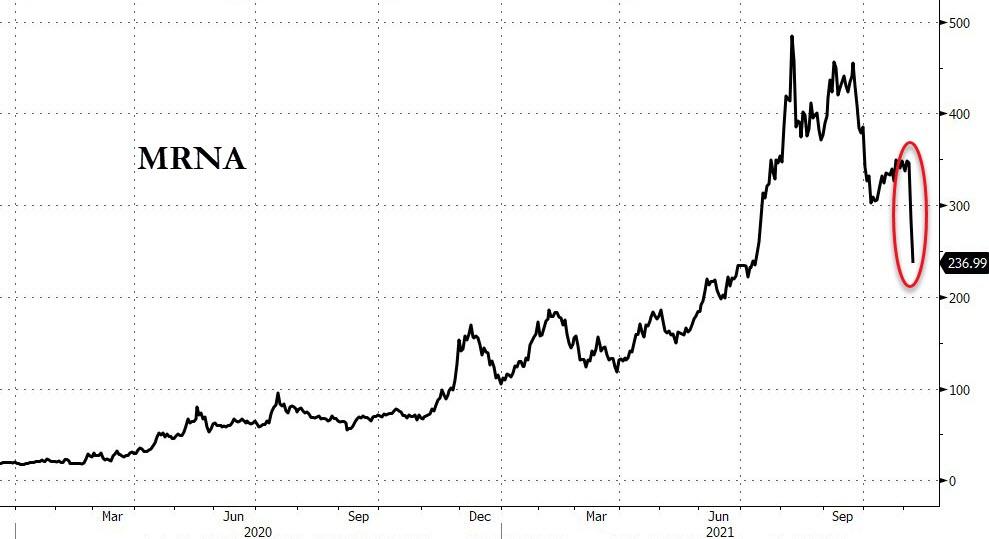
 Moderna's stock crashed late last week as it was hit by disappointing vaccine sales and Pfizer's 'miracle' COVID pill news. Wall Street analysts panicked about a handful of factors, but while Moderna and its rivals managed to complete their groundbreaking vaccines in ten months (with government help, of course), inventing the vaccines actually wasn't the hardest part of the process.

Mass-producing enough jabs to innoculate the entire world (or, at least, the entire developed world) is a task of almost herculean proportions. And while Moderna rivals like Pfizer have factories already in place to produce various products already being sold by the pharma giant, Moderna and other rivals had to ramp up facilities on multiple continents and distributing the vaccine to countries around the world in the middle of a devastating pandemic.

But when Moderna revealed during its Q3 earnings that its FY2021 production target would be between 700MM and 800MM jabs, analysts - and by extension, investors - were none too pleased. It was this subpar sales guidance that, combined with the Pfizer news, that sent shares of the pharma contender (which had been relentlessly pumped on CNBC by investor Stephen Weiss) sliding.

That added to pressure on the stock that has been building for months. Since Aug. 9, Moderna has dropped 51%, wiping out almost $100 billion in market value.

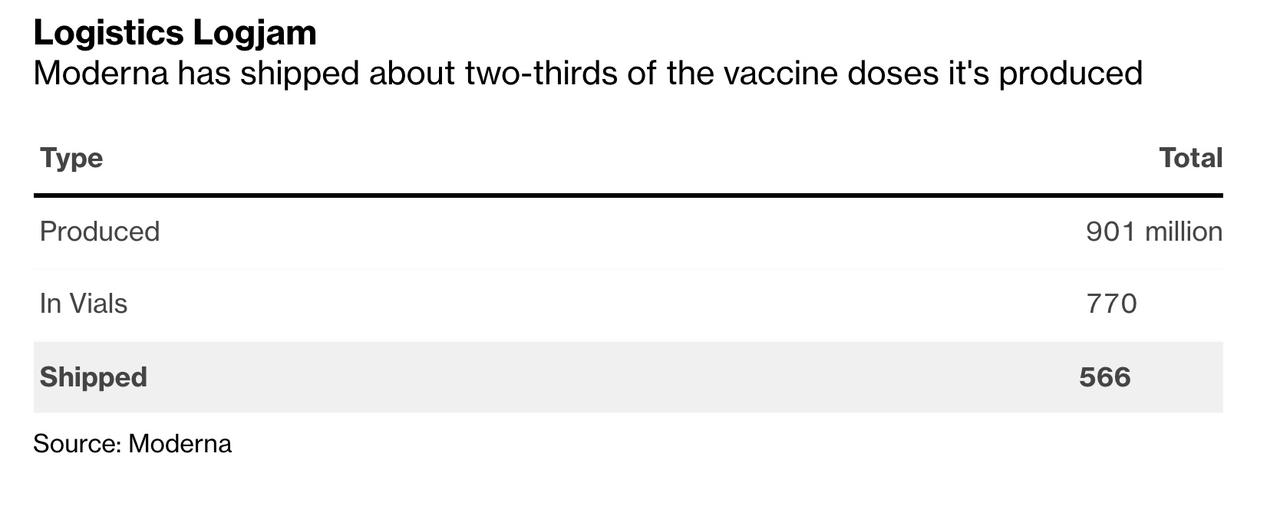
Here's an example of Moderna's problem: the company says it has already produced enough bulk substance to create more than 900MM doses of its vaccine, which consists of messenger RNA coated in lipid nanoparticles.

However, Moderna apparently won’t be able to get all those doses into vials, where they need to be, before next year.

Speaking on a conference call with analysts, Moderna CEO Stephane Bancel tried to make the best of it, comparing the production delays to "teething problems" as Moderna attempts to expand from a "boutique" biotech firm in Cambridge, Mass. to a global vaccine distribution powerhouse.

To be sure, Moderna isn’t the first vaccine maker to run into production delay, which is why Moderna led shares of several vax-makers lower. J&J, AstraZeneca and Novavax lower after reporting Moderna's earnings. It seems like all vax makers, and their partners, have all hit production snags that have slowed rollouts of their vaccines at some point during the past year.

Novavax CEO Stanley Erck said in an interview Friday that his company had no factories of its own at the outset of the pandemic, and had to create a network of internal and external production facilities from scratch. Among other problems it encountered were shortages of things like filters and 4,000-liter bags needed for producing its vaccine in insect cells.

"Seemingly simple things ran out of global supply," Erck said. But now the problems are mostly solved and the company and its partners are able to produce 200MM doses a month by early next year.

Moderna has relied almost entirely on contract manufacturers to fill vials with its vaccine a process known as fill and finish.

As for the advantage enjoyed by Pfizer and BioNTech, long-term relationships with an extensive base of suppliers, as well as numerous supply-chain experts helping to plan for every possible contingency during production, were major assets for Pfizer and BioNTech, said Julie Swann, a health systems expert at North Carolina State University, which gave Pfizer a massive advantage over its rivals.

For example: Prior to the pandemic, Pfizer already had capacity to make 200MM vaccine doses a year, with 12 biologics and vaccine-manufacturing facilities in 10 countries. Moderna’s lone factory was a plant in Norwood, Mass., which had never produced anything at large scale before COVID.

The problems of scale are only going to get worse for Moderna, especially as it starts to ship more jabs abroad. Now, Moderna and its contractors have become major exporters of a heavily regulated drug. Each new market has its own set of rules that must be met and understood. Pfizer's global scale will make this somewhat easier.

But as one analyst said: “It’s not surprising that if someone had a problem, it would be [Moderna]," said Swann.

https://www.zerohedge.com/covid-19/moderna-investing-jab-was-easy-part-shipping-it-around-world-proving-incredibly-hard