Search This Blog

Saturday, November 13, 2021

Black Friday DNA Test Deals (2021): Early 23andMe, Living DNA, Family Tree DNA & More

 The best early Black Friday DNA test deals for 2021, including Family Tree DNA, Living DNA, 23andMe and AncestryDNA discounts

Black Friday researchers at Spending Lab are comparing all the latest early DNA test deals for Black Friday, featuring all the top discounts on top-rated dog DNA test kits and genetic and health testing kits. Links to the top deals are listed below.

Best DNA Test Deals:

Looking for more deals? Check out Walmart’s Black Friday deals and Amazon’s Black Friday page for hundreds more live deals at the moment. Spending Lab earns commissions from purchases made using the links provided.

https://www.marketscreener.com/news/latest/Black-Friday-DNA-Test-Deals-2021-Early-23andMe-Living-DNA-Family-Tree-DNA-More-Deals-Publishe--37014878/

Novavax CEO: We aim to complete the FDA filing for our COVID vaccine this year

 Novavax CEO Stanley Erck joins Yahoo Finance's Anjalee Khemlani to discuss the pathway to FDA authorization for its COVID vaccine as well as scaling up its vaccine production.


ANJALEE KHEMLANI: Looking at the vaccine race, which has been going on for some time, we know we've heard of a couple of companies that have already made it to the finish line. But one that is getting closer here in the US is Novavax. And they've already started listing for emergency use authorization globally.

Here to speak with me about that and more is CEO Stanley Erck. Stan, thanks so much for joining us again. Pleasure to have you on. Let's get right to it. World Health Organization, the United Kingdom, and many other countries around the globe. You're finally starting to get those applications in. What can we expect in terms of a timeline?

STANLEY ERCK: Well, we've passed a major milestone, which is to get our first emergency use authorization in Indonesia, the fourth most populous country in the world. So that's a big breakthrough. And we've got seven or eight other regulatory filings in the UK, the European Union, and India and WHO. And so we've got just a ton of activity going on, on the regulatory side. And we're working with the FDA to hopefully get our filings in to them before the end of this calendar year.

ANJALEE KHEMLANI: I'd love to get an update on that. I know that we've talked previously about targeting that end of the year. Is that going to be the full package or the actual filing itself? And can you explain sort of what you anticipate the timeline to be after that?

STANLEY ERCK: Sure. It's-- we don't predict what the regulatory-- or the timing of the regulatory agencies. That's what's not in our control. What we can predict is the timing of our applications. And my guess is, is that following the Indonesia approval or authorization is that we'll start seeing as many as three or four or five EUAs approved in the coming six to eight weeks, and so this year.

And with the FDA, we can't predict until we have a meeting with them. We've asked for a meeting. I suspect that that'll happen very soon. And then we'll have an idea of what that pathway will be. But the hope is to get the complete filing based upon the results of that meeting and complete filing this year, this calendar year. And then, the FDA has to decide how quickly it'll review those data.

ANJALEE KHEMLANI: And of course, great news on Indonesia being the first market that you've actually entered. Looking at the supply that you have on hand, talk to me about, first of all, what's happening on the ground there and how much you expect to be able to distribute if all these other authorizations come in?

STANLEY ERCK: Sure. Yes, so it'll be the-- the distribution will be at the end of this year because we don't have the authorizations yet. So we do expect to be able to ship to Indonesia and perhaps one or two other places, countries, before the end of the year. But the majority of our production is scheduled for started in the first quarter. And we have publicly stated that we scaled up to the level that will be in the 2 plus billion dose range in the calendar year 2022. And that'll start in the first quarter. And so, we're going to go from 0 to a very large scale very quickly.

ANJALEE KHEMLANI: I know that we've heard today that the US government has created a deal with Johnson & Johnson. Largely looking at the global distribution through COVAX and waiving liabilities, do you anticipate being able to do something similar? I know that your vaccine specifically has been viewed as not only efficacious, but also possibly having a stronger safety profile and something that, you know, some individuals who are uncomfortable with M&A are looking forward to having come out.

STANLEY ERCK: Well, that's why we're going as fast as we possibly can. We have probably three things that stand out for us. The efficacy data is very strong, as you point out. The safety data is, I think, we have the most benign safety profile that is out there so far.

And we have another advantage, which is the stability of our product allows us to ship and store product at simple refrigerated temperatures. And so that can get us into parts of the world that are hard to get to. And we plan on targeting the low and middle income countries of the world with our COVAX agreement of 1.1 billion doses, along with our partner, Serum Institute.

ANJALEE KHEMLANI: And also going back to the US and by side by side, you also have that going on. But we know that largely speaking, you had really pivoted to looking at the global market, but also considering the booster market here in the US, with Pfizer being the only company, really, that looks to be able to get authorization by the end of the year possibly for all adults. Do you still see a market for boosters for Novavax here in the US?

STANLEY ERCK: Sure, but, you know, to be honest, we look at this as a global issue. And it's both getting the original first and second dose into as many people in the world as possible, but the booster market is a global issue. And so we expect to be boosted in the United States next year. And we're doing-- we've already completed a boosting study. We're in the middle of others. And so, we expect our authorization to include boosting throughout 2022 and beyond.

https://finance.yahoo.com/video/novavax-ceo-aim-complete-fda-155632671.html

Nursing homes shed 221K jobs since start of pandemic while other sectors recovered

 Nursing homes have lost 221,000 jobs since the start of the COVID-19 pandemic, the most among all healthcare providers, a new industry report finds.

The report (PDF), released Wednesday by the American Health Care Association and the National Center for Assisted Living, shows that while other healthcare employment sectors have recovered some of their job losses, recovery for nursing homes remains stagnant.

“Chronic Medicaid underfunding, combined with the billions of dollars providers have spent to fight the pandemic, have left long-term care providers struggling to compete for qualified staff,” said Mark Parkinson, the group’s CEO and president, in a statement.

The group analyzed employment numbers from the Bureau of Labor Statistics since March 2020 when the pandemic reached full swing in the U.S.

It showed employment in nursing homes declined by 220,000 from 1.58 million in March 2020 to 1.36 million in October 2021. Assisted living centers also lost 38,000 jobs in that time period.

Other healthcare industries saw similar declines in employment at the onset of the pandemic but have recovered.

For instance, hospital employment was at 5.17 million in March 2020 and after a dramatic decline has recovered to 5.15 million this October.

Physicians' offices also saw a dip in employment but have gained 70,000 jobs since the start of the pandemic. Outpatient care centers also gained 57,000 jobs as of October.

Nursing homes and assisted living facilities had issues with staffing even before the pandemic, and, now, burnout from the pandemic has led to more retirements across the healthcare industry.

A recent report from Mercer estimated that 29 states won’t be able to keep up with demand for registered nurses over the next five years.

In addition, while employment numbers have recovered from declines caused by the pandemic, hospitals are still facing higher expenses for contracted staff and declines due to burnout.

https://www.fiercehealthcare.com/practices/report-nursing-homes-shed-221k-jobs-since-start-pandemic-as-other-sectors-have-recovered

Majority of surgeons in new survey warn of longer waits, care delays if Medicare cuts go through

 Most surgeons said in a recent survey that a series of Medicare reimbursement cuts expected to go into effect in 2022 could lead to longer wait times and delays as well as exacerbate a crippling labor shortage.

The survey results of 2,227 members from the American College of Surgeons provided exclusively to Fierce Healthcare by the Surgical Care Coalition, a collection of 13 advocacy groups, comes as physician groups are pressing Congress to step in and delay a series of cuts that could add up to a nearly 10% shave to Medicare reimbursements.

The survey found 57% of respondents believe the cuts would lead to longer wait times, while 56% believe the cuts could contribute to a delay in care.

Surgeons warn the potential cuts are coming at a time when the healthcare industry is facing a major labor shortage that is already straining finances. A large majority (76%) of surgeons say staffing shortages have had an impact on their practice’s ability to provide quality care.

The shortage has also caused backlogs in care.

Michael Zinner, M.D., executive director of the Miami Cancer Institute, told Fierce Healthcare in an interview that the 11-hospital system he is part of is down 800 nurses. Only 19 out of 24 operating rooms are in use because of the staffing shortfall.

“We thought as we were coming out of the COVID mess that people would return to work and staffing would go to full strength. That is not true,” he said.

The reimbursement cuts would further exacerbate this problem, especially as practices face more expenses for labor, Zinner said.

“I think there are going to be more surgeons leaving the profession,” he added.

The survey results come as lobbying is intensifying among provider groups to press Congress to head off 9.75% in Medicare reimbursement cuts.

The cuts include a 4% reduction set to go into effect due to the PAYGO law, which calls for Congress to make a series of cuts if federal spending reaches a certain threshold.

Congress also temporarily increased physician payments by 3.75% in 2020 to help physicians combat revenue shortfalls caused by the pandemic, but now the bump is expected to go away after this year.

Providers could also face the resumption of a 2% cut in Medicare cuts imposed under sequestration. Congress passed a moratorium on the cuts to help providers, but a $1 trillion infrastructure bill that just passed Congress would restart the cuts.

https://www.fiercehealthcare.com/practices/exclusive-majority-surgeons-new-survey-warn-longer-wait-times-care-delays-if-medicare

How Bad Is 'Sulfur Microbial Diet' for Colorectal Cancer Risk?

 Risk for colorectal cancer (CRC) was increased in people who consumed larger amounts of foods friendly to sulfur-metabolizing bacteria, an analysis of the Health Professionals Follow-up Study and Nurses' Health studies suggested.

Participants in the highest quintile of adherence to this so-called sulfur microbial diet -- where junky food like french fries, red and processed meats, and low-calorie drinks feature highly; and fruits, leafy vegetables, and whole grains are often nowhere to be found -- had a 27% higher risk of CRC compared to those in the lowest quintile, after adjusting for various factors (HR 1.27, 95% CI 1.12-1.44, P<0.001), reported Andrew T. Chan, MD, MPH, of Massachusetts General Hospital and Harvard Medical School in Boston, and colleagues.

Anatomical subsite analysis showed that distal CRC was positively associated with a greater adherence to the diet (HR 1.25, 95% CI 1.05-1.50, P=0.02), while proximal colon cancer was not (HR 1.13, 95% CI 0.93-1.39, P=0.19), the group wrote in JAMA Network Open.

"We performed this study because there is strong evidence linking diet to colorectal cancer risk and emerging evidence supporting a key role of the gut microbiome in colorectal cancer," Chan told MedPage Today. "However, specific data to show if the influence of diet on cancer risk was mediated through its influence on the gut microbiome was lacking."

prior study that developed a dietary score associated with enrichment of sulfur-metabolizing gut bacteria demonstrated an increased risk for distal CRC with such a diet, though it only involved men.

"The next step will be to examine if diet could be modified in such a way as to encourage the development of a gut microbiome that has less sulfur-reducing bacteria to lower the risk of colorectal cancer," Chan said.

For the current study, Chan and colleagues analyzed data on 214,797 healthcare professionals from the Health Professionals Follow-up Study (1986-2014; 51,529 men), the Nurses' Health Study I (1984-2016; 121,700 women), and the Nurses' Health Study II (1991-2017; 116,429 women). Individuals with inflammatory bowel disease, CRC, or other cancers (except for nonmetastatic skin cancer) were excluded.

From 2012 to 2014, stool samples were provided by 519 participants from the studies. This subsample (307 men and 212 women) was used to develop the sulfur microbial diet.

The primary outcome assessed CRC incidence. Overall, there were 3,217 (1.5%) incident cases over an average follow-up of 26 years (5,278,048 person-years).

Using a "food-frequency questionnaire" provided to participants, the researchers examined dietary patterns involving the 43 foods most associated with sulfur-metabolizing gut bacteria on genomic sequencing.

Analyses adjusted for the following risk factors: body mass index (BMI), race, prior endoscopy or physical examination, smoking status (including pack-years), physical activity, CRC family history, energy intake, as well as use of aspirin, non-steroidal anti-inflammatory drugs, or menopausal hormonal therapy.

"Slightly stronger associations" linking the diet to CRC occurred among smokers and those who did not take aspirin regularly.

Participants with greater adherence to the diet tended to be younger, and had higher BMIs, less physical activity, and fewer endoscopies or physicals. Overall, most participants in the studies were white (89%), the average age was 51-57 years, and mean BMI was 24-26.

The analysis had several limitations, the researchers acknowledged, including recall bias and the fact that participants were all healthcare workers, which may limit the findings for the general public.


Disclosures

This study was supported by NIH funding, Nurses' Health study grants, the Loan Repayment Program, the American Gastroenterological Association, the American Cancer Society, the Crohn's and Colitis Foundation, Cancer Research UK, and the Massachusetts General Hospital.

Chan disclosed ties to Bayer Pharma AG, Pfizer, Boehringer Ingelheim, and served as investigator for a study funded by Zoe Ltd.

A coauthor reported serving on the scientific advisory boards of Empress Therapeutics, Seres Therapeutics, as well as Zoe Ltd.

Survey: The Pandemic Is Making You Ugly

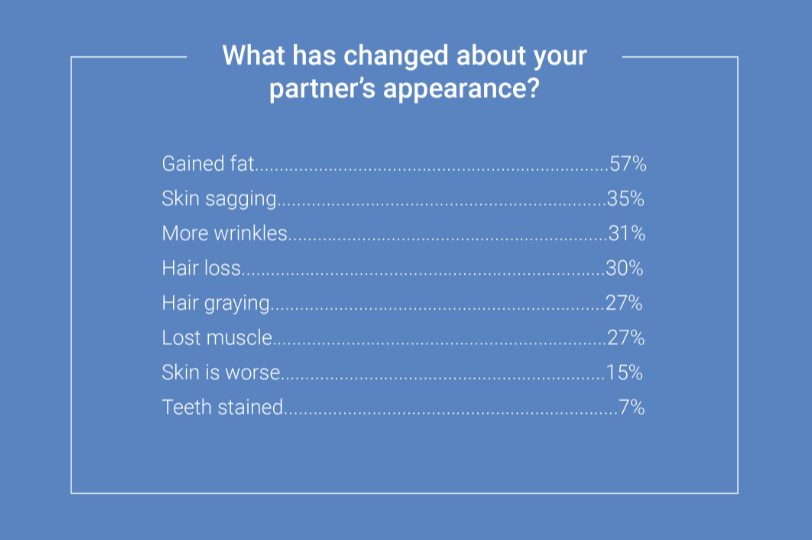
 The pandemic is making us ugly - at least, according to our own partners.

That was the finding of a new survey published by cosmetic dermatology company Advanced Dematology. They surveyed 1,463 people in relationships of one year or more. 

Those who responded were 51% male and 49% female with an average age of 38 years old. 

Among those surveyed, 2 in 3 people say "their partner looks worse than they did before the pandemic started". 

79% of those surveyed say their partner needs to lose some weight (22 pounds on average) and 55% have been embarrassed by their partner's appearance in social situations, the survey says. 

52% of respondents say their partner is dressing more casually and 45% say their partner spends less time on grooming. 

The study continued:

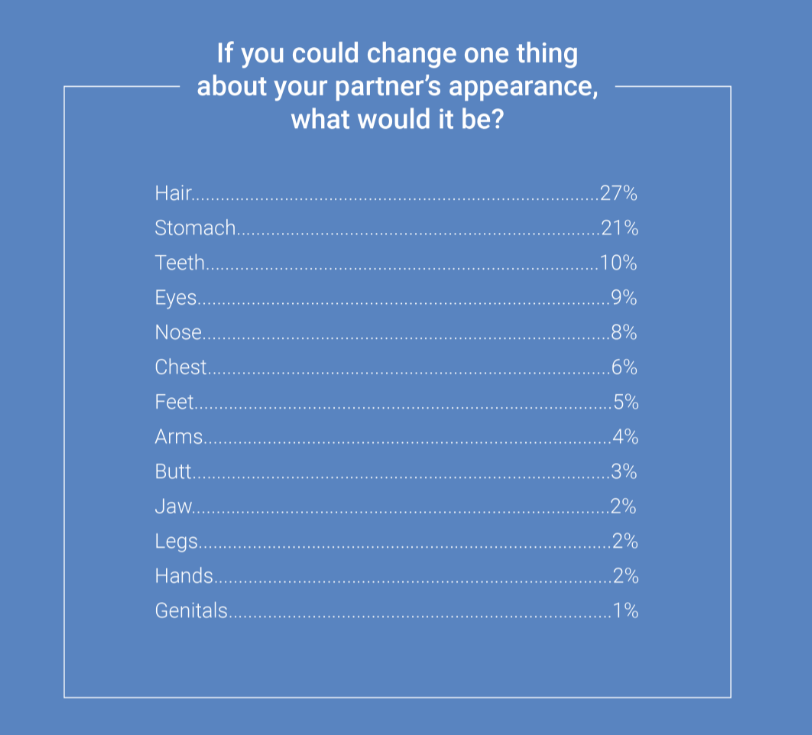
We asked what people would change about their partner’s appearance if they could. First and foremost, 79 percent of those we surveyed said their partner could stand to lose some weight. Quite a bit actually: twenty-two pounds on average. Presentation is important too: 69 percent said they wished their partner groomed themself differently.

Where do we go from here, besides the gym and the dermatologist? Good communication solves many problems in relationships, so you might start there if you have concerns. Three in four people say they’ve mentioned these changes to their partners, in one or another. More than half (52 percent) have addressed it directly, while the rest (48 percent) have stuck to making subtle comments.

The dermatology company says that the "boom" they are seeing in the industry is now "starting to make sense" as a result.

"Partners report the most noticeable changes have been: fatter bellies, fatter faces, and fatter lower bodies," the report says. 

It cites people falling out of their routines are the main reason why some people have "let themselves go". Physical upkeep and appearance have both suffered as a result, the survey says.

How antiviral pills could change course of pandemic

 ’Tis the season of the antiviral. In just over a month, two antiviral drugs — both capable of being taken as a pill — have been found to cut COVID-19 hospitalizations and deaths in clinical trials of people treated soon after their initial infection.

On 4 November, the United Kingdom became the first country to approve molnupiravir, which was developed by Merck, based in Kenilworth, New Jersey, and Ridgeback Biotherapeutics in Miami, Florida. The approval came just over a month after the companies announced that the antiviral drug, which will be branded Lagevrio, halved the risk of hospitalization in people with mild or moderate forms of COVID-19. A day after the UK approval, Pfizer, based in New York City, announced that its antiviral drug Paxlovid cut hospitalizations by 89%.

If the results hold up in the real world, the medicines could be game-changers for the pandemic. Previous antiviral options against COVID-19 were expensive and had to be administered in a hospital. The new drugs are small molecules and can be taken at home. “They would be relatively cheap to manufacture,” says Charles Gore, executive director of the Medicines Patent Pool, a United Nations-backed organization based in Geneva, Switzerland, that works to increase access to medicines. “For large parts of the world that have not got good vaccine coverage, this is really a godsend.”

But little is known about how well the drugs will work, and how easily they could be used in the places that need them most. Nature looks at five key factors that could determine how the new COVID-19 antivirals shape the course of the pandemic.

How effective are they?

Judging from the press releases, both drugs can slash hospitalizations — and potentially also deaths — from COVID-19 when they are given soon after infection takes hold. But until full reports of the clinical trials are released, some crucial details are missing.

Researchers will be looking at the ages and ethnicities of those who were enrolled in the trials, and at any other health conditions that they had, says John Mellors, an infectious-disease specialist at the University of Pittsburgh Medical Center in Pennsylvania.

Because antiviral drugs often need to be given early in the course of an infection for them to work effectively, Mellors will also be looking for more detail about when the drugs were given in the trials, and at how those timings correlated with efficacy. That information will provide a sense of when the window of opportunity for treatment closes. Neither trial had enough participants to enable firm conclusions to be drawn about the drugs’ ability to prevent deaths, but no deaths occurred in their treatment arms.

Researchers are also keen for any clue — including from further clinical trials — as to whether the drugs affect transmission of the coronavirus, or prevent illness in people who have been exposed to it.

If they do, the combination of vaccines and antiviral drugs could become a powerful tool in controlling outbreaks, says Jerome Kim, director-general of the International Vaccine Institute in Seoul. For example, if a worrying coronavirus variant emerges in a specific region, those who are most likely to be affected could be given an antiviral drug to supplement immunity from vaccines. This could clamp down on the virus and prevent its spread. “It opens up some new possibilities for the way we think about control,” Kim says. “This would have a really dramatic impact.”

Are they safe?

Both Pfizer and Merck have reported that their antivirals were well tolerated by study participants, and that potential side effects were minor. But both drugs have features that could limit who would be able to take them.

Molnupiravir acts by introducing mutations into the viral genome during viral replication. A metabolite of the drug is picked up by a viral enzyme called RNA-dependent RNA polymerase and incorporated into the viral genome, eventually causing so many errors that the virus can no longer survive.

Human cells have a DNA, rather than an RNA, genome, but some laboratory experiments have suggested that molnupiravir could cause mutations in human DNA as well1.

A full course of treatment with molnupiravir is only five days long. But regulators might be cautious, particularly when it comes to treating pregnant people, says Kim. “There’s probably going to be warnings around the use of this antiviral because of the potential risk,” he says.

Paxlovid acts by inhibiting an enzyme that’s needed to process some viral proteins into their final, functional form. But the drug is a combination of an antiviral and another drug, called ritonavir, which helps to prevent enzymes in the liver from breaking down the antiviral before it has a chance to disable the coronavirus. Ritonavir, a component of some HIV treatment cocktails, can affect how some other medications are metabolized by the body. A wide range of drugs should not be given with it, including some that are commonly used to treat heart conditions, suppress the immune system and reduce pain.

This means that many people might not be able to tolerate the combination of Paxlovid and ritonavir. But Mellors notes that this antiviral drug regimen also lasts only a few days, and physicians might find ways to work around some drug–drug interactions. “There’s going to be a learning curve as to when it can be used, and when it can’t,” he says.

Do they work against variants?

In theory, the drugs should be effective against known coronavirus variants, including the highly transmissible Delta variant. These variants are primarily characterized by mutations in the viral spike protein and other regions that are targeted by the immune system — and by vaccines.

The targets of molnupiravir and Paxlovid are different, but researchers will still need to show that the drugs work against variants, says Mellors. Merck has done laboratory studies indicating that molnupiravir is effective against Delta and other variants — including the Beta variant, which was first identified in South Africa.

Another concern is that the way in which molnupiravir generates mutations in the coronavirus genome could lead to the emergence of a new variant of concern. Although this is theoretically possible, Mellor thinks it’s unlikely. Laboratory studies have shown that molnupiravir generates a bevy of mutations in each viral genome, and the more mutations that the genome accumulates, the greater the likelihood that one of them will weaken the virus. “The chance that multiple mutations will enhance the virus is low,” Mellors says.

Can virus become resistant?

Drug resistance is a familiar problem and is the reason that some viral infections, such as HIV and hepatitis C, are treated using combinations of antivirals. “The bottom line is that we’re going to need combination therapies,” says Katherine Seley-Radtke, a chemist who is developing antiviral drugs at the University of Maryland, Baltimore County.

So far, molnupiravir and Paxlovid have been tested only as single therapies. A 5 November analysis by the science information and analytics firm Airfinity in London found only 16 COVID-19 trials that test combinations of antivirals and aim to enrol more than 100 participants. None involved molnupiravir or Paxlovid; most tested combinations with the malaria drug hydroxychloroquine, a drug that has repeatedly failed when tested as a single agent in rigorous clinical trials against COVID-19.

It will be important to look at people who don’t respond to molnupiravir or Paxlovid, to find out whether viral resistance is a factor, says Douglas Richman, an infectious-disease specialist at the University of California in San Diego. Researchers should also closely monitor people who receive the drugs and have weakened immune systems. Because infections might last longer in these people, there could be more opportunity for resistance to emerge, says Richman.

Who can access them?

Merck has signed an agreement with the Medicines Patent Pool to provide the intellectual-property licences needed to produce molnupiravir in low- and middle-income countries. Several generic-medicines companies have already started to manufacture the drug.

Gore says that the patent pool is in discussions with Pfizer. Both companies have committed to tier pricing to allow lower- and middle-income countries to pay less for the drugs than wealthier countries.

But intellectual property is not the only barrier to access. Another concern is testing: administering the antivirals early in the course of an infection means that countries will need an ample supply of COVID-19 tests. “There’s a huge gap in testing in some countries,” says Kim. “We don’t want someone to be prescribing this if someone has COVID-like symptoms, but it turns out to be the flu, not COVID-19.”

Meanwhile, wealthy countries are already placing large orders for the drugs, raising concerns that their stockpiles will soak up supplies and limit access in other parts of the world. The situation is all too familiar, says John Amuasi, leader of the Global Health and Infectious Diseases Research Group at the Kumasi Centre for Collaborative Research in Tropical Medicine in Ghana. “Look at what’s happened with the vaccines.”

doi: https://doi.org/10.1038/d41586-021-03074-5

https://www.nature.com/articles/d41586-021-03074-5