Search This Blog

Tuesday, October 25, 2022

Less Than 1 In 100 Million Chance That COVID-19 Has Natural Origin: New Study

 by Hans Mahncke via The Epoch Times (emphasis ours),

new study on the origins of the pandemic, “Endonuclease fingerprint indicates a synthetic origin of SARS-CoV2,” published on the preprint server bioRxiv, concludes that it is highly likely that the SARS-CoV-2 virus that causes COVID-19 originated in a laboratory. The odds of a natural origin, according to the study, are placed at less than 1 in 100 million.

Unlike previous studies that analyzed qualitative aspects such as virus features, the new study for the first time assesses the likelihood of a laboratory origin on a quantitative basis. This breakthrough methodology allowed the authors to present objective findings that appear to exceed any previous studies. 

Significantly, the new study does not rely on any of the known evidence pointing toward a lab origin of the SARS-CoV-2 virus. For instance, it does not take into consideration the highly unusual Furin Cleavage Site that makes the virus particularly virulent and which it is widely thought to have been inserted into the virus at the Wuhan Institute of Virology. Nor does it factor in the huge coincidence that the pandemic started on the door steps of the world’s premier coronavirus laboratory
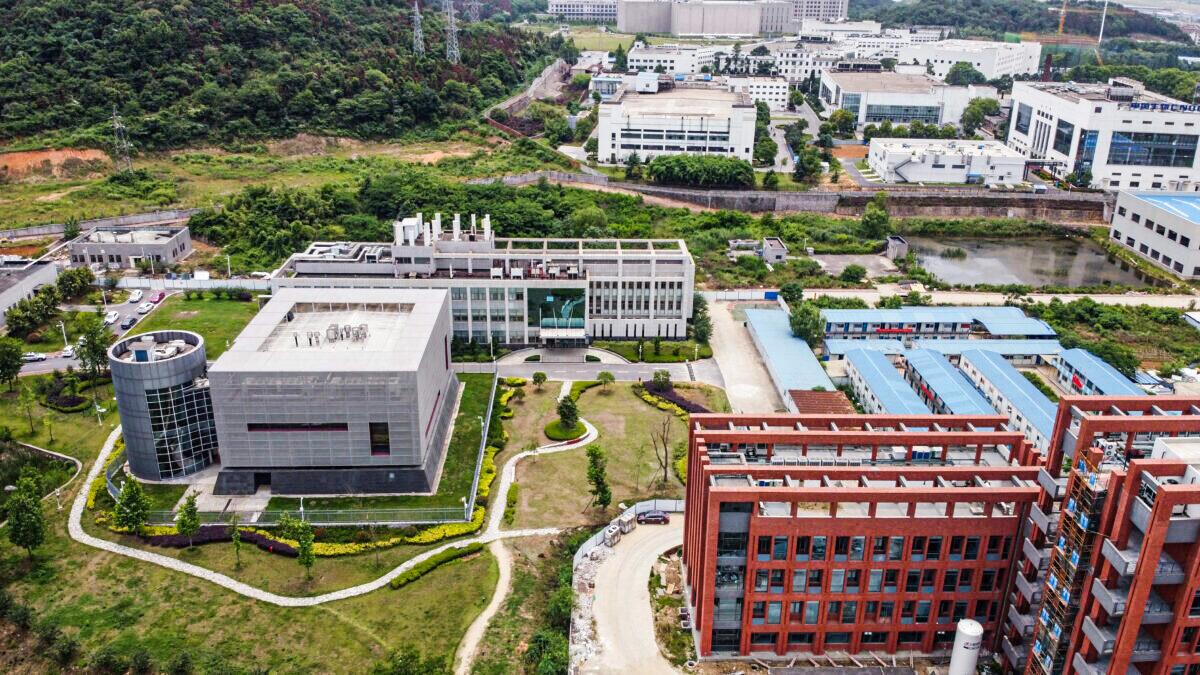
The P4 laboratory on the campus of the Wuhan Institute of Virology in Wuhan, Hubei Province, China, on May 13, 2020. (Hector Retamal/AFP via Getty Images)

Instead, the authors—Valentin Bruttel, a molecular immunologist at the University of Würzburg in Germany; Alex Washburne, a mathematical biologist at Selva Science; and Antonius VanDongen, a pharmacologist at Duke University—took a novel approach that assesses the genesis of the SARS-CoV-2 virus from an entirely new angle. The authors examined tiny fingerprints left behind in the process in which viruses are assembled in laboratories. While use of seamless genetic engineering techniques in creating viruses in laboratories typically conceals evidence of manipulation, the new study developed a statistical process for uncovering such hidden evidence by comparing the distribution of certain strands of genetic code in wild viruses and lab-made viruses. 

When viruses are constructed in a lab, they are typically assembled by piecing together various virus parts. According to a blog post from Washburne that accompanied the release of the study, it is like taking Mr. Potato Head from the movie Toy Story and replacing his arms with the arms of GI Joe to help “us study things like whether GI Joe arms provide any clear benefit for an important task in the virus life cycle like lifting weights.”

In other words, one of the main purposes of manipulating viruses is to better understand which parts of viruses make them particularly infectious, lethal, or transmissible. A related purpose is to develop bioweapons but the authors of the new study reject the idea that that is why SARS-CoV-2 was made. They believe that the virus “was assembled in a lab via common methods used to assemble infectious clones pre-COVID.”

recent experiment at Boston University is an example of piecing together virus parts. Researchers created a COVID-19 variant that killed 80 percent of exposed mice using the backbone of the ancestral SARS-CoV-2 virus and replacing its spike gene with that from the Omicron variant. Put another way, the Boston lab created a COVID-19 version of Frankenstein’s monster by piecing together different parts from different variants of the SARS-CoV-2 virus.  

Piecing together viruses in labs is subject to limitations. The genetic information for SARS-CoV-2 is contained in 30,000 base pairs of RNA nucleotides. However, the 30,000 base pairs are not pieced together all at once. Instead, laboratory viruses are assembled from a collection of smaller strands of base pairs that are later “glued” back together as chimeras, or compounds. Enzymes are used to cut viruses apart at certain points along the DNA strand (laboratories use DNA instead of RNA as it is more stable; the assembled DNA is then added to bacteria that create RNA viruses). 

Enzymes are proteins that cut through DNA strands at specific recognition sites. These recognition sites, or cutting sites, are the genetic sequences within DNA strands that are sought out by the enzymes. Enzymes are like biological scissors that cut only at particular cutting sites marked by sequences that are recognized by particular enzymes. 

Since cutting sites look like normal sequences of nucleotides, they can be found on RNA strands of naturally occurring viruses as well as on lab-made viruses. This is why this form of genetic engineering leaves no seams or obvious fingerprints. However, there is an important difference between cutting sites on wild-type and lab-made viruses that the authors exploited. Naturally occurring cutting sites are not necessarily located where scientists want them to be. Laboratories therefore routinely insert cutting sites in favorable locations and remove them from unfavorable locations.

While naturally occurring cutting sites and cutting sites added in a lab are biologically indistinguishable, Bruttel, Washburne and VanDongen hypothesized that they could detect a “very subtle but identifiable fingerprint” by plotting the distribution of the cutting sites on the SARS-CoV-2 virus. They would then compare this to the distribution of such sites on wild-type SARS viruses, as well as on other, pre-pandemic lab-made SARS viruses. They carried out their analyses for the most commonly used enzymes (biological “scissors”) which, according to a series of pre-pandemic publications from the Wuhan Institute of Virology, were also used for experiments in the Wuhan lab.
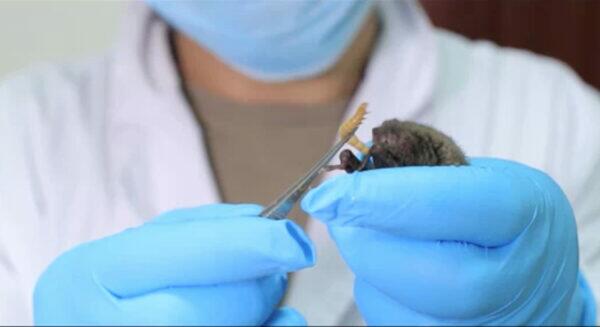
A researcher at the Wuhan Institute of Virology in Wuhan in China’s central Hubei Province feeds a bat with a worm in a 2017 video. (Screenshot)

The results of the new study are stark. While cutting sites on wild-type SARS viruses are randomly distributed, they tend to be regularly spaced on pre-pandemic lab-made viruses, as well as on SARS-CoV-2. So the authors found that regular spacing suggests that the location of the cutting sites was manipulated in a lab.

The new study also compared the length of the longest segments seen in wild-type viruses and lab-made viruses. The longest segments in wild-type viruses are far longer than any found in lab-made viruses, including in SARS-CoV-2. The findings again pointed to a lab origin for COVID-19.

The longest segments in lab-made viruses were found to be unusually short. As previously noted, the process of genetically engineering viruses requires scientists to use several shorter segments, which are then pieced together. Natural viruses are not pieced together and thus the length of segments is randomly determined and includes very short and very long segments. 

Bruttel, Washburne, and VanDongen estimate that the odds that the SARS-CoV-2 virus arose naturally lie between 1 in 100 and 1 in 1,400. However, this estimate only factors in the distribution of cutting sites. The authors also observed a concentration of mutations within the cutting sites that was “extremely unlikely in wild coronaviruses and nearly universal in synthetic viruses.” The estimate drops to a 1 in 100 million chance that SARS-CoV-2 was a naturally-occurring virus if these mutations are factored in. When considering additional criteria, such as the fact that the “sticky ends” where the viruses are “glued” back together all happen to fit perfectly, the authors estimate the odds of a natural origin to be even lower. 

The authors conclude that SARS-CoV-2 was assembled in a lab using common methods for assembling viruses. The authors do not speculate on which lab the virus escaped from.

In response to the new study, Kristian Andersen, the leading author of the Proximal Origin paper—the Dr. Anthony Fauci-led effort to dispel the lab leak theory—went on Twitter to slam the new study as “kindergarten molecular biology.” Andersen’s criticism is that cutting sites are common in naturally occurring SARS viruses. However, this criticism does not explain the very unusual placement of cutting sites in SARS-CoV-2.

https://www.zerohedge.com/covid-19/less-1-100-million-chance-covid-19-has-natural-origin-new-study

Monday, October 24, 2022

Bispecifics move beyond cancer

 Bispecific antibodies are continuing to attract deal interest, as two transactions this week showed. Oncology steals much of the limelight falling on such novel biological formats, but important progress is being made elsewhere too.

Two days ago Roche revealed that at least some of its future growth would be down to two novel dual-acting biologicals in non-cancer uses: Vabysmo in wet age-related macular degeneration and NXT007 in haemophilia. Evaluate Pharma reveals several other clinical-stage bispecifics outside oncology, including assets from Novo Nordisk, Moonlake and Provention Bio.

In wet AMD Roche’s recently launched Vabysmo, which targets VEGF and Ang-2, is taking market share from Regeneron’s Eylea, while in haemophilia A the Swiss group is taking forward NXT700, a Chugai-originated bispecific against factors IXa and X. The latter is a follow-on to the hugely successful Hemlibra, and the aim is for it to have higher potency, and possibly less frequent dosing.

Perhaps unsurprisingly, Roche is not the only company pursuing this mechanism: Novo Nordisk has Mim8 in phase 3, while Takeda inherited a Novimmune-originated preclinical anti-factor IXa/X, NIBX-2101, through its 2018 acquisition of Shire. However, NIBX-2101 does not yet appear to have been taken into clinical trials.

Structural approaches

Similarly to the oncology space the bispecifics in development here comprise a range of structural approaches, including full MAb formats, fusion proteins, Darts, MAb fragments like nanobodies and minibodies, and others.

This is well illustrated in lupus, where Astrazeneca/Amgen and Lilly have assets hitting the B cell survival protein BAFF. The former’s rozibafusp alfa combines an anti-BAFF MAb with a peptide against the co-stimulatory ligand ICOSL, while the latter’s tibulizumab is a tetravalent bispecific MAb that also hits IL-17, though it no longer appears in Lilly’s pipeline.

Among small players Provention Bio is also active in lupus with a bispecific Dart molecule, PRV-3279. Meanwhile, last year Merck KGaA sold to Moonlake Immunotherapies rights to sonelokimab, a nanobody it had studied in psoriasis, but which the licensee has taken forward in hidradenitis suppurativa.

Merck KGaA’s interest in sonelokimab stemmed from a deal with Ablynx, a Belgian company sold to Sanofi in 2018. It is largely through Ablynx, which was working on numerous camel-derived nanobodies, that Sanofi has a presence in bispecifics outside oncology, though vobarilizumab and ALX-0141 appear not to be in active clinical development.

Another Ablynx-derived asset, ozoralizumab, an anti-TNFα x human serum albumin nanobody, was licensed to Taisho, and last month was approved in Japan for rheumatoid arthritis as Nanozora.

Clinical-stage bispecific approaches excluding oncology
ProjectCompanyPharmacologyStatus
Mim8Novo NordiskAnti-factor IXa & X bispecific MAbPh3 in haemophilia A with/without inhibitors
NXT007Roche/ ChugaiAnti-factor IXa & X bispecific MAbPh2 (Japan) for harmophilia A
Rozibafusp alfa (AMG 570)Amgen/ AstrazenecaAnti-BAFF x ICOSL MAb/peptide conjugatePh2 for lupus
PRV-3279Provention BioAnti-CD32B x CD79B DartPh2 for lupus
Sonelokimab (M1095)Moonlake Immunotherapeutics (ex Merck KGaA)Anti IL-17A x IL-17F nanobodyPh2 for hidradenitis suppurativa
ALXN1820AstrazenecaAnti-properdin bispecific minobodyPh2 for sickle cell disease
Fazpilodemab (RG7992/BFKB8488A)RocheAnti-FGFR1 x coreceptor β klotho MAbPh2 for Nash
MEDI7352AstrazenecaAnti-NGF x TNFR2 bispecific fusion proteinPh2 for osteoarthritis of the knee
VobarilizumabSanofi (ex Ablynx)Anti-IL-6R x HSA nanobodyMixed ph2 data in rheumatoid arthritis (Abbvie deal terminated)
SAR442999SanofiAnti-TNFα x IL-23 nanobodyPh1 for inflammatory/skin diseases
RG6120RocheAnti-VEGF x Ang-2 dutaFabPh1 for wet AMD (designed for port delivery system)
ALX-0141Sanofi (ex Ablynx)Anti-RANKL x HSA nanobodyPh1 completed in postmenopausal women
Tibulizumab (LY3090106)LillyAnti-BAFF x IL-17 bispecific MAbVarious ph1 autoimmune trials completed
Note: HSA=human serum albumin; Source: Evaluate Pharma & clinicaltrials.gov.

https://www.evaluate.com/vantage/articles/news/corporate-strategy/bispecifics-move-beyond-cancer

NYC subway bathrooms to reopen after extended COVID closure

 Subway bathrooms will begin to reopen in January nearly three years after officials closed them to prevent the spread of COVID-19, according to a report.

Transit officials plan to reopen the facilities at eight of the 69 stations with public restrooms, Streetsblog reported on Monday.

The first round of reopened loos will include 161st Street-Yankee Stadium, 14th Street-Union Square, Jay Street-Metrotech, Flushing Main Street and Fulton Street in Manhattan.

Officials shuttered the subway’s 133 restrooms in March 2020, but declined to reopen even after studies showed COVID-19 primarily spreads through the air and not surfaces.

MTA CEO Janno Lieber blamed the continued closures on a lack of cleaning personnel and many cleaners’ safety concerns about entering the bathrooms alone.

Subway bathrooms closed for maintenance, pictured in 2016.
The MTA declined to reopen subway bathrooms for months due to safety concerns.
Tamara Beckwith/NY Post
Subway bathroom
Subway bathrooms were often closed before COVID-19.
Gabriella Bass

“The problem for us is during COVID, we lost a ton of cleaners, and we don’t have enough people to clean the stations, let alone the bathrooms, which is not just a cleaning issue, but honestly a security issue,” he said in an interview with CBS New York last month.

“Those cleaners are a little scared to go into those bathrooms sometimes.”

The authority has hired 800 additional cleaners in the past two months, MTA New York City Transit President Rich Davey told Streetsblog.

Restrooms at MTA commuter rail hubs reopened last year.

https://nypost.com/2022/10/24/mta-to-reopen-subway-bathrooms-after-extended-covid-closure/

Why did President Biden just endorse the most radical trans madness?

 State efforts to curb “gender-affirming” treatment of trans kids are “outrageous” and “immoral,” President Joe Biden told a panel of social-media influencers. “As a moral question and as a legal question, I just think it’s wrong.” Did he realize such treatment can include irreversible surgery on pre-teens, or was he just reading the talking points some staffer handed him?

Probably the latter. After all, why was the leader of the free world even bothering with the beyond-obscure NowThis News presidential forum, unless some agenda-driven minion set it up?

Biden was answering transgender TikTok star Dylan Mulvaney‘s question that asked if states should have the right to regulate sex-change surgeries for kids. Our president misses the point pretty regularly, but does he really believe that a 12-year-old should be able to get major organs removed, or even be put on puberty blockers (which also has lifelong consequences), without parental consent at least?

Then again, his administration’s own guidelines say as much. Heck, it’s been the Democratic line for years now: In 2016, the Obama administration issued rules telling doctors they couldn’t decline to perform gender-reassignment surgery on kids if it’s recommended by a “mental health professional.”

Never mind that kids simply aren’t competent to make such decisions on their own, or that gender dysphoria in the years around puberty often proves temporary. (Gay kids, in particular, have a lot to figure out, and young girls are particularly vulnerable to social-media crazes and “influencers.”)

Treat these kids with tolerance and compassion, absolutely. But the activists (and the folks who stand to make money off teen transitions) are pushing a far more radical agenda.

We’re not sure which is more depressing: that the Democratic Party seems unable to resist this madness, or that the White House lunatic left has so much control over the president that he endorsed it.

https://nypost.com/2022/10/24/why-did-president-biden-just-endorse-the-most-radical-trans-madness/

Oxytocin derivative improves cognitive impairment in Alzheimer's

 Alzheimer's disease (AD), characterized by an accumulation of β-amyloid protein (Aβ) in brain tissue, is a leading cause of dementia. Researchers at Tokyo University of Science have previously reported on the oxytocin-induced reversal of impaired synaptic plasticity triggered by amyloid β peptide (25-35) (Aβ25-35). They now show that an oxytocin derivative with modifications to enhance brain perfusion can reverse Aβ25-35-induced cognitive impairment in mice.

The cognitive decline and memory loss observed in Alzheimer's disease (AD) is attributed to the accumulation of β-amyloid protein (Aβ), which impairs neural function in the brain. Experimentation has shown that oxytocin, a peptide hormone primarily responsible for parturition, bonding, and lactation, also regulates cognitive behavior in the rodent central nervous system (CNS). This finding, along with the identification of oxytocin receptors in CNS neurons, has spurred interest in the potential role of oxytocin in reversing memory loss tied to cognitive disorders like AD.

However, peptides like oxytocin are characterized by weak blood-brain barrier permeability, and so can only by efficiently delivered to the brain via intracerebroventricular (ICV) administration. ICV, however, is an invasive technique which is impractical to implement clinically.

Delivering peptides to the CNS via intranasal (IN) administration is a viable clinical option. Prof. Chikamasa Yamashita at Tokyo University of Science recently patented a method to increase the efficiency of peptide delivery to the brain, by introducing cell-penetrating peptides (CPPs) and a penetration accelerating sequence (PAS) through structural modifications. Previous work had confirmed that both CPPs and the PAS benefit the nose-to-brain delivery pathway. Now, a group of researchers, led by Prof. Akiyoshi Saitoh and Prof. Jun-Ichiro Oka, leveraged this approach to prepare an oxytocin derivative: PAS-CPPs-oxytocin. Their findings were published online in Neuropsychopharmacology Reports on 19 September 2022.

"We have previously shown that oxytocin reverses amyloid 𝛽 peptide (25-35) (A𝛽25-35)-induced impairment of synaptic plasticity in rodents. We wanted to see if PAS-CPPs-oxytocin could be delivered more efficiently to the mouse brain for clinical application, and if it improved cognitive functional behavior in mice," states Prof. Oka

The group first developed an A&β25-35 peptide-induced amnesia model by supplying Aβ25-35 to the mouse brain using ICV delivery. During the course of the study, the spatial working and spatial reference memories of these mice were evaluated using the Y-maze and Morris water maze (MWM) tests. After confirming that memory was affected in Aβ25-35-impaired mice, PAS-CPPs-oxytocin and native oxytocin were administered using the IN and ICV routes respectively, to see if learning and memory improved in the treated mice. Finally, the distribution of the IN-administered oxytocin derivative in brain tissue was profiled by imaging of a fluorescent-tagged oxytocin derivative.

The results of this study were quite promising! The tagged PAS-CPPs-oxytocin showed distribution throughout the mouse brain following its IN administration. While the ICV administration of native oxytocin improved test outcomes in both the Y-maze and MWM tests, the IN administered PAS-CPPs-oxytocin yielded memory improving effects in the Y-maze test. Hailing the team's discovery, Prof. Oka says,"My team is the first to show that the oxytocin derivative can improve the A𝛽25-35-induced memory impairment in mice. This suggests that oxytocin may help reduce the cognitive decline we see in Alzheimer's disease."

Why are these findings clinically useful? Prof. Oka explains the broader implications of their work,"The oxytocin derivative enters the brain more efficiently. Furthermore, since IN delivery is a non-invasive procedure, this modified version of the hormone could potentially be a clinically viable treatment for Alzheimer's disease."


Story Source:

Materials provided by Tokyo University of ScienceNote: Content may be edited for style and length.


Journal Reference:

  1. Junpei Takahashi, Yudai Ueta, Daisuke Yamada, Sachie Sasaki‐Hamada, Takashi Iwai, Tomomi Akita, Chikamasa Yamashita, Akiyoshi Saitoh, Jun‐Ichiro Oka. Intracerebroventricular administration of oxytocin and intranasal administration of the oxytocin derivative improve β‐amyloid peptide (25–35)‐induced memory impairment in miceNeuropsychopharmacology Reports, 2022; DOI: 10.1002/npr2.12292

Even good gene edits can go bad

 A Rice University lab is leading the effort to reveal potential threats to the efficacy and safety of therapies based on CRISPR-Cas9, the Nobel Prize-winning gene editing technique, even when it appears to be working as planned.

Bioengineer Gang Bao of Rice's George R. Brown School of Engineering and his team point out in a paper published in Science Advances that while off-target edits to DNA have long been a cause for concern, unseen changes that accompany on-target edits also need to be recognized -- and quantified.

Bao noted a 2018 Nature Biotechnology paper indicated the presence of large deletions. "That's when we started looking into what we can do to quantify them, due to CRISPR-Cas9 systems designed for treating sickle cell disease," he said.

Bao has been a strong proponent of CRISPR-Cas9 as a tool to treat sickle cell disease, a quest that has brought him and his colleagues ever closer to a cure. Now the researchers fear that large deletions or other undetected changes due to gene editing could persist in stem cells as they divide and differentiate, thus have long-term implications for health.

"We do not have a good understanding of why a few thousand bases of DNA at the Cas9 cut site can go missing and the DNA double-strand breaks can still be rejoined efficiently," Bao said. "That's the first question, and we have some hypotheses. The second is, what are the biological consequences? Large deletions (LDs) can reach to nearby genes and disrupt the expression of both the target gene and the nearby genes. It is unclear if LDs could result in the expression of truncated proteins.

"You could also have proteins that misfold, or proteins with an extra domain because of large insertions," he said. "All kinds of things could happen, and the cells could die or have abnormal functions."

His lab developed a procedure that uses single-molecule, real-time (SMRT) sequencing with dual unique molecular identifiers (UMI) to find and quantify unintended LDs along with large insertions and local chromosomal rearrangements that accompany small insertions/deletions (INDELs) at a Cas9 on-target cut site.

"To quantify large gene modifications, we need to perform long-range PCR, but that could induce artifacts during DNA amplification," Bao said. "So we used UMIs of 18 bases as a kind of barcode."

"We add them to the DNA molecules we want to amplify to identify specific DNA molecules as a way to reduce or eliminate artifacts due to long-range PCR," he said. "We also developed a bioinformatics pipeline to analyze SMRT sequencing data and quantified the LDs and large insertions."

The Bao lab's tool, called LongAmp-seq (for long-amplicon sequencing), accurately quantifies both small INDELs and large LDs. Unlike SMRT-seq, which requires the use of a long-read sequencer often only available at a core facility, LongAmp-seq can be performed using a short-read sequencer.

To test the strategy, the lab team led by Rice alumna Julie Park, now an assistant research professor of bioengineering, used Streptococcus pyogenes Cas9 to edit beta-globin (HBB), gamma-globin (HBG) and B-cell lymphoma/leukemia 11A (BCL11A) enhancers in hematopoietic stem and progenitor cells (HSPC) from patients with sickle cell disease, and the PD-1 gene in primary T-cells.

They found large deletions of up to several thousand bases occurred at high frequency in HSPCs: up to 35.4% in HBB, 14.3% in HBG and 15.2% in BCL11A genes, as well as on the PD-1 (15.2%) gene in T-cells.

Since two of the specific CRISPR guide RNAs tested by the Bao lab are being used in clinical trials to treat sickle cell disease, he said it's important to determine the biological consequences of large gene modifications due to Cas9-induced double-strand breaks.

Bao said the Rice team is currently looking downstream to analyze the consequences of long deletions on messenger RNA, the mediator that carries code for ribosomes to make proteins. "Then we'll move on to the protein level," Bao said. "We want to know if these large deletions and insertions persist after the gene-edited HSPCs are transplantation into mice and patients"

Co-authors of the study from Rice are graduate students Mingming Cao and Yilei Fu, alumni Yidan Pan and Timothy Davis, research specialist Lavanya Saxena, microscopist/bioinstrumentation specialist Harshavardhan Deshmukh and Todd Treangen, an assistant professor of computer science, and Emory University's Vivien Sheehan, an associate professor of pediatrics.

Bao is the department chair and Foyt Family Professor of Bioengineering, a professor of chemistry, materials science and nanoengineering, and mechanical engineering, and a CPRIT Scholar in Cancer Research.

The National Institutes of Health (R01HL152314, OT2HL154977) supported the research.


Story Source:

Materials provided by Rice University. Original written by Mike Williams. Note: Content may be edited for style and length.


Journal Reference:

  1. So Hyun Park, Mingming Cao, Yidan Pan, Timothy H. Davis, Lavanya Saxena, Harshavardhan Deshmukh, Yilei Fu, Todd Treangen, Vivien A. Sheehan, Gang Bao. Comprehensive analysis and accurate quantification of unintended large gene modifications induced by CRISPR-Cas9 gene editingScience Advances, 2022; 8 (42) DOI: 10.1126/sciadv.abo7676

Intranasal COVID vaccine that works against variants in animals

 An intranasal vaccine against SARS-CoV-2 could quickly get to the respiratory tract, where the virus most commonly causes symptoms. And a spray or droplets could be a more palatable option for people who fear needles. But so far, only a few countries have approved COVID nasal vaccines. Now researchers report in ACS Nano that they've developed one that can fight off the original virus and two variants in hamsters.

The current batch of injected COVID vaccines have been effective at combating SARS-CoV-2 infection around the globe. But these shots enter the body in the muscle tissue, whereas the virus enters and causes many of the typical COVID symptoms in the respiratory tract. Thus, intranasal immunizations with a spray or droplets could be a better option. Although India and a couple of other countries have approved intranasal COVID vaccines in recent months, the road to formulating successful intranasal vaccines is not an easy one. For example, AstraZeneca announced this month that its intranasal candidate failed to produce a strong immune response in nasal tissues and offered less systemic protection than the intramuscular version. So, Madhavan Nallani, Pierre Vandepapeliere and colleagues wanted to formulate an intranasal COVID vaccine that would stimulate an immune response both systemically and in the respiratory tract, and that would also work against SARS-CoV-2 variants.

The researchers based their vaccine on the spike protein from the SARS-CoV-2 beta variant, separately encapsulating the antigen and an immune-stimulating adjuvant into nanoparticles known as artificial cell membrane polymersomes. They packaged the two components separately so that they could more easily change the spike component to one from another variant if needed. Intramuscular co-administration of the parts produced a strong immune response in both mice and hamsters. When the hamsters injected with the new vaccine were exposed to live virus, however, they still developed an infection. In contrast, intranasal coadministration in hamsters produced a strong systemic immune response. It also cleared viruses from the respiratory tract and prevented infection-associated lung damage. Regardless of how the vaccine was administered, it provided protection against multiple variants, including omicron. Based on these results, the researchers are now recruiting participants for a Phase 1 clinical trial.

The authors acknowledge funding by the National Health Innovation Centre Gap Funding Award Singapore.


Story Source:

Materials provided by American Chemical SocietyNote: Content may be edited for style and length.


Journal Reference:

  1. Jian Hang Lam, Devendra Shivhare, Teck Wan Chia, Suet Li Chew, Gaurav Sinsinbar, Ting Yan Aw, Siamy Wong, Shrinivas Venkataraman, Francesca Wei Inng Lim, Pierre Vandepapeliere, Madhavan Nallani. Artificial Cell Membrane Polymersome-Based Intranasal Beta Spike Formulation as a Second Generation Covid-19 VaccineACS Nano, 2022; DOI: 10.1021/acsnano.2c06350