Search This Blog

Saturday, January 21, 2023

Hunter Biden’s daughter urged by prof to cash in on family name in China

 A professor at the University of Pennsylvania once pointedly urged Hunter Biden’s daughter to attend a lavish all-expenses paid conference in China, advising that her family name would open doors for her in the country, according to messages found on Hunter’s abandoned laptop.

The university is under scrutiny after classified documents were discovered at the school’s Penn Biden Center in Washington D.C. shortly before the midterm elections. The discovery was concealed by the Biden White House for months afterwards. Some of the documents related to countries Hunter Biden did business in — like Ukraine.

Frank Plantan Jr., a “lecturer emeritus” at the university, assured Naomi Biden that China’s Boao Forum — which he described as an “Asian Davos” — would be easy.

“My impression [is] it is pretty light lifting — no long speeches and more conversational. They will fly you business class and of course provide all your accommodations and meals and are happy to try and arrange meetings or introductions for you there or in other sectors in China,” Plantan wrote to Naomi in a message, found on the laptop, that she shared with Hunter Biden over text in February 2019.

“I don’t think it would surprise you that they are interested in you thanks to your family name. I would not take offense at that — it is truly the Chinese way. (And frankly, better you than that dolt Tiffany Trump),” he added.Frank Plantan Jr.

Frank Plantan Jr. told Naomi Biden she could network at the conference thanks to her family name.
Frank Plantan LInkedIn

Tiffany Trump and Naomi Biden were classmates at Penn and both graduated in 2016. The China invitation came when Naomi Biden was studying law at Columbia University, and her grandfather Joe Biden was gearing up for his 2020 presidential campaign.

In a message to Hunter, Naomi identified Plantan as the “head of the IR department at Penn” and asked for his thoughts on whether she should go.

Hunter Biden spent years himself looking for ways to cash in on China and was feted by some of the country’s most powerful businessmen. A 2017/18 bid to sell liquified natural gas to China — which appears to have involved Joe Biden — has become a prime focus of the US House Oversight Committee. It’s new Chairman Rep. James Comer (R-Ky.) has called the deal “potentially criminal.”

Naomi Biden
Naomi Biden was studying at Columbia Law at the time of the invitation.
GC Images

Hunter Biden was all for the venture.

“Yes- I would,” he advised, urging her to ask for a second ticket for boyfriend Peter Neal.

“Don’t be shy,” Hunter Biden said. “I like the frankness of your professor but also the event seems worthwhile and something you could benefit from.”

The 2019 Boao Forum took place a month later in the country’s resort island of Hainan. It’s keynote speaker was Chinese Premier Li Keqiang — then the second most powerful man in the country’s ruling Communist party.

Li Keqiang
Li Keqiang was the keynote speaker of the Boao Forum.
Bloomberg via Getty Images

Naomi Biden, however, wasn’t there. With Joe Biden preparing to announce his presidential campaign, his team put the kibosh on the trip.

“It is with great regret that I write to tell you I will not be able to attend the Boao Forum,” Naomi Biden wrote to Plantan in a message — a draft of which she shared with Hunter Biden in an email.

“In doing his due diligence, my Pop [Joe Biden] asked his China experts and advisors to brief him on how my attendance may be perceived by the press and Chinese government,” she continued. “After he has all the information and upon the advice of his staff my Pop asked that I respectfully tell the Boao Forum that I would in fact not be able to attend.”

Plantan did not respond to request for comment from The Post.

https://nypost.com/2023/01/21/upenn-teacher-urged-hunter-bidens-kid-to-cash-in-on-name/

Bitcoin Surges Above $23,000; Best Start To A Year Ever

 Bitcoin's rampage higher in 2023 accelerated overnight with the largest cryptocurrency topping $23,000 for the first time since August 2022...

Source: Bloomberg

The latest thrust pushed bitcoin back above its 200-day moving-average...

Source: Bloomberg

And while Ethereum has also surged, Bitcoin has dramatically outperformed its peers, erasing the year-to-date relative gains of the DeFi surge...

Source: Bloomberg

As Bitcoin Magazine's Dylan LeClair detailsone of the most useful models in tracking the cyclical tops for both the S&P 500 Index and bitcoin since March 2020 has proven to be net liquidity, an original model by 42 Macro.

Net liquidity tracks the changes in Federal Reserve total assets, the U.S. Treasury general account balance and the reverse repo facility. A lower net liquidity translates to less capital available to deploy in markets. We find it useful as a key macro indicator to assess current liquidity conditions and how bitcoin trades in the market.

Bitcoin has acted as a liquidity sponge throughout its life and contracting liquidity in all markets has had a significant impact on the bitcoin price and trajectory. Ultimately, that’s one of the main drivers of our core long-term thesis that bitcoin’s growth depends on an environment of perpetual monetary debasement and expanding liquidity to work against current levels of unsustainable sovereign debt and deflationary forces. In the short-term, it’s not clear when overall liquidity will increase again en masse. That’s the trillion dollar question and the topic of conversation on which everyone is speculating. Net liquidity provides a view into that trajectory as a measure that’s updated weekly with fresh data.

Bitcoin is seeing some of its largest relative strength since January 2021, but it also comes at a time when we’re seeing a significant daily uptick in net liquidity after a period of historically low volatility. The uptick is driven by a much lower reverse repo balance since the start of the year. With the Fed’s position of “higher for longer,” a projected view of Core CPI at 3.5% for 2023 and continued balance sheet runoff, we will likely see net liquidity decline — barring a spontaneous or emergency policy reversal. 

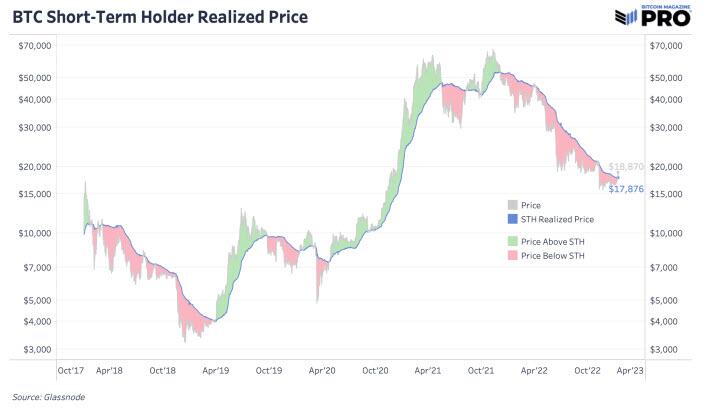
Price has broken above the short-term holder realized price. That’s happened only a few times in this bear market and these events were short-lived. As this price reflects the average on-chain cost basis of the more recent buyers, it will be key to see if these market participants are looking to sell here at cost or if they will stay to continue with the momentum.

While there is a long way to go in terms of surpassing previous bull market heights, after a year where the enture industry practically imploded, the year-to-date performance is - according to Bloomberg data - the best start to a year in crypto's history...

However, not everyone is buying this rally, with some suggesting it's just another 'dead cat bounce'.

As CoinTelegraph reportsAsia was leading the way into the weekend, with sellside pressure from market makers being absorbed on exchanges.

“Another rally driven by asia bid. TWAP buyers absorbing the sell pressure from MMs. Large spot bid lifting offers & ask wall pulled prior to another short squeeze,” intraday trader 'Skew' commented on a composite chart.

BTC/USD annotated charts. Source: Skew/ Twitter

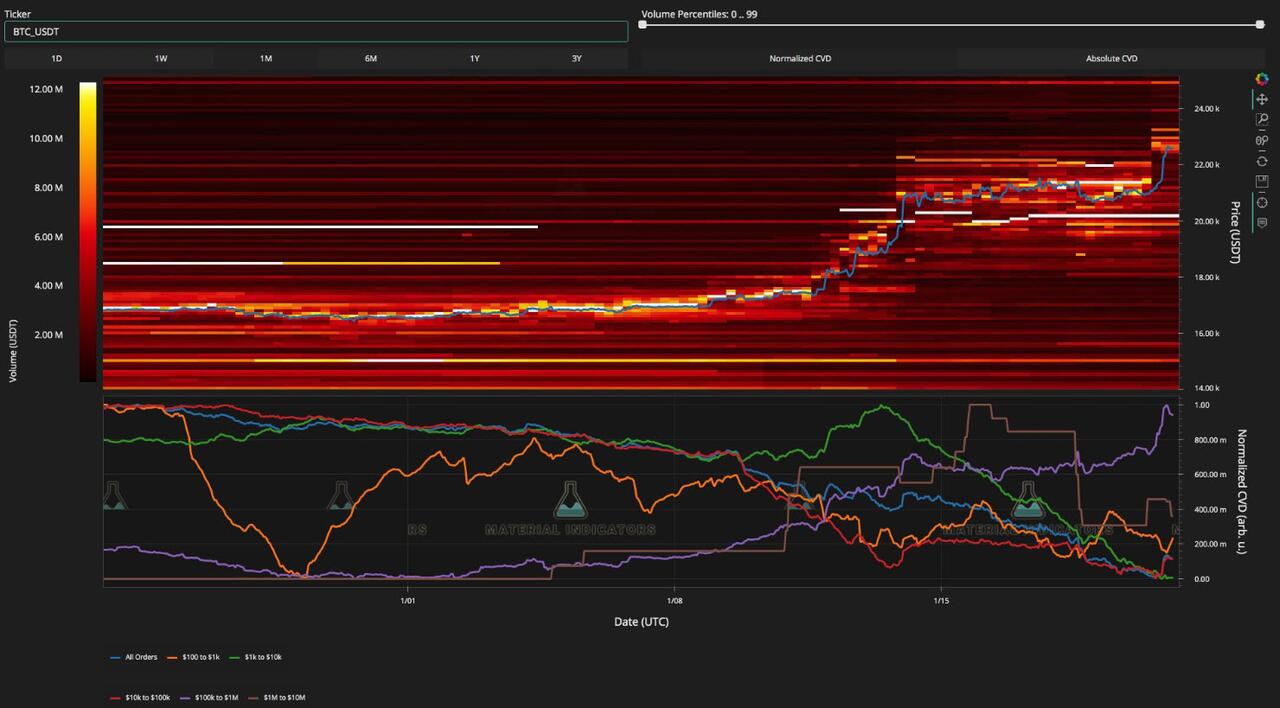
On-chain analytics resource Material Indicators meanwhile flagged ask liquidity being removed on Binance the day prior, this allowing Bitcoin’s initial run beyond the $22,000 mark.

“Volatility continues. Don't give it all back, be sure to take some profit along the way,” it wrote in part of a subsequent update.

BTC/USD order book data (Binance). Source: Material Indicators/ Twitter

As ever, Bitcoin was far from above suspicion at its latest highs, with some familiar faces still urging traders to prepare for the worst.

“The bigger the pump, the harder BTC will fall down,” analyst Toni Ghinea tweeted, while Crypto Tony argued that the entire move may be nothing more than a “dead cat bounce.”

“Regardless if this is dead cat relief wave or a reversal on Bitcoin, it is great to see some optimism back in Crypto,” he summarized.

Considering why further gains were coming after the end of the week’s TradFi trading, one popular commentator additionally suggested that traders were being manipulative.

“No one who genuinely wants to buy and own crypto waits until the Friday close each week to execute,” an update read, adding that those buyers’ “aim is clear.”

Zooming out to the bigger picture, CoinTelegraph reports that others focused on continued impressive moves by safe haven gold, which had hit a new nine-month high on Jan. 19.

In a Twitter debateanalysts eyed a potential continued game of catch-up between gold and Bitcoin, which researcher and data analyst James V. Straten argued had been a “mirror image” of each other in 2022.

“My bet BTC closes that gap soon,” he said while discussing the market implications of Federal Reserve policy.

Straten added that BTC/USD had already “retraced the entire FTX collapse and approaching the end of the narrative for DCG,” referring to ongoing problems for crypto finance conglomerate, Digital Currency Group.

As Cointelegraph reportedexpectations previously called for a copycat move on Bitcoin after gold took an early lead in recovering from lows.

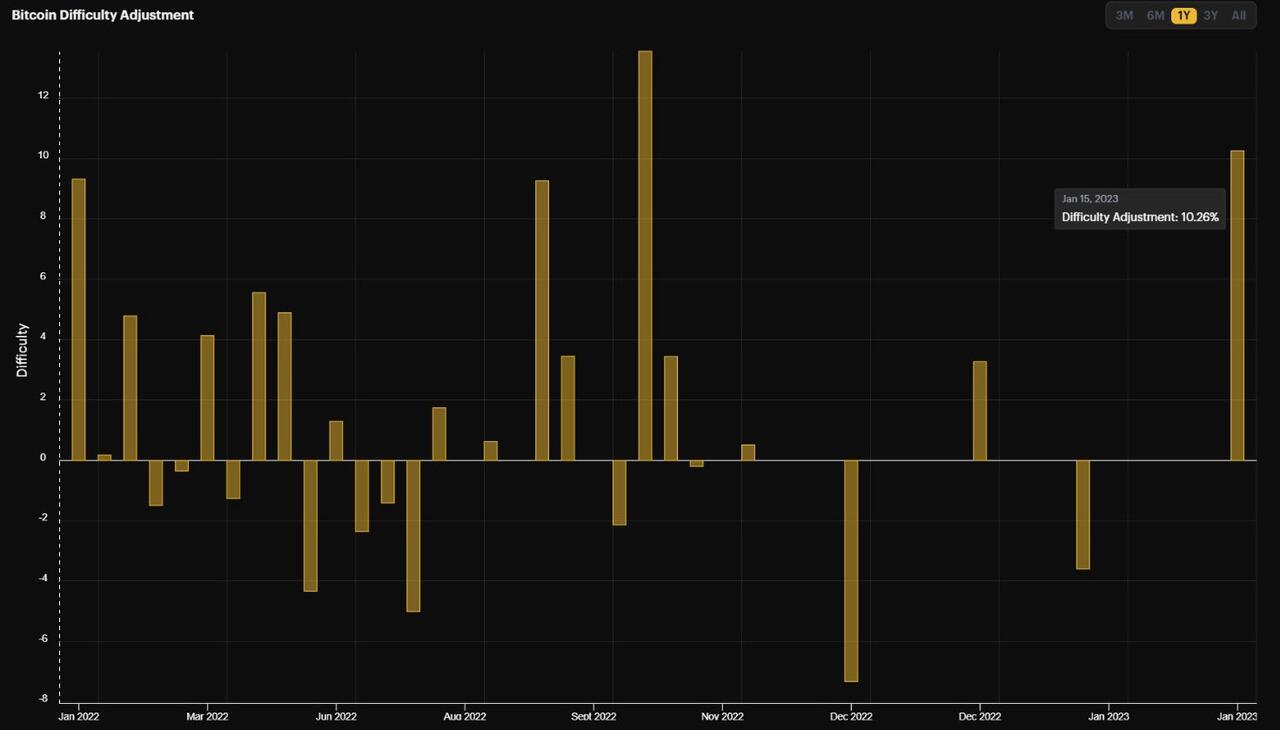
Finally, while miners are currently seeing some relief after a tough year, potentially rough roads lie ahead.

With the upcoming Bitcoin halving event due in 2024, mining BTC will become even more difficult and possibly more expensive for miners, providing more stress on already thin margins. On the upside, the last halving event in 2019 was followed by a 300% gain for BTC the year before.

https://www.zerohedge.com/crypto/bitcoin-surges-above-23000-best-start-year-ever

With Upcoming Ovarian Cancer Data, Citi Sees 100% Upside For Mersana Therapeutics


  • Citi initiated coverage on Mersana Therapeutics Inc (NASDAQ: MRSN) with a Buy rating and a price target of $12. 

  • The analyst says the topline registrational data (expected in mid-2023) from the UPLIFT Ph2 study evaluating upifitamab rilsodotin (UpRi; NaPi2b ADC) in platinum-resistant ovarian cancer (PROC) will be a catalyst of significant debate.

  • Citi analyst says that while readout will be binary, investors are underappreciating UPLIFT’s probability of success in NaPi2b-high patients, given the promising efficacy observed in Phase 1.

  • If the UPLIFT study results are positive, it will lead to a clear pathway to an accelerated approval filing by YE23.

  • The analyst writes that UpRi’s durability in Phase 1 was in-line or better than single-agent chemo SOC and the recently approved ADC Elahere.

  • On toxicity, reduced dosing and patient selection strategies should mitigate the risk of Gr4/5 pneumonitis seen earlier in Phase 1.

  • In December, Mersana announced its third significant collaboration agreement in 2022, reflecting its increasing role as an ADC partner.

  • The company announced a research collaboration and commercial license agreement with a subsidiary of Merck KGaA (OTC: MKKGY) to discover novel Immunosynthen ADCs directed against up to two targets.

  • Mersana received an upfront payment of $30 million and is eligible to receive reimbursement of certain costs, up to $800 million in potential milestone payments.

Genetic disorder causes susceptibility to opportunistic infections

 An international consortium co-led by Vanderbilt University Medical Center immunogeneticist Rubén Martínez-Barricarte, Ph.D., has discovered a new genetic disorder that causes immunodeficiency and profound susceptibility to opportunistic infections including a life-threatening fungal pneumonia.

The discovery, reported Jan. 20 in the journal Science Immunology, will help identify people who carry this in-born error of immunity (IEI). "Our findings will provide the basis for  and preventive treatment for these groups of patients," Martínez-Barricarte said.

IEIs, also known as primary immunodeficiencies, are  characterized by increased susceptibility to , autoimmunity, anti-inflammatory disorders, allergy, and in some cases, cancer.

To date, 485 different IEIs have been identified. It is now thought that they occur in one of every 1,000 to 5,000 births, making them as prevalent as other genetic disorders, including cystic fibrosis and Duchene's muscular dystrophy.

Despite recent medical advances, about half of patients with IEIs still lack a genetic diagnosis that could help them avoid debilitating illness and death. That's why this research is so important.

The error in this case is a mutation in the gene for the protein IRF4, a transcription factor that is pivotal for the development and function of B and T , as well as other immune cells.

As a postdoctoral fellow at The Rockefeller University, Martínez-Barricarte was part of an international research team that, in 2018, identified an IRF4 mutation associated with Whipple's disease, a rare bacterial infection of the intestine that causes diarrhea, weight loss, and abdominal and joint pain.

Martínez-Barricarte is now an assistant professor of Medicine in the Division of Genetic Medicine, and of Pathology, Microbiology & Immunology in the Division of Molecular Pathogenesis.

In 2020, after moving his lab to VUMC, he began collaborating with Aidé Tamara Staines-Boone, MD, and her colleagues in Monterrey, Mexico. They were caring for a young boy who was suffering from severe and recurrent fungal, viral, mycobacterial, and other infections.

Martínez-Barricarte and his team sequenced the protein-encoding regions of the boy's genome and discovered a de novo IRF4 mutation, which originated in the patient and was not inherited from his parents.

Upon consulting with IRF4 experts at the Imagine Institute for the study and treatment of genetic diseases in Paris, they were told that seven other groups were independently characterizing the same mutation. They now collaborate as the IRF4 International Consortium.

In the current study, the consortium identified seven patients from six unrelated families across four continents with profound combination immunodeficiency who experienced recurrent and serious infections, including pneumonia caused by the fungus Pneumocystis jirovecii. Each patient had the same mutation in the DNA-binding domain of IRF4.

Extensive phenotyping of patients' blood cells revealed immune cell abnormalities associated with the disease, including impaired maturation of antibody-producing B cells, and reduced T-cell production of infection-fighting cytokines.

Two knock-in mouse models, in which the mutation was inserted into the mouse genome, exhibited a severe defect in antibody production consistent with the combined immune deficiency observed in the patients.

The researchers also discovered the mutation had a "multimorphic" effect detrimental to the activation and differentiation of .

While the mutant IRF4 binds to DNA with a higher affinity than the native form of the protein (in a hypermorphic way), its transcriptional activity in common, canonical genes is reduced (hypomorphic), and it binds to other DNA sites (in a neomorphic way), altering the protein's normal gene expression profile.

This multimorphic activity is a new mechanism for human disease. "We anticipate that variants with multimorphic activity may be more widespread in health and disease," the researchers concluded.

Co-authors from Martínez-Barricarte's lab included graduate students Jareb Pérez Caraballo and Xin Zhen, and research assistant Linh Tran.

More information: A multimorphic mutation in IRF4 causes human autosomal dominant combined immunodeficiency, Science Immunology (2023). DOI: 10.1126/sciimmunol.ade7953


https://medicalxpress.com/news/2023-01-reveals-genetic-disorder-susceptibility-opportunistic.html

Average pregnancy length in the US is shorter than in Europe

 Maternal health outcomes continue to worsen in the United States, where maternal and infant mortality rates far exceed rates in European countries and other wealthy nations. Now, a new study led by researchers at Boston University School of Public Health (BUSPH) and Harvard Medical School-affiliated Beth Israel Deaconess Medical Center (BIDMC) is shedding insight on how hospital organizational structures and staffing within US maternity care may affect the birthing process and possibly contribute to adverse birth outcomes.

Published in the journal PLOS ONE, the study analyzed gestational age patterns and timing of home and hospital births in three high-income countries: the US, which embraces a maternity care model that relies heavily on obstetricians and clinical interventions, and England and the Netherlands, which primarily rely on midwives who provide low-intervention maternity care.

The findings show that the average length of US pregnancies steadily declined by more than half a week between 1990 and 2020, from 39.1 weeks to 38.5 weeks, and that US pregnancies, on average, are shorter than pregnancies in England and the Netherlands. In 2020, only 23 percent of US births occurred at 40 or more weeks, compared with 44 percent of births in the Netherlands and 40 percent of births in England. The gestational age pattern for home births was the same in all three countries.

In all three countries, the researchers also examined birth timing by hour of the day for home and vaginal births at the hospital, and then repeated this analysis, limiting the comparison to hospital-based vaginal births without interventions such as induction or labor augmentation that could possibly alter the timing.

In England and the Netherlands, births at home and at the hospital occurred at similar times in the day, peaking in the early morning hours between 1 a.m.-6 a.m.

But in the US, there was a noticeable difference in birth timing between the two settings: births at home peaked in the same early morning hours as  in other countries. By contrast, hospital-based births—even those with no interventions that could affect the natural pattern of timing—largely occurred during standard working hours for clinical staff, from 8 a.m. to 5 p.m.

The paper is the first international study using large datasets to compare gestational age and birth timing in three high-income countries; most prior research has focused on data from individual hospitals or countries. Given England's and the Netherlands's superior birthing outcomes, the authors say their findings suggest the US maternity care models could benefit from an organizational shift that places less emphasis on active, clinical management of labor and allows the birthing process to take a natural course.

"Our multi-country analysis shows that the US is an outlier in gestational age distribution and timing of low-intervention ," says study lead and corresponding author Dr. Eugene Declercq, professor of community health sciences at BUSPH. "There's a lesson to be learned from countries with more positive maternity outcomes than the US in having hospital staffing and operational plans conform more closely to the natural patterns of birth timing and gestational age rather than try to have birth timing fit organizational needs."

The study included nationally representative and publicly available population-based birth data from all three countries, including data on more than 3.8 million births in the US and 156,000 births in the Netherlands in 2014, and more than 56,000 births in England from 2008-2010. The researchers examined home and  birth  for births that occurred between 37 and 42 weeks.

"Every system is perfectly designed to get the results that it gets," says study senior author Dr. Neel Shah, chief medical officer of Maven Clinic and a visiting scientist at BIDMC. "The alarmingly poor results of the US maternal health system demand greater attention to its design. Our study shows that in comparison with other , American hospitals may be designed to center the convenience of clinicians more than the needs of people giving ."

More information: Eugene Declercq et al, The natural pattern of birth timing and gestational age in the U.S. compared to England, and the Netherlands, PLOS ONE (2023). DOI: 10.1371/journal.pone.0278856


https://medicalxpress.com/news/2023-01-average-pregnancy-length-shorter-european.html

Why NYC drug death epidemic is no surprise

 Drug overdose deaths in New York City have hit a record high and it comes, tragically, as no surprise. As reported by the city Department of Health last week, 2,668 New Yorkers died from overdoses in 2021 – the logical (and deadly) result of a failed approach by “public health” authorities to the City’s fentanyl epidemic. While the data does not reveal every cause of this spike, this wave of death makes clear that the city’s endorsement of safe drug use, or harm reduction, has failed.

Indeed, acquiescence and acceptance are leading to death. Because anyone looking for public health campaigns that actually discourage drug use — similar to the high-profile prime-time ads warning against cigarette smoking — would have looked in vain this past year in New York City.

Instead, last May, passengers on subways and buses were treated to the city’s “Let’s Talk Fentanyl” campaign.  It was less a warning than a tutorial. “Start with a small dose and go slowly,” one placard urged. Make sure to have naloxone, the overdose antidote, on hand, the posters noted. That nodding junkies high on fentanyl might fail to act prudently apparently did not occur to public health “authorities”.  

One of the many posters from the Dept. of Health's recent 'Let's Talk Fentanyl' subway campaign. True, such messages can inform users how to prevent overdoses, but they do little to actually get addicts into treatment.
One of the many posters from the Dept. of Health’s recent ‘Let’s Talk Fentanyl’ subway campaign. True, such messages can inform users how to prevent overdoses, but they do little to actually get addicts into treatment.
BRIGITTE STELZER
Users shooting up in front of the Harlem "safe" injection site. The space, which has seen little success with getting addicts into recovery, has also negatively impacted the surrounding neighborhood.
Users shooting up in front of the Harlem “safe” injection site. The space, which has seen little success with getting addicts into recovery, has also negatively impacted the surrounding neighborhood.
J.C.Rice

The campaign followed the opening, with city approval, of two so-called “safe injection sites” — pseudo-health clinics to which opioid users may bring illegal street drugs and shoot up under supervision. These sites, one in East Harlem and another in Washington Heights, are illegal under federal “controlled substance” law; but still the city has approved and funded them.

Most crucially, these sites do little to actually discourage drug use or encourage drug treatment — the most effective measures against rising drug deaths. As CBS2 New York reporter Jessi Mitchell uncovered at the supervised injection site OnPointNYC in Harlem, there are no serious effort to monitor any decline in drug consumption. “How are you tracking the actual reduction of drug use?” he asked director Sam Rivera. “That’s difficult. It really is. It’s a challenge. So for us, it’s anecdotal,” Rivera responded. 

A syringe-filled playground close to the Harlem "safe" injection site illustrates the severe impact such facilities can have on a community's quality of life.

A syringe-filled playground close to the Harlem “safe” injection site illustrates the severe impact such facilities can have on a community’s quality of life.
@harlemvoice/Twitter

This has been a pilot program without clear checks or balances. City officials report, as if a proof of concept, that 585 people have registered at the sites and have used the locations 4,974 times. What we don’t know is how many would have chosen not to inject themselves without these city-approved shooting galleries. What we don’t report is the effect on the quality of life of the surrounding neighborhoods, which have become magnets for open-air drug use, often in front of school children passing by on their way to school. 

Yet the city’s arbiters of culture, as well as its officials, appear to be on board with this institutional lack of accountability.  In its empathetic reporting of a Harlem woman who has used heroin for 40 years, the New York Times essentially endorsed the safe injection approach, reporting that South Bronx grandmother Rennee Jones felt ostracized from her “community” of drug users during periods of recovery. “When I sit around people that are getting high and I’m clean,” she said, “I feel like the outcast.” 

New York City's first-ever legal cannabis dispensary, which opened recently in Greenwich Village. A delay in granting dispensary licenses has resulted in a boom of illegal pot shops citywide.
New York City’s first-ever legal cannabis dispensary, which opened recently in Greenwich Village. A delay in granting dispensary licenses has resulted in a boom of illegal pot shops citywide.
Robert Miller

No serious consideration of the subway campaign — or safe injection sites — could fail to connect them to the rise in overdose deaths. And those deaths, say city officials, will continue to surge. This trajectory is particularly worrisome considering what’s happened in San Francisco, a once-shining city where drug-addicted homeless now line the sidewalks and safe-injections sites have morphed into full-fledged encampments. 

Pot advocates, of course, distinguish between weed and fentanyl – and they should. They miss the point, however: That the pursuit of pleasure is not necessarily the same thing as the pursuit of happiness — the latter often the product of achievements such as holding a job and building a family.

New York's clumsy marijuana roll-out has also left the city awash it pot smoke, even though nearly all of the drug's sales points are operating illegally.
New York’s clumsy marijuana roll-out has also left the city awash it pot smoke, even though nearly all of the drug’s sales points are operating illegally.
Robert Miller

We should also connect the dots between overdose deaths and the bungled rollout of legalized cannabis in New York state. By legalizing weed before granting legal licenses, the state allowed hundreds of unregulated pot shops to spring up city-wide. Not only do these businesses impact quality of life, their proliferation also reflects, again, state approval of drug use — in this case in pursuit of increased tax revenues.

Messages sent by authorities matter — and can prove effective.  Back during the  Bloomberg Administration, the city’s Human Resources Administration mounted a subway and bus campaign warning against teen motherhood in 2013, which it linked to a life of poverty for families and even prison for children. Is it little coincidence that between 2000 to 2015, during a pair of socially conservative mayoralties, the pregnancy rate among New York City residents ages 15 to 19 declined 60% and the number of teen-pregnancies dropped by more than 16,000.

Another outtake from the 'Let's Talk Fentanyl' campaign, which suggests there are responsible ways to consume deadly narcotics.
Another outtake from the ‘Let’s Talk Fentanyl’ campaign, which suggests there are responsible ways to consume deadly narcotics.
NYC

Ending New York’s fentanyl epidemic won’t be easy, but the City seems to be doing all it can to make this process even harder. The Department of Health has all but preordained that drug overdose deaths will reach record numbers in 2023. It’s not a record for which any city should feel proud.

Howard Husock is a Senior Fellow in Domestic Policy Studies at the American Enterprise Institute.

https://nypost.com/2023/01/21/new-york-citys-drug-death-epidemic-is-no-surprise/

Are robots the answer to a nursing shortage?

 Meet Moxi.

She's an employee at Elmhurst Memorial, just outside of Chicago, Illinois.

She's also a 5-foot-tall robot – one of two at the hospital, who work around the clock – quite literally.

“Between the two, they are working 24-7 with only a short period of time to charge in between.”

As America grapples with a nursing shortage, medical centers have been looking for alternative ways to keep patient care flowing.

Are robots like Moxi the answer?

Moxi has a simple but important task: delivering supplies and medication to staff.

DIANE BUTTS, CLINICAL MANAGER OF SURGICAL ONCOLOGY AT ELMHURST MEMORIAL HOSPITAL: “Put in the request on the iPad, and then in a few moments she'll come and then she'll kind of announce herself with a little bit of a beep and we can just scan our badge. She opens up one of our compartments. We place the device in and then complete the transaction, and then she's on her way.”

The goal is to ease the burden on hospital staff – so they can spend more time attending to patients.

According to the hospital’s statistics, the two robots make about 1,800 deliveries per month.

In six months, that's equated to over 31 hundred hours of time saved for the human staff.

KLAUDIA TALASKA, REGISTERED NURSE AT ELMHURST MEMORIAL HOSPITAL: “It leaves a lot more time for us to be able to focus on the patient and focus on what's going on and not be distracted by leaving the floor.”

But as capable as she is - one area is off limits to Moxi:

BUTTS: “We're not relying on Moxi to interact with patients. That's still our privilege and honor. So we get to spend more time with them.”

And that's the whole point of Moxi, according to her creators at Texas-based Diligent Robotics.

Andrea Thomaz is CEO and co-founder.

“We're really passionate about building robots that work as a team and really kind of fit seamlessly into a team work environment to take on some of the work that people in that environment don't really need to be doing.”

Thomaz says she sees regular robot assistants in the future of healthcare.

“If you've got a nursing shortage, you've got a workforce shortage, you know, one of the things that you can do is really think about making sure that the people that you do have are focused on what they need to be focused on.”

Diligent Robotics could not disclose to Reuters how many Moxis are enlisted at hospitals across the United States but did confirm there are “dozens” – with more on the way.

https://www.yahoo.com/now/robots-answer-nursing-shortage-165824082.html