Search This Blog

Sunday, January 22, 2023

Is it Possible to Prepare for a Pandemic?

 In a new paper, Robert Tucker Omberg and I ask whether being “prepared for a pandemic” ameliorated or shortened the pandemic. The short answer is No.

How effective were investments in pandemic preparation? We use a comprehensive and detailed measure of pandemic preparedness, the Global Health Security (GHS) Index produced by the Johns Hopkins Center for Health Security (JHU), to measure which investments in pandemic preparedness reduced infections, deaths, excess deaths, or otherwise ameliorated or shortened the pandemic. We also look at whether values or attitudinal factors such as individualism, willingness to sacrifice, or trust in government—which might be considered a form of cultural pandemic preparedness—influenced the course of the pandemic. Our primary finding is that almost no form of pandemic preparedness helped to ameliorate or shorten the pandemic. Compared to other countries, the United States did not perform poorly because of cultural values such as individualism, collectivism, selfishness, or lack of trust. General state capacity, as opposed to specific pandemic investments, is one of the few factors which appears to improve pandemic performance. Understanding the most effective forms of pandemic preparedness can help guide future investments. Our results may also suggest that either we aren’t measuring what is important or that pandemic preparedness is a global public good.

Our results can be simply illustrated by looking at daily Covid deaths per million in the country the GHS Index ranked as the most prepared for a pandemic, the United States, versus the country the GHS Index ranked as least prepared, Equatorial Guinea.

Now, of course, this is just raw data–maybe the US had different demographics, maybe Equatorial Guinea underestimated Covid deaths, maybe the GHS index is too broad or maybe sub-indexes measured preparation better. The bulk of our paper shows that the lesson of Figure 1 continue to apply even after controlling for a variety of demographic factors, when looking at other measures of deaths such as excess deaths, when  looking at the time pattern of deaths etc. Note also that we are testing whether “preparedness” mattered and finding that it wasn’t an important factor in the course of the pandemic. We are not testing and not arguing that pandemic policy didn’t matter.

The lessons are not entirely negative, however. The GHS index measures pandemic preparedness by country but what mattered most to the world was the production of vaccines which depended less on any given country and more on global preparedness. Investing in global public goods such as by creating a library of vaccine candidates in advance that we could draw upon in the event of a pandemic is likely to have very high value. Indeed, it’s possible to begin to test and advance to phase I and phase II trials vaccines for every virus that is likely to jump from animal to human populations (Krammer, 2020). I am also a big proponent of wastewater surveillance. Every major sewage plant in the world and many minor plants at places like universities ought to be doing wastewater surveillance for viruses and bacteria. The CDC has a good program along these lines. These types of investments are global public goods and so don’t show up much in pandemic preparedness indexes, but they are key to a) making vaccines available more quickly and b) identifying and stopping a pandemic quickly.

Our paper concludes:

A final lesson may be that a pandemic is simply one example of a low-probability but very bad event. Other examples which may have even greater expected cost are super-volcanoes, asteroid strikes, nuclear wars, and solar storms (Ord, 2020Leigh, 2021). Preparing for X, Y, or Z may be less valuable than building resilience for a wide variety of potential events. The Boy Scout motto is simply ‘Be prepared’.

Read the whole thing.

Going Cashless: Norway's Digital Currency Project Raises Privacy Questions

 by David Attlee via CoinTelegraph.com,

At this point, the test network for the Norwegian CBDC uses not the public Ethereum ecosystem, but a private version of the enterprise blockchain Hyperledger Besu...

The small Nordic country of Norway may not be particularly notable on the global crypto map. With its 22 blockchain solution providers, the nation doesn’t stand out even at the regional level

However, as the race to test and implement central bank digital currencies (CBDCs) accelerates every day, the Scandinavian nation is taking an active stance on its own national digital currency. In fact, it was among the first countries to begin the work on a CBDC back in 2016.

Dropping cash

In recent years, amid a rise in cashless payment methods and concern over cash-enabled illicit transactions, some Norwegian banks have moved to remove cash options altogether.

In 2016, Trond Bentestuen, then an executive at major Norwegian bank DNB, proposed to stop using cash as a means of payment in the country:

“Today, there is approximately 50 billion kroner in circulation and [the country’s central bank] Norges Bank can only account for 40 percent of its use. That means that 60 percent of money usage is outside of any control.”

A year before that, another large Norwegian bank, Nordea, also refused to accept cash, leaving only one branch in Oslo Central Station to continue handling cash.

This sentiment came in parallel with Bitcoin enthusiasm, as DNB enabled its customers to buy BTC via its mobile app, local courts demanded that convicted drug dealers pay their fines in crypto, and local newspapers widely discussed investments in digital assets.

Last year Torbjørn Hægeland, executive director for financial stability at Norway’s central bank, Norges Bank, outlined to the project’s goal of replacing cash use in the country:

"With this background, the decline in cash use and other structural changes in the payment system are key drivers for the project."

The experimental phase of the Norwegian CBDC will last until June 2023 and end with recommendations from the central bank on whether the implementation of a prototype is necessary.

Ethereum is the key 

In September 2022, Norges Bank released the open-source code for the Ethereum-backed digital currency sandbox. Available on GitHub, the sandbox is designed to offer an interface for interacting with the test network, enabling functions like minting, burning and transferring ERC-20 tokens.

However, the second part of the source code, announced to go public by mid-September, has yet to be revealed. As specified in a blog post, the initial use of open-source code was not a “signal that the technology will be based on open-source code,” but a “good starting point for learning as much as possible in collaboration with developers and alliance partners.”

Norges Bank in Oslo. Source: Reuters/Gwladys Fouche

Earlier, the bank revealed its principal partner in building the infrastructure for the project — Nahmii, a Norway-based developer of a layer-2 scaling solution for Ethereum of the same name. The company has been working on this scaling technology for Ethereum for several years and has its own network and tokens. At this point, the test network for the Norwegian CBDC uses not the public Ethereum ecosystem, but a private version of the enterprise blockchain Hyperledger Besu.

In late 2022, Norway became part of Project Icebreaker, a joint exploration with the central banks of Israel, Norway and Sweden on how CBDCs can be used for cross-border payments. Within its framework, the three central banks will connect their domestic proof-of-concept CBDC systems. The final report for the project is scheduled for the first quarter of 2023.

Local specifics, universal problems

In terms of hopes and fears, what defines the Norwegian CBDC project among others is the national regulatory context. Like its geographical neighbors, Norway is known for its cautious approach to the digital assets market, with high taxes and the relatively small scale of its domestic crypto ecosystem — a recent study by EU Blockchain Observatory estimated its total equity funding at a modest $26.9 million.

Norwegian serial entrepreneur Sander Andersen, who has recently moved his fintech company to Switzerland, doubts that the upcoming project will co-exist peacefully with the crypto industry. There are already more than enough problems for tech entrepreneurs in the country, he said in a chat with Cointelegraph:

“Despite the country's strong infrastructure for entrepreneurs in other industries, such as low energy costs and free education, these benefits do not extend to the digital realm. The tax burden faced by digital companies makes it nearly impossible to compete with businesses based in more business-friendly jurisdictions.

As central bank digital currencies have the potential to compete with private cryptocurrencies, and the goal of any government is to control financial transactions as tightly as possible, Andersen doesn’t see Norway among the exceptions:

“The Norwegian central bank's CBDC project can also pose a threat to the legal status of private stablecoins in the country. The introduction of a CBDC may prompt increased regulation and oversight of private stablecoins, making it harder for these companies to operate.”

Speaking to Cointelegraph, Michael Lewellen, head of solutions architecture at OpenZeppelin, a company contributing its contracts library to the Norges Bank project, doesn’t sound so pessimistic. From a technical perspective, he emphasized, there is nothing stopping private stablecoins from trading and operating alongside CBDCs on both public and private Ethereum networks, especially if they use common, compatible token standards such as ERC-20. 

However, from a policy perspective, there’s nothing that can stop central banks from performing financial gatekeeping and enforcing the Know Your Customer (KYC) standards, and this is where the CBDC looks like a natural development. Banks will not sit idly by as the blockchain ecosystem grows, as there is a lot of shadow-banking activity happening on-chain, Lewellen specified, adding:

“CBDCs offer central banks the ability to better perform gatekeeping and enforce KYC rules on CBDC holders, whereas enforcing the same standards against entities using non-governmental stablecoins is far more challenging.”

Could Norway’s CBDC offer anything reassuring in terms of users’ privacy? It’s hardly possible from both technological and strategic points of view, Lewellen said. Today, a mature solution doesn’t exist that would allow privacy in a compliant manner regarding the use of CBDCs.

Any national digital currency would almost certainly require every address to be linked to an identity, using KYC and other means we see in banks today. In fact, if done on the private ledger, like the one that Norges Bank is testing right now, the CBDC will offer not only less privacy for a single customer, but at the same time less public transparency with regard to blockchains.

https://www.zerohedge.com/crypto/going-cashless-norways-digital-currency-project-raises-privacy-questions

Changing Your Trading Psychology By Changing Your Body

 A fascinating finding from research in psychology is that lasting changes in thought, feeling, and behavior require processing of our experience in states of heightened emotional arousal.  When we are in novel modes of consciousness, we become more open to new ways of viewing ourselves and the world.  One of the most powerful gateways to shifts in our states of awareness is the body.  We see this in meditation, yoga, and hypnosis.  We also see this principle at work in psychotherapy, when the enhanced emotional experience of a relationship with a therapist helps us get in touch with feelings and opens the door to new perspectives on ourselves.  Think about visualization exercises in behavioral work or self-talk exercises in cognitive therapy.  We change our viewing by shifting our doing.

Of course, we don't need to be in therapy to enhance our states of awareness and our physical states.  Indeed, there is much to be said for using our physical states during the day to keep ourselves from falling into the ruts of routine.  Research in psychology tells us that high levels of positive emotional experience (well-being) are essential to optimal productivity and creativity.  An important dimension of well-being is our energy level.  We cannot expect to be dynamic people or performers living in static bodies.

Many of our most successful change efforts begin with the body.  We can use our bodies to program our minds, as in biofeedback and self-hypnosis, enabling us greater access to our "gut" intuitions.  In a prior post, I noted that what we internalize is much more a function of what we do than what we say and think.  How we move the body greatly impacts our psychology.  Think about how different kinds of dance impact our experience; think about how we use anchoring to cement new behaviors.  Across the great religious and spiritual traditions of the world, we see how the body is a gateway to change, as in the case of fasting and shifting the body during prayer.

In her insightful and practical book Body Aware, Erica Hornthal, a licensed therapist and dance therapist, explains how utilizing the body to promote change is not just about physical exercise.  How we move--from hour to hour and day to day--greatly impacts our experience of ourselves.  "It is through the body that permanent change occurs, ultimately bringing new patterns of thought and speech...We must address how the body is wired, or in some cases 'miswired,' to fundamentally rewire the mind.  A body that is stretched by new experiences changes the mind's dimensions forever" (p. 74).    

Could it be the case that, just as we read others through their "body language", we process our experiences of ourselves through our bodily states?  What if we are continuously reading our own body language and internalizing what we're reading as our self-image, self-concept, and self-esteem?  As traders, we could be religiously keeping journals, studying markets, and collaborating with others, but if we are physically inert, not eating well, and not getting optimal sleep, can we expect to be truly open to fresh learning from our reviews and teamwork?  We can set goals and push for greater performance, but if we're experiencing ourselves as static and constrained, will we ever truly internalize the right mindsets?  As Erica Hornthal notes, a resilient mindset begins with a resilient body.


http://traderfeed.blogspot.com/2023/01/changing-your-trading-psychology-by.html

Bayer investor criticizes Bayer chair for lack of initiative

 The Bayer investor Union Investment criticized Bayer's chair for a lack of engagement, such as exploring a spin-off of the company's consumer health division, according to an interview in WirtschaftsWoche.

Bayer is facing demands from activist investor Bluebell Capital Partners to break up, with a sale of the company's consumer health unit and, at a later stage, for a separation of Bayer's pharmaceuticals and agriculture businesses.

Bayer Chair Norbert Winkeljohann "does seek dialogue with investors, but he should have initiated more," Markus Manns, portfolio manager at Union Investment, told WirtschaftsWoche.

"It would definitely have been a matter for the supervisory board to help initiate a spin-off of Consumer Health," Manns added. He noted that chairs at competitors are much more engaged in creating value for shareholders.

Winkeljohann did not immediately respond to a request for comment.

A spokesperson for Bayer declined to comment on Union Investment's position. "But generally speaking we are always open to a constructive dialogue with our stakeholders," the spokesperson said.

https://finance.yahoo.com/news/bayer-investor-criticizes-bayer-chair-104706090.html

At least 10 dead in a mass shooting in Monterey Park, Cal


The FBI is involved in the Monterey Park mass shooting investigation

From CNN's Michelle Watson

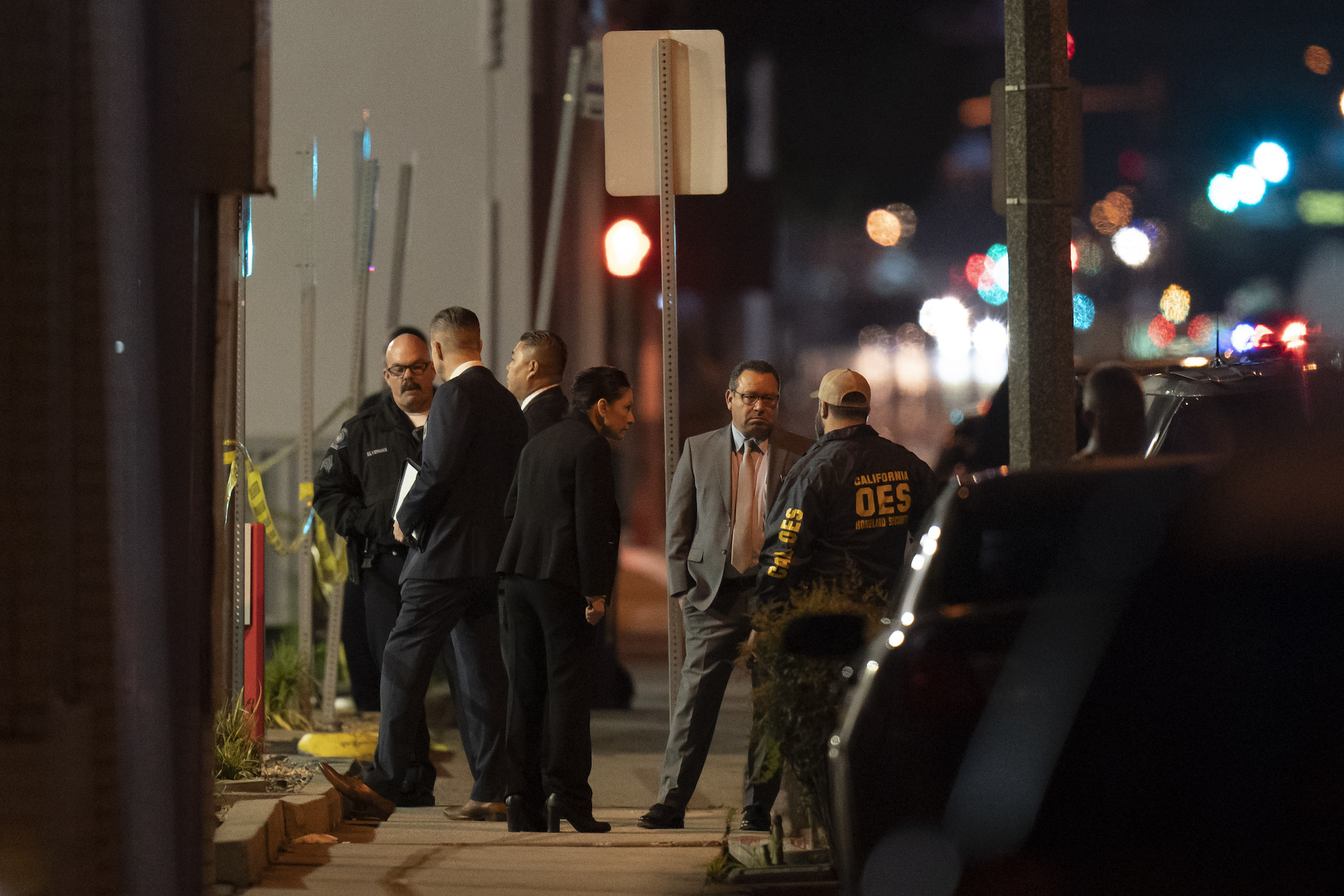
The FBI’s Los Angeles Field Office is working with the Los Angeles County Sheriff's Department Homicide Bureau, the Monterey Park Police and other agencies as they investigate the mass shooting that killed at least 10 people on Saturday night.

The sheriff's "Homicide Bureau is working closely with Chief Scott Wiese and his agency at the Monterey Park Police Department," LASD Homicide Capt. Andrew Meyer said Sunday.

"We're working with the California Governor's Office of Emergency Services, The Federal Bureau of Investigation LA office and numerous other law enforcement agencies," he added.  

Mass shooting took place inside a dance studio in Monterey Park, California, CNN analysis shows

Saturday's mass shooting in Monterey Park, California, took place in the Star Ballroom Dance Studio, according to a CNN analysis.

Los Angeles Sheriff's Department Capt. Andrew Meyer said in a news conference the shooting took place in a local business in the 100 block of West Garvey Avenue in downtown Monterey Park. He later identified the business as a dance studio.

CNN geolocated a photo taken Saturday evening just after the shooting, posted on social media, from inside the Star Ballroom Dance Studio.

The Monterey Park community is predominantly Asian

The Monterey Park community is 65.6% Asian, according to 2020 data from the city's website.

The city has 61,096 residents, according to the website, which provides the following demographic breakdown:

Asian 65.6%

Hispanic or Latino 28.5%

White 14%

Other race: 4.9%

Two or More Races: 1.8%

Black: 0.7%

The median age in the neighborhood is 43.1, the website adds.

It 's too early in the investigation to know if the suspect knew any of the victims or if this was a targeted shooting, police said.

"We will look at every angle as far as whether it's a hate crime or not. It's just too early in the investigation to know," said Capt. Andrew Meyer of the Los Angeles County Sheriff's Department.

Sunday's Lunar New Year festival canceled in Monterey Park, California

Saturday night's mass shooting in Monterey Park, California, happened near a Lunar New Year festival celebration. The event that was scheduled to be extended into Sunday is now canceled, according to Monterey Park Police Chief Scott Weise.

"The festival that occurred Saturday also extended to Sunday. Out of an abundance of caution and reverence for the victims, we are canceling the event that's going to happen later today. The Lunar festival here in Monterey Park has been canceled," he told reporters at a news conference.

The Monterey Park shooting happened at a dance location

The mass shooting that left at least 10 dead happened at a dance location in Monterey Park, California, according to Capt. Andrew Meyer of the Los Angeles County Sheriff's Department.

CNN spoke to people on the scene, and CNN reporter Camila Bernal reported: "I talked to witnesses here on the scene who told me that this is a popular dance club. People regularly come here on the weekends. We also know that they were celebrating the Chinese Lunar New Year. So as these celebrations were going on, these shots rang out."

When asked if there was any other location, Meyer said police are aware of another incident in Alhambra, California, which neighbors Monterey Park, and they are investigating if it is connected to the mass shooting in Monterey Park.

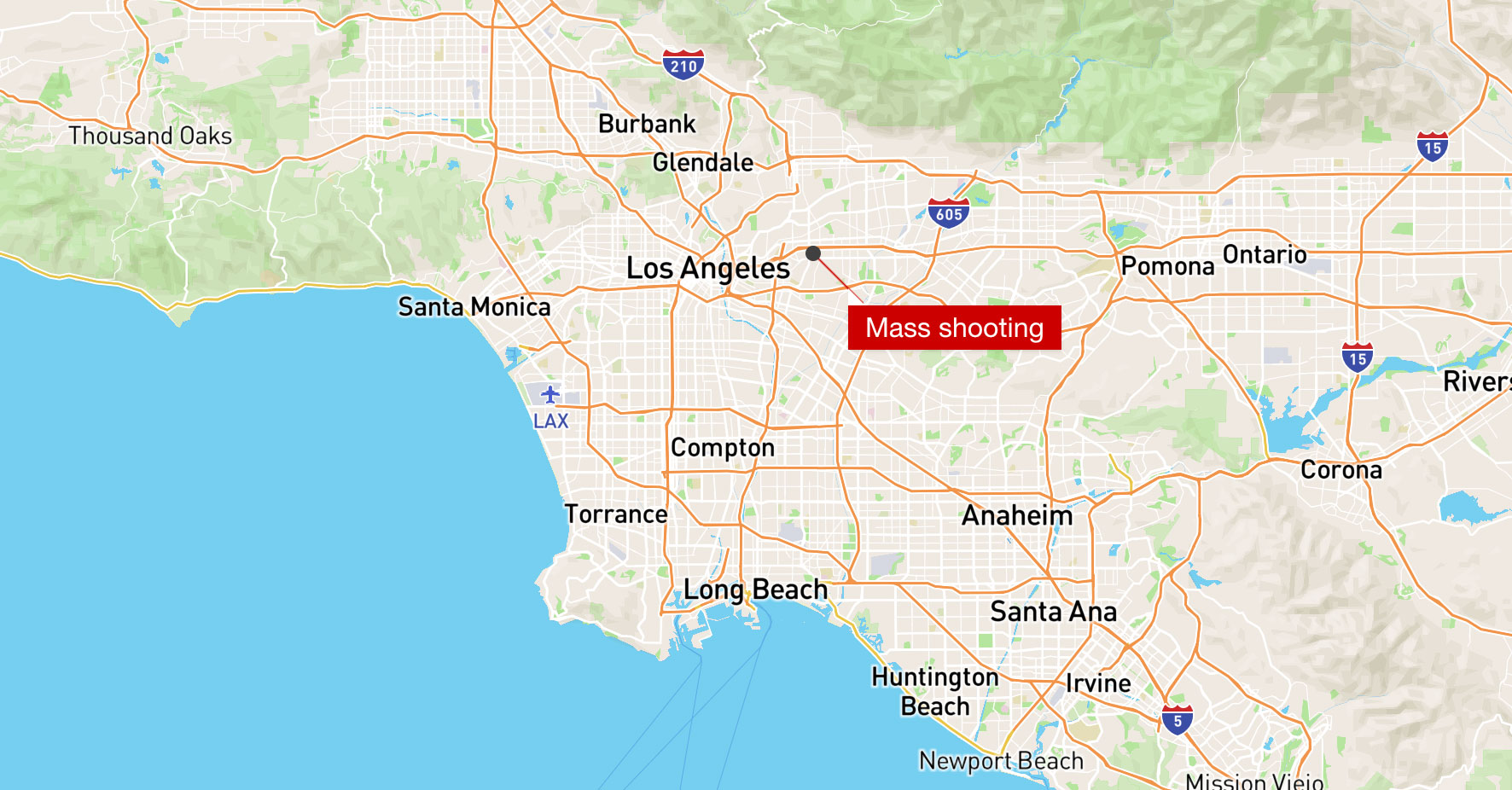
This is where Monterey Park is located in California

Monterey Park, California.
Monterey Park, California. (Mapbox)
The suspect's motive and description are unclear

The suspect's motive is unclear in the mass shooting that left at least 10 dead in Monterey Park, California, according to Capt. Andrew Meyer of the Los Angeles County Sheriff's Department.

Meyer did not provide a description of the suspect at a news conference.

"All they are saying is that it was a man who was here last night at around 10:22 p.m. and began shooting," CNN's Camila Bernal reported.

"All I can tell you is that it was a firearm that was used," Meyer told reporters, but did not provide any details on the type of weapon used.

At least 10 people died at the scene of the mass shooting

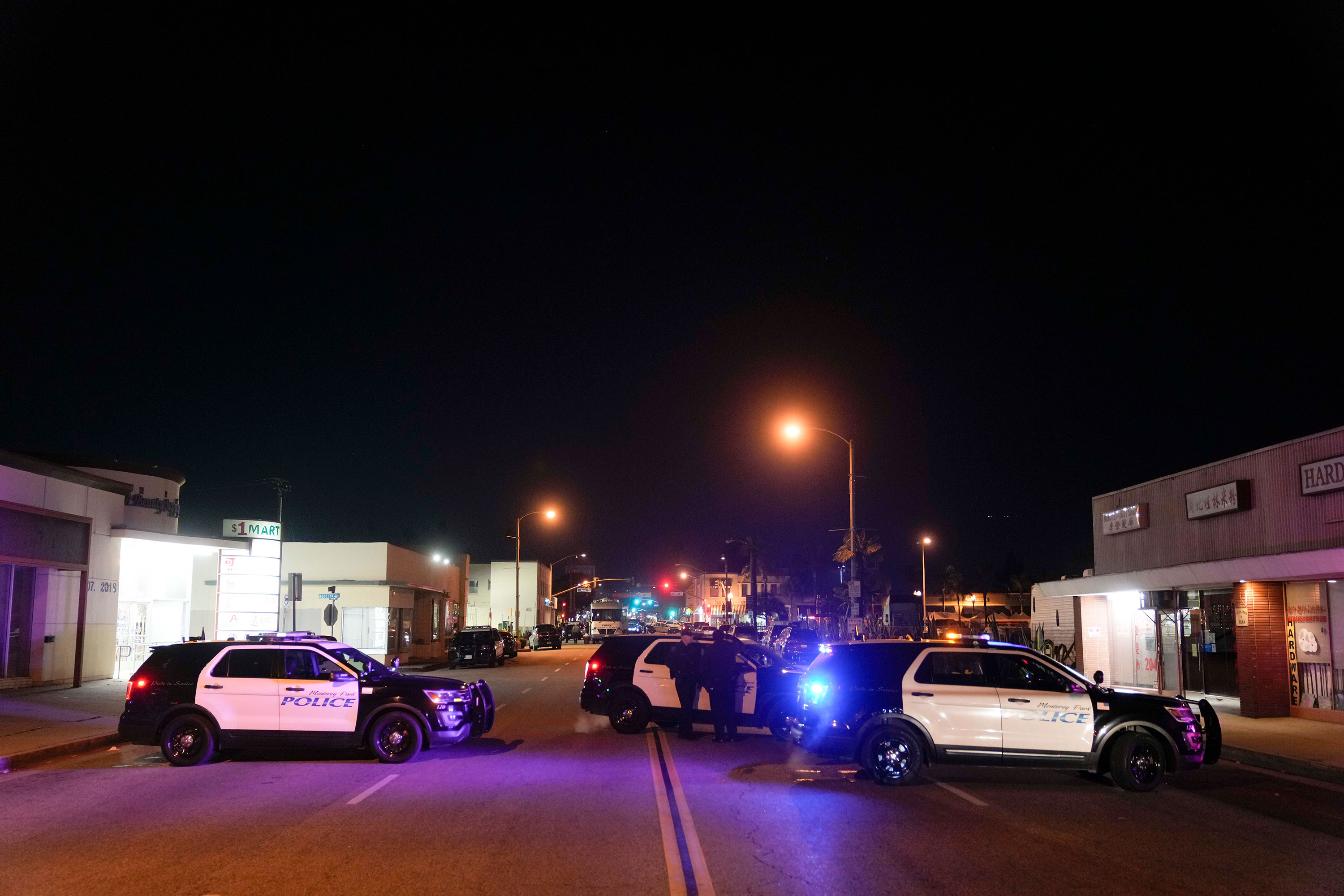
Police vehicles block the street near a scene where a shooting took place in Monterey Park, California on Sunday.
Police vehicles block the street near a scene where a shooting took place in Monterey Park, California on Sunday. (Jae C. Hong/AP)

At least 10 people have died in the mass shooting that happened late Saturday night in Monterey Park, California, according to Capt. Andrew Meyer of the Los Angeles County Sheriff's Department.

"The Monterey Park Fire Department responded to the scene and treated the injured. And pronounced 10 of the victims deceased at the scene," he said.

At least 10 other victims are in the hospital following the incident, he added. "There are at least 10 additional victims that were transported to numerous local hospitals and are listed in various conditions from stable to critical."

The shooting happened Saturday night at 10:22 p.m. local time

The mass shooting in Monterey Park, California, happened at 10:22 p.m. PT on Saturday, according to Capt. Andrew Meyer of the Los Angeles County Sheriff's Department.

"Officers from the Monterey Park Police Department responded to a local business in the 100 block of West Garvey Avenue in the city of Monterey Park regarding a shots fired call," he told reporters Sunday.

"When officers arrived on scene, they observed numerous individuals, patrons of the location pouring out of the location, screaming," he added. "The officers made entry to the location and located additional victims."

The Monterey Park shooting suspect fled the scene, police say

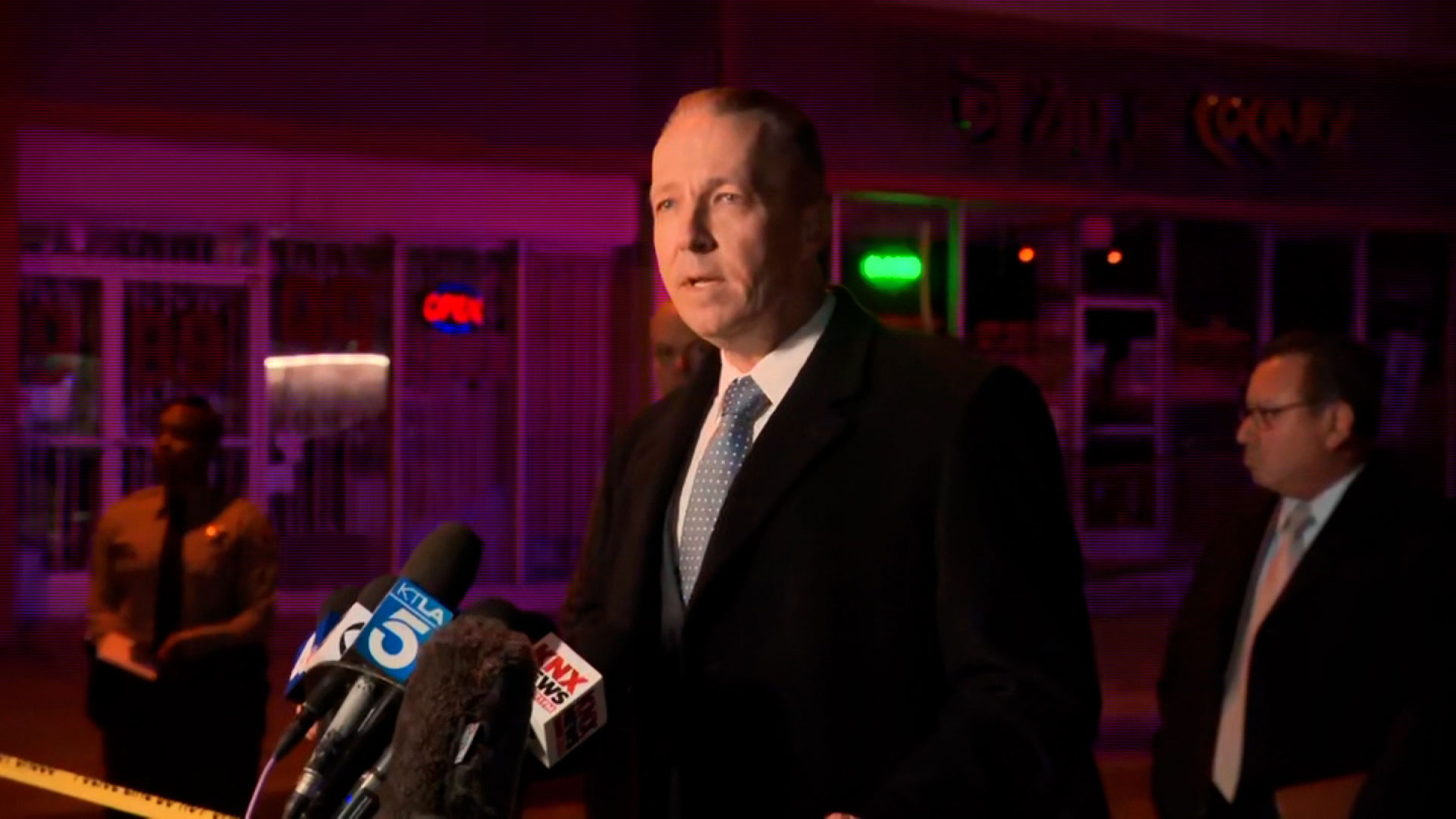
Capt. Andrew Meyer of the Los Angeles County Sheriff's Department speaks at a press conference Sunday morning.
Capt. Andrew Meyer of the Los Angeles County Sheriff's Department speaks at a press conference Sunday morning. (CNN)

The suspect in the mass shooting in Monterey Park, California, "fled the scene and remains outstanding," said Capt. Andrew Meyer of the Los Angeles County Sheriff's Department.

He urged anyone with information regarding this incident to "call LA sheriff's homicide at 323-890-5500. Or if you prefer to remain anonymous, call crime stoppers at 800-222-8477."

The shooting happened near a Lunar New Year festival celebration

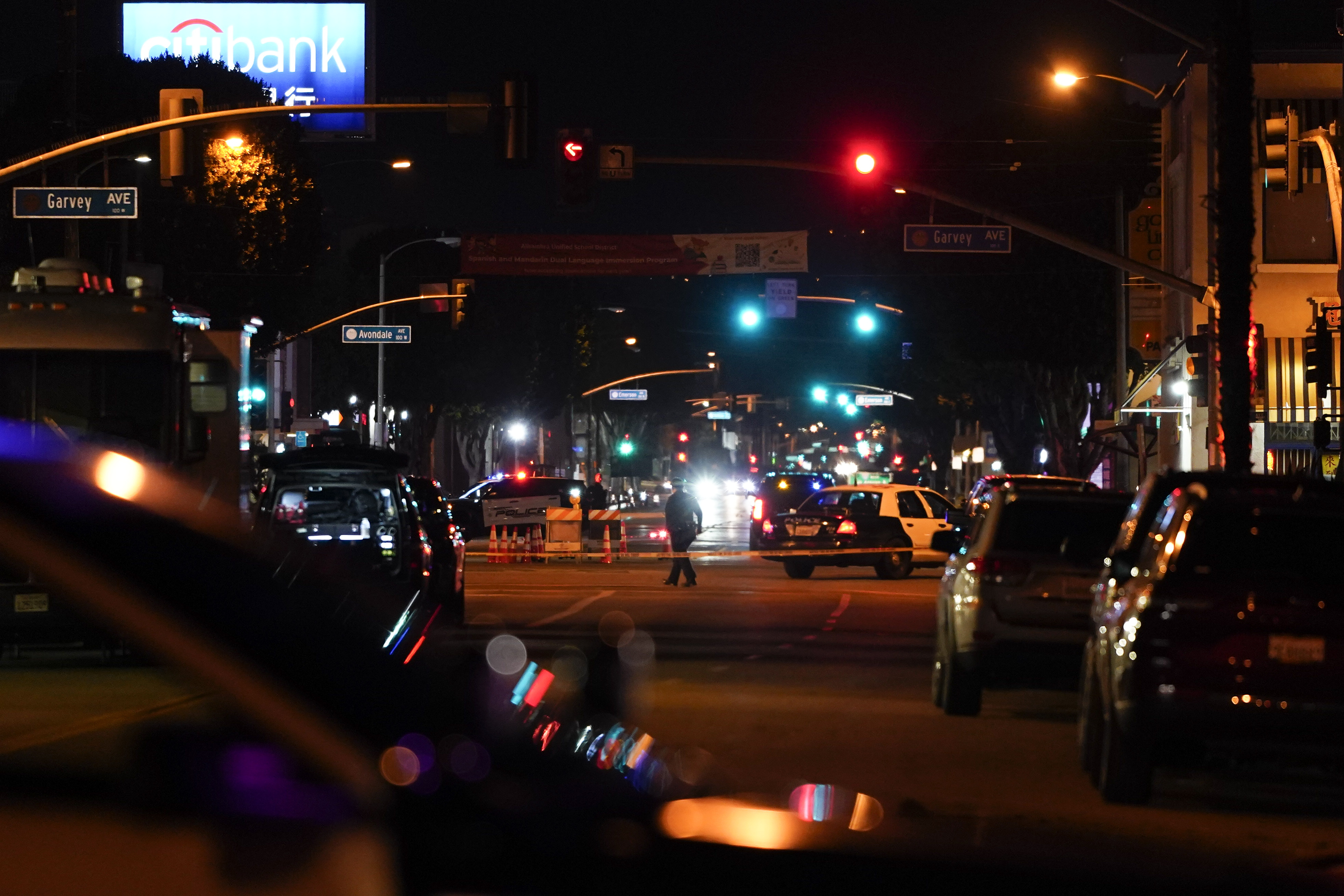
The shooting happened near the area of Monterey Park’s Lunar New Year festival, which was scheduled to take place until 9 p.m. local time on Garvey Avenue, between Garfield and Alhambra avenues.

Past Lunar New Year events in the city have drawn crowds estimated at over 100,000 people from across Southern California, according to the city. It’s unclear how many people were still gathered in the area when shots were fired.

At least 9 are dead in Monterey Park shooting, according to sheriff's office


Police investigate the scene where a shooting took place in Monterey Park on Sunday.
Police investigate the scene where a shooting took place in Monterey Park on Sunday. (Jae C. Hong/AP)

At least nine people were killed in a mass shooting in Monterey Park, California, according to the Los Angeles County Sheriff's Department.

The shooting incident occurred late Saturday night.

A law enforcement press conference is expected Sunday morning, according to CNN affiliate KCAL/KCBS.

Police are responding to reported Saturday night shooting in Monterey Park, California


Investigators gather at the scene of the shooting in Monterey Park on Sunday.
Investigators gather at the scene of the shooting in Monterey Park on Sunday. (Jae C. Hong/AP)

Homicide detectives are responding to a reported shooting that took place late Saturday night in Monterey Park, California, according to a spokesperson with the Los Angeles County Sheriff's Office.

There are multiple casualties in the shooting incident, according to the Los Angeles Times, citing law enforcement sources. 

According to CNN affiliate KCAL/KCBS, a law enforcement press conference is expected Sunday morning.

Monterey Park is a city in Los Angeles County’s San Gabriel Valley, approximately seven miles from downtown Los Angeles.

https://edition.cnn.com/webview/us/live-news/los-angeles-mass-shooting-01-22-2023/index.html

Antifa torch police car, damage businesses in Atlanta

 An angry crowd took to the streets of Atlanta Saturday night, smashing windows and torching a police car in response to the death of a 26-year-old protester Wednesday, reports said.

Atlanta Police Chief Darin Schierbaum told reporters that multiple protesters were found with explosive devices on them. One of the devices was used to set an Atlanta Police car on fire.

Protesters — who hit the streets after calls for a “Night of Rage” by Antifa members — were also seen throwing bricks at Atlanta Police Department vehicles smashing property, 11Alive reported.

At least six people were arrested and three businesses were damaged, police said.

Just before 7 p.m., police said “order has been restored to the downtown space.” Georgia Gov. Brian Kemp condemned the protesters’ actions Saturday night. “Violence and unlawful destruction of property are not acts of protest,” he tweeted. “They are crimes that will not be tolerated in Georgia and will be prosecuted fully.”

Protestors march in Atlanta on Saturday, Jan. 21, 2023, during demonstrations related to the death of Manuel Teran.
REUTERS

Schierbaum said the protests began peacefully marching in the city around 5 p.m. when some members began smashing property. The ATF and FBI are assisting with the investigation.

A burned police car sits unattended after protests took to the streets on Saturday, Jan 21, to protest the death of activist Manuel Teran.
A burned police car sits unattended after protests took to the streets on Saturday, Jan. 21, to protest the death of activist Manuel Teran.
AP

“We already know that we have arrested actors that have already been involved in other criminal activity and are involved in a manner to deter the building of the public safety training center,” he told reporters.

The mayhem comes after Manuel Esteban Paez Teran was shot and killed by Georgia State Patrol troopers who were trying to clear protesters camping near the site of the Atlanta Public Safety Training Center — dubbed “Cop City.” Paez had allegedly shot and wounded an officer, officials said.

The chaos comes after a group called Scenes from the Atlanta Forest put up a social media post Wednesday calling for “retaliation.” “‘On Friday, January 20th, wherever you are, you are invited to participate in a night of rage in order to honor the memory of our fallen comrade,” the message continued.

A protester is detained during Saturday's demonstrations in Atlanta.
A protester is detained during Saturday’s demonstrations in Atlanta.
REUTERS
A protester throws a rock at a window during Saturday's demonstrations in Atlanta.
A protester throws a rock at a window during Saturday’s demonstrations in Atlanta.
REUTERS
Broken glass at a Wells Fargo branch during protests in Atlanta on Saturday, Jan. 21.
AP

Opponents of the training center have been protesting for over a year by building platforms in surrounding trees and camping out at the site.

They claim that the $90 million project, which would be built by the Atlanta Police Foundation, involves cutting down so many trees that it would be environmentally damaging. 

Activists have questioned the police version of events in Teran’s death and have called for the release of law enforcement body camera footage. GBI said Friday that there is no bodycam footage of the shooting.

A photograph of Manuel Teran
Manuel Teran, 26, was killed after he allegedly shot and wounded a Georgia state trooper.
REUTERS

Spokespeople with “Stop Cop City,” who have claimed several times that they are peaceful protesters, defended their actions as nonviolent in a statement provided to WSB-TV.

“Destruction of material is fundamentally different from violence. All reported acts appear to be explicitly targeted against the financial backers & goons of the Atlanta Police Foundation, a shady nonprofit that funnels weapons and military gear into our city to wage war on black and brown folks,” the organization said.

https://nypost.com/2023/01/21/protesters-torch-police-car-damage-businesses-in-atlanta-after-activist-killed/

Saturday, January 21, 2023

Fatal house fire was latest of NYC battery blazes

 A Queens house fire that killed one person and injured 10 others was sparked by a lithium-ion battery, the fire department said Saturday. It adds to a series of battery blazes that have caused concern in the city.

The latest ripped through two floors of a home on 89th Street, a few blocks from LaGuardia Airport, around 11 p.m. Friday.

One occupant was pronounced dead at a hospital after being found on the home’s second floor, suffering from smoke inhalation, police said in a release. The fire department said 10 other people, including four firefighters, were taken to hospitals for treatment, at least seven of them with minor injuries.

Fire marshals later determined that a lithium-ion battery caused the blaze, the fire department tweeted Saturday.

Commercially available since the early 1990s, lithium-ion batteries are the familiar, rechargeable power source for many phones, laptop computers, vehicles and other devices. Fires can happen if the batteries are overcharged, overheated, defective or damaged.

Such batteries in electric bikes and scooters were linked to about 200 fires last year citywide. They included a blaze that killed a woman and a 5-year-old girl in East Harlem in August and a high-rise apartment-building fire that injured over three dozen people and spurred a dramatic rope rescue a few blocks from the United Nations headquarters in November.

The fire department has issued warnings and safety tips. The city administration has urged the federal Consumer Product Safety Commission to consider new regulations, and some city lawmakers have proposed legislation of their own.

https://apnews.com/article/health-queens-fires-c379a465a13a26180babcc2b3b0f0f92