Search This Blog

Wednesday, February 8, 2023

BBC: Twitter outage sees users told they are over daily tweet limit

 Some Twitter users were unable to tweet on Wednesday after the website experienced technical problems.

Account holders received a message saying: "You are over the daily limit for sending Tweets."

The outage-tracking website DownDetector reported the glitch at just before 22:00 GMT.

Elon Musk has slashed Twitter's workforce over the last few months since he acquired the platform last October for $44bn (£36.5bn).

Last month the Tesla and SpaceX boss said Twitter had about 2,300 employees - down from around 8,000 when he took over.

For months experts have been warning that such deep cuts could cause technical issues, though it is not yet clear if the reduced headcount was to blame for Wednesday's outage.

It appears part of the outage was soon fixed, with many users reporting they could tweet.

Some reported being notified by Twitter that they were over the 2,400-tweet-per-day limit, even if they had not posted on Wednesday.

Account holders had also reported problems with Twitter messages. Several users said they could not access TweetDeck - a dashboard that can be used with Twitter.

It's not yet clear how many people were affected.

"Twitter may not be working as expected for some of you. Sorry for the trouble. We're aware and working to get this fixed," Twitter said.

In recent weeks many users have complained of bugs while using Twitter - including some claiming they could increase the reach of tweets if they locked their accounts.

Tech news website The Information reported that Mr Musk had told Twitter employees to pause on new feature development "in favour of maximising system stability and robustness, especially with the Super Bowl coming up".


https://www.bbc.com/news/technology-64577731

Which Sectors Are Working With OpenAI?

 While OpenAI has really risen to fame with the release of ChatGPT in November 2022, the U.S.-based artificial intelligence research and deployment company is about much more than its popular AI-powered chatbot.

In fact, as Statista's Felix Richter reports belowOpenAI’s technology is already being used by hundreds of companies around the world.

Infographic: Which Sectors Are Working With OpenAI? | Statista

According to data published by the enterprise software platform Enterprise Apps Todaycompanies in the technology and education sectors are most likely to take advantage of OpenAI’s solutions, while business services, manufacturing and finance are also high on the list of industries utilizing artificial intelligence in their business processes.

Broadly defined as “the theory and development of computer systems able to perform tasks normally requiring human intelligence, such as visual perception, speech recognition, decision-making, and translation between languages” artificial intelligence (AI) can now be found in various applications, including for example web search, natural language translation, recommendation systems, voice recognition and autonomous driving.

In healthcare, AI can help synthesize large volumes of clinical data to gain a holistic view of the patient, but it’s also used in robotics for surgery, nursing, rehabilitation and orthopedics.

https://www.zerohedge.com/technology/which-sectors-are-working-openai

Promising 'Young Blood' Anti-Aging Drug Discovered

 Young blood plasma transfusions for anti-aging are popular with some wealthy elites. There are claims that young blood rejuvenates the body's organs. But turning back the body's clock with transfusions might not need to be done anymore following research from Columbia University in New York that states an anti-inflammatory drug can rejuvenate the body and possibly increase the human lifespan by decades. 

"An aging blood system, because it's a vector for a lot of proteins, cytokines, and cells, has a lot of bad consequences for the organism," Emmanuelle Passegué, Ph.D., director of the Columbia Stem Cell Initiative, who's been studying how blood changes with age, said in a statement. 

"A 70-year-old with a 40-year-old blood system could have a longer healthspan, if not a longer lifespan," Passegué said. 

Instead of a liter of plasma from younger donors that might cost thousands of dollars, researchers found young blood could be produced in pill form. 

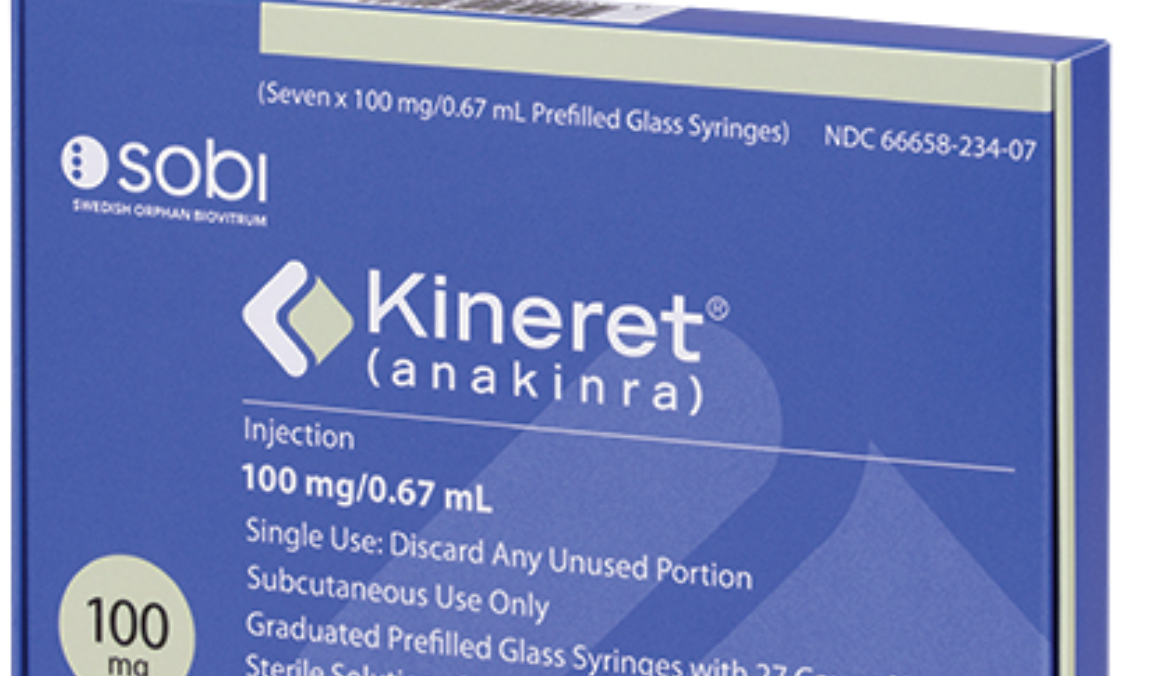
That pill is an anti-inflammatory drug called anakinra, already approved for use in rheumatoid arthritis. Passegué and graduate student Carl Mitchell discovered anakinra reverses some of the effects of age on the hematopoietic system of mice. 

"These results indicate that such strategies hold promise for maintaining healthier blood production in the elderly," Mitchell said.

What didn't work, and explained by Passegué and her team in a 2021 study in the Journal of Experimental Medicine, was:

to rejuvenate old hematopoietic stem cells, in mice, with exercise or calorie-restricting diet, both generally thought to slow the aging process. Neither worked. Transplanting old stem cells into young bone marrow also failed. Even young blood had no effect on rejuvenating old blood stem cells.

Her team then discovered the benefits of anakinra in mice: 

Mitchell and Passegué then took a closer look at the stem cells' environment, the bone marrow. "Blood stem cells live in a niche; we thought what happens in this specialized local environment could be a big part of the problem," Mitchell says

With techniques developed in the Passegué lab that enable detailed investigation of the bone marrow milieu, the researchers found that the aging niche is deteriorating and overwhelmed with inflammation, leading to dysfunction in the blood stem cells.

One inflammatory signal released from the damaged bone marrow niche, IL-1B, was critical in driving these aging features, and blocking it with the drug, anakinra, remarkably returned the blood stem cells to a younger, healthier state.

Even more youthful effects on both the niche and the blood system occurred when IL-1B was prevented from exerting its inflammatory effects throughout the animal's life.

The researchers are now trying to learn if the same processes are active in humans and if rejuvenating the stem cell niche earlier in life, in middle age, would be a more effective strategy.

Meanwhile, "treating elderly patients with anti-inflammatory drugs blocking IL-1B function should help with maintaining healthier blood production," Passegué says, and she hopes the finding will lead to clinical testing.

"We know that bone tissue begins to degrade when people are in their 50s. What happens in middle age? Why does the niche fail first?" Passegué says. "Only by having a deep molecular understanding will it be possible to identify approaches that can truly delay aging."

Of course, the research is still very early, and results have yet to be tested on humans. But that might not stop people from Googling the drug as a possible anti-aging solution. 

https://www.zerohedge.com/medical/next-anti-aging-drug-could-be-pill-form

Top China Economist Sees Possible Interest Rate Cut Next Quarter

  • Ping An’s Zhong says PBOC to face less constraints in 2Q
  • Core inflation likely to be under control in 2023, Zhong says


China’s central bank may have more room to cut interest rates in the second quarter as the risk of another Covid wave looms in coming months and the US Federal Reserve ends its interest rate hikes, according to a prominent Chinese economist.

The People’s Bank of China could face less constraints on easing policy in the next quarter, said Zhong Zhengsheng, chief economist at Ping An Securities Co., adding that domestic inflation will likely stay weak. Zhong has previously consulted with Premier Li Keqiang on government policy.

https://www.bloomberg.com/news/articles/2023-02-09/top-china-economist-sees-possible-interest-rate-cut-next-quarter

U.S. House votes to end foreign air traveler COVID vaccine requirement


The U.S. House of Representatives on Wednesday voted to end a requirement that most foreign air travelers be vaccinated against COVID-19, one of the few remaining pandemic travel restrictions still in place.

The vote was 227 to 201 with seven Democrats joining Republicans. No Republicans voted against the bill.

The Biden administration in June dropped its requirement that people arriving in the United States by air must test negative for COVID but has not lifted Centers for Disease Control and Prevention (CDC) vaccination requirements for most foreign travelers.

The White House said Tuesday it was opposed to the bill saying the vaccine requirement "has allowed loved ones across the globe to reunite while reducing the spread of COVID-19 and the burdens it places on the health care system in the United States." It is not clear if the Senate will take up the bill.

The White House plans to end the COVID public health emergency on May 11. "As we approach the end of the public health emergency, the administration will review all relevant policies, including this one," the White House said.

The CDC says vaccines continue to be the most important public health tool for fighting COVID-19 and recommends all travelers be vaccinated.

The U.S. Travel Association said "the need for this requirement has long since passed, and we appreciate the bipartisan action by the U.S. House to end this outdated policy ... The U.S. is the only country that has maintained this policy."

Currently, adult visitors to the United States who are not citizens or permanent residents must show proof of vaccination before boarding their flight, with some limited exceptions.

Republican Representative Thomas Massie introduced the measure to rescind the vaccine requirement.

https://www.marketscreener.com/news/latest/U-S-House-votes-to-end-foreign-air-traveler-COVID-vaccine-requirement--42935606/

Biden says he sees no recession in 2023 or 2024 - PBS interview

 President Joe Biden said on Wednesday he did not believe the U.S. economy will fall into recession either this year or next year, his most confident prediction on the fate of an economy that is still rattled by fears of a downturn.

Asked in an interview on the PBS NewsHour program whether he thought there would be a recession this year, Biden responded: "No, or next year. From the moment I got elected, how many of the experts are saying within the next six months there's gonna be recession?"

Economists for months have been warning of a possible recession as the U.S. Federal Reserve raised interest rates in order to tame decades-high inflation.

Biden himself has said a recession was possible, and earlier this week he told reporters that the risk was very low.

On the whole, economic data in recent months has moved in the president's favor, particularly after inflation spiked to a 40-year high last summer and government reports showed the U.S. economy could be heading into a recession.

Strong job numbers last week, which occurred despite layoffs in the technology sector as well as in interest-rate-sensitive sectors like housing and finance, poured cold water on market expectations that the U.S. central bank was close to pausing its monetary policy tightening cycle.

https://www.yahoo.com/now/biden-says-sees-no-recession-000852227.html

What Fauci Knew About Vaccine Ineffectiveness... And When

 by Jeffrey A. Tucker via The Epoch Times (emphasis ours),

What if Anthony Fauci co-authored an article on vaccines that would have gotten you and I blocked and banned at any point in the last three years?

That just happened.

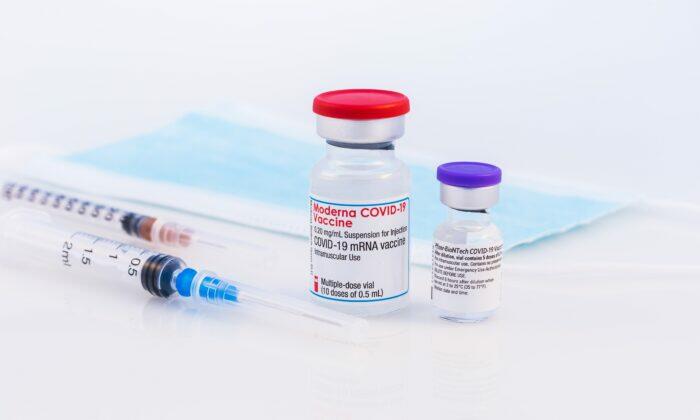
His article in Cell - “Rethinking next-generation vaccines for coronaviruses, influenzaviruses, and other respiratory viruses” - says it as plainly as possible: the COVID vaccine did not work because it could not work.

First some review from what we knew before this whole fiasco began.

Vaccines are not suitable for coronaviruses. Such respiratory viruses spread and mutate too quickly. This is why there has never been a vaccine for the common cold and why the flu shot is predictably suboptimal. Vaccines can only be sterilizing and contribute to public health when the virus is a stable pathogen like Smallpox and Measles. For coronaviruses, there is really only one way forward: better anti-virals, therapeutics, and acquired immunity.

The above paragraph has been repeated to me countless times in my life, especially after COVID hit. Every expert was on the same page. There was simply no question about it. Anything that would be called a vaccine would lack the features of vaccines past. It would not stop infection or transmission, much less end a bad season for respiratory viruses. This is why the FDA has never approved one. It would not and could not make it through trials, especially given the safety risks associated with every vaccine.

Maybe, maybe, there exists the possibility that you can come up with one variant but it is not likely to be approved in time to be effective. It might provide temporary protection against severe outcomes from one variant but it will be useless against further mutations. In addition, vaccine-induced protection is not as broad as natural immunity, so it is likely that the person would get infected later. Boosting is likely only to pertain to last month’s mutation, and raises dangers of itself: imprinting the immune system in ways that make it less effective.

Sadly, posting those three paragraphs on social media at any point in the last three years would likely get you censored or even banned. Normal science was suppressed. Common knowledge among experts was verboten. Everything we’ve learned for a century or even two millennia was thrown out. The job of censorship was tasked to a gaggle of ill-educated tech workers obeying the FBI overlords, so they went along.

And here we are two years after the vaccine rollout and the truth is rather well known. The vaccines were an enormous flopAt best. At worst, they caused tremendous amounts of injury and death as compared to any vaccine ever approved for the market. That they were forced on people in many professions—and backed by a Stalinesque media frenzy—is simply incredible. Several cities even locked themselves down for the vaccinated only. Even now, unvaccinated non-Americans cannot travel to the United States, unless they come across the southern border.

And yet only now does Fauci choose to lay out the science that we knew long ago. There is nothing particularly interesting in his article. Only the timing is interesting: following trillions in pharma profits, millions displaced by mandates, and suffering from injury all over the world. Now he says that there was really no chance that the vaccine would be either effective or necessarily safe.

This is a level of trolling that is truly unthinkable and indescribable.

Here is the summary of the article:

“Viruses that replicate in the human respiratory mucosa without infecting systemically, including influenza A, SARS-CoV-2, endemic coronaviruses, RSV, and many other ‘common cold’ viruses, cause significant mortality and morbidity and are important public health concerns. Because these viruses generally do not elicit complete and durable protective immunity by themselves, they have not to date been effectively controlled by licensed or experimental vaccines. In this review, we examine challenges that have impeded development of effective mucosal respiratory vaccines, emphasizing that all of these viruses replicate extremely rapidly in the surface epithelium and are quickly transmitted to other hosts, within a narrow window of time before adaptive immune responses are fully marshaled.”

There are profound safety issues to consider too. It takes a very long time to assure that. Fauci says:

“Considering that vaccine development and licensure is a long and complex process requiring years of preclinical and clinical safety and efficacy data, the limitations of influenza and SARS-CoV-2 vaccines remind us that candidate vaccines for most other respiratory viruses have to date been insufficiently protective for consideration of licensure …”

https://www.zerohedge.com/covid-19/just-how-hard-were-we-trolled