Search This Blog

Friday, April 14, 2023

Booker Calls Marijuana ‘Dangerous Drug’; Frustrated With ‘Non-Diverse’ Industry


Sen. Cory Booker (D-NJ) says it’s been “frustrating” to see marijuana legalization fall short of equity goals, which he said is partly due to ongoing federal prohibition. And while he’s pushing for reform, he characterized cannabis as a “dangerous” drug that hasn’t been studied enough.

The senator, who has long advocated for equity-centered federal legalization and sponsored a bill to that end with Senate Majority Leader Chuck Schumer (D-NY) last year, discussed the prospects of drug policy reform at a panel at Tisch College on Monday.

Asked about which of his priorities could be achieved in the current Congress, Booker said that he believes that bipartisan lawmakers will be able to pass legislation to eliminate the sentencing disparity between crack and powder cocaine, and that marijuana “compromise legislation” is also something that “might happen” based on conversations with certain Republican colleagues.

However, while cannabis legalization is “something profoundly important to me,” Booker said that “what is really frustrating me is I thought that legalizing marijuana would have a democratizing force on our country, and it has not.”

He said he’s dissatisfied with the progress of expungements for people with prior cannabis convictions living in states where the plant is now legal, and also decried that the industry lacks critical diversity.

“Even the business side of this is not as fair and equal in terms of opportunity as you would think,” he said. “And some of that is because we have failed to deschedule it—and so if you’re a woman who gets a [cannabis] license, you can’t get the capital necessary often to hold on to that license to start a business or to fund the business.”

"So you have these multi-state operators funded by large hedge funds or large wealthy individuals who are not diverse, who are going around buying up licenses from desperate people in communities—where they thought they were going to help make sure that the very people who are disproportionately impacted by marijuana prohibition were now going to get an opportunity to help on the business side, but that has not happened,” the senator said.

“Marijuana business in the United States of America is overwhelmingly non-diverse, white male,” he said. “Women and minorities make up a tiny, tiny fraction—not in any way proportionate to the numbers in America, and so this is an issue I’ve been working on.”

Booker made similar points about his concerns with the equity shortcomings of cannabis reform last year as he and colleagues worked to advance a package of modest marijuana proposals including bipartisan banking and expungements legislation that ultimately did not come to pass.

But during his discussion on Monday, he also asserted that marijuana is “dangerous drug” that’s been understudied.

He said he shared the same concerns as an audience member who spoke about the risks of high-potency THC products. While Booker said that the status quo is untenable and will only lead to more discriminatory criminalization, “the question is what’s the right way to move forward?”

“This is a drug, and I think it’s a dangerous drug. I really do,” he said. “I think we haven’t studied it enough. I think what’s happening to the brain—I will tell you this, I think alcohol is a pretty damn dangerous drug as well.”

“If you have a child, or if you are younger than 25, and you’re drinking or smoking pot, you are damaging your brain in ways that will severely affect your mental health, the wellbeing of your brain,” he said. “The studies and the data now—when you get to be like my age, and what you’ve done to yourself if you’ve lived that way of regularly smoking drugs and smoking marijuana, I just think, why? Why would you do it?”

“But I will tell you this: I would rather a system that strictly regulates [and] enforces. There’s a lot more that I see being done in some jurisdictions to protect kids, especially from accessing this serious drug,” the senator said. “I would want a lot more research being done on alcohol and drugs and other things that we seem to have in our society that cause a lot more damage than we’re talking about.”

Booker, Schumer and other colleagues have held early meetings with bipartisan senators this session after failing to advance a so-called SAFE Plus package of cannabis legislation last year. The reform is now further complicated by the fact that Republicans hold control of the House.

The majority leader and other lawmakers are also scheduled to speak at an advocacy event inside the Capitol Building on the cannabis holiday 4/20 next week.

Meanwhile, Booker recently filed a bill alongside Sen. Rand Paul (R-KY) that’s meant to streamline the federal rescheduling of “breakthrough therapies” like psilocybin and MDMA in order to promote research and drug development.

https://www.marijuanamoment.net/cory-booker-calls-marijuana-a-dangerous-drug-and-says-hes-frustrated-with-non-diverse-industry/

Virtual Clinics Have a Backup Plan: Misoprostol-Only Abortions

 AFTER CONFLICTING LEGAL rulings triggered widespread uncertainty about the future of abortion pill access in the United States, both US-based telehealth providers and overseas pill-by-mail sellers want to make one thing clear: They’re here to stay.

Since the US Supreme Court overturned Roe v. Wade, virtual abortion clinics have taken a more prominent role in reproductive health care. Before that decision, virtual abortion clinics accounted for 4 percent of abortions in the US; after the decision, the number rose to 11 percent, according to a study from the Society of Family Planning. 

The ground shifted for abortion pill providers on April 8, when a ruling from Judge Matthew Kacsmaryk of the Northern District of Texas invalidated the US Food and Drug Administration’s approval of mifepristone, one of the two drugs commonly used in a two-step medication abortion. The ruling ignored decades of scientific consensus about mifepristone’s safety and undermined the FDA’s decades-old approval of the medication. It also directly conflicted with a ruling made the same day by Judge Thomas Rice of the Eastern District of Washington, directing US authorities to preserve access to the medication. 

Wednesday, the Fifth Circuit Court of Appeals partly overruled Kacsmaryk, ordering that mifepristone remain legally available—but it also overturned mifepristone dispensation by mail in states where it was previously legal. The ruling states that the drug must now be dispensed in person, undoing recent changes the FDA made to ensure people can access health care. 

This reversal impacts a wide network of telehealth providers. During the pandemic, when the FDA eased restrictions around virtual abortion care, abortion pills became available by mail in 25 states and Washington, DC. Many of these pills were provided by services specifically devoted to reproductive telehealth, including virtual clinics like Hey Jane and Choix. 

These companies have been preparing for increased restrictions and are now moving quickly to ensure they’re still able to legally operate without pause. As of now, both Hey Jane and Choix are continuing to offer mifepristone pills by mail in the states they were previously servicing. 

It’s unclear what might happen long-term if the mifepristone-by-mail ban stays, though. Even if virtual clinics want to keep dispensing the pills, they may run into an issue with the two major US manufacturers, Danco Laboratories and GenBioPro. “They would not give the pills to mail-order pharmacies to mail, unless the Biden administration issues an enforcement discretion notice, telling them that they're allowed to do that,” says Drexel University law professor David Cohen, referring to an FDA policy in which the agency does not take action against the dissemination of unapproved drugs if there are extenuating circumstances.

The FDA declined to comment on whether it would exercise enforcement discretion in regards to mifepristone-by-mail distribution. 

There are backup plans in place if mifepristone becomes unavailable for US telehealth providers. Medication abortions typically consist of two pills: mifepristone and misoprostol. Mifepristone works by blocking the hormone progesterone, which is necessary for pregnancies to continue. While mifepristone is often referred to colloquially as “the abortion pill,” it’s actually misoprostol that causes the uterine contractions that expel fetal tissue from the body. And as misoprostol is not subject to the recent rulings, there is a possibility that these companies will begin offering misoprostol on its own if manufacturers cut off access to mifepristone. This is not ideal, as the combination of pills produces the best results; misoprostol on its own can cause additional cramping and nausea. But for providers determined to keep helping patients, it’s better than nothing. 

“We are prepared with the misoprostol-only protocol, should we need to go that route,” says Hey Jane cofounder and CEO Kiki Freedman. “It’s also very effective and very safe.”

Even before the Kacsmaryk ruling, virtual abortion clinics were limited in how they could operate. In more than half the country, they were already not permitted to send the pills. This doesn’t mean that people in states like Louisiana and Texas aren’t having medical abortions, though. Although US-based virtual clinics can’t send pills by mail in states that ban their services, a large number of overseas abortion pill providers still send mifepristone and misoprostol all across the US. They operate outside of the formal health care system, in a legal gray zone. And they plan to continue sending mifepristone to people who need it in the United States. Aid Access, an organization led by Dutch doctor and abortion rights activist Rebecca Gomperts, is the most prominent of these overseas organizations. Gomperts says Aid Access is not planning to change anything, even in a worst-case scenario where legal access is further restricted. 

Other overseas organizations are also staying the course. “The court ruling is not really changing how we operate, except that we could see more requests,” says Billy Adams, the spokesperson for a collective of medical professionals and abortion activists known as PrivateEmma. Both Aid Access and PrivateEmma send pills manufactured in India to people who request them in the United States, after providing a virtual medical consultation. 

Even if there is a major uptick in requests to these overseas providers, it’s unlikely there will be a scarcity issue. “There’s no supply shortage of the medication,” says Elise Wells, cofounder of abortion advocacy group Plan C. In addition to groups like Aid Access and PrivateEmma, there is a wide variety of more money-minded online sellers, who usually do not offer any support services but simply ship pills for a fee; these sellers also often source their pills from India. Ordering and taking pills from these sellers is not without risk. There’s no quality control to ensure the pills aren’t counterfeit, for starters. And while Gomperts says it’s “very rare” for packages that Aid Access sends to be intercepted, overseas mifepristone does occasionally get confiscated. Still, many people who cannot access legal abortion pills in the United States decide that these risks are worth taking.

While overseas providers brace for an uptick in people seeking abortion pills, the US telehealth providers remain optimistic that they will persevere. 

“I do not view this as an existential threat,” Freedman says. “There are many ways for us to continue providing safe and effective care to our patients. And we are confident that we will be able to continue doing so after this week.” 

The day after the Fifth Circuit’s decision was announced, a banner appeared at the top of Hey Jane’s website. It reads: Medication abortion is extremely safe, effective, and still legally available through Hey Jane.

https://www.wired.com/story/telehealth-abortion-pill-access-court-decision/

Former Home Depot CEO issues grim warning over US bankruptcies

 Former Home Depot CEO Bob Nardelli issued a grim warning over the U.S.'s "very complex" economy, cautioning consumers that middle market companies are under "tremendous pressure."

"I think we're going to see a lot of bankruptcies. Like Bed, Bath and Beyond. We got Walmart not only laying people off, but closing stores. We got Accenture laying people off. We got Amazon closing distribution centers. So I think there's a tremendous-mixed message," Nardelli said during an appearance on "Cavuto: Coast to Coast."

The former CEO continued, saying that the "complexity" of the U.S. economy is "different than anything I have seen in my 52 years." 

According to UBS analysts, more than 50,000 retail locations could permanently shut their doors over the next five years. Those closures would cut the current U.S. store count of about 940,000 by around 5% by the end of 2027.

The number of shuttered stores is "already up significantly" in 2023 compared to last year, due to heavy hitters like Bed Bath & Beyond, Foot Locker and bankrupt Tuesday Morning trimming their footprints. 

Over the past year, Bed Bath & Beyond has initiated a turnaround plan that involved shuttering hundreds of stores. Last month, Foot Locker announced it plans to shutter more than 400 low-performing stores in shopping malls by 2026 as it shifts its focus to new concept stores. 

According to Nardelli, Congress' inability to come together and raise the debt ceiling limit has placed an unprecedented burden on businesses, sharing with host Neil Cavuto that he is "definitely worried."

"I'm seeing inventory builds in a lot of the businesses, both public and private. Neil, you remember when we spoke in ‘07, ’08 and '09, there was a singular focus on the banks, right? Their meltdown took everything down," Nardelli continued, Friday.

"Today, the banks are doing great. But now we have this mixed messaging. Retail is not doing so well. Banks are doing well. Transportation is up 13.9% over the last 12 months. I think we're in a very complex environment. And, of course, this debt issue only adds to that. It adds to the certainty of uncertainty, what's going to happen," he concluded.

https://www.foxbusiness.com/economy/home-depot-ceo-predicts-a-lot-of-bankruptcies-in-us-economy-its-different-than-anything-ive-seen

NYT Lies About Snowden To Peddle 'Evil-Leaker' Propaganda, Then Stealth-Edits When Caught

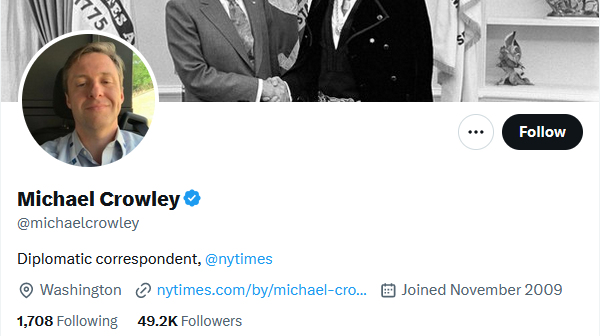
 When the New York Times wonders why they went from 'the paper of record' to BuzzFeed in a suit, they can look no further than this article on whistleblowers written by 'Diplomatic correspondent' Michael Crowley - which for 12 hours, despite undergoing a full editorial process, contained major fabrications about whistleblower Edward Snowden, who in 2013 exposed vast domestic and international spying operations run by the NSA and other organizations.

For starters, Crowley wrote that Snowden "handed them off to the website WikiLeaks for publication," which is a complete lie. Snowden in fact gave the documents to journalist Glenn Greenwald when he was with The Guardian, and the Washington Post - where they went through the editorial process.

Second, Crowley wrote that a disclosure that the NSA was spying on former German Chancellor Angela Merkel's phone came from the Snowden archive - another total lie. Both of these lies could have been debunked with a 10 second look at WikipediaIn reality, the Merkel findings were the result of a 2015 internal investigation in the Danish Defense Intelligence Service into the NSA's role in the partnership, and broken by Reuters.

As Greenwald notes, "This story was published by the NYT 12 hours ago. Numerous top editors who oversaw publication of our reporting -- then-Guardian-editor-in-chief @janinegibson and Intercept's @MargotWilliams -- quickly corrected them, but the paper ignored it."

Then, without saying a word, the Times stealth edited the lies out of the article more than 12 hours later.

Reactions have been... appropriate.

Supreme Court Temporarily Pauses Restrictions On Abortion Pill

 The Supreme Court has temporarily paused a suspension of the FDA's approval on the abortion pill, mifepristone, after Justice Samuel Alito issued a five-day administrative stay in order to give the high court time to consider a longer delay.

The stay, which expires next Wednesday, April 19, comes one day after the Biden DOJ asked the Supreme Court to protect the availability of the abortion pill, after the 5th US Circuit Court of Appeals blocked doctors from prescribing the pill after the seventh week of pregnancy.

https://www.zerohedge.com/political/supreme-court-temporarily-pauses-restrictions-abortion-pill

MindMed jumps after psychedelics company reports positive findings in trial of LSD for major depression

 The stock of psychedelics company Mind Medicine Inc. rose 4% Friday, after the company's Swiss research partners reported positive results from a Phase 2 trial of LSD as a treatment for major depressive disorder, or MDD. The trial involving 61 patients showed "rapid, durable and beneficial effects" of LSD in mitigating the symptoms of MDD, the company said in a statement. The high dose regimen involved giving patients 100 ug on the first dosing day, followed four weeks later by a 200 ug dose. The primary endpoint was to show statistically and clinically significant improvements using the clinician-rated Inventory of Depressive Symptomatology, or IDS, scores six weeks after dosing compared with the control group. The research was conducted by Prof. Matthias Liechti and Dr. Felix Mueller, MindMed collaborators at University Hospital Basel and the University Hospital of Psychiatry. The data has direct relevance to MindMed's MM-120 program as a treatment for generalized anxiety disorder, which is in a Phase 2 dose-finding trial. MindMed stock has gained 47% in the year to date, while the S&P 500 has gained 7%.

https://www.morningstar.com/news/marketwatch/20230414659/mindmed-stock-jumps-45-after-psychedelics-company-reports-positive-findings-in-trial-of-lsd-as-treatment-for-major-depressive-disorder

IRS Says 'Time Running Out To Claim $1.5 Billion In Unclaimed Refunds For Tax Year 2019'

 Authored by Tom Ozimek via The Epoch Times (emphasis ours),

The Internal Revenue Service (IRS) announced Wednesday that over a million Americans have unclaimed tax refunds for the tax year 2019 and face a looming deadline to claim a total of $1.5 billion before it becomes government property.

The IRS said in a press release that nearly 1.5 million people across the United States have unclaimed refunds because they haven’t filed their tax returns for the 2019 tax year.

“The 2019 tax returns came due during the pandemic, and many people may have overlooked or forgotten about these refunds,” IRS commissioner Danny Werfel said in a statement. “We want taxpayers to claim these refunds, but time is running out.”

Normally, the deadline for filing older tax returns falls around the April tax deadline. But for 2019 returns, that window has been extended to July 17 due to the pandemic.

“With the pandemic taking place when the 2019 tax returns were originally due, people faced extremely unusual situations,” Werfel said.

There’s a three-year window for taxpayers to file returns and claim refunds. If they don’t file within three years, any money they could have received becomes the property of the U.S. Treasury.

The average unclaimed amount for the 2019 tax year is $893 per filer.

In a separate press release, the IRS issued a reminder that April 18 is the deadline for first quarter estimated tax payments for the tax year 2023. These estimated quarterly tax payments are typically made by individuals like the self-employed and entities like corporations that do not have their taxes withheld.

Also, the IRS on Tuesday announced that taxpayers in nearly two dozen states should consider filing amended tax returns for 2022 because they may have needlessly reported income from special state relief payments and stand to get bigger refunds.

Some Taxpayers Eligible for Bigger Refunds

The IRS said in a press release that taxpayers who reported certain state payments related to general welfare and disaster relief as taxable income on their tax returns did so, in many cases, unnecessarily.

The tax agency earlier this year determined that taxpayers in nearly two dozen states didn’t need to report these special payments in tax year 2022 and the IRS won’t challenge their taxability.

https://www.zerohedge.com/political/irs-says-time-running-out-claim-15-billion-unclaimed-refunds-tax-year-2019