Search This Blog

Saturday, April 15, 2023

The corrupted science behind Biden’s COVID vax mandates

 President Joe Biden decreed on Sept. 9, 2021, that more than 100 million Americans must get COVID-vaccine injections.

But newly disclosed emails show that the Food and Drug Administration finding behind that order, official certification of the jabs as “safe and effective,” was the result of a bureaucratic bait-and-switch.

The FDA had approved COVID vaccines on an emergency-use basis in December 2020, before Biden even took office.

The White House assumed that was the silver bullet to enable Biden to save Americans from COVID.

But it soon became clear that many Americans were hesitating to get jabbed, in part because the FDA approval was solely for emergency use.

Many Americans have long been wary of vaccines, including health-care workers who avoid flu shots.

The president championed vaccines with evangelical fervor.

“You’re not going to get COVID if you have these vaccinations,” he insisted in a July 21, 2021, CNN town hall.

Biden’s claim was false, spurred by the Centers for Disease Control and Prevention decision to ignore any “breakthrough” COVID infections that did not result in death or hospitalization.

As for the emergency-only approval, Biden assured the audience that “the group of scientists we put together” will “get a final approval” very soon.

Bowl of COVID-19 vaccines.
Biden said in 2021 that Americans would not get COVID if they got the vaccine.
AP

In fact, when Pfizer applied for full approval in May 2021, the FDA said it aimed to announce a decision in January 2022.

But that wasn’t fast enough for the Biden White House.

Newly released emails reveal that Acting Commissioner Janet Woodcock was concerned because “states cannot require mandatory vaccination” without FDA final approval, according to the chief of FDA’s vaccine-review office, Marion Gruber.

Gruber warned that a thorough evaluation was needed due to “increasing evidence of association of this vaccine and development of myocarditis (especially in young males).”

After Gruber balked, Woodcock placed a loyal subordinate in charge of the process, and the vaccine got full approval Aug. 23.

Biden boasted that day of achieving a COVID “key milestone” and labeled FDA approval the “gold standard,” proving vaccines were safe and effective.

The White House arm-twisting spurred a “mutiny” at the FDA, as Politico put it: Gruber and her top deputy resigned in protest.

When Biden gave his vaccine-mandate speech Sept. 9, he promised to “finish the job [on COVID] with truth, with science.”

But the White House had already buried the truth and effectively exiled dissenting scientists.

Nurses in a COVID-19 ward.
Biden had promised to finish the job on COVID “with science.”
AP

Indeed, another key Biden claim had already fallen apart: that vaccines stop transmission.

Late July 2021 brought news that almost 500 vaccinated people contracted COVID on holiday visits to Provincetown, Mass.

On July 30, The Washington Post and New York Times published leaked Centers for Disease Control and Prevention documents warning that vaccines were utterly failing to stop transmission.

The Times tweeted, “The Delta variant is as contagious as chickenpox and may be spread by vaccinated people as easily as the unvaccinated.”

Biden White House COVID spokesman Ben Wakana hysterically denounced The WaPo as “completely irresponsible” and flogged the Times with an all-caps outburst: “YOU’RE DOING IT WRONG.”

But on Aug. 5, CDC chief Rochelle Walensky admitted that vaccines failed to “prevent transmission” of COVID.

The following week, a Mayo Clinic study indicated that the Pfizer vaccine had become only 42% effective — below the standard the FDA normally required for vaccine approval.

None of that mattered to an administration that had decided vaccines were everything: Biden announced his private-employee mandate Sept. 9.

And the FDA final approval prompted many schools, colleges and other organizations to impose their own mandates. (This, when it was already clear that young people faced minimal risk from COVID.)

Yet the vaccines were already proving less effective against the new COVID variants that experts had long predicted would occur.

King Joe could not sweep back the viral tide.

By January 2022, the nation was seeing a million new COVID cases a day, and still-frightening numbers of deaths among both the vaccinated and unvaccinated — while the Supreme Court struck down Biden’s vaccine mandate for 84 million private employees on the 13th.

This 2020 electron microscope image made available by the Centers for Disease Control and Prevention shows SARS-CoV-2 virus particles.
COVID vaccines can still provide protection for the elderly and people with severe health problems.
AP
The pandemic still ended, as pandemics always do: The population reached “herd immunity” — through both vaccination and natural immunity.

The COVID vaccine’s rushed approval was the pharmaceutical version of a riverboat gamble.

Yet the administration is still pushing new jabs, including boosters — ignoring risks such as the threat of myocarditis among vaccinated younger males (a four- to 28-fold elevated risk).

The CDC is investigating a possible link between Pfizer vaccines and strokes in the elderly. 

COVID vaccines can still provide protection for the elderly and people with severe health problems.

But since early 2022, most COVID fatalities have occurred among the fully vaccinated.

More medical research is necessary to reveal the benefits and risks of the vaccines.

Meanwhile, the House Select Subcommittee on the Coronavirus Pandemic is demanding a bevy of documents from the FDA on its rushed vaccine approval, while Biden policymakers continue to treat transparency as a plague to avoid at all costs.

If and when federal files are finally opened, how many other COVID policy scandals will be revealed?

James Bovard is the author of 10 books and a Brownstone Institute fellow.

https://nypost.com/2023/04/14/the-corrupted-science-behind-bidens-covid-vax-mandates/

Pfizer’s Maternal RSV Vaccine Falls Short

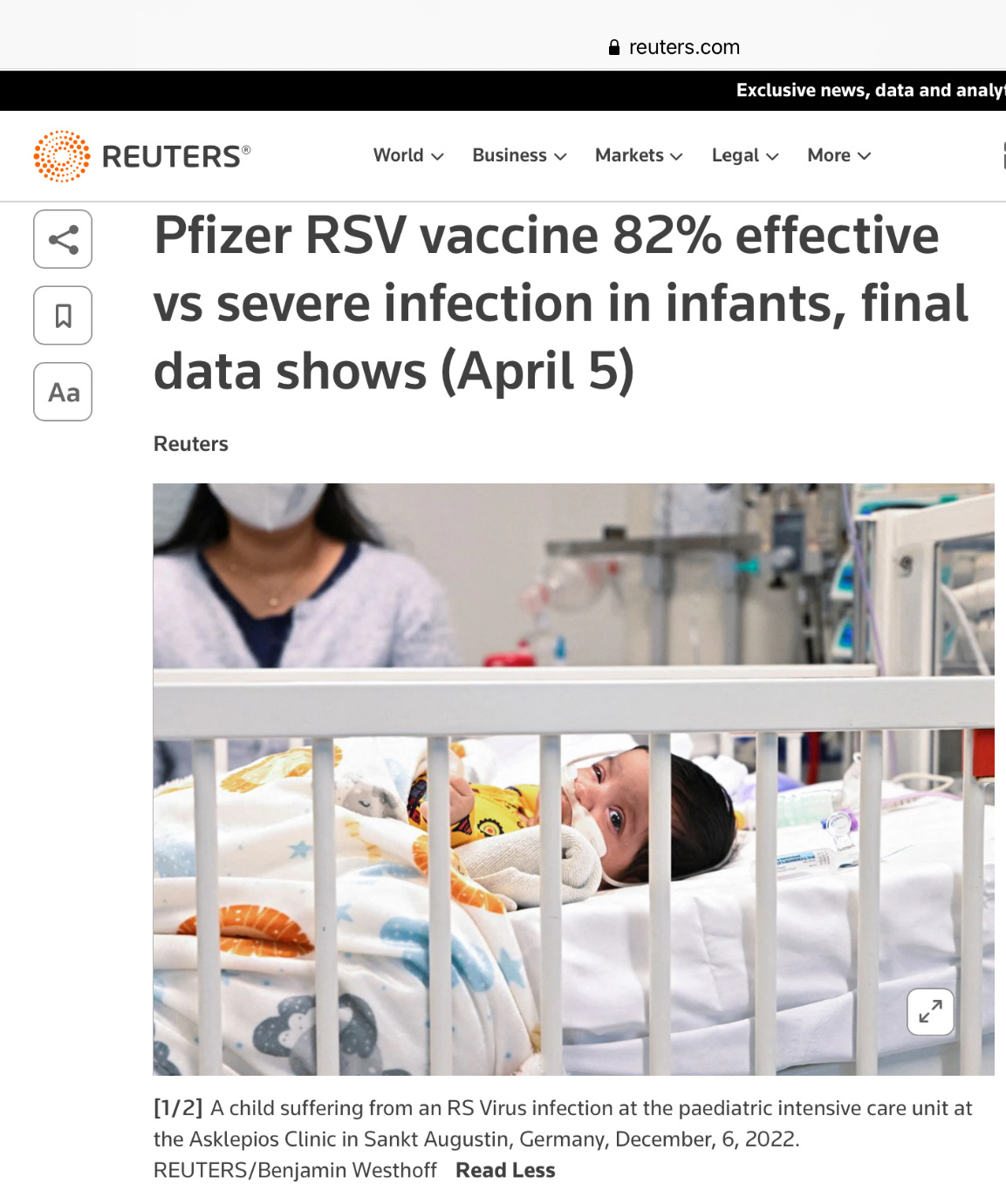
 Back in November, I wrote about Pfizer’s press release for their ground-breaking new maternal RSV vaccine, RSVpreF. The news was exciting — respiratory syncytial virus lands some 1-2% of U.S. infants in the hospital in a typical year, and an effective vaccine has been long overdue. I was cautiously optimistic, but expressed concerns over two issues: will their safety data hold up given that competitor GSK’s maternal RSV vaccine trial was stopped for adverse outcomes, and how will efficacy look once all the data is published? Well, in yet another example of “why you can’t trust a press release,” all that glittered was not gold. I no longer have a positive opinion on the RSVpreF vaccine.

Now, this is not to say the vaccine failed utterly; the study results as reported last week in the New England Journal of Medicine were not altogether out of line with that enthusiastic press release from the fall. At 90 days after birth, infants of mothers who received the shot were 82% less likely to have experienced a severe case of RSV; and at 180 days, there was still a 69% lower rate. We were reassured that adverse incidents were similar between vaccine and placebo groups beyond the usual post-injection complaints. All in all, the results were met with enthusiasm:

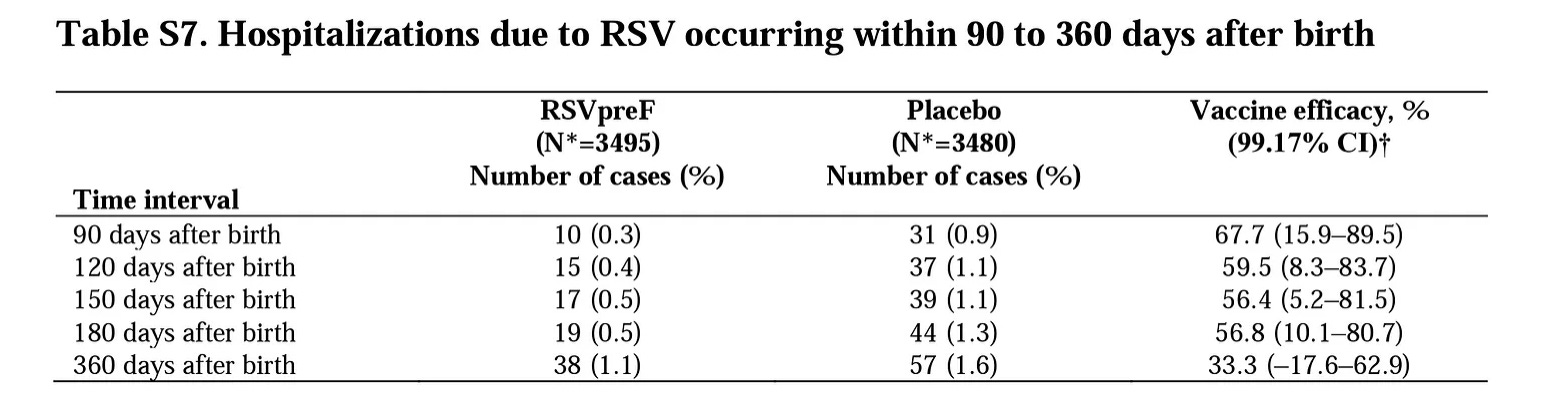
I am not going to pick the entire study apart; that’s done well by a medical student, Dave Allely, here. Instead, I will focus on two numbers. First, as regards efficacy, the primary outcomes of interest were those 82% and 69% reduced rates of severe RSV at 90 and 180 days (as well as overall all-comer rates of medically-attended RSV, which was a more modest 57% reduction which did not meet the pre-determined criterion for a successful outcome). These shorter time frames make sense from Pfizer’s perspective, as we would expect the effectiveness of a maternally-administered vaccine to wane with each month after birth. However, from a physician’s perspective, the outcome in which I was most interested was the secondary outcome of RSV hospitalization, with data out to 1 year after birth; this data went conspicuously unmentioned in the November press release, despite Pfizer having shifted the outcome measure mid-trial from 180 to 360 days. Sure enough, it’s a bit less inspiring:

Now, I would rather prevent severe RSV in the first 6 months than later in life, if forced to choose, as the mortality rate is moderately higher in younger infants than older infants and toddlers. However, a hospitalization is still a serious event at 9 months or a year, too, and as a parent, I don’t suddenly lose interest in how effective a vaccine is after my baby is 6 months old. What we see in the above table is that the RSVpreF rapidly lost efficacy after 6 months, with hospitalizations suddenly accruing at a faster rate among the vaccinated cohort than placebo (19 cases vs 13 over those 6 months). Whether statistical noise or a signal that altering the usual transmission dynamics in infants could have unforeseen drawbacks, it undermined most of the benefit of those first 6 months, with only a 33% reduction in hospitalization remaining that was not statistically significant.

So… the benefit of taking this vaccine for an expectant mother does not clearly exist over the full length of time in the trial. We do have a “trend” — i.e., improvement lacking statistical significance — implying that 1 in every 200 infants would be spared an RSV-associated hospitalization in the first year of life through this vaccine.

What about the cost, though? Here is where the authors seemed particularly unwilling to address the elephant in the room. As I wrote in my November post, no one touting Pfizer’s promising results was mentioning how exactly they avoided GSK’s safety concerns while testing a similar product in their trial. The details of what went wrong with the GSK trial was still not publicly available in the fall; however, the safety signal was revealed via a scientific abstract in February 2023:

Well, how did Pfizer’s product stack up in this one regard? Not well!

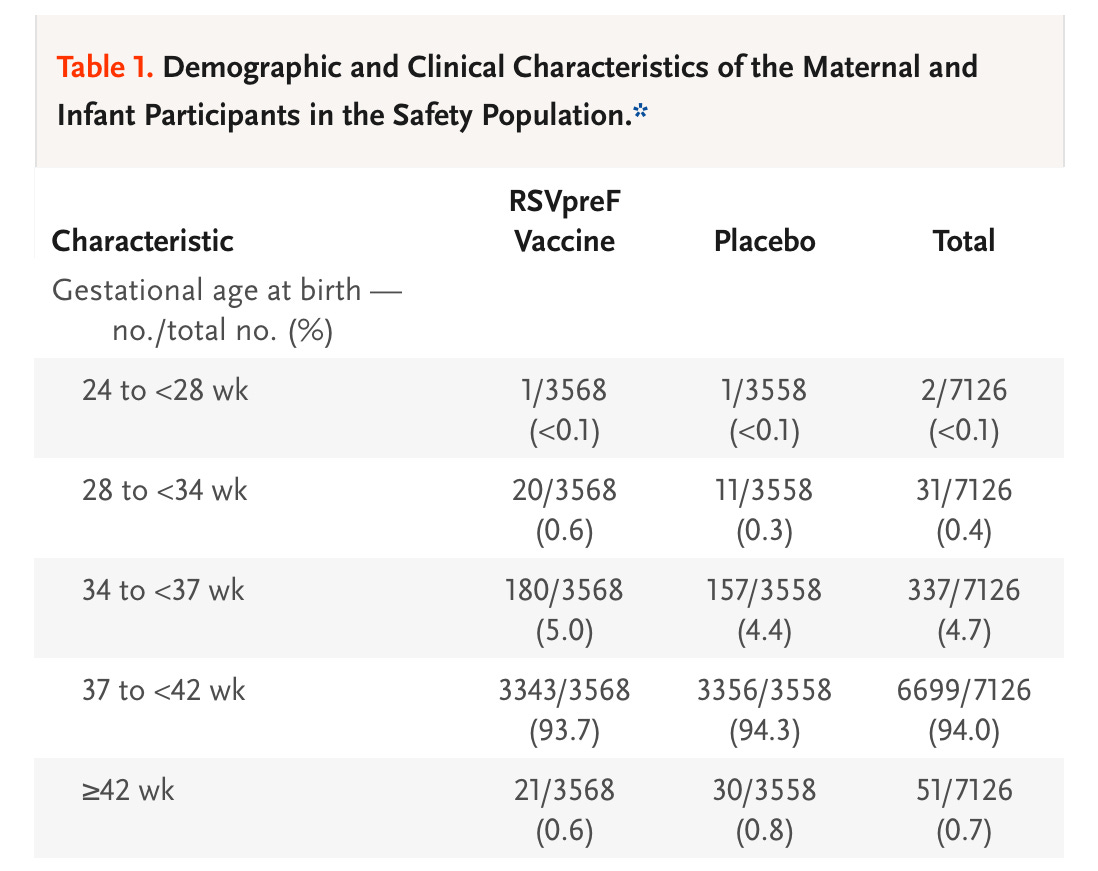
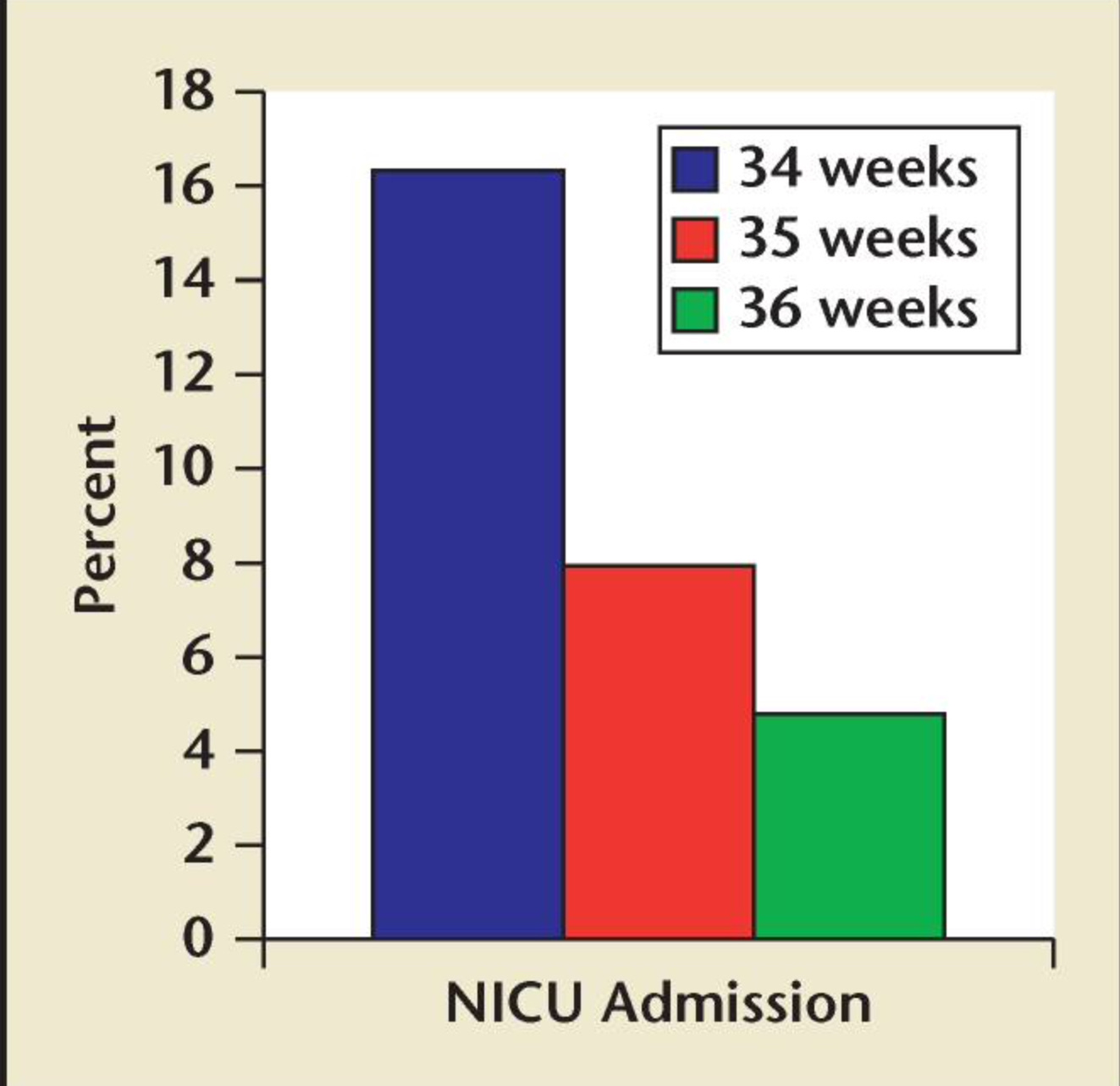
A 5.6% rate of pre-term birth vs 4.7% among the placebo group if we use 37 weeks as our cut-off; and at the more significant cut-off of <34 weeks, at which there can be substantial short- and long-term repercussions of pre-term birth, we still see an absolute difference of 0.25%. To be clear, even so-called “late pre-term birth” is not a trivial matter; births in the 34-37 week range are at greater risk of complications than term babies.

So, if the signal found in the trial were to hold up with larger scale data, we would see an increase of almost 1 in a 100 additional infants born pre-term to mothers given the RSVPreF. 1 in 400 would be born earlier than 34 weeks. Will these findings hold up in the real world with more numbers? The larger GSK trial certainly suggests there is a legitimate chance they would.

Of course, our numbers are limited because Pfizer’s MATISSE trial for RSVPreF was stopped early — because it was so effective! I am confounded by the regulators who saw fit to stop a trial early with a major, easily-anticipated safety signal not yet fully delineated.

It also leaves me unable to recommend this vaccine to my patients. The risk of preterm birth is simply too high to advocate for its benefits; if we are guided by the limited (and not statistically significant) information we have, the best guess we can make is that the improvement in hospitalizations over one year (1 save per 200 vaccines) is eroded by the potential for additional pre-term deliveries (1 extra per 110 vaccines, with 1/400 early pre-term before 34 weeks). Especially when it comes to pregnant women and infants, “first do no harm,” right?

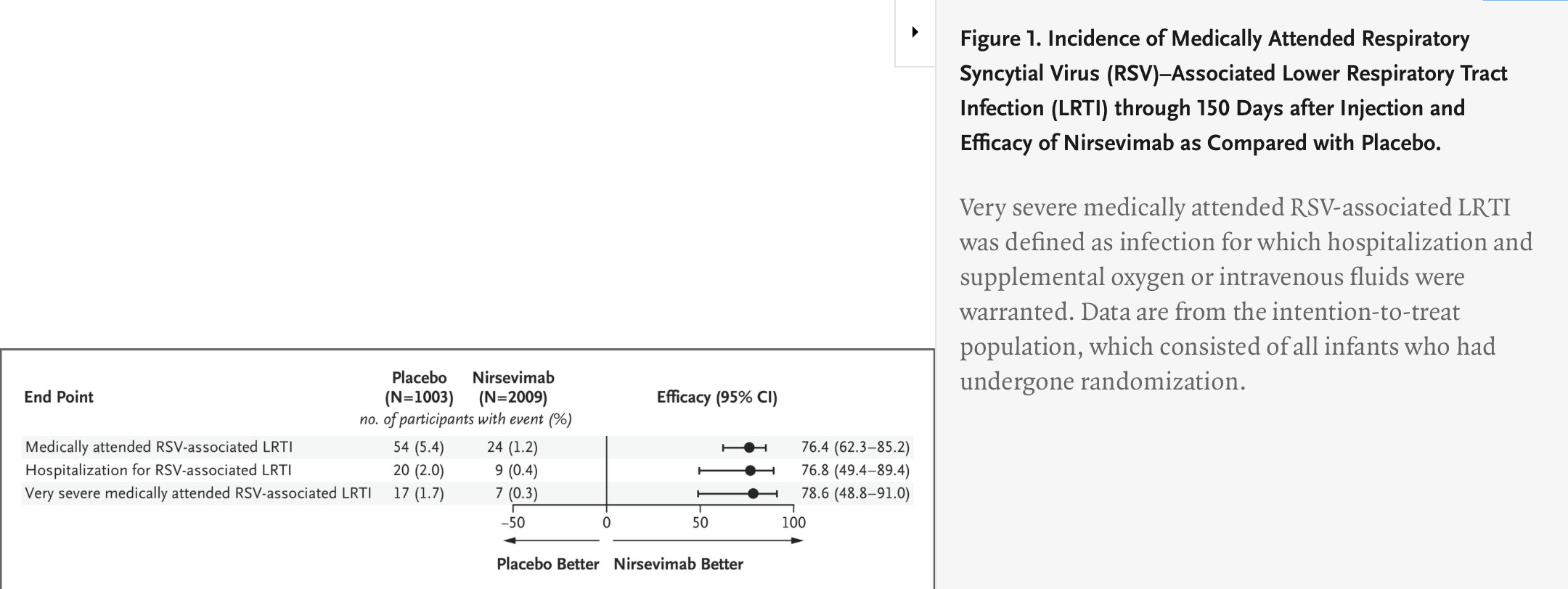
The other factor in why this trial data amounts to a failed vaccine for me is that we are about to have a perfectly good alternative. I am sure it was not a coincidence that in the same NEJM issue, we had correspondence reviewing the updated trial data for AstraZeneca’s monoclonal antibody, nirsevimab, already approved in the UK and EU for late-pre-term and term infants to prevent RSV. It essentially meets or exceeds the efficacy data for the RSVPreF vaccine, with 78% reduction of hospitalizations at 5 months, as well as reducing overall cases of medically-attended RSV:

Unfortunately, they did not collect efficacy data beyond 150 days, but their efficacy figure exceeds that of the Pfizer vaccine at 160 days.

As to safety, rates of overall and severe adverse events were quite similar in placebo and nirsevimab groups. Adults with the new Covid-19 monoclonal antibodies had tolerable but concerning severe allergic reaction rates, but none were seen among infants given nirsevimab. The only safety signal of concern was the report of 4 deaths in the ~2000 members of the nirsevimab cohort, with none in the ~1000-strong placebo group. None were within 4 months of their intramuscular injection of nirsevimab, and I find the list below reassuring that there is not likely a genuine increased risk of all-cause death after receiving nirsevimab:

Obviously, this safety concern can be tracked with post-marketing data, as deaths in the U.S. among infants are rare. The same can probably not be said for RSVPreF, for which I expect approval with a plan to track post-marketing data on pre-term births. The problem, of course, is that pre-term births are common, often without a known cause, and we will lack a control group and be left with a “historical cohort” for comparison. If the FDA approves RSVPreF without requiring further randomized controlled trial data to elucidate the risk of pre-term birth, we will probably never be able to accurately assess this risk. I am not optimistic that more trial data will be demanded, however.

So, in short: I doubt I will ever be able to recommend Pfizer’s RSVPreF to pregnant women concerned with the risk of RSV hospitalizing their infant. At this point, AstraZeneca’s nirsevimab has a clear advantage, and I would offer to infants with high risk due to medical conditions, limited access to care, or high exposure risks. RSV is not a trivial concern to infants. It’s unfortunate that Pfizer could not convince with its maternal vaccine study.


https://doctorbuzz.substack.com/p/pfizers-maternal-rsv-vaccine-falls

Karyopharm: Data at AACR from Phase 1 Study of Selinexor in Myelofibrosis

 Updated Safety and Efficacy Data Will be Presented in a Poster Session at AACR 2023 from All Patients Enrolled in the Phase 1 Study –

– Company to Host Investor Webcast Featuring a Key Opinion Leader on April 18, 2023 at 4:30 p.m. ET to Discuss Updated Results –

Karyopharm will host a webcast on, April 18, 2023, at 4:30 p.m. Eastern Time with a key opinion leader to discuss the updated data on selinexor in combination with ruxolitinib as well as the current treatment landscape and unmet medical need in treating patients with myelofibrosis.

To access the event, please dial (888) 349-0102 (local) or (412) 902-4299 (international) at least 10 minutes prior to the start time and ask to be joined into the Karyopharm Therapeutics call. A live audio webcast of the call, along with accompanying slides, will be available under "Events & Presentations" in the Investor section of the Company's website, http://investors.karyopharm.com/events-presentations. An archived webcast will be available on the Company's website following the event.

23andMe: Phase 1 Results from the First-in-Human Phase 1/2a Study of Solid Tumor Therapy


  • First clinical results to be presented at the AACR Annual Meeting 2023 showed 23ME-00610 demonstrated an acceptable safety and tolerability profile, with favorable pharmacokinetics and peripheral CD200R1 saturation in patients with advanced solid malignancies
  • Recommended dose selected for evaluation of anti-tumor activity in the ongoing Phase 2a portion of the Phase 1/2a study

Dutch to widen 'right-to-die' to include terminally ill children

 The Netherlands will widen its existing euthanasia regulations to include the possibility of doctor-assisted death for terminally ill children between one and twelve years old, the Dutch government said on Friday.

The new rules would apply to an estimated group of around 5 to 10 children per year, who suffer unbearably from their disease, have no hope of improvement and for whom palliative care cannot bring relief, the government said.

"The end of life for this group is the only reasonable alternative to the child's unbearable and hopeless suffering," it said in a statement.

In 2002, the Netherlands was the first country in the world to legalise euthanasia under strict conditions. All cases of euthanasia must be reported to medical review boards.

The law already provided possibilities for euthanasia involving terminally ill babies until their first birthday and for children aged older than 12.

In 2022, only one instance of euthanasia for a minor between 12 and 16 years old was reported, figures from regional euthanasia review boards show.

The Netherlands would not be the first to allow doctor-assisted death for children of all ages. Belgium has allowed it since 2014.

https://www.yahoo.com/news/dutch-widen-die-terminally-ill-134905829.html