Search This Blog

Sunday, April 16, 2023

Merck in talks to acquire Prometheus Biosciences: report

 Merck & Co. is reportedly in talks to acquire Prometheus Biosciences Inc.

The talks are said to be in the late stage with a deal possibly announced as soon as Sunday, according to The Wall Street Journal.

A deal is not certain and could still fall apart.

The deal could give Merck promising immune disease treatments.

FOX Business has reached out to Merck and Prometheus Biosciences for comment.

Prometheus had a market cap of $5.4 billion as of Friday’s market close. Its shares are up about 4% year-to-date.

Merck is looking to add new products to its pipeline as its top-selling drug cancer therapy Keytruda, is expected to lose patent protection this decade.

placeholder

Merck’s sales last year came to $59.3 billion, with Keytruda sales making up roughly $21 billion of it.

The San Diego-based Prometheus develops immune treatments and doesn’t have any approved products.

The company's pipeline drug in development treats immune diseases including ulcerative colitis and Crohn’s disease and recently reported separate positive study results in mid-stage testing.

Company sales totaled $6.8 million last year.

TickerSecurityLastChangeChange %
RXDXPROMETHEUS BIOSCIENCES INC.114.01+1.15+1.02%
MRKMERCK & CO. INC.115.31-0.27-0.23%

Merck recently made another deal, agreeing to acquire blood-cancer biotech Imago BioSciences for $1.35 billion.

https://www.foxbusiness.com/markets/merck-talks-acquire-prometheus-biosciences-report

Saturday, April 15, 2023

US Criticizes China's Death Sentence Of 'Wrongfully Detained' American Citizen

 by Aldgra Fredly via The Epoch Times (emphasis ours),

The United States on Thursday expressed its “disappointment” over China’s decision to uphold a death sentence of an American man who had been “wrongfully detained” for over a decade on drug-related charges.

Mark Swidan, a Houston resident, was detained on Nov. 13, 2012, while on a business trip to China. He was accused of being a part of a network involved in the manufacturing and trafficking of drugs.

Swidan pleaded not guilty to all charges but was denied by the Jiangmen Intermediate Court, which upheld his death sentence with a two-year suspended sentence, according to the U.S. Department of State.

“We are disappointed by this decision and will continue to press for his immediate release and return to the United States,” Vedant Patel, a Department of State spokesman, said in a statement.

“U.S. officials have repeatedly expressed their concerns to senior PRC [People’s Republic of China] officials about Swidan’s treatment, medical care, and his inability to send or receive mail in a timely manner,” he added.

Patel said that President Joe Biden and Secretary of State Antony Blinken will “continue to remain personally focused” on the release of Swidan and other U.S. nationals who were “wrongfully detained” or held hostage around the world.

Lack of Evidence

Swidan was aged 37 at the time of his arrest. He was sentenced to death in 2018 despite a lack of evidence presented against him.

No drugs were found on Swidan’s body or in his hotel room when he was arrested, according to a report [pdf] released by the United Nations Working Group on Arbitrary Detention in 2020.

The prosecution failed to produce forensic or telecommunications evidence, such as emails, phone call records, or letters. His passport records showed that Swidan was not in China when the alleged offense occurred.

U.S. officials had previously called for his release. In February, Texas Republicans—including Sen. Ted Cruz, Sen. John Cornyn, and Congressman Michael Cloud—introduced a resolution demanding his release ahead of Blinken’s planned trip to Beijing.

They’ve sentenced him to death on charges for which they have little to no evidence, and I had been urging Tony Blinken when he was going to Beijing to raise Mark’s case and to make the case for Mark to be released,” Cruz said in a statement.

Blinken indefinitely postponed his visit after a suspected Chinese spy balloon was detected flying over the continental United States. A U.S. military jet later shot down the balloon on Feb. 4.

“Bringing Mark Swidan home to his family should be a top priority for this administration,” Cloud said. “Too many innocent Americans remain wrongfully imprisoned by authoritarian regimes who are happy to collect human lives as a capital for future political bargaining.”

‘Badly Mistreated’

According to the U.N. report, Swidan was “badly mistreated” while in detention and exposed to “poor sanitary conditions.” He was denied medical treatment and barred from communicating with his family or U.S. Consulates.

https://www.zerohedge.com/political/us-criticizes-chinas-death-sentence-wrongfully-detained-american-citizen

Composition of joint lubricant potential culprit behind osteoarthritis

 Osteoarthritis is a degenerative joint disease caused by the breakdown of cartilage that afflicts more than 35 million adults in the U.S. The exact mechanism of cartilage breakdown in osteoarthritis is unknown, but damage from mechanical stress with insufficient self-repair is believed to be the main culprit.

The composition of synovial fluid, or joint lubricant, changes significantly in osteoarthritis: The concentration and molecular weight of hyaluronic acid tends to decrease and is commonly used to diagnose the disease.

In Biointerphases, an AVS journal published by AIP Publishing, an international group of researchers explored the disease-driven breakdown of hyaluronan and the mechanistic implications of these changes on the lubrication and subsequent wear of joints.

"One of the most important properties of the synovial fluid is its viscosity," said co-author Rosa Maria Espinosa-Marzal of the University of Illinois Urbana-Champaign. "Viscosity is a measure of the internal frictional force between adjacent layers of a fluid in relative motion, or, more simply, a fluid's resistance to flow. Large, high molecular weight polymers such as hyaluronic acid play a significant role in maintaining a high viscosity of the synovial fluid, which helps maintain a fluid film and reduces friction between articulating surfaces during motion."

Through analysis with neutron and light scattering (studies carried out by Changwoo Do and Tooba Shoaib at Oak Ridge National Laboratory), the team determined that the structure of the lipid-hyaluronic-acid complexes in the bulk solution is a function of concentration and its molecular weight.

Researchers at the University of Illinois Urbana-Champaign, Kangdi Sun and Espinosa-Marzal, in collaboration with Mark Rutland, from KTH Royal Institute of Technology, found the hyaluronic acid's concentration and molecular weight both play a role in how the lubricant reacts with different surfaces.

"Our results show low molecular weight hyaluronic acid, which mimics osteoarthritis-diseased joints, hinders the adsorption of the hyaluronic-acid-lipid complex," said Espinosa-Marzal. "The lack of the formation of an amorphous film on the surface may reflect a consequence of osteoarthritis, since this film should help reduce friction and wear."

Their hypothesis is that this film's absence may increase wear of the cartilage surface. In contrast, high molecular weight hyaluronic-acid-lipid complexes form an amorphous film, which presumably helps maintain the mechanical integrity and longevity of efficient lubrication in healthy cartilage.

Studies on hyaluronic acid itself and hyaluronic-acid-lipid complexes "do not entirely support hyaluronic acid's role in providing high lubricity to the cartilage's articular surface, which is still a bit controversial," Espinosa-Marzal said. "Our results indicate that for low molecular weight hyaluronic acid, this is likely the case."

By exploring the complex interplay between phospholipid and hyaluronic acid self-assembly, and the role of molecular weight on surface affinity, "our study illuminates a mechanism whereby the 'vicious circle' of osteoarthritis can be explained," said Rutland.

Journal Reference:

  1. Kangdi Sun, Tooba Shoaib, Mark W. Rutland, Joseph Beller, Changwoo Do, Rosa M. Espinosa-Marzal. Insight into the assembly of lipid-hyaluronan complexes in osteoarthritic conditionsBiointerphases, 2023; 18 (2): 021005 DOI: 10.1116/6.0002502

Contentious COVID-19 Drugs Are All Anti-Malarial: May Not Be A Coincidence

 by Marina Zhang via The Epoch Times (emphasis ours),

The COVID-19 recommendations hydroxychloroquine, ivermectin, and now artemisinin all have one thing in common: They are antimalarial drugs or have such properties.

Yet studies suggest that this may not be a mere coincidence; malaria and COVID-19 may be more similar than people may realize.

Malaria Versus COVID-19

From the outset, malaria and COVID-19 are very distinct diseases.

Malaria is a parasitic disease. An infection starts when an individual is bitten by a mosquito carrying a parasite from the Plasmodium genus. Upon infection, the parasite first goes to the liver and multiplies in liver cells. Then it migrates to the bloodstream, invades and proliferates in red blood cells, and causes these cells to expand and burst.

Common malaria symptoms such as fever, chills, and sweating occur during the blood-stage infection. Complications include anemia, and on rare occasions, cerebral malaria, liver failure, fluid buildup in the lungs, and acute respiratory distress syndrome.

COVID-19, on the other hand, is a viral disease. Infection occurs primarily through the inhalation of contaminated droplets. The virus invades the body through the nasal cavities, entering the upper and then lower respiratory tracts.

Inflammation of the lungs ensues as the body’s immune cells fight off the infection. The person’s oxygen levels start dropping as inflammation worsens in the advent of a cytokine storm, and the lungs become damaged. Some of the virus can also go into the bloodstream and invade other organs, causing systemic inflammation and damage.

Several Commonalities

While one mainly affects blood cells and the other primarily affects the lungs, both diseases are characterized by a strong inflammatory response early in the infection, according to a 2022 paper in Frontiers in Immunology.

Symptoms-wise, both infections from malaria and COVID-19 can lead to fever, fatigue, shortness of breath, diarrhea, and muscle pain.

If inflammation is prolonged, the body will experience a significant increase in cytokines, and individuals can become severely injured or even die.

The two diseases are also similar in that they both sequester iron, use the same receptors in their pathogenesis, and even share similar structures in their proteins.

Iron Storage

Both the Plasmodium parasite and the SARS-CoV-2 virus require iron to proliferate. Therefore, both the parasite and the virus need to store iron inside the ferritin protein within infected cells. High or increased levels of ferritin are therefore an indication of severe disease and inflammation.

Drugs that are capable of targeting iron storage or preventing proliferation may therefore be successful in treating both malaria and COVID-19.

Similar Receptors

The angiotensin-converting enzyme 2 (ACE-2) receptor is involved in both malaria and COVID-19 infections.

In COVID-19, the virus binds to ACE-2 to invade cells. ACE-2 is ubiquitous within the human body, present within at the very least:

  • Lungs
  • Blood vessels
  • Muscles
  • The gut
  • Nerves
  • Stomach
  • Heart
  • Kidneys
  • Pancreas
  • Testes
  • Uterus

Organs that have a high number of ACE-2 receptors are therefore at a higher risk of COVID-19 infection.

The significance of ACE-2 in malaria is uncertain. However, one study, as well as the one published in Frontiers in Immunology, showed that people who have their ACE-2 receptors reduced due to genetic predispositions are more resistant to malaria.

According to the Frontiers in Immunology study, malaria parasites use the CD147 receptors on red blood cells to gain entry into the cell. The COVID-19 virus also uses CD147 in the absence of ACE-2 receptors. CD147 has also been linked to the formation of blood clots in COVID-19 infections.

Therapeutics that can target CD147 and ACE-2 may be successful in treating both malaria and COVID-19.

Similar Protein Structures

Additionally, both pathogens share a degree of overlap in their protein structures. The COVID-19 surface N protein has at least 40 percent structural similarity with important malarial proteins in charge of transport, attachment, and invasion.

This means that drugs that can target malarial proteins may also be able to target SARS-CoV-2 viral proteins.

Antimalarial Drugs Used in COVID-19

Early in the pandemic, many studies recommended antimalarial and anti-parasitic drugs such as hydroxychloroquine, chloroquine, ivermectin, and artemisinin as potential treatment options for COVID-19. These recommendations, however, soon received backlash, with one reason being that malaria and COVID-19 seem to be very different diseases.

But many doctors and studies found these therapeutics helpful in treating acute COVID-19. Professor Jose Luis Abreu, whose specialty is in plant science at The State University of Nuevo León, used the proposition of “parallelism between malaria and COVID-19” as an explanation for why antimalarial drugs such as ivermectin, artemisinin, and hydroxychloroquine may be applied to COVID-19 in his protocol.

Block COVID-19 Receptors and Proteins

In simulation studiesivermectin, hydroxychloroquine, and artemisinin can bind to SARS-CoV-2 N proteins, which have structural similarities with malaria proteins. In treating malaria, hydroxychloroquine and artemisinin have been shown to block malarial proteins from replicating and proliferating.

All three drugs can also bind to CD147 and ACE-2 receptors, as previously reported by The Epoch Times. These drugs can also bind to COVID-19 spike proteins directly to prevent viral attachment to cell receptors and also prevent viral proliferation by blocking proteins that take part in viral replication.

https://www.zerohedge.com/covid-19/contentious-covid-19-drugs-are-all-antimalarial-may-not-be-coincidence

SEC Sides With Conservatives Over Launching PayPal Discrimination Probe

 by Kevin Stocklin via The Epoch Times (emphasis ours),

The Securities and Exchange Commission (SEC) sided with conservative investors this week in their request to investigate what they say is PayPal’s systematic political and religious discrimination against customers.

Over the objections of PayPal’s management, the SEC allowed a proposal by the National Center for Public Policy Research (NCPPR) to go to a shareholder vote at the company’s next annual meeting. This decision follows a similar decision on March 29, in which the SEC green-lighted a proposal regarding alleged political and religious discrimination at JPMorgan Chase, America’s largest bank.

In an April 10 letter to PayPal’s attorneys, the SEC stated that NCPPR’s proposal “requests that the board conduct an evaluation and issue a report within the next year evaluating how it oversees risks related to discrimination against individuals based on their race, color, religion (including religious views), sex, national origin, or political views, and whether such discrimination may impact individuals’ exercise of their constitutionally protected civil rights.”

Responding to PayPal’s request to block the proposal from going to a shareholder vote, the SEC stated: “We are unable to concur in your view that the Company may exclude the Proposal under Rule 14a-8(i)(7). In our view, the Proposal transcends ordinary business matters.”

PayPal had argued that its shareholders should not consider NCPPR’s request because the issue of viewpoint discrimination is part of the company’s “ordinary business operations” and that “the proposal seeks to ‘micro-manage’ the company by probing too deeply into matters of a complex nature upon which shareholders, as a group, would not be in a position to make an informed judgment.”

The NCPPR proposal stated, among other things, that “companies that provide banking or financial services are essential pillars of the marketplace. On account of their unique and pivotal role in America’s economy, many federal and state laws already prohibit them from discriminating when providing financial services to the public. And the UN Declaration of Human Rights, consistent with many other laws and the U.S. Constitution, recognizes that ‘everyone has the right to freedom of thought, conscience and religion.’”

Conservatives Charge Viewpoint Discrimination

We know from news stories that PayPal has been discriminating on the basis of viewpoints, shutting down accounts that differ from their ‘woke’ political principles,” Scott Shepard, a director at NCPPR and co-author of the proposal, told The Epoch Times. “We’re giving them a chance with this to consider ways to rectify those problems.”

PayPal has scored well in terms of its support for progressive causes. Standard & Poor’s ranked it a 49 out of 100 in the social-justice category of its environmental, social, and governance (ESG) score, more than double the industry average of 22, though below the industry best of 90. Its overall ESG rating increased steadily from 18 in 2018 to 58 today.

PayPal scored a perfect 100 percent on the Corporate Equality Index (CEI), published by the Human Rights Campaign (HRC). The HRC publishes various corporate indices that it says are “benchmarks of LGBTQ-inclusive policies, practices, and benefits of our nation’s employers.” Noting left-wing philanthropist George Soros’s funding of the HRC, some analysts have suggested that campaigns such as Bud Light’s endorsement of trans activist Dylan Mulvaney were part of a standard corporate practice of pursuing high scores from ESG rating agencies and progressive organizations like the HRC. Anheuser-Busch, the brewer of Bud Light beer, scored 100 on HRC’s Corporate Equality Index.

https://www.zerohedge.com/markets/sec-sides-conservatives-over-launching-paypal-discrimination-probe

NY had record-high cases of ‘diabolical’ fungal infection last year

 It might not be “The Last of Us” — but these new stats are pretty terrifying.

New York had close to the most cases in the nation of a “diabolical” drug-resistant and deadly fungus that has already infected people in at least 28 states.

There were 379 confirmed cases of the dangerous, drug-resistant fungi named, Candida auris last year, according to the state health department, eclipsing the previous statewide record for infections of 291 in 2021.

Last year’s totals put it alongside Nevada, California and Florida as the states with the most infections from the fungus with 384, 359 and 349, respectively.

There have already been at least 72 new cases this year statewide, bringing the state’s total number of cases to 1,454 with the first reports of the infection in the state beginning in 2013

“I do not think it’s going to peter out,” warned Dr. Rodney Rohde, a microbiologist and professor of clinical laboratory science at Texas State University.

“It’s a global problem.”

The species of fungus was first identified in Japan in 2009 — and it has since proven to be most deadly in close-quartered settings such as hospitals or nursing homes.

Candida Auri
Candida auris cases have been steadily rising across New York since the first case was reported in 2013, according to state data.
BSIP/Universal Images Group via Getty Images

Since then, the number of confirmed Candida auris infections has surged in part because of its ability to survive on surfaces for weeks and resistance to some anti-fungal drugs.

“They just persist,” Rohde said.

“They are diabolical in how they hang on to surfaces and they are always just a little bit ahead of us.”

Rohde said that the fungus secrets a sticky substance, called a biofilm prevents anti-fungal drugs from working.

When that surface is human tissue, the “gunky” coating can prevent drugs from working properly.

“Think of this biofilm like a thick, sticky matrix that the drugs can’t get down to the actual surface of the skin, or the body, or internally,” Rohde said.

“It can kill things on the top, but its so thick and gunky it basically repels the drugs.”

“It’s resistant to multiple anti-fungal drugs,” Rohde said.

“Combine that with a biofilm.

“Combine it with its ability to spread easily on surfaces and its knack for living on surfaces.

“It’s just kind of the perfect storm.”

Between 30% to 60% of people people who have contracted Candida auris have died, according to the CDC, although the populations most at risk are those who have a compromised immune system and those who have frequent, or long-term, hospital stays, according to health officials.

Rohde said warning signs could be a fever or severe urinary tract infection.

It can then cause sepsis and organ failure if the fungus gets into the blood.

“It can be delivered to really critical organs, including your kidney and your heart,” Rohde said.

“It can even get into your brain and cause encephalitis,”

Immune-compromised patients are particularly vulnerable, he added.

“Individuals in health care, research, and different infectious disease specialties need to be more purposeful in explaining some of these types of microbes…sometimes a patient is so sick that they may not be advocating for themselves,” Rohde said.

Data from the CDC differs from New York State when it comes to Candida auris infections with the state listing 379 cases and the federal agency reporting 329 cases.

The disease has drawn comparisons on social media to the video game-inspired HBO sci-fi series “The Last of US,” which portrays a post-apocalyptic world devastated by a fungus that kills its hosts, then turns them to bloodthirsty monsters, which experts note is not a trait of Candid auris.

https://nypost.com/2023/04/15/new-york-had-record-high-cases-diabolical-fungal-infection-last-year/

The E. Coli Super-Pathogens You Should Know About

 by Dr. Sean Lin and Jacky Guan via The Epoch Times (emphasis ours),

Foodborne illnesses, also known as food poisoning, are a serious public health issueEach year, they make 48 million people get sick, hospitalize 128,000, and cause the death of 3,000. Pathogenic E. coli is one of the most common known foodborne pathogens. However, the severity of various E. coli strains varies tremendously and the public should be cautious about one particularly dangerous type of E. coli.

E. Coli 101

Escherichia coli, also known as E. coli, is one of the most common types of bacteria known to mankind. From helping with digestion in your stomach to being a producer of artificial insulin, the bacteria discovered in 1885 have been studied countless times and improved our understanding of the microscopic world.

The E. coli we infamously know from the news belong to the group Enteropathogenic E. coli (EPEC) and are pathogens responsible for food poisoning. Foodborne illnesses also include Salmonella and Norovirus (responsible for the recent cruise ship outbreaks). Typically, an E. coli infection occurs when a person comes into contact with contaminated food, animals, or water. It usually only causes mild abdominal pain or brief diarrhea. Other symptoms include stomach cramps, nausea, vomiting, and fever.

Typical treatment usually involves rest, hydration, and nutritional support. The disease is usually self-limiting as the body can normally clear it. The use of antibiotics is common in treating E. coli, yet antibiotic resistance is also a problem worldwide. However, severe forms of E. coli are the Shiga toxin-producing variants of the bacteria that can have dire consequences.

STEC Variants Severely Damage Intestinal Linings and Kidneys

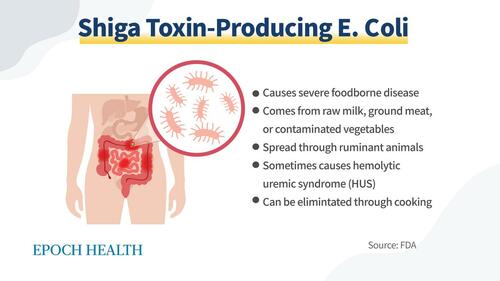
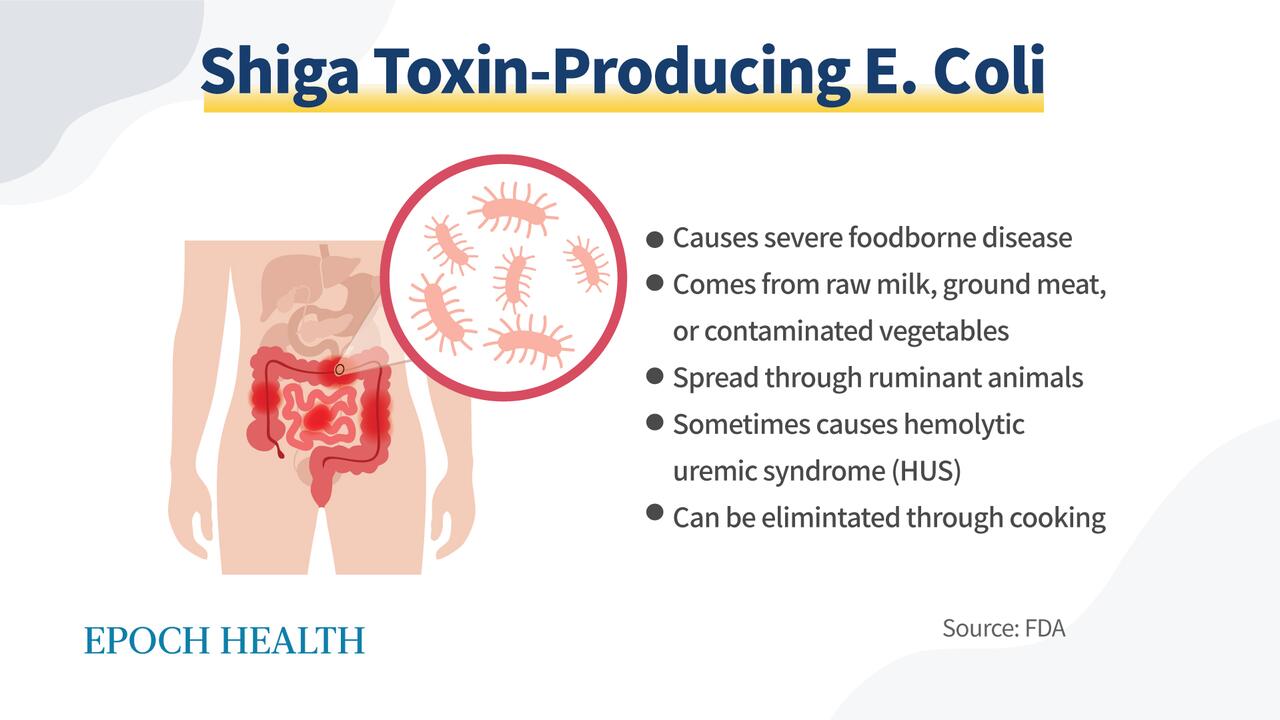
The variants of E. coli that produce Shiga toxins (Stx) are called Shiga toxin-producing E. coli, or STEC. They have gained a lot of attention in the past few decades, as they are known for causing severe disease.

STEC belongs to the EPEC group. STEC strains are capable of producing toxins named Shiga toxin type 1 (Stx1), type 2 (Stx2), or both, encoded by stx1 and stx2 genes, respectively.

The toxins are named after Kiyoshi Shiga, who first described the bacterial origin of dysentery caused by Shigella dysenteriae. Historically, the toxin produced by E. coli was named Shiga-like toxin (SLT). Now, Shigella dysenteriae and STEC are regarded as the most common sources of Shiga toxins.

Symptoms of a STEC infection include abdominal pain and watery diarrhea. There are also severe—possibly life-threatening—cases characterized by hemorrhagic colitis. These types of E. coli are also called Enterohemorrhagic E. coli (EHEC). Shiga toxins are also associated with hemolytic uremic syndrome (HUS).

In particular, the STEC O157:H7 and STEC O104:H4 are the two most notorious STEC strains. One could say these STEC groups are something like super soldiers in the E. coli army.

Shiga toxin-producing bacteria are E. coli strains one does not want to encounter. (The Epoch Times)

The Shiga toxin does most of its work in small blood vessels, as it is rather ineffective in large vessels such as major veins and arteries. This is how the toxin can specialize against the digestive tract, kidney, and lungs. For example, the Shiga toxins are good at destroying clusters of nerve endings or small blood vessels in the kidneys, which can lead to kidney failure and even HUS. It can severely damage the lungs as well, so food poisoning associated with Shiga toxins is often also associated with lung and nervous system damage.

https://www.zerohedge.com/medical/e-coli-super-pathogens-you-should-know-about