Search This Blog

Monday, July 3, 2023

NYC homelessness up 18% in 2023 despite sweeps, new outreach

 The number of homeless in New York jumped by nearly 18% in just a year — despite Mayor Adams’ efforts to clean up the vagrant population.

The annual Homeless Outreach Population Estimate  survey counted 4,042 people sleeping on the streets or in the subways when the citywide tally was performed on January 24, up from 3,439 in 2022.

The uptick in homelessness comes  after the Adams administration had made aggressive efforts to tackle the humanitarian crisis including enforcement, sweeps and outreach efforts.    Yet, the city has returned to pre-pandemic levels when then-Mayor Bill de Blasio was frequently criticized for not doing enough to resolve the issue.

“Over this past year, our agency has responded to a massive humanitarian crisis while ensuring that we are effectively delivering on our mission to address homelessness in New York City,” said Social Services Commissioner Molly Wasow Park, who oversees the Department of Homeless Services, in a statement.

The annual Homeless Outreach Population Estimate (HOPE) survey found 4,042 sleeping on the streets or in the subways when the citywide count was performed on January 24.
Stephen Yang

The agency went on to blame a milder-than-usual winter — even though it came amid controversial street sweeps of encampments and a much-touted $171 million new funding for outreach.

Officials pointed out that street homelessness had only increased by 18% as the overall shelter population has nearly doubled, an increase fueled by waves of migrants from the southern border.

City Hall proudly touted the bolstered spending to resolve the homeless issue in 2022 but with not much to show for it.  The directives moved just 119 people out of 2,308 homeless New Yorkers living in the encampments into the shelter system, a rate of just 5%, according to a scathing audit released by Comptroller Brad Lander on June 28.

“Over this past year, our agency has responded to a massive humanitarian crisis while ensuring that we are effectively delivering on our mission to address homelessness in New York City,” said Social Services Commissioner Molly Wasow Park (not pictured).
Officials pointed out that street homelessness had increased by 18% as the overall shelter population has nearly doubled.
Stephen Yang
The review of the Department of Homeless Services found that the sweeps completely failed to meet their primary goal of connecting homeless individuals with services.
J.C. Rice

As of January 23, 2023, only 47 people remained in the shelter, and only three people secured permanent housing.

Lander’s review of DHS found that the sweeps completely failed to meet their primary goal of connecting homeless individuals with services.

The street homelessness figures for 2023 were quietly released by the Department of Homeless Services on the same day the City Council voted to approve the Big Apple’s $107 billion budget and that City Hall finally released the years-in-the-making reports on yeshivas that fail to meet teaching standards. 

https://nypost.com/2023/07/03/nyc-homelessness-up-18-in-2023-despite-sweeps-new-outreach-survey/

FAA Greenlights "Limited" Flight Operations For SpaceX-Backed Flying Car

 About eight months ago, we penned a note titled "Forget Musk's Tunnels, Early Tesla Investor Seeds First-Ever eVTOL Car." And come to find out, the flying car SpaceX-backed mobility firm Alef Aeronautics has received a Special Airworthiness Certification from the U.S. Federal Aviation Administration, marking the first time any vehicle of its kind has received legal approval to fly from the federal government. 

Alef Aeronautics' "Model A" flying car was revealed to the public in October 2022. The FAA's limited Special Airworthiness Certification means the 100% electric flying car that can drive on the street and take off vertically when needed can be "used for limited purposes, including exhibition, research, and development," an FAA spokesperson told Fox Business.

"We're excited to receive this certification from the FAA. It allows us to move closer to bringing people an environmentally friendly and faster commute, saving individuals and companies hours each week. This is a one small step for planes, one giant step for cars," said Jim Dukhovny, CEO of Alef.

FAA officials are developing policies for electrical vertical takeoff and landing (eVTOL) vehicles, as well as regulations and ground infrastructure. 

Last month, the FAA proposed a new rule requiring eVTOL operators to train and become certified pilots. This implies all these new eVTOLs that will be on the market in the coming years will likely require the operator to have some form of a pilot's license. 

"These proposed rules of the sky will safely usher in this new era of aviation and provide the certainty the industry needs to develop," said Acting Associate Administrator for Aviation Safety David Boulter.

The FAA emphasized, "New rules are necessary because many of the proposed aircraft take off and land like a helicopter but fly enroute like an airplane." These proposed rules will allow "certainty to pilots and the industry on what the requirements and expectations will be to operate these aircraft once it is finalized," the agency continued. 

What will happen as eVTOLs become more affordable and the FAA lays the groundwork to ensure the airspace is ready for these vehicles is a surge in demand for pilot school classes as this mode of transportation will revolutionize travel. 

Those who put preorders down for the Model A can expect delivery of the vehicles in 2025, according to USA Today. 

We wonder if the vehicle will be equipped with Tesla's North American Charging Standard (NACS) port. The answer is probably 'Yes.' 

https://www.zerohedge.com/technology/faa-greenlights-limited-flight-operations-spacex-backed-flying-car

CISA Was Behind The Attempt To Control Your Thoughts, Speech, And Life

 Via The Brownstone Institute,

Keeping up with the corruption of the Covid regime feels like drinking from a firehose. The volume of the fraud, the pace of new discoveries, and the breadth of the operations are overwhelming. This makes it imperative for groups like Brownstone Institute to digest the onslaught of information and communicate salient themes and dispositive facts, particularly given the dereliction of mainstream media.

On Monday, the House Judiciary Committee released a report on how the Cybersecurity and Infrastructure Security Agency (CISA) “colluded with Big Tech and ‘disinformation’ partners to censor Americans,” adding to the informational firehose we work to imbibe. 

The 36-page report raises three familiar issues: first, government actors worked with third parties to overturn the First Amendment; second, censors prioritized political narratives over truthfulness; and third, an unaccountable bureaucracy hijacked American society. 

1. CISA’s Collusion to Overturn the First Amendment

The House Report reveals that CISA, a branch of the Department of Homeland Security, worked with social media platforms to censor posts it considered dis-, mis-, or malinformation. Brian Scully, the head of CISA’s censorship team, conceded that this process, known as “switchboarding,” would “trigger content moderation.”

Additionally, CISA funded the nonprofit EI-ISAC in 2020 to bolster its censorship operations. EI-ISAC worked to report and track “misinformation across all channels and platforms.” In launching the nonprofit, the government boasted that it “leverage[d] DHS CISA’s relationship with social media organizations to ensure priority treatment of misinformation reports.” 

The switchboard programs directly contradict sworn testimony from CISA Director Jen Easterly. “We don’t censor anything… we don’t flag anything to social media organizations at all,” Esterly told Congress in March. “We don’t do any censorship.” Her statement was more than a lie; it omitted the institutionalization of the practice she denied. The agency’s initiatives relied on a collusive apparatus of private-public partnerships designed to suppress unapproved information. 

This should sound familiar.

Alex Berenson gained access to thousands of Twitter communications that uncovered concrete evidence that government actors – including White House Covid Advisor Andy Slavitt – worked to censor him for criticizing Biden’s Covid policies.

White House Director of Digital Strategy Rob Flaherty privately lobbied social media groups to remove a video of Tucker Carlson reporting the link between Johnson & Johnson’s vaccine and blood clots.

Facebook worked with the CDC to censor posts related to the Covid “lab-leak” hypothesis. Company employees later met with the Department of Health and Human Services to de-platform the “disinformation dozen,” a group including Robert F. Kennedy, Jr.

These were not cherry-picked examples – they were part of an institutional collusion to strip Americans of their First Amendment rights. Journalists Michael Shellenberger and Matt Taibbi exposed the “Censorship Industrial Complex,” a collection of the world’s most powerful government agencies, NGOs, and private corporations that worked together to silence dissent. 

The Supreme Court has held that it is “axiomatic” that the government cannot “induce, encourage, or promote private persons to accomplish what it is constitutionally forbidden to accomplish.” Yet, CISA has joined the disturbing tendency of public-private partnerships designed to impede Americans’ right to information and freedom of speech. 

2. Political Operatives

Second, these programs were not idealistic attempts to promote the truth; they were calculated programs designed to quash inconvenient but truthful narratives.

The report outlines how CISA censored “malinformation – truthful information that, according to the government, may carry the potential to mislead.” Journalist Lee Fang later wrote that the malinformation campaign “highlights not only the broad authority that the federal government has to shape the political content available to the public, but also the toolkit that it relies upon to limit scrutiny in the regulation of speech.” 

In this system, uncensored information has a tacit government approval, amounting to a system of widespread propaganda.

“State and local election officials used the CISA-funded EI-ISAC in an effort to silence criticism and political dissent,” the report notes. “For example, in August 2022, a Loudon County, Virginia, government official reported a Tweet featuring an unedited video of a county official ‘because it was posted as part of a larger campaign to discredit the word of’ that official. The Loudon County official’s remark that the account she flagged ‘is connected to Parents Against Critical Race Theory’ reveals that her ‘misinformation report’ was nothing more than a politically motivated censorship attempt.”

The officials supporting the operation remained unrepentant in their aim to advance political agendas. Dr. Kate Starbird, a member of CISA’s “Misinformation & Disinformation” subcommittee, lamented that many Americans seem to “accept malinformation as ‘speech’ and within democratic norms.” 

Of course, the program explicitly violated the Constitution. The First Amendment does not discriminate based on the veracity of a statement. “Some false statements are inevitable if there is to be an open and vigorous expression of views in public and private conversation,” the Supreme Court’s controlling opinion held in United States v. Alvarez. But CISA – led by zealots like Dr. Starbird – appointed themselves the arbiters of truth and worked with the most powerful information companies in the world to purge dissent. 

This was part of a larger political campaign. 

Hunter Biden’s laptop, natural immunity, the lab-leak theory, and side effects of the vaccine were all censored at the government’s behest. The truth of the reports were not at issue; instead, they presented inconvenient narratives for Washington’s political class, who then used the Orwellian label of “malinformation” to lend cover to eviscerating the First Amendment. 

3. The Terror of the Administrative State

Third, the report exposes the increasing power of the administrative state. Federal bureaucrats rely on anonymity and unaccountability. Private industry employees could never oversee a disaster like the Covid response and maintain their jobs. It’d be like if BP’s head of safety for the Gulf of Mexico received a promotion after the oil spill. 

But unelected officilals like CISA officials enjoy ever-increasing power over Americans’ lives without having to answer for their calamities. Suzanne Spaulding, a member of the Misinformation & Disinformation Subcommittee, warned that it was “only a matter of time before someone realizes we exist and starts asking about our work.” 

Spaulding’s comment reflects the power that CISA wields and the benefit it derives from its lack of public exposure. Most Americans have never heard of CISA despite its overwhelming influence over lockdowns. 

In March 2020, CISA divided the American workforce into categories of “essential” and “nonessential.” Within hours, California became the first state to issue a “stay at home” edict. This began a previously unimaginable assault on Americans’ civil liberties. 

The House Report indicates that CISA was a central actor in censoring criticism of the Covid regime in the ensuing months and years. The agency is representative of the cabal of censorial and unaccountable officials engaged in public-private partnerships designed to keep us in the dark.

Body's immune response may offer alternative approach to neuropathic pain therapies

 In the midst of a global opioid epidemic, a team of scientists is exploring natural killer (NK) cells as an alternative treatment for neuropathic pain. In an Opinion piece published June 27th in the journal Trends in Neurosciences, the researchers gather existing evidence for the impact of NK cells in pain, pointing to their ability to prune the damaged nerve cells that may cause it. They urge the scientific community to explore biological mechanisms underlying NK cell activity to move towards a realistic pain therapy that is both effective and safe.

Neuropathic pain is a chronic condition experienced as a recurring shooting or stabbing sensation. It is caused by nerve damage, which may occur because of trauma, a disease such as diabetes, or after chemotherapy.

"The prevalence of neuropathic pain is unfortunately only likely to increase over time," says co-author Alexander Davies, a neurophysiologist with the Neural Injury Group at Oxford University. "As we get better at treating diseases like cancer, we have survivors who may be left with pain from either the cancer treatment or the surgery that was used to remove it."

While therapies such as opioids and antidepressants are currently used to address these pain symptoms, they do not treat the underlying cause of pain and have their own risks and side effects. The authors point out that 564,000 people overdosed on opioids in the United States between 1999 and 2020.

"The main approach is silencing the neurons," Davies says. "While we certainly need anesthetics to deal with pain in the short term, if we use them in the long term, we can become addicted to the sensation of removing pain, which is in itself pleasurable."

Alongside T cells and B cells, NK cells are a type of white blood cell called lymphocytes. Their existing role in the body includes attacking tumors or viruses. NK cells increase activity during acute pain. However, they appear to decline in frequency or potency in people who experience chronic pain. Not having a fully functional NK cell population may therefore prevent people from resolving neuropathic pain in the long term.

"We first became interested in this idea when one of my colleagues found a T cell response after nerve injury, but I noticed that NK cells were also involved," says senior author Seog Bae Oh, a neurobiologist at Seoul National University. "NK cells are typically explored in the context of cancer, but I thought it was worth looking at them in pain as well."

NK cells may resolve pain because they are involved in the process by which neurons are pruned. Injury and disease can cause neurons to become incorrectly wired or to stop functioning as intended, resulting in pain symptoms. Introducing NK cells could help to remove these anomalies. Experiments in mice have shown that if a neuron is in distress, its axon, the segment responsible for transmitting messages, displays a molecule called the RAE1 stress ligand. This could alert the NK cells to their need for pruning. A similar ligand, belonging to what is known as the ULBP family, is also seen in sensory neurons in humans with pain.

Conversely, NK cells may have a negative effect in the central nervous system, such as the brain and spinal cord, where neurons cannot regenerate so easily if they are removed. Their impact here should be considered carefully in the design of any possible therapies.

The authors stress that our understanding of the processes by which NK cells support pain relief is still limited, and their potential viability as a future treatment depends on further research. Both Davies and Oh are continuing to explore their NK cells in pain. Oh and his colleagues are investigating the therapeutic potential of NK cells in a range of preclinical models as well as their activity in patients who experience pain, while Davies is working to identify the cellular targets of NK cells following nerve injury.

"We need to have a better mechanistic understanding of how NK cells work and what they can target before we can develop realistic therapies, and we need to minimize their side effects," Davies says. "However, the more prongs we have to treat neuropathic pain, the more likely we are ultimately to be able to address it."

Journal Reference:

  1. Hyoung Woo Kim, Shuaiwei Wang, Alexander J. Davies, Seog Bae Oh. The therapeutic potential of natural killer cells in neuropathic painTrends in Neurosciences, 2023; DOI: 10.1016/j.tins.2023.05.008

El Dorado County Group Mulls Secession From California

 by Jill McLaughlin via The Epoch Times,

Frustrated by what they call a lack of representation, some residents of El Dorado County, east of Sacramento, are exploring a plan to split from the Golden State and form their own state.

If enough residents support the idea, the Republic for El Dorado State group will take the matter directly to Congress, bypassing the state Legislature that has squashed numerous past attempts.

“We’re trying to find a way for it to happen without having to go to California on our knees, begging for them to release us. Because we know they will not,” one of the organizers, Sharon Durst, told The Epoch Times.

The county encompasses about 1,800 square miles along the Sierra Nevada and includes South Lake Tahoe, Placerville, Pollock Pines, Fallen Leaf, Meeks Bay and many other small towns and villages.

Today, the rural county of less than 200,000 people attracts tourists to its wine country and recreational offerings.
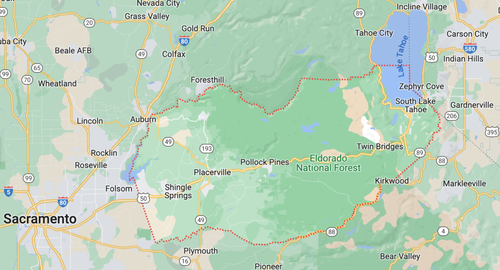
(Google Maps/Screenshot via The Epoch Times)

According to the website for the group, “The residents of El Dorado County have no local state or congressional representation. None of the state or federal representatives that serve El Dorado County, live in El Dorado County.”

They also say the “invasion” at the state’s border, sanctuary policies, and rampant crime violate the county’s rights.

The group has only officially met once in May but are planning to hold another town hall July 10.

If allowed to secede, El Dorado State could create its own constitution and a style of living that the locals want, according to Durst.

Their interpretation of California’s Constitution guarantees them a republican form of government, meaning their voice should be represented—but this isn’t happening, Durst said. For example, their state senator in District 4, which stretches across 13 counties, Sen. Marie Alvarado-Gil (D-Jackson), represents around 1 million residents.

The group also argues they are guaranteed to have Congress help them with foreign invasions and domestic violence, both of which are rampant in the state with the influx of undocumented immigrants and skyrocketing crime, Durst said.

“Right now, people are leaving California, but we don’t want to leave our homes, we don’t want to leave what we’ve built. We just want to leave California,” she said.

People carry skis as they walk towards a resort in South Lake Tahoe, Calif., on March 21, 2023. (Justin Sullivan/Getty Images)

Making Economic Sense

Former county supervisor Ray Nutting, who was arrested in 2013 and later acquitted of charges related to receiving state grants, is helping to organize the economics side of the plan.

“We have an economic base that is renewable in terms of agriculture, tourism, and water supply,” he told The Epoch Times.

“We are very blessed in terms of who we are in El Dorado County, and our tax base absolutely will be enough to deliver critical services.”

He sees taxes going down for residents if they split from California. The state’s income, sales, and gas taxes are some of the highest in the nation. Those are on top of assorted fees for electricity usage, businesses, climate action, and many other fees and charges.

A recent increase in the state’s housing regulations and mandates requiring low-income housing and high-density developments are also expensive, Nutting said.

Nutting’s children are fifth-generation ranchers, and he has taught them to care for the land, he said.

“We have a chance to take care of the land better than the state of California,” Nutting said.

The proposed secession would hinge on Article 4, section 3, clause 1, which provides the process of forming new states. This article—sometimes called the Admissions Clause—declares no state can be formed within the jurisdiction of any other state without the consent of the Legislatures of the states and Congress.

This is sometimes called the “Admissions Clause,” but Durst calls it the “Hostage Clause,” because it holds the people who are unhappy with their current situation hostage, she said.

Traffic flows along Highway 50 in South Lake Tahoe, Calif., on Sept. 5, 2021. (Jane Tyska/Bay Area News Group via AP)

The second clause—Article 4, section 3, clause 2—states that Congress shall have the power to dispose of and make all needful rules and regulations respecting the territory or other property belonging to the United States.

The group points to the fact that 46 percent of the land in El Dorado County is federal forest land, and the county was formed before the state. Nutting said he believes the county could use this clause to go straight to Congress, although he said they will have to obtain expert legal advice at some point.

Law Professor Disagrees

Margaret Russell, a law professor at Santa Clara University and constitutional law expert, said this language does not allow counties to go directly to Congress.

“I think this is a non-starter of an argument for them,” Russell told The Epoch Times.

There’s no such thing as a county in the constitutional structure, she added. “They derive their power from the state.”

The U.S. Constitution doesn’t say anything about the role of counties and makes it clear the state is the relevant stakeholder, she said.

As for representation, the state mirrors the structure of Congress. This allows representation based on population and representation in the Senate based on equalizing power across the government, according to Russell.

Pioneering Spirit

The group is circulating a survey to find out how many of their neighbors support the idea. So far, they have received positive feedback and few negative comments, according to Durst. They expect to take about a year to organize what they need to petition Congress, she said.

“So many of these ‘separate from California‘ movements linger on and on, and we don’t want to do that,” Durst said. “We want to know fairly quickly, do the people of [El Dorado County] see an advantage to leaving California as a new state.”

Bill Roberts holds an American flag in front of his house in South Lake Tahoe, Calif., on Aug. 31, 2021. (Terry Chea/AP Photo)

The group’s trailblazing spirit is reminiscent of the efforts made by forefathers of the region, who came out west seeking riches during the Gold Rush of the late 1840s and early 1850s, she said.

“We still have that pioneer spirit in El Dorado County,” Durst said.

Her great-great grandmother arrived in the county in a covered wagon, she said. Durst was born just west of the area in Sutter County and moved back after she retired from her job in Sacramento.

The secession isn’t about politics—Durst isn’t a Republican or a Democrat. The state has always been too big, she said.

“The Declaration [of Independence] gave us freedom and liberty from King George, and we want freedom and liberty from the state of California,” Durst said.

Talk of splitting up the Golden State has been floated many times before this, reaching back to when the territory first became a state in 1850. At least 220 attempts to break up the nation’s third-largest state have failed, according to the California State Library.

Residents of a cluster of rural northern California and southern Oregon counties have repeatedly attempted to form a “State of Jefferson” due to concerns over logging, mining, and agricultural industries. In 2013, two northern California counties—Siskiyou and Modoc—voted in favor of beginning plans to secede and create the State of Jefferson.

In the 1990s, the late California Assemblyman Stan Statham, a Republican from Redding, advocated for dividing California into three states.

https://www.zerohedge.com/personal-finance/el-dorado-county-group-mulls-secession-california

1st genetic marker for MS severity

 Scientists identify the first genetic marker for MS severity, opening the door to preventing long-term disability.

A study of more than 22,000 people with multiple sclerosis has discovered the first genetic variant associated with faster disease progression that can rob patients of their mobility and independence over time. Multiple sclerosis (MS) is the result of the immune system mistakenly attacking the brain and the spinal cord, resulting in symptom flares known as relapses as well as longer-term degeneration known as progression. Despite the development of effective treatments for relapses, none can reliably prevent the accumulation of disability. The breakthrough findings, published in Nature on June 28, 2023, point to a genetic variant that increases the disease's severity and provide the first real progress in understanding and eventually fighting this aspect of MS.

"Inheriting this genetic variant from both parents accelerates the time to needing a walking aid by almost four years," said Sergio Baranzini, PhD, professor of neurology at the University of California, San Francisco (UCSF) and co-senior author of the study. The work was the result of a large international collaboration of more than 70 institutions from around the world, led by researchers from UCSF and the University of Cambridge. "Understanding how the variant exerts its effects on MS severity will hopefully pave the way to a new generation of treatments that are able to prevent disease progression," said Stephen Sawcer, a professor at Cambridge and the other co-senior author of the study.

A renewed focus on the nervous system

To address the mystery of MS severity, two large MS research consortia joined forces: The International Multiple Sclerosis Genetics Consortium (IMSGC) and The MultipleMS Consortium. This enabled MS researchers from around the world to pool the resources needed to begin to identify the genetic factors influencing MS outcomes. Previous studies have shown that MS susceptibility, or risk, stems in large part from dysfunction in the immune system, and some of this dysfunction can be treated, slowing down the disease. But "these risk factors don't explain why, 10 years after diagnosis, some MS patients are in wheelchairs, while others continue to run marathons," explained Baranzini.

The two consortia combined data from more than 12,000 people with MS to complete a genome-wide association study (GWAS), which uses statistics to carefully link genetic variants to particular traits. In this case, the traits of interest were related to MS severity, including the years it took for each individual to advance from diagnosis to a certain level of disability. After sifting through more than 7 million genetic variants, the scientists found one that was associated with faster disease progression. The variant sits between two genes with no prior connection to MS, called DYSF and ZNF638. The first is involved in repairing damaged cells, and the second helps to control viral infections. The variant's proximity to these genes suggests that they may be involved in the disease's progression.

"These genes are normally active within the brain and spinal cord, rather than the immune system," said Adil Harroud, MD, lead author of the study and former postdoctoral researcher in Baranzini's lab. "Our findings suggest that resilience and repair in the nervous system determine the course of MS progression and that we should focus on these parts of human biology for better therapies." The findings give the field its first leads to address the nervous system component of MS."Although it seems obvious that your brain's resilience to injury would determine the severity of a disease like MS, this new study has pointed us towards the key processes that underlie this resilience," Sawcer said. To confirm their findings, the scientists investigated the genetics of nearly 10,000 additional MS patients. Those with two copies of the variant became disabled faster.

Netherlands Institute for Neuroscience

But how do we know how relevant this DNA variant actually is? That's where the Dutch Brain Bank steps in. A team of researchers from the Netherlands Institute for Neuroscience (Aletta van den Bosch, Jeen Engelenburg, Dennis Wever, Jorg Hamann, Inge Huitinga and Joost Smolders), within the International MS Genetics Consortium (IMSGC), looked at the genetic architecture underlying the course of MS, using donor brains.

Joost Smolders (aside from his employment at the Netherlands Institute for Neuroscience, also working as a neurologist at Erasmus MC Rotterdam and member of the IMSGC): 'In terms of treatment, there's already a lot that we can do for people with MS, but we can't yet predict the speed at which their health deteriorates. For this we need more insight into underlying mechanisms, with the discovery of the SNP being an important first step. A SNP is a variation in the DNA of a single DNA building block. At the Netherlands Institute for Neuroscience, we can perform the second step, which involves looking into the brain tissue to see the effect of this SNP. At the Brain Bank, we have brains from deceased donors with MS who already have an entire disease history behind them, all available for research. We asked ourselves whether carriers of the genetic abnormality had more severe MS-related changes in their brains.'

'Our results show that homozygous carriers of the risk allele (rs10191320), or double carriers of the gene, have almost twice as many MS abnormalities in their gray and white matter than MS donors without this genetic variation. This is very important, because it allows us to validate that this SNP may really be relevant to people with MS. This also illustrates the strength of the Brain Bank: you can look at the pathology very closely. The effect of such a SNP is magnified far more in the pathology than in the effect it has on someone's experience with MS. Something that would typically require tens of thousands of people with MS for living measurements can be confirmed with a hundred or so of these particular MS brain donors.'

Next steps

Further work will be necessary to determine exactly how this genetic variant affects DYSF, ZNF638, and the nervous system more generally. The researchers are also collecting an even larger set of DNA samples from people with MS, expecting to find other variants that contribute to long-term disability. "This gives us a new opportunity to develop new drugs that may help preserve the health of all who suffer from MS," said Harroud. Could we say instead, "treatments to prevent long-term disability"?

Journal Reference:

  1. Adil Harroud et al., Locus for severity implicates CNS resilience in progression of multiple sclerosisNature, 2023; DOI: 10.1038/s41586-023-06250-x

Fewer teens now perceive themselves as overweight, finds international study

 A study involving more than 745,000 adolescents from 41 countries across Europe and North America identified an increase in the amount of teenagers who underestimate their body weight.

Tracking data from 2002 to 2018, the findings, published in Child and Adolescent Obesity, demonstrate a noticeable decrease in those who overestimate their weight too.

The team of international experts, who carried out the research, warn these shifting trends in   could reduce the effectiveness of public health interventions aimed at  in .

"During this impressionable age, body weight perception may influence a young person's lifestyle choices, such as the amount and types of food they eat and their exercise habits," says lead author Doctor Anouk Geraets, from the Department of Social Sciences, at the University of Luxembourg.

"So it's concerning that we're seeing a trend where fewer adolescents perceive themselves as being overweight—as this could undermine ongoing efforts to tackle increasing levels of obesity in this age group. Young people who underestimate their weight and therefore do not consider themselves to be overweight may not feel they need to lose excess weight and, as a result, they may make unhealthy lifestyle choices."

A person's perception of their body weight may not accurately reflect their actual weight. A discrepancy in body weight perception (BWP) may either be an underestimation (where actual weight is higher than perceived weight) or an overestimation (where actual weight is lower than perceived weight).

The researchers examined survey data, from 746,121 11-, 13- and 15-year-olds from 41 countries, collected at four-yearly intervals between 2002 and 2018, for the International Health Behavior in School-Aged Children (HBSC), a WHO collaborative study.

The team modeled trends in BWP among adolescents across different countries over time, making adjustments for age, gender, and family . They found:

  • Underestimation of weight status increased, and overestimation of weight status decreased over time among both sexes, with stronger trends for girls.
  • Correct weight perception increased over time among girls, while it decreased among boys.
  • Changes in correct weight perception, underestimation and overestimation of weight status differed across different countries—but these changes could not be explained by an increase in country-level overweight/obesity prevalence.

The authors speculated that the observed differences between girls and boys in BWP may support the idea there are sex differences in body ideals—and that these body ideals have changed over time. Notably, the increased underestimation and decreased overestimation of weight status over time for girls may be explained by the emergence of an athletic and strong body, as a new contemporary body ideal for both sexes.

"This study has clinical and public health implications. The increase in correct weight perception and the decrease in overestimation may have a positive effect on unnecessary and unhealthy weight loss behaviors among adolescents, while the increase in underestimation might indicate the need for interventions to strengthen correct  perception," says lead author Doctor Anouk Geraets.

"More research is now needed to understand the factors underlying these time trends and to develop effective public health interventions."

While the large number of participating countries is a strength of the present study—but as these only included countries in Europe, the U.S. and Canada, the results can't be generalized to other regions. In addition, although steps were taken to adjust the models for certain potential confounding factors, several other factors—such as , dieting, changing eating patterns, or migration—may also have played a role in the observed trends over time.

More information: Cross-National Time Trends in Adolescent Body Weight Perception and the Explanatory Role of Overweight/Obesity Prevalence, Child and Adolescent Obesity (2023). DOI: 10.1080/2574254X.2023.2218148www.tandfonline.com/doi/full/1 … 574254X.2023.2218148


https://medicalxpress.com/news/2023-06-teens-overweight-international-adolescents.html