Search This Blog

Tuesday, July 4, 2023

Gunman arrested for Philly mass shooting is BLM activist who wore women’s clothes

 The rifle-wielding suspect who donned a bulletproof vest before allegedly shooting dead five men and injuring two children in Philadelphia has been identified as a Black Lives Matter supporter who shared gun-toting memes on social media.

Kimbrady Carriker, 40, was nabbed shortly after the bloodshed in the city’s Kingsessing neighborhood Monday night, the Philadelphia Inquirer reported, citing sources.

Cops haven’t yet publicly disclosed the suspect’s identity.

On his Facebook page, Carriker posted two pictures of him wearing a bra, a women’s top and earrings with his hair braided long in March, three months before the alleged shooting.

He also regularly posts about supporting Black Lives Matter, including supporting workers who protested in the Strike For Black Lives in July 2020.

Police said the 40-year-old male suspect was armed with a rifle, pistol, extra magazines, a police scanner and bullet proof vest when he fatally shot four men on the street and then chased and killed a fifth man inside a home.

Kimbrady Carriker,
Kimbrady Carriker, 40, was nabbed shortly after the bloodshed in the city’s Kingsessing neighborhood.
Kimbrady Carriker/Facebook
Kimbrady Carriker
Carriker allegedly shot five men dead and injured two children in Philadelphia.
Kimbrady Carriker/Facebook

A 2-year-old boy was shot four times in the legs, while a 13-year-old boy also suffered to gunshot wounds to his legs, according to cops.

The gunman had fired at police as they chased him for several blocks before he eventually surrendered in an alley, Police Commissioner Danielle Outlaw said.

Carriker also described himself as a computer engineer, and showed an interest in guns, posting pictures and memes of people with firearms.

One image featured a person holding a pistol with the caption: “Wherefore art thou opposition so I may slide upon thine block and runneth down on thee.”

Another one of his posts showed footage of several kids firing off rounds from a rifle.

Philadelphia's Crime Scene Unit look for evidence including three bullets scattered along the sidewalk in Philadelphia, on Tuesday, July 4, 2023.
The rifle-wielding suspect who donned a bullet proof vest before allegedly shooting dead five men and injuring two children in Philadelphia has now been identified.
AP
Police canvas the scene of Monday night's deadly shooting in Philadelphia's Kingsessing neighborhood.
Police canvas the scene of Monday night’s deadly shooting in Philadelphia’s Kingsessing neighborhood.
REUTERS
Carriker posted a video of a burning Philadelphia police car to Facebook in 2020
Kimbrady Carriker/Facebook

In May 2020 Carriker also posted a video to his Facebook of a burning Philadelphia police car which had been daubed with grafitti including “ACAB” — an acronym for “all coppers are b—–ds” — and captioned it: “I was there; where were you? #we matter.” However, It is unclear if he had filmed the video himself.

The shooter, who was taken into custody without incident, didn’t have any connection to the victims prior to the shooting, Outlaw added.

Carriker’s old roommate, Tina Rosette, 49, told the Inquirer she was shocked to learn of his involvement in the shooting.

”I didn’t even know he had a gun,” she said.

Rosette described Carriker as “really smart, intelligent, creative” and someone who loved computers, but said he had “an aggressive approach to some things in life.”

She recalled him teaching young people how to fight “purportedly” in self-defense — but he failed to give them directions on when to stop.

Kimbrady Carriker
A photo Kimbrady Carriker uploaded to Facebook
Kimbrady Carriker/Facebook
Kimbrady Carriker bullet
He was armed with a rifle, pistol, extra magazines, a police scanner and bullet proof vest.
AP/Steven M. Falk
A child's bike left at the scene of a shooting  in Philadelphia,  on Tuesday, July 4, 2023.
The suspect was nabbed shortly after the bloodshed in Philadelphia’s Kingsessing neighborhood Monday night.
AP
A truck parked at the scene was riddled with bullet holes in the wake of the shooting.
REUTERS

Rosette’s daughter, Cianni Rosette, 24, who also lived with the alleged shooter, said Carriker had flashed a handgun several times.

”He was trying to get me comfortable around guns and stuff like that,” she said.

The mother and daughter said they lived with Carriker in 2021 but moved out about a year ago.

The elder Rosette said she believed he’d been in a “dark place” of late but she didn’t know why.

Carriker had been arrested in 2003 and charged with possession of a weapon without a license, carrying a firearm in public and drug possession, according to Philadelphia court records.

District Attorney Larry Krasner listens to community members as investigations are ongoing the day after a mass shooting in the Kingsessing section of southwest Philadelphia, Pennsylvania, U.S. July 4, 2023.
At the scene of Monday night’s shooting, officers said they found dozens of shell casings strewn across eight blocks.
REUTERS
Officers said they found dozens of shell casings strewn across eight blocks.
TRACIE VAN AUKEN/EPA-EFE/Shutterstock

He eventually pleaded guilty to having a firearm without a license and the other charges were dropped. He was placed on three years probation and made to pay over $1,000 in costs. 

Carriker had at one point appeared to start his own company LDS Frameworks, writing software and developing computer games but it had been inactive since 2019.

At the scene of Monday night’s shooting, officers said they found dozens of shell casings strewn across eight blocks.

“You can see there are several scenes out here,” Outlaw said. “We’re canvassing the area to get as much as we can, to identify witnesses, to identify where cameras are located and to do everything to figure out the why,” Outlaw said.

Cops have since identified the slain victims as Lashyd Merritt, 20; Dymir Stanton, 29; Ralph Moralis, 59; Daujan Brown, 15; and Joseph Wamah, Jr., 31.

https://nypost.com/2023/07/04/kimbrady-carriker-ided-as-philadelphia-gunman-accused-of-killing-5/

Best performing healthcare IPOs of 2023, so far

 Genelux, Structure Therapeutics and Jin Medical have been the best performing healthcare IPOs so far this year.

https://seekingalpha.com/news/3984835-best-worst-performing-healthcare-ipos-2023-so-far

Independence From Tyranny: The Fight For Gun Rights In America

 by Gun Owners of America,

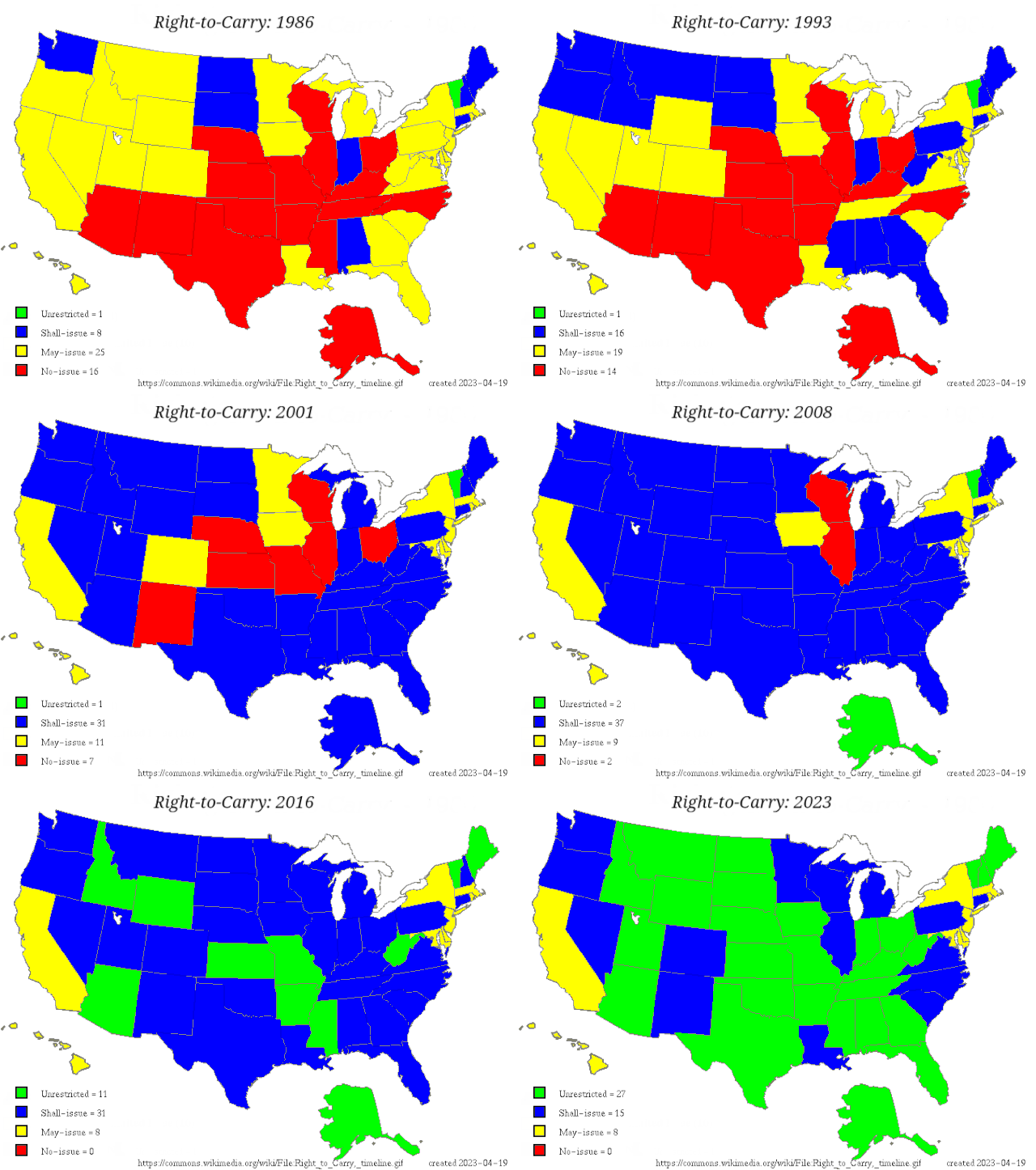
When looking at how gun laws across the United States have changed over the past few years, there's a lot to be hopeful for. Just this year, Nebraska became the 27th state to pass a "constitutional carry" bill into law, following in the footsteps of Florida, which passed similar legislation just a few days prior.  

The residents of Florida and Nebraska now join 25 other states where American citizens can freely carry firearms concealed without needing a permit, just as our founding fathers intended when they wrote the Second Amendment into the Constitution.  

Those two States won't be the last to pass permitless carry bills either. There are several different bills at different stages of the legislative process in multiple states nationwide.  

But let's not forget, just a mere 15 years ago -- the Second Amendment was not considered an individual right. If we look further back to the 1980s, there was only one constitutional carry state, Vermont. In addition, very few states would even allow carrying with a permit.  

This is because, before 2008's landmark District of Colombia v. Heller decision, the Second Amendment was considered a collective right that referred to a militia.  

This interpretation allowed for all sorts of constitutional infringements, which is why Dick Heller sued Washington, D.C., over its city-wide ban on handguns.  

We recently celebrated the 15th anniversary of the Heller decision on June 26th and have Heller to thank for laying the foundation for gun rights to this day.   

Of course, no discussion of present-day gun rights would be complete without mentioning NYSRPA v. Bruen, the landmark case currently providing the legal tools for overturning the most egregious gun control nationwide.  

The Bruen decision has halted some of the worst gun control passed this year. For example, Oregon passed Ballot Measure 114 by an extremely slim margin, with most of the "yes" votes coming from Portland, and the rest of the state voting "no.". The Ballot measure changed gun law in Oregon to require a permit to purchase a firearm and banned large-capacity magazines.  

But thanks to the Bruen decision, a legal challenge from Gun Owners of America has halted the law from going into effect. 

On this 4th of July, Americans should remember the mentality of the Founding Fathers, who included the Second Amendment in the Constitution. They had just fought a war for independence against a tyrannical government.  

From 1768-1775, the British began a policy to disarm American citizens.  

In 1777, William Knox, the Under Secretary of State in the British colonial office, advocated for this exact policy, writing

"The Arms of all the People should be taken away, & every piece of Ordnance removed into the King's Stores, nor should any foundry or manufactory of Arms, Gunpowder, or Warlike Stores, be ever suffered in America, nor should any Gunpowder, Lead, Arms or Ordnance be imported into it without License; they will have but little need of such things for the future, as the King's Troops, Ships and Forts will be sufficient to protect them from any danger." 

William Knox sounds a lot like the anti-gun politicians of today.  

The Second Amendment guarantees all of our constitutional rights, and it ensures the protection of life and liberty. This is what the Founding Fathers wanted when they declared independence from the British 246 years ago.  

We at Gun Owners of America are proud to see gun rights continue to expand, and we will continue working to repeal all infringements on the Second Amendment.   

https://www.zerohedge.com/political/independence-tyranny-fight-gun-right-america

Family Doctors Provide Most Care for Several Chronic Diseases

 Family physicians are the only providers of care for most patients with several chronic diseases, according to new research.

A population-based retrospective cohort study examined data from nearly 1 million patients with common chronic conditions in Alberta, Canada. Family doctors were the sole providers of care for 85.7% of patients with hypertension and 70.9% of those with diabetes.

The study is part of efforts to encourage more research "by primary care, for primary care," study author Jessica Kirkwood, MD, family physician and assistant professor of family medicine at the University of Alberta in Edmonton, told Medscape Medical News. The prevalence of primary care involvement demonstrates the importance of involving family physicians in creating guidelines for management and developing clinical trials, Kirkwood said.

The study was published June 1 in Canadian Family Physician.

Who Provides Care?

The study focused on care provided from 2013­-2017 for seven chronic conditions. The information collected consisted of data from administrative health databases, which track medical services provided by Alberta's government-funded universal healthcare system.

Most patients' care was managed by family physicians alone in four of the conditions studied: hypertension (85.7% solely by family physicians), diabetes (70.9%), chronic obstructive pulmonary disease (59.8%), and asthma (65.5%).

Specialists were more involved in the remaining three diseases. They provided the sole management in 49.1% of patients with ischemic heart disease, 42.2% of those with chronic kidney disease, and 35.6% of those with heart failure. For these conditions, family physicians remained involved in the care for a large proportion of patients. Specialist involvement may be more common with these diseases because they sometimes involve interventions that only specialists offer, like angiography and dialysis, said Kirkwood.

The study also found that nurse practitioners were involved in care for very few patients (less than 1%), in accordance with the small number of nurse practitioners working in primary care settings.

Kirkwood acknowledged that the data come with certain limitations because they were not intended for research purposes. One limitation is that some conditions may not have been recorded because of "shadow billing." Salaried physicians and practitioners do not have an incentive to include all diagnostic codes in their records. By comparison, clinicians operating under a fee-for-service model would be likely to indicate all diagnoses.

Developing Guidelines

Despite the widespread management of chronic conditions by family physicians, these doctors represented about 17% of the experts who contribute to guidelines and recommendations, according to a 2015 study that the investigators cited.

"Frankly, that's concerning," said Kirkwood, regarding the disconnect between the people creating the recommendations and the people using them. The guidelines should include the perspective of clinicians who regularly work with patients, she said. Providing that perspective would also make the design of clinical trials on interventions more informative, the researchers concluded.

"I know as a family doctor myself that some recommendations are completely overwhelming," especially given the range of issues that primary care clinicians see, said Kirkwood. Including primary care representatives who are familiar with the demands of the position "hopefully will make the recommendations much more applicable to the people that they will affect," she said.

Kirkwood also noted the need for sufficient support for family doctors to contribute to guideline creation and research, especially for doctors in rural communities who are not already affiliated with a university.

The involvement of primary care providers in research settings is a primary goal of Patients, Experience, Evidence and Research (PEER), a primary care-led group that collaborates with the College of Family Physicians of Canada. The current investigators are members of PEER.

Additional Conditions

Commenting on the study for Medscape, Martin Fortin, MD, clinical teaching professor at the University of Sherbrooke in Quebec, said, "This is a good opportunity to advocate for more studies to be done in the primary care context, where the majority of chronic disease management is done."

However, Fortin wishes that more diagnoses had been included in the study, such as mental health and musculoskeletal conditions like back pain and osteoarthritis. These conditions are also commonly seen by primary care clinicians, according to Fortin.

Because the number of conditions studied is limited, the data may not reflect the true prevalence of multimorbidity, Fortin added.

Primary care doctors provide a broad perspective on the overall health of patients, compared with specialists who focus on particular conditions. Similarly, during drug trials, pharmaceutical companies aim to reduce complicating factors, even though the medications are prescribed for conditions where multimorbidity is common. "Medication should be tested in the real environment," said Fortin.

Ultimately, he added, the study cannot address the complexity of the patients, but it nevertheless sheds light on who is providing care and where the research on these conditions should be done.

The study was conducted without outside funding. Kirkwood and Fortin reported no relevant financial relationships.

Can Fam Physician. Published June 1, 2023. Full text

https://www.medscape.com/viewarticle/993994

Long COVID 'Brain Fog' Confounds Doctors, but New Research Offers Hope

 Kate Whitley was petrified of COVID-19 from the beginning of the pandemic because she has Hashimoto disease, an autoimmune disorder that she knew put her at high risk for complications.

She was right to be worried. Two months after contracting the infection in September 2022, the 42-year-old Nashville resident was diagnosed with long COVID. For Whitley, the resulting brain fog has been the most challenging factor. She is the owner of a successful paper goods store, and she can't remember basic aspects of her job. She can't tolerate loud noises and gets so distracted that she has trouble remembering what she was doing.

Whitley doesn't like the term "brain fog" because it doesn't begin to describe the dramatic disruption to her life over the past 7 months.

"I just can't think anymore," she said. "It makes you realize that you're nothing without your brain. Sometimes I feel like a shell of my former self."

Brain fog is among the most common symptoms of long COVID, and also one of the most poorly understood. A reported 46% of those diagnosed with long COVID complain of brain fog or a loss of memory. Many clinicians agree that the term is vague and often doesn't truly represent the condition. That, in turn, makes it harder for doctors to diagnose and treat it. There are no standard tests for it, nor are there guidelines for symptom management or treatment.

"There's not a lot of imprecision in the term because it might mean different things to different patients," said James C. Jackson, PsyD, a neuropsychiatrist at Vanderbilt University School of Medicine and author of a new book, Clearing the Fog: From Surviving to Thriving With Long COVID ― A Practical Guide.

Jackson, who began treating Whitley in February 2023, said that it makes more sense to call brain fog a brain impairment or an acquired brain injury (ABI) because it doesn't occur gradually. COVID damages the brain and causes injury. For those with long COVID who were previously in the intensive care unit and may have undergone ventilation, hypoxic brain injury may result from the lack of oxygen to the brain.

Even among those with milder cases of acute COVID, there's some evidence that persistent neuro-inflammation in the brain caused by an activated immune system may also cause damage.

In both cases, the results can be debilitating. Whitley also has dysautonomia — a disorder of the autonomic nervous system that can cause dizziness, sweating, and headaches along with fatigue and heart palpitations.

She said that she's so forgetful that when she sees people socially, she's nervous of what she'll say. "I feel like I'm constantly sticking my foot in my mouth because I can't remember details of other people's lives," she said.

Although brain disorders such as Alzheimer's disease and other forms of dementia are marked by a slow decline, ABI occurs more suddenly and may include a loss of executive function and attention.

"With a brain injury, you're doing fine, and then some event happens (in this case COVID), and immediately after that, your cognitive function is different," said Jackson.

Additionally, ABI is an actual diagnosis, whereas brain fog is not.

"With a brain injury, there's a treatment pathway for cognitive rehabilitation," said Jackson.

Treatments may include speech, cognitive, and occupational therapy as well as meeting with a neuropsychiatrist for treatment of the mental and behavioral disorders that may result. Jackson said that while many patients aren't functioning cognitively or physically at 100%, they can make enough strides that they don't have to give up things such as driving and, in some cases, their jobs.

Other experts agree that long COVID may damage the brain. An April 2022 study published in the journal Nature found strong evidence that SARS-CoV-2 infection may cause brain-related abnormalities, for example, a reduction in gray matter in certain parts of the brain, including the prefrontal cortex, hypothalamus, and amygdala.

Additionally, white matter, which is found deeper in the brain and is responsible for the exchange of information between different parts of the brain, may also be at risk of damage as a result of the virus, according to a November 2022 study published in the journal SN Comprehensive Clinical Medicine.

Calling it a "fog" makes it easier for clinicians and the general public to dismiss its severity, said Tyler Reed Bell, PhD, a researcher who specializes in viruses that cause brain injury. He is a fellow in the Department of Psychiatry at the University of California, San Diego. Brain fog can make driving and returning to work especially dangerous. Because of difficulty focusing, patients are much more likely to make mistakes that cause accidents.

"The COVID virus is very invasive to the brain," Bell said.

Others contend this may be a rush to judgment. Karla L. Thompson, PhD, lead neuropsychologist at the University of North Carolina School of Medicine's COVID Recovery Clinic, agrees that in more serious cases of COVID that cause a lack of oxygen to the brain, it's reasonable to call it a brain injury. But brain fog can also be associated with other long COVID symptoms, not just damage to the brain.

Chronic fatigue and poor sleep are both commonly reported symptoms of long COVID that negatively affect brain function, she said. Sleep disturbances, cardiac problems, dysautonomia, and emotional distress could also affect the way the brain functions post COVID. Finding the right treatment requires identifying all the factors contributing to cognitive impairment.

Part of the problem in treating long COVID brain fog is that diagnostic technology is not sensitive enough to detect inflammation that could be causing damage.

Grace McComsey, MD, who leads the long COVID RECOVER study at University Hospitals Health System in Cleveland, Ohio, said her team is working on identifying biomarkers that could detect brain inflammation in a way similar to the manner researchers have identified biomarkers to help diagnose chronic fatigue syndrome. Additionally, a new study published last month in JAMA for the first time clearly defined 12 symptoms of long COVID, and brain fog was listed among them. All of this contributes to the development of clear diagnostic criteria.

"It will make a big difference once we have some consistency among clinicians in diagnosing the condition," said McComsey.

Whitley is thankful for the treatment that she's received thus far. She's seeing a cognitive rehabilitation therapist, who assesses her memory, cognition, and attention span and gives her tools to break up simple tasks, such as driving, so that they don't feel overwhelming. She's back behind the wheel and back to work.

But perhaps most importantly, Whitley joined a support group, led by Jackson, that includes other people experiencing the same symptoms she is. When she was at her darkest, they understood.

"Talking to other survivors has been the only solace in all this," Whitley said. "Together, we grieve all that's been lost."

Sources

Kate Whitley, long COVID patient

JAMA Network, "Prevalence and Correlates of Long COVID Symptoms Among US Adults," October 2022.

James C. Jackson, PsyD, director of Long-Term Outcomes at the Critical Illness, Brain Dysfunction, and Survivorship (CIBS) Center at Vanderbilt University Medical Center.

Oxford Open Immunology, "Long Covid brain fog: a neuroinflammation phenomenon?" September 2022.

Nature, "SARS-CoV-2 is associated with changes in brain structure in UK Biobank," April 2022.

SN Comprehensive Clinical Medicine, "Brain fog as a Long-term Sequela of COVID-19," November 2022.

Tyler Reed Bell, PhD, a fellow in the Department of Psychiatry at the University of California, San Diego.

Karla L. Thompson, PhD, lead neuropsychologist at University of North Carolina School of Medicine COVID Recovery Clinic.

Grace McComsey, who leads the long COVID RECOVER study at University Hospitals Health System in Cleveland, Ohio.

Stanford News Center, "Researchers identify biomarkers associated with chronic fatigue syndrome severity, " July 2017.

https://www.medscape.com/viewarticle/993981