Search This Blog

Tuesday, July 4, 2023

CMS proposes $375M cut to home health Medicare payments in 2024

 The Biden administration issued a proposal Friday to cut reimbursements to home health providers by 2.2% next year, or an estimated $375 million less than 2023 payment levels.

The Centers for Medicare & Medicaid Services (CMS) released Friday a proposed rule outlining changes to the 2024 Home Health Prospective Payment System and updating rates for home health agencies.The proposed update would bump payments 2.7%, or $460 million, but home health agencies would also absorb a 5.1% decrease that reflects the effects of the permanent behavior assumption adjustment, or a decrease of $870 million. The payment changes also reflect an estimated 0.2% increase that reflects the effects of an updated fixed-dollar loss ratio, or $35 million increase, CMS wrote in the proposed rule.

"This rule proposes a permanent, prospective adjustment to the CY 2024 home health payment rate to account for the impact of the implementation of the Patient-Driven Groupings Model (PDGM). This adjustment accounts for differences between assumed behavior changes and actual behavior changes on estimated aggregate expenditures due to the implementation of the PDGM and 30-day unit of payment as required by the Bipartisan Budget Act of 2018," the agency wrote.

"CMS previously finalized, for CY 2023, a permanent adjustment that was half of the estimated required permanent adjustment," agency officials wrote in the proposed rule.

The draft is expected to be officially published in the Federal Register on July 10. CMS will accept comments on the proposed rule through Aug. 29.

The large dip for agencies reflects reforms installed back in 2020 for home health payments. A 2018 spending law required CMS to “better align payments with patient care needs, especially for clinically complex beneficiaries that require more skilled nursing care rather than therapy,” CMS said in a fact sheet on the new rule. 

CMS was required to create new assumptions about behavioral changes in home health and to change the payment rate from a 60-day unit to a 30-day period. The agency each year must determine the impact of differences between the assumed behavior changes and actual changes from 2020 through 2026.

CMS is also proposing to rebase and revise the home health market basket; revise the labor-related share; recalibrate the PDGM case-mix weights; update the low utilization payment adjustment (LUPA) thresholds, functional impairment levels, and comorbidity adjustment subgroups for CY 2024.

"The actions CMS is taking in this proposed rule would help improve patient care and also protect the Medicare program’s sustainability for future generations. In addition, the proposed rule includes several hospice-related enrollment provisions. We believe these provisions would help protect hospice beneficiaries by more closely scrutinizing hospice owners and ensuring that they do not pose program integrity risks," the agency wrote.

For 2024, using updated 2022 claims and the methodology finalized in the 2023 final rule, CMS determined that Medicare paid more under the new system than it would have under the old system. The agency is proposing an additional permanent adjustment percentage of -5.653% in 2024 to address the differences in the aggregate expenditures.

Industry groups immediately decried the proposed payment changes. CMS continues to rely on a "deeply flawed methodology that inappropriately produces devastating cuts to Medicare home health," one industry group said in a statement.

"Despite several years of significant Medicare home health payment cuts – and evidence demonstrating reduced access to home health services as a result – CMS has proposed further cuts in 2024 and beyond," the Partnership for Quality Home Healthcare said in a statement.

“The Partnership has repeatedly expressed concerns with CMS’ actions aimed at cutting Medicare home health reimbursement, primarily because of the serious impacts on access to the home-based care that patients and families overwhelmingly prefer,” said Joanne Cunningham, CEO of the Partnership. “The home health provider community is gravely concerned that CMS’s proposed actions for 2024 will only continue to degrade beneficiary access to home healthcare services.”

Overall, the Partnership estimates cuts will total more than $18 billion over the next decade at a time when home health providers have faced rising costs and significant challenges hiring the skilled nurses, therapists, and other caregivers necessary for patient care. 

In a statement, the American Hospital Association said it previously expressed concern about the scale of the proposed PDGM behavioral offsets, and is "disappointed" that CMS continues to seek their implementation.

“We continue to strenuously disagree with the budget neutrality methodology that CMS employed to arrive at the rate adjustments,” William A. Dombi, the president of the National Association for Home Care & Hospice (NAHC), said in a statement shared with Home Health Care News. “Overall spending on Medicare home health is down, fewer patients are receiving care, patient referrals are being rejected because providers cannot afford to provide the care needed within the payment rates, and providers have closed their doors or restricted service territory to reduce care costs. If the rate was truly budget neutral, we would not see these actions occurring.”

Last month, senators Debbie Stabenow (D-MI) and Susan Collins (R-ME) introduced the Preserving Access to Home Health Act of 2023 to prevent further cuts to home health providers. The bill, if passed, would take away some of CMS' payment-rate setting power and force the The Medicare Payment Advisory Commission (MedPAC) to consider Medicare Advantage payment rates in its reports.

"We strongly support this essential legislation as current policy positions of CMS put access to home health services for the over three million beneficiaries that utilize this care in jeopardy,”  NAHC's Dombi said in a statement last month. “The Medicare home health benefit has shrunk over the last decade due to various payment cuts, which the most recent of those is the subject of the legislation. We call on both houses of Congress to join Senator Stabenow and Senator Collins in their valiant effort to preserve the home health benefit.”

https://www.fiercehealthcare.com/providers/cms-proposes-375m-cut-home-health-medicare-payments

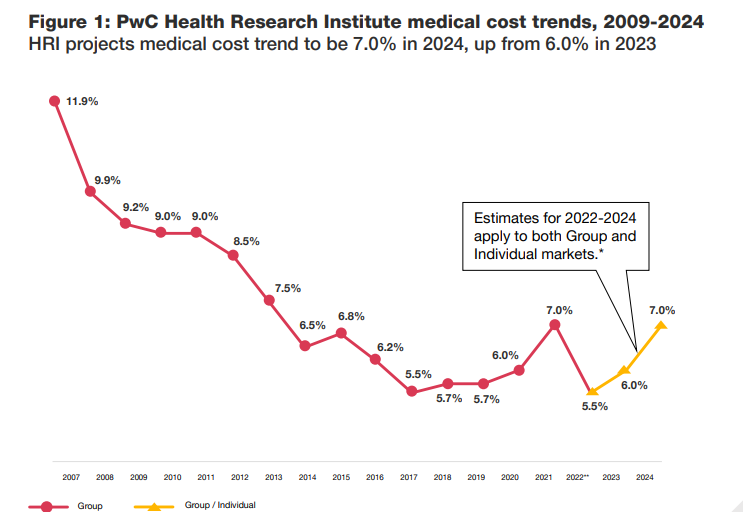
Payers should expect a 7% increase in healthcare costs next year: PwC

 Healthcare costs will balloon 7% next year, as payers hammer out new contracts with providers, the labor shortage stretches on and drug prices continue to increase, according to a new report by PwC.

This represents a jump from PwC cost increase estimates in 2022 (5.5%) and 2023 (6%)

Researchers with PwC’s Health Research Institute spoke to insurance actuaries who work with health plans that cover over 100 million enrollees in employer-sponsored health plans and about 10 million individuals in plans on the Affordable Care Act marketplace.

However, the estimate is not set in stone, as the report said PwC adjusted its medical cost projection for the group market from 6.5% to 5.5% for 2022 due to fewer individuals receiving inpatient hospital care, as they opted instead to get care from outpatient sites.

PwC 2024 chart

“The higher medical cost trend in 2024 reflects health plans’ modeling for inflationary unit cost impacts from their contracted healthcare providers, as well as persistent double-digit pharmacy trends driven by specialty drugs and the increasing use of the GLP-1 agonists for Type 2 diabetes or weight loss,” the report said.

Health plans expect hospitals and physicians to seek not only rate increases but also shorter gaps between new contracts. Physician burnout and greater demand for surgeries and procedures post-COVID will also add to inflationary pressures, according to the report.

“Many health plan actuaries said they are facing increasing inflationary pressure on unit cost in 2023 and 2024,” the PwC report said. “Their ability to manage price increases during contract renewals will be a key factor in determining how the impact of inflation will materialize in the coming years.”

Employment in healthcare began to start recovering from the systemic shock rendered by COVID-19 in 2022, but there’s still a shortage, especially in nursing and workers in long-term care facilities and insurers can’t envision any short-term fix for this problem.

“Assuming the persistence of such shortages in 2024, hospitals will continue to be financially challenged and forced to seek higher reimbursement from payers,” the PwC report said. “On the other hand, if healthcare employment levels return to a stable level in 2024, pent-up demand for care is likely to drive utilization up. In both cases, health plans can expect to face inflationary pressure in 2024.”

Though health plans will continue to face a rising median price for new drugs, as well as price hikes for existing drugs, there are some deflationary indicators as well. For instance, biosimilars cost about 50% less than their reference drugs.

“The launch of adalimumab biosimilars to Humira in 2023 is a new milestone in the market that is already driving significant savings,” the PwC report said

Health plans see other factors at play for the rest of this year and next year, and while those might spur hope for controlling costs, that hope will arrive sometime in the future, having negligible effects on what’s going on now.

For instance, insurers will keep investing in total cost of care initiatives such as value-based care.

“National health plans generally demonstrated better cost management and subsequently achieved lower cost trends,” the PwC report said. “As these national plans continue to grow, they will have a deflator effect overall on medical cost trends.”

In addition, while health plans expect the demand and utilization of behavioral healthcare to rise, that won’t be a major inflationary problem, as behavioral healthcare is less expensive than other medical costs, according to the report.

https://www.fiercehealthcare.com/payers/payers-should-expect-7-increase-healthcare-costs-next-year-pwc

Bidenomics: Big Government, Industrial Policy And Centralized Control

 by Kevin Stocklin via The Epoch Times (emphasis ours),

With an eye toward the upcoming presidential elections, the White House has launched a new public relations campaign called “Bidenomics,” to define President Joe Biden’s economic agenda.

“I don’t know what the hell that is, but it’s working,” Biden stated at a June 17 union rally in Philadelphia, begging the question: what is Bidenomics, and is it working? 

According to a White House statement, Bidenomics rests on three pillars: massive “smart” government spending on renewable energy and semiconductors, support for unions and domestic manufacturing, and promoting competition. As a result, the White House states, “our economy has added more than 13 million jobs—including nearly 800,000 manufacturing jobs—and we’ve unleashed a manufacturing and clean energy boom.” 

The Creating Helpful Incentives to Produce Semiconductors and Science (CHIPS) Act of 2022 allocates $280 billion in federal spending to bolster U.S. semiconductor manufacturing. The Infrastructure Act of 2021 allocated more than $65 billion for “clean energy” projects. And the 2022 Inflation Reduction Act allocated an additional $394 billion for clean energy in the form of tax incentives, loans, and grants. 

I would define it as trickle-down big government,” Jonathan Williams, chief economist at the American Legislative Exchange Council, told The Epoch Times. “The common thread of this administration has been growth and expansion of government power, and certainly big government spending.”

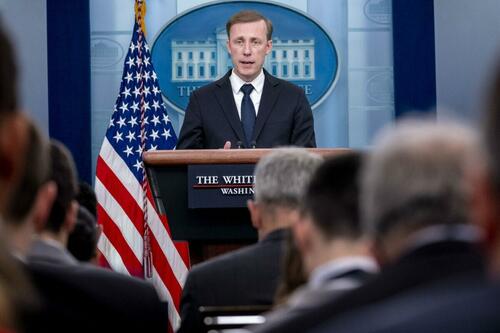
White House national security adviser Jake Sullivan speaks at a press briefing at the White House on April 24, 2023. (Andrew Harnik/AP Photo)

According to National Security Advisor Jake Sullivan, when Biden took office, “America’s industrial base had been hollowed out. The vision of public investment that had energized the American project in the postwar years—and indeed for much of our history—had faded.“

Sullivan, who, despite his focus on security issues, has become a spokesman for Bidenomics, has been highly critical of what has been called “Reaganomics,” or a platform of tax cuts, trade liberalization and deregulation.

There was one assumption at the heart of all of this policy: that markets always allocate capital productively and efficiently,” Sullivan said during an April speech at the Brookings Institution.

“President Biden … believes that building a twenty-first-century clean-energy economy is one of the most significant growth opportunities of the twenty-first century,” he stated. “But that to harness that opportunity, America needs a deliberate, hands-on investment strategy to pull forward innovation, drive down costs, and create good jobs.”

Despite the administration’s argument that government is best positioned to direct private industry, some critics say that waste and failure are the hallmarks of government industrial policy.

Political Investors

The government is not in the business of making good investments,” economist Arthur Laffer, a former advisor to Presidents Ronald Reagan and Donald Trump as well as U.K. Prime Minister Margaret Thatcher, told The Epoch Times. “That’s not what they should be doing,” he said.

“These guys are not good investors; they’re political investors,” Laffer said. The more the government seeks to influence the private sector, the more the private sector will orient itself toward producing what the government wants versus what consumers want. 

Economist Arthur Laffer attends a ceremony where U.S. President Donald Trump presented him with the Presidential Medal of Freedom in Washington on June 19, 2019. (Win McNamee/Getty Images)

“Bidenomics is nothing more than the application of government intervention to guide, direct and restructure the economy as the White House thinks it should be structured,” Steve Hanke, economics professor at Johns Hopkins University, told The Epoch Times.

“This type of interventionism flies under the rubric of ‘industrial policy.’ It’s where government picks winners and losers by using levers of government policy, like taxes subsidies, regulations, tariffs, quotas, and even outright bans.”

Recent examples of government ventures into private industry include Solyndra, a California maker of solar panels that received $535 million in federal loan guarantees from the Obama administration before going bankrupt. 

Under Bidenomics, automakers are being pushed by a combination of consumer subsidies, manufacturing grants, and ever-tightening emissions regulations to switch their production from gasoline-powered cars and trucks to electric vehicles (EVs). However, there is scant evidence that enough consumers will switch to EVs to justify the investments or that carmakers will be able to source enough lithium, cobalt, and other minerals to build EV batteries in large quantities, or that the U.S. electric grid can build enough new generation capacity and connect enough charging stations to charge EVs at scale. 

At the same time, the Biden administration is working to reduce domestic production of oil, gas, and coal in favor of wind and solar, with the same supply issues that automakers face. The required minerals for wind turbines and solar panels are typically mined in countries that may not be friendly to the United States, and it has created a heavy dependence on China, which controls most of the refining of these minerals. 

According to Hanke, who served on Reagan’s Council of Economic Advisors, “Bidenomics is nothing new. Advocates of industrial policy in the 1980s used to latch onto Japan as a model for industrial policy, arguing that it contributed to Japan’s emergence as an economic power after World War II. 

“But since the last three lost decades in Japan, the industrial policy advocates have gone radio silent,” Hanke said. “It’s hard to imagine a more misguided way to make decisions than to put them in the hands of those who pay no price for being wrong.”

Trillions in New Spending

To date, the Biden administration has overseen more than $4 trillion in new spending, of which $1.6 trillion was passed by Congress on a partisan basis, $1.4 trillion was passed on a bipartisan basis, and another $1.1 trillion came from Biden’s executive actions. Despite this spending, the White House claimed in March that “the President’s Budget improves the fiscal outlook by reducing the deficit by nearly $3 trillion over the next decade.”

The Congressional Budget Office (CBO) sees it differently, however. 

“Under the President’s FY 2023 budget, the debt would grow be allowed to grow by $16 trillion over ten years, or $50,000 of debt per American citizen,” the CBO reported in March. “Under CBO’s current projections, the gross federal debt would increase from $31 trillion today (123 percent of GDP) to $52 trillion (132 percent of GDP) in 2033.”

“Probably the worst part of Bidenomics is the enormous increase in spending,” Laffer said. “I never could have guessed anyone would have overspent like that. 

“If you look at the national debt-to-GDP or any other measure, it’s gone way, way up,” he said. “This is an egregious reversal of what would be good economics.”

Tax Policy Under Biden

“Forty years of handing out excessive tax cuts to the wealthy and big corporations had been a bust,” Biden stated. By contrast, Bidenomics “is about building an economy from the bottom up and the middle out, not the top down.”

While most of the tax hikes that Biden called for have so far failed to get through Congress, critics argue that Americans have experienced significant tax hikes nonetheless, due to another economic phenomenon to carry the president’s name: “Bidenflation.”

“The inflation that has come in under Biden has pushed capital gains tax rates way up, because we have illusory capital gains that are now subject to capital gains taxation,” Laffer said. Because of inflation, he said, the nominal value of assets has increased dramatically, even though in terms of purchasing power “it’s the same thing.” 

This results in a “tax on the illusory capital gains,” he said. Inflation has also pushed Americans into higher income tax brackets, despite the fact that wage gains often failed to keep up with rising prices, leaving Americans poorer but facing higher tax liabilities. 

“If you look at the corporate rate, it’s still what it was when Trump left; and as you look at the personal income tax rates, 37 percent is still the highest,” Laffer said. “But if you look at all the inflation induced tax rate increases, they’ve been quite substantial.” 

And this is in addition to the effective tax of inflation itself, which drives up the cost of goods and services as the dollar loses its value. Inflation was cited as the main reason why 76 percent of Americans polled in an Associated Press-University of Chicago survey in May had a negative view of Biden’s economic policies. 

There’s nothing that can bring the economy to its knees faster, and more damagingly, than an unhinged paper currency and high inflation,” Laffer said.

https://www.zerohedge.com/political/bidenomics-big-government-industrial-policy-and-centralized-control

U.S. yield curve hits deepest inversion since 1981

 Expectations of another rate hike by the Federal Reserve to tame stubbornly high inflation helped push a closely watched part of the U.S. Treasury yield curve to its deepest inversion since 1981 on Monday, once again putting a spotlight on what many investors consider a time-honored recession signal.

The U.S. central bank has hiked interest rates aggressively over the last year to fight inflation that hit around 40-year highs and remains above its 2% target rate.

The yield curve inverts when shorter-dated Treasuries have higher returns than longer-term ones. It suggests that while investors expect interest rates to rise in the near term, they believe that higher borrowing costs will eventually hurt the economy, forcing the Fed to later ease monetary policy.

The phenomenon is closely watched by investors as it has preceded past recessions.

The yield curve briefly inverted to 42-year lows Monday as investors increasingly expect the Fed to raise its benchmark borrowing rates to keep inflation in check. Rate futures markets reflect a greater than 80% chance of a quarter-point hike later this month but much less conviction the Fed will proceed beyond that, even though Fed officials said in June a second quarter-point increase was likely by year end.

The two-year U.S. Treasury yield, which typically moves in step with interest rate expectations, was down 2.7 basis points at 4.850% Monday. The yield on 10-year Treasury notes was down 3.9 basis points at 3.780%.

Treasury Yield 10 Years (^TNX)
ICE Futures - undefined (USD)
3.8580
0.0000(0.00%)
As of 2:59PM EDT.Market open.
Full screen

Here is a quick primer on what an inverted yield curve means, how it has predicted recession, and what it might be signaling now.

WHAT SHOULD THE CURVE LOOK LIKE?

The yield curve, which plots the return on all Treasury securities, typically slopes upward as the payout increases with the duration. Yields move inversely to prices.

A steepening curve typically signals expectations for stronger economic activity, higher inflation and higher interest rates. A flattening curve can mean investors expect near-term rate hikes and are pessimistic about economic growth.

HOW DOES THE CURVE LOOK NOW?

Investors watch parts of the yield curve as recession indicators, primarily the spread between three-month Treasury bills and 10-year notes, and the two- to 10-year (2/10) segment.

Yields on two-year Treasuries have been above those of 10-year Treasuries since last July.

That inversion briefly reached negative 109.50 basis points on Monday as shorter term yields fell less than longer-dated ones, creating the largest gap between shorter-dated and longer-term yields since 1981. At that time, the economy was in the early months of a recession that would last until November 1982, becoming what was then the worst economic decline since the Great Depression.

"It's not unusual to get a yield curve inversion but it is unusual to get one of this magnitude. We haven't seen one like this in quite a while," said Brian Jacobsen, senior investment strategist at Allspring Global Investments.

Federal Reserve Chairman Jerome Powell speaks during a meeting at the Spain's Central Bank in Madrid, Spain, Thursday, June 29, 2023. Federal Reserve Chair Jerome Powell says the central bank may have to tighten its oversight of the American financial system after the failure of three large U.S. banks this spring. (AP Photo/Manu Fernandez)
Federal Reserve Chairman Jerome Powell speaks during a meeting at the Spain's Central Bank in Madrid, Spain, Thursday, June 29, 2023. (AP Photo/Manu Fernandez)

Concerns about the lagging economic impacts of the Fed's aggressive path of rate hikes has kept the yield curve inverted for more than a year. Yet the recent push that has deepened the inversion may be a result of leveraged positions by hedge funds and other institutional investors as issuance by the Treasury Department surged since the passage in early June of a Congressional plan to raise the debt ceiling, analysts say.

Deeper inversions do not necessarily mean deeper or longer recessions, Jacobsen said.

The curve plotting yields of three-month bills against those of 10-year notes, which had already inverted in intraday trading in July, turned negative in late October, closing inverted for the first time since early 2020.

WHAT DOES AN INVERTED CURVE MEAN?

The inversions suggest that while investors expect higher short-term rates, they may be growing nervous about the Fed's ability to control inflation without significantly hurting growth. The Fed has raised rates by 500 basis points since it started the cycle in March 2022.

The 2/10 year yield curve has inverted six to 24 months before each recession since 1955, a 2018 report by researchers at the San Francisco Fed showed. It offered a false signal just once in that time. That research focused on the part of the curve between one- and 10-year yields.

Anu Gaggar, global investment strategist for Commonwealth Financial Network, found the 2/10 spread has inverted 28 times since 1900. In 22 of these instances, a recession followed, she said in June.

For the last six recessions, a recession on average began six to 36 months after the curve inverted, she said.

Before this year, the last time the 2/10 part of the curve inverted was in 2019. The following year, the United States entered a recession caused by the pandemic.

WHAT DOES THIS MEAN FOR THE REAL WORLD?

When short-term rates increase, U.S. banks raise benchmark rates for a wide range of consumer and commercial loans, including small business loans and credit cards, making borrowing more costly for consumers. Mortgage rates also rise.

When the yield curve steepens, banks can borrow at lower rates and lend at higher rates. When the curve is flatter their margins are squeezed, which may deter lending.

https://finance.yahoo.com/news/explainer-u-yield-curve-hits-182731416.html

Watchdog Group: Biden Administration Pushing To Make A.I. Inherently Left-Wing

 by Eric Lendrum via American Greatness,

As artificial intelligence (A.I.) technology takes off, the Biden Administration is allegedly pursuing efforts to make sure that such new technology adopts a left-wing worldview by default.

According to Fox News, the report comes from the watchdog group American Accountability Foundation (AAF), which said in a new memo that top officials in the Biden White House are attempting to program “dangerous ideologies” into new A.I. systems.

“Under the guise of fighting ‘algorithmic discrimination’ and ‘harmful bias,’ the Biden administration is trying to rig AI to follow the woke left’s rules,” said Tom Jones, the president of AAF. “Biden is being advised on technology policy, not by scientists, but by racially obsessed social academics and activists. We’re already seen the biggest tech firms in the world, like Google under Eric Schmidt, use their power to push the left’s agenda.”

This would take the tech/woke alliance to a whole new, truly terrifying level,” Jones added.

One of the examples AAF cited in the memo is a plan released by the White House’s Office of Science and Technology Policy last October, titled the “Blueprint for an AI Bill of Rights.” The document claims, with no evidence, that there could be an “algorithmic discrimination” in the way A.I. responds to certain people based on race, gender, and other characteristics. Such programs, the White House orders, should be “reviewed for bias based on the historical and societal context of the data.”

The White House document recommends “proactive equity assessments as part of the system design,” among other tactics, in order to make the A.I. more left-wing. A similar report was released in May by the White House’s Select Committee on Artificial Intelligence, titled the National Artificial Intelligence Research and Development Strategic Plan, which similarly claims that “AI systems are prone to ‘hallucinate’ and recapitulate biases derived from the unfiltered data from the internet used to train them.”

In February, Biden signed an executive order demanding that all states “root out bias in the design and use of new technologies, such as artificial intelligence.”

Such efforts to politicize A.I. were already hinted at – and warned against – by leaders in the field of A.I. and similar technology, such as Twitter owner Elon Musk. In December, Musk warned that “the danger of training AI to be woke — in other words, lie — is deadly.”

https://www.zerohedge.com/political/watchdog-group-biden-administration-pushing-make-ai-inherently-left-wing

Insurers look to ease UN climate alliance rules after member exodus

 The remaining insurers in a United Nations-backed coalition aimed at tackling climate change are poised to loosen the alliance's membership requirements, after a recent exodus of members, according to two people familiar with the discussions. The U.N.-convened Net-Zero Insurance Alliance (NZIA) is set to remove a six-month deadline for members to publish greenhouse gas emissions targets alongside other changes to make membership less prescriptive, the sources said.

The hope is to "steady the ship" and create space for ex-members to consider returning later, they said. The NZIA has lost more than half its members including AXA, Lloyd's of London and Tokio Marine since attorneys general from 23 Republican-run U.S. states sent a May 15 letter seeking information about insurers' membership and threatening legal action.

The attorneys general said the NZIA's requirements for members to publish and meet greenhouse gas emission-reduction targets appeared to violate antitrust laws, and that the alliance's actions had pushed up insurance and other costs for consumers. Launched in 2021 to drive insurers' efforts to hit zero emissions on a net basis by 2050 in their underwriting portfolios, the NZIA is one of several industry coalitions under the Glasgow Financial Alliance for Net Zero (GFANZ) umbrella group.

The NZIA now has 12 members, down from a peak of 30. Other GFANZ alliances have also faced U.S. political pressure but have not seen many members leave.

CONCERN FROM CAMPAIGNERS 

The NZIA's 'target-setting protocol' published in January required insurers to publish their initial 2030 targets for reducing emissions by end-July, or within six months of joining for newer entrants, and then report their progress against the targets annually. But remaining members, among them Britain's Aviva, Italy's Generali and South Korea's Shinhan Life, want to avoid insurers publishing targets simultaneously, which could invite fresh accusations of anti-competitive collaboration, the first source said, speaking on condition of anonymity because of the sensitivity of the matter.

An NZIA spokesperson declined to comment.

The potential for looser rules was met with concern by environmental campaigners, who say insurers are already doing too little to curb emissions and that aggressive collective action is needed.

"The NZIA has had very minimal requirements and expectations of membership from the start," said Peter Bosshard, coordinator of the Insure our Future campaign.

The alliance, Bosshard said, developed less stringent requirements - such as not restricting fossil fuel underwriting - than another investor coalition, the Net Zero Asset Owners Alliance, precisely to avoid accusations it was breaching anti-trust laws.

"The target-setting is the only thing left," he added. Without such requirements "the NZIA would just become another industry talking shop".

Other proposals being discussed include making the alliance a broader forum where insurance industry bodies participate in areas like target-setting best practice, the first source said.

The changes under discussion have not been finalised, the sources said, and it's not clear how the alliance would deal with insurers that drag their feet in publishing targets.

U.S. EXPOSURE

Insurers inside and outside the NZIA say they remain committed to their net-zero pledges despite the backlash in the United States.

They are convinced they are not violating antitrust rules, but companies departing the coalition were concerned about their exposure to regulatory and litigation risks, given U.S. states are the industry's primary regulator. Insurers with little U.S. exposure have also been quitting, threatening the alliance's viability.

Insurance Australia Group declined to explain its exit last month. Canada's Beneva said the U.S. political debate around environmental, social and governance (ESG) criteria was "a distraction from the actions around which the company wishes to rally".

Remaining members believe the NZIA still has a valuable role, and point to methodologies it developed for assessing and reporting on underwriting-linked emissions. France's AXA, which chaired the NZIA before quitting in May, last week published its first emissions goals for its insurance portfolio.

https://news.yahoo.com/exclusive-insurers-look-ease-un-172102325.html

Federal agency powers in the crosshairs at the US Supreme Court

 Even as it has ushered in sweeping changes to American law and society - on abortion, gun rights and affirmative action - the U.S. Supreme Court has kept tabs on another issue of keen interest to its conservative majority: keeping federal regulatory power in check.

The issue will figure prominently during the court's next term, which begins in October, as the justices already have agreed to decide several cases that could curtail the authority of U.S. agencies to issue regulations and enforce laws in areas ranging from finance to fisheries.

The cases involve what has come to be known as the "administrative state," the agency bureaucracy that interprets laws, crafts federal rules and implements executive action. The court's conservatives, with a 6-3 majority, in recent years have reined in what they viewed as governmental overreach by the Environmental Protection Agency (EPA) and other agencies.

"Next term is going to be a huge one at the court for cases involving the administrative state," said Brianne Gorod, chief counsel at the Constitutional Accountability Center liberal legal group. "These cases all represent challenges that are part of a long-running, multifaceted conservative attack on the administrative state, and nothing less than the ability of the federal government to function effectively is at stake."

The court, in a summer recess after ending its last term on Friday, has agreed to hear in its coming term cases challenging the constitutionality of the funding structure for the Consumer Financial Protection Bureau (CFPB) and the in-house enforcement regime at the Securities and Exchange Commission (SEC). It also could overturn a decades-old precedent that helps federal agencies defend their regulatory actions in court.

Legal experts see potential trouble ahead for the agencies.

"It's harder for the court to rule that the agency's composition or funding mechanism is unconstitutional without declaring a lot of what the agency has done to be illegal," said Jonathan Adler, a professor at Case Western Reserve University School of Law in Cleveland.

The court's conservatives have proven willing to make vast changes to the law. Last year, they ended the recognition of a woman's constitutional right to abortion and expanded gun rights. Last week, they rejected affirmative action policies used by many universities to boost Black and Hispanic student enrollment and allowed certain businesses to refuse services for same-sex weddings.

They also last week blocked President Joe Biden's student debt relief plan and in May embraced a stringent new test for declaring wetlands protected under a landmark anti-pollution law - rulings that limited the role of the U.S. government's executive branch and curtailed its regulatory power.

PAYDAY LOANS

In the upcoming CFPB case, the justices will hear the agency's appeal of a lower court's ruling that its funding mechanism violated a constitutional provision giving Congress the power of the purse. The case involves a lawsuit by trade groups representing the payday loan industry against the agency that enforces consumer financial laws.

In the latest legal attack on the SEC, the financial markets regulator, the justices will hear a Biden administration appeal of a lower court's decision striking down the agency's enforcement proceedings as a violation of the constitutional right to a jury trial. The case involves a hedge fund manager who the SEC found committed securities fraud.

The court will also weigh a challenge by New Jersey-based fishing companies to a federal regulation requiring commercial fishermen to help fund a program monitoring herring catches off New England's coast. The companies asked the court to overturn its own precedent that calls for judges to defer to federal agency interpretation of U.S. laws, a doctrine called "Chevron deference."

For the conservative justices, cases such as these often raise a central concern: the constitutional principle of separation of powers among the U.S. government's executive, legislative and judicial branches.

"This is a court that is very interested and comfortable with separation-of-powers cases and is very interested in opining on it," said attorney Sarah Harris, an administrative law expert who has argued cases before the justices.

The court's embrace of the "major questions" doctrine has provided a seismic shift in its approach toward agency power. This judicial approach gives judges broad discretion to invalidate executive branch actions of "vast economic and political significance" unless Congress clearly authorized them.

The court's conservatives this year invoked the doctrine to invalidate Biden's student debt relief and last year to curb EPA authority to reduce carbon emissions from power plants. In a dissent in the student loans ruling, liberal Justice Elena Kagan called the doctrine "made-up."

University of Texas law professor Thomas McGarity, a critic of the doctrine, said the court's approach is diminishing "the agencies to which Congress has assigned the responsibility for protecting people, for protecting the environment and for protecting consumers."

https://www.yahoo.com/lifestyle/federal-agency-powers-crosshairs-us-100350735.html