Search This Blog

Thursday, July 6, 2023

‘Missing’ Biden corruption case witness Dr. Gal Luft details allegations against president’s family


 The “missing witness” from the Biden corruption investigation, Israeli professor Dr. Gal Luft, has laid out his bribery allegations against the president’s family in an extraordinary video filmed in an undisclosed location while on the run. 

In the 14-minute recording, obtained exclusively by The Post, the fugitive former Israeli army officer claims he was arrested in Cyprus to stop him from testifying to the House Oversight Committee that the Biden family received payments from individuals with alleged ties to Chinese military intelligence, and that they had an FBI mole who shared classified information with their benefactors from the China-controlled energy company CEFC. 

The self-proclaimed fall guy says he provided the incriminating evidence to six officials from the FBI and the Department of Justice in a secret meeting in Brussels in March 2019 — but alleges that it was covered up. 

“I, who volunteered to inform the US government about a potential security breach and about compromising information about a man vying to be the next president, am now being hunted by the very same people who I informed — and may have to live on the run for the rest of my life on the run . . .” 

“I’m not a Republican. I’m not a Democrat. I have no political motive or agenda . . . I did it out of deep concern that if the Bidens were to come to power, the country would be facing the same traumatic Russia collusion scandal — only this time with China. Sadly, because of the DOJ’s coverup, this is exactly what happened . 

“I warned the government about potential risk to the integrity of the 2020 elections . . . Ask yourself, who is the real criminal in this story?” 

The House Oversight chairman, Republican James Comer, who was preparing to interview Luft before Luft disappeared, says the Israeli remains a “potential witness” in the Biden family probe, despite his fugitive status. 

It remains to be seen whether Luft is the man who will bring down the Bidens, but he is not going quietly into the sunset.

He is determined to tell the American public his version of the truth. 

Calling himself “patient zero of the Biden family investigation,” Luft, 57, says he is innocent of charges of conspiring to sell Chinese weapons to Kenya, Libya and the UAE, of violating the Foreign Agents Registration Act (FARA), and of making a false statement.

He says he was forced to skip bail in Cyprus in April while awaiting extradition “because I did not believe I will receive a fair trial in a New York court.” 

Hunter Biden
The self-proclaimed fall guy says he provided the incriminating evidence to six officials from the FBI and the Department of Justice in a secret meeting in Brussels in March 2019 but alleges that it was covered up.
CNP / Polaris

‘Make evidence public’ 

Now he is challenging the government to release the minutes of the Brussels meeting and make public the evidence against him. 

“Why did the DOJ choose to unseal the indictment on Nov. 1, 2022, the very same week of the midterm elections?” he asks.

“Could this have anything to do with the fear that once Republicans gain control over Congress and begin to investigate, [the DOJ] coverup would be on full display?” 

Luft says he told the DOJ and the FBI in Brussels that Joe Biden, soon after his vice presidential term ended, had attended a meeting at the Four Seasons Hotel in Washington, DC, with son Hunter and officials from CEFC.

Luft’s account of the former VP’s presence at that meeting was corroborated 21 months later when the FBI interviewed another attendee, Biden family associate Rob Walker, according to testimony recently before Congress.

Luft disclosed during the Brussels interview that CEFC was paying $100,000 a month to Hunter and $65,000 to his uncle Jim Biden, in exchange for their FBI connections and use of the Biden name to promote China’s Belt and Road Initiative around the world — and that the money was being funneled through Walker.

The Oversight Committee has written to Walker demanding he submit to questioning about his role in distributing more than $1 million from China to at least three of President Biden’s relatives. 

The DOJ sent a delegation of six people to meet Luft in Brussels, he alleges; four FBI agents and two prosecutors from the Southern District of New York, Daniel Richenthal and Catherine Ghosh.

Among the FBI contingent was Special Agent Joshua Wilson from the Baltimore field office, who would go on to sign a subpoena later that year to seize Hunter’s abandoned laptop from a Delaware repair shop. 

“Why did the government dispatch to Europe so many people?” asks Luft. 

“They knew very well I’m a credible witness and I have insider knowledge about the group and individuals that enriched the Biden family. 

“Over an intensive two-day meeting, I shared my information about the Biden family financial transactions with CEFC, including specific dollar figures. I also provided the name of Rob Walker, who later became known as Hunter Biden’s bagman.” 

James Comer
Rep. James Comer, who was preparing to interview Luft before he disappeared, says the Israeli remains a “potential witness” in the Biden family probe, despite his fugitive status.
Getty Images

Think-tank ties 

He also told the DOJ and the FBI in Brussels that Hunter had an FBI mole named “One Eye” who had tipped off his CEFC associates, Dr. Patrick Ho and Chairman Ye Jianming, that they were under investigation. 

Luft is well connected in intelligence circles in Washington, DC, where he ran a think tank, the Institute for the Analysis of Global Security, with former CIA Director James Woolsey and former National Security Adviser Robert McFarlane as advisers. 

He learned in 2017 that Hunter and uncle Jim Biden were being paid by CEFC because Luft was in partnership at the time with a nonprofit think tank associated with the Chinese company. 

When Ho was arrested in 2017 in New York on bribery charges, the first person he tried to call was Hunter Biden, whom he had paid $1 million as a “legal retainer.”

But at his trial, Ho was blocked by prosecutors from mentioning the Bidens, according to Luft. 

Ho “paid Hunter Biden a million dollars for God-knows-what [but] was not allowed to mention the word Biden before the jury,” says Luft.

Joe Biden, Hunter Biden
Luft also told the DOJ and the FBI in Brussels that Hunter had an FBI mole named “One Eye” who had tipped off his CEFC associates, Dr. Patrick Ho and Chairman Ye Jianming, that they were under investigation.
WireImage

“Prosecutor Daniel Richenthal told the judge at the time that mentioning the name Biden would ‘add a political dimension’ to the case, and the judge agreed. Which means if I was brought before a New York court, I would not be allowed to utter the word Brussels or Biden.” 

Luft denies the charge that he is an arms dealer: “I was asked by a bona fide arms dealer, an Israeli friend, to inquire with a company I knew if they had an item and what would be the price of an item. This is where the conspiracy ended. No follow-up, no money, no brokering activity.” 

He also faces FARA charges of acting as an unregistered foreign agent of CEFC. 

“The DOJ says I caused a payment of $6,000 a month to former CIA Director James Woolsey in order to put his name on an article I had ghostwritten for the China Daily newspaper . . . Woolsey had been an adviser to my think tank since 2002 and nothing in the article represented Chinese interests.” 

“Why am I being indicted . . . for ghostwriting an innocuous article for which I received no payment, let alone from a foreign government, when the mother of all FARA cases, the Bidens’ systemic influence peddling on behalf of foreign governments, for which they raked [in] millions, goes unpunished?” 

Attorney met with gov’t 

A curious addendum to Luft’s tale comes in October 2020, days after The Post’s bombshell revelations from Hunter’s laptop. 

Luft dispatched his attorney, Robert Henoch, to Washington to meet the Trump administration’s acting Deputy Attorney General Richard Donoghue to repeat the allegations he had made in Brussels.

Donoghue also had been assigned by Attorney General Bill Barr in February 2020 to coordinate federal investigations into all Ukraine-related corruption allegations against Joe Biden.

Unbeknownst to Luft, on Sept. 4, Donoghue had ordered the Delaware US attorney to pause the criminal investigation into Hunter to avoid leaks in the two months before the election, according to testimony before Congress.

Donoghue agreed to meet Henoch at a Starbucks near DOJ headquarters and corresponded on his private email, says Luft, who showed The Post the emails between his attorney and the senior official. 

“The story is about corruption at the very highest levels of government/politics and I think it can all be corroborated,” Henoch wrote.

Nothing ever came of the meeting — until February of this year, when Luft was arrested in Cyprus.


https://nypost.com/2023/07/05/missing-biden-corruption-case-witness-dr-gal-luft-details-allegations-against-presidents-family-in-extraordinary-video/

Wednesday, July 5, 2023

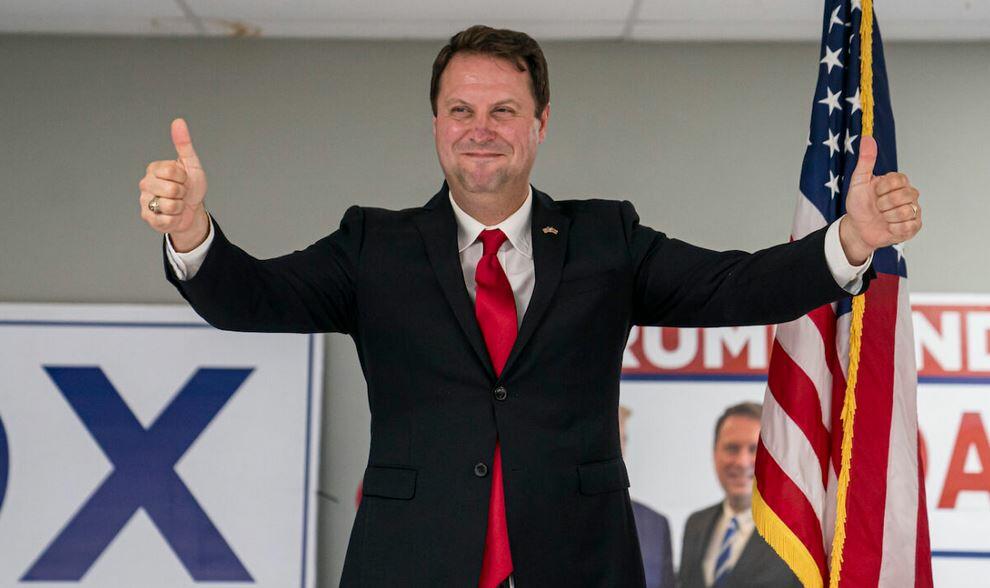
Md. Republican Dan Cox Says Someone Committed Fraud By Filing Election Paperwork In His Name

 by Samantha Flom via The Epoch Times (emphasis ours),

Former Maryland gubernatorial candidate Dan Cox on July 3 said that someone had falsely filed paperwork in his name to run for his state’s 6th Congressional District.

I have not filed. We’ve reported this matter to the FEC for fraud,” Cox wrote on Twitter.

“I have made no such filing and Valerie and I have made no decision yet,” the former state delegate wrote in an earlier statement on Facebook. “Apparently a far left new Delegate from Montgomery County has issued a press release that I’ve filed and apparently media says someone has filed my name. I did not do so and intend to take action to find out who did.”

Dan Cox, then-candidate for the Republican gubernatorial nomination, reacts to his primary win on July 19, 2022 in Emmitsburg, Maryland. (Nathan Howard/Getty Images)

Currently, Maryland’s 6th District is represented by third-term Rep. David Trone (D-Md.).

In May, Trone announced that he would be vacating the seat to run for Sen. Ben Cardin’s (D-Md.) Senate seat upon Cardin’s retirement at the end of his current term.

Cox, a former state delegate, received the endorsement of former President Donald Trump in his 2022 bid for the governorship. Although Cox defeated the more moderate Kelly Schulz in the GOP primary, he was ultimately routed by the state’s current Democrat Gov. Wes Moore.

Prior to running for governor, Cox sought Maryland’s 8th Congressional District seat in 2016. After winning the primary, he lost that race to Democrat Rep. Jamie Raskin.

During the COVID-19 pandemic, Cox was a vocal critic of former Republican Gov. Larry Hogan’s policies, which included mask mandates and stay-at-home orders.

In the state’s General Assembly, he introduced articles of impeachment against Hogan, but they were ultimately rejected by members of his own party.

Although he did not challenge the results of the 2022 election, Cox asked the U.S. Supreme Court in January to reverse an emergency state court order issued prior to the election that suspended parts of Maryland’s election law forbidding the early counting of mail-in ballots.

The court order, Cox held, violated the Elections Clause of the U.S. Constitution in allowing ballots to be opened more than a month prior to Election Day.

“Mr. Cox was the only elected official who saw an issue with what the Board of Elections was doing,” Cox’s attorney, Ed Hartman, told The Epoch Times in February.

https://www.zerohedge.com/political/maryland-republican-dan-cox-says-someone-committed-fraud-filing-election-paperwork-his

T cells require healthy mitochondria

 All cells have their own power plants, called mitochondria. There are often more than 100 mitochondria per cell and each possesses their own genome, which in turn contains genes responsible for energy production. If errors creep into these genes, this can cause problems in the cell and result in diseases.

Scientists from the Berlin Institute of Health at Charité (BIH) and the Max Delbrück Center have now discovered that the T cells of the immune system are especially sensitive to genetic disturbances within their mitochondrial power plants. They have published their findings in the journal Nature Genetics.

Patients with Pearson syndrome suffer from anemia because their  produces too few . Immune system defects are also suspected, but these have not yet been studied in detail. The source of these problems are errors in the genome of the cellular power plants, the , explains Dr. Leif S. Ludwig, head of the Emmy Noether Independent Junior Research Group "Stem Cell Dynamics and Mitochondrial Genomics" at the BIH and Max Delbrück Center.

"The genome of the mitochondria has large gaps (deletions) in these patients, which results in the cells not having enough energy to perform their various functions."

No mutations in the mitochondria of some T cells

Ludwig's group is part of the joint focus area "Single-Cell Approaches for Personalized Medicine," which the BIH at Charité founded together with the Max Delbrück Center and Charité—Universitätsmedizin Berlin. The scientists are specialized in analyzing individual cells and were thus able to closely examine the patients' blood and .

"Our research showed that the pathogenic changes in the  were not equally present in all cells," explains Ludwig, a cell biologist. "For example, the mitochondria in certain types of T cells were almost completely free of mutations. That was quite surprising."

An explanation for this finding, according to Ludwig, is that when T cells are activated, they rely on the mitochondria to supply the energy needed for their continued maturation. "During a defense response, T cells need to proliferate substantially, and we think that especially these initial cell divisions don't work properly without healthy mitochondria."

Selection at play

Yet interestingly, different types of T cells show different degrees of tolerance to defects in the mitochondrial genome. Pathological mutations are frequently found in memory CD4+ T cells, but rarely in memory CD8+ T cells. "The way we explain this is that CD8+ T cells use the mitochondria differently," says Ludwig.

"Since they require mitochondria that are completely healthy, we only see memory CD8+ T cells without mutations. Cells with 'sick' mitochondria are culled out or, as we cell biologists say, negatively selected." As this is highly relevant for patients with mitochondrial disease, the scientists now want to do further research to see exactly how the mitochondria of different cells differ.

Ludwig, whose group is based at the Berlin Institute for Medical Systems Biology of the Max Delbrück Center (MDC-BIMSB), is translating his findings into  in collaboration with his clinical partners at Charité, including Prof. Lars Bullinger and Prof. Ulrich Keller, the Directors of the Department of Hematology, Oncology and Tumor Immunology at Charité Campus Virchow-Klinikum (CVK) and Charité Campus Benjamin Franklin (CBF), respectively.

"We don't yet know how therapeutically effective the use of base editing technologies—or even the transplantation of healthy mitochondria—will one day be at addressing changes in the mitochondrial genome," says Ludwig, "but we are giving it serious thought."

More information: Caleb A. Lareau et al, Single-cell multi-omics of mitochondrial DNA disorders reveals dynamics of purifying selection across human immune cells, Nature Genetics (2023). DOI: 10.1038/s41588-023-01433-8


https://medicalxpress.com/news/2023-07-cells-require-healthy-mitochondria.html

Sanofi partners with local drugmakers to crank out vaccines at new manufacturing plant in Saudi

 After AstraZeneca and National Resilience made recent inroads into the United Arab Emirates, Sanofi has emerged as the next pharmaceutical giant setting its sights on the Middle East.

The French pharma is linking up with Saudi drugmakers Arabio and Lifera—the latter of which is wholly owned by the kingdom’s sovereign wealth fund PIF—to bolster production of vaccines in Saudi Arabia. Under a newly minted memorandum of understanding, the companies will explore a range of potential prophylactic initiatives, including the enlistment of Lifera as a contract manufacturer to Sanofi, plus the build-out of a new manufacturing plant utilizing the latest vaccine tech.

Sanofi will further share biotechnological know-how to initially manufacture seven vaccines included in Saudi Arabia’s mandatory immunization schedule, the partners said in a press release Wednesday. Arabio, for its part, will leverage its local and regional distribution strength to help supply the shots and other biopharmaceutical products to the Saudi market.

The vaccine pact aligns with Lifera’s broader goal to boost the national healthcare system and grow the biopharma sector in Riyadh as part of Saudi Arabia’s Vision 2030.

"As one of the leading global vaccines manufacturers and as a strategic partner to Saudi Arabia and an enabler of Vision 2030, Sanofi is committed to increasing vaccine accessibility and supporting Saudi Arabia's goal to reduce its reliance on pharmaceutical imports,” Fokion Sinis, vaccines general manager for Sanofi Greater Gulf, said in a statement.

Sanofi already boasts a sizable presence in the region, where more than 10 million people receive the drugmaker’s shots each year. In 2022, Sanofi doled out more than 6 million doses of its quadrivalent flu vaccine in the region, making it the top pediatric, meningitis and influenza vaccine supplier across the Gulf.

Lifera, meanwhile, has positioned itself as a new pharma company on a  mission to strengthen Saudi Arabia’s biopharmaceutical sector and boost national health resilience by developing local manufacturing capacity for vaccines, insulin, plasma therapeutics and other biologics. The company is also investing in genetic testing and precision medicine.

Sanofi is just the latest multinational drugmaker to make moves in the Middle East.

In December, British pharma major AstraZeneca joined forces with Abu Dhabi-based G42 healthcare in a bid to bolster pharmaceutical production in the capital of the UAE. That deal came on the heels of the country’s “Make it in the Emirates” initiative, which was launched by the UAE’s Ministry of Industry and Advanced Technology to boost its profile as an “attractive destination” for global investors and position itself as a “global hub” for future industries.

And just a few weeks into 2023, manufacturing upstart National Resilience unveiled a separate plan to build a factory in the UAE to churn out vaccines and therapeutics for cancer, infectious diseases and other disorders. Formerly limited to 10 sites in the U.S. and Canada, the UAE play marked Resilience’s first excursion overseas since its genesis in November 2020.

https://www.fiercepharma.com/pharma/go-gulf-sanofi-partners-local-drugmakers-crank-out-7-vaccines-new-manufacturing-plant-saudi

Roche pulls a Gavreto approval before Blueprint severance, citing unfeasible trial

 Another FDA accelerated approval has run its course, with Roche giving up on a niche indication for cancer drug Gavreto.

After speaking with the FDA, Roche’s Genentech unit has decided to withdraw Gavreto for the treatment of advanced RET-mutant medullary thyroid cancer. Blueprint, the drug’s original developer, revealed the news in a securities filing Friday.

Gavreto earned this approval back in 2020 under the FDA’s accelerated approval pathway based on tumor shrinkage data from the phase 1/2 ARROW trial. Now, Roche figures the phase 3 trial AcceleRET-MTC, which is designed to convert the nod into a full approval, is no longer feasible, according to the Blueprint filing.

Despite the retreat from RET-mutant disease, Gavreto maintains an approval in RET fusion-positive thyroid cancer. For that indication, the FDA's postmarketing requirements call for additional data from patients in the ARROW trial and the basket TAPISTRY trial, a Blueprint spokesperson told Fierce Pharma.

The company remains on track to deliver on that commitment, the spokesperson added.

Medullary thyroid cancer only makes up a small fraction of Gavreto’s meager sales. The RET inhibitor only generated altogether CHF 26 million last year.

Meanwhile, Roche in February decided to terminate the Blueprint partnership and will return Gavreto to the Massachusetts biotech. The two companies are in a transition period and will officially untie the knot in February.

Blueprint is currently searching for a new partner for Gavreto and the biotech doesn’t expect the withdrawal to affect that process, the company spokesperson said. In fact, the termination of the AcceleRET-MTC trial reduces future development costs for any potential partner, the spokesperson added. 

Besides thyroid cancer, Gavreto’s initial indication is in RET fusion-positive non-small cell lung cancer. In that use, which is also an accelerated approval, Roche is investigating Gavreto in a phase 3 trial. The AcceleRET-Lung trial is pitting Gavreto against chemo with or without Merck’s Keytruda in newly diagnosed RET-positive metastatic NSCLC.

The drug was once part of an umbrella phase 3 trial comparing RET-, ALK- and ROS-targeted therapies against AstraZeneca’s Imfinzi in stage 3 NSCLC, but a Genentech spokesperson said the Gavreto arm has been closed.

For the NSCLC indication, the FDA wants to see more data from patients in the original ARROW trial as confirmatory evidence for a full nod, the Blueprint spokesperson said. 

In the past, drugmakers have pulled accelerated approvals because confirmatory trials became difficult to run. In one recent example, Viatris withdrew the antimicrobial powder Sulfamylon because new clinical practice has made it impossible for the company to enroll patients in a controlled phase 4 trial for its product.

A Genentech spokesperson said Gavreto’s AcceleRET-MTC trial was not activated “due to changes to the evolving treatment landscape over time." The study was set to study Gavreto against either Exelixis’ Cabometyx or Sanofi’s Caprelsa in previously treated RET-mutant thyroid cancer. It’s possible that given the availability of RET inhibitors, doctors no longer want to treat patients with traditional, less precise multikinase inhibitors.

But Eli Lilly is running a similar phase 3 trial for its rival RET inhibitor Retevmo. Coded LIBRETTO-531, that phase 3 is also using Cabometyx or Caprelsa in the control arm. In response to Fierce Pharma’s inquiry, a Lilly spokesperson said its trial “remains on track.”

Gavreto’s withdrawal comes against a backdrop of increased scrutiny by the FDA’s oncology department on accelerated approvals that don’t meet confirmatory trial requirements. The agency has pushed for market withdrawals of certain PD-1/L1 inhibitors, PI3K inhibitors, PARP inhibitors, and other meds.

https://www.fiercepharma.com/pharma/roche-pulls-gavreto-accelerated-approval-blueprint-severance-confirmatory-trial-turns

Moderna Signs $1B Deal to Develop mRNA Drugs for China

 Moderna has signed a memorandum of understanding and a land collaboration agreement with China to develop mRNA medicines for Chinese use-only with a total investment of $1 billion, according to multiple media reports.

Moderna CEO Stéphane Bancel arrived in Shanghai on Tuesday to attend a signing ceremony for the investment, according to Chinese media outlet Yicai.

“Any medicines produced under this agreement will be exclusively for the Chinese people ... and will not be exported,” a Moderna spokesperson told Reuters in an email.

The move is a first for the company and comes amid recent efforts by both Moderna and the Chinese government to make inroads. Moderna opened an office in Hong Kong in 2022. In April 2023, Bancel visited Shanghai and told local media that the company would be accelerating its investment in China, while looking for local research and development opportunities with Chinese partners.

By May, Moderna had set up a biotechnology unit in Shanghai. Moderna (China) Biotech was registered May 24 with $100 million in capital. A company spokesperson at the time said: “We are exploring opportunities to engage in the market and bring the power of Moderna's mRNA platform to the people of China.” Moderna also said that while it wanted to sell its vaccine in China, the government was insisting on only using Chinese-made vaccines.

China, meanwhile, has been indicating its own interest in working with foreign pharma companies. Chinese Commerce Minister Wang Wentao said at a Wednesday industry roundtable that foreign drugmakers can expect “more development opportunities.” Among the 12 pharma companies in attendance at Wednesday’s meeting were representatives from AstraZeneca, Bayer, Merck, Novo Nordisk, Pfizer, Roche, Sanofi and Takeda.

Currently, Moderna’s only U.S. approved product is its mRNA vaccine. But demand has been falling sharply for COVID-19 vaccines. Discussions last year between Moderna and China to sell its vaccine in China fell apart after the company refused to reveal the core intellectual property behind its vaccine and to partner with a Chinese pharma company, according to reporting by the Financial Times. At the time, the company said it was still “eager” to sell the vaccine to China.

Meanwhile, Moderna has been making moves to diversify its income base. The company announced Wednesday that it made applications around the world for approval of its investigational mRNA vaccine to treat respiratory syncytial virus (RSV).

The virus is the second-leading cause of death for infants under one year old, after malaria, but is even more serious in older adults, which is the group Moderna is targeting with its vaccine. Among adults over 65, the fatality rate for RSV is nearly six times higher than for infants under a year. The vaccine is also currently undergoing Phase I trials for use in pediatric populations.

The company also has Phase III trials for an influenza vaccine ongoing, as well as for a next-generation COVID-19 vaccine. In addition, Moderna has four influenza vaccines in its pipeline and five combination vaccine programs.

https://www.biospace.com/article/moderna-signs-1b-deal-to-develop-mrna-vaccines-for-china/

Acasti Pharma, FDA Agree on GTX-104 Phase 3 Trial Protocol

 Acasti Pharma said Wednesday it has aligned with the U.S. Food and Drug Administration on the protocol for its late-stage trial of its lead clinical asset, GTX-104.

The Quebec-based biopharmaceutical company also said it has received guidance from the regulator on a potential new drug application package for a novel injectable nimodipine formulation administered under intravenous infusion.

Acasti said it has all the necessary information from the FDA to initiate its Phase 3 trial of GTX-104 to evaluate the drug candidate's safety and tolerability profile relative to oral nimodipine as a treatment for aneurysmal subarachnoid hemorrhage, a rare and life-threatening medical emergency.

Acasti said its expects to dose the first Phase 3 trial patient in the fourth quarter and its current cash runway to be sufficient in funding a potential new drug application submission for GTX-104 in the first half of 2025.

https://www.marketscreener.com/quote/stock/ACASTI-PHARMA-INC-24446197/news/Acasti-Pharma-FDA-Agree-on-GTX-104-Phase-3-Trial-Protocol-44271356/