Search This Blog

Thursday, July 6, 2023

Biotech firms target weight-loss drugs without Wegovy's side-effects

 Weight-loss drug Wegovy helped Rebecca Vogt achieve a major goal - shedding the weight she had not managed to drop since giving birth. But, after a particularly brutal day in the bathroom suffering from vomiting and diarrhoea, she called it quits.

"The nausea is just so awful with this medication," said Vogt, who had endured daily sickness for months.

After stopping taking the weekly injection, Vogt, a 48-year-old customer service representative in Buffalo, New York, said she regained the 27 pounds (12.2 kilograms) she had lost.

Though extreme, Vogt's experience on Novo Nordisk's hugely popular drug is not unique. Some 44% of patients taking the weekly injection experienced nausea and 30% experienced vomiting, according to prescribing information - the guidance for healthcare professionals approved by the U.S. health regulator, the Food and Drug Administration (FDA).

"If there was a drug like Wegovy without the nausea side effects, I would love to take it," Vogt said.

Some U.S. and European biotech companies are hoping to offer an alternative to Vogt and other people suffering side-effects.

More than a dozen small, privately-owned companies are developing drugs that hold the promise of Wegovy-like weight loss without the downside of nausea, according to U.S. investment bank Stifel, which published reports in March and July on the obesity market.

These experimental drugs function slightly or entirely differently than the class of drugs like Wegovy, which work by mimicking the GLP-1 gut hormone that reduces appetite. For this reason, they appear to avoid the side-effect of nausea, according to interviews with executives from three of the companies.

Some of these companies have been working on their drugs for years. Executives from four of them told Reuters the huge amount of attention the obesity market is receiving due to Wegovy's success could be a game-changer for their own drug development prospects.

They said the boom in interest is putting them in a more favourable position to raise funds from potential investors, as they seek a slice of a market estimated to be worth as much as $100 billion by the end of the decade.

"The attention is very welcome," said Jayson Dallas, chief executive of Rivus Pharmaceuticals in the United States. His company, founded in 2019, is developing a drug that disrupts the body's mitochondria, affecting energy consumption, so that a person taking the drug would lose weight if they eat the same amount of food.

Investors are taking note of the demand from people like Vogt.

"The next frontier of obesity treatment would be to achieve Wegovy or Mounjaro-like efficacy with less side effects and less muscle mass loss," said Noushin Irani, a portfolio manager at Deutsche Bank's asset management unit DWS, which had 841 billion euros ($914.34 billion) under management as of end-March.

Mounjaro is Eli Lilly's obesity drug. The company said in April that it expects the drug to be approved as an obesity treatment by the FDA as early as late 2023. It leads to 22.5% weight loss, according to a Lilly trial published last year.

MULTIPLE APPROACHES

Originally developed to treat type 2 diabetes, the glucagon-like peptide-1 (GLP-1) receptor agonist drugs - like Wegovy - mimic a gut hormone that suppresses appetite, promoting the feeling of fullness. The effect achieves far more weight loss than predecessors.

First-to-market Wegovy, which launched in the U.S. in June 2021, leads to an average weight loss of 15% when combined with changes in diet and exercise.

Novo, Lilly and other big drugmakers including Pfizer have said they are working on a second generation of weight-loss drugs that improve on Wegovy and Mounjaro by offering pills instead of injections or by potentially leading to greater weight loss.

But these drugs are GLP-1s and still cause nausea, according to data the companies separately published in May from mid- and late-stage trials.

Some investors say biotech companies have an opportunity.

"There is room for multiple approaches. Individuals and their physicians will see what works best for them," said Andrew Levin, managing director at RA Capital Management, a U.S. investment firm focused on healthcare with $9.65 billion under management.

The group led a $132 million Series B funding round that closed last September for Rivus.

Rivus said its main drug in development, HU6, showed in an early, eight-week "proof of concept" study to cause weight loss comparable to the GLP-1 drugs while sparing muscle mass and avoiding nausea. Results of two Phase II trials of HU6 are expected next year.

If that trial data is good enough, Rivus will consider an initial public offering (IPO) depending on market conditions, Dallas, the CEO, said.

Another U.S. biotech taking a different approach that has proven in early trials to achieve weight loss without nausea is Glyscend Therapeutics, born out of a lab at Johns Hopkins University in Baltimore, Maryland.

The company in May published preliminary data from a Phase IIa trial showing the effective weight loss; the data also indicated the drug was "well-tolerated". Glyscend's chief scientific officer Mark Fineman said in an interview that the trials showed "only mild nausea and gastrointestinal side effects that are short-lived" and disappeared within a day.

"We have a lot of options from a financing and partnering perspective, which did not exist even a few years back," CEO Ashish Nimgaonkar said in the same interview.

The company is well capitalised but Nimgaonkar said he was optimistic the interest in the obesity market would help in future fundraising as it advances the drug development process.

Glyscend may consider an IPO if the market improves or a partnership with a big pharma firm for Phase III trials, he said.

An even earlier stage biotech firm, Antag Therapeutics in Denmark, told Reuters that the ballooning obesity market has improved its fundraising prospects.

Antag's CEO Alexander Sparre-Ulrich told Reuters that the company hopes to close a Series A funding round of 30 million euros by the end of 2023, to begin its Phase I clinical study.

And another European biotech company, Switzerland-based Aphaia Pharma, in May launched its Phase II clinical trial of its daily glucose formulation, which is taken mixed with water. It curbs appetite by restoring the natural release of GLP-1 and other hormones, without causing nausea, Phase I data showed.

The effect of the drug on weight loss is being tested in the Phase II study. Results are expected next year.

"It's absolutely possible that in 5 to 10 years we'll see over a hundred biotechs working in this area," said Tim Opler, a Stifel investment banker. Opler said Stifel is not currently an investor in any of the biotech firms cited in their reports.

https://ca.style.yahoo.com/biotech-firms-target-weight-loss-051011942.html

Safety Concerns About New Weight Loss Drugs Brew as Demand Soars

 The European Medicines Agency recently flagged a safety signal regarding the potential for glucagon-like peptide-1 receptor agonists to cause thyroid cancer. The documentation—the first step taken by the regulator toward investigation of potential adverse events in approved products—comes as demand for the popular diabetes and weight loss drugs reaches a fever pitch.

The safety signal reported by the EMA’s Pharmacovigilance Risk Assessment Committee (PRAC) in April covers a range of glucagon-like peptide-1 receptor (GLP-1) agonists, including semaglutide, the key ingredient in Novo Nordisk’s Wegovy, Ozempic and Rybelsus. Supplemental information was also requested from Eli Lilly, Sanofi and AstraZeneca, all of which manufacture drugs in this class. 

GLP-1 is a hormone that stimulates insulin secretion after eating, enabling a feeling of fullness and regulating blood sugar. GLP-1 agonists mimic the effects of this hormone, making them an effective treatment for diabetes and obesity.

An EMA spokesperson told BioSpace in an email that the discussion that led to the safety signal for the GLP-1 class followed the publication of a November 2022 study by Julien Bezin and colleagues suggesting there might be an increased risk of thyroid cancers with the use of these medicines in patients with Type 2 diabetes (T2D). In the paper, published in Diabetes Care, the authors claimed to have found that the use of the drugs for 1–3 years was associated with an increased risk of all thyroid cancer and medullary thyroid cancer, though the study is not without criticism.

The PRAC agreed on a list of questions to be addressed to the makers of these drugs while the committee reviews the available evidence, the spokesperson said. 

A causal association between semaglutide and thyroid cancer has not been demonstrated in large-scale clinical trials and post-marketing surveillance, Lars Otto Andersen-Lange, media relations director at Novo Nordisk, told Reuters on June 22.

Michael Glickman_self courtesy
Michael Glickman

Michael Glickman, an obesity medicine specialist at Revolution Medicine, Health & Fitness, added that it is “extremely reassuring” that GLP-1 medications have been on the market for almost 20 years, with Eli Lilly and Amylin Pharmaceuticals’ Byetta (exenatide) approved by the FDA for T2D in 2005. Several others have since followed, not just for T2D but for obesity and overweight as well.

“For a modern medicine to be on the market for that long and to not have shown any obvious long-term problems is very good,” he told BioSpace. “In general, when medications are proven to have cancer links, they’re discovered relatively quickly.” 

The History of GLP-1 Drugs

The possibility of a connection between GLP-1 drugs and thyroid cancer has been around for years. A rodent study published in 2010 showed that long-term exposure to liraglutide, a GLP-1 analog approved to treat T2D, activated the GLP-1 receptors on neuroendocrine cells in the thyroid known as C cells, leading to hyperplasia and tumors. However, the same study found that both humans and monkeys had low GLP-1 receptor expression in thyroid C cells, raising questions about whether the results would translate to primates. 

“A rodent’s thyroid gland is physiologically different than a human’s thyroid gland,” Glickman said. “A rodent thyroid gland has the GLP-1 receptor at a much higher rate than a human thyroid gland does, so when you expose a rodent to that medicine, more of the medicine goes to the thyroid preferentially.” 

Nevertheless, a connection between GLP-1 drugs and thyroid cancer in humans has now been documented. A clinical trial evaluating liraglutide identified increased rates of thyroid cancer, for example, though the risk was not statistically significant. There were also an increased number of thyroid cancer cases reported in a meta-analysis of 12 other clinical trials with liraglutide.

Both studies were cited by the new study from Bezin and colleagues, which looked at more than 3.5 million patients with Type 2 diabetes in France’s national healthcare insurance system database. Comparing those patients who developed thyroid cancer with matched controls who did not, the researchers found that using a GLP-1 receptor agonist increased risk for thyroid cancer, particularly if they’d been taking the GLP-1 drug for at least a year.

The study, however, spawned several rebuttals. One December 2022 commentary, written by Til Stürmer and Caroline Thompson from the University of North Carolina at Chapel Hill Gillings School of Global Public Health, noted the risks of a case-control study design.

This design “provides relative measures of effect only,” Stürmer and Thompson wrote, but it cannot provide insights into absolute risk, which is the critical component of a benefit-harm calculation that must be undertaken by patients and their doctors. Without this information, they explained, it’s impossible to accurately weigh the benefits these drugs provide, such as reduced risk of cardiovascular disease, against the potential uptick in thyroid cancer risk.

Stürmer and Thompson additionally stated that despite a recent rise in thyroid cancers, the mortality rate has remained low and stable, which they attribute to overscreening and overdiagnosis in developed countries. Indeed, the incidence of medullary thyroid cancer is just 0.2 cases per 100,000 patient years.

Glickman concurred, saying that “the potential absolute risk of thyroid cancer is exceptionally small, and the benefits of the medication quite significant, so these should both be taken into consideration when having a shared decision-making conversation with a patient.” 

He continued, “The question is, in those years while we’re waiting to get that theoretical information, how many heart attacks we prevented? How many strokes have we prevented? How many patients with diabetes have we reversed? How many extra years of longevity have we given that patient because of this life-changing medication?”

https://www.biospace.com/article/safety-concerns-about-new-weight-loss-drugs-brew-as-demand-soars-/

Binance CEO: Another Hack On Multichain; Does Not Affect Users On Binance Or Binance Itself

 BINANCE CEO SAYS LOOKS LIKE ANOTHER HACK HAPPENED ON MULTICHAIN;THIS DOES NOT AFFECT USERS ON BINANCE OR BINANCE ITSELF Source text: https://tinyurl.com/56s7pmer

https://www.marketscreener.com/news/latest/Binance-CEO-Says-Looks-Like-Another-Hack-Happened-On-Multichain-This-Does-Not-Affect-Users-On-Binan--44285515/

Dan Ives, Wedbush: "It will be difficult for Threads to achieve critical mass"

 As Mark Zuckerberg's Meta unveiled Threads, Instagram's new text app to compete with Twitter, Wedbush senior analyst Dan Ives believes it will be difficult for the new network to achieve "critical mass" as a viable rival to Elon Musk's network, recalling the ill-fated experiences of other platforms. He believes that the aim of the new service is to develop cross-fertilization opportunities between Meta's networks, particularly in advertising. 

https://www.marketscreener.com/news/latest/Dan-Ives-Wedbush-It-will-be-difficult-for-Threads-to-achieve-critical-mass--44281275/

'America's Darkest Secret': Sex Trafficking, Child Abuse, & The Biden Administration

 by Uzay Bulut via The Gatestone Institute,

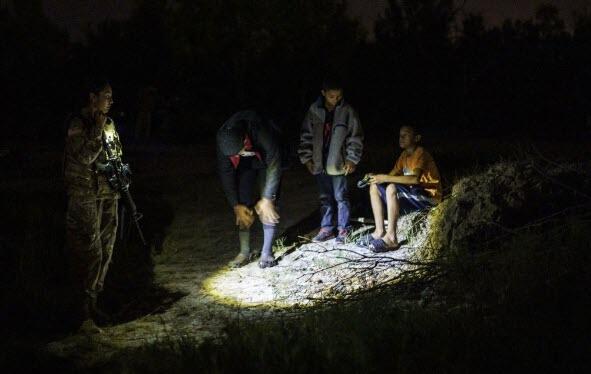
The criminal practice of trafficking and abusing hundreds of thousands of migrant children who cross the southern border is now, thanks to the open-border policy of the Biden Administration, apparently "normal" inside the US:

"According to Customs and Border Protection, since January 2021 when Biden took the oath of office, there have been 5,118,661 encounters with illegal immigrants along the southern border."

These numbers do not include reports that "at least 1.2 million illegal immigrants," or "gotaways," who "were confirmed to have unlawfully crossed the U.S.-Mexico border."

"The actual number of illegal immigrants... [is] unknown. It could be double the number of known gotaways, it could be three times worse, or more. We just don't know...."

Currently, at least 85,000 children are believed to be missing.

According to Customs and Border Protection statistics,

"[T]he number of UACs [Unaccompanied Alien Children] who arrive at the border has swelled from 33,239 in fiscal year 2020 to more than 146,000 in fiscal year 2021 and 152,000 in fiscal year 2022. So far in fiscal year 2023, there have been more than 70,000 encounters of unaccompanied children."

Many of those children are raped, used for forced labor, and forced to undertake brutal jobs ostensibly to "work off" their debt by the criminal cartels who reportedly now control the Mexican side of the border and brought the children in.

According to Tara Lee Rodas, a Health and Human Services whistleblower, in testimony before the House Judiciary Subcommittee on Immigration Integrity, Security, and Enforcement on April 26:

"Whether intentional or not, it can be argued that the US Government has become the middleman in a large scale, multi-billion-dollar, child trafficking operation run by bad actors seeking to profit off the lives of children."

She described the practice as "modern-day slavery".

"Today, children will work overnight shifts at slaughterhouses, factories, restaurants to pay their debts to smugglers and traffickers. Today, children will be sold for sex. Today, children will call a hotline to report the are being abused, neglected, and trafficked.....

"I must confess; I knew nothing about their suffering until 2021 when I volunteered to help the Biden Administration with the crisis at the Southern Border. As part of Operation Artemis, I was deployed to the Pomona Fairplex Emergency Intake Site in California to help the HHS [Department of Health and Human Services] Office of Refugee Resettlement reunite children with sponsors in the US.

"I thought I was going to help place children in loving homes. Instead, I discovered that children are being trafficked through a sophisticated network that begins with being recruited in home country, smuggled to the US border, and ends when ORR [Office of Refugee Resettlement] delivers a child to a Sponsors – some sponsors are criminals and traffickers and members of Transnational Criminal Organizations. Some sponsors view children as commodities and assets to be used for earning income - this is why we are witnessing an explosion of labor trafficking.

".... I want to see the children protected, so I want to tell you some what I witnessed at the Pomona Fairplex:

  • I saw vulnerable indigenous children from Guatemala who speak Mayan dialects and can't speak Spanish. That means they can't ask for help in English and they can't ask for help in Spanish. These children become captive to their Sponsors.

  • I've sat with Case Managers as they cried retelling horrific things that were done to children on the journey.

  • I saw apartment buildings where 20, 30 & 40 unaccompanied children have been released.

  • I saw sponsors trying to simultaneously sponsor children from multiple ORR sites.

  • I saw sponsors using multiple addresses to obtain sponsorships of children.

  • I saw numerous cases of children in debt bondage and the child knew they had to stay with the sponsor until the debt was paid.

"Realizing that we were not offering children the American dream, but instead putting them into modern-day slavery with wicked overlords was a terrible revelation."

Rodas added that after she went public, her bosses retaliated against her.

"They threatened me with an investigation. They walked me off the emergency intake site in Texas and took my badge. It is a terrible thing when you blow the whistle to try to save children and you're retaliated against for trying to help. The HHS [The United States Department of Health and Human Services] did everything they could to keep all of this silent."

In another testimony, Jessica M. Vaughan, an expert on immigration, said:

"Numerous investigative journalism reports published over the years in the Washington Times, Reuters, and the New York Times, Project Veritas, and others, that provide graphic details of the experiences of UACs during and after their illegal crossing and placement with sponsors in the United States, including domestic servitude, sexual abuse, forced labor, labor exploitation, and illegal employment in manufacturing, landscaping, and other inappropriate and dangerous jobs."

Rachel Campos-Duffy reported on April 26 on the crimes committed against migrant children:

"Over the last two years, this country has become an international hub for child trafficking. And the US government is behind it. Under Biden, hundreds of thousands of children have come into this country illegally. Once they get here, most are sold for sex, used for cheap labor, or forced to join gangs. Nobody deserves this. Especially not children."

Campos-Duffy called the mass trafficking, abuse, and exploitation of migrant children "America's darkest secret."

Sheena Rodriguez, president of the Alliance for a Safe Texas, presented eyewitness testimony regarding what is happening to children at the southern border:

"In April 2021, when Texas Gov. Greg Abbott learned of allegations of abuse of unaccompanied minors in a federal facility in San Antonio, he said, 'The Biden administration is presiding over the abuse of children.' He also called on the administration to shut these facilities down. Instead, the administration has only expanded them without communicating with state or local authorities. Local communities are not told how long the minors will be there, or where they will go when released and with no concern of the impact to local citizens. I am requesting that Congress launch a full investigation into the federal agencies responsible for approving the contracts for these facilities."

Among the several examples Rodriguez gave:

"I have also been a witness to several incidents where children were intentionally put in harm's way by adults who forced the children into the deadly currents of the Rio Grande instead of walking through a legal port of entry feet above from their crossing point in the river...

"I also met teenage boys between the ages of 14 to 17, who claimed cartel operatives often transported children through Mexico and held them at bodegas or warehouses where armed cartel members stood guard. Many were told they were going to stay with sponsors in America, with several claims that the teens had never met or personally communicated with their supposed sponsors.

"Since January 2021, there have been over 356,000 UACs...encountered at the southern border, a majority of which have been released into the U.S.: more than 10,000 of which have been released in my respective area of north Texas.

"The Biden administration has admitted they do not keep track of their whereabouts when they are released into the U.S. With the use of taxpayer dollars, tens of thousands of children are simply missing."

Jessica M. Vaughan also offered detailed testimony,

"The mass migration crisis instigated by the Biden administration's misguided immigration policies has caused incalculable harm to American communities, to the integrity of our immigration system, and, tragically, to many of the migrants themselves. These migrants were enticed by these policies to put themselves in risky situations to cross the border illegally, led by criminal smuggling and trafficking organizations, and enabled by government agencies and contractors that have looked the other way at the abuse and exploitation that frequently occurs en route and after resettlement. The most vulnerable group that has been endangered by the Biden policies are the more than 300,000 minors who have arrived on his watch (out of 660,000 total since 2012). They have been carelessly funneled through the custody of U.S. government agencies and contractors, and handed off to very lightly vetted sponsors (who are usually also here illegally) in our communities without regard to their safety and well-being...

"Several major investigative reports conducted by branches of the U.S. government and news media outlets have documented how U.S. policies and practices have facilitated not only this mass migration episode, but also the resulting exploitation and abuse of the participants, which has been present since the onset of this episode. These studies and reports have exposed numerous incidents of abuse, fraud, and trafficking for the purposes of commercial sex and forced labor.

"The Florida Grand Jury observed:

"'Some 'children' are not children at all, but full-grown predatory adults; some are already gang members or criminal actors; others are coerced into prostitution or sexual slavery; some are recycled to be used as human visas by criminal organizations' some are consigned to relatives who funnel them into sweatshops to pay off the debt accumulated by their trek to this country; some flee their sponsors and return to their country of origin; some are abandoned by their so-called families and become wards of the dependency system, the criminal justice system, or disappear altogether.'"

Vaughan gave examples of how children are exploited by gang members for sex and other criminal purposes, such as:

"In the Virginia MS-13 sex trafficking case, after running away from a group home in Fairfax, Va, the teen victims were horribly beaten to initiate them into the gang, and then repeatedly forced to engage in prostitution both to members of the gang and outsiders. From one court document:

'MINOR 2 was sex trafficked by numerous MS-13 gang members and associates shortly after she and MINOR 3 ran away from Shelter Care on August 27, 2018. According to MINOR 2, MINOR 3 informed her that she would engage in sex in exchange for money, food, and other things that MINOR 2 needed'." ....

"The Biden administration has implemented policies that incentivize the illegal entry of unaccompanied alien children on a massive scale, to the profit of criminal smugglers and traffickers, even with full knowledge of the risks that such policies will endanger the safety and well-being of the migrant children. Some supporters of these policies have defended them on the belief that they are aiding the reunification of families, providing a safe haven from difficult living environments in their home countries, and even benefiting US employers. On the contrary, I submit that there is no possible rationalization for policies that have facilitated the abuse and exploitation of child migrants on such a large scale for so many years. There is no possible humanitarian or economic motive that could justify or make up for the damage that has been done to the victims by the smugglers, traffickers, abusive sponsors, and even family members who participated in these dreadful arrangements."

Florida Governor Ron DeSantis describes what is happening as "effectively the largest human smuggling operation in American history."

Senator Josh Hawley referred to the Biden policy "the biggest child smuggling ring and the biggest child labor ring in American history." He told Fox News not only that the FBI needs to be involved in finding the 85,000 migrant children that the federal government has lost track of, but that the FBI should investigate the Department of Homeland Security and the Department of Health and Human Services (HSS) over their handling of migrant children.

"This is criminal... The FBI needs to be involved. They need to go find every single one of these kids — 85,000 or more — who are lost. The FBI needs to find them. We need to have an investigation by the FBI into the Homeland Security Department, into HHS to figure out who is facilitating these smuggling rings, are they deliberately not doing their job, are they deliberately or negligently turning these kids over to smugglers? We need to find out. The FBI needs to get on it and launch a full-scale investigation right now."

"There is no question," Vaughan said, "that that the system for processing minors who cross illegally is dysfunctional, and has been for some time, and needs to be fixed.

"To solve the problem, Congress must change the immigration laws and rein in the executive policies that are incentivizing the mass illegal migration of both adults and minors" What is needed is "more opportunity for state and local governments to investigate and penalize human trafficking and the illegal migration, human smuggling, identity fraud, and illegal employment."

https://www.zerohedge.com/political/americas-darkest-secret-sex-trafficking-child-abuse-biden-administration

Carnival Cruise Ships Emit More Toxic Fumes Than All Of Europe's Cars, Study Finds

 A new study commissioned by the European Federation for Transport and Environment revealed that toxic emissions of sulfur oxides from 63 cruise ships belonging to Carnival Corporation were 43% higher than all the combustion engine vehicles in Europe. This stunning statistic comes as EU leaders have decided to ban small combustion engines for cars by 2035. But what about 'green' cruise ships? Only crickets... 

"The most polluting cruise ship operator was MSC Cruises, whose vessels emitted nearly as much sulphur as all the 291 million cars in Europe. When looking at parent companies, as in our original 2019 report, the Carnival Corporation comes on top with the 63 ships under its control emitting 43% more sulfur oxides than all of Europe's cars in 2022," the study said. 

For cruise ship operators to achieve carbon-neutral status, this might take decades. According to the study, about 40% of cruise ships in the order books of global shipyards are dual-fuel LNG engines. "When running on LNG, these ships will cause less air pollution, but they are more damaging than fuel oils from a climate perspective due to methane slip from their four-stroke engines," the study noted. 

The study continued, "Cruise companies should discontinue investing in LNG-powered vessels and prioritize zero-emission technologies, such as hydrogen fuel-cells, batteries, and wind-power." 

Cruise ship order books currently have limited to no zero-emission vessels in shipyards. The most immediate fuel switch is from heavy fuel oil to LNG. 

The study shows Carnival's vessels pollute more than Europe's cars and then some, but what's mindboggling is that EU lawmakers went after cars first in their 'greenification' crusade. Why not cruise ships?

https://www.zerohedge.com/markets/carnival-cruise-ship-emits-more-toxic-fumes-all-europes-cars-study-finds

Opioid Crisis Failure Of Public Policy – It's Time To Change Course

 by Susan Martinuk via The Epoch Times,

What is the end goal of a policy that deals with drug addiction?

That’s the key question that political leaders and societal stakeholders should be considering as they announce ever more alarming initiatives in an attempt to limit the number of drug-overdose deaths across Canada.

After all, in the end, there are only two possible outcomes:

  • The first is to continue to maintain a small slice of society that wanders about aimlessly in “pharmaceutical oblivion” and remains wholly dependent on society for drugs, money, medical care, food, and shelter. They are stripped of all human dignity and unable to contribute positively to society.

  • The second option is getting addicts into treatment. Nurturing them through detox, treatment, healing, and renewal. Getting them to a place where their dignity is restored, and they become active members of society.

Now tell me—which is the most compassionate choice?

British Columbia, the epicentre of the epidemic, had 272 overdose deaths in 2001 and 474 in 2015. In 2022, there were 2,272. Nationally, there were 2,830 overdose deaths in 2016; that number jumped to 7,328 (an average of 20 per day) in 2022.

One thing is glaringly obvious—what we are doing is not working.

In B.C., the Vancouver safe injection site (SIS) has been in place for the past 20 years. Now there are dozens of SISs across the country. There are safe supply initiatives that hand over hydromorphone pills, a highly addictive narcotic, like candy despite indications that users are selling them to make money to buy fentanyl, a drug that packs more of a punch.

Marijuana (considered harmless by some and a not-so-harmless, entry-level drug by others) has been legalized and possession of small amounts of hard drugs has been decriminalized.

Yet the drug overdose numbers keep climbing.

Many political leaders say we have to consider addiction as a medical issue. But there is nothing but rampant failure if we look at the health outcomes that stem from these supposedly progressive drug policies. Carrying on with these same measures should be a non-starter.

As a result, Vancouver’s Downtown Eastside (DTES) has descended into the kind of hell that has small businesses and locals on edge. Serious assaults and property crime have increased; businesses are closing, and some say their workers are afraid to walk home at night. Tent encampments, public defecation, needles on sidewalks, and general degradation of the living space have made the DTES a no-go zone for most of the city’s citizens. Even Canada Post has refused to deliver mail to parts of the DTES because of concerns for the health and safety of its workers.

All of this is a consequence of the broad initiative known as “harm reduction.” Yet our political leaders seem determined to stay the course in spite of the grim results.

In May, the Liberal government (along with the NDP and Bloc Quebecois) defeated a federal Conservative party motion to halt the safe supply of drugs. Carolyn Bennett, federal minister of mental health and addictions, has said that harm reduction is necessary to reduce the “stigma, the fear and shame” that keeps drug users silent and “prioritizes the dignity and safety” of users.

Apparently, that’s the best justification she has for federal policies, yet, based on the escalating number of deaths alone, it is clear that harm reduction is failing miserably at upholding the dignity and safety of drug users.

just-released Leger survey shows that most Canadians are also fed up with harm reduction measures. Just 33 percent of Canadians support the decriminalization of street drugs (opioids, cocaine, meth, and ecstasy). A significant majority want a greater focus on prosecuting those who bring drugs into the community (86 percent), more policing (72 percent), and tougher laws prohibiting street drug use (69 percent).

Seven in 10 Canadians (71 percent) support involuntary treatment programs where addicts are required to attend addictions counselling in exchange for a safe supply of drugs.

In sum, Canadians are fed up.

Our political leaders and their harm reduction policies have failed us, our communities, and most of all, our drug-addicted souls who are given every opportunity to use—but very few opportunities to get help.

It’s time to invest in detox beds and treatment centres. It’s time to talk about involuntary treatment programs. It’s time to establish education and work programs that get addicts back into the real world—that is where they will find dignity, safety, and healing.

https://www.zerohedge.com/medical/opioid-crisis-reflects-failure-public-policy-its-time-change-course