Search This Blog

Saturday, July 8, 2023

Xi Tells China Military To Deepen War, Combat Planning Amid Tensions With US, Taiwan

 By Alex Wu of The Epoch Times

Chinese Communist Party leader Xi Jinping urged the regime’s military to deepen war and combat planning, as Sino-U.S. relations continue to sour and the tension in the Taiwan Strait intensifies.

Xi inspected the Eastern Theater Command on July 6 and met with representatives of officers and soldiers when he made the comments, according to state media Xinhua. Xi claimed that the world has entered a new period of turmoil and change and China’s security situation has become more unstable and uncertain. He required the military to “deepen war and combat planning to increase the chances of victory in actual combat.”

he Eastern Theater Command was established in February 2016 after the CCP’s military reform. It mainly governs the armed forces in East China (Jiangsu, Shanghai, Zhejiang, Fujian, Jiangxi, and Anhui provinces). Headquartered in Nanjing of Jiangsu Province, it’s responsible for the security of eastern China, including the East China Sea, the Taiwan Strait, and the Pacific Ocean. In the past 7 years, the Eastern Theater has performed many military exercises and cruises targeting Taiwan.

Aiming at Taiwan

Chang Yanting, former deputy commander of Taiwan’s Air Force and visiting professor at Tsinghua University in Taiwan, told The Epoch Times on July 7 that Mr. Xi’s emphasis on military readiness and preparation for war is closely related to the current international environment. “It’s including the military tensions between the United States and mainland China, as well as economic wars, financial wars, trade wars, technology wars, and so on. The CCP is now emphasizing ‘deepening war and combat planning,’ which is envisioning the United States as its opponent, intending to deter the United States from intervention in the Taiwan Strait.”

A missile from the rocket force of the Eastern Theater Command of the Chinese People’s Liberation Army (PLA) takes part in operations during the combat readiness patrol and military exercises around Taiwan

Mr. Chang said, “He [Xi Jinping] wants to strengthen preparations for war, and the Taiwanese cannot take it lightly. Especially the United States believes that from 2025 to 2027 is the most dangerous time for Taiwan. I don’t think we should take it lightly, and we must strengthen our military preparations.”

However, Mr. Chang pointed out that if the CCP wages a war over Taiwan, it will face a very complicated international situation.

“Once war breaks out, the CCP is not just facing Taiwan. Warships from Japan, South Korea, the Philippines, Australia, the United States, and even Europe, including France and Germany will all come to join the fight. Will they fire at these warships or not? They are in the Taiwan Strait over there. Once the CCP hit any of them, according to the North Atlantic Treaty, if one country is attacked, it will be regarded as all countries are attacked. As long as the United States has a warship attacked in the Taiwan Strait, the other 30 countries will support the United States,” Mr. Chang said.

Stabilize Morale

Military commentator Yang Wei told The Epoch Times on July 6 that Mr. Xi’s sudden visit to the Eastern Theater Command could not be ruled out to demonstrate his control of the CCP military. “After the Wagner mutiny in Russia, the leaders of the CCP seemed to be frightened. They may intend to show that [their] military power is stable and show the outside world that there will be no mutiny or coup,” Mr. Yang said.

Former Lieutenant Colonel Yao Cheng of the Chinese Navy Command told The Epoch Times on July 6 that both the Southern Theater Command and the Eastern Theater Command are responsible for the fight in the Taiwan Strait. “But the CCP’s military is not monolithic. Because Xi is now cleansing the military, the morale of the military is not stable, and he wants to win the hearts of them.”

Mr. Xi told the military officers in the Eastern Theater Command during his tour that they should “adhere to the direction and enhance the awareness of urgency,” “dare to fight and be good at fighting,” etc.

Mr. Yao said that the sense of urgency is Mr. Xi’s own sense of urgency, not the military’s. “The military and Xi Jinping are not of one mind in fighting wars. They are unwilling to fight battles that cannot be won,” he said.


https://www.zerohedge.com/economics/xi-tells-china-military-deepen-war-combat-planning-amid-tensions-us-taiwan

Mutation can cause individuals with normal cholesterol to develop heart disease at a young age

 A novel molecular pathway to explain how a mutation in the gene ACTA2 can cause individuals in their 30s—with normal cholesterol levels and no other risk factors—to develop coronary artery disease has been identified, according to researchers with UTHealth Houston.

The study was published in the European Heart Journal.

"The gene ACTA2 codes a  that has nothing to do with cholesterol," said Dianna Milewicz, MD, Ph.D., senior author of the study and professor and director of the Division of Medical Genetics at McGovern Medical School at UTHealth Houston. "It was a surprise to find that people with the  had too much atherosclerosis at a young age and with no ."

2009 study led by Milewicz found that a number of mutations in ACTA2 predispose humans to develop  (30s or younger) .

Atherosclerosis is a buildup of fats, cholesterol, and other substances in and on the artery walls. It can develop over time and most people don't know they have it until they suffer a  or stroke. Traditional risk factors for developing atherosclerosis include high cholesterol, , diabetes, smoking, obesity, lack of exercise, and consuming a .

ACTA2 is typically found in the , which line the arteries and allow the arteries to contract to control blood pressure and flow. Milewicz and her team found that protein coded by this gene is not folded correctly because of the mutation, and it triggers stress in the smooth muscle cell, which then forces the cell to make more cholesterol internally, regardless of the levels of cholesterol in the blood, driving atherosclerotic plaque formation.

"This finding is unique in that we found a completely new pathway to atherosclerosis. It explains why for years we have known statins protect people from heart attacks, even those people whose blood cholesterol levels are normal. In the people with ACTA2 mutations, the statins block the cholesterol made by the stressed smooth muscle cells," said Milewicz, the President George Bush Chair in Cardiovascular Medicine with McGovern Medical School.

"In our study, the mutant protein made by the ACTA2 mutation caused the cells in the artery wall to be stressed, but there are many other factors that can stress cells. We are now working on the risk factors for coronary artery disease, like hypertension, that would also stress the cells and activate this novel pathway for coronary artery disease."

One of the results of stress in smooth muscle cells associated with atherosclerosis is the deposition of calcium in the arteries.

"Cardiac calcium imaging in individuals with ACTA2 mutations could be a useful early diagnostic tool to monitor the development of the early atherosclerosis in these people. This would allow physicians to decide at what age to start these patients on statins," Milewicz said.

Using a  that contains a particular ACTA2 mutation and feeding the mice a diet rich in cholesterol, the researchers induced atherosclerosis and found that these mice have much more atherosclerosis than similarly treated mice normal mice.

The study also found that the increased atherosclerosis could be reversed by treating the mice with pravastatin, a member of the statin group of drugs commonly prescribed to lower blood cholesterol. The researchers confirmed that same molecular pathway is activated in smooth muscles cells isolated from a human patient with an ACTA2 mutation.

Statins prevent coronary artery disease by lowering the levels of cholesterol in the blood. At the same time, more than half of heart attacks occur in apparently healthy men and women with average or low levels of plasma LDL-cholesterol. Statins also reduce  events in people with normal cholesterol levels.

More information: Kaveeta Kaw et al, Smooth muscle α-actin missense variant promotes atherosclerosis through modulation of intracellular cholesterol in smooth muscle cells, European Heart Journal (2023). DOI: 10.1093/eurheartj/ehad373


https://medicalxpress.com/news/2023-07-genetic-mutation-individuals-cholesterol-heart.html

All forms of weightlifting build strength and muscle, details matter less

 Whether you use heavy or light weights, lifting them as many times as you can builds strength and muscle. The details of how you go about it are less important than simply making a habit of it, researchers have determined.

After studying the most popular variables among resistance training programs—how much you lift, how often, and how many times—kinesiologists at McMaster University have found all forms of resistance training are beneficial, including body- exercises such as planks, lunges and push-ups.

"There are a dizzying number of factors and combinations to consider when creating a weightlifting program to maximize strength and ," says Stuart Phillips, a Kinesiology professor who conducted the work with graduate students Bradley Currier and Jonathan Mcleod.

"This is an age-old debate among athletes and strength and conditioning coaches: what combination leads to the best gains?"

For the study, published today in the British Journal of Sports Medicine, researchers reviewed 192 randomized, controlled studies with a total sample size of more than 5,000 people evenly split between women and men, making it the single largest project of its kind.

The work is the culmination of years of planning, collecting and analyzing massive amounts of data revolving around three key resistance-training variables: higher versus lower loads, single versus multiple sets, and training frequency: whether one, two or three (or more) sessions per week.

Most fitness experts have come to believe that using the heaviest weights—which can only be lifted three to five times—works best for building strength while using weights that can be lifted eight to 10 times works best for building muscle size.

Based on their original research, McMaster researchers have spent the last decade or more pushing back against the idea that heavier weights are the only option.

Phillips and his team have published several papers showing significant gains are possible when lifting lighter weights toward the point of exhaustion. That can mean 20 to 30 repetitions, sometimes more.

In this comprehensive review of research from across their field, the researchers found that to maximize , lifting heavier weights is most effective, while to maximize muscle size, one should do each exercise several times and the weight lifted is less important.

"Our analysis shows that every resistance training prescription resulted in strength and muscle mass gains. Complex prescriptions are sufficient but unnecessary to gain strength and muscle. Simple programs are extremely effective, and the most important result is that people can benefit from any weightlifting program," says Currier. "Seek guidance if you are unsure where to begin and how to progress, but it doesn't need to be complicated."

Researchers say the analysis is good news for anyone, regardless of age, interested in gaining  and maintaining more , which are important to preventing injury, maximizing mobility and optimizing metabolism.

"The biggest variable to master is compliance," said Mcleod, "Once you've got that down, then you can worry about all of the other subtle nuances, but our analysis clearly shows that many ostensibly important variables just aren't that essential for the vast majority of people."

More information: Brad S Currier et al, Resistance training prescription for muscle strength and hypertrophy in healthy adults: a systematic review and Bayesian network meta-analysis, British Journal of Sports Medicine (2023). DOI: 10.1136/bjsports-2023-106807


https://medicalxpress.com/news/2023-07-great-weight-debate-weightlifting-strength.html

1st four-arm laparoscopic surgical device developed

 Researchers at EPFL have developed the first system that enables four-arm laparoscopic surgery by controlling two additional robotic arms via haptic foot interfaces.

Roboticists at EPFL have combined multi-limb manipulation with advanced shared-control augmentation for an unprecedented advance in the field of laparoscopic surgery. The results, published in The International Journal of Robotics Research, confirm the feasibility of the setup for reducing surgeon workload and improving precision and safety. Specialists have already been successfully trained on the system and  are ongoing in Geneva.

In a tight collaboration between the research group REHAssist and the Learning Algorithms and Systems Laboratory (LASA), Ph.D. students Jacob Hernandez and Walid Amanhoud and a team of researchers developed a system that allows surgeons, in addition to their two natural arms, to control two additional robotic arms using haptic foot interfaces with five degrees of freedom. Each hand controls a manipulative instrument, while one foot controls an endoscope/camera, and another foot controls an actuated gripper.

One key innovation of this system lies in the shared control between the surgeon and the robotic assistants. The control framework developed by the researchers ensures that the surgeon and robots can work collaboratively within a concurrent workspace while meeting the precision and safety demands of .

According to Mohamed Bouri, head of the group REHAssist, "Actuators in the foot pedals give  to the user, guiding the foot towards the target as if following an invisible field-of-forces, and also limit force and movement to ensure that erroneous feet movements do not endanger the patient." Bouri goes on to say, "Our system opens up new possibilities for surgeons to perform 4-handed laparoscopic procedures, allowing a single person to do a task that is usually performed by two, sometimes three people."

Minimizing fatigue

Known as shared control, the robotics sometimes lead the surgeon's control of the instrument as they predict where the surgeon wants to move. When tying a knot for example, the endoscope adjusts into the proper position and the gripper could move out of the way.

"Controlling four arms simultaneously, moreover with one's feet, is far from routine and can be quite tiring. To reduce the complexity of the control, the robots actively assist the surgeon by coordinating their movements with the surgeon's through active prediction of the surgeon's intent and adaptive visual tracking of laparoscopic instruments with the camera. Additionally, assistance is offered for more accurate grasping of the tissues," says Professor Aude Billard, head of LASA.

Bouri adds, "By incorporating foot-controlled robotic assistants and shared control strategies, we reduce the mental and physical load on surgeons and we hypothesize to improve surgical outcomes."

Collaboration with surgeons

A comprehensive user study with practicing surgeons was conducted to evaluate the system's ease of use and effectiveness. According to Dr. Enrico Broennimann, who has participated in the trials in a collaboration with the Swiss Foundation for Innovation and Training in Surgery (SFITS), "The idea to actively use one's feet to perform robotic-assisted surgery is a good idea, and it's definitely a learnable skill. I'd like to see it implemented in the operating room, perhaps as a cockpit well away from the patient to increase ergonomics."

While the system continues to be tested and improved, the results published in this study confirm the feasibility of performing four-arm surgical-like tasks without intensive training. The shared-control strategies implemented in the system were found to reduce task load, improve performance, increase fluency, and enhance coordination during laparoscopic tasks.

More information: Jacob Hernandez Sanchez et al, Enabling four-arm laparoscopic surgery by controlling two robotic assistants via haptic foot interfaces, The International Journal of Robotics Research (2023). DOI: 10.1177/02783649231180366


https://medicalxpress.com/news/2023-07-four-arm-laparoscopic-surgical-device.html


Discovery could lengthen short telomere

 Each time our cells divide, the protective caps that keep our chromosomes from fraying, called telomeres, lose a bit of their DNA. Telomeres shorten steadily as we age, but in certain medical conditions like dyskeratosis congenita, the process is accelerated.

"Your telomeres determine your lifeline; how long they are determines how old your body is," says Becca Hudson, who was diagnosed with  at age 14. "My  was below the first percentile for my age."

A failing bone marrow

Trying out for cheerleading, 14-year-old Becca was pulled when testing found something amiss with her blood work. She had very low counts of platelets, red cells, and white cells. Her doctor called later that day and said she should be admitted that night to Boston Children's Hospital.

Becca's bone marrow was failing, unable to keep up with her need for . She was first diagnosed with aplastic anemia. Later, a telomere length test led to the diagnosis of dyskeratosis congenita. Becca's is one of about 300 cases known in the U.S.

Within months, in January 2015, Becca underwent a . She received an infusion of blood stem cells from a healthy donor through a protocol developed by her hematologist, Suneet Agarwal, MD, Ph.D., in the Dana-Farber/Boston Children's Cancer and Blood Disorders Center.

While the transplant helped normalize Becca's blood system, it didn't slow down the shortening of telomeres in all her tissues. Although she has avoided serious complications of dyskeratosis congenita, such as liver disease or lung scarring, she suffers from a minor heart condition and joint pains.

"I describe it as an aging disorder," says Becca, now 23 and just graduated from college. "My body thinks it's older than it actually is. I'm grateful every day that I don't have the worst of it."

Extending telomere life

For more than a decade, Agarwal has looked for a way to lengthen telomeres and turn back the cellular aging process. Much of his lab's work has focused on telomerase, an enzyme that builds telomeres back up, and how genetic mutations affect factors that make up telomerase or regulate it.

Now, taking an entirely different approach, Agarwal and Will Mannherz, an MD-Ph.D. student in his lab, have zeroed in on a surprisingly effective way to lengthen telomeres—one that could be tested clinically relatively soon.

Using CRISPR editing, the researchers systematically knocked out genes in the genome one by one, looking for factors involved in telomere maintenance. The work is published in the journal Nature Genetics.

That revealed a surprising ingredient and potential therapeutic. As described recently in Nature Genetics, adding the compound thymidine lengthened telomeres dramatically in cell lines and in  made from patients with dyskeratosis congenita.

Thymidine is one of four different nucleotides of DNA, also known as bases, together with adenine, cytosine, and guanine.

"Nucleotides are what telomeres are made of," says Mannherz. "We looked at all different combinations of nucleotides, and with every combination that had thymidine in it, telomeres were longer."

Clinical trial planned

Serendipitously, thymidine has already been found safe and is being used in clinical trials for thymidine kinase 2 deficiency, another rare disease that weakens muscles. Agarwal, co-program leader for the Stem Cell Transplant Program at Boston Children's, anticipates he could begin offering thymidine treatment to patients with telomere disease within a year or so. Eventually, he and his colleagues hope to establish a new treatment center focused on  diseases.

"We have many patients who are waiting for answers beyond bone marrow transplantation, which is only for the blood problems," he says. "Because thymidine is already used and appears to be safe, we may save years compared to traditional drug development and de-risking."

Becca, who has known Agarwal since her diagnosis, is excited by the prospect of trying thymidine. She's long been involved in his research studies, donating blood and skin cells, and hopes to remain his patient as she transitions to adulthood.

More information: William Mannherz et al, Thymidine nucleotide metabolism controls human telomere length, Nature Genetics (2023). DOI: 10.1038/s41588-023-01339-5

Biogen Leqembi set to become Medicare's single highest drug spend

 With an annual list price of $26.5K, Leqembi is set to become one of the most expensive drugs based on annual costs to be covered by Medicare Part B. Leqembi's label says it "should be initiated" in those with mild cognitive impairment or mild dementia stage of Alzheimer's. These are earlier stages of the disease.

https://seekingalpha.com/news/3986276-biogen-eisai-leqembi-medicare-single-highest-drug-spend

AI Over-Hyped: "Those Who Believe Artificial General Intelligence Is Imminent Almost Certainly Wrong"

 "The intelligence of AI systems is being overhyped and, while we could get there eventually, we are currently nowhere near achieving artificial general intelligence (AGI)."

Those are the words of Gary Marcus, Professor Emeritus of Psychology and Neural Science at New York University, as he pours cold water on the 'AI Boom' that has almost single-handedly supported the entire stock market for the last month.

We have seen these hype-cycles before...

Source: Bloomberg

In a conversation with Goldman Sachs' Jenny Grimberg, Marcus explains how generative artificial intelligence (AI) tools actually work today?

At the core of all current generative AI tools is basically an autocomplete function that has been trained on a substantial portion of the internet.

These tools possess no understanding of the world, so they’ve been known to hallucinate, or make up false statements.

The tools excel at largely predictable tasks like writing code, but not at, for example, providing accurate medical information or diagnoses, which autocomplete isn’t sophisticated enough to do.

Contrary to what some may argue, the professor explains that these tools don’t reason anything like humans.

AI machines are learning, but much of what they learn is the statistics of words, and, with reinforcement learning, how to properly respond to certain prompts.

They’re not learning abstract concepts.

That’s why much of the content they produce is garbage and/or false.

Humans have an internal model of the world that allows them to understand each other and their environments.

AI systems have no such model and no curiosity about the world. They learn what words tend to follow other words in certain contexts, but human beings learn much more just in the course of interacting with each other and with the world around them.

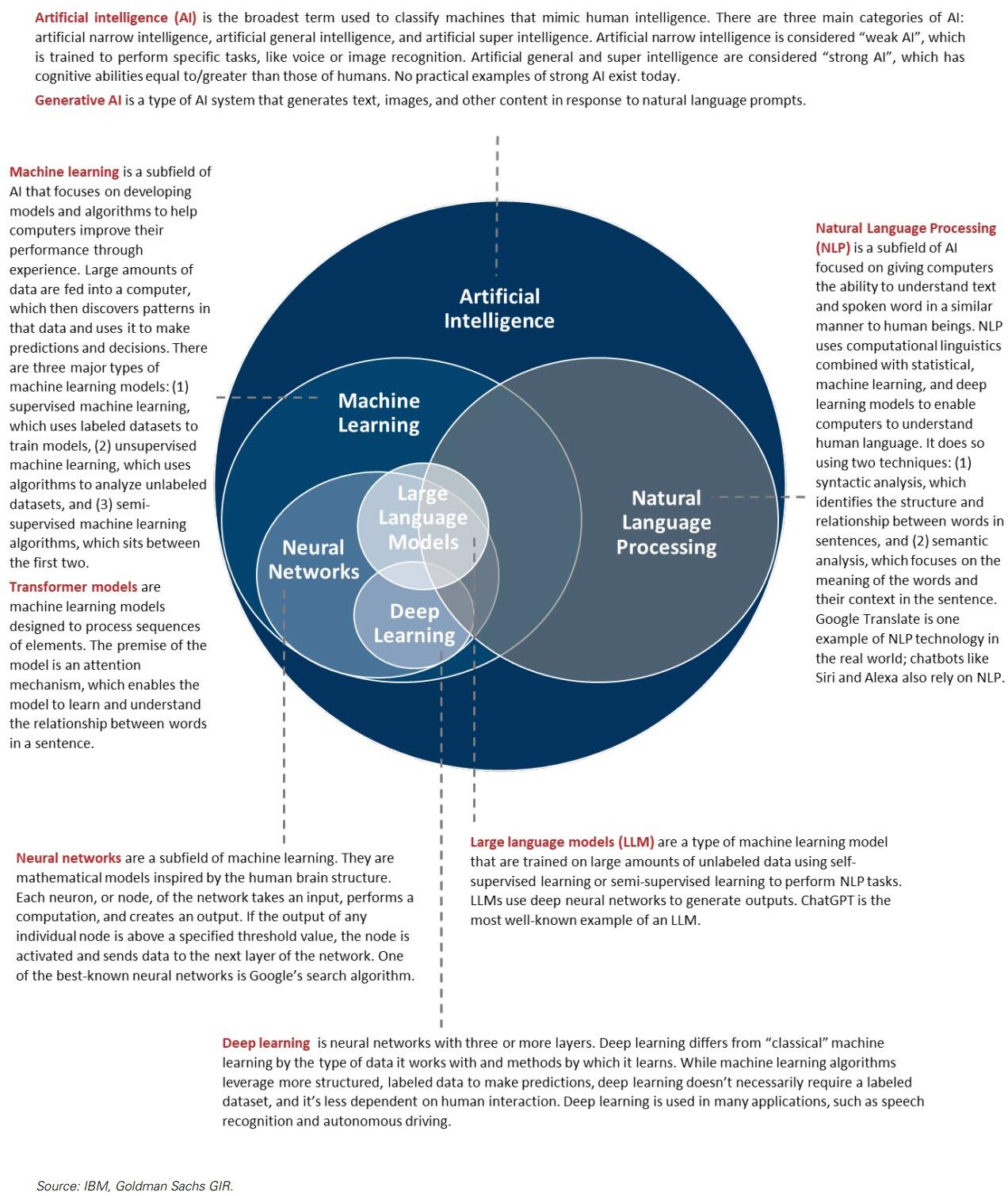
Artificial intelligence (AI) is the science of creating intelligent machines. AI is a broad concept that encompasses several different subfields, including machine learning, natural language processing, neural networks, and deep learning.

So, is the hype around generative AI overblown?

Marcus responds like any good academic - "Yes and no."

Generative AI tools are no doubt materially impacting our lives right now, both positively and negatively.

They’re generating some quality content, but also misinformation, which, for example, could have significant adverse consequences for the 2024 US presidential election.

But the intelligence of AI systems is being overhyped.

A few weeks ago, it was claimed that OpenAI’s GPT-4 large language model (LLM) passed the undergraduate exams in engineering and computer science at MIT, which stirred up a lot of excitement. But it turned out that the methodology was flawed, and in fact my long-time collaborator Ernie Davis pointed that out around a year ago, yet people still proceeded to use it.

We are nowhere near achieving artificial general intelligence (AGI). Those who believe AGI is imminent are almost certainly wrong.

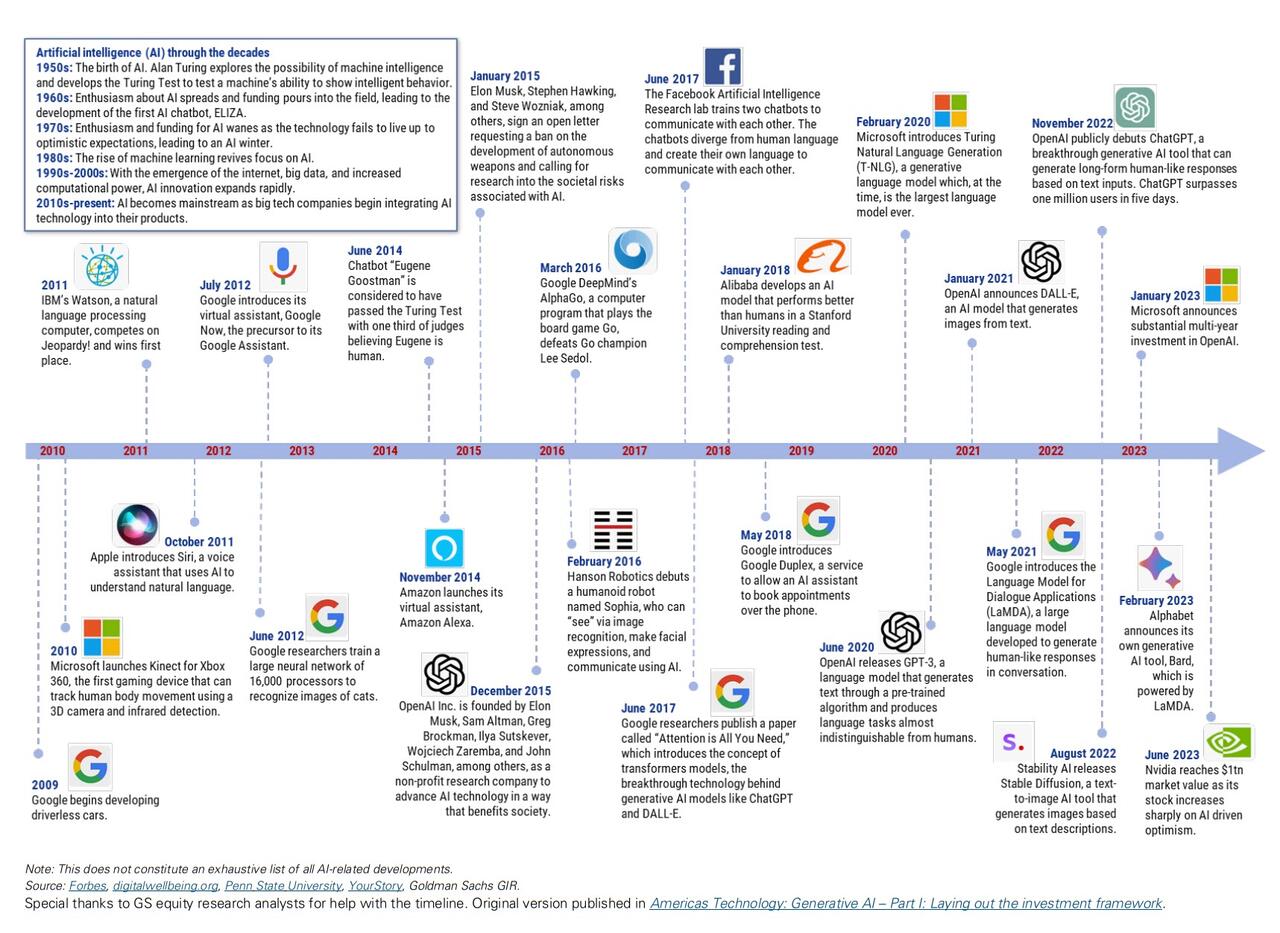
Here's how we got here...

Finally, Marcus explains that his biggest concern is that we’re giving an enormous amount of power and authority to the small number of companies that currently control AI systems, and in subtle ways that we may not even be aware of.

The data on which LLMs are trained can have bias effects on the model output, which is disquieting given that these systems are starting to shape our beliefs. Another concern is around the truthfulness of AI systems - as mentioned, they’ve been known to hallucinate.

Bad actors can use these systems for deliberate abuse, from spreading harmful medical misinformation to disrupting elections, which could gravely threaten society.

Be wary of the hype, Marcus concludes, AI is not yet as magical as many people think.

I wouldn’t go so far as to say that it’s too early to invest in AI; some investments in companies with smart founding teams that have a good understanding of product market fit will likely succeed. But there will be a lot of losers. So, investors need to do their homework and perform careful due diligence on any potential investment. It’s easy for a company to claim that they’re an AI company, but do they have a moat around them? Do they have a technical or data advantage that makes them likely to succeed? Those are important questions for investors to be asking.

https://www.zerohedge.com/technology/ai-being-over-hyped-those-who-believe-artificial-general-intelligence-imminent-are