Search This Blog

Thursday, August 10, 2023

'Not The Scandal You're Looking For': How DC Is Attempting To Dismiss $20 M As An Illusion

 by Jonathan Turley,

I previously wrote a column marveling at the success of the Bidens in pulling off one of the neatest tricks in political history. I analogized it to how Houdini used to make his 10,000-pound elephant Jennie disappear on a stage in front of a live audience. The media and political establishment is now striving to top that performance by declaring $20 million in payments to Biden family members as an “illusion” of influence. At the heart of this scandal is the BFF, the Biden Family Fund.

Here is the column:

This week, President Joe Biden responded to calls for greater access to the media with a blockbuster interview with . . . the Weather Channel.

The interview immediately prompted critics to speculate that the president wanted to continue to talk about the weather - the same claim made after the disclosure of his participation in various dinners with his son’s foreign associates.

As the number of these dinners, meetings and outings increase, Joe Biden appears to have covered more meteorological subjects than Al Roker.

The problem is that conditions are worsening in Washington.

This week, House Oversight Committee Chairman James Comer released a third report on the ongoing investigations into the Biden corruption scandal.

The latest bank records indicate the Biden family has received more than $20 million, including from corrupt Kazakh figures.

Some of this money provided Hunter Biden with extravagant toys. On April 22, 2014, Kazakh oligarch Kenes Rakishev wired $142,300 to the Rosemont Seneca Bohai bank account.

That account then shows the exact same amount being wired to a New Jersey car dealership for a Fisker sports car for Hunter.

Finding the Fisker unsuitable, Hunter traded it in for a Porsche.

Notably, these payments often coincided with dinners and meetings with Joe Biden.

Russian oligarch Yelena Baturina, the widow of Moscow ex-Mayor Yury Luzhkov, wired $3.5 million to Rosemont Seneca Thornton Feb. 14, 2014.

She later attended a dinner with Joe and Hunter Biden at Washington, DC, hotspot CafĂ© Milano.

For weeks, Joe Biden’s prior claims have been collapsing as his allies in the media and Congress struggle for an alternative spin on these new disclosures.

The president’s denials of any knowledge of his son’s foreign dealings finally have been exposed as a lie.

Even the Washington Post has acknowledged Biden lied when he insisted that Hunter never made any money in China.

It was always a boldfaced falsehood (and a confusing claim from a man who insisted that he had no knowledge of his son’s foreign dealings).

But the testimony of associate Devon Archer and new bank records forced the paper and others to recognize the falsehood.

There is also the confirmation that Biden’s long denials that he attended key dinners with Hunter’s business associates were false.

Most notably, the media are grudgingly admitting that Hunter was openly selling influence peddling and access to his father as part of what Archer called “selling the brand.”

The final line of defense is now that Hunter Biden was selling access to Joe Biden but it was an “illusion.” The reason, they claim, is there is no evidence of direct payments to Joe and Jill Biden.

There is, of course, nothing “illusionary” about tens of millions moving to Hunter and other family members.

But political spins are often built on illusions. The latest is that Joe Biden only benefits from these payments if they were directly deposited in his accounts.

For a family that Hunter explained was “the best” at this type of dealingit is absurd to expect a deposit slip from a corrupt Ukrainian official to the account of Joe and Jill Biden, one of the most vulnerable accounts in the world to review and monitoring.

These claims, moreover, ignore emails discussing Hunter’s and his father’s use of joint accounts to pay for expenses, including how one account was used to pay Joe’s taxes. There is also Hunter’s complaint that he was using half of his earnings to support his father. Indeed, one trusted FBI informant said that, in planning a bribe, one foreign figure was told to avoid direct payments to Joe Biden. Today, that is as amateurish as an envelope of cash and the Bidens have been in the business of influence peddling for decades.

Responding to the new evidence, Washington Post columnist Phillip Bump led the charge in asking: Where’s the bribe?

In other words, as long as Hunter got the luxury car, Joe didn’t benefit or receive a bribe.

(Notably, Bump did not have the same high standards when he pushed the false claim over a photo op in Lafayette Park and later refused to concede with the rest of the media on the lack of Russian collusion with Donald Trump.)

Not even millions to Biden children and grandchildren would seem to satisfy Bump as an inducement for the then-vice president.

Yet the greatest illusion is the claim Joe Biden would only be motivated by a direct payment to one of his accounts.

Biden clearly benefited from millions going to the Biden Family Fund (BFF). Even grandchildren received some of the transfers funneled through a labyrinth of accounts.

Joe Biden is 80 years old. Despite holding only government jobs in his career, he is worth an estimated $8 million.

Forbes reported he earned $17.3 million over the four years he was out of office. He will never spend his fortune. Any additional money would have to pass to his descendants.

For most wealthy people in their final years, the challenge is not raising more money but getting that money to your children without heavy taxes or delays.

This money was going to his BFF. That is a benefit and probably of greater value to a man of Joe Biden’s age and wealth.

None of this has stopped politicians, press and pundits from insisting that absent a direct payment to the president’s account, there is no corruption or crime.

After all, $20 million going to a president’s family is like complaining about the weather in Washington.

https://www.zerohedge.com/political/not-scandal-youre-looking-how-washington-attempting-dismiss-20-million-illusion

'What Biden’s executive order means for U.S. investors in China'

 The Biden administration’s long-awaited executive order on U.S. investments in Chinese companies leaves open plenty of questions on how it will be implemented.

Its 45-day public comment period gives U.S. investors significant potential to influence any final regulation, analysts said.

“The executive order obviously gives an outline of what the program’s scope is going to be like,” said Brian P. Curran, a partner, global regulatory at law firm Hogan Lovells in Washington, D.C.

“It’s not even a proposed rule. It’s not a final rule.”

U.S. President Joe Biden on Wednesday signed an executive order aimed at restricting U.S. investments into Chinese semiconductor, quantum computing and artificial intelligence companies over national security concerns.

Treasury Secretary Janet Yellen is mostly responsible for determining the details. Her department has published a fact sheet and a lengthy “Advance Notice of Proposed Rulemaking” with specific questions it would like more information on.

Businesses can share information confidentially as needed, according to the advanced notice, which is set to be formally published on Monday. The notice said it is only a means for sharing the Treasury’s initial considerations, and will be followed by draft regulations.

“The final scope of the restriction, to be defined by the Treasury Department after public consultations, including with U.S. investors in China, will be critical for the enforcement of the order,” said Winston Ma, an adjunct professor at NYU Law and a former managing director of CIC.

So what’s banned?

This week’s announcements don’t explicitly prohibit U.S. investments into Chinese businesses, but the documents indicate what policymakers are focused on.

The U.S. transactions potentially covered include:

  • Acquisition of equity interests such as via mergers and acquisitions, private equity and venture capital;
  • Greenfield investment;
  • Joint ventures;
  • Certain debt financing transactions.

The forthcoming regulations are not set to take effect retroactively, the Treasury said. But the Treasury said it may request information about transactions completed or agreed to since the issuance of the executive order.

“We’ve been advising clients leading up to the issuance of the executive order, it does make sense to look at your exposure to the kinds of transactions that have the potential to be covered by the regime,” Curran said.

Any plans to invest in the sectors named in the public materials should come under additional consideration of the risks and how to manage them, he said.

Here are the sectors of concern:

Semiconductors — Treasury is considering a ban on tech that enables production or improvement of advanced integrated circuits; design, fabrication and packaging capabilities for advanced integrated circuits; and installation, or sale to third-party customers, of certain supercomputers.

Treasury is also considering a notification requirement for transactions involving the design, fabrication and packaging of other integrated circuits.

The U.S. government is concerned about tech that will “underpin military innovations,” the advance notice said.

Quantum computing — Treasury is considering a ban on transactions involving the production of quantum computers, sensors and systems.

However, the Treasury said it is considering not to require investors to notify it of transactions in this sector.

The U.S. government is concerned about quantum information technologies that could “compromise encryption and other cybersecurity controls and jeopardize military communications,” the notice said.

Artificial intelligence — Treasury is considering a ban on U.S. investments into the development of software using AI systems designed for exclusive military, government intelligence or mass-surveillance use.

The Treasury said it may also require U.S. persons to notify it if undertaking transactions involved with AI systems for cybersecurity applications, digital forensics tools, control of robotic systems and facial recognition, among others.

However, the Treasury said its intent is not to touch entities that develop AI systems only for consumer applications and other uses that don’t have national security consequences.

What’s allowed

The Treasury said it expects to exclude certain investments into publicly-traded securities or exchange-traded funds.

The following transactions are not set to be included by forthcoming regulation:

  • University-to-university research collaborations
  • Contracts to buy raw materials
  • Intellectual property licensing
  • Bank lending and payment processing
  • Underwriting
  • Debt rating
  • Prime brokerage
  • Global custody
  • Stock research

What’s next

The Treasury is asking for written comments on its advanced notice by Sept. 28.

The notice includes wide-ranging requests for data into investment trends. It also asked questions about effective threshold requirements and definitions, and details about the resulting burdens for U.S. investors: “If such limitations existed or were required, how might investment firms change how they raise capital from U.S. investors, if at all?”

Among the many other questions, the Treasury is asking for areas within the three overarching categories where U.S. investments into Chinese entities would “provide a strategic benefit to the United States, such that continuing such investment would benefit, and not impair, U.S. national security.”

“There is a lot of opportunity for the public’s comment for what should be covered what should not be covered,” said Anne Salladin, a partner, global regulatory, at Hogan Lovells. “It strikes me as an extraordinarily good opportunity for clients to weigh in on that front.”

“This has been under consideration by the administration for a couple of years now,” she said. “One of the things that’s important is to take [the regulatory process] at a slow speed to understand what the ramifications are for U.S. businesses.”

Given the lengthy process, forthcoming regulations aren’t expected to take effect until next year.

However, the niche industry of China-based venture capitalists — which raise funds from U.S. investors to invest in Chinese start-ups, many tech-focused — is already struggling.

Fewer than 300 unique U.S.-based investors have participated in China-based VC deals since 2016 each year, with just 64 participants so far this year, according to Pitchbook.

China VC deal activity in the second quarter continued a recent decline, to the lowest since the first quarter of 2017, according to Pitchbook.

The data showed China VC deal activity with U.S.-only investor participation in artificial intelligence has fallen since the first quarter of 2022. Pitchbook recorded barely any such deals in quantum computing since 2021, while semiconductors saw moderate activity through the first half of this year.

The industry and political developments also mark a shift in the overall risk environment.

“The kind of law that Biden’s [planning], it’s small but it’s important because once the state starts to meddle with these things it creates more dramatic possibilities,” said Jonathan Levy, a University of Chicago economic history professor and author of “Ages of American Capitalism: A History of the United States.”

While he said he doesn’t have any sources within the Biden administration, Levy said the latest developments signal to him that the U.S. government doesn’t want the new economic relationship with China “to consist of U.S. investment funds investing in Chinese high tech because we think high tech is kind of a strategic interest.”

“I also think more fundamentally, I don’t know what kind of relationship they have in mind, [but] there’s going to be a new order. We want to shape to some degree what that [order] looks like.”

https://www.cnbc.com/2023/08/11/what-bidens-executive-order-means-for-us-investors-in-china-.html

It Was Pelosi: Former Capitol Police Chief Reveals 'Set Up' Behind January 6

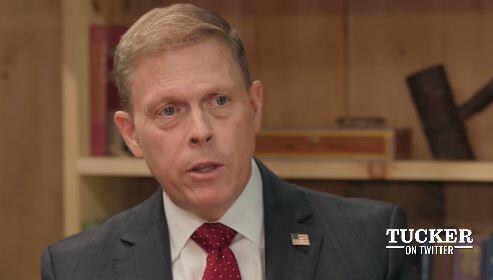
 Tucker Carlson released a bombshell interview with former Capitol Police Chief Steven Sund on Wednesday, during which Sund explains what happened on January 6, 2021 in great detail.

Carlson and Sund had notably recorded an entire interview on Fox News, which never aired.

Perhaps most damning is Sund's claim that then-House Speaker Nancy Pelosi (D-CA) refused to authorize the deployment of the National Guard at the Capitol despite Sund's pleas, and that federal agencies withheld information and warning signs of potential dangers prior to the riot.

"It doesn’t seem like people really want to get to the bottom of it," said Sund, adding "It really doesn’t. And it just gets worse. It gets worse from there."

Sund got approval to bring in the National Guard at 2:09 p.m. Before his approval, he alleged that he begged several generals, including General Michael Flynn, to bring the National Guard. The officials told Sund they did “not like the optics of the National Guard” as he allegedly begged for their assistance to intervene in the violence. -Daily Caller

"This sounds like a set up to me," Carlson said, adding "I'm sorry, it does."

To which Sund replied:

"It gets better. So I beg and beg and he goes ‘well, I’m gonna walk down the hall and we’ll talk to the Secretary of Defense or whoever he’s gonna talk to. Right then I get a notification, oh, I’m still on the call, we have the shooting of Ashli Babbitt. And I said we have shots firing, I still remember yelling over the phone. We have shots firing on the U.S. Capitol, is that urgent enough for you now?"

According to Sund, the National Guard didn't show up until 6 p.m., hours after the fatal shooting of Babbitt. He also claimed that the Pentagon deployed resources to the homes of generals, but not the Capitol.

Watch:

Probing link between 'deprogrammed' regulatory T cells and cardiovascular disease

 Scientists can finally hunt down a harmful kind of human T cell, thanks to new research led by scientists at La Jolla Institute for Immunology (LJI) and the Medical College of Georgia (MCG) at Augusta University.

Immune cells called ex-T regulatory cells (exTregs) tend to be rare in the body, and so far, impossible to detect in human samples. The new study gives scientists a reliable way to find human exTregs and provides a window into how exTregs contribute to inflammation and cardiovascular disease.

The researchers used fluorescent tags to track down exTregs in mice prone to atherosclerosis. They then identified specific markers that made these exTregs special. They transposed these findings to humans to detect exTregs in human blood.

"These cells are likely causing damage," says LJI Postdoctoral Researcher Payel Roy, Ph.D., co-first author of the new Nature Immunology study. "Now we have the potential to use these biomarkers and screen for these cells in human blood."

"Identifying exTregs in humans opens up more opportunities for research since patient material—like blood samples—are readily available," adds study senior author Klaus Ley, M.D., co-director of MCG's Immunology Center of Georgia.

Crazy ex-T regulatory cells

T cells do many jobs in the body. Some T cells have the job of alerting other  to danger or destroying infected host cells. These T cells are the fighters, the offensive lineup. T  (Tregs) have the important job of stopping the other T cells from releasing too many inflammatory, or cytotoxic, molecules as they fight infection. The Tregs are like the referees.

In previous studies, Ley and his LJI colleagues found that some T cells contribute to atherosclerosis by attacking a molecule called apolipoprotein B (APOB), the main component in the "bad" cholesterol that builds up into dangerous plaques in the arteries. These T cells ramp up their attacks as atherosclerosis worsens, likely adding to inflammation in the arteries. The strange thing is that these T cells look a lot like the normally helpful Tregs.

The new study reveals the true identities of these cells: They are exTregs. ExTregs are like zombie Tregs. They've gone through a genetic "deprogramming" and lost their ability to help regulate inflammation.

Scientists don't know exactly why exTregs develop, but the phenomenon may happen when the body misses the mark in an attempt to adapt to chronic disease.

"When you have too much chronic inflammation, say, for example, in heart disease, your body is highly stimulated and may be rewired to address the situation," says LJI Postdoctoral Researcher Antoine Freuchet, Ph.D., who served as co-first author of the new study. "Because of that, this kind of Tregs, whose purpose was to keep the bad guys in check, turn bad themselves. Instead of controlling the inflammatory guys, they acquire inflammatory properties."

Red cell, green cell

The new study had to begin in mice. "ExTregs have been identified in mice for a long time, but there were no tools to find them in people," says Ley. "In mice, you can use genetic manipulation to label cells, but you cannot do that in people."

For the study, the researchers tagged both Tregs and harmful exTregs in a mouse model prone to atherosclerosis. These fluorescent red and green tags glowed when Tregs were functioning normally. A switch from green and red to only red revealed exTreg development in real time.

The team then took organ samples from the mice and used a technique called  to detect the green and red tags to sort the Tregs from the exTregs. The researchers used techniques called bulk RNA sequencing to learn more about these cells.

The sequencing highlighted vast differences in gene expression and showed that exTregs make a distinct set of genes that sets them apart from Tregs. At last, the scientist could detect specific exTreg markers.

Detecting exTregs in humans

Next, the researchers used the exTreg markers found in mice to transpose them to a single cell RNA sequencing performed on human blood samples. Through this process, they successfully identified biomarkers for human exTregs. They studied  samples provided by researchers at the University of Virginia and by LJI's John and Susan Major Center for Clinical Investigation.

The researchers were thrilled to find that the exTreg biomarkers they'd seen in mouse samples were also relevant for human exTregs. They discovered that exTregs from humans with atherosclerosis are potentially more potent.

"Now that we can detect exTregs in the blood, we can fish them out specifically and know who they are—know their molecular fingerprints," says Roy.

Going forward, the researchers hope to use exTreg biomarkers to detect and study the roles of these  in other chronic health conditions, such as in patients with autoimmune diseases. Roy and Freuchet are also interested in studying samples from the same individual patients taken over time. How might exTreg biomarkers change as atherosclerosis changes? Would they see decreased signs of exTregs if a patient was put on an effective medication?

"This could be a powerful tool for future studies," says Freuchet.

Additional authors of the study include Sujit Silas Armstrong, Mohammad Oliaeimotlagh, Sunil Kumar, Marco Orecchioni, Amal J Ali, Amir Khan, Jeffrey Makings, Qingkang Lyu, Holger Winkels, Erpei Wang, Christopher Durant, Yanal Ghosheh, Rishab Gulati, and Felix Nettersheim.

More information: Antoine Freuchet et al, Identification of human exTreg cells as CD16+CD56+ cytotoxic CD4+ T cells, Nature Immunology (2023). DOI: 10.1038/s41590-023-01589-9


https://medicalxpress.com/news/2023-08-scientists-link-deprogrammed-regulatory-cells.html

Changes in brain immune cells linked to Alzheimer's

 Immune cells in the brains of people who had Alzheimer's disease appear to behave differently than those who had healthy brains for their age, according to an analysis of the cells' gene activity.

The finding suggests it might be possible to treat Alzheimer's  by altering the behavior of these , said Katherine Prater, an expert in neuroinflammation and an acting instructor in neurology at the University of Washington School of Medicine.

"If we can determine what they are doing, we might be able to change their behavior with treatments that might prevent or slow this disease," she said.

Prater and collaborators at the UW Medicine, Fred Hutchinson Cancer Center, Arizona State University and University of North Carolina at Chapel Hill reported their findings May 29 in the journal Nature Aging.

In the study, the researchers looked at  called , which play a variety of essential roles in the :

  • They promote  and learning by stimulating new connections between  and pruning connections we no longer need.
  • They perform routine housekeeping chores such as clearing away  and unwanted debris.
  • They protect the brain from infection by engulfing microbes and releasing chemical signals that help orchestrate the body's immune response.

Their role in Alzheimer's disease, however, is less clear. For example, they appear to protect the brain by clearing out amyloid deposits, the toxic protein clumps that form in the brains of people with the disease, but they may also contribute to an inflammatory process seen in Alzheimer's that leads to the death of brain cells.

To better understand what these cells do, the researchers examined which  were active in microglia taken from the brains of people who had Alzheimer's and from those who did not. Because genes control a cell's behavior, knowing which ones are active can help reveal what a cell is likely doing.

To identify which genes were active, the scientists took advantage of the fact that when a gene is activated, the instructions encoded in its DNA sequence are copied, or transcribed, into a related molecule called RNA. Therefore, by sequencing the RNA in a cell's nucleus, using a technique called single-nucleus RNA sequencing, it is possible to know which genes are active in different cells.

In their study, the researchers studied microglia from the brains of 12 people who died with Alzheimer's and 10 who did not have this disease. They found that populations of microglia in both sets of brains were diverse, with the populations falling into 10 subpopulations, each of which—-based on —likely exhibit different characteristics and behaviors.

Although the microglia populations were similar in both sets of brains, the mix was different, with some populations being more prevalent in the brains affected by Alzheimer's.

The differences could be attributed to the cells' contributing to the destruction of brain cells seen with Alzheimer's, or they could result from the destruction caused by the disease, Prater said.

"At this point, we can't say whether the microglia are causing the pathology or whether the pathology is causing these microglia to alter their behavior," she said.

Among the populations that were more prevalent in the brains affected by Alzheimer's were cells that appear to be in a pre-inflammatory state. Those cells may have an impaired ability to perform the housecleaning tasks microglia typically do. There were also fewer protective cells that are thought to promote healthy aging.

"Now that we have determined the genetic profiles of these microglia, we can try to find out exactly what they are doing and hopefully identify ways to change their behaviors that may be contributing to Alzheimer's disease," Prater said.

The authors expressed gratitude to the brain donors and their families for contributing to this research. The authors also noted contributions from UW Precision Neuropathology Core and Aimee Schantz and Erica Melief from the Keene Lab in Laboratory Medicine and Pathology at UW Medicine.

This work was facilitated by the advanced computational, storage and networking infrastructure provided by the Hyak supercomputer system at the University of Washington and the Hyak team.

More information: Katherine E. Prater et al, Human microglia show unique transcriptional changes in Alzheimer's disease, Nature Aging (2023). DOI: 10.1038/s43587-023-00424-y


https://medicalxpress.com/news/2023-08-links-brain-immune-cells-alzheimer.html

OptiNose ups revenue forecast

 On August 10, 2023, OptiNose, Inc. projected that their net revenues for FY23 XHANCE would range between $64M-$70M, surpassing their previous estimate of $62M-$68M. Moreover, they anticipate the average net revenue per prescription for XHANCE in the full year of 2023 to be approximately $200.

During the first quarter of 2023, OptiNose recorded $11.8 million in net revenue from XHANCE, which represented a decline compared to the same period in 2022. However, in the second quarter of 2023, OptiNose announced a preliminary figure of $19.5 million in net revenue for XHANCE.

https://beststocks.com/optinose-inc-expects-increased-net-revenues-f/

Seattle Mayor's Office Demanded Fewer 'Officers Who Are White' For New Police Hires

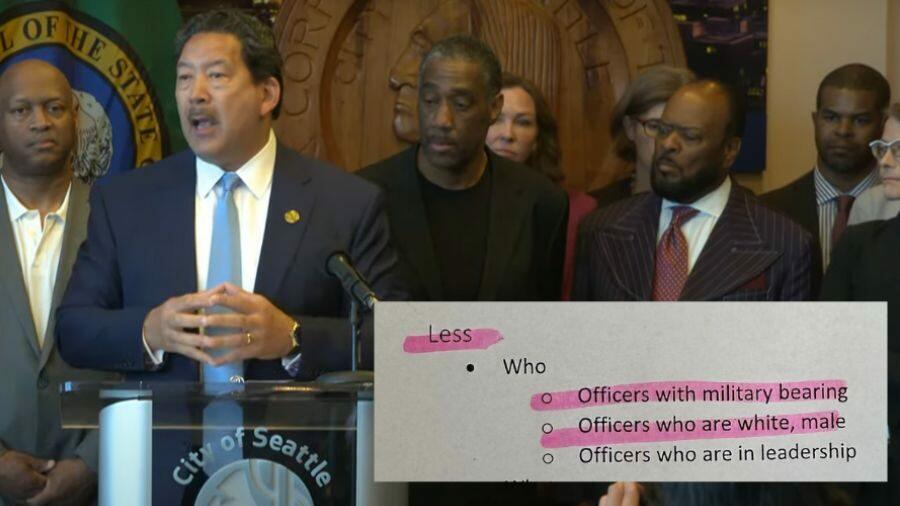
 Seattle Mayor Bruce Harnell's office demanded that the Seattle Police Department (SPD) hire fewer white men and those with "military bearing," according to a memo obtained by the Jason Rantz Show.

While the Mayor's office initially refused to turn over the document through a public disclosure request, it was provided to Rantz by a confidential source.