Search This Blog

Tuesday, August 29, 2023

Harris slip-up reveals how Bidenomics hurting American families

 In the midst of President Biden’s campaign to sell "Bidenomics" to American voters, Vice President Kamala Harris made a curious admission. Speaking about the costs of getting an abortion (so not Bidenomics), she stated that "[m]ost Americans are a $400 unexpected expense away from bankruptcy."

Of course, as with most dramatic White House economic claims, it wasn’t exactly true. But you have to give her credit for raising a counter-narrative the Biden administration is otherwise choosing to ignore. 

The fact is that American families are in trouble, deep trouble, and it’s far more significant than any Bidenomics spin can conceal. 

Harris’s point comes from a recent Morning Consult survey which found that in the third quarter of this year only 46% of Americans could cover a $400 unexpected expense without going into debt. That’s not the same as being $400 away from bankruptcy, but it’s still really bad. It shows how expenses as commonplace as a surprise car repair or a medical bill are forcing many American families into debt – at a time when interest rates are disturbingly high.

It also raises a very disconcerting question: Is this the new Bidenomics normal? Let’s look at the data. 

The Lending Club’s Paycheck-to-Paycheck Report for June confirms the Morning Consult survey. It found that a majority of Americans (54%) were living paycheck to paycheck. That includes 53% of consumers who earn $50,000 to $100,000 per year. So, this problem extends well beyond lower-income families, although it certainly hits you harder the less you have.

But what about personal savings? American received a lot of cash from the government during the pandemic. In fact, when Biden took office, Americans had $2.3 trillion in personal savings. That number shot up to $5.7 trillion following Biden’s March 2021 ironically named "American Rescue Plan." 

But by June of this year, a mere 27 months later, personal saving had dropped by nearly $5 trillion to a much diminished $862 billion. 

Again, it isn’t just lower-income Americans who have watched their savings diminish. According to a Bloomberg analysis, the average middle-class household has lost over $33,000 in real wealth in just the past year.

The situation is so bad that Americans are even draining their 401(k) plans to cover expenses. According to Bank of America’s analysis of its clients’ employee benefits programs (with a total of over 4 million plan participants), 36% more people drained their retirement accounts to make ends meets in the second quarter of 2023 as compared to the same period last year.

So, where did all that money go? Well, you may have noticed that Bidenomics-induced inflation has driven the cost of living up – a lot. Let’s look at it in dollar terms, which is how most Americans experience inflation. 

The Bureau of Labor Statistic publishes the Consumer Price Index (CPI) each month, a common measure of inflation. CPI takes a basket of commonly purchased goods and services and prices them on a monthly basis. In January 2021, when Biden took office, that basket cost about $261.50. In July of this year, the same basket cost $305.70. That’s a huge 16.9% increase in only two and a half years. It’s also larger than the CPI increase for any full four-year presidential term since the 1980s, and Bidenomics has 16 months to go. 

Exacerbating the problem, wage growth has failed to keep pace with inflation – increasing only 13% since Biden took office (versus nearly 17% for inflation). When you’re living paycheck to paycheck, as most Americans are, that kind of disparity hurts. 

So, with savings increasingly depleted and wages failing to keep up with increased living expenses, many Americans are resorting to their credit cards in an effort to make ends meet. According to the Federal Reserve Bank of New York, in the second quarter of this year, credit card debt rose to $1 trillion – the highest number ever. 

And that amount of credit card debt is a huge problem with 51% of Americans unable to pay off their entire balance each month – so they let it revolve to the next month at an average budget killing interest rate of nearly 15%, according to JD Powers’ recent Annual Credit Card Satisfaction Survey. Perhaps more disconcerting, Wallet Hub reports that the current average credit card interest rate is slightly over 22%. Either rate would be devastating for already stretched family budgets. 

Bottom line: When you read that "Bidenomics is working," know that it’s not. Claims to the contrary are simply untrue. In reality, a majority of Americans are unable to cover a common but unexpected $400 expense because their cost of living is way up and real wage growth has failed to keep pace. So, they are draining their savings and retirement accounts and maxing out their credit cards despite crippling interest rates. 

This is Bidenomics in a nutshell, and it will be the new normal – unless we make a change next November. 

The Hidden Racial Bias In K-12 Education

 by Patrick Hughes via RealClear Wire,

The Supreme Court might have ended race-based affirmative action in higher education, but as students return to the classroom this fall, the next frontier in the debate over discrimination in education and at work is already at our doorstep in K-12 public schools.

In his majority opinion in Students for Fair Admissions v. Harvard, Chief Justice Roberts wrote, “Eliminating racial discrimination means eliminating all of it.” The only way to achieve that constitutional imperative is for public school boards and superintendents to take a close look at the way they staff America’s K-12 classrooms.

A new report from the National Opportunity Project identifies widespread discrimination in public school employment practices. After reviewing responses to a litany of public records requests, evaluating job posts, and examining hiring criteria, the National Opportunity Project found that school districts are using divisive social and political ideologies, and in some instances race, to drive hiring decisions.

The biased K-12 hiring practices often stem from the en vogue “diversity, equity, and inclusion,” or DEI, initiatives that have been adopted by school boards and administrators in recent years. Once thought to be prevalent only in higher education, research by the National Opportunity Project demonstrates the trickle-down effect of discriminatory higher education practices; they eventually are adopted by K-12 public schools.

Many school districts fail to prioritize candidates’ educational and professional qualifications, and instead focus on applicants’ answers to questions about poorly-defined political causes such as “social justice” and “equity.” For example, in suburban Chicago, Evanston Township High School requires that “applicants must demonstrate a commitment to social justice, equity, excellence and high expectations for all students.”

In Fairfax County Public Schools in Virginia, teacher candidates are asked, “What does equity mean to you? How do you plan to keep equity at the center of your classroom?” Responses that show strong agreement with DEI concepts like “equity journey,” “equity work,” and “understand that race is a social construct” are rated more highly on a scoring rubric. This is just a small deviation from the race-based numerical rating system that was outlawed by the Supreme Court more than 20 years ago in Gratz v. Bollinger.

Hiring committees are also instructed to assemble teaching staff that reflect certain politics, social ideologies, and racial backgrounds. City Schools of Decatur in Georgia directs school leaders to staff hiring teams for racial and gender equity by “ensur[ing] that there is at least one person of color and one woman or gender-fluid individual on the interview panel. Individuals who embody other aspects of diversity should be included as well.”

The practical effect of these policies is that teachers in many of America’s K-12 schools are not being selected based on their teaching ability or experience connecting with our country’s youngest and most vulnerable. Instead, we’re selecting teachers based on subjective, quasi-political, and sometimes illegal criteria that have nothing to do with reading, writing, and math. Plus, these types of hiring practices stifle true diversity and result in a homogenous teaching staff educating from only one ideological perspective.

America is the land of opportunity, a place where free speech and free thought are to be protected and encouraged. No matter your political stripes, we all should find these hiring practices alarming and at odds with our fundamental values.

What’s more, as the Supreme Court recently reminded us, straightforward racial discrimination is unconstitutional. And trying to smuggle such discrimination through code words like “equity” is still problematic. As the Supreme Court has stated, “What cannot be done directly cannot be done indirectly. The Constitution deals with substance, not shadows.”

It’s past time to address these discriminatory hiring practices in K-12 schools. The college students fighting to end affirmative action wanted all students to be seen for who they are beyond their demographics. In the same vein, what makes good teachers must be determined by examining their qualifications, their track records, their education, and their commitment to achieving the best outcomes for their students. Teacher applicants should not—and considering recent Supreme Court precedent, cannot—be judged, ranked, or hired based on their race, gender, creed, or political views.

Patrick Hughes is founder and president of the National Opportunity Project, a nonprofit government watchdog and education organization.

First COVID Deaths Were Fully Jabbed, Australian State Records Reveal

 by Jessie Zhang via The Epoch Times (emphasis ours),

In light of a court case launched by a group of doctors challenging the Queensland government's COVID-19 vaccination mandates, records have revealed that the first deaths in the Australian state were individuals who were fully vaccinated.

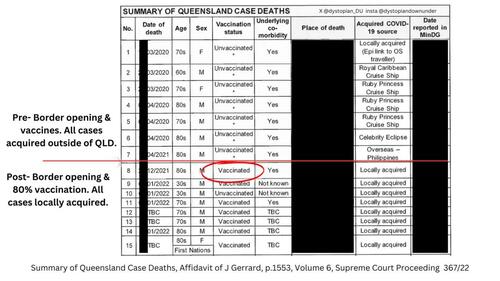
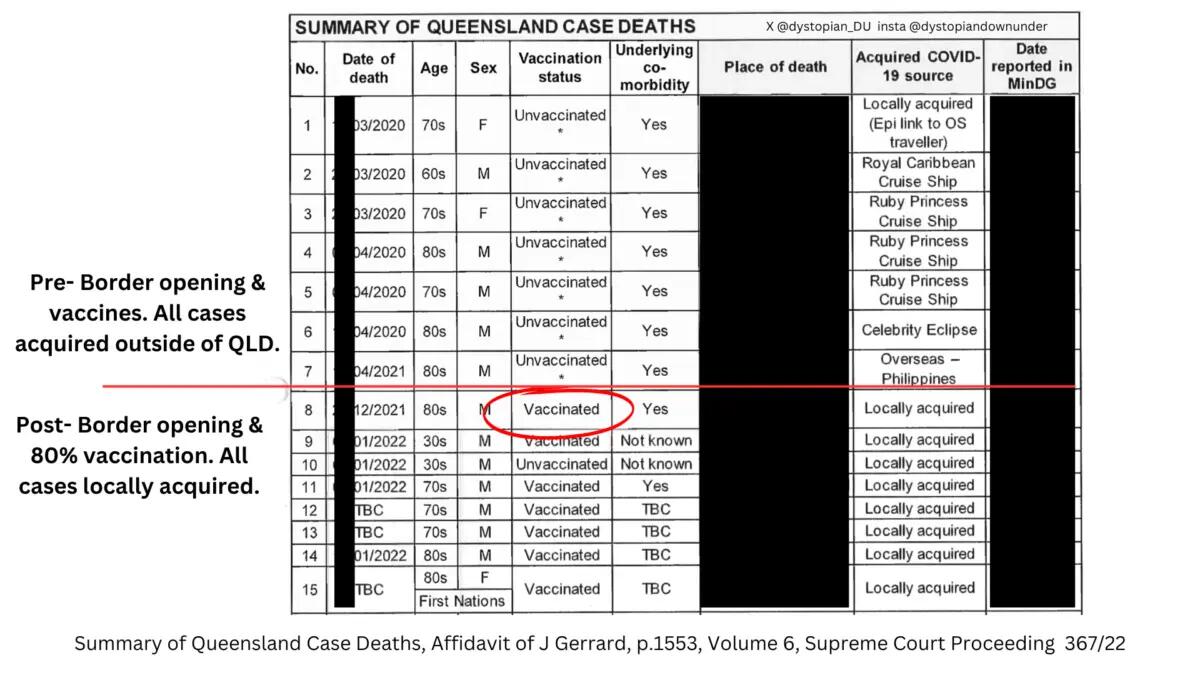
A list of the state’s first 183 COVID-19 deaths from the pandemic's start on March 13, 2020, until Jan. 27, 2022, produced by Queensland’s chief health officer in an affidavit, indicates it was known to authorities as early as Jan. 2022 that the vaccines may not be preventing deaths.

The list shows that the first locally acquired COVID-19 death was one in their 80s and another in their 30s, with both having received two doses of the vaccine in December 2021 and January 2022, respectively.

While Queensland recorded seven deaths early in the pandemic, these cases were acquired outside of the state and before vaccine rollouts began.

Queensland's border opened in December 2021 after 80 percent of the state population vaccination was reached. By Dec. 31, 2021, nearly 90 percent of the population over 16 were fully vaccinated.

Summary of Queensland's first deaths after the vaccine rollouts. (Supplied byDystopian Down Under)

Queensland's Workplace Mandates

The case, which was launched against the state, calls for the September 2021 directive requiring employees in public health and aged-care facilities to be vaccinated against COVID-19 to be revoked.

A specialist from the case, psychiatrist Peter Parry, said that in the three decades of his career, he had never been subject to disciplinary action until now.

“I graduated from medical school 40 years ago and in all that time have never had a single complaint about me presented to a medical board or AHPRA,” he said.

The reason he chose to decline the COVID-19 vaccines was because these are “not normal vaccines.”

“We hope, by bringing evidentiary material and expert witness testimonies before the Supreme Court, that the Justices will look at the evidence and rule in our favour. If successful, large numbers of experienced nurses, allied health, and doctors will be able to return to assist an overstretched Queensland public health system,” he added.

In addition to enforced work mandates, Premier Annastacia Palazczuk barred the unvaccinated from accessing services and freedoms such as hospitals, disability services, aged care, libraries, and hospitality venues.

This was enforced by proof of vaccination requirements at venues, which the Queensland government said was to keep Queenslanders safe.

Messaging Shifts to Reducing Severe Illness

Initially, in 2021, the Queensland Government closed the state's borders and encouraged people to get vaccinated against COVID-19. They aimed to reopen the borders once 80 percent of the population was vaccinated, with the goal of stopping the virus's spread and safeguarding vulnerable citizens.

However, when the borders reopened after reaching the target, COVID-19 cases surged instead of decreasing. When it became clear that the vaccines didn't entirely prevent infection or transmission, the focus of the messaging shifted to highlight the vaccines' effectiveness in reducing severe illness and death.

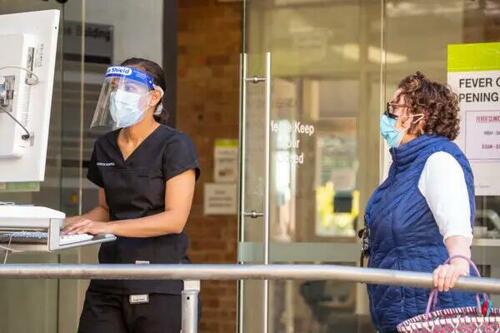
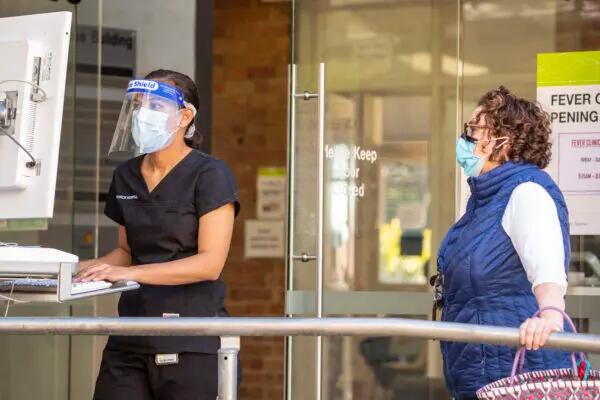
A nurse is seen working at a COVID-19 testing clinic at Ipswich Hospital in Brisbane, Australia. on Aug. 24, 2020. (Glenn Hunt/Getty Images)

It is still a condition today for most Queensland health staff to be vaccinated against COVID-19 to ensure the ongoing safety of employees, patients, visitors and the wider community.

The overwhelming benefits of COVID-19 vaccination continue to outweigh the potential risks, and this is substantiated by enormous amounts of safety data based on billions of doses worldwide,” a spokesperson for the TGA told The Epoch Times in an email.

Pfizer Dismisses Concerns Over Vaccine Mandates

The news of the deaths follows a parliamentary inquiry into the COVID-19 mandates heard from the Australian heads of Pfizer Australia that the vaccine mandates coerced Australians into getting vaccinated for COVID-19, saying they had a choice.

Appearing before an Australian senate inquiry into the COVID-19 vaccine mandates, Pfizer Country Medical Director Dr. Krishan Thiru and Dr. Brian Hewitt, the head of Regulatory Sciences for Pfizer, dismissed concerns of senators that Australians had been coerced into getting the COVID-19 vaccine.

"I believe firmly that nobody was forced to have a vaccine," Dr. Thiru said.

"Mandates for vaccine requirements are determined by governments and health authorities. I believe everybody was offered an opportunity to get a vaccine or not get a vaccine. I don't believe that anybody was forced to take a vaccine."

Meanwhile, Dr. Hewitt, when asked if he believed Australians in states that were subject to large-scale mandates—like Western Australia or Victoria—were not forced into getting the shot even when they found they were unable to earn a living without receiving a vaccination, replied he did not believe mandates compelled individuals into vaccinating.

"The mandates for vaccine requirements are determined by governments and health authorities. I don't believe that the mandates actually forced individuals to get vaccinations," he said.

Victoria Kelly-Clark contributed to this report.

https://www.zerohedge.com/covid-19/first-covid-deaths-were-fully-jabbed-australian-state-records-reveal

Study identifies geographic 'hot spots' for cigarette, firearm deaths in the US over two decades

 Study identifies geographic 'hot spots' for cigarette, firearm deaths in the US over two decades

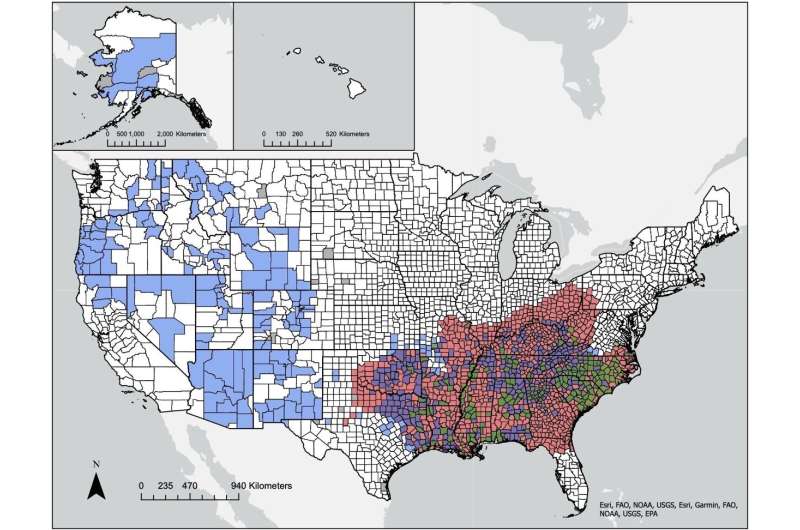
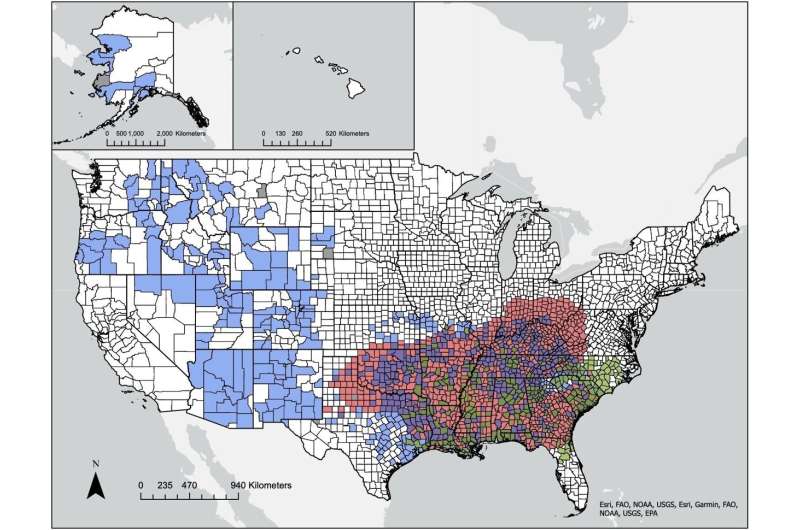
Hot spot analysis of age-adjusted mortality rates in the U.S. from smoking, firearm-related suicide and firearm-related assault from 1999 to 2005. Credit: Florida Atlantic University

Smoking and firearms are among the leading causes of avoidable premature death in the United States. In 2021, 480,000 deaths in the U.S. were attributable to tobacco and more than 40,000 to firearms—both are legal yet lethal.

A new study from Florida Atlantic University's Schmidt College of Medicine, and collaborators, now reveals geographically distinct areas of the highest  rates in the U.S. related to cigarettes as well as firearms, including both assault and suicide over two decades.

Results, published in Preventive Medicine, show all three measures—smoking, firearm-related assault and firearm-related suicide—clustered in the Southeastern U.S. with significantly higher rates compared to the U.S. overall.

From 1999 to 2019, firearm assault-related and suicide-related mortality increased 16 percent in the U.S. and 25 percent in the Southeast. For smoking-related mortality, rates have decreased significantly over the course of the last 20 years but "" of increased mortality persist in the Southeast, West and Alaska. Firearm mortality also had "hot spots" in the Southeast, West and Alaska.

States with hot spots of all three measures included Florida, Alabama, Georgia, South Carolina, North Carolina, Mississippi, Louisiana, Arkansas, Texas, Oklahoma, Missouri, Kentucky, Virginia and West Virginia. The largest number of overlapping counties were located in North Carolina and South Carolina. This contrasts with the Western U.S. where there was no overlap and hot spots were located solely for firearm-related suicide.

"These data are descriptive not  but may aid  and policy makers, especially in areas of highest risks," said Charles H. Hennekens, M.D., Dr.PH, senior author, first Sir Richard Doll Professor of Medicine, senior academic advisor to the dean, and interim chair, Department of Population Health and Social Medicine, in FAU's Schmidt College of Medicine, and an adjunct professor of family and  at Baylor College of Medicine.

Researchers used data from the U.S. Centers for Disease Control and Prevention Wide Ranging Online Data for Epidemiologic Research (WONDER) as well as the Multiple Cause of Death files. Using age-specific rates, they generated geospatial maps of hots spots across three time periods: 1999 to 2005; 2006 to 2012; and 2013 to 2019. Overlapping maps with all three exposures were generated for each of the three time periods displaying hot spots.

"Both smoking and firearm-related mortality rates remain higher in the Southeast compared to the entirety of the U.S. with the patterns largely unchanged over the two decades of observation," said Sarah A. Palumbo, M.D., first author, a recent M.D. graduate and a first-year resident in internal medicine in FAU's Schmidt College of Medicine.

Hot spots from 1999 to 2005:

  • Smoking-related deaths: 1,268 counties identified as hot spots primarily in the Southeast extending up to the Appalachian corridor. The county with the highest rates was in South Dakota.
  • Firearm-related deaths from assaults: 190 counties identified as hot spots within a single region in the Southeast. The county with the highest rates was in Louisiana. In Florida, two hot spots were in two northern counties.
  • Firearm-related deaths from suicide: 602 counties identified as hot spots primarily in the Southeast, the West and Alaska. The county with the highest rates was in Alaska.
Study identifies geographic 'hot spots' for cigarette, firearm deaths in the US over two decades
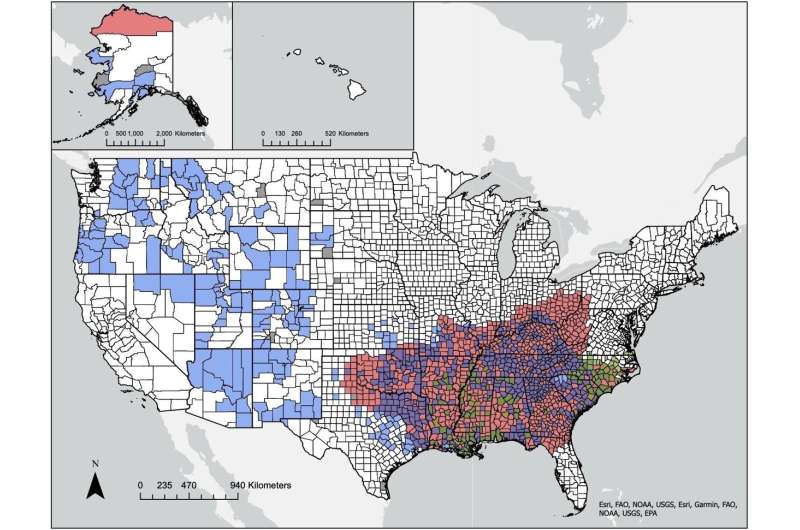
Hot spot analysis of age-adjusted mortality rates in the U.S. from smoking, firearm-related suicide and firearm-related assault from 2006 to 2012. Credit: Florida Atlantic University

Hot spots from 2006 to 2013:

  • Smoking-related deaths: 1,194 counties identified as hot spots primarily in the Southeast with minimal changes from 1999 to 2005. The county with the highest rates was in Kentucky.
  • Firearm-related deaths from assaults: 131 counties identified as hot spots predominantly in the Southeast, with minimal changes from 1999 to 2005. The county with the highest rates continued to be in Louisiana. The hot spot in the Southeast still excluded most of Florida.
  • Firearm-related deaths from suicide: 693 counties identified as hot spots, especially in the Southeast and the West with minimal changes from 1999 to 2005. The county with the highest rates was in Alaska.
Study identifies geographic 'hot spots' for cigarette, firearm deaths in the US over two decades
Hot spot analysis of age-adjusted mortality rates in the U.S. from smoking, firearm-related suicide and firearm-related assault from 2013 to 2019. Credit: Florida Atlantic University

Hot spots from 2013 to 2019:

  • Smoking-related deaths: 1,135 counties were identified as hot spots primarily in the Southeast with some southern expansion. The county with the highest rates was in South Dakota.
  • Firearm-related deaths from assaults: 254 counties identified as hot spots in the Southeast with some expansion of the region. The county with the highest rate was in Virginia. The hot spot in the Southeast expanded further south into Florida and further northwest.
  • Firearm-related deaths from suicide: 764 counties identified as hot spots with a major region still observed in the Southeast and minimal changes from 2006 to 2013. The county with the highest rates was in Alaska.

More information: Sarah A. Palumbo et al, Temporal trends and geographic variations in mortality rates from tobacco and firearms in the United States, Preventive Medicine (2023). DOI: 10.1016/j.ypmed.2023.107622


https://medicalxpress.com/news/2023-08-geographic-hot-cigarette-firearm-deaths.html

Researchers prep fentanyl, heroin vaccines for human trials

Researchers at the University of Montana and their partners are nearing human trials for vaccines to prevent fentanyl and heroin drug overdoses.The vaccines would protect people struggling with drug addiction or those at risk of accidental overdose. According to the National Institutes of Health, more than 106,000 U.S. drug overdose deaths were reported in 2021. Of those, 71,000 can be attributed to synthetic opioids like fentanyl.

Researcher Jay Evans directs the UM Center for Translational Medicine, which is working on the vaccines. He also is co-founder of Inimmune, the corporate partner charged with scaling up the vaccine components for manufacture. Inimmune is based in MonTEC, UM's Missoula-based business incubator.

"We anticipate testing our vaccines in humans in early 2024," Dr. Evans said. "The  will target heroin, followed shortly thereafter with a fentanyl vaccine in Phase I . Once we establish safety and early efficacy in these first clinical trials, we hope to advance a combined multivalent vaccine targeting both heroin and fentanyl."

He said the vaccines start with Dr. Marco Pravetoni, a professor of psychiatry and behavioral sciences at the University of Washington who directs the Center for Medication Development for Substance Use Disorders. His research team designs haptens and drug conjugate vaccines that can elicit the production of antibodies against target opioids.

Pravetoni has worked on vaccines against opioids for over a decade, bringing one candidate oxycodone vaccine to human testing in Phase I clinical trials with collaborator Dr. Sandra Comer of Columbia University.

"Our vaccines are designed to neutralize the target opioid, while sparing critical medications such as methadone, buprenorphine, naltrexone and naloxone, which are used in treatment of opioid addiction and reversal of overdose," he said.

The UM team contributes a patented adjuvant called INI-4001 to the vaccine cocktails. Adjuvants are substances that boost the effectiveness of vaccines.

"Our adjuvants improve the vaccine response, providing a stronger and more durable immunity," Evans said. "We have worked closely with researchers from Inimmune, the University of Minnesota, the University of Washington, Hennepin Healthcare Research Institute and Columbia University over the past few years to design and optimize anti-opioid vaccines for advancement to human clinical trials."

A few years ago, UM earned a contract to develop and advance two candidate anti-opioid vaccines through Phase 1 clinical trials.

The vaccines were tested with animal models to support their advancement to human clinical trials. Mice were tested at UM and rats and pigs at the University of Minnesota. Papers demonstrating how the TLR7/8 adjuvant increased the effectiveness of the fentanyl vaccine among animals were published recently in the journal npj Vaccines. Publications on the success of the heroin vaccine are forthcoming.

There are many moving pieces in , and Evans expects the heroin vaccine human trials to begin before the fentanyl, even though the fentanyl papers published first. The team expects to finalize their Investigational New Drug applications to the FDA later this year.

"The  will include a drug challenge to evaluate both safety and efficacy of the vaccines in early clinical development," he said. "We will also follow the patients to evaluate how long the antibodies against opioids will last."

The Phase 1 human trials will be conducted with Dr. Comer at Columbia University in New York City. Evans said it could take six months or longer to recruit and enroll the required subjects: people who are using fentanyl or heroin. According to DrugAbuse.com, the relapse rate for heroin and opioid users hovers around 90%. Evans said the vaccines could save lives and help people seeking treatment.

He said the Phase 1 trials involve gradual dose escalation.

"We start with the lowest dose—a dose that may not be effective," Evans said. "Phase I clinical trials are focused on safety. When the first dose cohort is complete, a data safety monitoring board reviews the data and approves testing at the next dose level if the vaccine is safe. The process takes time until you reach dose levels that are both safe and effective."

After that, Phase 2 human trials determine things like the number of doses needed to be effective and the amount of time required between doses. Phase 3 is the all-important efficacy study that involves many participants that the FDA uses to determine whether the benefits of the vaccine outweigh potential risks.

"It takes a long time—years—to get to a final approved product," Evans said. "Based on the efficacy data we see in our preclinical data and the established safety profile in animal models, we are very hopeful these vaccines will be successful. But there is still a lot of work to be done."

He said Inimmune and the University of Washington are working on the process development and scale-up manufacturing of "GMP"——to produce the volumes and quality of vaccine products necessary for Phase 1 .

In addition to the anti-opioid vaccines, the UM team is working on vaccines targeting SARS-CoV-2, the influenza virus, tuberculosis, monkeypox, pertussis, pseudomonas, Lyme disease, valley fever, malaria, E. coli, allergy and cancer.

"We expect to see other vaccine candidates advance to Phase I clinical trials in the coming years," Evans said. "Some are new vaccines, and others are improved versions of current vaccines with adjuvants added to increase vaccine safety, durability and efficacy in vulnerable populations."

Evans said UM students have become an incredible asset for his center and Inimmune. Undergraduate interns, graduate students and postdocs work in all their labs.

"We are a university campus, and training students has become a big part of our process," he said. "I think they are part of the reason our group has grown like it has.

"Doing what we do can be a grind, and students bring a fresh level of energy and enthusiasm," Evans said. "They get excited: 'Oh, my gosh, I'm working on a fentanyl vaccine, or I'm working on a COVID or flu or monkeypox vaccine.' They bring a different level of enthusiasm and excitement because it's new to them. So our only goal isn't just to come up with new drugs and treatments, it's also to educate students."

More information: Bethany Crouse et al, A TLR7/8 agonist increases efficacy of anti-fentanyl vaccines in rodent and porcine models, npj Vaccines (2023). DOI: 10.1038/s41541-023-00697-9


https://medicalxpress.com/news/2023-08-prep-fentanyl-heroin-vaccines-human.html

AAP's Hearing Test Clinical Update Is the First Since 2009

 The American Academy of Pediatrics has updated its recommendations on risk assessment, terminology, and other care components for children who are deaf or hard of hearing. The update is the first since 2009.

The AAP's clinical report was published online in Pediatrics.

Charles Bower, MD, with the department of otolaryngology at Arkansas Children's Hospital in Little Rock, led the research team representing AAP's Committee on Practice and Ambulatory Medicine, section on otolaryngology and head and neck surgery.

The report details how primary care clinicians can detect changes in hearing status by age.

Eliminating terms such as "failed" or "impairment"

A key change in this report is that it no longer uses terms such as "loss," "failed," or "impairment," "to reflect that children who are deaf or hard of hearing (D/HH) are equal, healthy, and whole," the authors wrote.

The report's recommendations are based on the literature and engagement with deaf and hard of hearing professionals and partner organizations, such as the National Association of the Deaf, working with the AAP Early Hearing Detection and Intervention program.

Birth to 5 a critical time

The authors noted that early medical support for hearing is especially important between birth and 5 years of age. That span is a critical time for brain and language development.

Parents and caregivers are often the first to notice a child's inattention or erratic responses to sound, they wrote, and it's important to address these concerns with a pediatrician even if the child has passed a newborn hearing test after birth.

Among recommendations in the update:

  • All children should have an objective, evidence-based risk assessment for changes in hearing.

  • Children at all ages should have prompt screening if there is clinical or caregiver concern about hearing.

  • A child who screens positive for atypical hearing in one or both ears should be referred to an audiologist for diagnostic consultation and testing.

  • Because standard testing for children with developmental or behavioral health conditions may be impossible or inaccurate, referral may be more appropriate to audiology for electrophysiological hearing testing using auditory brainstem response (ABR) with sedation.

  • To prevent false negatives and to avoid delays in identification, access to language, and support, screening tests should not be repeated more than once before referral to audiology.

Additional recommendations

The report authors pointed out that genetic causes may affect hearing and may show up beyond the newborn period.

They wrote that congenital cytomegalovirus (cCMV) infection is the most common infectious cause of childhood sensorineural hearing change and accounts for 25% of deaf and hard of hearing children at age 4.

Meningitis and otitis media also are leading causes of a change in hearing.

Judith E.C. Lieu, MD, MSPH, professor, program director and vice-chair for education in the department of otolaryngology and head and neck surgery at Washington University in St. Louis, who was not part of the research team, said screening recommendations have not changed much in the update, but she highlighted some points.

She noted that tympanometry is not listed as a method of hearing screening in primary care.

"I agree that tympanogram is not a hearing screening. It is an adjunct to look at middle ear function, but that doesn't necessarily mean it looks for hearing," she said.

Dr. Lieu says she does take issue with the stated length of one of the tests in the paper. She said she is concerned that the pure-tone audiometry test for ages 4 through adolescence is listed as taking 30 minutes in a primary care setting. She said she worries that pediatricians will be put off by reading that it is a 30-minute test.

"Honestly, in my experience, it doesn't take 30 minutes. Maybe 10 minutes," she said. "I don't know any pediatrician who could devote 30 minutes to one screening test."

Development milestones have been adjusted

Also different in these recommendations are the developmental and speech milestones updated according to the most recent AAP information, Dr. Lieu said. Though the new milestones don't change by much, they are important to note, she said, such as updated guidance on when to be concerned about speech delay.

She said she wished the guidance included more about hearing loss in older children.

The report authors stated that about 1 to 3 per 1,000 children have atypical hearing at birth and similar numbers become deaf or hard of hearing later in childhood.

But Dr. Lieu says that statistic may give the wrong impression about frequency of atypical hearing.

"Hearing loss increases during childhood," she pointed out. "By the time they hit about age 18, about 15% of kids have some kind of hearing loss."

"I don't think it's made clear to pediatricians that this is not 1 or 2 in a thousand children — this happens much more frequently," she said.

The report authors and Dr. Lieu report no relevant financial relationships.

https://www.medscape.com/s/viewarticle/995944

FDA to Step Up Oversight of Cosmetics, Assess 'Forever Chemicals''

 US regulators this year will begin to demand reports from cosmetics manufacturers about the ingredients used in their products. They are also preparing to assess potential risks of so-called forever chemicals in these products.

The US Food and Drug Administration (FDA) last year gained new authority over cosmetics when Congress passed the Modernization of Cosmetics Regulation Act of 2022 (MoCRA) by adding this bill to a December budget package.

"On average, consumers in the US use six to 12 cosmetics products daily. But, until recently the FDA didn't have the authority to require manufacturers to submit cosmetic product listings, including a list of ingredients used in these products, or register the facilities where they were produced," said Namandjé Bumpus, PhD, FDA's chief scientist, in an August 7 press release.

In the statement, the FDA announced the release of a draft guidance document that is intended to help companies comply with the transparency requirements slated to kick in this December. The agency is accepting comments on this draft guidance through September 7.

"Later this year, registration and listing of cosmetic product facilities and products will become a requirement, making information about cosmetic products, including the ingredients used in products and the facilities where they are produced, readily available to the agency," Bumpus said.

The products, according to the FDA statement, include makeup products, nail polishes, shaving creams, other grooming products, perfumes, face and body cleansers, hair products, moisturizers, and other skincare products.

MoCRA "represents a sea change in how FDA regulates the cosmetics industry," wrote attorneys Frederick R. Ball, Alyson Walker Lotman and Kelly A. Bonner, in an article for the Food and Drug Law Institute published in spring 2023.

The FDA has called the MoCRA law "the most significant expansion" of its authority to regulate cosmetics since the Federal Food, Drug, and Cosmetic Act was passed in 1938.

The agency is in the process of expanding its staff to carry out newly authorized duties, including the tracking of adverse events. The FDA budget request for fiscal 2024, which begins October 1, seeks $5 million for work needed to implement MoCRA.

PFAS, or "Forever Chemicals"

Some of the requested FDA funding is intended to prepare the agency to assess the use of per-and polyfluoroalkyl substances (PFAS) in cosmetics.

MoCRA sets a 3-year deadline for the FDA to issue an assessment of the use and potential risks of PFAS in cosmetics products. PFAS are sometimes added as ingredients in some cosmetic products, including lotions, cleansers, nail polish, shaving cream, foundation, lipstick, eyeliner, eyeshadow, and mascara, according to the FDA. Sometimes the presence of PFAS in cosmetics is unintentional and is the result of impurities in raw materials or is due to the breakdown of ingredients, the FDA said.

The FDA's website says that so far, the available research doesn't allow for "definitive conclusions about the potential health risks of PFAS in cosmetics."

The Centers for Disease Control and Prevention has stated that research has suggested potential links between high levels of certain PFAS, in general, with increased cholesterol levels, changes in liver enzyme levels, increased risk of hypertension or preeclampsia in pregnant women, and increased risk of kidney or testicular cancer.

PFAS compounds often are used to resist grease, oil, water, and heat in industrial settings. They are used in thousands of products, from nonstick cookware to firefighting foams and protective gear, because they can reduce friction, according to a National Academies of Sciences, Engineering, and Medicine report on PFAS that was issued last year.

PFAS are known as "forever chemicals" because they contain a carbon-fluorine bond, which does not break naturally. Even when PFAS are transformed in the body, they can assume other forms of PFAS that preserve the troublesome carbon-fluorine bond. With PFAS, the human body is confronted with a substance it doesn't have the tools to process.

This is in contrast to proteins and carbohydrates, which are in a sense prepackaged for relatively easy disassembly in the human body. Many of these compounds have weak links that enzymes and stomach acid can take apart, such as sulfur-to-sulfur (disulfide) bonds. That's why protein-based biotech drugs are injected instead of administered as pills. The ultimate goal of this digestion is for the body to gain energy from these compounds.

But with PFAS, the body faces the challenge of carbon-fluorine bonds that are very hard to break down, and there is no payoff for these efforts, Graham F. Peaslee, PhD, professor of physics at the University of Notre Dame (Indiana), told Medscape.

"Nothing will naturally eat it because when you break the bond, it's like eating celery," he said. "You use more calories to eat the celery than you gain back from it."

Interest From a US Senator

Peaslee was one of the authors of a 2021 article about PFAS in cosmetics that appeared in the journal Environmental Science and Technology Letters.

In the article, Peaslee and colleagues reported on their screening of 231 cosmetic products purchased in the United States and Canada using particle-induced gamma-ray emission spectroscopy. They found cases of undisclosed PFAS in cosmetic products. Foundations, mascaras, and lip products were noted as being especially problematic.

Sen. Susan Collins (R-ME) cited Peaslee's article in a 2021 floor speech as she argued for having the FDA ban the intentional addition of PFAS to cosmetics.

"The findings of this study are particularly alarming, as many of these products are subject to direct human exposure," Collins said. "For example, lipstick is often inadvertently ingested, and mascara is sometimes absorbed through tear ducts."

In addition, workers at cosmetics plants may be exposed to PFAS and discarded cosmetics that have these compounds, which could potentially contaminate drinking water, Collins said. In 2021, she introduced legislation seeking a ban on PFAS that re intentionally added to cosmetics. That legislation did not advance through the Senate.

But the Senate Appropriations Committee, on which Collins is the ranking Republican, wants the FDA to keep a ban on PFAS in mind.

The Senate Agriculture Appropriations subcommittee, which oversees the FDA's budget, raised the issue of PFAS and cosmetics in a June report. The FDA should develop a plan outlining research needed to inform "regulatory decision making, including potential development of a proposed rule to ban intentionally added PFAS substances in cosmetics," the subcommittee said.

https://www.medscape.com/viewarticle/995955