Search This Blog

Monday, September 4, 2023

New Approaches To Obtain Organs For Transplantation — One Is Available Immediately

 Modern medicine has produced many high-tech miracles, among them gene therapy, electrical stimulation devices that restore significant function after traumatic spinal cord injury, and robot-performed surgery.

Another sector of medicine that needs a breakthrough is transplantation of solid organs. More than 100,000 Americans are waiting for transplants, and due to a shortage of hearts, lungs, livers, and kidneys, at least 17 die each day. Currently, donor organs – from a living person or a cadaver – must match the recipient’s tissue type and size, and often, the match is not perfect. By one estimate, approximately half of transplanted organs are rejected by recipients’ bodies within 10-12 years. Compounding the shortage, the organ procurement system in the U.S. is inefficient, inconsistent, and unaccountable – in short, a mess that causes preventable deaths.

A high-tech approach that uses organs from genetically engineered pigs for transplantation, xenotransplantation, might both eliminate the need for human organ donors and reduce the risk of tissue rejection.

Researchers at the University of Alabama at Birmingham reported in JAMA Surgery earlier this month that they had transplanted a pig kidney with 10 gene edits into a brain-dead man, where it functioned normally – producing urine and evading rejection – during a seven-day study.

That experiment was made possible by a milestone that occurred in December 2020 when the FDA approved “a first-of-its-kind intentional genomic alteration (IGA) in a line of domestic pigs” called GalSafe, which may be used for food or human therapeutics. The IGA in the animals eliminates the gene that makes α-Gal, a sugar molecule found naturally on the surface of porcine cells. It is the source of allergy in some people when they consume certain meats, and it is also involved in tissue or organ rejection after transplantation into humans. That was the first IGA in an animal approved by the FDA for both human food consumption and as a potential source for therapeutic uses.

Another limited success occurred this month, when a kidney from a pig with only a single edited gene was transplanted at NYU Langone Health in New York City into a brain-dead human recipient.  That kidney has functioned for upwards of five weeks.

These are very exciting advances. We are nearing a time when the FDA will permit clinical trials in living patients. Within the next 10 to 20 years, xenotransplantation may well be mainstream practice for kidney failure. But that is too long to wait for people languishing on dialysis today. 

Therefore, we propose a federal tax credit for living kidney donors willing to save the lives of strangers. The value of the reward should be between $50,000 and $100,000, which physicians and others who endorse donor compensation believe would be sufficient to address the shortage. Currently, only friends, relatives, and the occasional “good Samaritan” donor can donate kidneys. Under section 301(a) of National Organ Transplant Act of 1984 (NOTA), it is a federal crime for “any person to knowingly acquire, receive, or otherwise transfer any human organ for valuable consideration for use in human transplantation if the transfer affects interstate commerce.” 

An economic analysis published last year estimated that a reward of $77,000 could encourage sufficient donations to save 47,000 patients annually.

The credit would be universally available – refundable in cash for people who do not pay income tax, not phased out at high income levels, and available under the alternative minimum tax. There would be no change in NOTA’s restriction on payments by organ recipients and other private individuals and organizations – it would still be illegal for recipients to buy organs.

A qualified organ donation would be subject to stringent safeguards. Prospective compensated donors would be carefully screened for physical and emotional health, as all donors are now. A minimum six-month waiting period before the donation would filter out impulsive donations of the financially desperate.

In addition to saving lives, the credit would save the government money – about $14 billion (according to an analysis that examined disincentive removal; providing incentives would probably yield considerably more). Thus, donors would receive financial compensation from the government for both contributing to the public good and for bearing the risk of a surgical operation to remove the organ. This would be compassionate and pragmatic policy.

Moreover, it could be implemented immediately, rapidly clearing much of the backlog of Americans waiting for organs in advance of the longer-term high-tech approaches.

The organ shortage kills thousands of Americans every year. We must do all we can to alleviate it now.  

Henry I. Miller, a physician and molecular biologist, is the Glenn Swogger Distinguished Fellow at the American Council on Science and Health. He was the founding director of the FDA’s Office of Biotechnology. Sally Satel, a psychiatrist and senior fellow at the American Enterprise Institute, is a kidney recipient. She and economist Alan Viard developed the tax proposal in depth

https://issuesinsights.com/2023/08/31/we-urgently-need-new-approaches-to-obtain-organs-for-transplantation-one-is-available-immediately/

British Court Rules Competent & Conscious Patient Can Be Denied Life-Sustaining Treatment Against Will

 by Jonathan Turley,

In my torts class, I often compare the different approaches and doctrines in the United States and the United Kingdom.

One of the most pronounced is the position and authority of physicians on issues like consent and malpractice. This week produced a particularly striking example.

British doctors are seeking to take a 19-year-old critically ill female patient off the intensive care despite her objections and those of her parents.

Unlike most such cases, the woman known only as “ST” is conscious and communicative.

Yet, the doctors argue that she is not being realistic about her chances of survival from a rare disorder. 

Now a British court has agreed and ordered that she can be placed on end-of-life care against her will.

ST is suffering from a rare genetic mitochondrial disease that is progressively degenerative. The case has similarities to that of Charlie Gard, an infant who was removed from life support at the insistence of doctors despite objections from the parents. The Gard family was seeking to take Charlie to the United States for experimental treatment.

ST has been in the ICU for the past year, requiring a ventilator and a feeding tube. She also requires regular dialysis due to chronic kidney damage from her disease.

She wants to be allowed to travel to Canada for an experimental treatment but the doctors oppose the plan and say that she is not accepting the realities of her terminal illness.

They say that she is “actively dying” without any hope of resuming life outside of intensive care.

Her deeply religious family have spent their entire life savings on her care and has complained that a “transparency order” requested by the hospital barred their ability to give details on the case to help raise public funds.

What is so remarkable about this case is that it is not an infant or a comatose patient. 

The court found that ST “is able to communicate reasonably well with her doctors with assistance from her mother and, on occasion, speech therapists.”

Moreover, two psychiatrists testified that she is mentally competent to make decisions about her own care.

Despite all the difficulties which currently confront her, ST is able to communicate reasonably well with her doctors with assistance from her mother and, on occasion, speech therapists. Over the course of the last week she has engaged in two separate capacity assessments. I heard evidence from two consultant psychiatrists whose conclusions in relation to her capacity in both domains are set out in full written reports. . . .

She has been described by those who know and love her as “a fighter”. That is how she sees herself. At the heart of the issues in this case is what ST and her family perceive to be a ray of hope in the form of an experimental nucleoside treatment outside the United Kingdom which might offer her hope of an improved quality of life, albeit a life which is likely to end prematurely in terms of a normal life expectancy. She has told her doctors that she wants to do everything she can to extend her life. She said to Dr C, one of the psychiatrists who visited her last week, “This is my wish. I want to die trying to live. We have to try everything”. [Court’s emphasis] Whilst she recognises that she may not benefit from further treatment, she is resistant to any attempt to move to a regime of palliative care because she wants to stay alive long enough to be able to travel to Canada or North America where there is at least the prospect that she may be accepted as part of a clinical trial. . . .

ST is well aware that she has been offered a very poor prognosis by her doctors. She acknowledges that they have told her that she will die but she does not believe them. She points to her recovery from previous life-threatening episodes whilst she has been a patient at the intensive care unit. She believes she has the resilience and the strength to stay alive for long enough to undergo treatment abroad and she wishes the court to acknowledge her right to make that decision for herself.

Nevertheless, the judge found that she is mentally incapable of making decisions for herself because “she does not believe the information she has been given by her doctors.” 

The court appears to reject her ability to make this decision because she is making the wrong decision:

In my judgment . . . ST is unable to make a decision for herself in relation to her future medical treatment, including the proposed move to palliative care, because she does not believe the information she has been given by her doctors. Absent that belief, she cannot use or weigh that information as part of the process of making the decision. This is a very different position from the act of making an unwise, but otherwise capacitous, decision. An unwise decision involves the juxtaposition of both an objective overview of the wisdom of a decision to act one way or another and the subjective reasons informing that person’s decision to elect to take a particular course. However unwise, the decision must nevertheless involve that essential understanding of the information and the use, weighing and balancing of the information in order to reach a decision. In ST’s case, an essential element of the process of decision-making is missing because she is unable to use or weigh information which has been shown to be both reliable and true.

Accordingly, the court ruled that decisions about ST’s further care should be determined by the Court of Protection based on an assessment of her best interests. Her “best interest,” according to the doctors, is to die.

Thus, the courts have declared that ST cannot choose to continue life-extending treatment and can be forced into palliative care against her will.

The logic of the decision is chilling.

The court is told that ST has cognitive and communicative abilities to make such decisions. However, because the court disagrees with her desire to continue to fight to live, she is treated as effectively incompetent. 

It seems like the judicial version of Henry Ford’s promise that customers could pick any color car so long as it is black.

Here is the opinion: In the Matter of ST

https://www.zerohedge.com/medical/british-court-rules-competent-conscious-patient-can-be-denied-life-sustaining-treatment

Pfizer Asks Court To Revoke Moderna's COVID-19 Vaccine Patents

 by Zachary Stieber via The Epoch Times (emphasis ours),

Pfizer and its partner BioNTech have asked a U.S. court to revoke Moderna's patents for COVID-19 vaccine technology.

Pfizer and BioNTech said in new filings to the U.S. Patent and Trademark Office's Patent Trial and Appeal Board that Moderna's patents are so broad that they essentially "coopt the entire field" of messenger RNA technology, which is used in some COVID-19 vaccines.

The patents, obtained during the COVID-19 pandemic, are "unimaginably broad" and cover technology that was known long before 2015, when Moderna says it developed the technology, one filing stated.

Moderna didn't respond to a request for comment.

One Moderna patent being challenged covers messenger RNA vaccines with the spike protein or spike protein subunit of any betacoronavirus, such as COVID-19, delivered into the human body through a lipid delivery system. Another covers similar technology.

Pfizer and BioNTech are seeking an inter partes review of a trial at the board that would go over whether the technology Moderna patented was already described.

Scientists found in 1990 that messenger RNA could be used in ways that would improve vaccines, and in 1993, scientists found that vaccines with the technology produced an immune response, Pfizer and BioNTech told the court.

They pointed to experiments that Dr. Robert Malone and others reported in 1990 in Science magazine and tests described in a 1993 paper in the European Journal of Immunology.

Federal law governing patents says that a person shall be entitled to a patent unless the claimed invention was "patented, described in a printed publication, or in public use, on sale, or otherwise available to the public before the effective filing date of the claimed invention."

Inter partes reviews adjudicate challenges on that basis, an area of patent law known as "prior art."

Subsequent improvements to the technology, such as using lipid nanoparticles to deliver the messenger RNA, were also described in public materials before Moderna requested patents, the filings say.

That includes a patent filed in 2013 that outlined the delivery system.

The patent "is prior art" under the law, Pfizer and BioNTech said.

The patent court hasn't yet ruled on the filings.

Pfizer and BioNTech also used messenger RNA in their COVID-19 vaccine, one of the most widely used around the world, but say that the shot was based on proprietary technology.

"We remain confident in our intellectual property supporting the Pfizer/BioNTech vaccine and will vigorously defend against the allegations of the lawsuit," they said in 2022, after being sued by Moderna over alleged patent infringement.

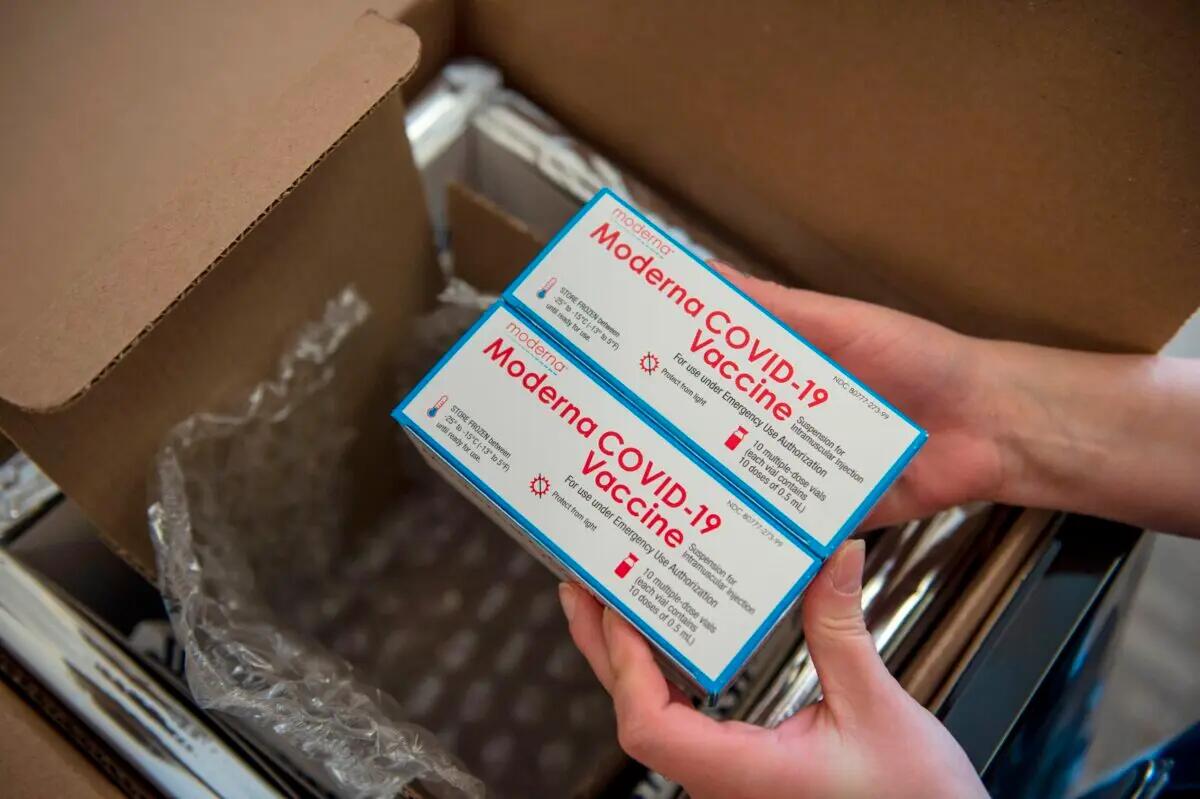
Moderna COVID-19 vaccines are unpacked in Boston on Dec. 24, 2020. (Joseph Prezioso/AFP via Getty Images)

Earlier Suits

While the companies produced the first COVID-19 vaccines in the world, they have been feuding since, filing suits against each other.

Moderna sued Pfizer and BioNTech in August 2022, saying the Pfizer-BioNTech shot used features that were developed by Moderna scientists.

“Despite recognizing the importance of patents to innovators such as Moderna, Pfizer, and BioNTech have copied Moderna’s intellectual property and have continued to use Moderna’s inventions without permission. Moderna therefore brings this lawsuit to protect the mRNA technology platform it innovated, invested in, and patented, and to ensure that intellectual property is respected,” stated the litigation, filed in U.S. court in Massachusetts, where Moderna is headquartered.

Pfizer CEO Albert Bourla said during a conference in 2020 that the company’s mRNA vaccine was using an antigen “which is, I think, the same like the [one] Moderna is using,” the suit noted.

Moderna said it offered to consider selling licenses to its technology, but that neither Pfizer nor BioNTech ever made contact to request a license.

Moderna also filed a patent infringement suit in a court in Germany, where BioNTech is headquartered.

Pfizer and BioNTech countersued later in 2022, introducing the argument that Moderna's patents weren't valid.

The patents "far exceed" Moderna's "actual contributions to the field," the countersuit states.

Pfizer and BioNTech also said in the filing that they produced their vaccine independent of Moderna's technology.

Other Litigation

Moderna has also been sued by additional companies, which say that the firm infringed on their patent in its COVID-19 vaccine.

Arbutus Biopharma and Genevant Sciences filed the claim in U.S. court.

Moderna's attempt to dismiss the case, backed by the U.S. government, was rejected by a federal judge earlier this year.

Alnylam Pharmaceuticals, another firm, has accused both Moderna and Pfizer of violating a related patent.

Pfizer and BioNTech have also been sued in the United States by Arbutus and a separate company, CureVac, which alleges the companies infringed on its technology in their vaccine.

“Our scientists have pioneered fundamental break­throughs in mRNA vaccine technology over the last two decades," CureVac CEO Dr. Alexander Zehnder said in a statement at the time. "These contributions underpin the rapid development of SARS-CoV-2 mRNA vaccines such as Comirnaty."

That case is poised to head to trial in 2024.

https://www.zerohedge.com/political/pfizer-asks-court-revoke-modernas-covid-19-vaccine-patents

Fauci Squirms As CNN Anchor Confronts Him With Data Showing Masks Don't Work

 by Steve Watson via Summit News,

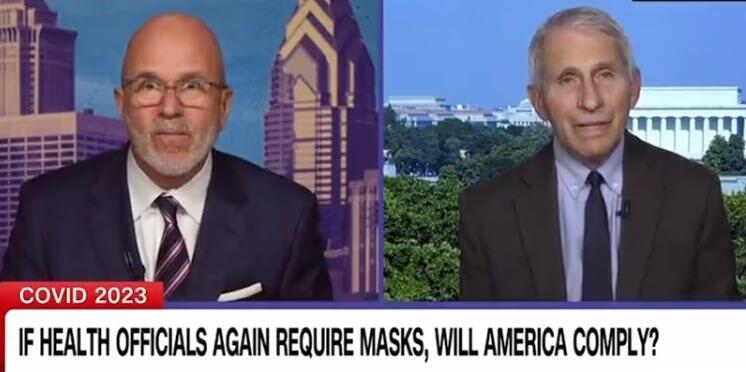
Anthony Fauci refused to back away from the recommendation of face masks Saturday as CNN (of all networks) confronted him with a study showing that they have no effect on preventing the spread of COVID.

After Fauci claimed “there have been many studies indicate the benefit of wearing masks,” Anchor Michael Smerconish brought up the Cochrane review of masks, one of umpteen studies that have all found that the face coverings do little to nothing against COVID transmission.

“When you’re talking about the effect on the epidemic or the pandemic as a whole, the data are less strong,” Fauci squirmingly admitted, but then went on to suggest people should still wear them anyway.

“There are other studies, Michael, that show at an individual level, for individuals they might be protective,” Fauci claimed.

Senator Rand Paul blasted Fauci for spreading “more subterfuge”:

Others chimed in:

Elsewhere during the interview Fauci said he hopes people will comply with wearing masks again, while stating “we’re not talking there’s forcing anybody to do anything.”

He continued, “We’re not talking about mandates or forcing anybody but when you have a situation where the volume of cases in society gets to a reasonably high level, particularly the vulnerable, those who are elderly, and those with underlying conditions are going to be more susceptible and vulnerable if they do get infected to get severe disease leading to hospitalization.”

“I would hope that if in fact we get to the point where the volume of cases is such an organization’s like the CDC recommend, CDC doesn’t mandate anything, I mean, recommends that people wear masks, I would hope that they abide by the recommendation and take into account the risk to themselves and to their families,” Fauci further stated.

He continued, “People keep thinking that the federal government is going to mandate that you wear a mask, that’s not going to happen,” he said. “But there may be individual institutions, organizations that are going to say, if you want to come to work, you’ve got to wear a mask.”

Here is the full interview:

As we have highlighted, there is a creeping attempt to bring back masking and COVID restrictions despite no large bounce in cases and the fact that they just don’t work.

Related:

https://www.zerohedge.com/covid-19/watch-fauci-squirms-cnn-anchor-confronts-him-data-showing-masks-dont-work

Sunday, September 3, 2023

Chinese gatecrashers at US bases raise espionage concerns -WSJ

 Chinese nationals, sometimes posing as tourists, have accessed military bases and sensitive sites in the U.S. as many as 100 times in recent years, the Wall Street Journal reported on Sunday, citing U.S. officials who described the incidents as potential espionage threats.

The Defense Department, FBI and other agencies held a review last year to try to limit these incidents that involved gatecrashers because of their attempts to get into U.S. military bases without proper authorization, the WSJ report said.

The gatecrashers ranged from Chinese nationals found crossing into a U.S. missile range in New Mexico to scuba divers swimming in murky waters near a U.S. government rocket launch site in Florida, according to the report.

The incidents that occurred in rural areas where there is little tourism typically involved Chinese nationals who were pressed into service and required to report back to the Chinese government, the report added, citing officials familiar with the practice.

The U.S. Department of Defense and Department of Homeland Security did not immediately respond to a request for comment on the WSJ report.

The reported incidents come at a time when Washington and Beijing are taking tentative steps to soothe tensions that spiked after a suspected Chinese high-altitude spy balloon crossed the United States before the U.S. military shot it down off the East Coast in February.

https://finance.yahoo.com/news/1-chinese-gatecrashers-us-bases-035716739.html

Novo Nordisk launches weight-loss drug Wegovy in UK

 Novo Nordisk launched its weight-loss injection Wegovy in Britain on Monday, its second debut in Europe in just over a month as the drugmaker seeks to expand in the region even as it struggles to keep up with soaring demand.

The Danish drugmaker said in a statement that Wegovy would be available in the UK "through a controlled and limited launch".

Surging demand for the drug, and Novo's highly effective diabetes drug Ozempic, have sent the company's shares and earnings to record highs. On Friday it unseated LVMH as Europe's most valuable listed company, ending the French luxury group's 2-1/2 year-long reign at the top.

Wegovy, shown to help patients reduce body weight by around 15% when used along with exercise and lifestyle changes, is so far available in the United States, Norway, Denmark, and as of late July, Germany.

Novo's inability to keep up with U.S. demand for Wegovy has effectively delayed the launch in most of Europe.

The company has struggled to keep up with demand even as it has added production capacity, and its CEO told Reuters last month it would "take quite some years" before the company can satisfy the whole market.

"We are closely monitoring Wegovy demand and are working with regulators and providers to ensure people living with obesity can have access to and remain on treatment," the company said in its statement.

In March, Britain's drug cost-effectiveness watchdog NICE recommended the use of Wegovy in adults with at least one weight-related condition and a body mass index of 35, but only within the National Health Service's (NHS) specialist weight management scheme.

Novo's statement noted that the drug will be available both within the National Health Service's weight management scheme and "privately through a registered healthcare professional".

Novo did not say how much supply it would make available in the UK or how much Wegovy would cost in either of the two treatment scenarios it mentioned. In the United States, the drug sells for as much as $1,350 a month.

It was not immediately clear what the implications would be of the drug being available through private healthcare professionals.

"As we expect supply to be constrained for the foreseeable future, a proportion of available supply will be allocated for use only within the NHS to allow healthcare professionals to implement NICE guidance," the statement said.

In June, the British government said it planned to launch a pilot programme exploring how new weekly weight-loss shots such as Wegovy can be given to obese patients by general practitioners, though at the time Wegovy's launch date was unknown.

Reuters reported last week that supplies of Wegovy were limited in Germany less than a month after its launch in Europe's largest drug market, highlighting the challenge for Novo's ambitions in Europe.

https://www.marketscreener.com/quote/stock/NOVO-NORDISK-A-S-1412980/news/Novo-Nordisk-launches-weight-loss-drug-Wegovy-in-UK-44762888/

AstraZeneca's Calquence Product Approved in China for Leukaemia

 AstraZeneca said its Calquence product has been approved in China for the treatment of adults with leukaemia.

The Anglo-Swedish pharma giant said Monday the product has been approved for the treatment of patients with chronic lymphocytic leukaemia, or CLL--the most prevalent type of leukaemia across the globe--or small lymphocytic lymphoma, or SLL, assuming they have received at least one prior therapy.

The approval by the National Medical Products Administration was based on positive results from two clinical trials, one global and one local. The latter trial showed an 83.3% overall response rate in Chinese patients treated with Calquence.

Calquence is approved for the treatment of CLL and SLL in the U.S., CLL in the European Union and other countries around the world, and approved in Japan for relapsed CLL and SLL.

https://www.marketscreener.com/quote/stock/ASTRAZENECA-PLC-4000930/news/AstraZeneca-s-Calquence-Product-Approved-in-China-for-Leukaemia-Treatment-44763052/