Search This Blog

Monday, September 4, 2023

'Goldman Cuts US Recession Chances to 15% on Improved Inflation'


Goldman Sachs Group Inc. now sees a 15% chance the US will slide into recession, down from 20% previously as cooling inflation and a still-resilient labor market suggest the Federal Reserve may not need to raise interest rates any further.

“First, real disposable income looks set to reaccelerate in 2024 on the back of continued solid job growth and rising real wages,” Jan Hatzius, chief economist at Goldman, said in a research note. “Second, we still strongly disagree with the notion that a growing drag from the ‘long and variable lags’ of monetary policy will push the economy toward recession.”

https://www.bloomberg.com/news/articles/2023-09-05/goldman-cuts-us-recession-chances-to-15-on-improved-inflation

New Biomarker Tests Aid Quick, Accurate Diagnosis of Alzheimer’s Disease

 Prior to the approval of effective therapies for Alzheimer’s disease, there was little need for biomarker tests. Now, with Eisai and Biogen’s anti-amyloid drug Leqembi on the market and approval of Eli Lilly’s donanemab expected to follow soon, the pipeline of Alzheimer’s drugs is expanding and the development of tests to detect the disease is accelerating.

With Leqembi’s full approval, the Centers for Medicare and Medicaid Services (CMS) has instituted broader coverage of the drug—with stipulations. To ensure reimbursement, physicians must participate in a qualified registry and patients must be diagnosed with mild cognitive impairment or mild Alzheimer’s disease dementia with evidence of beta-amyloid deposits. To help facilitate this, CMS proposed in July 2023 to increase its coverage of PET scans to detect these amyloid plaques—however, cheaper and faster diagnostic methods are still being developed.

The past decade has seen the development of biomarker tests to detect Alzheimer’s disease. In June, for example, the FDA cleared two tests from Roche that measure the concentration of beta-amyloid and tau proteins in cerebrospinal fluid (CSF). And at the end of July, Quest Diagnostics launched what it claims is the first direct-to-consumer blood-based biomarker test for Alzheimer’s.

“It’s an exciting time for Alzheimer’s disease biomarker research,” Ted Wilson, an investigator with the Alzheimer’s Disease Research Center Biomarker Core at Stanford University, told BioSpace. While these tests have yet to be accepted as diagnostic replacements for PET scans, researchers are hopeful that could be the way of the future.

Diagnostic Challenges

An estimated 6.7 million Americans have Alzheimer’s disease, with its prevalence predicted to rise. In 2023, it is estimated that dementias on the whole will cost America $345 billion. But despite their ubiquity, experts told BioSpace that obtaining an accurate diagnosis is difficult.

Part of the diagnostic challenge stems from the different types of dementia and neurological diseases that produce overlapping symptoms of cognitive impairment, Amanda Heslegrave, a research fellow at the UK Dementia Research Institute Biomarker Factory, told BioSpace. Alzheimer’s disease makes up 60–80% of dementia diagnoses, but other types include frontotemporal and vascular dementia, and a patient may suffer from multiple types of dementia simultaneously.

“The complete picture of what’s going on pathologically can often only be found at post-mortem,” Wilson said.

As a result, the diagnosis of Alzheimer’s disease is largely one of exclusion, or ruling out non-Alzheimer’s causes of symptoms, explained M. Laura Parnas, disease area network lead in cardiometabolism and neurology at Roche Diagnostics. “Obtaining an accurate diagnosis can take years,” she told BioSpace in an email.

Parsing out an accurate diagnosis is critical for making appropriate treatment decisions, experts say. For instance, frontotemporal dementia does not usually involve the buildup of amyloid plaques, and therefore anti-amyloid therapies such as Leqembi would not be an effective treatment.

To aid the diagnostic process, many researchers have set their sights on biomarker tests. These typically focus on two proteins that aggregate in the brain of dementia patients—amyloid and tau. Another biomarker for Alzheimer’s is neurofilament light chain (NfL), a marker of neurodegeneration. High levels of neurofilament indicate rapid neurodegeneration and disease progression, though a commercial diagnostic test using this biomarker has yet to be developed.

The tests approved so far examine one of two types of bodily fluids, CSF and blood. CSF samples require a lumbar puncture to retrieve and are unpopular with patients. Blood tests are often seen as the next step in Alzheimer’s diagnostics. Such noninvasive biomarker tests could reduce costs for patients and providers, Parnas said.

However, low concentration of Alzheimer’s biomarkers and the presence of other proteins in the plasma that might interfere with a potential assay have challenged this endeavor, Wilson. “Initially it was thought there were insurmountable problems using plasma as the matrix to detect these proteins.”

Currently Available Alzheimer’s Tests

Roche Diagnostics was one of the first companies to bring an Alzheimer’s diagnostic test to the market, with its Elecsys CSF beta-amyloid and phosphorylated-tau assays receiving approval in 2022. Then this June, the company received clearance from the FDA for its Elecsys CSF beta-amyloid and total tau assays. 

In both cases, the pair of tests is used in tandem to measure the ratio of beta-amyloid to tau (either phosphorylated or total). High levels of amyloid and tau in the brain—and reflected in the CSF—indicate a patient is likely suffering from Alzheimer’s disease, Heslegrave said, while a high concentration of tau alone indicates other types of dementia are the cause of cognitive impairment.

In addition to the approved Roche Diagnostic panels, another CSF test from Fujirebio Diagnostics measuring beta-amyloid received marketing authorization from the FDA in 2022. CSF tests have comparable accuracy to PET scans when diagnosing Alzheimer’s disease.

For now, though, the Alzheimer’s Association still recommends that these tests be used in conjunction with PET scans to confirm the presence of amyloid plaques in the brain and officially diagnose a patient with Alzheimer’s disease, thereby qualifying them for treatment with Leqembi. However, CMS does not state how the disease must be verified, and it’s uncertain what diagnostic tests will be needed to qualify for CMS coverage. Currently, the most common use of biomarker assays is in clinical trials to screen patients and monitor drug effects, or as part of a broader diagnostic assessment alongside neuropsychological evaluation and clinical presentation, Wilson said.

Blood-based biomarker tests are further behind in clinical development. Quest Diagnostics’ blood-based test authorized at the end of July, for example, has not been officially validated as a test for Alzheimer’s and is not endorsed by Quest as a diagnostic tool, though it can reflect Alzheimer’s disease risk.

C2N Diagnostics is also developing a blood-based Alzheimer’s test that measures plasma-tau and amyloid concentrations, and the company recently reported that the second-generation version of the test, PrecivityAD2, had comparable diagnostic accuracy to CSF tests and PET scans.

Eventually, Parnas wrote in an email to BioSpace, these tests could be used as an official Alzheimer’s diagnostic, “providing a lower cost alternative to traditional imaging techniques” such as PET scans.

https://www.biospace.com/article/new-biomarker-tests-aid-the-quick-and-accurate-diagnosis-of-alzheimer-s-disease/

Coveted GLP-1 Drugs Show Early Promise in Alzheimer’s

 There may be no hotter trend in biopharma right now than GLP-1 receptor agonists. Currently approved to treat type 2 diabetes and obesity, this drug class has also shown potential in other indications, from nonalcoholic fatty liver disease and cardiovascular disease to addiction, and recent studies suggest it may help tackle another big target—Alzheimer’s disease.

"[GLP-1] does all kinds of things in the body,” Christian Hölscher, co-founder and chief scientific officer at Kariya Pharmaceuticals and a professor of neuroscience at the Henan University of Chinese Medicine in China, told BioSpace. “It’s just a coincidence that they found an effect in diabetes first.” Kariya and other companies are now pursuing the use of these drugs to treat neurodegeneration.

GLP-1 is a hormone that stimulates insulin secretion after eating, enabling a feeling of fullness and triggering cells to take up glucose from the blood. GLP-1 agonists mimic the effects of this hormone, making them an effective treatment for diabetes and obesity. But GLP-1 is also produced in the central nervous system, predominantly in the brainstem, and its receptors are expressed in multiple regions of the brain, including the striatum and nucleus accumbens.

Glucose is the body’s primary energy supplier—and though the brain only makes up only 2% to 3% of the body’s total weight, it consumes about 20% of those energy resources, Howard Fillit, co-founder and chief science officer at the Alzheimer’s Drug Discovery Foundation (ADDF), told BioSpace.

Dr. Howard Fillit_ADDF
Howard Fillit

“There’s no doubt there’s increasing insulin resistance with aging across the whole body,” he said, meaning cells fail to take up glucose in response to the hormone. “When there’s sub-optimal glucose and highly active neurons have limited access to energy, they dysfunction and ultimately die on a chronic basis.” The most active neurons are in regions of learning and memory, Fillit said, making them more susceptible to glucose deprivation and, ultimately, neurodegeneration.

Recent Research

Alzheimer’s disease is sometimes called type 3 diabetes because insulin resistance is known to be a contributing factor. A review article published in 2022 in Frontiers in Endocrinology posits that drugs that target GLP-1 to treat type 2 diabetes (T2D) could potentially treat Alzheimer’s as well.

GLP-1 receptor agonists have shown the ability to reduce neuroinflammation and oxidative stress—well-recognized contributors to Alzheimer’s disease—and provide neurotrophic effects in animal models of Alzheimer’s, the authors write, while cautioning that this needs to be verified by further clinical trials.

poster presentation at the 2023 International Conference on Alzheimer’s and Parkinson’s Diseases and Related Neurological Disorders (AD/PD) highlighted positive results from one such trial, the Phase II ELAD study, which assessed Novo Nordisk’s liraglutide in mild to moderate Alzheimer’s. ADDF, which Fillit said has been “very interested” in this pathway for many years, was involved in funding the trial.

In Alzheimer’s disease, the brain shrinks over time and cells die, Hölscher, a co-author on the poster, told BioSpace. Biomarker analysis of the study showed that this shrinking process was “much reduced, he said. Patients who received liraglutide had slower reduction in MRI volume and cognition compared to placebo, the authors wrote in the poster abstract. Hölscher called the study “a clear proof of concept” that a GLP-1 receptor agonist can help slow Alzheimer’s progression. 

Christian Holscher_Kariya Pharmaceuticals
Christian Hölscher

In 2021, Novo Nordisk—which also markets the GLP-1 receptor agonist semaglutide as Rybelsus for T2D—launched two Phase III trialsEVOKE and EVOKE Plus, studying the drug in approximately 3,700 people with early-stage Alzheimer’s disease. In an email sent to BioSpace, a Novo representative said that the trials are ongoing but declined to comment further for this article. The EVOKE trials are expected to be completed in September 2025.

Hölscher noted that drugs like liraglutide and semaglutide were not designed to treat diseases of the brain. “They’re actually designed to stay in the blood, which is good for diabetes but bad for Alzheimer’s because a drug that stays in the blood doesn’t get into the brain.”

At Kariya, Hölscher has designed drugs to be taken up into the brain that he said show much better effects in preclinical studies. The molecules also have a second component: a glucose-dependent insulinotropic polypeptide (GIP), a hormone he said “works hand-in-hand” with GLP-1. This dual mechanism of action is the same as Eli Lilly’s Mounjaro, currently marketed for T2D and being tested for its effect on obesity. Kariya expects to begin a Phase I trial in September.

A Combination Candidate

Hölscher said the biggest barrier to the uptake of GLP-1 as an approach to Alzheimer’s—and other diseases of the brain—is psychological. “When you talk to people who work in Alzheimer’s, they have never heard of GLP-1,” he said. “It’s still amyloid, amyloid, amyloid.” This dilemma also exists in reverse in the diabetes space, where he said researchers “know everything about GLP-1, but they don’t know anything about the brain.” Combined, this makes it difficult to win research dollars, he noted.

But providing that the mechanism continues to bear out in the clinic, there are advantages to GLP-1 drugs over anti-amyloid antibodies, Hölscher said. “We know that the drugs are safe, they’re easy to apply, and you don’t need IV injections as with the antibodies.”  

It also doesn’t need to be one approach or the other. As Fillit noted, GLP-1 drugs would be “very good candidates to be delivered in combination” with an anti-amyloid drug like Eisai and Biogen’s recently approved Leqembi (lecanemab) or Lilly’s investigational donanemab, because there is no overlap in the mechanism of action. 

In its confirmatory trial, Leqembi was shown to reduce clinical decline in mild to moderate Alzheimer’s by 27%, while donanemab reduced decline in early symptomatic Alzheimer’s by up to 36%. While calling these results “meaningful” and “a big breakthrough,” Fillit said it is obviously not enough. “We want to get to 100% slowing and even prevention,” he said.

https://www.biospace.com/article/coveted-glp-1-drugs-show-early-promise-in-alzheimer-s-disease-/

Jill Biden tests positive for COVID-19 for second time

First lady Jill Biden has tested positive for COVID-19, according to a statement from her office on Monday. President Biden tested negative for the virus.

"This evening, the First Lady tested positive for COVID-19," the statement reads. "She is currently experiencing only mild symptoms. She will remain at their home in Rehoboth Beach, Delaware."

Jill Biden speaks while wearing a face mask

US first lady Jill Biden speaks during a panel on cancer during a visit to the Mays Cancer Center, February 23, 2022, in San Antonio, Texas.  (Photo by SERGIO FLORES/AFP via Getty Images)

Jill Biden speaking at an event

First lady Jill Biden has tested positive for COVID, according to a statement from her office on Monday. (AP Photo / Andrew Harnik / File)

The first lady is double-vaccinated, twice boosted, according to a statement from her communications director last year.

placeholder

The last time the 72-year-old tested positive for the virus was in August 2022. At the time, she was staying at a private residence in South Carolina.

"Following the First Lady's positive test for COVID-19, President Biden was administered a COVID test this evening," White House Press Secretary Karine Jean-Pierre said. "The President tested negative. The President will test at a regular cadence this week and monitor for symptoms."

The announcement comes amid rising COVID cases and hospitalizations throughout the country as several hospital systems have reinstated mask-wearing requirements for patients and staff.

https://www.foxnews.com/politics/first-lady-jill-biden-tests-positive-covid-second-time

"Unprecedented Levels" Of Theft In DC Forces Supermarket Chain To Remove Name-Brand Items

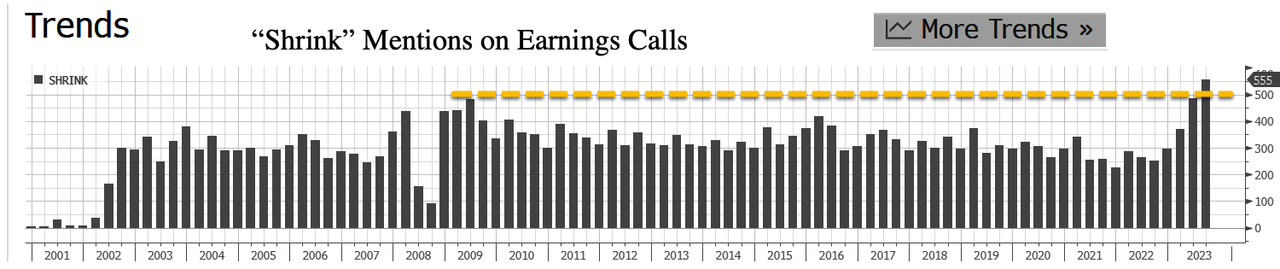
 Walmart, Target, Kohl's, Foot Locker, Dick's Sporting Goods, and Dollar Tree, to name a few, have all raised concerns about out-of-control thefts in their stores nationwide. The latest is supermarket chain Giant Food, which warned about "unprecedented levels" of "shrink" - the loss of inventory due to circumstances such as retail theft - at one of its stores in Washington, DC. 

NBC Washington said the Giant Food, located at 1535 Alabama Ave SE, has already warned if rampant shoplifting continues, the supermarket will have to close its doors.

The Giant on Alabama Avenue SE is the only full-service supermarket in the area, and if it closes, it will create a food desert in Southeast DC. Instead of closing, it seems the grocery chain has come up with a solution:

In a statement, Giant said it plans to remove national brand health and beauty care items and replace them with private label brands where possible. The new policy aims to reduce "unprecedented levels" of theft and make the store safer for shoppers and employees. 

"None of the tactics we deploy is the ultimate solution to the problem we face, but we continue to invest in efforts that will improve safety for our associates and customers and reduce theft," part of the statement read. --NBC Washington

Replacing brand name items, such as Tide, Colgate, or Advil, with only private label products is a last-ditch effort to prevent the store from closing. 

DC's failed progressive social justice reform policies have only emboldened criminals, as AP News warned in July: "Violent crime is rising sharply, fueled by more homicides and carjackings." 

Major corporations who funded the 'defund the police' movement during the Covid era are getting what they deserve: A surge in thefts as soft on crime Democrats in control of many of the nation's cities have only sparked a theft and violent crime wave. 

Retailers sounded the alarm on the theft wave this past earnings season. The number of times CEOs mentioned "shrink" on earnings calls soared to a record high.  

A new report last week drew a Mexican cartel connection in America's retail theft epidemic that cost companies like Walmart, Target, Kohl's, Home Depot, and Foot Locker, among others, tens of billions of dollars last year. Yet another failed Democrat policy to leave borders open. 

 Open borders are not so great after all... It's time to reinforce law and order in the nation or face out-of-control theft waves now making it to suburbia. 

https://www.zerohedge.com/markets/unprecedented-levels-theft-nations-capital-force-supermarket-chain-remove-name-brand-items

'Raise pension contributions to combat UK capital market decline, says think-tank'

 Higher minimum contributions to pension schemes and turning the regulatory screw would help plug shortfalls in retirement income and reverse shrinkage in Britain's capital market, think-tank New Financial said in a report on Tuesday.

A welter of regulatory reforms to bolster London's capital market and boost the flow of money from pensions into investments is a good start, but more is needed to avoid pensioners having too little to live on, said New Financial CEO William Wright.

"This isn't something that we can keep kicking down the road," Wright told reporters.

The report, written in partnership with Citi bank and abrdn asset management, said there is a "parallel crisis" in Britain's pensions and capital market as too little investment flows into UK-based companies and asset managers play safe with government bonds.

"I would wonder if there's something in the Consumer Duty that says there's something about having too much money in a bank account when you don't need it, you should be putting money into something that is better than that," abrdn chair Douglas Flint said.

Regulator the Financial Conduct Authority's Consumer Duty introduced in July requires financial firms to ensure that customers are getting fair value on their investments, and to point out better deals where available.

The report said an employee currently has to contribute a minimum of 8% of earnings to a defined contribution (DC) pension scheme, a "woefully inadequate" level.

This fails to build a big enough pool of money that allows more investment in riskier assets like start-up companies and infrastructure, and reverse a shrinkage in listings.

The median DC pension pot for people aged 55 to 65 is just 35,000 pounds ($44,177), giving an annual pension of 1,750 pounds, meaning a social security safety net is often needed.

"You have to have a glidepath to getting to 15% to 16%. The big issue is the contribution rate," Flint said.

The report rejects mandating pension funds to invest in certain assets, but notes that 48 billion pounds in net tax relief on pension contribution in 2021 alone means there should be a "social contract" to create some form of "quid pro quo" from the sector.

https://www.yahoo.com/lifestyle/raise-pension-contributions-combat-uk-234556413.html

Thoma Bravo Nears Deal for NextGen Healthcare

 Thoma Bravo is in advanced talks to buy software company NextGen Healthcare Inc., according to people familiar with the matter. 

The private equity firm could announce a deal as soon as this week for NextGen, said the people, who asked to not be identified because the matter isn’t public. No final decision has been made and discussions could fall through, the people added. 

Representatives for Thoma Bravo and NextGen didn’t immediately respond to requests for comment. 

NextGen, a health-care information technology company, rose 6.2% to close at $19.33 in New York trading Friday, giving it a market value of about $1.3 billion. 

Based in Atlanta, NextGen provides cloud-based technology services to outpatient health-care providers, according to its annual report. 

Led by Managing Partner Orlando Bravo, Thoma Bravo is one of private equity’s most active technology investors. The firm agreed in June to sell Adenza to Nasdaq Inc. for $10.5 billion. 

https://www.bnnbloomberg.ca/thoma-bravo-nears-deal-for-nextgen-healthcare-1.1967045