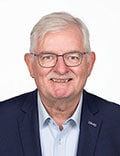
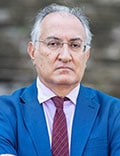
U.S. drugmakers Johnson & Johnson and Eli Lilly increased spending on security for their top executives in 2024, with both citing increased threats after a UnitedHealth insurance executive was murdered outside the company's investor meeting in December, regulatory filings show.
J&J is now providing executives with an armed driver, and both pharmaceutical companies have given executives home protection and a security detail for travel, according to their annual proxy statements. In previous years, those filings did not contain such specific details; this marks the first time Lilly has made security disclosures in its proxy.
Brian Thompson, the former CEO of UnitedHealth Group's insurance unit UnitedHealthcare, was shot dead on December 4 outside a Midtown Manhattan hotel where the company was holding an investor conference. The killing prompted companies to reassess whether the risk of targeted violence against top management had increased.
J&J's executives are now required to use an armed driver and a secure company vehicle for all travel after an internal security assessment conducted in December due to "increased threats," according to its regulatory filing, released Wednesday. The company did not respond to Reuters when asked if they made the review after Thompson's murder.
The New Brunswick, New Jersey-based company quadrupled its security spending for 2024, even though the dollar figure is relatively small at nearly $103,000 for CEO Joaquin Duato's personal and home security services.
Between 2020 and 2024, expenses for a company car and driver were capped below $25,000 and it reimbursed "limited home security system-related fees" in prior years.
Similarly, Lilly introduced security services for top executives in 2024 for the first time, its regulatory filing showed on Friday. "These (security) costs are appropriate and necessary considering the current threat landscape," the company said.
Lilly spent $73,630 for security services for CEO David Ricks in 2024, the first time it has disclosed such costs in its proxy. The Indianapolis-based company did not respond to a request for comment.
Shortly after Thompson's murder, health insurers removed pictures of their executives from corporate websites. In January, organizers at a major San Francisco healthcare meeting stepped up security for attendees inside and outside the venue.
In previous years, companies in the healthcare and pharmaceuticals sectors have generally compensated the use of private jets and limited compensation related to security, according to older filings with the U.S. Securities and Exchange Commission.
Russia is asking companies to propose which sanctions Moscow should seek to have lifted ahead of talks with Washington, two Russian business people told Reuters, adding curbs that hamper cross-border payment flows are the most painful.
U.S. Secretary of State Marco Rubio on Tuesday said it was Russia's turn to respond, after Washington agreed to resume sharing military aid and intelligence with Kyiv, which said it would accept a U.S. proposal for a 30-day ceasefire.
U.S. President Donald Trump has threatened harsher sanctions on Moscow should it fail to negotiate, but sanctions relief if agrees to a ceasefire in Ukraine.
Two Russian industry sources said the industry and trade ministry was asking companies to suggest which sanctions most urgently needed to be lifted.
One person said the ministry was distributing a form for businesses to fill out, asking companies which sanctions had affected their business most and to identify the most sensitive restrictions. Reuters could not access a copy of the form.
The industry ministry did not respond to a request for comment.
In all, Reuters spoke to a dozen people - employees at major exporters, consultants, lawyers, economists and advisers. Most of them asked not to be named so they could speak freely.
The people Reuters questioned said payment issues were the most onerous, although three of the sources also highlighted energy sanctions, particularly restrictions on Russia's oil tanker fleet.
"Everything has become much more expensive given transaction costs and settlements through third currencies," one of them said. "So the most important, most dangerous, most painful is the restriction on settlements in dollars."
Asked for details on which sanctions Russia wants eased, the Kremlin on Thursday said it believes all sanctions are illegal and should be lifted.
"As for the details, these are already the subject of negotiations, and here I would like to again remind you of my words: 'let's not get ahead of ourselves'," Kremlin spokesman Dmitry Peskov told reporters.
"And there is no point in announcing any specific segments before the negotiations."
DOLLAR ACCESS
Major Russian banks were blocked from using the SWIFT global payments network shortly after Moscow sent its army into Ukraine in February 2022. Without access to dollar and euro markets, Russian companies have been forced to find workarounds in other currencies and through third countries.
Removing those restrictions and sanctions on banks would be a huge boost for Russia, three of the sources said, although one noted it was unrealistic to hope for such a favourable outcome soon.
Renaissance Capital analyst Andrei Melashchenko cited the likelihood Europe may not follow any U.S. move.
"Lifting of U.S. sanctions would not automatically remove European sanctions or fully restore payment infrastructure, meaning the recovery of commission-based income from cross-border operations would remain limited," he said.
Reduced enforcement of secondary sanctions that target companies in third countries, allowing Russia to circumvent restrictions, is the more likely near-term outcome, two of the sources said.
The lack of clarity over whether secondary sanctions will be enforced has meant few banks in China are willing to risk possible retribution, causing payment bottlenecks and increasingly complex steps to avoid delays.
"Workarounds are expensive and slow," said one source. "We can get equipment and technologies through China or the Emirates, but how can we pay for them?"
Another of the people said its business "really howled" when China tightened settlements in August last year. For Russian business as a whole, billions of dollars in revenue cannot be settled for goods already delivered, the person said.
FROZEN ASSETS
Easing the enforcement of secondary sanctions, which largely depends on the United States, could improve acceptance of Russia's Mir payment cards, Moscow's alternative to Visa and Mastercard.
But most of the around $300 billion of Russia's sovereign assets frozen by the West are held in Europe, where leaders have maintained a tougher stance against Moscow than the United States.
"The issue of European sanctions is going to be on the table, not to mention what happens with the frozen assets," Rubio said on Wednesday. "There's going to have to be some decision made by the Europeans about what they're going to do with these sanctions."
An industrial sector source said finding ice-class tankers was another major issue hampered by the payment problems.
Another source said sanctions at the end of the Joe Biden administration that targeted vessels in Russia's shadow fleet, major oil exploration companies and the networks trading Russian oil had been very painful.
Not everyone expected any relief.
German Gref, CEO of Russia's largest lender Sberbank, said his bank worked under the assumption that sanctions, if anything, would be tightened.
Eduard Gudkov, deputy chairman of liquefied natural gas (LNG) producer Novatek's board said last month: "One should not think that as geopolitical tensions ease, it will somehow ease our situation."
President Vladimir Putin said on Thursday that Russia supported a U.S. proposal for a ceasefire in Ukraine in principle, but that any truce would have to address the root causes of the conflict and that many crucial details needed to be sorted out.
Russia's invasion of Ukraine in February 2022 has left hundreds of thousands of dead and injured, displaced millions of people, reduced towns to rubble and triggered the sharpest confrontation between Moscow and the West in decades.
Putin's heavily caveated support for the U.S. ceasefire proposal looked designed to signal goodwill to Washington and to open the door to further talks with U.S. President Donald Trump. But the sheer number of clarifications Putin sought and the conditions he suggested might need to be attached to reassure Moscow appeared to rule out a swift ceasefire.
"We agree with the proposals to cease hostilities," Putin told reporters at a news conference in the Kremlin following talks with Belarusian President Alexander Lukashenko. "The idea itself is correct, and we certainly support it."
"But we proceed from the fact that this cessation should be such that it would lead to long-term peace and would eliminate the original causes of this crisis."
He went on to list a slew of issues he said needed clarifying and thanked U.S. President Donald Trump, who says he wants to be remembered as a peacemaker, for his efforts to end the war which both Moscow and Washington now cast as a deadly proxy war which could have escalated into World War Three.
Trump, who said he was willing to talk to the Russian leader by phone, called Putin's statement "very promising" and said he hoped Moscow would "do the right thing."
Trump said Steve Witkoff, his special envoy, was engaged in serious talks with the Russians in Moscow around the U.S. proposal which Kyiv has already agreed to.
Ukraine is likely to see Putin's stance as an attempt to buy time while Russian troops squeeze the last Ukrainian troops out of western Russia and Moscow sticks to demands that Kyiv regards as seeking its own capitulation.
The West and Ukraine describe Russia's 2022 invasion as an imperial-style land grab, and have repeatedly vowed to defeat Russian forces. Russian forces control nearly a fifth of Ukraine's territory and have been edging forward since mid-2024.
Putin portrays the conflict as part of an existential battle with a declining and decadent West which he says humiliated Russia after the Berlin Wall fell in 1989 by enlarging the NATO military alliance and encroaching on what he considers Moscow's sphere of influence, including Ukraine.
PUTIN AND TRUMP
European powers have been deeply concerned that Trump could be turning his back on Europe for some sort of grand bargain with Putin that could include China, oil prices, cooperation in the Middle East and Ukraine.
Putin said Russian forces were moving forward along the entire frontline and that the ceasefire would have to ensure that Ukraine did not seek to simply use it to regroup.
"How can we and how will we be guaranteed that nothing like this will happen? How will control (of the ceasefire) be organised?" Putin said. "These are all serious questions."
"There are issues that we need to discuss. And I think we need to talk to our American colleagues as well."
Putin said he might call Trump to discuss the issue.
The United States agreed on Tuesday to resume weapons supplies and intelligence sharing with Ukraine after Kyiv said at talks in Saudi Arabia that it was ready to support a ceasefire proposal.
Russia over recent days has pressed a lightning offensive in the western Russian region of Kursk against Ukrainian forces which smashed through the border last August in a bid to divert forces from eastern Ukraine, gain a bargaining chip and embarrass Putin.
The Russian leader wondered how a ceasefire would impact the situation in Kursk.
"If we stop hostilities for 30 days, what does that mean? That everyone who is there will leave without a fight?," he said. "Should we let them out of there after they have committed a lot of crimes against civilians? Or will the Ukrainian leadership give us the order to lay down our arms? It is not clear."
Ukraine now has a sliver of less than 200 square km (77 square miles) in Kursk, down from 1,300 square km (500 square miles) at the peak of the incursion last summer, according to the Russian military.
Putin on Wednesday donned a camouflage uniform - extremely rare for the former KGB officer - to visit a command post in the Kursk region.
'WELCOME'
Beyond the immediate ceasefire idea, Russia has presented the U.S. with a list of demands for a deal to end its war against Ukraine and reset relations with Washington, according to two people familiar with the matter.
Asked about the Reuters report, Kremlin aide Yuri Ushakov said Washington knew Russia's position. Before Putin spoke, Ushakov said that the U.S. ceasefire proposal offered Russia "nothing".
Putin said Russia would welcome back Western companies if they wanted to return, though he also said that markets had been taken over by domestic producers and that Moscow would not be creating any special conditions for western companies.
"To those (companies) who want to return, we say: Welcome, welcome at any moment," Putin said, using the English word welcome.
Putin added that if Moscow and Washington could agree on energy cooperation, then gas supplies for Europe could resume after Russia lost its primary position as the main supplier to Europe during the war.
Phreesia (NYSE:PHR) is up ~7% in Thursday trading after reporting fiscal 2024 Q4 financial results that beat on both lines and saw healthy year-over-year increases in service clients and revenue per client.
Compared to the prior-year period, service clients increased ~10% in the quarter while revenue per client was up ~5%. Total revenue per client was $25,266.
Phreesia significantly reduced its net loss to $6.4M from $30.6M in Q4 2023.
As of Jan. 31, the company had $84.2M in cash and cash equivalents down from $87.5< as of Jan. 31, 2024.
Novartis has teamed up with the NFL in a multi-year partnership, marking the first such collaboration between the football league and a pharmaceutical company.
The partnership will center around the NFL’s slate of health initiatives, according to a Thursday announcement, with an initial focus on oncology.
To start, Novartis will support the league’s “Crucial Catch” awareness campaign, a year-round initiative held in partnership with the American Cancer Society that kicked off its 16th season last fall and is aimed at boosting early cancer detection and risk reduction.
The team-up will also see Novartis serve as the presenting partner for annual events like the NFL’s health and safety summit—the first of which was held in March 2024—as well as the Pro Football Hall of Fame Game, which is scheduled this year for July 31, and the Hall of Fame class presentation, which takes place at the NFL Honors award ceremony a few days before the Super Bowl.
Elsewhere, Novartis will support the NFL’s “My Cause My Cleats” program, in which players sport customized cleats honoring a cause important to them. The company will also have a presence at the NFL Draft, the Super Bowl and “other special events throughout the season,” per the announcement.
“At the heart of this first-of-its-kind partnership is the ambition to educate and mobilize communities to detect cancer and other diseases early, broadening health solutions beyond medicine,” Victor Bultó, Novartis’ U.S. president, said in a statement.
“With its nationwide fan base and demonstrated commitment to health advocacy, the NFL is a powerful partner for igniting critical health conversations at an unmatched scale,” Bultó continued. “Together, Novartis and the NFL are working toward leveling the playing field against serious health conditions, empowering every fan to proactively manage their health.”
The NFL has allowed pharma sponsorships for the league and its teams since 2003; that year, Bayer and GSK inked a joint three-year deal that made them the first drugmakers to come aboard as official sponsors for the league. The Novartis deal represents an “unprecedented” new type of pharma collab for the NFL, according to the release, with the Swiss company serving as a partner, rather than merely a sponsor.
Novartis recently bulked up its NFL bona fides by launching its first-ever Super Bowl ad at February’s big game. The star-studded “Your Attention, Please” campaign roped in Wanda Sykes and Hailee Steinfeld to help raise awareness about the importance of breast health and promote early breast cancer detection.
And, even more recently, Novartis stepped up as the exclusive pharma sponsor of another athletic institution: the National Basketball Retired Players Association. The partners unveiled the sponsorship at the annual NBA All-Star Weekend in mid-February, where, according to Novartis, “Our focus was on providing education and raising awareness about elevated Lp(a), a genetic condition that increases the risk of heart attack and stroke.”
The medical community is accustomed to rigorous standards for drug development and approval. But in the context of assisted dying, there is a surprising and persisting lack of robust scientific data.
Steven Pleiter
“It’s very hard to do scientific research with regard to the usage of drugs for euthanasia. If you apply euthanasia, you want to be successful, and you can’t use any other drugs than the drugs we know work,” Steven Pleiter, former managing director of the Dutch Center of Expertise for Euthanasia, told Medscape Medical News. “But the evidence is based on years and years of experience.”
“The amount of evidence supporting the use of these drugs is astoundingly small,” Claud Regnard, MD, a retired palliative medicine consultant in the United Kingdom, told Medscape Medical News. “The last study looking at efficacy and side effects was published 25 years ago, using data from 10 years earlier.”
The Drugs and Their Protocols
The Netherlands, one of the first European countries to legalize euthanasia and assisted dying, has developed guidelines on their implementation, now in their third edition.
Euthanasia is when a doctor directly ends the life of a patient, while assisted dying is when a doctor provides the means for them to end their own life.
For euthanasia, the standard Dutch protocol involves an initial injection of thiopental or propofol at doses several times higher than those used in general anesthesia to induce a deep coma. This is followed by administering a neuromuscular blocking agent such as rocuronium, atracurium, or cisatracurium in doses sufficient to cause complete paralysis and eventual death. “Most people die after the coma-inducing drug because it’s such a high dose,” Pleiter said. “The patient will die within seconds. It’s very rapid.”
Assisted death in the Netherlands involves the oral ingestion of pentobarbital or secobarbital in doses far exceeding what would be used for sedation, often flavored to mask the taste. An antiemetic is administered 24 hours before the ingestion of the barbiturate. “The oral pathway can take a few hours. The doctor remains with the patients and will administer an intravenous dose if the patient has not died after 1 hour,” he explained. The vast majority of cases (97%) undergo euthanasia and thus use intravenous drugs. Only 3% undergo assisted dying involving oral ingestion, Pleiter said.
In Switzerland, a commonly used drug is the fast-acting barbiturate sodium pentobarbital, according to documentation provided by Dignitas to Medscape Medical News. This is usually taken orally or, in some cases, via a gastric tube or intravenously. The documentation did not include specific data on this drug’s efficacy or complication rates. Dignitas declined a request for an interview.
Mario Riccio, MD
In Italy, where assisted dying is a more recent development and only a handful of cases have occurred, Mario Riccio, MD, a retired anesthetist, current advisor of the Luca Coscioni Association, and the doctor involved in most Italian cases, reported using intravenous drugs and dosages based on the Dutch guidelines and personal experience. “I know these drugs are used elsewhere. I know they are safe. I know they work,” he told Medscape Medical News. He maintains that, while minor complications are possible, they are less significant for individuals facing terminal suffering and seeking a dignified end.
Unlike the Dutch protocol, however, he cannot subsequently administer neuromuscular blockers because patients must self-administer the drugs under Italian regulations, which he views as unnecessarily burdensome. Once the barbiturates take effect, patients are no longer able to administer a second drug. “A neuromuscular blocker would provide an extra layer of efficacy, but I am not allowed to touch the patient during the procedure,” he explained.
There is no standardized global approach to drug selection and dosing for either euthanasia or assisted dying, and the process is mainly empirical. “There isn’t a single drug regulatory authority anywhere in the world that has assessed and approved assisted dying drugs [in the doses required for this purpose],” said Regnard.
Instead, these medications are approved for indications such as anesthesia or epilepsy, and their use in euthanasia or assisted dying falls under off-label prescribing. Physicians rely on guidelines established by medical associations, expert committees, and historical clinical practice for their use.
The Evidence Gap
Unlike other areas of medicine, assisted dying has largely escaped rigorous scientific evaluation. “You wouldn’t allow this in any way with any other sort of drugs,” Regnard said. In a 2022 study, he found that drugs used for assisted dying have not undergone the usual level of scrutiny.
Claud Regnard, MD
The pharmacokinetics and pharmacodynamics of these drugs at high doses remain poorly understood. “We extrapolate from therapeutic doses, but we have no proper data on what happens at lethal doses,” Regnard said. "That's not science — that's guesswork.”
He said most jurisdictions, like Switzerland, the Netherlands, Belgium, Canada, and Australia, do not systematically collect or publish data on assisted dying drug efficacy, mechanisms, and complications. “Oregon is the only jurisdiction providing some transparency, but even their data is severely incomplete,” he said.
In a 2023 report from the US state of Oregon, 74% of complication data were missing. Of the available data, 9%-11% of patients experienced complications, including vomiting, aspiration, agitation, and seizures. “In some cases, patients regained consciousness after ingesting a lethal dose,” he said.
The time to death also varies widely — from minutes to several hours. Factors such as the specific drugs used, the route of administration, and individual patient factors can all play a role. In some cases, death may occur rapidly, while in others it may take longer. This variability can be distressing for both the patient and their loved ones, particularly if they expect a swift and peaceful death, he argued.
However, the lack of reported data on complications makes the evidence as anecdotal as the evidence behind safety, Pleiter said.
Ethical and Practical Implications
The lack of reliable data also raises concerns about informed consent. Patients are often reassured that their death will be peaceful, but without comprehensive studies, how can such promises be guaranteed?
“How can you get informed consent from a patient when the data isn’t there?” Regnard asked. “Until they produce the data, the data is purely anecdotal. We wouldn’t tolerate that level of uncertainty in palliative care, so why are we tolerating it here?”
Pleiter noted that euthanasia has been practiced in the Netherlands for two decades, with consistent guidelines that have undergone only minor revisions. More than 100,000 patients have undergone the procedure using these established protocols. The core drug dosages have remained mostly unchanged. “When the correct drugs are administered at the right doses, there are no issues, and the outcome is always certain,” he said. Having overseen almost 5000 cases, Pleiter said he has never encountered complications.
Riccio said, “Even with precautions, the process is not always smooth. There can be moments of discomfort and unexpected reactions — things we simply cannot control. But for someone whose suffering is so excruciating that he is determined to die, minor complications are completely surmountable.”
Pleiter, Regnard, and Riccio reported no relevant financial relationships.
For the last 2 years, compounded versions of glucagon-like peptide 1 (GLP-1) medications have been big business. Nearly 137 million American adults are eligible to use these costly drugs to treat diabetes and obesity, or for secondary prevention of cardiovascular disease. That’s more than half of our adult population, so it’s no surprise the drugs have been in short supply. Compounding pharmacies stepped in to fill the gaps, as permitted by law during shortages, and millions of Americans turned to them for affordable, copycat drugs. But the US Food and Drug Administration (FDA) has nowdeclared those shortages over. Compounding pharmacies will soon have to stop selling their mass-produced versions — at least, in theory.
“There is so much money to be made,” Robert Califf, MD, FDA commissioner under former President Joe Biden, told Reuters. “There’s just an endless number of tricks that compounders could use. So I don’t think it’s the end of it, but it certainly will bring us into a new era after the time period has passed and all the lawsuits are finished.”
Here’s what you should know.
'Concerns About Compounds'
As sales of these drugs boomed, problems emerged. Compounding pharmacies are regulated by the FDA, but the individual drugs they make don’t need to meet the same evidentiary standards as their brand-name counterparts. The brand-name drug has FDA approval, but the compounded version does not. Advertising for online vendors has walked a fine ethical line in terms of promises made, said Rena Conti, PhD, associate professor of markets, public policy, and law at Questrom School of Business at Boston University, Boston. She’s the co-author of a recent article in JAMA Health Forum that looked at marketing and safety concerns with compounded GLP-1s.
Questionable marketing isn’t the only issue.
“From a medical perspective, one challenge of dealing with the explosion of these products online is that it’s not clear whether your patients are using them,” she said. “Your medical record is not complete, and that creates challenges because these products have side effects and have interactions with other drugs and with the management of other conditions.”
There are risks specific to the way the drugs are dispensed, too. Brand-name GLP-1s generally come in prefilled injection pens. With compounded versions, patients must learn to fill an empty syringe from a vial. User error is common.
“All drugs have side effects, but what we’re documenting is that patient-reported problems with use of these products have exploded,” Conti said. “We think it has to do with these compounding products being dispensed in a way that patients don’t completely understand how to take them.”
By November 30, 2024, the FDA had received more than 600 reports of adverse events with compounded GLP-1s.
'Accessibility and Affordability'
As popular as they are, GLP-1 medications aren’t cheap. Brand-name prescriptions cost upward of $1000 per month. According to Becker’s Hospital Review, skyrocketing demand has led several insurers to post operating losses. Coverage was restrictive before, but it’s even more so in 2025.
According to GoodRX, which tracks how insurance companies handle these drugs, almost 5 million people lost coverage for Zepbound this year. And for patients whose insurance does cover some GLP-1s, 83% now must meet some additional requirement, like prior authorization.
This double whammy of limited accessibility and hard-to-swallow pricing helped drive patients to compounding pharmacies, where they’ve been able to get the medications for much less — for instance, telehealth company Hims & Hers has been offering a month’s supply of compounded semaglutide for $165. That company is currently trying to find a legal workaround to the FDA’s deadline.
“Some compounders think maybe they’ll keep producing,” said Jeanne Varner Powell, JD, senior legal risk consultant for the Mutual Insurance Company of Arizona Risk Team. “They may believe the FDA enforcement manpower is so weak that the FDA won’t be enforcing the prohibition that closely. Maybe they’ll keep producing. Physicians need to be aware of that. From a risk standpoint, I don’t think they’d want to be associated with a compounder that’s in violation of the law.”
Once the ban on large-scale compounding of GLP-1s takes effect, physicians should be on the lookout for — and warn their patients about — counterfeit versions that might fill the gap, Powell said. The FDA has already expressed concern about this.
Meanwhile, the drug companies behind brand-name GLP-1s are getting into the act, selling direct-to-consumers well below list price. Last summer, Eli Lilly began to offer a month’s supply of Zepbound for between $350 and $500 without insurance. The company told NPR that 100,000 people now buy direct each month. Recently, Novo Nordisk announced they’ll be dispensing Wegovy for $499 per month. Even at these lower prices, though, brand-name medications remain out of reach for many.
“It’s about managing expectations,” Powell said. “It’s important to tell patients, while these [compounded] drugs are still available, we expect there’s going to be an end. You have to consider if you can afford the cost of the name brand.”
'How to Better Help Your Patients'
So while the FDA may say shortages are over, compounded GLP-1s aren’t necessarily going away. They’ll still be permitted on an individual basis. For instance, to create a version of a drug that doesn’t contain a certain ingredient or in a dosage that isn’t readily available.
“That determination is made by the physician who has to write a prescription for a patient-specific drug that, in their opinion, will make a clinical difference for the patient,” Powell said. So if you have patients who need access to a specific kind of compounded GLP-1, you can still prescribe it. Advise your patient on how to find a trustworthy compounding pharmacy, and if necessary, show them how to administer the drugs to themselves.
But use this option judiciously, she cautioned. “I’d hope they wouldn’t get into a routine of copy-pasting, using the same rationale for each patient. If something happens — if an adverse outcome happens — they’re opening themselves to risk.”
Communication is key, Conti said. “If physicians are seeing patients drop weight over time that looks to be in the range of what’s possible with GLP-1s and they haven’t prescribed [the medication], they should educate their patients on the use of these products found online in a compounding format. Ask directly and document it in their medical records.”
Part of that communication calls for empathy and paying attention to each patient’s situation.
“Physicians should anticipate their patients might try to get medications from alternative sources if they can’t get the physician to write an individual compounding prescription, and they can’t afford brand-name prices,” Powell said. “It’s very likely the physician’s duty, as part of their relationship with the patient, to warn them there may be counterfeit drugs out there. Compounded versions should not be available, so they should be very skeptical about anything they see online.”