Search This Blog

Thursday, March 13, 2025

DHS agents search 2 Columbia U residences – days after anti-Israel agitator arrested

 Department of Homeland Security agents executed search warrants on two Columbia University residences on Thursday night – just days after anti-Israel agitator Mahomoud Khlil was arrested by ICE at an off-campus apartment, the Ivy League school announced.

Interim President Katrina Armstrong revealed the raids in a letter to the Columbia community and noted that nobody was arrested or detained when the feds searched the rooms of two students.

“Federal agents from the DHS served Columbia University with two judicial search warrants signed by a federal magistrate judge authorizing DHS to enter non-public areas of the University and conduct searches of two student rooms,” Armstrong said.

Protesters march during a pro-Palestine demonstration
Protesters march during an anti-Israel demonstration on Tuesday, March 11, 2025 in New York, NY.James Keivom

“The University has a clear protocol in place. Consistent with this protocol, our longstanding practice, and the practices of cities and institutions throughout the country, the University requires that law enforcement have a judicial warrant to enter non-public University areas, including residential University buildings.”

The “heartbroken” leader said she was “obligated” to comply with the law, adding that no items were removed and no additional action was taken by the feds.

“I understand the immense stress our community is under,” Armstrong continued, providing university resources for students in need.

“Despite the unprecedented challenges, Columbia University will remain a place where the pursuit of knowledge is cherished and fiercely protected, where the rule of law and due process is respected and never taken for granted, and where all members of our community are valued and able to thrive. These are the principles we uphold and that guide us every day.”

Thursday’s raid comes after Khalil – a Palestinian activist who helped fuel the riotous and disruptive protests at Columbia University and Barnard College – was arrested Saturday in his Columbia-owned apartment by Immigration and Customs Enforcement agents. 

DHS searches Columbia
An email sent to the Columbia community informing about DHS search.Columbia University

The Trump administration is seeking to deport Khalil, a green card holder who is married to an American who is eight months pregnant with his child, over his role in disruptive and at times violent anti-Israel protests at Columbia last summer. 

Khalil leads Columbia United Apartheid Divest, a radical group which sympathizes with terror groups like Hamas and Hezbollah and calls for the “end of Western civilization.” The coalition is also responsible for the violent takeover of Columbia’s Hamilton Hall last April.

His arrest came days after President Trump yanked $400 million in grants and contracts from the Ivy League school, claiming Columbia didn’t comply with anti-discrimination laws when it failed to protect Jewish students. 

Kahlil is currently being held in a Louisiana lock-up while he fights his case — getting a win on Monday when a judge temporarily blocked any attempt to deport him.

His arrest has sparked massive protests in New York, including on Thursday, when a mob of dozens flooded Trump Tower to push for Khalil to be freed, before cops began arresting the agitators. 

Vice President JD Vance said Thursday that he expects “more people” to have their student visas or green cards revoked by the Trump administration. 

“This is not fundamentally about free speech, and to me, yes, it’s about national security, but it’s also more importantly about who do we as an American public decide gets to join our national community,” Vance told “The Ingraham Angle” host Laura Ingraham on Fox News. 

“And if the secretary of state and the president decided this person shouldn’t be in America, and they have no legal right to stay here, it’s as simple as that. I think we’ll certainly see some people who get deported on student visas if we determine that it’s not in the best interest of the United States to have them in our country.”

DHS did not immediately respond to The Post’s request for comment.

https://nypost.com/2025/03/14/us-news/dhs-agents-search-two-columbia-university-residences-days-after-anti-israel-agitator-mahmoud-khalil-arrested-by-ice/

Putin and Saudi Crown Prince discuss OPEC+ agreements and Ukraine crisis in call

 Russian President Vladimir Putin and Saudi Arabia's Crown Prince Mohammed bin Salman agreed on the importance of upholding their OPEC+ commitments and discussed moves to bring peace to Ukraine during a phone call, the Kremlin said late on Thursday.

The leaders of the two countries reaffirmed their commitment to fulfilling their obligations under the OPEC+ agreement, the Kremlin said in a statement published after the call.

Putin also thanked the crown prince for Saudi Arabia's mediation efforts when it came to hosting negotiations between Russian and U.S. diplomats in a meeting in February.

The crown prince told the Russian President that his kingdom remains committed to facilitating dialogue and supporting a political resolution to the Ukraine crisis, the Saudi state news agency reported on Friday.

https://www.yahoo.com/news/putin-saudi-crown-prince-discuss-063321470.html

Ukraine's Zelenskiy says Turkey is a partner in security guarantees

 President Volodymyr Zelenskiy said on Thursday that Ukraine saw Turkey as a partner in security guarantees for his country, and added that Kyiv was ready to ratify a free trade agreement between the states.

NATO member Turkey has balanced ties with Kyiv and Moscow since Russia's invasion of Ukraine in 2022. It has maintained good ties with both, supporting Ukraine militarily and backing its territorial integrity, while refusing to join sanctions on Russia.

As Europe scrambles to bolster its own defence and security, while seeking guarantees for Kyiv under any possible ceasefire deal with Moscow urged by Washington, Turkey has emerged as a key potential security partner.

On Thursday, Zelenskiy met Turkish Trade Minister Omer Bolat and Agriculture Minister Ibrahim Yumakli in Kyiv, and discussed bilateral ties, cooperation in drone production, and Turkish firms' involvement in Ukraine's reconstruction.

"It is important that Turkish businesses are already present in Ukraine. Our country appreciates this, as well as Türkiye's support and assistance, particularly the supply of Bayraktar drones," Zelenskiy said on X.

"Ukraine considers Türkiye one of its strategic partners, as well as a partner in terms of security guarantees, and is ready to ratify the Free Trade Agreement with Türkiye during President (Tayyip) Erdogan's upcoming visit," he added, without specifying when he would visit.

Bolat and Yumakli also attended the first meeting of a task force between Turkey and Ukraine for the reconstruction of the country after the war.

Bolat said on X the meeting was attended by more than 20 companies in Turkey's contracting and technical consultancy sectors as well as Ukrainian state and private sector representatives involved in the country’s reconstruction.

He said Turkish contractors were ready to share their experience and knowledge for future projects.

https://www.usnews.com/news/world/articles/2025-03-14/ukraines-zelenskiy-says-turkey-is-a-partner-in-security-guarantees

Singapore Shipping Firm Hit by US Sanctions Over Iran Oil Links


A Singapore-based company has been slapped with US sanctions for links to the Iranian oil trade, becoming the first in the city-state to be penalized for assisting with oil transfers at sea.

Shipload Maritime Pte was sanctioned because it “knowingly engaged in a significant transaction for the transport of petroleum or petroleum products from Iran,” according to a statement from the US Department of State on March 13. The punishment relates to an ship-to-ship transfer in December near Indonesia.

https://www.bloomberg.com/news/articles/2025-03-14/singapore-shipping-firm-hit-by-us-sanctions-over-iran-oil-links

Britain Wants Ukraine's Minerals Too

 by Mark Curtis via Declassified UK,

When U.K. officials signed a 100-year partnership with Ukraine in mid-January, they claimed to be Ukraine’s “preferred partner” in developing the country’s “critical minerals strategy.”
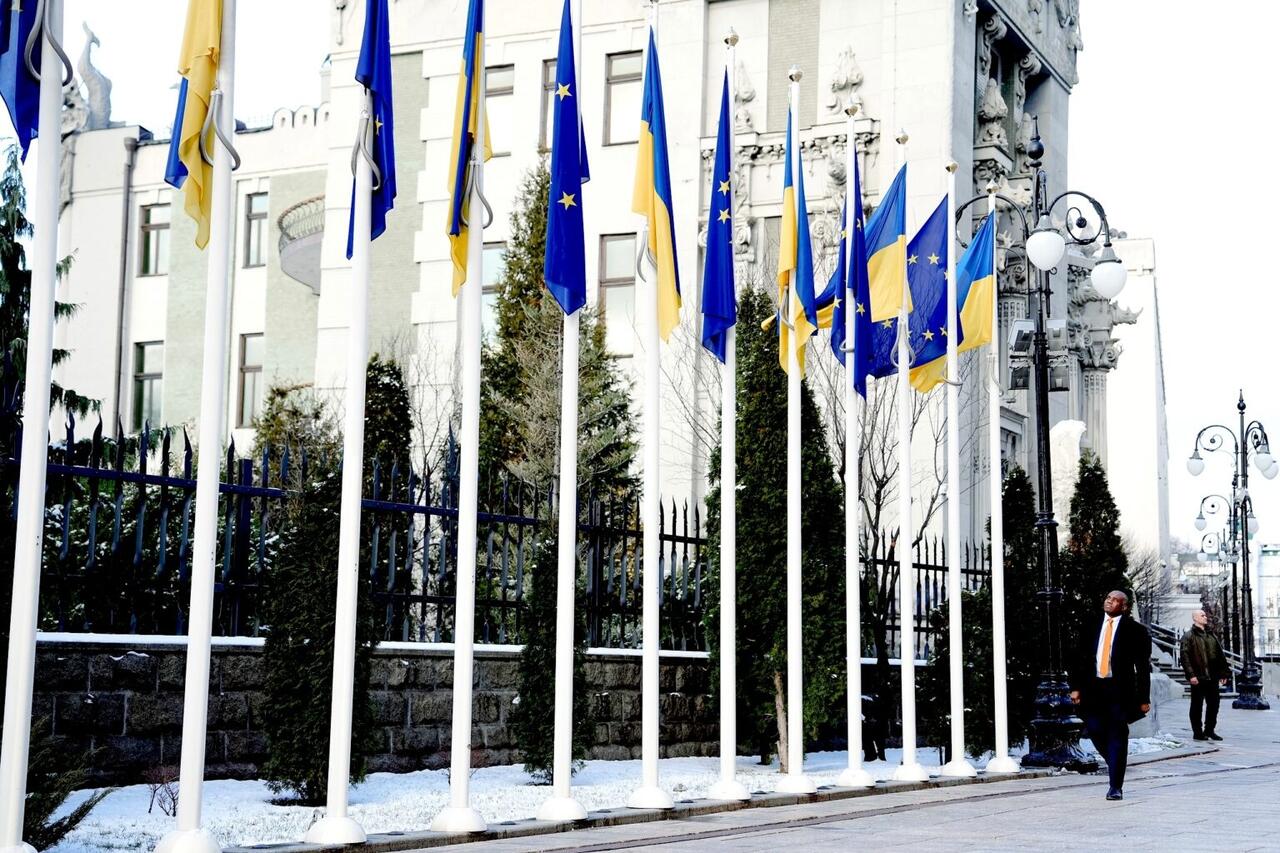
Yet within a month, U.S. President Donald Trump had presented a proposal to Ukraine’s President Volodymr Zelensky to access the country’s vast mineral resources as “compensation” for U.S. support to Ukraine in the war against Russia.

Whitehall was none too pleased about Washington muscling in. 

When Foreign Secretary David Lammy met Zelensky in Kyiv last month he reportedly raised the issue of minerals, “a sign that [Keir] Starmer’s government is still keen to get access to Ukraine’s riches”, the iPaper reported. 

Lammy earlier said, in a speech last year:

“Look around the world. Countries are scrambling to secure critical minerals, just as great powers once raced to control oil.”

The U.K. foreign secretary was correct, but Britain itself is one of those powers, and Ukraine is one of the major countries U.K. officials — as well as the Trump administration — have their eyes on. 

It’s no surprise why. Ukraine has around 20,000 mineral deposits covering 116 types of minerals such as beryllium, manganese, gallium, uranium, zirconium, rare earth metals and nickel. 

The country, whose economy has been devastated by Russia’s brutal war, also possesses one of the world’s largest reserves of graphite, the largest titanium reserves in Europe, and a third of the continent’s lithium deposits. 

These resources are key for industries such as military production, high tech, aerospace, and green energy. 

In recent years, the Ukrainian government has sought to attract foreign investment to develop its critical mineral resources and signed strategic partnerships and held investment fora to showcase its mining opportunities.

The country has also begun auctioning exploration permits for minerals such as lithium, copper, cobalt and nickel, offering lucrative investment opportunities. 

Media narratives largely parrot the U.K. government’s interests in Ukraine being about standing up to aggression. But Whitehall has in the past few years stepped up its interest in accessing the world’s critical minerals, not least in Ukraine.

‘Critical Minerals Work’
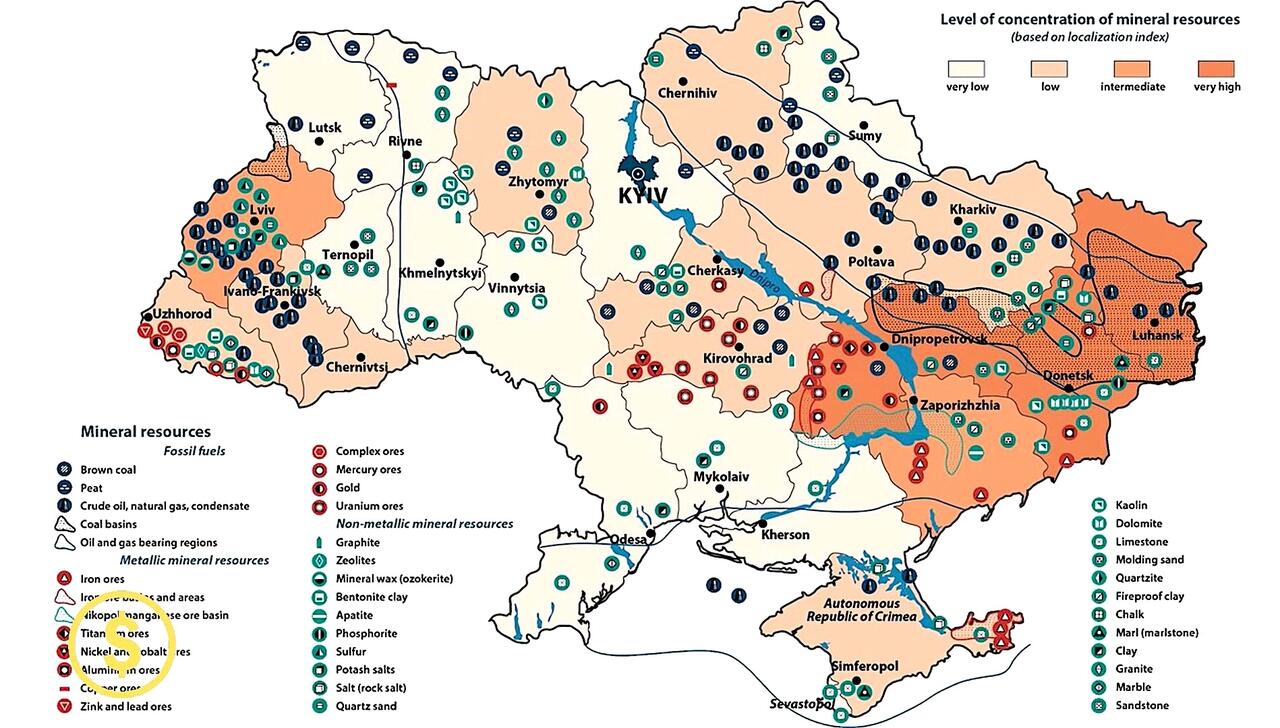
Map of minerals of Ukraine, 2022. (Zbigniew Dylewskie / Wikimedia Commons /CC BY 3.0)

Nusrat Ghani, a trade minister in Rishi Sunak’s government, held at least 10 meetings on the subject of critical minerals in 2023 and the first half of 2024, government transparency data shows. 

Among the companies she met were giant U.K. mining corporations Rio Tinto and Anglo American, and arms exporter BAE Systems and military aerospace lobbyists, ADS.

It is not clear if Ukraine was the subject of these discussions but one other prominent firm Ghani met to discuss “mineral supply chains” was Rothschilds, which has extensive interests in Ukraine. 

Ghani held a discussion with the Paris-headquartered global advisory firm in April 2023 while her successor Alan Mak did so the following year in May. Mak met the firm “to discuss Rothschild’s critical minerals work,” the data show.

The corporation was invited to the 2023 Ukraine Recovery Conference held in London and is a member of the U.K.-Ukraine Finance Partnership. It has also been the main adviser to the Ukrainian Ministry of Finance since 2017.

Rothschilds, on whose board sits former U.K. National Security Adviser Lord Mark Sedwill, has no less than $53 billion invested in Ukraine. 

‘British-Ukrainian Partnership’

(GOV.UK)

Writing recently in Unherd, researcher Sang-Haw Lee quotes a senior Labour figure saying the U.K. was involved in extensive negotiations for the whole of last year relating to securing exclusive access to Ukraine’s minerals, but that adequate government support was not forthcoming.

Some other meetings have crept into the public domain. Last April, two prominent U.K. parliamentarians met one of Ukraine’s largest mining investment companies in London to discuss “British-Ukrainian partnership in the field of critical minerals mining.” 

BGV Group, which has investments of $100 million in Ukrainian mining projects, held discussions with then energy minister, Lord Martin Callanan, and Bob Seely, then a Conservative MP who sat on Parliament’s Foreign Affairs Committee. 

The company is seeking investors for its graphite and beryllium projects and said in a media release that “Ukraine has all the prerequisites to become one of Britain’s main suppliers of critical minerals crucial for advanced technologies and the green energy transition.” 

“As Ukraine’s ultimate European ally, the U.K. could leverage its strong position within NATO to help secure mining sites and transportation routes”, writes Andriy Dovbenko, the founder of U.K.-Ukraine TechExchange.

‘Vast Resources’

The U.K. government’s “Ukraine Business Guide” notes that “Ukraine has vast resources” and “a rich mineral base of iron ore, manganese, coal, and titanium.”

Certainly, enhancing access to critical minerals has been a broad priority across Whitehall over the last three years. 

The U.K. produced its first-ever Critical Minerals Strategy in 2022 and updated this with a refresh” the following year. It identifies 18 minerals with “high criticality” for the U.K., including several present in Ukraine, such as graphite, lithium and rare earth elements. 

The U.K.’s strategy aims, among other things, to “support U.K. companies to participate overseas” in supply chains for these minerals and “champion London as the world’s capital of responsible finance for critical minerals.”

As part of its critical minerals strategy, the government set up a so-called Task & Finish group, analysing the risks to U.K. industry, and including participants from BAE, Rio Tinto and ADS. The group highlights titanium, rare earth elements, cobalt and gallium as among the minerals with a supply risk to the U.K. military sector.
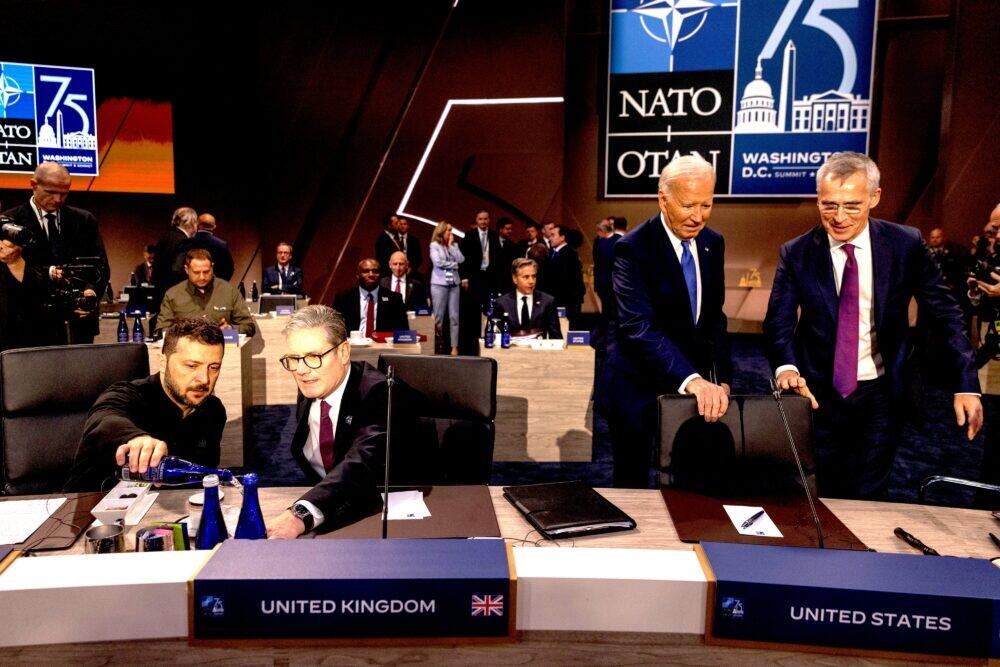
 Zelenskyy pouring water for Starmer during a NATO Ukraine Council session at the military alliance’s summit in Washington, D.C., in July 2024. Then President Joe Biden and NATO General Secretary Jens Stoltenberg on right. (Simon Dawson / No 10 Downing / CC BY-NC-ND 2.0)

The U.K. has also launched a Critical Mineral Intelligence Centre and established a Critical Minerals Expert Committee to advise the government.

A report by the Foreign Affairs Committee on critical minerals published in December 2023 concluded that “the U.K. cannot afford to leave itself vulnerable on supply chains that are of such strategic importance.” 

A sign of how seriously the government is taking the issues is that it says it will “ensure consideration for critical minerals is embedded” in the free trade agreements it is negotiating with a range of countries.

‘Regulatory Structures’
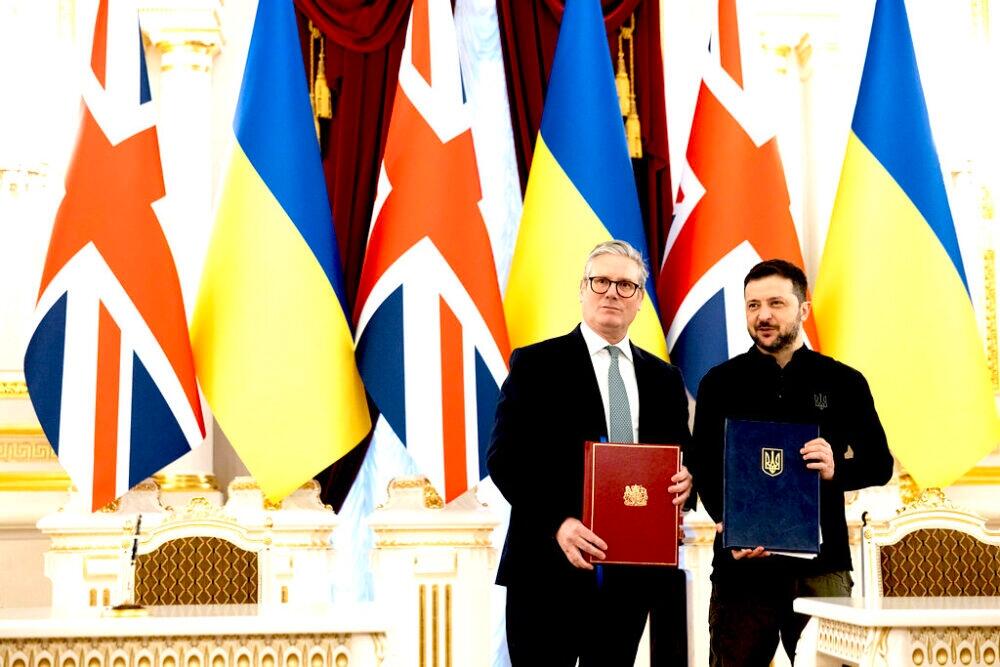
Starmer and Zelenskyy in Kiev in January when they signed a 100-year partnership agreement. (Simon Dawson / No 10 Downing Street/ Flickr/ CC BY-NC-ND 2.0)

Accessing minerals overseas often depends on loosening government regulations to enable foreign corporations to strike favourable deals.

The 100-year partnership declaration commits the U.K. and Ukraine to “supporting development of a Ukrainian critical minerals strategy and necessary regulatory structures required to support the maximisation of benefits from Ukraine’s natural resources, through the possible establishment of a Joint Working Group.”

The thrust of the partnership is to “support a more enabling environment for private sector participation in the clean energy transition” and to “attract investments of British companies in the development of renewable energy sources.”

More generally, the two sides will “work together to boost and modernise Ukraine’s economy by progressing reforms that aim to attract private finance” and “boost investor confidence.” 

As Declassified recently showed, British aid to Ukraine is focused on promoting these pro-private sector reforms and on pressing the government in Kyiv to open up its economy to foreign investors. 

Foreign Office documents on its flagship aid project in Ukraine, which supports privatisation, note that the war provides “opportunities” for Ukraine delivering on “some hugely important reforms.”

The U.K. supports a project called SOERA (State-owned enterprises reform activity in Ukraine), which is funded by USAID with the U.K. Foreign Office as a junior partner. 

SOERA works to “advance privatization of selected SOEs [state-owned enterprises], and develop a strategic management model for SOEs remaining in state ownership.”

U.K. documents note the programme has already “prepared the groundwork” for privatisation, a key plank of which is to change Ukraine’s legislation. 

“SOERA worked hand-in-hand with GoU and proposed 25 pieces of legislation of which 13 were adopted and implemented,” the most recent documents note. 

‘Geostrategic Rivalries’

Much U.K. foreign policy and wars can be explained by Whitehall wanting British corporations to get their hands on other countries’ resources. 

The 2003 invasion of Iraq was mainly about oil while decades earlier the U.K.’s brutal war in Malaya in the 1950s was substantially about rubber. Britain’s support for apartheid South Africa is significantly explained by the U.K. wanting continued access to South Africa’s massive mineral resources.

But the main concern now is China, which is the biggest producer of 12 out of the 18 minerals assessed by the U.K. as critical. 

The Ministry of Defence’s major geopolitical forecast, its “Global Strategic Trends,” released last year, makes 57 mentions of minerals, noting that they “will become of increasing geopolitical importance” and could lead to “new geostrategic rivalries and tensions.”

History suggests that Whitehall’s international strategy on critical minerals, and its scramble for Ukraine’s, will continue to shape U.K. foreign policy and contribute to these future international tensions.

https://www.zerohedge.com/geopolitical/britain-wants-ukraines-minerals-too

Pharming outlines 2025 revenue guidance of $315-335M driven by RUCONEST and Joenja growth


  • CEO Fabrice Chouraqui highlighted a strong performance in 2024 with revenue growth of 21% to $297 million, exceeding guidance. He emphasized RUCONEST's growth of 11% to $252 million, driven by increased patient enrollments and prescriber base, and Joenja's revenue increase of 147% to $45 million, supported by new patient therapies and expanding market launches.
  • RUCONEST's unique profile as an on-demand treatment for HAE was noted as a key growth driver, with a significant share in the acute treatment market. Joenja's early stage growth trajectory includes expansions into pediatric use and broader geographical markets.
  • CFO Jeroen Wakkerman reported a 14% revenue growth during Q4, with operating profit and positive cash flow in the last two quarters. He stated that gross profit growth was impacted by a one-time inventory impairment. The acquisition of Abliva for $66.1 million was completed, with plans to integrate its programs in the next fiscal year.

Outlook

  • The company provided 2025 revenue guidance of $315 million to $335 million, reflecting a 6% to 13% growth. Underlying assumptions include single-digit RUCONEST growth and strong Joenja performance, particularly in H2 driven by new patient enrollments and market expansions.
    • Plans for Joenja include addressing VUS classifications for APDS patients, pediatric label expansion filings in 2026, and launches in key markets such as Japan, Germany, and the UK.

    Financial Results

    • Q4 revenues grew 14% year-over-year, with RUCONEST increasing by 9% and Joenja by 66%. Full-year revenues reached $297 million, with $252 million from RUCONEST and $45 million from Joenja.
    • Operating profit improved for the second consecutive quarter, supported by active cost management. A one-off inventory impairment and acquisition costs were noted as exceptional items affecting gross margins.
    • Cash flow remained positive in the last two quarters, with cash reserves slightly reduced due to interest costs and currency effects.

    Q&A

    • Jeff Jones, Oppenheimer, inquired about the patient population for KL1333 and Joenja. Chief Medical Officer Anurag Relan clarified that the 30,000 targeted patients for KL1333 were identified based on specific mitochondrial DNA mutations. Chief Commercial Officer Stephen Toor mentioned that 188 patients on Joenja therapy globally are transitioning to commercial therapy as registrations are finalized.
    • Ben Jackson, Jefferies, questioned the $30 million additional OpEx from Abliva and potential US tariffs. CFO Wakkerman explained that $17 million relates to R&D, with the rest being non-recurring costs. CEO Chouraqui confirmed proactive steps to mitigate potential tariff impacts on the supply chain.
    • Alistair Campbell, RBC, raised concerns about RUCONEST's growth amidst new competition. CEO Chouraqui and CCO Toor emphasized RUCONEST's unique efficacy and its appeal to severe HAE patient segments.

    Sentiment Analysis

    • Analysts expressed cautious optimism about Joenja's growth and RUCONEST's resilience. Concerns were raised regarding competition and the pace of patient enrollments.
    • Management conveyed confidence in meeting revenue guidance and expanding RUCONEST and Joenja markets. CEO Chouraqui highlighted opportunities from regulatory approvals and pipeline expansions.
    • Compared to Q3, analysts were more focused on execution risks for Joenja and the integration of Abliva. Management maintained a consistent tone of confidence but acknowledged ongoing challenges in competitive markets.