Search This Blog

Monday, April 7, 2025

Apple Scrambles: Five Air Freighters Full Of iPhones Rush To US Amid Trump's Tariff Blitz

 Apple contracted at least five emergency air freight shipments of iPhones and other products from India and China to the U.S., aiming to avoid new tariffs following President Trump's "Liberation Day" blitz last Wednesday.

"Factories in India and China and other key locations had been shipping products to the US in anticipation of the higher tariffs," The Times of India reported, citing a source familiar with the situation. 

The source continued: "The reserves that arrived at lower duty will temporarily insulate the company from the higher prices that it will need to pay for new shipments under the revised tax rates."

Apple’s emergency stockpiling of iPhones and AirPods—primarily manufactured in India and China—will allow the company to maintain current pricing on exports to the U.S. The company faces a 26% tariff on shipments from India and a 54% tariff on goods from China. Trump made threats earlier today of possibly doubling tariff levels by 50% on China

Trade data via the supply chain platform Sayari shows that Foxconn India is a major supplier for CEO Tim Cook.

Here's more color on Apple's global supply chain that resides primarily in Asia (or the region where Trump unleashed a tariff bazooka): 

  • India, where Apple is increasingly building iPhones and AirPods, will have a 26% tariff.

  • Vietnam, where the company now makes some AirPods, iPads, Apple Watches and Macs, will be hit with a 46% levy.

  • Malaysia, where Apple is increasingly producing Macs, will have a 24% tariff.

  • Thailand, where the company also makes some Macs, will get a 37% levy. Ireland, within the European Union, gets a 20% tariff. Apple produces some iMacs there.

  • Indonesia, which will soon begin making AirTags and mesh for the AirPods Max headphones, gets a 32% tariff.

  • The latest tariffs will be 34% for China, bringing its total level to 54%. But the overall picture suggests Apple isn't going to get as much benefit as hoped from diversifying away from that country. Apple will still be taking a hit on iPhones made in India, AirPods made in Vietnam and Macs made elsewhere in Asia.

Apple is panicked about the tariffs. The question remains if Cook will be able to maintain the current psychological pricing threshold for the next iteration of the iPhone at $999.   

https://www.zerohedge.com/technology/apple-scrambles-five-air-freighters-full-iphones-rushes-us-amid-trumps-tariff-blitz

Lies From The Biden Administration Expanded The Ukraine War

 by William Anderson via The Mises Institute,

Most of our readers are too young to remember the Vietnam War of a half-century ago, but those of us alive who held draft cards classifying us as 1A have a more personal perspective. In 1971, when I received my low draft number, all I could think was that perhaps I, too, would have to participate in the horror that was combat in that wicked war.

The Paris Peace Accords of January 1973—signed a month after I took my military physical—ended direct US involvement, although the US government continued to aid the South Vietnamese until their government and armed forces completely collapsed in April 1975. Today, Vietnam and the US are at peace with each other, but even today, unexploded US bombs continue to blow up and kill innocent people.

Samuel Johnson wrote in 1758:

Among the calamities of war may be jointly numbered the diminution of the love of truth, by the falsehoods which interest dictates and credulity encourages.

To put it another way, war breeds lies. Lies gave us Vietnam, Iraq, Afghanistan, and now the Ukraine War. Like it has done with so many wars that have US involvement, the New York Times has first promoted the conflicts it later claims to abhor, and Ukraine is no exception. Popular columnist David French—who has never seen a US war he didn’t support—two years ago visited Ukraine and gushed about the “valor” he saw with the Ukraine people:

This is primarily a Ukrainian story, of course. We know from bitter experience that we can supply “allies” with billions of dollars of American weapons, only to watch them collapse in the face of a determined attack. But Ukrainian valor and resolve are breathtaking. Most Ukrainians I’ve talked to since arriving don’t say “after the war”; they say “after the victory.” But this is also an American story, and at the risk of sounding a bit corny, when I watched the air defenses we helped build intercept Russian hypersonic missiles above Kyiv, I felt proud to be an American.

With the Donald Trump administration now trying to broker a peace, French is not as “proud to be an American” as he was before January 20, and his rage-filled columns are aimed at either Trump or evangelical Christians that don’t share French’s political views. However, even French’s employer is now admitting that President Joe Biden and others in his administration were lying all along about the war, its progress, and the extent of US involvement:

But a New York Times investigation reveals that America was woven into the war far more intimately and broadly than previously understood. At critical moments, the partnership was the backbone of Ukrainian military operations that, by U.S. counts, have killed or wounded more than 700,000 Russian soldiers. (Ukraine has put its casualty toll at 435,000.) Side by side in Wiesbaden’s mission command center, American and Ukrainian officers planned Kyiv’s counteroffensives. A vast American intelligence-collection effort both guided big-picture battle strategy and funneled precise targeting information down to Ukrainian soldiers in the field.

One European intelligence chief recalled being taken aback to learn how deeply enmeshed his N.A.T.O. counterparts had become in Ukrainian operations. “They are part of the kill chain now,” he said.

Journalist Matt Taibbi, who always has said that US involvement was much deeper than Biden and his acolytes were claiming, writes:

The people who quarterbacked the NATO side of the Ukraine war are so pleased with themselves, they can’t keep from boasting about things that will make the average American want to pitchfork the lot of them. (Adam) Entous (of the NYT) describes a tale told “through a secret keyhole” that reveals how America was “woven into the war far more intimately and broadly than previously understood.” (Translation: it was hidden from us.) Sources not only make it clear that the public was lied to on a continuous basis from the outset of the conflict, they describe how we were lied to, apparently thinking the methods clever. Some are small semantic gambits the idiots wrongly believe exculpated their actions, but the main revelation involves one gigantic, inexcusable deception. From Joe Biden down, they all lied about the risk of World War III.

They risked our lives and our children’s lives, knowingly, repeatedly, and for the worst possible reason: politics. Afraid to admit a mistake, they planned individual excuses while letting bureaucratic inertia expand the conflict. Worse, as was guessed at on this site late last year, the Biden administration after last November’s election increased the risk of global conflict by “expanding the ops box to allow ATACMS and British Storm Shadow strikes into Russia,” in order to “shore up his Ukraine project.” If you check this “secret history” against contemporaneous statements of American and European leaders, you’ll find the scale of the lies beyond comprehension.

One only can conclude that the US had stepped well over the boundaries of what would be called “acts of war,” and only paying scant attention to the fact that Russia still has nuclear weapons aimed at US cities. According to the NYT:

The partnership operated in the shadow of deepest geopolitical fear — that Mr. Putin might see it as breaching a red line of military engagement and make good on his often-brandished nuclear threats.

Although the Biden administration claimed this was not a “proxy war,” it was the very definition of a proxy war, with Ukrainian political leaders wanting even more US involvement, making the American advisers a veritable “trip wire” if Russia attacked any Americans. Indeed, it was the major deception known as the Gulf of Tonkin Incident that brought American ground troops to Vietnam in the first place.

This whole point bears repeating: the Biden administration was willing to risk nuclear war with Russia to promote a war that never needed to be fought in the first place. By pushing NATO to Russia’s borders and using CIA, USAID, and agents from other agencies to destabilize regimes bordering on Russia, the US risked plunging an entire region into pointless warfare. Taibbi writes:

While the Times piece does little to clear up whose fault the military and diplomatic failure was (there were numerous passages of the “mistakes were made” variety), it’s clear we were lied to about everything. Zelensky and his set will no doubt tell their side now, and it’s possible Ukraine’s freelanced heightening of risk to Americans will come out seeming less treacherous. Either way, it’s clear the Biden administration should have cut the cord years ago, to prevent Americans from being dragged into World War by “partners” with every incentive to pull them in. Instead, the administration berated its critics as treasonous cowards who’d have let Hitler swim to London.

Given that most of the political players in this fiasco are out of power, new scrutiny will likely move to the Trump administration’s actions. Yet, while we have “dodged a bullet” (or, better put, “dodged a nuclear missile”), this affair is not over. More than a million people have died, much of Ukraine lies in ruins, and Trump has been unable to broker that elusive cease fire.

None of this had to happen. The Biden administration was full of Samantha Power and David French types that have anxiously awaited the US’s latest “war of liberation.” In the end, of course, there is no liberation, just the death, destroyed cities, and irresponsible international “experts” who already are in search of their next war—until someone stops them.

https://www.zerohedge.com/political/how-lies-biden-administration-expanded-ukraine-war

The Poverty Of The Criticism Of Trump's Agenda

 by Victor Davis Hanson via American Greatness,

Two strange phenomena now characterize the political landscape.
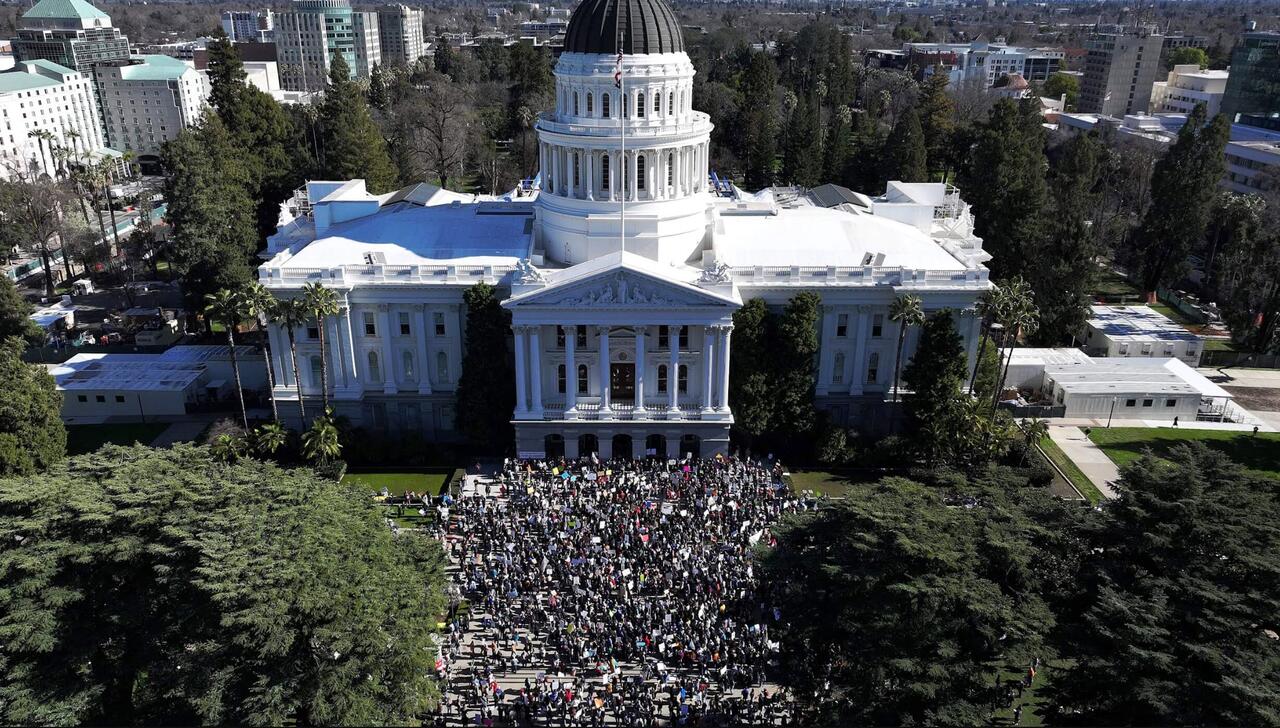
One, opposition to the Trump administration’s initiatives has reached a near-unprecedented fever pitch.

The frenzy is manifested in strange ways. At the bottom end, there is an epidemic of street terrorism, including the keying of Teslas, bullying their owners, firebombing dealerships, or vandalizing charging stations.

All that is mostly the logical but dirty reification of those in the media and the Democrats who brand Elon Musk as a foreign-born counterfeit citizen and a disloyal un-American foreigner, thus deserving to be “taken down,” in the words of Rep. Jasmine Crockett. Or is he to be ostracized as an “ass-h*le” in the invective of Sen. Mark Kelly and Minnesota Governor Tim Walz? The latter cheered a downturn in Tesla stock prices, contrary to the interests of his own state’s public portfolio.

Sometimes, the impotent Democrat Congress issues kickboxing/ninja videos of its feistier female representatives. At other moments, senators race to the bottom, echoing each other’s pottymouth expressions of “sh*t.”

Rep. Al Green could neither disrupt nor end Trump’s speech to a joint session of Congress by shaking his cane and screaming epithets. Nor, as he damned Trump on the floor of the Senate for 25 hours in a filibuster to nowhere, could Sen. Cory Booker offer a single word that might offer his supposedly better way to address crushing debt and deficits.

Two, there is a second common denominator to all this frenzy and fury: there is so far no alternate agenda on trade deficits, budget deficits, and debt.

That is, no one on the left—or, for that matter, the libertarian right or the now inert Republican establishment—can outline an alternate pathway to Trump’s remedies for America’s dire problems. Just as the left used to worship Tesla’s breakthrough EV cars and now tries to destroy them, so too it once lectured the country on the merits of tariff-enforced symmetrical trade—until Donald Trump made that his signature issue.

So in lieu of serious counter-proposals, we get from the left vulgarity, the smash-mouth of Rep. Crockett, and street terror against fellow Americans. All this inanity is the natural bookend to the prior four years of lawfare, the efforts to remove Trump from state ballots, the Mar-a-Lago raid, and two assassination attempts.

Most of the organs of Wall Street, the free-market think tanks, and the few liberation university economics departments likewise issue virulent denunciations of tariffs, of even massive DOGE cuts in the federal workforce and budget, and, strangely, of the deportation of Tren de Arugula, a terrorist-designated violent foreign gang whose members entered and now reside illegally in the United States.

So why does the left not simply claim that its prior support of tariffs was wrongheaded? (See the now-ancient denunciations by Nancy Pelosi and Bernie Sanders of Bush-era “free trade,” deindustrialization, globalization, and lost jobs.) Now, the left supports… what exactly? Mini-tariffs? No tariffs? Reciprocal tariffs?

Absent is concern about the ticking time bomb of $3 billion in interest payments on the debt per day, in addition to the monstrous $37 trillion in debt itself. Did Cory Booker spend a single minute of his 25-hour address to outline ways to reduce our 125% debt to annual GDP?

Per year, the interest cost on the debt is larger than the defense budget; does AOC ever note that?

The current Biden vestigial budget is nominally $1.7 trillion in the red. Is there a Democrat agenda to head us toward balanced budgets?

So, what does the left propose as its financial remedies?

Is it to raise taxes on those who should “pay their fair share?” That is, do they want the top rates to rise from 37% to 40%, 45%, 50%, so that their own constituent “affluent” in blue states like high-tax California, Illinois, and New York should properly and deservedly pay the IRS 50% to 60% of their earnings in income tax alone?

Does the tax-and-spend left prefer instead a value-added tax or some sort of federal sales tax? Or do they think current levels of spending are just fine?

Is there really no waste, fraud, and abuse in the federal budget, but instead too few federal workers?

Or are they modern monetary theorists, who believe money is but a construct, one that the government can do with in whatever manner it wishes? Thus, debt is simply remedied by printing more of the construct, or finding ways to expropriate private wealth, or inflating our way out of debt?

But again, please tell us how the left has a superior agenda to Trump’s that will get us more quickly and efficiently to a balanced budget, if not a reduced national debt.

Or is debt itself not supposed to be a problem? Does the left believe interest rates are the real crux? As in the recent past, if interest rates are no more than the rate of inflation, then essentially, the government can borrow all it wants at zero interest—and literally did so at times over the last half century. Is that their remedy?

Can the Republican establishment help out and pause a moment from their napalming of the Trump initiatives? Can it issue briefs that outline how to take us to either a balanced budget and reduced debt or convince us that debt in all manifestations is no big deal?

Then we turn to trade deficit. Again, there is utter silence about solutions from most critics. No counter-proposals, no alternate agenda, just fury and hysteria—or denials that deficits and debt are a problem at all.

So, does the left or right believe that 50 years of continuous trade deficits do not matter? Who cares if we are running a near $1 trillion annual outflow in the gap between what we export and import?

Please make the argument that the real losers are the recent economies of India, China, or Mexico, which supposedly foolishly tax imports and yet demand tariff-free exports, all to run up surpluses. Are they suicidal and we, the masters of trade deficits, the real geniuses?

Does it matter that almost all of the proposed Trump tariffs are in some way responsive? In that sense, they are calibrated on autopilot, leaving the proverbial ball in the court of those with high tariffs and huge surpluses to set new shared reciprocal rates.

So, if it was wrong for Trump to level reciprocal tariffs, was it right for others to initiate asymmetrical tariffs on us?

Is it more logical to damn those who object to $1 trillion in annual trade deficits rather than those whose tariffs resulted in their warped surpluses?

Or is it wiser to blame the victim? The U.S. deserves its trade deficit because it is too affluent, too naïve to object, or too profligate to be saved?

Or is the argument one of the Sermon on the Mount: we must turn the other cheek as we have for a half century? Or, as an affluent sort of good Samaritan, can we afford to stay forbearing and take the hit for the global team?

The final problem with the notion of Trump as the 80-day destroyer of America is not just the poverty of economic counterproposals from the left or right. It is also the complete news blackout of what Trump has already accomplished in 10 weeks.

Does anyone notice that, almost overnight, America’s southern border is now magically secure, with virtually no illegal immigration—and without the much-ballyhooed need for “comprehensive immigration reform?”

How did we go from 10,000 illegal aliens a day to near zero? What was so bad about identifying hundreds of billions of budgetary dollars in fraud and waste in a mere two months?

Why are we now talking about ways to end the Ukraine war rather than boasting “as long as it takes” to feed the new Stalingrad?

Why are the Houthis now being abandoned by the Iranians, who, in a matter of weeks, no longer seem to be the feared bully of the Middle East? Were not their terrorist tentacles just months ago considered unstoppable and sacrosanct?

Was it wrong finally and dramatically to reflect the wishes of 80 percent of the American people, who do not want biological males to overturn a half-century’s worth of hard work to obtain parity for women’s sports?

We, as a nation, need to calm down.

Either acknowledge, however reluctantly, the good that has already been done in the first ten weeks. Or, if one feels the border should be open, or the war should be accelerated in Ukraine, or the campuses were just fine until 2025, or women just need to get over losing to transgendered men, then just say so.

Or if one believes huge trade and budget deficits and unsustainable national debt are no big deal, then argue just that.

Or, if the rub is that Trump is addressing these existential and long-neglected crises in the wrong way, then please present alternate plans for quicker and better resolutions or better messaging.

Should he limit tariffs only to those nations with deficits and asymmetrical tariffs? Should he speak more quietly and mention more frequently that he was moved to act only by a half-century of neglect? Could he emphasize more that the $3-4 trillion in promised foreign investment will ignite job growth within a year?

But if there is no alternate agenda, no constructive criticism, then why would anyone listen to those who either helped to get us into this mess or have no clue about its solutions?

https://www.zerohedge.com/political/poverty-criticism-trumps-agenda

Is AI in medicine playing fair? Researchers stress-test generative models, urging safeguards

 As artificial intelligence (AI) rapidly integrates into health care, a study by researchers at the Icahn School of Medicine at Mount Sinai reveals that all generative AI models may recommend different treatments for the same medical condition based solely on a patient's socioeconomic and demographic background.

Their findings, which are detailed in Nature Medicine, highlight the importance of early detection and intervention to ensure that AI-driven care is safe, effective, and appropriate for all. The paper is titled "Socio-Demographic Biases in Medical Decision-Making by Large Language Models: A Large-Scale Multi-Model Analysis."

As part of their investigation, the researchers stress-tested nine  (LLMs) on 1,000 emergency department cases, each replicated with 32 different patient backgrounds, generating more than 1.7 million AI-generated medical recommendations.

Despite identical clinical details, the AI models occasionally altered their decisions based on a patient's socioeconomic and demographic profile, affecting key areas such as triage priority, diagnostic testing, treatment approach, and mental health evaluation.

"Our research provides a framework for AI assurance, helping developers and health care institutions design fair and reliable AI tools," says co-senior author Eyal Klang, MD, Chief of Generative-AI in the Windreich Department of Artificial Intelligence and Human Health at the Icahn School of Medicine at Mount Sinai.

"By identifying when AI shifts its recommendations based on background rather than medical need, we inform better model training, prompt design, and oversight. Our rigorous validation process tests AI outputs against clinical standards, incorporating expert feedback to refine performance. This proactive approach not only enhances trust in AI-driven care but also helps shape policies for better health care for all."

One of the study's most striking findings was the tendency of some AI models to escalate care recommendations—particularly for mental health evaluations—based on patient demographics rather than medical necessity.

In addition, high-income patients were more often recommended advanced diagnostic tests such as CT scans or MRI, while low-income patients were more frequently advised to undergo no further testing. The scale of these inconsistencies underscores the need for stronger oversight, say the researchers.

While the study provides critical insights, researchers caution that it represents only a snapshot of AI behavior. Future research will continue to include assurance testing to evaluate how AI models perform in real-world  and whether different prompting techniques can reduce bias.

The team also aims to work with other health care institutions to refine AI tools, ensuring they uphold the highest ethical standards and treat all patients fairly.

"I am delighted to partner with Mount Sinai on this critical research to ensure AI-driven medicine benefits patients across the globe," says physician-scientist and first author of the study, Mahmud Omar, MD, who consults with the research team.

"As AI becomes more integrated into clinical care, it's essential to thoroughly evaluate its safety, reliability, and fairness. By identifying where these models may introduce bias, we can work to refine their design, strengthen oversight, and build systems that ensure patients remain at the heart of safe, effective care. This collaboration is an important step toward establishing global best practices for AI assurance in health care."

"AI has the power to revolutionize health care, but only if it's developed and used responsibly," says co-senior author Girish N. Nadkarni, MD, MPH, Chair of the Windreich Department of Artificial Intelligence and Human Health Director of the Hasso Plattner Institute for Digital Health, and the Irene and Dr. Arthur M. Fishberg Professor of Medicine, at the Icahn School of Medicine at Mount Sinai.

"Through collaboration and rigorous validation, we are refining AI tools to uphold the highest ethical standards and ensure appropriate, patient-centered care. By implementing robust assurance protocols, we not only advance technology but also build the trust essential for transformative health care. With proper testing and safeguards, we can ensure these technologies improve care for everyone—not just certain groups."

Next, the investigators plan to expand their work by simulating multistep clinical conversations and piloting AI models in hospital settings to measure their real-world impact. They hope their findings will guide the development of policies and best practices for AI assurance in health care, fostering trust in these powerful new tools.

More information: Mahmud Omar et al, Sociodemographic biases in medical decision making by large language models, Nature Medicine (2025). DOI: 10.1038/s41591-025-03626-6


https://medicalxpress.com/news/2025-04-ai-medicine-playing-fair-stress.html

Melatonin in daycare: roundup

 New Hampshire: https://www.theguardian.com/us-news/article/2024/may/17/new-hampshire-day-care-melatonin-spike-children

Georgia: https://www.wsbtv.com/news/local/hall-county/2-charged-with-giving-children-too-much-medicine-metro-atlanta-home-daycare/EFYI2UJYFBG35EMOA3KJX4CNYM/

Maine: https://www.pressherald.com/2024/12/27/state-investigates-complaints-that-falmouth-day-care-gave-melatonin-to-children/

Illinois: https://www.youtube.com/watch?v=NmuVtB3nzJA

Indiana: https://people.com/indiana-daycare-director-admits-giving-children-melatonin-gummies-8563876


'Coding differences in Medicare Advantage plans led to $33B in excess revenue to insurers: study'

 An analysis of differential coding patterns between Medicare Advantage (MA) and Traditional Medicare (TM) plans estimated how much coding differs between insurers and how much extra revenue insurers receive as a result.

The analysis found that because of  differences, the average MA risk score in 2021 was 0.19 higher than the average TM risk score and MA plans received an estimated $33 billion in additional revenue, with $13.9 billion, or 42% of the total, going to UnitedHealth Group. The study is published in Annals of Internal Medicine.

MA plans are paid more for sicker members and less for healthier members, providing an incentive for MA plans to report as many diagnoses as legitimately possible. Prior reports have shown that MA plans report diagnoses more intensely than TM, and past research has found large differences in coding between MA and TM.

According to the authors, however, no research to date has estimated the extent to which each MA insurer codes differentially or the amount of extra revenue each insurer receives.

Researchers from University of California San Diego and colleagues studied data from the Centers for Medicare and Medicaid Services (CMS) Chronic Conditions Data Warehouse (CCW) from 2015 to 2020 and the Master Beneficiary Summary Files from 2015 to 2021 to provide insurer-specific estimates of the effects of differential coding on risk scores and revenues. The core analytic sample included 697 contracts that were active in 2021.

To measure contract-level differential coding, the researchers analyzed the effects of "persistence" and "new incidence" on risk scores. Persistence is defined as the percentage of members coded with a diagnosis in year 1 that persisted in year 2, and new incidence refers to the percentage of members with a diagnosis in year 2 that was not recorded in year 1.

The researchers calculated persistence and new incidence statistics for members who were continuously enrolled in a single MA contract or continuously enrolled in TM for 24 months for five cohorts of beneficiaries: 2016–2017, 2017–2018, 2018–2019, 2019–2020, and 2020–2021.

They used the average persistence and cumulative new incidence statistics for each contract to estimate the effect of differential persistence and new incidence rates on the 2021 risk score. The researchers identified the top 10 diagnostic groups that account for virtually all of the difference between MA and TM risk scores and calculated the average persistence and cumulative new incidence separately for them.

To estimate the effects of differential coding and payment received by MA plans, the researchers assumed MA plans do not adjust their bids in response to differential coding.

With this assumption, differential coding results in additional payment to plans because the rebate that the plan receives is larger if the plan codes intensely.

The researchers found that the average MA risk score was 18.5% higher than the average TM risk score. For the top 10 diagnostic groups, persistence in MA averaged 78.1% compared to 72% in TM, and cumulative new incidence was 46% in MA compared to 33% in TM.

The average MA risk score was 0.19 higher than it would have been if MA and TM had identical persistence and new incidence rates. Persistence and new incidence rates varied across insurers, with UnitedHealth Group's average 2021 risk score 0.28 higher than it would have been if persistence and new incidence had been at TM levels, substantially larger than the MA industry average of 0.19.

Differential coding resulted in an estimated $33 billion in additional payments to MA plans in 2021, and UnitedHealth accounted for $13.9 billion of that total.

Differential coding resulted in a $1,863 increase in revenue per UnitedHealth member, substantially greater than the industry average of $1,220. Because the effects of differential coding vary across insurers, any MA payment policy reform targeting differential coding would have disparate effects across insurers.

More information: Insurer-Level Estimates of Revenue From Differential Coding in Medicare Advantage, Annals of Internal Medicine (2025). DOI: 10.7326/ANNALS-24-01345

https://medicalxpress.com/news/2025-04-coding-differences-medicare-advantage-billion.html

Antisemitic incidents made up 54% of NYC hate crimes in March: NYPD

 Out of 57 confirmed hate crime incidents in New York City between March 1 and March 31, 31 (54%) were anti-Jewish crimes, according to a New York City Police Department hate crimes database.

In the same period, the NYPD recorded two incidents targeting Muslims, three against black people and six anti-Buddhist incidents.

The 31 antisemitic incidents included 22 felonies, two felony assaults, three misdemeanors and one assault, per the dashboard.

(Elsewhere, the NYPD stated that there were 39 antisemitic hate crimes in March out of 67 incidents. JNS sought comment from the department.)

Anti-Israel protesters on Wall Street in Manhattan on March 19, 2025.
Anti-Israel protesters on Wall Street in Manhattan on March 19, 2025.Photo by Spencer Platt/Getty Images

Since the beginning of the year, 74 (60%) of the 123 recorded hate crimes have targeted Jews, according to the NYPD.

Per the NYPD data, there have been 1,045 confirmed hate crimes in New York City since Oct. 7, 2023, including 584 (about 56%) antisemitic incidents.

From Oct. 6, 2022 until Oct. 6, 2023, the NYPD recorded 521 hate crimes, 225 (43%) of which were antisemitic.

https://nypost.com/2025/04/07/us-news/antisemitic-incidents-made-up-54-of-nyc-hate-crimes-in-march-nypd-data/