Search This Blog

Thursday, May 8, 2025

Another US Fighter Jet Destroyed In The Red Sea

 Another $60 million US Navy fighter jet has been 'lost at sea' - this time during a crash landing as the aircraft was trying to land on the USS Harry S. Truman aircraft carrier.

This marks the second F/A-18 Super Hornet fighter jet which has been destroyed aboard the Truman in just over a week.

US Navy image

The first Super Hornet reportedly fell overboard late last month while the Truma took a hard turn amid inbound Houthi fire, in a strange incident which could just be a Pentagon cover story.

But as for the second incident, first reported Tuesday night (local US time), CNN writes that "It is not entirely clear what happened yet, as the investigation is ongoing, but two of the people said there was some kind of arrestment failure as the jet was trying to land on the carrier and the pilot and weapons systems officer had to eject."

"They were recovered by a rescue helicopter and are both alive, but they suffered minor injuries, one of the people said," the report continues.

Amid the apparent systems failure the aircraft went overboard. "The arrestment failed, causing the aircraft to go overboard. Both aviators safely ejected and were rescued by a helicopter assigned to Helicopter Sea Combat Squadron 11," a defense official described. "The aviators were evaluated by medical personnel and assessed to have minor injuries. No flight deck personnel were injured."

US Naval Institute News further details:

It’s unclear if the arresting wire that stops the aircraft during the carrier landing failed or if the hook on the fighter didn’t catch the wire. It’s also unclear whether the incident fouled the flight deck, interrupting flight operations. As of Tuesday evening, Truman was fully operational, the defense official said.

In total three jets have been recently lost in the Red Sea:

And in December, the missile cruiser USS Gettysburg, part of the Truman's strike group, shot down a Super Hornet in what the US military described as "an apparent case of friendly fire." Both aviators ejected safely.

The Houthis had since Red Sea hostilities were renewed in mid-March (in the wake of the Gaza ceasefire collapsing), sent drones and missiles against US warships off Yemen's coast, particularly the Truman carrier.

This week Israel has joined the US-led coalition's bombing campaign against the Houthis in Yemen. Israeli jets obliterated Sanaa International Airport, in an operation described as retaliation for the Sunday ballistic missile attack on Ben Gurion International Airport in Tel Aviv.

The timing of this second jet loss incident is interesting, given it was revealed the same day that President Donald Trump announced the US would stop strikes against the Houthis.

The Houthis have confirmed there will be a ceasefire in the Red Sea with the United States. The deal was mediated by Oman, and this looks like a 'mission accomplished' moment for Trump where he's ready to grasp onto a way out of the quagmire the US found itself in. Wisely, he is getting the US out, and Israel appears to be stepping up in terms of its own defense.

Mideast war correspondent Elijah Magnier has concluded, "The US intelligently stopped the bombing on Yemen due to the lack of objectives, the empty outcome and the high cost versus no gain." 

https://www.zerohedge.com/geopolitical/another-us-fighter-jet-destroyed-red-sea

Viemed ups guidance

 Operational highlights (all dollar amounts are USD):

  • Net revenues for the quarter ended March 31, 2025 were $59.1 million, representing an increase of $8.5 million, or 17%, over net revenues reported for the comparable quarter ended March 31, 2024.

  • Net income attributable to Viemed for the quarter ended March 31, 2025 totaled $2.6 million, or $0.06 per diluted share, an increase of 64% over net income attributable to Viemed of $1.6 million, or $0.04 per diluted share, for the quarter ended March 31, 2024.

  • Adjusted EBITDA for the quarter ended March 31, 2025 totaled $12.8 million, a 26% increase as compared to the quarter ended March 31, 2024. A reconciliation of reported non-GAAP financial measures to their most directly comparable U.S. GAAP financial measures can be found in the tables accompanying this press release.

  • The Company increased its ventilator patient count to 11,809 as of March 31, 2025, an increase of 13% over March 31, 2024, and a slight increase as compared to December 31, 2024.

  • The Company increased its PAP therapy patient count to 22,899 as of March 31, 2025, an increase of 46% over March 31, 2024, and a 7% sequential increase from December 31, 2024. The Company's sleep resupply patient count was 22,941 as of March 31, 2025, an increase of 21% over March 31, 2024, and a 6% sequential decrease from December 31, 2024.

  • As of March 31, 2025, the Company maintains a strong cash balance of $10.2 million, and an overall working capital balance of $13.6 million. Long-term debt as of March 31, 2025 amounted to $3.5 million and the Company has $55 million available under existing credit facilities.

Updated Full Year 2025 Guidance (all dollar amounts are USD):

  • Net revenue for the year ending December 31, 2025 is expected to be in the range of $256 million to $265 million, increased from the prior range of $254 million to $265 million.

  • Adjusted EBITDA for the year ending December 31, 2025 is expected to be in the range of $55 million to $58 million, increased from the prior range of $54 million to $58 million. See “Forward-Looking Statements” below for further information on this non-GAAP financial guidance.

Agreement to Acquire Lehan’s Medical Equipment for $26 Million in Third Quarter of 2025 (all dollar amounts are USD):

  • As previously disclosed on May 6, 2025, Viemed agreed to acquire Lehan’s Medical Equipment, a healthcare company offering home medical equipment with specialties in respiratory care and women’s health, for approximately $26 million, subject to customary net working capital adjustments and an estimated $2.2 million of contingent payments. In 2024, Lehan generated net revenues of approximately $25.7 million and Adjusted EBITDA of approximately $7.4 million.

  • Viemed has not included the anticipated impact of this acquisition in its full year 2025 guidance. When the acquisition is completed, subject to customary closing conditions, in the third quarter of 2025, the Company intends to update its full year outlook to incorporate the anticipated contributions from the acquisition.

Conference Call Details

The Company will host a conference call to discuss first quarter results, as well as its 2025 guidance, on Thursday, May 8, 2025, at 11:00 a.m. EDT.

Interested parties may participate in the call by dialing:

866-682-6100 (US Toll-Free)
+1-862-298-0702 (International)

Live Audio Webcast: https://event.choruscall.com/mediaframe/webcast.html?webcastid=0dOJVhdb

Following the conclusion of the call, an audio recording and transcript of the call can be accessed on the Company's website.


https://finviz.com/news/50680/viemed-healthcare-announces-first-quarter-2025-financial-results

China Airlines Order for Boeing 777X Passenger and Freighter Models

 Boeing [NYSE: BA] and China Airlines (CAL) today announced the carrier as the newest 777X customer with an order for 10 777-9 passenger and four 777-8 Freighter airplanes. The first carrier in Taiwan to order the fuel-efficient 777X, China Airlines will leverage the widebody jet's added capacity and range on long-haul routes to North America and Europe.

Boeing rendering of a 777-9 and 777-8F in China Airlines livery

In addition to the firm order, which booked in March 2025 and was posted as unidentified on Boeing's orders and deliveries website, the airline has options to purchase five 777-9s and four 777-8 Freighters. With this order, China Airlines joins an exclusive group of global airlines that have ordered the passenger and freighter variants of the 777X family.

https://www.kxan.com/business/press-releases/cision/20250508CG82995/china-airlines-announces-order-for-boeing-777x-passenger-and-freighter-models/

Wednesday, May 7, 2025

OpenAI and US FDA hold talks about using AI in drug evaluation, Wired reports

 OpenAI and the U.S. Food and Drug Administration have been meeting to discuss the health regulator's use of AI, technology news platform Wired reported on Wednesday, citing sources with knowledge of the meetings.

Sources close to the project say a small team from OpenAI has met with the FDA and two associates of Elon Musk's so-called Department of Government Efficiency multiple times in recent weeks, according to the report.

https://www.aol.com/openai-us-fda-hold-talks-212838561.html

Amphastar strategic shift to proprietary drugs amid growth challenges

 Amphastar Pharmaceuticals (NASDAQ:AMPH) presented its corporate strategy on May 7, 2025, highlighting a significant pivot toward proprietary and biosimilar products amid recent financial headwinds. The presentation comes after the company’s disappointing Q4 2024 results, where it missed analyst expectations with an EPS of $0.92 against a forecast of $0.97, causing an 11% stock drop. Currently trading at $24.43, Amphastar remains well below its 52-week high of $53.96.

Strategic Initiatives

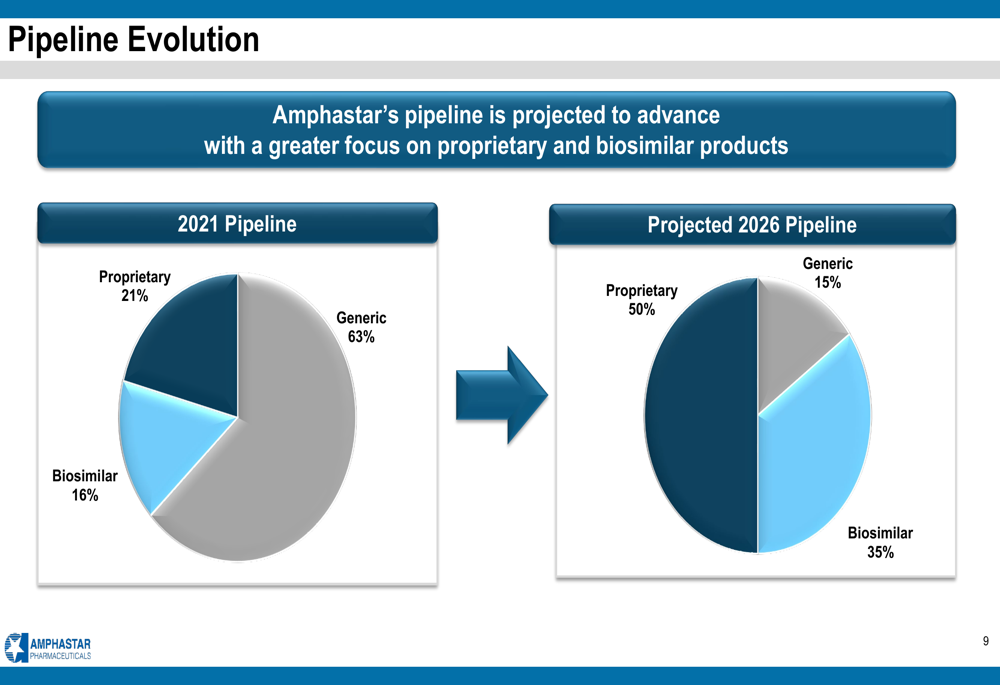
Amphastar’s presentation emphasized a fundamental transformation of its business model, moving away from its historical reliance on generic drugs toward higher-margin proprietary and biosimilar products. This strategic evolution is projected to dramatically reshape the company’s pipeline composition by 2026.

As shown in the following chart of Amphastar’s pipeline evolution:

The company plans to reduce its generic portfolio from 63% in 2021 to just 15% by 2026, while increasing proprietary products from 21% to 50% and biosimilars from 16% to 35%. This shift aligns with Amphastar’s "Three-H Focus" strategy of High Quality, High Efficiency, and High Technology, which has contributed to significant margin expansion in recent years.

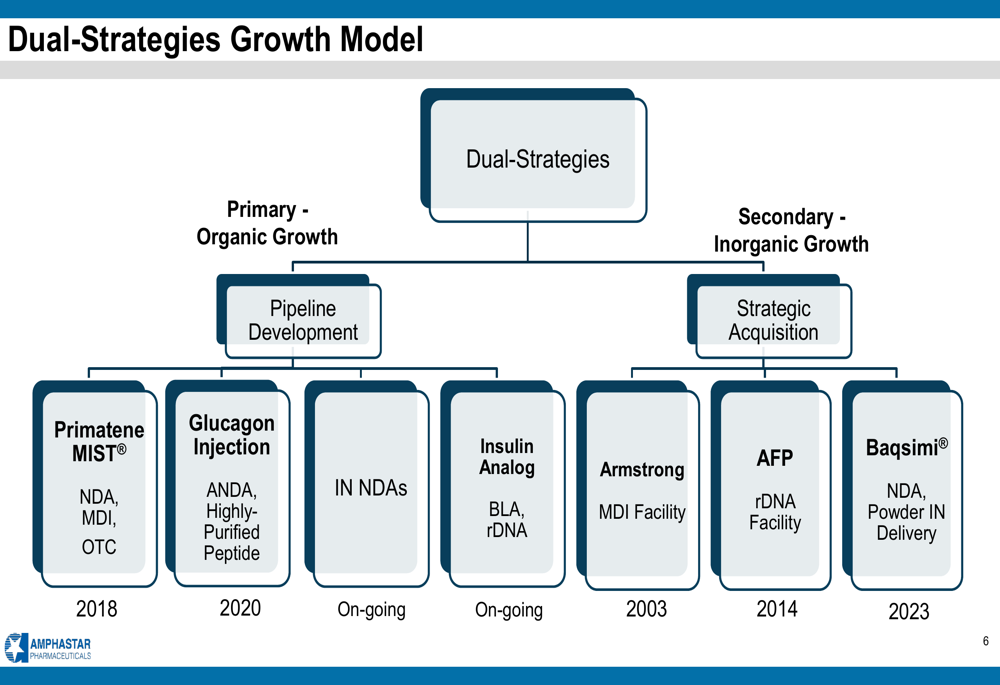
The company’s strategic approach is built on a dual-growth model combining organic pipeline development with strategic acquisitions:

Detailed Financial Analysis

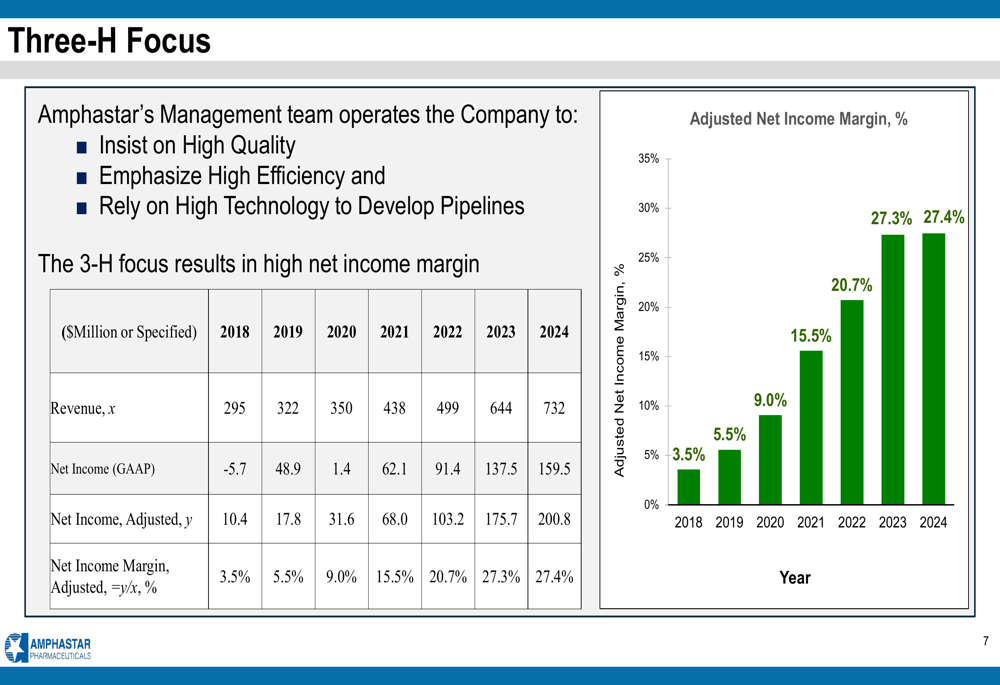
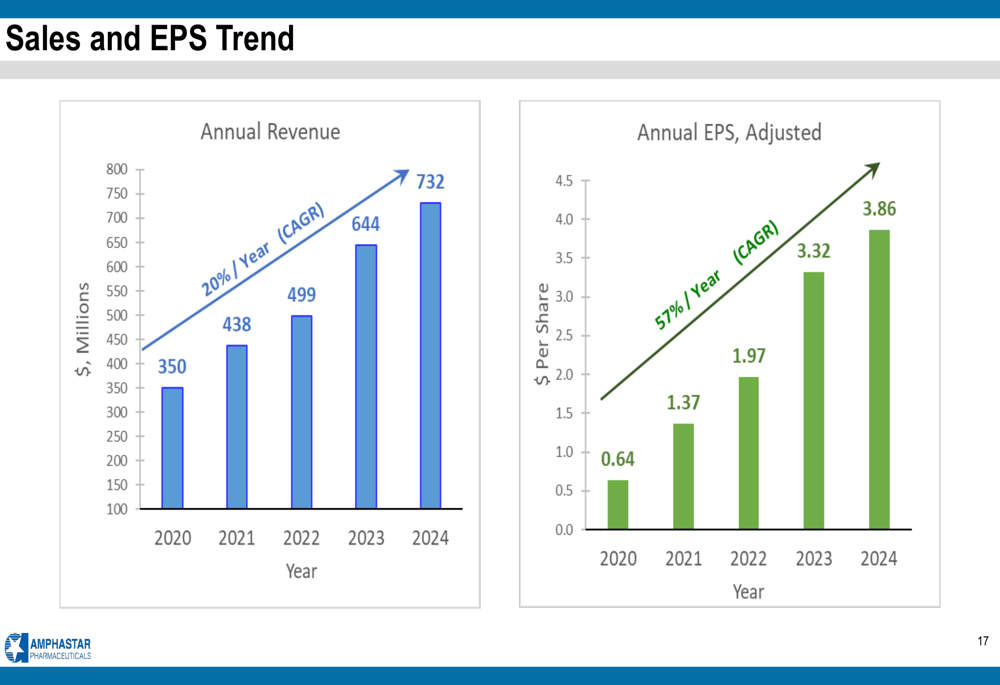
Historically, Amphastar has demonstrated strong financial performance, with revenue growing from $295 million in 2018 to $732 million in 2024, representing a 20% compound annual growth rate (CAGR) from 2020-2024. More impressively, adjusted net income margin expanded from just 3.5% in 2018 to 27.4% in 2024.\The following chart illustrates this margin expansion:

Similarly, adjusted earnings per share grew at a 57% CAGR between 2020 and 2024, reaching $3.86 per share last year:

However, recent quarterly performance has shown signs of pressure. The company’s Q4 2024 results revealed declining gross margins (46.5%, down from 54% year-over-year) and revenue that fell short of analyst expectations. This contrast between long-term growth and recent challenges suggests Amphastar may be experiencing headwinds as it navigates its strategic transition.

Competitive Industry Position

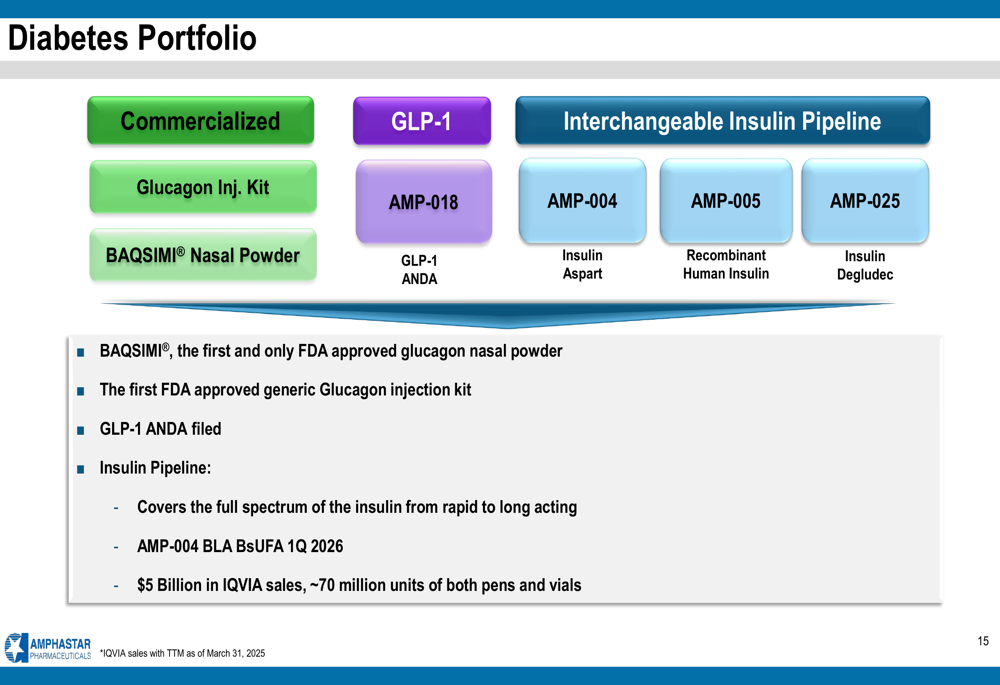
Amphastar’s diabetes portfolio has emerged as a cornerstone of its proprietary product strategy. The company has built a comprehensive offering spanning treatment options for diabetes patients:

The 2023 acquisition of BAQSIMI, a nasal glucagon powder for severe hypoglycemia, represents a pivotal element of this strategy. BAQSIMI is the first and only FDA-approved glucagon nasal powder, offering significant advantages over traditional injection kits.

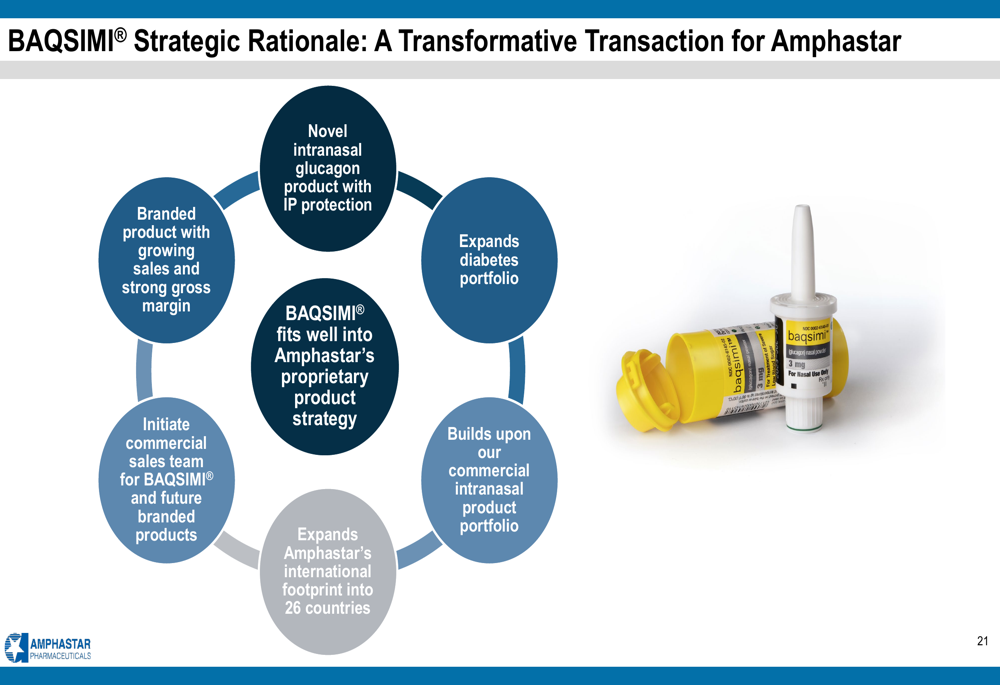
The strategic rationale for the BAQSIMI acquisition extends beyond product diversification:

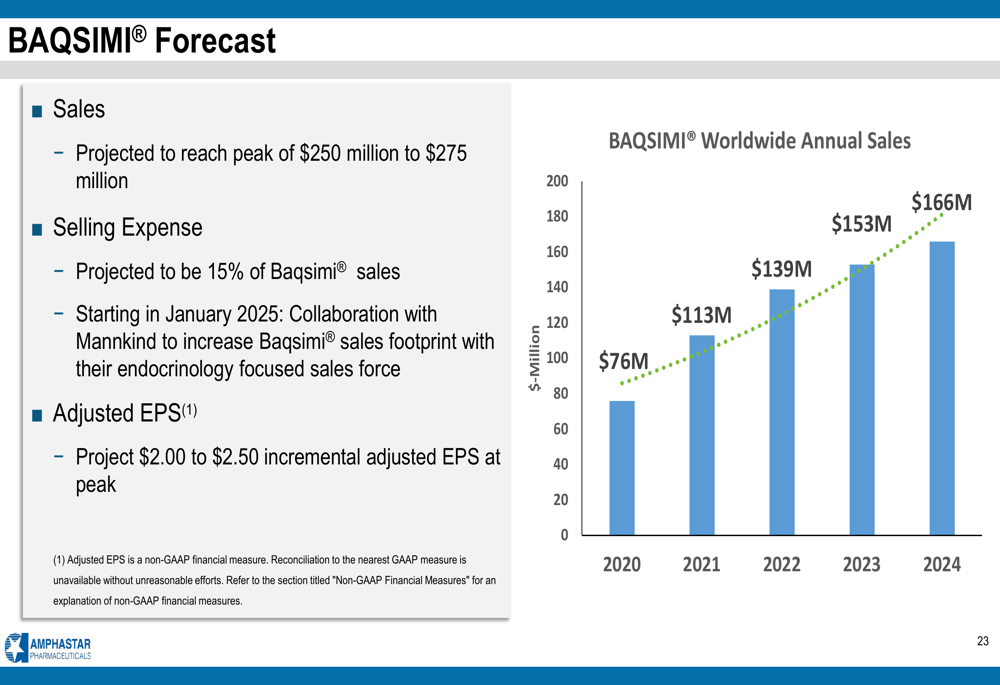
Amphastar projects BAQSIMI to reach peak sales of $250-275 million, with a collaboration with MannKind (NASDAQ:MNKD) beginning in January 2025 to expand its sales footprint:

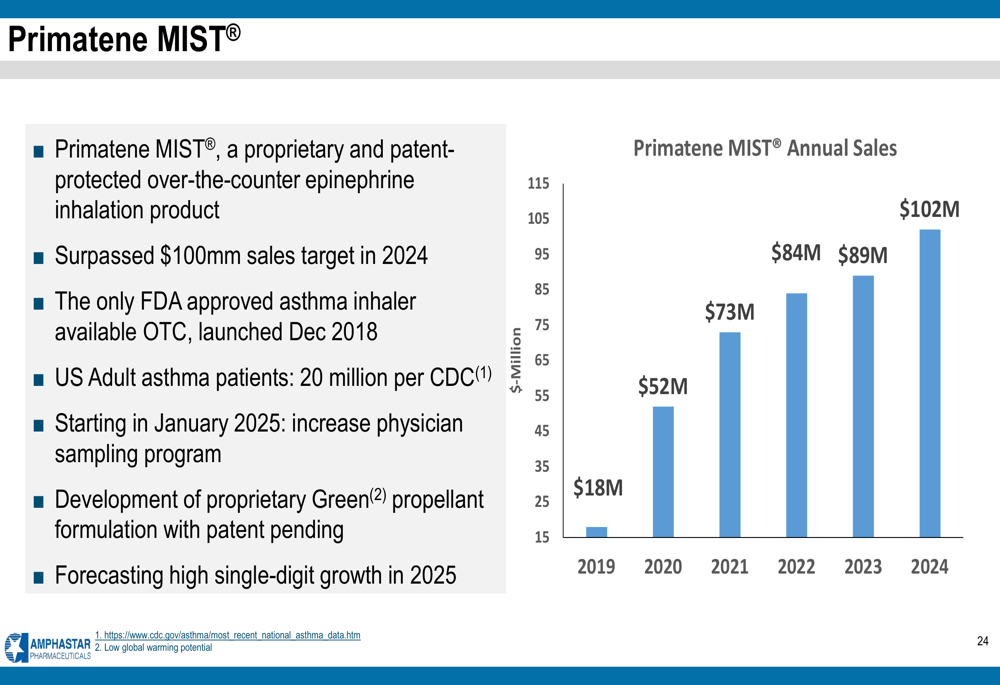
Another key proprietary product is Primatene MIST, an over-the-counter epinephrine inhalation product for asthma symptoms. The product surpassed $100 million in sales in 2024, growing steadily since its 2018 launch:


Forward-Looking Statements

Despite the company’s optimistic presentation, management has tempered near-term expectations, projecting flat sales in 2025 before returning to growth in 2026. This outlook contrasts with the presentation’s emphasis on upcoming catalysts and pipeline developments.

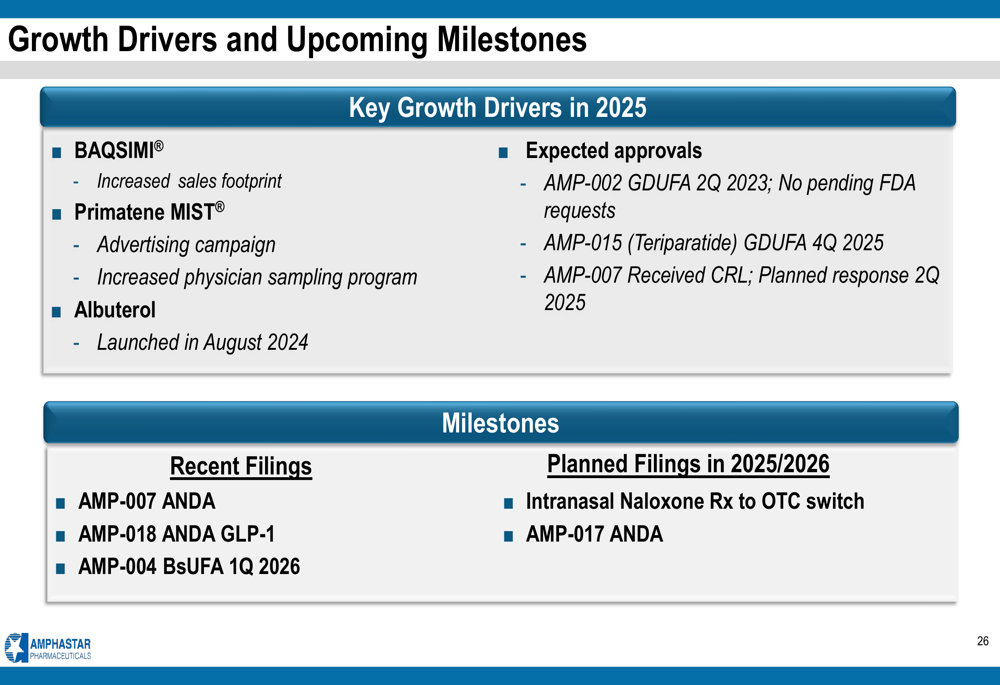
Key growth drivers for 2025 include continued expansion of BAQSIMI and Primatene MIST, while the pipeline features several potential approvals and filings:

Particularly significant is the company’s insulin biosimilar program, with AMP-004 targeting a BsUFA date in Q1 2026. This product aims at a $5 billion market with approximately 70 million units of both pens and vials.

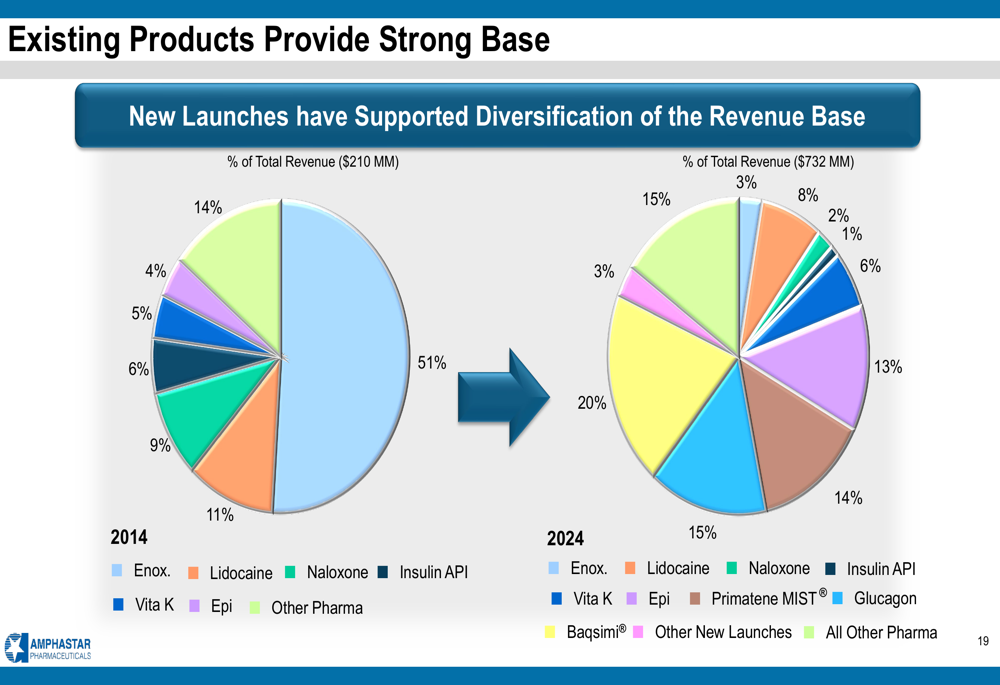
The company’s product revenue base has diversified significantly since 2014, reducing dependency on any single product:

https://www.investing.com/news/company-news/amphastar-q2-2025-slides-strategic-shift-to-proprietary-drugs-amid-growth-challenges-93CH-4030139