Search This Blog

Sunday, September 7, 2025

US Plans Curbs on Chinese Drones, Heavy Vehicles Over Security Risks


The Trump administration is preparing sweeping new restrictions on Chinese drones and heavy vehicles, citing growing national security risks tied to foreign-controlled technology.

According to the Commerce Department, the rules, expected as early as this month, could ban or sharply limit imports of drones and vehicles weighing more than 10,000 pounds from China and other countries deemed adversaries.

The announcement marks the latest move in Washington’s broader strategy to reduce reliance on Chinese technology and secure U.S. supply chains.

While details of the new measures remain unclear, the initiative follows a series of executive orders issued in June aimed at tightening procurement rules, limiting Chinese drone access to critical infrastructure, and boosting American alternatives.
Executive Orders Expand Screening and Countermeasures

In June, President Donald Trump signed two executive orders designed to curb Beijing’s influence over the U.S. drone market. One directive tasked the Federal Acquisition Security Council with creating a Covered Foreign Entity List, effectively barring federal agencies and contractors from purchasing drones tied to foreign governments.

The orders also directed the Commerce Department to expand trade-related investigations and draft regulations to secure supply chains. Meanwhile, the Departments of Commerce and Defense, along with U.S. export agencies, were instructed to promote American drone exports through loans, regulatory reforms, and broader market access.

A second order focused on domestic airspace security, mandating that the Federal Aviation Administration develop new rules to restrict drone flights over sensitive sites such as airports, pipelines, and federal facilities. It also provided federal funding for local governments to buy drone detection and tracking technology, citing the increasing risks of espionage and foreign surveillance.
Chinese Dominance Sparks Security Warnings

Chinese firms dominate the global drone supply chain, with Da-Jiang Innovations (DJI) and Autel Robotics controlling nearly 90% of the U.S. commercial drone market. Industry analysts warn that this level of dependence allows Beijing to leverage its position for both economic and strategic gains.

U.S. officials have raised alarms that Chinese drones could collect sensitive data over American infrastructure, ranging from energy pipelines to military bases, and feed it back to Beijing. Past incidents of Chinese nationals conducting unauthorized drone flights over restricted areas have only intensified these fears.

China has also shown a willingness to weaponize its dominance. For instance, Beijing previously cut off key drone components to U.S. manufacturer Skydio after it supplied equipment to Taiwan’s National Fire Agency.
Tariffs, Market Shifts Likely Ahead

The Commerce Department’s pending rules may add tariffs or outright bans on Chinese drones and heavy vehicles. While these measures could protect sensitive industries, they are also likely to disrupt U.S. businesses that depend heavily on low-cost imports. DJI alone accounts for more than half of all U.S. commercial drone sales, meaning industries from real estate to agriculture could face price hikes and supply shortages.

On the automotive side, earlier restrictions targeting Chinese cars and trucks are set to take effect in late 2026. Analysts expect the new measures on medium- and heavy-duty vehicles to accelerate that timeline, forcing fleet operators and logistics firms to diversify suppliers sooner than anticipated.

The administration argues that these sacrifices are necessary to bolster national security and strengthen domestic manufacturing. By curbing Chinese imports, Washington hopes to create space for American drone companies to compete in a market long dominated by foreign rivals.

Centessa to Morgan Stanley 23rd Annual Global Healthcare Conference


Centessa Pharmaceuticals plc (Nasdaq: CNTA), a clinical-stage pharmaceutical company that aims to discover and develop transformational medicines for patients, today announced that members of its management team will participate in the Morgan Stanley 23rd Annual Global Healthcare Conference in New York, NY. A fireside chat is scheduled for Tuesday, September 9th at 4:50 PM ET.


The live audio webcast of this event, as well as an archived recording, will be available under the “Events & Presentations” tab on the investor relations section of the Centessa Pharmaceuticals website at https://investors.centessa.com/.

About Centessa Pharmaceuticals
Centessa Pharmaceuticals, plc is a clinical-stage pharmaceutical company with a mission to discover, develop and ultimately deliver medicines that are transformational for patients. We are pioneering a new class of potential therapies within our orexin receptor 2 (OX2R) agonist program for the treatment of excessive daytime sleepiness (EDS), impaired attention, cognitive deficits, and fatigue and other symptoms across neurological, neurodegenerative and neuropsychiatric disorders.

More: Doctors Told Pregnant Women Tylenol Was Safe – New Research Raises Doubts

 By University of Washington School of Medicine/UW Medicine March 11, 2025

A new study suggests that fetal exposure to acetaminophen significantly increases the risk of ADHD in children, raising concerns about its safety during pregnancy.

While acetaminophen has long been considered a low-risk pain reliever for pregnant women, this research—tracking a cohort of over 300 mothers—found that children exposed to the drug had nearly double the likelihood of developing ADHD. The effect was even more pronounced in girls, though researchers are unsure why.

Acetaminophen in Pregnancy: A Hidden Risk?

A new study published in Nature Mental Health suggests that fetal exposure to acetaminophen may increase the risk of ADHD in children.

Acetaminophen, the active ingredient in many pain relievers such as Tylenol and NyQuil, is commonly used during pregnancy. Research shows that up to 70% of pregnant women take it to relieve pain or reduce fever. The U.S. Food and Drug Administration (FDA) has long considered it one of the few safe medications for pregnancy.

Should Doctors Reconsider Acetaminophen?

However, the study’s findings suggest that doctors may need to reconsider its use during pregnancy.

“Most of the prior studies asked women to self-report whether they had taken Tylenol or anything that contained acetaminophen,” said lead author Brennan Baker, a researcher at Seattle Children’s Research Institute. Baker also works in the lab of Dr. Sheela Sathyanarayana, a UW Medicine pediatrician.

A Drug That Needs Reevaluation?

“This medication was also approved decades ago, and may need reevaluation by the FDA,” said Sathyanarayana, the paper’s senior author. “Acetaminophen was never evaluated for fetal exposures in relation to long-term neurodevelopmental impacts.”

Acetaminophen is widely used during pregnancy, with 41-70% of pregnant individuals in the United States, Europe, and Asia reporting use. Despite acetaminophen’s classification as low risk by regulatory agencies such as the FDA, accumulating evidence suggests a potential link between prenatal acetaminophen exposure and adverse neurodevelopmental outcomes, including ADHD and ADHD autism spectrum disorder, the researchers noted.

Tracking Acetaminophen’s Impact Over a Decade

This research tracked a cohort of 307 women from 2006 to 2011, who agreed to give blood samples during their pregnancy. The researchers tracked plasma biomarkers for acetaminophen in the samples.

The children born to these mothers were followed for 8 to 10 years. Among the women who did not use acetaminophen during pregnancy, the rate of ADHD was 9%, but for the women who used acetaminophen, the ADHD rate among their offspring was 18%.

Acetaminophen metabolites were detected in 20.2% of maternal plasma samples. Children whose mothers had these biomarkers present in their plasma had a 3.15 times higher likelihood of an ADHD diagnosis compared with those without detected exposure.

Stronger Effects in Girls Than Boys

The association was stronger among daughters than sons, with the daughters of acetaminophen-exposed mothers showing a 6.16 times higher likelihood of ADHD while the association was weaker and nonsignificant in males. Researchers did not know why the association was stronger in females.

The investigators’ analysis used data from the Conditions Affecting Neurocognitive Development and Learning in Early Childhood (CANDLE) research cohort, which comprised 1,031 pregnant individuals in Memphis, Tenn., who were enrolled between 2006 and 2011.

By happenstance, and not by design, the study cohort included only Black women, Baker said, adding that the results could be generalized to women and children of any race or ethnicity.

A Commonly Recommended Drug

Mothers often are advised to turn to acetaminophen, the primary agent in Tylenol, rather than ibuprofen, which is more likely to adversely affect the fetal kidney or heart, Baker said.

“(Acetaminophen) is really the only option to control fever or pain during pregnancy,” he said.

So, what is a mother to do?

“There is obviously more work that needs to be done in this area,” he said. “And we need to continually update our guidance.”

Is There an Alternative?

For example, he suggested, during prenatal visits, patients should discuss the dosage of a drug that contains acetaminophen or talk about what pain it is intended to help manage, he said. Another drug class, such as triptans, is safe and effective for managing migraines, he added.

More work needs to be done to find out if some people can tolerate acetaminophen during pregnancy with no ill effects on the fetus while others cannot, he said.

He added that research findings on the effects of the drug and its potential risks during pregnancy have not been consistent.

Conflicting Studies Call for More Research

One study recently released in Sweden, showed no link between maternal acetaminophen use and ADHD in their children; while another study out of Norway, did in fact find a link. The study out of Sweden, however, relied on self-reported data, Baker noted.

“The study out of Sweden, however, reported that only 7% of pregnant individuals used acetaminophen,” Baker noted. “And that study could have underestimated the exposure.

“I think it goes back to how the data was collected,” he added. “The conflicting results mean that more research is needed.”

A Call for Updated Guidelines

Medical societies and the FDA should update guidance on the use of acetaminophen as safety data emerges, Sathyanarayana said.

Reference: “Associations of maternal blood biomarkers of prenatal APAP exposure with placental gene expression and child attention deficit hyperactivity disorder” by Brennan H. Baker, Theo K. Bammler, Emily S. Barrett, Nicole R. Bush, Brent R. Collett, Karen J. Derefinko, Daniel A. Enquobahrie, Catherine J. Karr, Kaja Z. LeWinn, Jiawang Liu, Christine T. Loftus, James W. MacDonald, Shanna H. Swan, Qi Zhao, Alison G. Paquette and Sheela Sathyanarayana, 6 February 2025, Nature Mental Health.
DOI: 10.1038/s44220-025-00387-6

https://scitechdaily.com/doctors-told-pregnant-women-tylenol-was-safe-new-research-raises-doubts/

Trump says European leaders will visit US this week to discuss Russia-Ukraine war

 U.S. President Donald Trump said on Sunday that individual European leaders would visit the United States on Monday or Tuesday to discuss how to resolve the Russian-Ukraine war.

Speaking to reporters after returning from the U.S. Open in New York City, Trump also said he would speak to Russian President Vladimir Putin soon.

"Certain European leaders are coming over to our country on Monday or Tuesday individually," Trump said. It was not clear to whom Trump was referring, and the White House did not immediately respond to a request for further details.

© Reuters.

Trump added that he was "not happy" about the status of the Russia-Ukraine war, after reporters asked about a massive Russian air assault overnight on Sunday that Ukrainian officials said had set the main government building in Kyiv on fire. But he again expressed confidence that the war would soon be settled.

"The Russia-Ukraine situation, we’re going to get it done," Trump said.

https://www.investing.com/news/world-news/trump-says-european-leaders-will-visit-us-this-week-to-discuss-russiaukraine-war-4228008

Trump on Georgia Hyundai factory raid: ‘We’re going to look at that whole situation’

 President Trump on Sunday called on foreign companies investing in the United State to respect the country’s immigration laws after a raid at a Hyundai-LG battery plant in Georgia led to arrests of South Korean citizens sent to the plant to construct it.

The strange story in Ellabell, Ga., quickly became an international incident after South Korea reached a deal with the Trump administration to free hundreds of its citizens. South Korea President Lee Jae Myung said he would be sending a charter plane to bring back his country’s citizens.

The South Korean workers at the plant appeared to be caught up in two separate Trump narratives: the president’s efforts to forcibly crack down on immigration and his efforts to leverage trade to get foreign trading partners to make huge investments in the U.S.

In this case, the South Korean workers who were detained were there to help build the plant, and Trump in his remarks threaded the needle of welcoming the investments while insisting immigration laws had to be respected.

“Your Investments are welcome, and we encourage you to LEGALLY bring your very smart people, with great technical talent, to build World Class products, and we will make it quickly and legally possible for you to do so,” Trump wrote on Truth Social.

“What we ask in return is that you hire and train American Workers. Together, we will all work hard to make our Nation not only productive, but closer in unity than ever before. Thank you for your attention to this matter!”

Earlier, Trump had also responded to questions from reporters about the incident after returning to Joint Base Andrews after a trip to the U.S. Open in New York.

Trump said he would be speaking to South Korean officials, and he insisted relations with that ally were strong despite the anger the arrests provoked in South Korea.

Trump suggested foreign companies needed to train U.S. people at factories they were building in the U.S.

“And you know, when they’re building batteries, if you don’t have people in this country right now that know about batteries, maybe we should help them along and let some people come in and train our people to do, you know, complex things, whether it’s battery manufacturing or computer manufacturing or building ships,” he said.

“So we’re going to look at that whole situation.”

He said the way you train people is to bring people in that can do the training and “let them stay for a little while and help.”

Trump called the whole situation “interesting” and defended Immigration and Customs Enforcement for the raid, saying they were doing “right” because the South Korean workers had been in the U.S. “illegally.”

“But we do have to work something out where we bring in experts so that our people can be trained so that they can do it themselves. Does that make sense?”

He then insisted his administration had a “great” relationship with South Korea and that “I’m going to look at it because I understand exactly what they’re saying.”

https://thehill.com/homenews/state-watch/5491225-south-korean-workers-detained/

Democrat New Mexico Governor Admits National Guard Making Progress in High-Crime Albuquerque

 by Allen Stein via The Epoch Times,

In the shade of a tall fence along Central Avenue, a group of homeless people lingered in Albuquerque’s troubled International District as three squad cars and a medical vehicle swept onto the scene.

Police and first responders moved in quickly, scattering the group as a homeless woman began shouting epithets from the middle of the street.

Matthew, a resident of a nearby halfway house, stood at the edge of the turmoil and watched as the situation unfolded.

“They’re just making people leave, man,” he said, frowning.

“They give you a chance to leave. If you don’t leave, they give you another chance. If you don’t leave again, they just run your name.”

He said if the information shows there is an outstanding warrant, handcuffs come out.

Matthew, who did not want to share his last name, said police have been more visible in a neighborhood that has struggled with crime, homelessness, and drug use for a long time.

The display of force by law enforcement is anything but accidental.

On April 8, Gov. Michelle Lujan Grisham activated the New Mexico National Guard to assist Albuquerque police in addressing increased crime and safety concerns, particularly on busy Central Avenue.

This allowed officers to return to regular patrols and other duties.

The emergency request from the Albuquerque Police Department (APD) cited the fentanyl epidemic and rising violent juvenile crime as issues requiring immediate intervention.

“The safety of New Mexicans is my top priority,” Lujan Grisham, a Democrat, said in a statement.

“By deploying our National Guard to support APD with essential duties, we’re ensuring that trained police officers can focus on what they do best—keeping our communities safe.”

In May, 60 to 70 National Guard members were sent to the city for Operation Zia Shield. Their training was overseen by New Mexico’s Homeland Security, Public Safety, and local police agencies.

National Guard members have been assisting with tasks such as providing aid along Central Avenue, processing and transporting prisoners, maintaining security at Metro Court, and monitoring the city with police cameras and drones.

“The National Guard will serve as a visible, trusted presence supporting law enforcement duties, which will enhance officer presence in high-crime areas and reinforce community trust through visible engagement,” Lujan Grisham said.
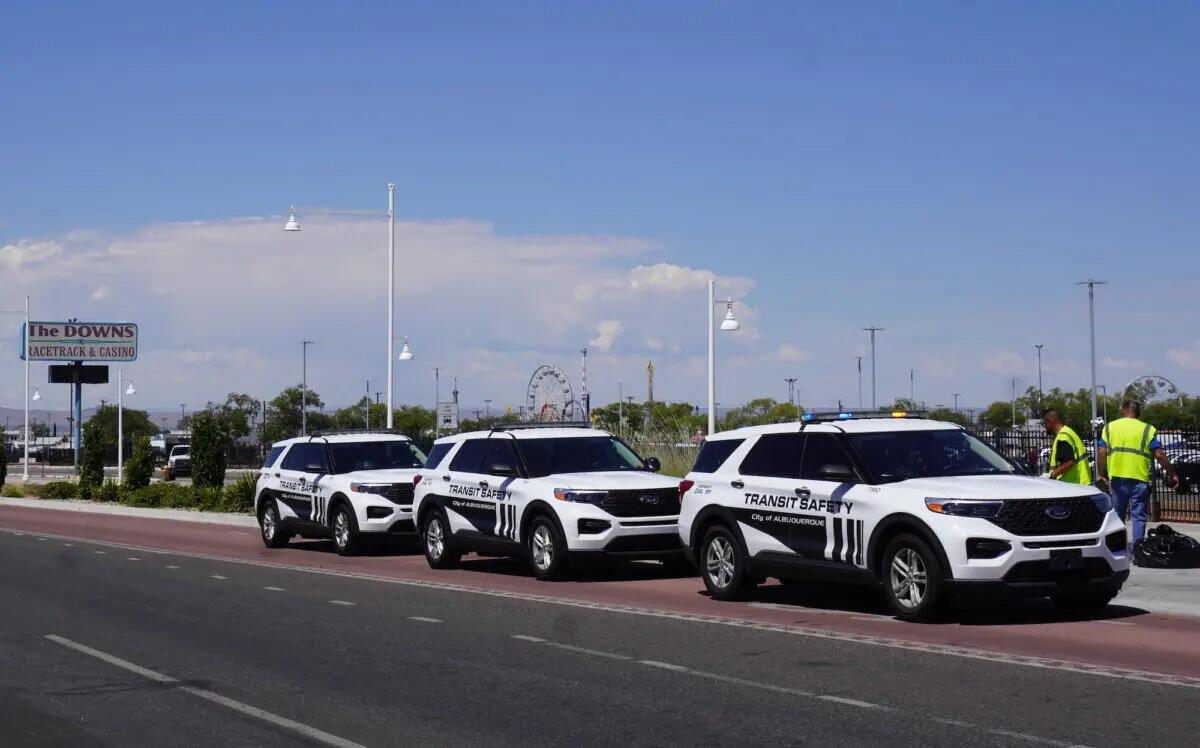
Transit Police vehicles line Central Avenue within the International District in Albuquerque, N.M., on Sept. 3, 2025. Allan Stein/The Epoch Times

Criticism

Lujan Grisham and Albuquerque Mayor Tim Keller criticized President Donald Trump’s deployment of National Guard troops in Washington, D.C., after he declared a crime emergency in the nation’s capital on Aug. 11. The president also federalized the D.C. Metropolitan Police Department.

“President Trump’s massive executive overreach in Washington sets a dangerous precedent and undermines safety in our nation’s capital,” Lujan Grisham and Keller said in a joint statement.

Pentagon press secretary Kingsley Wilson during a press conference on Aug. 11, said, “it is disgraceful that we have allowed D.C., to become so incredibly dangerous.”

“I think there’s no more important job for this department than alongside federal law enforcement partners and local police in securing our nation’s capital,” Wilson said.

Meanwhile, Lujan Grisham received criticism for deploying National Guard personnel in her state, including from the American Civil Liberties Union (ACLU) of New Mexico.
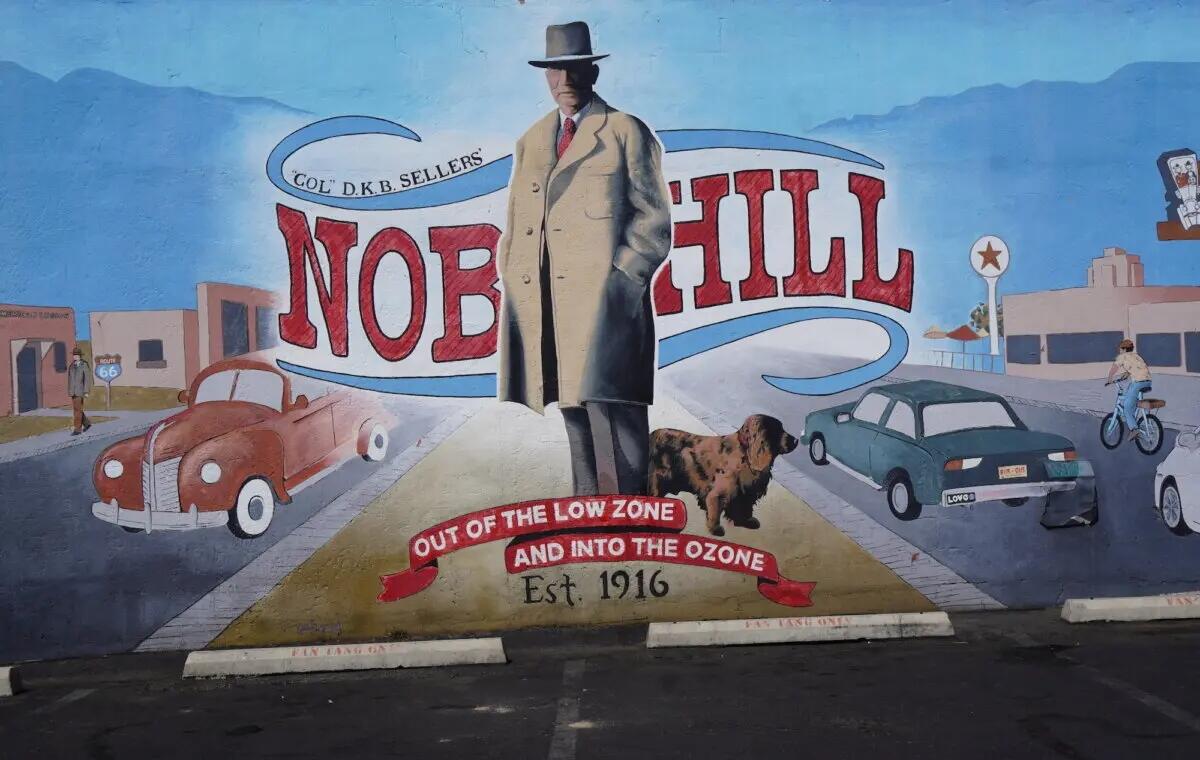
A mural depicts the historic Nob Hill section of Albuquerque, N.M., near Central Avenue on Sept. 3, 2025. Allan Stein/The Epoch Times

In April, the ACLU expressed “serious concerns” that military deployment would lead to civil rights violations and further criminalize the homeless.

“All of us deserve to be safe at home, at work, and in our community. We, like so many in Albuquerque, know that that’s not always the case in our city,” Daniel Williams, ACLU of New Mexico policy advocate, said in a statement.

“However, Governor Lujan Grisham’s deployment of the National Guard to support Albuquerque police is a show of force, not a show of solutions.”

A group of people squats in the shade of a building off Central Avenue in the International District of Albuquerque, N.M., on Sept. 3, 2025. Allan Stein/The Epoch Times

Despite this criticism, Lujan Grisham’s office said Operation Zia Shield, now in its third month, has been “highly successful.”

“Initial plans cited a minimum of six months in order to make a positive impact in the community,” a spokesman told The Epoch Times.

Officials will continue to review the situation to decide whether to proceed or end the mission, he said.

Field operations in Albuquerque began on June 5, with National Guard personnel monitoring city streets under the direction of police dispatch.

“Having National Guardsmen assisting with these calls reduces the number of sworn law enforcement officers needed at each call, freeing them up for more serious calls,” the spokesman said.

Jonathan Tafoya stands inside Fonzy's Barbershop, in the Nob Hill section of Albuquerque, N.M., on Sept. 3, 2025. Allan Stein/The Epoch Times

Since mid-May, Operation Zia Shield has devoted nearly 4,000 hours to responding to 1,216 incidents throughout the city.

These included 210 calls for patrolling neighborhoods, which took 282 hours; 35 calls for medical assistance; 117 calls to assist other officers; 107 special tasks; and 194 calls to patrol public transportation areas.

On July 28, a Zia Shield unit effort provided guard personnel with job training to assist with paperwork and expedite court case processing.

Guard members processed 549 criminal summons and prepared and sent 1,347 officer trial notices, according to the spokesman.

On Aug. 8, selected Guard personnel monitored traffic cameras and earned drone pilot licenses. They flew drones 180 times, totaling almost 39 hours.

One week into the mission, National Guard members monitoring traffic cameras noticed a person who appeared to be having a medical emergency in a bus shelter.

Their observation helped save the person’s life, the spokesman said.

Since Operation Zia Shield started, Guard members have processed 2,248 people under arrest. This allowed police officers to focus on other tasks.

Jonathan Tafoya, owner of Fonzy’s Barbershop along Monte Vista Boulevard near Central Avenue, opened his shop six months ago.

While he hasn’t seen much crime in his area, he thinks using the National Guard to support law enforcement is a good idea, “because there aren’t enough cops.”

‘More Police Needed’

As of Sept. 3, the city has reported 50 homicides so far this year. In 2024, there were 66 confirmed homicides, while in 2023, the number was 73.

The APD has 864 officers who serve a city that spans 189.5 square miles and is home to 558,874 people.

In 2023, 40 APD officers resigned, representing a 32.2 percent decrease from 2002—when 59 officers resigned—and a 36.5 percent decrease from 2021, when 63 officers left the force, according to Police1.

“They need to step up their police presence,” Tafoya told The Epoch Times. “Just hire more cops—but nobody wants to be a cop.”

A police substation in the Nob Hill area of Albuquerque, N.M., on Sept. 3, 2025. Allan Stein/The Epoch Times

Robert, a local business owner on Central Avenue in the Nob Hill neighborhood, said homelessness is a major problem in the city.

“I know in our back alley, they‘ll be back there using drugs, and they’ll try and camp back there, and we’ll tell them to move,” said Robert, who didn’t want his last name used out of fear of retaliation.

The solution, he said, is hiring more police officers. The problem is, “Who wants to be a police officer?”

“It’s a very hard role to fill now because it comes with a lot of politics, a lot of baggage,” Robert said.

“There are no consequences anymore for a lot of things that people do, especially in Albuquerque. The juvenile crime is out of control. Our legislators won’t take action. They give them a slap on the hand.”

Christian works as a cook at a restaurant on Central Avenue. He said he feels sympathy for the homeless but sometimes sees them as part of the problem.

“A lot of homeless people do drugs and everything. We shouldn’t have to deal with that,” he said

A man waits for public transportation to arrive in Albuquerque's Nob Hill East section on Sept. 3, 2025. Allan Stein/The Epoch Times

Christian, like Robert, believes that using National Guard members to help local police is a “good thing.”

Better Days

Robert recalled that the International District was once known as the “War Zone” because crime was so prevalent.

“It used to be a nice part of town way back when,” he said. “But that’s where a lot of the homeless are now.”

Matthew said every day, people experiencing homelessness gather in the shaded areas along Central Avenue across from the casino.

It can still be a dangerous place, he said, even with police patrolling nearby.

“Everybody’s doing drugs out here, bro. They’re getting their pills and syringes everywhere. It’s disgusting,” he said.

After the police moved the group of homeless people away from the shaded fence, he offered some advice to someone walking by.

“Be safe, man,” Matthew said.

https://www.zerohedge.com/political/democrat-new-mexico-governor-admits-national-guard-making-progress-high-crime-albuquerque


The Battle Brewing: Mass Surveillance Vs The People

 by Susan D. Harris via The Epoch Times,

Behind the scenes of breaking news, culture wars, and moral division, a significant battle is brewing: mass surveillance vs. the people.

One surveillance technology in particular is rising to the surface of the national conversation: automated license plate readers (ALPR).

Flock Safety, a leader in ALPR technology, is one of the companies in the eye of the storm. Last week, Flock’s CEO and co-founder Garrett Langley made headlines when he released a statement announcing the company was going to “pause” its pilot programs with the U.S. government.

The company said that while it has no current contracts with any U.S. Department of Homeland Security agencies, it did engage in “limited pilots with the U.S. Customs and Border Protection (CBP) and Homeland Security Investigations (HSI), to assist those agencies in combatting human trafficking and fentanyl distribution.”

So why would a company decide not to aid their own government in the fight against human trafficking and fentanyl distribution? Who are the voices that swayed them?

The company’s statement likely stems from criticism (or demonization) of Flock Safety for developing technology that has been adapted for use by ICE agents.

In a July interview with 9News Denver, Flock Safety CEO Langley was asked about the Denver city council voting against extending the city’s Flock contract “out of concerns the system would be exploited for immigration matters.”

Langley straddled the fence:

“Every city needs to make a decision what’s right for them. Some cities work really closely with federal authorities … Now in the case of Denver, if there’s no desire to work with ICE, that’s great. We need to create a safer city while still upholding the values we have.”

Ultimately, however, Denver Mayor Mike Johnston, a Democrat, extended the contract through October 2025 after the dollar amount was reset to a figure that didn’t need council approval.

A spokesman for the mayor said the cameras are “an important tool for fighting crime.”

Meanwhile, Denver city leaders formed a special task force to discuss the technology’s privacy concerns. The policy director for the ACLU of Colorado said he would like the cameras turned off entirely—"until there are policies in place to regulate the use of them ...”

Reason magazine claims that that “Flock Safety’s 40,000 cameras present in over 5,000 communities across the U.S. are being used to detain undocumented immigrants, many of whom have no criminal history.”

To be clear, it’s not a matter of Homeland Security or ICE agents directly accessing the Denver system—or any ALPR system. It’s a complex issue of state and local law enforcement agencies sharing information or granting access to other agencies. As Denver7 reported, “Flock Safety’s cameras capture billions of photos of license plates each month. However, it doesn’t own that data. The local agencies in whose jurisdictions the cameras are located do, and they’re the ones who receive inquiries from other law enforcement agencies.”

The same issue has been unfolding in other parts of the country as well.

In 2019, the ACLU of Northern California complained of ICE “using driver location data from local police for deportations.” The company at the center of that controversy was Vigilant Solutions. Now a subsidiary of Motorola Solutions, Inc., it too provides license plate recognition technology and intelligence platforms for law enforcement and commercial applications.

As a matter of fact, there are tons of companies clamoring to be Number One in the ALPR industry. Genetec’s AutoVu, PlateSmart Technologies, and Rank One Computing are just a few.

Beyond the field of computer science known as computer vision that encompasses license plate recognition, there also lies the lucrative field of biometrics: the physical field of analyzing body traits and the behavioral field that analyzes patterns. In short, there’s a virtual feeding frenzy happening in the marketplace of digital panopticons. (For a great commentary on Bentham’s panopticon—the prison designed for total surveillance—and the modern era, see “The Age of the Digital Panopticon” on the Neuroscience ABS blog.)

But before we balk at having our license plates zapped into a searchable database, let’s consider the advantages.

Local TV station Denver7 reported that Flock Safety cameras “led to 353 arrests, 251 recovered stolen vehicles and 39 recovered firearms as of August 12.”

Cities like Dallas and Fort Worth, Texas, began installing Flock Safety cameras years ago, and law enforcement reports the cameras have made a difference in fighting crime. Fort Worth authorities say the cameras have helped with gun detection, while Dallas police note their use in real-time crime fighting by sending license plate images to the Dallas Fusion Center. (For those not in the know, there are at least 79 fusion centers across the United States, run by state and local law enforcement in collaboration with the U.S. Department of Homeland Security. These centers act as hubs for collecting, evaluating, and sharing intelligence and public safety data.)

Additionally, Flock Safety markets its ALPR technology, as well as its gunfire locator systems, far beyond law enforcement and city management: Companies like Lowe’s and Home Depot use them.

They also sell to neighborhood associations (HOAs), schools, and private individuals. Think of their advantages in emergencies like school or church shootings or Amber alerts. ALPR technology seems to be making us all safer.

Yet as with most of the surveillance technology that we’ve reluctantly embraced “for our own good”—especially after the attacks of 9/11—Americans are having second thoughts about the privacy they’re being asked to forfeit in the name of safety.

The movement against license plate readers is making strange bedfellows: Some conservatives criticize it as government overreach, seeing it as a digital dragnet that tracks all vehicles without probable cause—directly infringing on fourth amendment protections against unreasonable searches. Simultaneously, some progressives are also focusing on it as a violation of civil liberties, alleging that it’s being used to target “undocumented migrants.”

Flock Safety’s recent announcement is the first sign that a company providing this kind of surveillance can be swayed by public opinion. It is a clear harbinger of a larger public debate that will likely drive new legislation at the local, state, and possibly even the federal level. It’s a conversation that is long overdue.

https://www.zerohedge.com/technology/battle-brewing-mass-surveillance-vs-people