Search This Blog

Friday, November 7, 2025

N. Dakota, Texas Saw Greatest GDP Growth Of US States In Past 35 Years, Louisiana Least

 The 1990s were a different time. Dial-up internet, gas costing a dollar, and many states still leaning on manufacturing.

Even then, new tech clusters and improved drilling methods were starting to reshape the map, setting up today’s energy-rich and tech-focused states for the strongest economies.

The visualization, via Visual Capitalist's Pallavi Rao, ranks all 50 states and the District of Columbia by inflation-adjusted GDP growth between 1998–2024.

Data for real GDP growth by U.S. state is sourced from Bureau of Economic Analysis.

ℹ️ Real GDP growth measured from chained 2017 dollars.

America’s Shale Boom in One Map

North Dakota’s economy more than doubled thanks to the Bakken shale boom, which lifted its real output by 164%—twice the U.S. average.

Texas, already the nation’s largest oil-producing state, followed closely with 141% growth.

RankStateState CodeGDP Growth (1998–2024)CAGR2024 GDP (Billions)
1North DakotaND164%3.8%$80,058
2UtahUT157%3.7%$299,471
3IdahoID144%3.5%$129,018
4TexasTX141%3.4%$2,769,766
5WashingtonWA134%3.3%$856,014
6ArizonaAZ126%3.2%$570,089
7ColoradoCO117%3.0%$557,633
8CaliforniaCA115%3.0%$4,048,108
9FloridaFL113%3.0%$1,726,710
10OregonOR102%2.7%$330,250
11NevadaNV102%2.7%$269,011
12South DakotaSD101%2.7%$76,796
13NebraskaNE96%2.6%$189,243
14MontanaMT93%2.6%$78,441
15North CarolinaNC89%2.5%$844,209
16MassachusettsMA87%2.4%$778,523
17GeorgiaGA85%2.4%$881,508
18South CarolinaSC84%2.4%$357,074
19OklahomaOK83%2.4%$263,695
20TennesseeTN83%2.3%$561,201
21VirginiaVA81%2.3%$761,734
22New MexicoNM76%2.2%$147,085
23MarylandMD74%2.2%$546,028
24New HampshireNH73%2.1%$119,337
25IowaIA71%2.1%$265,795
26MinnesotaMN68%2.0%$507,688
27New YorkNY65%2.0%$2,322,139
28District of ColumbiaDC65%1.9%$184,298
29ArkansasAR64%1.9%$188,340
30VermontVT63%1.9%$46,276
31MaineME62%1.9%$99,174
32KansasKS61%1.9%$230,522
33WyomingWY60%1.8%$51,498
34AlabamaAL59%1.8%$325,345
35IndianaIN58%1.8%$519,517
36HawaiiHI56%1.7%$117,627
37WisconsinWI53%1.6%$453,299
38DelawareDE51%1.6%$110,972
39PennsylvaniaPA50%1.6%$1,007,874
40New JerseyNJ47%1.5%$846,000
41KentuckyKY44%1.4%$295,375
42MissouriMO42%1.4%$448,714
43IllinoisIL41%1.3%$1,148,106
44Rhode IslandRI40%1.3%$80,381
45OhioOH39%1.3%$923,141
46AlaskaAK39%1.3%$71,567
47MississippiMS36%1.2%$158,192
48ConnecticutCT35%1.2%$356,835
49West VirginiaWV34%1.1%$106,475
50MichiganMI30%1.0%$702,467
51LouisianaLA23%0.8%$329,173
N/AU.S.USA81%2.3%$29,298,013

New Mexico and Oklahoma also landed in the top 20. Cheap feedstock, rising exports of liquefied natural gas (LNG), and associated midstream build-out helped these states capture much of the value created by soaring U.S. energy production.

ℹ️ Related: New Mexico overtook North Dakota as the second-largest oil producing U.S. state.

Tech & Tourism Hubs Sustain Rapid Expansion

Utah (+157%), Idaho (+144%), and Washington (+134%) show how a diversified tech sector can supercharge state-level GDP.

Microsoft’s cloud push, Idaho’s semiconductor fabs, and Utah’s “Silicon Slopes” collectively fostered high-wage job growth and attracted inbound migration.

Even the giant economies of California (+115%) and Florida (+113%) managed to outpace the national average rate of GDP growth by U.S. states. This shows how tech and professional-services clusters spill over into broader economic activity.

Rust Belt and Coastal Laggards

Manufacturing-heavy states in the Midwest and Appalachia largely underperformed. Michigan (+30%) and West Virginia (+34%) never fully recovered the industrial output lost after the early-2000s recession and the Great Financial Crisis.

Connecticut (+35%) and New Jersey (+47%) illustrate how high costs and slow demographic growth weighed on East Coast economies.

Louisiana, hit by multiple hurricanes and refinery shutdowns, posted the slowest gain at just 23%, one-quarter of the national pace.

https://www.zerohedge.com/personal-finance/north-dakota-texas-saw-greatest-gdp-growth-us-states-over-past-35-years-louisiana

CytomX outlines Q1 2026 CX-2051 data, 100-patient enrollment milestone as Phase Ib study nears


Management View

  • CEO Sean McCarthy announced the appointment of Rachael Lester as Chief Business Officer, emphasizing her "broad strategic planning and business development experience will be highly valuable as we shape our pipeline and corporate development strategy towards realizing our ambition of building CytomX to commercial stage."
  • McCarthy described CX-2051 as the company's most advanced drug candidate, targeting colorectal cancer (CRC) with "the first and only EpCAM-directed ADC in development" and highlighted the proprietary PROBODY platform as a key differentiator.
  • The CEO detailed interim Phase I data for CX-2051, citing "robust clinical activity and the potential, we believe, for CX-2051 to become a new standard of care," with a preliminary median progression-free survival of 5.8 months and a confirmed objective response rate of 28% in the initial data set.
  • McCarthy stated, "We're now well into the expansion phase of the Phase I study with our next data update planned for Q1 2026," and expects "total enrollment in the CX-2051 Phase I study to be about 100 patients by our planned data update in the first quarter next year."
  • Plans were outlined to initiate a Phase Ib study with bevacizumab in Q1 2026 and to provide updates on non-CRC indications for CX-2051 in 2026.
  • For CX-801, McCarthy highlighted progression in combination with KEYTRUDA in advanced melanoma, noting, "initial data for the CX-801-KEYTRUDA combination by the end of 2026."
  • CFO Chris Ogden stated, "As of September 30, 2025, we ended the quarter with $143.6 million in cash, cash equivalents and investments versus $158.1 million in cash at the end of the second quarter of 2025. We continue to project that our cash balance, will be able to fund CytomX operations to at least the second quarter of 2027."

Outlook

  • McCarthy expects a "CX-2051 data update in Q1 of next year" and highlighted that "investing behind a potential first approval will continue to be our top capital allocation priority."
  • The company plans to "initiate a Phase Ib study with the anti-VEGF antibody, bevacizumab in the first quarter of 2026."
  • Updates on additional indications for CX-2051 and CX-801-KEYTRUDA combination data are targeted for 2026.

Financial Results

  • CFO Ogden reported, "Total revenue was $6 million compared to $33.4 million in the third quarter of 2024. The decreased revenue was primarily attributed to the completion of our performance obligations in our Bristol Myers Squibb collaboration."
  • Operating expenses for the third quarter were $21.7 million, with R&D expenses at $15.3 million and G&A expenses at $6.4 million, each reflecting reductions from the third quarter of 2024.
  • The company maintains a "disciplined approach to capital allocation, focused on delivering on our key program milestones for CX-2051 and CX-801 and advancing the pipeline towards later-stage development."

Q&A

  • Edward Tenthoff, Piper Sandler: Asked about expectations for CX-2051 readout, including ORR and progression-free survival. McCarthy responded, "across the 3 relevant dose levels... we saw an integrated confirmed response rate of 28%, which very substantially beats the current standard of care... preliminary estimate [PFS] based on that early data set compares to 2 to 3 months in the late-line setting."
  • Tenthoff asked if efficacy would be broken out by dose. McCarthy replied, "We absolutely would expect to be breaking the data out by dose in this next update."
  • Nabeel Nissar, Jefferies: Inquired about enrollment momentum and AE management. McCarthy attributed increased enrollment to "high interest from our investigators and patients" and stated, "We are highly focused on really the one adverse event that we need to actively manage with the drug, which, as you know, is the diarrhea."
  • Olivia Brayer, Cantor Fitzgerald: Asked about the combination approach with bevacizumab and loperamide use. McCarthy indicated multiple dose levels would be explored and that "loperamide is used... to manage diarrhea for any medicine that has that adverse event" with management strategies evolving as more is learned.
  • Matthew Biegler, Oppenheimer: Questioned regulatory strategy for monotherapy. McCarthy stated, "everything is still on the table," with the fourth-line study being most clear for initial approval.
  • Joyce (for Anupam Rama), JPMorgan: Asked about expansion to other tumor types. McCarthy described "pan-tumor potential given the widespread expression of EpCAM on so many solid tumor types" and anticipated updates in 2026.
  • Etzer Darout, Barclays: Asked about enrollment balance across doses. McCarthy said, "we're enrolling patients at similar dose levels... the patient population that we're continuing to enroll is pretty consistent with what we saw in the first 20 to 25 patients."
  • Mitchell Kapoor, H.C. Wainwright: Asked about FDA interactions and competitor landscape. McCarthy indicated regulatory discussions would occur in 2026 and emphasized the company's differentiated approach.

Sentiment Analysis

  • Analysts appeared positive on the progress of both CX-2051 and pipeline expansion, with questions focused on enrollment success, efficacy benchmarks, and regulatory pathways.
  • Management maintained an optimistic and confident tone, frequently emphasizing robust data and strategic milestones, with direct statements such as "we're super excited about our progress in 2025."
  • Compared to the previous quarter, both analyst and management sentiment remained confidently optimistic, with a slight increase in forward-looking statements regarding pipeline expansion and regulatory planning.

Quarter-over-Quarter Comparison

  • The addition of Rachael Lester as CBO marks a new management appointment this quarter.
  • Guidance shifted from a Q1 2026 CX-2051 update targeting 70 patients to an expanded enrollment of around 100 patients.
  • Strategic planning now includes imminent initiation of a Phase Ib study with bevacizumab and explicit plans for updates on additional indications for CX-2051.
  • Financial discipline remained a consistent theme, with a continued focus on capital efficiency and maintaining a projected cash runway through Q2 2027.
  • Analyst questions in both quarters centered on efficacy benchmarks, regulatory strategy, and pipeline breadth, but this quarter saw greater emphasis on dose expansion and real-world management of adverse events.

Risks and Concerns

  • Management highlighted the need to manage gastrointestinal adverse events, particularly diarrhea, associated with CX-2051, noting the implementation of prophylactic strategies and ongoing monitoring.
  • A reduction in revenue was noted due to completed collaboration obligations, but management emphasized existing resources and ongoing business development efforts.
  • Regulatory strategy and alignment with the FDA remain future-focused risks, with discussions planned as the CX-2051 dataset matures.

Final Takeaway

CytomX Therapeutics highlighted strong momentum in advancing its clinical pipeline, particularly with CX-2051 in colorectal cancer, supported by robust early efficacy and a growing patient dataset. Key milestones include a planned Q1 2026 data update and the initiation of a Phase Ib bevacizumab combination study, with management emphasizing both capital discipline and the expansion of development into new indications. The company remains focused on addressing late-stage CRC while evaluating broader opportunities for its technology in additional tumor types and continuing to prioritize efficient capital allocation and regulatory engagement moving into 2026.

Read the full Earnings Call Transcript

https://www.msn.com/en-us/money/savingandinvesting/cytomx-outlines-q1-2026-cx-2051-data-update-and-100-patient-enrollment-milestone-as-phase-ib-study-nears/ar-AA1Q1stj

Evolent Health Q3 2025: Revenue grows 8% sequentially amid shifting business mix


Evolent Health Inc (NYSE:EVH) presented its third-quarter 2025 financial results on November 6, 2025, revealing sequential revenue growth but facing investor skepticism amid profitability concerns. Following the earnings release, Evolent’s stock dropped 5.51% to $6.35, approaching its 52-week low of $5.98, as the company’s earnings per share of $0.05 missed analyst expectations of $0.11 by 54.55%.

The healthcare solutions provider highlighted its revenue growth and Adjusted EBITDA improvement in its presentation, but investors appeared more focused on the company’s rising leverage and shifting business mix, particularly the declining Medicare segment.

Quarterly Performance Highlights

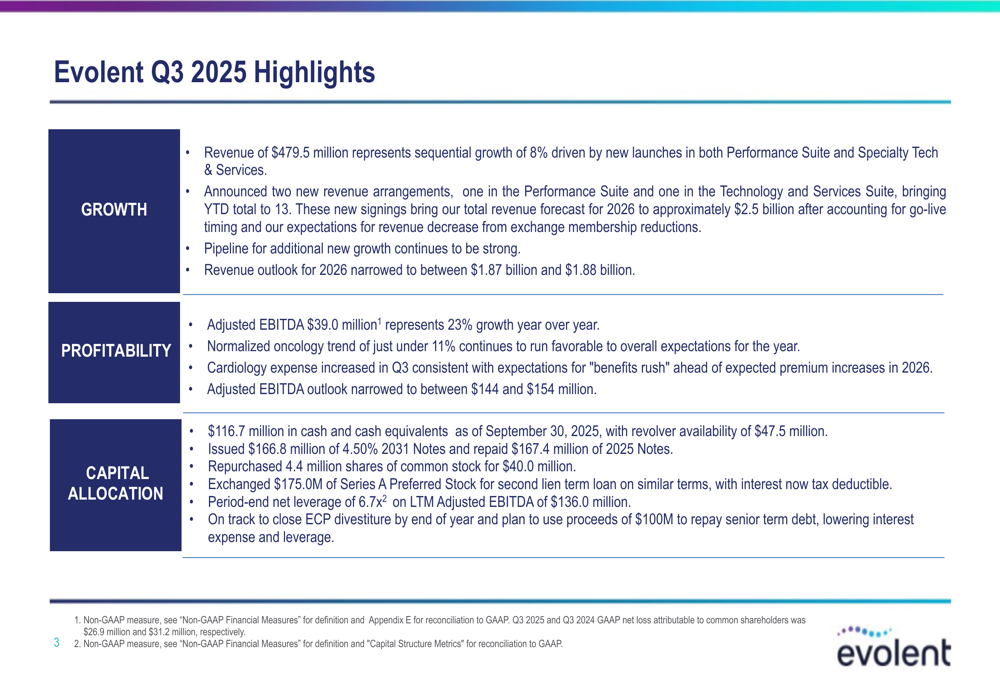
Evolent reported Q3 2025 revenue of $479.5 million, representing 8% sequential growth and slightly exceeding market expectations by 2.58%. The company’s Adjusted EBITDA reached $39.0 million, a 23% year-over-year improvement, though this positive metric was overshadowed by the significant EPS miss.

The quarter saw Evolent secure two new revenue arrangements – one in its Performance Suite and another in its Technology and Services Suite – bringing the year-to-date total to 13 new signings. Management noted that normalized oncology trend was running favorably at just under 11%.

As shown in the following quarterly highlights:

Detailed Financial Analysis

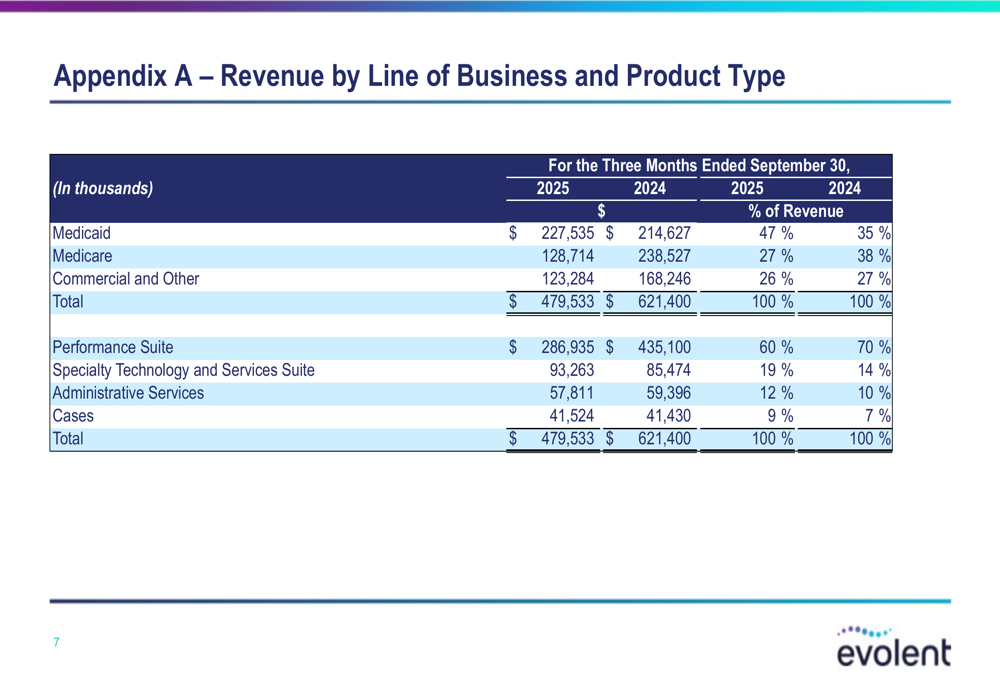
A deeper examination of Evolent’s financials reveals significant shifts in the company’s business mix. Revenue by line of business shows Medicaid increasing from 35% to 47% of total revenue year-over-year, while Medicare decreased from 38% to 27%. This shift reflects broader challenges in the Medicare Advantage market that were acknowledged during the earnings call.

Similarly, the company’s Performance Suite revenue decreased from 70% to 60% of total revenue compared to Q3 2024, while other segments saw modest increases in their proportional contribution.

The following breakdown illustrates these shifts in revenue composition:

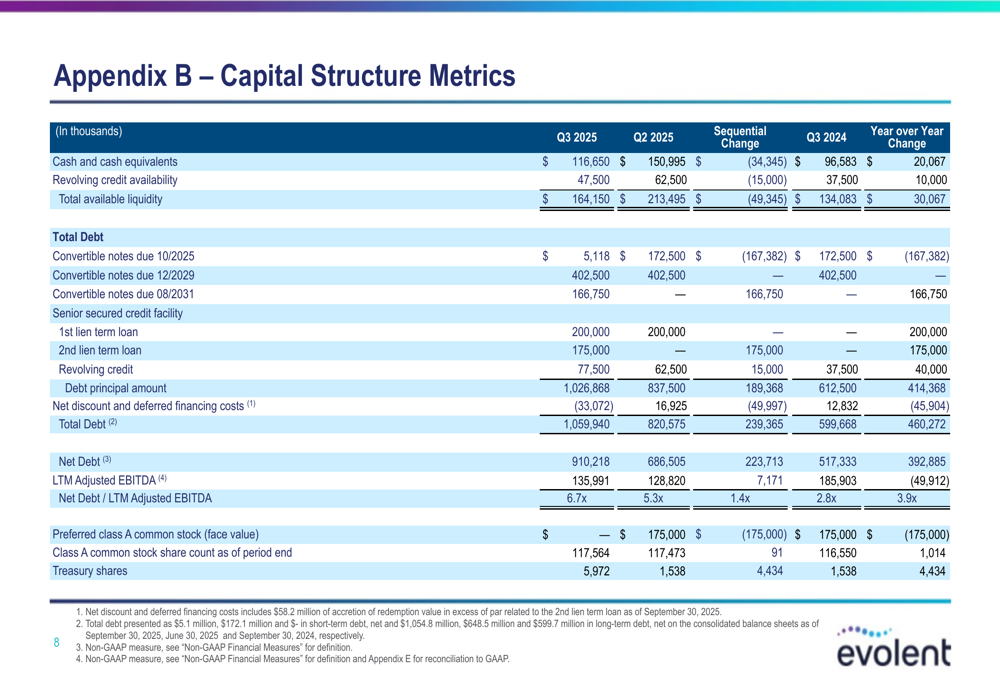
Evolent’s capital structure metrics reveal a concerning trend in the company’s leverage. Net Debt to Last Twelve Months (LTM) Adjusted EBITDA increased dramatically from 2.8x in Q3 2024 to 6.7x in Q3 2025, reflecting both higher debt levels and lower LTM Adjusted EBITDA. Total debt rose from $599.7 million in Q3 2024 to approximately $1.06 billion in Q3 2025.

These capital metrics are detailed in the following table:

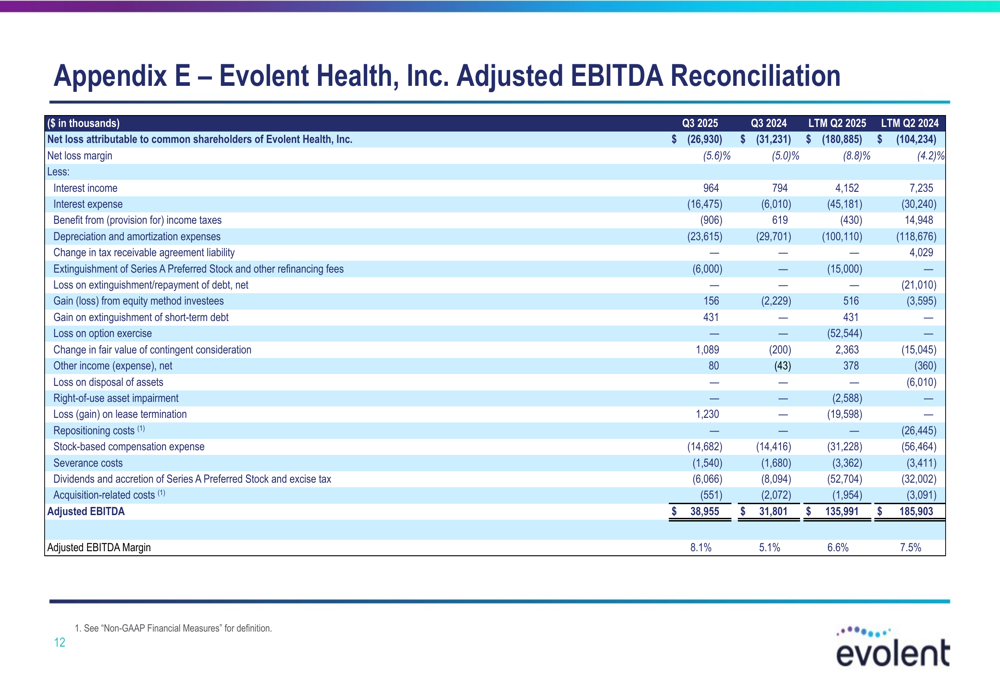
The company’s reconciliation from net loss to Adjusted EBITDA shows a slight improvement in net loss attributable to common shareholders, from $(31.2) million in Q3 2024 to $(26.9) million in Q3 2025. However, the adjusted figures mask underlying profitability challenges that appear to concern investors.

The following reconciliation provides further context:

Strategic Initiatives

Despite financial headwinds, Evolent continues to pursue strategic initiatives to strengthen its market position. The company is on track to close its ECP divestiture by the end of 2025, with plans to use the $100 million in proceeds to repay senior term debt, which could help address leverage concerns.

During the quarter, Evolent also took several actions to manage its capital structure, including:

  • Issuing $166.8 million of 4.50% 2031 Notes and repaying $167.4 million of 2025 Notes
  • Repurchasing 4.4 million shares of common stock for $40.0 million
  • Exchanging $175.0 million of Series A Preferred Stock for a second lien term loan

  • CEO Seth Blackley emphasized during the earnings call that the company has "developed the leading specialty platform in the industry" and noted that challenges faced by customers in membership and utilization are creating "a very significant growth opportunity for Evolent."


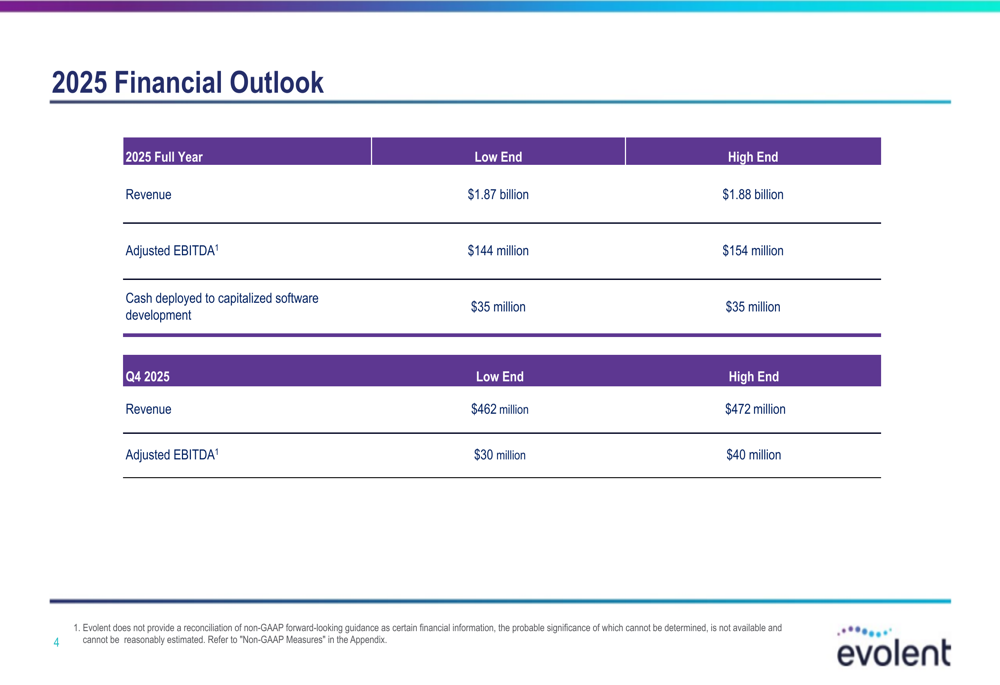
The financial outlook is summarized in the following projection:

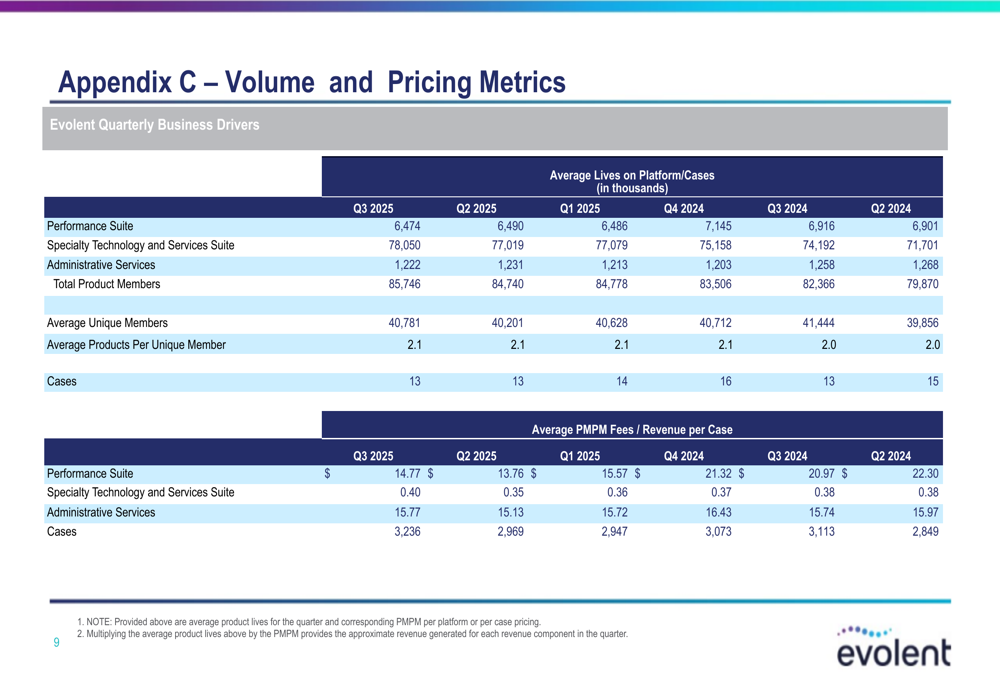
Evolent’s business drivers show relatively stable metrics for average lives on platform and pricing across recent quarters, though the company faces challenges in maintaining growth momentum amid shifting market dynamics.

The following table details these operational metrics:

While Evolent’s presentation emphasizes revenue growth and new business wins, the market reaction suggests investors remain concerned about the company’s profitability trajectory and increasing leverage. As Evolent approaches the end of 2025, its ability to successfully integrate new business, manage debt levels, and improve bottom-line performance will be critical factors for investor confidence moving forward.

Full presentation:

https://ng.investing.com/news/company-news/evolent-health-q3-2025-slides-revenue-grows-8-sequentially-amid-shifting-business-mix-93CH-2193896

Cidara Therapeutics Stock Climbs Amid Flu Program Success

 Cidara Therapeutics’ stock is on the rise due to positive developments in its CD388 Flu program. The company’s strategic advancements, particularly the expansion of the Phase 3 ANCHOR study, have broadened its market potential, prompting analysts to maintain Buy ratings. Although Cidara reported a net loss, its increased cash reserves bolster confidence in the continued development of CD388, which is expected to be a universal preventative for influenza.

https://www.tipranks.com/news/catalyst/cidara-therapeutics-stock-climbs-amid-flu-program-success

ALX Oncology update sees cash runway into 1Q27

  • ASPEN-06 data to be presented at SITC demonstrates that evorpacept drove durable clinical benefit across all efficacy measures in HER2+ gastric cancer patients with high CD47 expression
  • Phase 2 ASPEN-09-Breast Cancer trial remains on track for FPI in Q4 2025 and will evaluate evorpacept efficacy by CD47 expression levels
  • Phase 1 trial for ALX2004, a novel EGFR-targeted ADC, is currently enrolling patients in the second dose cohort and on track to deliver initial safety data in 1H 2026
  • Cash runway expected into Q1 2027 to support key milestones, including ALX2004 initial safety data in 1H 2026, interim data for ASPEN-09-Breast Cancer in Q3 2026
  • Appointed Board Member Barbara Klencke, M.D., as Chief Medical Officer
  • Company to host webcast including perspective from Breast Cancer Expert Dr. Peter Schmid on Friday, November 7, at 5:30 a.m. PT / 8:30 a.m. ET

 Cash, cash equivalents and investments as of September 30, 2025, were $66.5 million. The Company believes its cash, cash equivalents and investments are sufficient to fund planned operations into Q1 of 2027.

https://www.tipranks.com/news/the-fly/alx-oncology-sees-cash-runway-into-1q27-thefly