Search This Blog

Saturday, May 9, 2026

Murders up 300% in NYC subway system, robberies surge: NYPD data

 Violence is up in the Big Apple’s transit system — with robberies and murders surging — even as overall crime underground is down, according to NYPD data.

A maniac repeat-offender pushed an elderly man to his death on Manhattan subway stairs Thursday, cops said — the fourth subway homicide this year, a 300% spike from the one murder at the same time last year.

Cops brought Rhamell Burke, described as an “emotionally disturbed person,” to Bellevue Hospital’s psych ward at 3:30 p.m. Thursday. He was released an hour later and at 9:30 p.m. allegedly shoved Ross Falzone, a 76-year-old retired teacher, down the stairs of a Chelsea subway station.  

Rhamell Burke allegedly pushed a man to his death in the subway.Robert Mecea for New York Post

Robbery has also shot up by 18% so far in 2026 over the same span last year, to 156 from 132, according to NYPD data. 

Felony assault is down 6% so far this year, to 209 from 221, but has increased 16% over the same period in 2024 and 60% from seven years ago.

Misdemeanor assault — typically the charge for a punch — is up 15% so far this year from 500 to 573, and 68% from seven years ago.

Major crimes in transit overall, which include murder, rape, robbery, felony assault and grand larceny, are down less than a percentage point from 733 to 732, according to NYPD data.

Tickets for fare beating have dropped 8% so far this year, from 40,036 to 36,659, and 14% over the same span two years ago, according to the data. 

Three elderly people were slashed on April 11 by a man with a machete at Grand Central Station.Luiz C. Ribeiro for NY Post

“What’s not surprising is that there seems to be a significant increase in certain offenses that is coupled with a decrease in enforcement,” said Rafael Mangual of the Manhattan Institute.

Outside of transit the Big Apple has been seeing historic lows in crime, including the lowest monthly murder count in recorded history with 19 in April 2026, following the safest first quarter for shootings and murders, which was driven by precision policing and increased officer hiring, according to officials.

“Last year was the safest year on New York City’s subway since 2009, excluding the pandemic years,” an NYPD spokesperson said.

So far this year, grand larcenies in transit have dropped 2.7% from 368 to 358.

Major crimes in transit overall, which include murder, rape, robbery, felony assault and grand larceny, are down less than a percentage point from 733 to 732.

The felony assaults include a large number of assaults against police officers in transit — 28% or 58 so far this year, compared to 29% or 64 in the same period last year, the spokesperson said.

Out of the 157 robbery reports this year, 103 have resulted in an arrest, the spokesperson said, adding that some of the robberies happened after people fell asleep on the train.

“But there is always more we can do to ensure people feel safe, and that is why we’ve recently added more than 175 officers to the subway every day, in addition to the normal cops who are always within the transit system,” the spokesperson said.

Out of the 157 robbery reports this year, 103 have resulted in an arrest.Luiz C. Ribeiro for NY Post

“Their focus is on preventing violence and responding immediately when something happens. They work to ensure that the millions of people who ride our subways each day can do so safely.”

The subway murders included a beloved 83-year-old veteran who was randomly pushed onto the tracks by a stranger on March 8 and a 41-year-old man was shot dead on a Bronx subway platform when an argument between the victim and the gunman turned deadly.

A 55-year-old man died after he was punched on the northbound C/E platform at Penn Station around 7 p.m. March 14. Nassadir Tate, 21, was arrested and charged with assault but was later released pending an autopsy report.

Shooting incidents are up so far this year — 2 to 3 — over the same period last year.AP

In one recent violent incident, a machete-wielding man slashed three elderly people in the subway at Grand Central Station on April 11, causing terrified straphangers to flee. A detective working at the Manhattan transit hub shot and killed the slasher.

Terrifying incidents like those can make people feel less safe, Mangual said.

He cited the NYPD’s Citywide Quality of Life stat, which shows total calls about complaints in the subway are up 34%, to 30,417, so far this year from 22,787 during the same period last year.

“I would say that’s a canary in the coal mine,” he said. “When you have these quality of life complaints, you know, going up like that, that tends to signal that something else is wrong in the system, signals that there’s less enforcement, that signals that there’s less oversight.”

Subway riders said they were keeping their heads on a swivel.

“I’ve witnessed hostile violent behavior, there needs to be more police on the subways,” Upper East Side teacher Abel Navaro, 45, said Friday.

Straphangers said they’d like to see more police in the system.Kyle Mazza/NurPhoto/Shutterstock

Bri Soekoe, a 42-year-old Broadway producer, said she feels like things have gone downhill in her 25 years taking the subway.

“I do feel like crime is up in the subway,” she said. “I’ve experienced a lot more turnstile hopping and a lot more harassing on subway cars.”

Subway shove suspect Bairon Hernandez seen on the platform in a red hood in a video filmed by one of the victims.Obtained by NYPost

Harlem engineer Susie Gonzales, 50, said she worries about her safety.

“As a mature single female, it’s dangerous,” she said. “I saw someone pull out a machete on the 1 line.””

Peter Schepper, 61, works at an Upper East Side frame shop his friend was pushed on the tracks.

“They pulled him out before the train came,” he said. “It was a crazy homeless person who pushed him.”

https://nypost.com/2026/05/09/us-news/murders-robberies-surge-in-nyc-subway-nypd-data-shows/

Bahrain arrests 41 people over links to Iran's IRGC

 The Bahraini Interior Ministry announced on Saturday that the country's law enforcement arrested 41 people over their alleged links to Iran's Islamic Revolutionary Guard Corps (IRGC).

The ministry said that the country's security services discovered the group, which was later charged with "espionage with foreign entities and sympathy with blatant Iranian aggression."

"Investigations continue to take the necessary measures against anyone found to be involved in the activities of this organization and to have committed illegal acts," the ministry added.

https://breakingthenews.net/Article/Bahrain-arrests-41-people-over-links-to-Iran's-IRGC/66257857

Iran said to get Russian drone parts via Caspian Sea

 Iran has managed to receive drone components from Russia through the Caspian Sea, The New York Times (NYT) reported on Saturday, citing a source from the United States.

The source said that, since the naval blockade and the closure of the airspace amid the conflict with the US and Israel, Iran has boosted traffic via the Caspian Sea. It was also speculated that Russia has been sending other commercial goods to Iran.

The report came amid the US and Iran's latest attempt to solve their conflict diplomatically. Meanwhile, the New York Post alleged that the US offered to ease some of the sanctions against Iran if it agreed to halt its uranium enrichment program.

https://breakingthenews.net/Article/Iran-said-to-get-Russian-drone-parts-via-Caspian-Sea/66257771

More from Iran on Khamenei injuries


Iran’s Supreme Leader Mojtaba Khamenei is in "good health" and suffered only minor injuries during the February 28 strikes, senior Iranian officials said on Friday, dismissing mounting speculation over his condition and ability to govern.The officials insisted that Khamenei remains actively involved in state affairs and accused Iran’s enemies of spreading "rumours and false claims" about his health following the attack that reportedly killed his father, former Supreme Leader Ali Khamenei, along with several senior Iranian figures.Mazaher Hosseini, head of protocol in the office of the supreme leader, said Mojtaba Khamenei sustained only limited injuries during the strike. According to Iran International English, Hosseini said Khamenei suffered injuries to his kneecap, lower back and the area behind his ear."During the attack Khamenei as not in the place where the attack took place. They hit his home where is wife was killed. He was on his way, on the stairs, when the missile stuck there. Hewas on the stairs when the blast knocked him on the ground," Hosseini said while addressing supporters, Iranian International English reported.
"Thank God, he is in good health. The enemy is spreading all kinds of rumours and false claims. They want to see him and find him, but people should be patient and not rush. He will speak to you when the time is right," he added.Hosseini also acknowledged that"a small piece of shrapnel had hit him behind the ear" but insisted that the wounds were healing and that Khamenei was now "in complete health".The remarks come amid continuing conflicting reports over Mojtaba Khamenei’s medical condition, with several international media reports claiming he suffered serious injuries during the strikes.Earlier this month, Reuters reported, citing three people familiar with his inner circle, that the 56-year-old cleric suffered severe facial injuries and serious wounds to one or both legs during the strike on the supreme leader’s compound in central Tehran.The report also claimed that several members of his family, including his wife and close relatives, were killed in the attack alongside Ali Khamenei.According to the report, Mojtaba Khamenei remains mentally alert and continues participating in major state decisions through audio conferences, including discussions linked to the ongoing conflict and negotiations with Washington.A separate report by CNN, citing US intelligence assessments, said Mojtaba Khamenei has emerged as a central figure in shaping Iran’s war and negotiation strategy following recent US and Israeli strikes.The report said US intelligence agencies have not visually confirmed Khamenei’s whereabouts since he assumed leadership after his father’s death.CNN further reported that Khamenei is avoiding electronic communication and relying instead on trusted couriers and face-to-face meetings while undergoing medical treatment for burns and other injuries affecting parts of his face, arm, torso and leg.Meanwhile, Donald Trump said on Friday that the United States expected to receive a response from Iran regarding Washington’s proposal aimed at ending the ongoing West Asia conflict. "We'll hear from them supposedly tonight," Trump told reporters before travelling to Virginia.Asked whether Iran was deliberately delaying the process, Trump said, "We'll find out soon enough."Trump also rejected suggestions that Washington had made merely a "one-page offer" to Iran. "Well, it's more than a one-page offer. It's an offer that basically said they will not have nuclear weapons; they are going to hand us the nuclear dust and many other things that we want," Trump said.When asked if Iran had accepted the terms, Trump replied, "They have agreed. When they agree, it doesn't mean much because the next day they forget they agreed."


https://timesofindia.indiatimes.com/world/middle-east/he-was-on-the-stairs-iran-claims-mojtaba-khamenei-was-knocked-down-by-us-blast-but-is-recovering-well/articleshow/130970449.cms

'HHS officials considered banning SSRI antidepressants - report'

 HHS officials recently discussed whether to ban selective serotonin reuptake inhibitors (SSRIs), among the most popular antidepressant medications prescribed, amid a push to reduce the use of the drugs.

The development, which was broken by Reuters, comes after HHS Secretary Robert F. Kennedy Jr. at the Mental Health and Overmedicalization Summit, sponsored by the MAHA Institute, on May 4 said that psychiatric medications should no longer be considered the default in treatment. He added, however, "If you are taking psychiatric medication, we are not telling you to stop."

Most SSRIs are available as generics. Common brand names are Prozac, Zoloft, Lexapro, and Paxil. A 2026 study found that 16.6% of Americans take an antidepressant.

A May 4 HHS news release stated that the department is launching a "MAHA Action Plan to Curb Psychiatric Overprescribing."

"Today, we take clear and decisive action to confront our nation’s mental health crisis by addressing the overuse of psychiatric medications—especially among children," RFK Jr. said. "We will support patient autonomy, require informed consent and shared decision-making, and shift the standard of care toward prevention, transparency, and a more holistic approach to mental health."

HHS spokesman Andrew Nixon told Reuters that the department "has not had any discussions about ​banning SSRIs, and any claims suggesting otherwise are false."

https://www.msn.com/en-us/health/other/hhs-officials-considered-banning-ssri-antidepressants-report/ar-AA22JzDc

Iranians risk arrest at Iraq border to escape Tehran's total internet blackout


Desperate to communicate with the outside world, Iranians are increasingly travelling to the border with Iraq, where Iraqi SIM cards and impromptu hotspots became a hot commodity, they told Euronews.

Iranians living near the border with Iraq's Kurdistan region are crossing into neighbouring territory or gathering at the frontier just to get online, as the Tehran regime's months-long internet blackout has cut tens of millions of people off from the outside world.

The Islamic Republic officials have justified the restrictions by citing "security considerations" and the need to counter "cyber warfare".

Citizens say the blackout has cut them off from independent news sources, made it impossible to reach family members abroad, and in many cases destroyed their livelihoods.

Authorities have also outright criminalised many of the tools Iranians have turned to in order to get online, including VPNs and Starlink satellite internet.

"After the war began, the internet in Iran was completely shut down and practically no communication existed between inside and outside the country," a resident of the border city of Baneh told Euronews, speaking anonymously for security reasons.

Iran and Iraq share a 1,600-kilometre-long border, from the tripoint with Turkey to the Arvand river and the Persian Gulf to the south. Baneh, a city of some 100,000 residents, is just 30 kilometres from the nearest crossing.

"In Baneh, where much of the economy depends on trade, many merchants and shopkeepers needed internet access to continue their work, and for this reason they turned to SIM cards from neighbouring countries," they explained.

Some residents of towns near the Kurdistan region already held Iraqi SIM cards or travelled into Iraq to obtain them. In areas with stronger cross-border reception, people called relatives abroad or tried to keep their businesses running.

An improvised internet access point eventually appeared several kilometres outside Baneh, near the frontier.

"Many people would go to an area about 3 to 4 kilometres outside the city of Baneh, near the Iraqi border, where reception was better and it was possible to connect to the internet," the Baneh resident explained.

"Gradually, the number of people going there increased, and a group built a small shack on the spot and started offering internet access by the hour in exchange for money, by sharing their mobile internet with others via Wi-Fi," they said.

More than 50 arrests

Islamic Republic authorities eventually raided the site. "They raided the area, arrested more than 50 people and confiscated their mobile phones," the Baneh resident said.

"The agents went through all the data stored on the mobile phones of those arrested and then warned that anyone who approached the border or carried an Iraqi SIM card would face a harsh response."

"Those detained were put under pressure to explain why they had sought to access the internet.

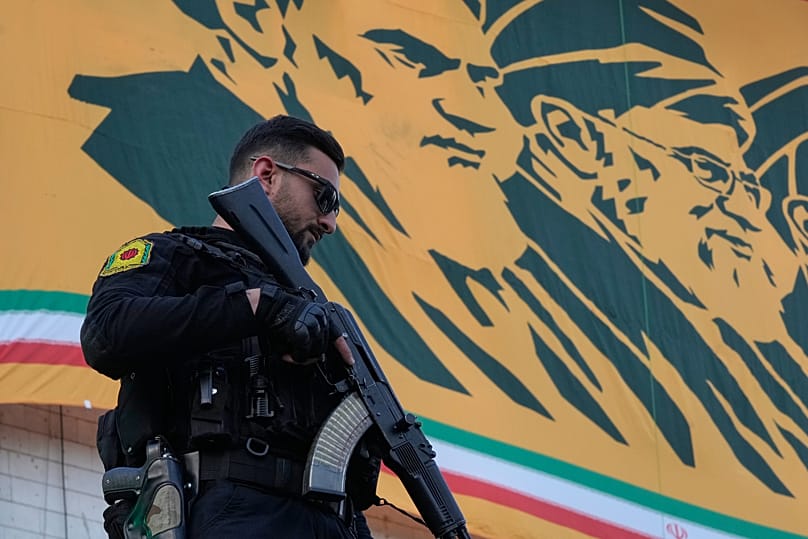
FILE: A police officer stands guard in front of a banner with portraits of late Ayatollahs Khomeini and Khamenei in a state-organised rally, Tehran, 29 April 2026
FILE: A police officer stands guard in front of a banner with portraits of late Ayatollahs Khomeini and Khamenei in a state-organised rally, Tehran, 29 April 2026 AP Photo

Many had only called relatives abroad, while others were traders and businesspeople who needed the internet to do their work," he added. Most were released after signing written pledges. Around 10 people remain in custody, according to eyewitnesses Euronews spoke to.

The crackdown made people more cautious at the border crossings as well.

"At the moment, because of security sensitivities, people avoid some border crossings, and many of those travelling between Iran and the Kurdistan region wipe their mobile phones and laptops to avoid arrest or being accused of collaborating with Israel and the US," another witness told Euronews.

Internet for the few

Over the past months, only a small number of Iranians have managed to access the global internet through costly or officially prohibited means.

A limited category of business licence holders can register for what authorities call "pro internet," but a 50-gigabyte package costs around 2.8 million tomans — around €15 at current free-market exchange rates — and is charged separately from registration fees.

For many workers whose monthly salary does not reach 20 million tomans (€110), the cost is out of reach.

A select few also have access through special SIM cards or privileged journalistic access. Some who have such access refuse to use it, either because it is unavailable to most Iranians or because they are concerned that their online activity is being monitored.

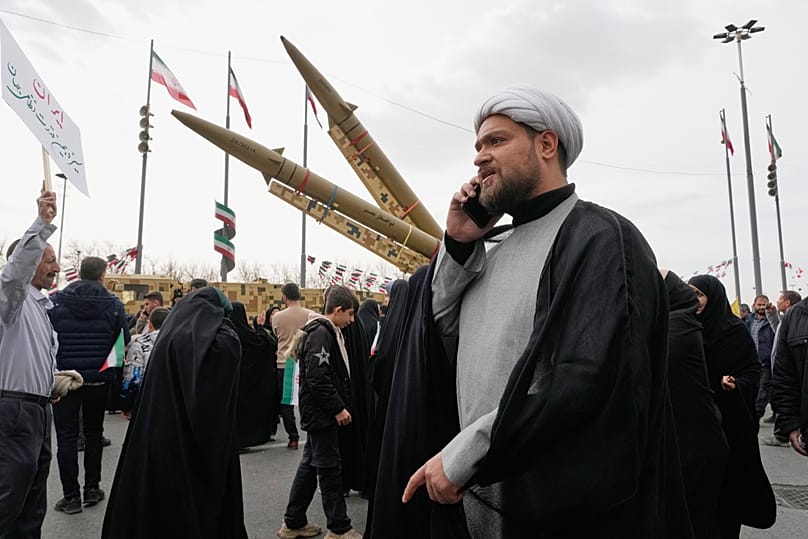
FILE: A cleric talks on his phone as he walks in front of missiles during an annual rally marking the Islamic Revolution at the Azadi square in Tehran, 11 February 2026
FILE: A cleric talks on his phone as he walks in front of missiles during an annual rally marking the Islamic Revolution at the Azadi square in Tehran, 11 February 2026 AP Photo

VPN prices, which spiked sharply at the start of the blackout, have since fallen as supply has increased. A limited number of Starlink devices, most of them smuggled, are also circulating — but their use carries the risk of prosecution and has already cost one person their life.

In the latest incident, a 40-year-old businessman from Tehran died in detention after security forces arrested him when he went to follow up on the case of his brother, who had been held on charges related to the use of Starlink equipment.

A resident of Sardasht told Euronews that access conditions in the border areas were now "somewhat better" and that most people without any of these options were using Iran's domestic "national internet" and waiting for the restrictions to end.

The head of the Iran Chamber of Commerce's economy commission Afshin Kalahi told domestic media that the shutdown was causing direct daily losses of $30 million to $40 million (€25.5m to €34m) for Iran's economy.

Iran's ministry of communications separately cited daily business losses of 600 billion toman (€30.3m) for businesses.

The ministry also said that around 10 million people — mainly from the middle and lower classes — depend on stable digital communications for their work.

https://www.euronews.com/2026/05/08/exclusive-iranians-risk-arrest-at-iraq-border-to-escape-tehrans-total-internet-blackout