Demand for EVs is nowhere close to projections so car makers are slashing production.
Ford Cuts F-150 Lightning Truck Production
CNN reports Ford is Cutting Back F-150 Lightning Electric Truck Production
Ford will shut down one of two production shifts in April at the Dearborn, Michigan, factory that builds the F-150 Lightning electric pickup. The move is part of “matching F-150 Lightning production to customer demand,” the company said Friday.
General Motors recently made a similar announcement about its Chevrolet Silverado EV, announcing it would postpone adding production facilities for the truck, which went into production last spring for corporate customers.
Ford still projects an increase in Lightning sales this year after a 55% jump to 24,000 trucks last year.
About That 55 Percent Jump
The EV advocates like to stress surging 55 percent increase in demand. I like to look at other numbers.
Ford went from selling 15,000 trucks to selling 24,000 trucks. Ford sold 750,000 trucks last year. EVs accounted for 3.2 percent of them.
That’s roughly going from 2 percent to 3 percent. Hooray?
The price of a Lightning starts at about $50,000 and is eligible for $7,500 in federal EV tax credits. Even with the tax credits, the price remains higher than the $34,000 base price of the gas-powered truck.
In July, Ford slashed the price of a Lightning Pro, following earlier increases, to about $50,000. [And customers still don’t want the damn things. OK. OK. 3 percent do].
About 1,400 workers will be cut from the Rouge Electric Vehicle Center, where the Lightning is built. About half of those employees will move to the nearby Michigan Assembly Plant, where production will increase for the gasoline-powered Ford Bronco and Ranger models.
While Ford has said it is building factories in Tennessee and Kentucky where a next-generation EV truck will be built, the company recently announced it would scale back plans for an EV battery plant in Michigan.
Could it Be the Product?
Scaling back the EV Battery plant. Gee. Who couldda thunk?
The more sales there are the more chance defects show up. Have we hit the point where defect stories have impacted sales?
The Wall Street Journal asks: Companies cut output amid flagging demand. Could it be the product?
The Biden Administration keeps throwing around billions in subsidies for electric vehicles, and the press corps keeps hailing them, but consumers don’t seem to want them. The evidence is building that this green industrial policy is a bust.
Ford Motor said on Friday that it’s slashing production of its F-150 Lightning truck amid flagging demand. The F-150 Lightning drew oohs and aahs from the press when it was unveiled in May 2021. Yet the electric pickup has been plagued with defects that have required recalls. It sold a mere 24,165 Lightnings last year and lost roughly $36,000 on each EV in the third quarter. [Wait a second WSJ. Hold on. You are not allowed to say only 24,165. Shame shame. You need to stress 55 percent growth!!!!]
Or consider General Motors, which last month told its Chevrolet dealers to stop selling its electric Blazer SUV owing to software and other problems. Consumer complaints have piled up on social media about glitches including inoperable window switches and batteries that won’t charge.
A Consumer Reports survey in November found that new EVs have 79% more problems than internal-combustion cars. “This suggests that legacy auto makers need more time to work out the kinks under the hood of their EVs,” the report noted. “What matters most to consumers remains the same: finding safe, reliable cars,” Consumer Reports CEO Marta Tellado said. People want safe, reliable cars—who would have thought?
None of this is stopping the Biden Administration, as this week the Environmental Protection Agency sent its final rule on auto greenhouse emission standards to the White House for review. This back-door EV mandate will punish Ford and other auto makers if they respond to consumer demand by selling more gas-powered cars. It will also compel the companies to roll out EVs before technological and engineering kinks are worked out. This is a recipe for making EVs less popular, not more.
Amid the private jet-set at Davos this week, Biden climate czar John Kerry attributed consumer resistance to EVs to “disinformation.” That’s hilarious. The automobile press couldn’t be more in the tank for EVs.
What Should Ford Do?
That’s easy. Ford should move to 100 percent production of EVs. Then by losing $36,000 per vehicle it can quickly declare bankruptcy and readjust the union contract it just worked out. Then perhaps it can break even selling EVs.
Alternatively, Ford can tell Biden to go to hell, produce cars and trucks it wants and take the case to the Supreme Court if Biden presses the matter.
The county is just not prepared for vehicles that cost more, don’t get the mileage touted, won’t charge in the Winter, lack insufficient infrastructure, and have 79% more problems than internal-combustion cars.
Other than that, EVs are just great, especially for those who seldom drive, don’t go far when they do, and like reading books while waiting hours for their car to charge in the Winter.
$2 Billion in Subsidies, Only 2 EV Stations Opened
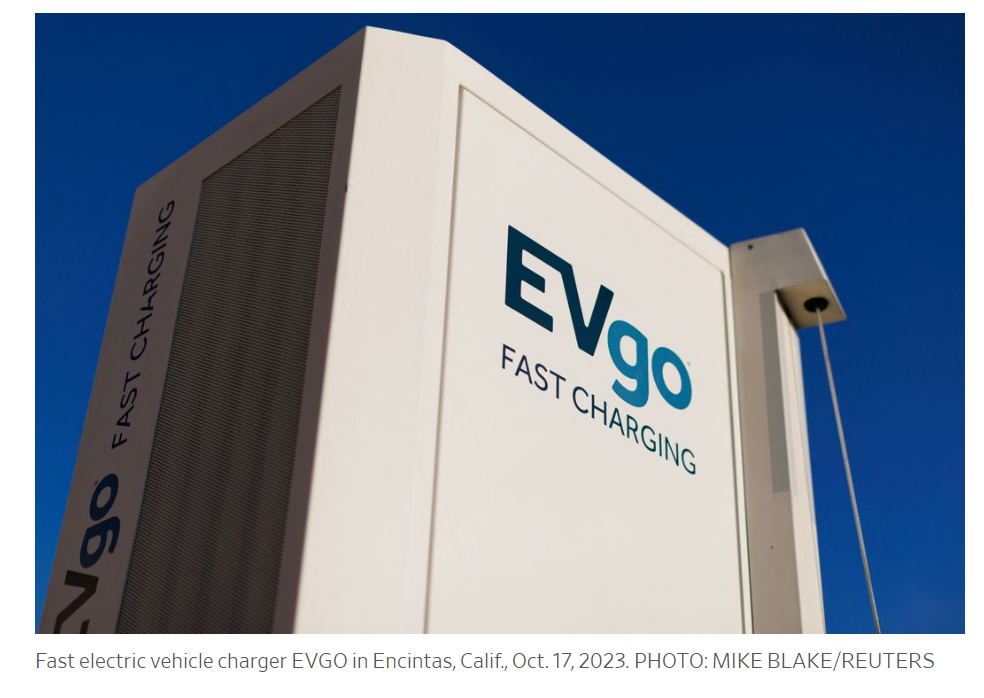
Meanwhile, despite $2 Billion in Subsidies, Only 2 EV Stations Opened, the Holdup is Social Justice
In yet another example of Biden incompetence, the administration is setting up rules making it harder to deliver EV charging stations.
Actions Speak Louder Than Projections
The adoption rate of EVs, actions by Hertz, actions by GM, action by Ford, and survey of intensions speak loud and clear.
That is despite massive incentives, subsidies, and outright coercion in California.
Both GM and Ford are scrapping targets.
Hertz planned to buy 100,000 Teslas. Instead it is selling 20,000 of them.
If Trump wins the election this year, he is certain to immediately roll back all of Biden’s energy regulations and mandates.
California mandates 35% of new 2026 car models sold in California must be zero-emissions, climbing to 68% in 2030 and 100% in 2035.
Nationally, the 2030 projection was for 10 percent EVs by 2030. Will we even reach that?
https://mishtalk.com/economics/ford-loses-36000-on-each-ev-cuts-production-of-electric-trucks/

No comments:
Post a Comment
Note: Only a member of this blog may post a comment.