by James Varney
Looking to reorient U.S. energy policy toward fossil fuels and nuclear plants, President Trump has access to an enormous sum of money made available by an unlikely source: the Biden administration and congressional Democrats.
Legislation passed on party-line votes, most notably the $1 trillion Inflation Reduction Act, allocated hundreds of billions to the Department of Energy and the Environmental Protection Agency to fund various green energy projects. While some of that money has since been zeroed out by Republicans, more than $280 billion remains – allocated but unspent.
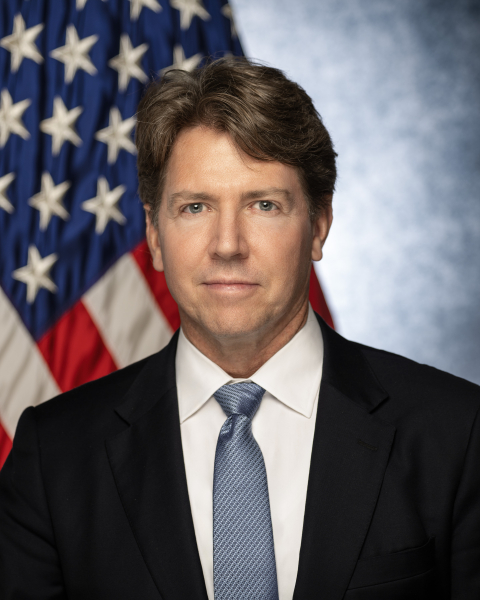
The Trump administration is wiping clear billions of dollars in loans made by the Biden administration and will streamline the federal grant process under the newly created Office of Energy Dominance Financing (EDF). Energy officials assert the department will rely on “common sense and data,” thereby eliminating the numerous charges of conflicts of interest associated with energy loans during the Biden era, which were highlighted in a recent report from the department’s inspector general.
“The Biden administration had an agenda to decarbonize without asking the important questions of reliability and affordability,” said Greg Beard, the senior advisor to the EDF. “I wouldn’t describe our plan as an agenda, I would describe it as common sense. We’re grateful that Congress saw that the Trump Administration can have an important impact while being good stewards of taxpayer dollars.”
Billions ‘Rushed Out the Door’
Energy Secretary Chris Wright has been an outspoken proponent of oil, natural gas, and nuclear power for years, and quickly took an aggressive stance toward department loans. Last year, he canceled $3.7 billion in loans he said made no financial sense, and on Jan. 22, 2026, he announced $83 billion in Biden administration energy loans would be “restructured, revised or eliminated” and characterized the portfolio as part of the “Green New Scam.”
“We found more dollars were rushed out the door of the Loan Programs Office in the final months of the Biden administration than had been disbursed in over 15 years,” Wright said.
That announcement came on the heels of Wright’s remarks at the World Economic Forum earlier this month, when he urged Great Britain and other European countries to turn away from expensive and dicey NetZero projects. That was the framework Biden and the Democrats sought to fund when passing bills via reconciliation without any Republican support, and Wright had urged Congress last year to keep the money available.
Energy’s new lending agency says it will support critical minerals and hydrocarbon projects, including, in some cases, coal, as well as restarting or upgrading the nation’s existing nuclear energy sector – all things the Trump administration considers far more reliable sources of affordable energy than solar, wind, and other renewables. President Trump underscored this commitment last May when he issued an executive order on nuclear power. Since then, administration actions have included a $1 billion loan to restart a nuclear plant on the Susquehanna River in Pennsylvania, and a continuing $1.52 billion loan to the Palisades Nuclear Plant in Michigan.
The change in emphasis was welcomed by some experts who think the shift recognizes the supply and technological situation that exists in the energy sector today.
“Reality has signaled to the world it needs to have a recalibration when it comes to energy matters. There’s even some clarity restored to the IEA’s world energy outlook,” said Mark Mills, executive director of the National Center for Energy Analytics. “The world isn’t following the ‘NetZero’ blueprint, Europe is backpedaling, and one of the big stories going forward this year will be the who, when and where the Trump administration decides to put money.”
Warping the Market
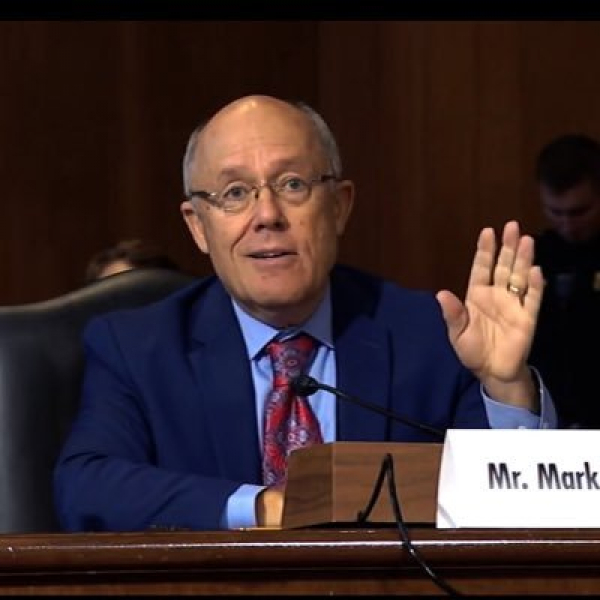
Mills cautioned that the government’s resources are so great that massive loans in one sector could warp the market by discouraging private capital, but the EDF’s Beard told RealClearInvestigations his office is aware of that possibility, particularly with nuclear energy. In addition, any new nuclear project will take at least five years to deliver energy to the grid, and that is probably an optimistic timeline.
“EDF loans are all tied to specific companies and projects and are the subject of extensive due diligence to validate that projects meet EDF standards for project readiness and reasonable assurances that loan will be repaid,” Beard said. “There is never a scenario where we do not know where the money is going.”
Those who believe global warming is an existential crisis have decried the Trump administration’s focus on plentiful energy sources that emit carbon, a process that the Energy Department’s new direction will continue. RCI reached out to prominent environmental groups such as the Sierra Club and the Environmental Defense Fund, but they did not respond. However, several environmentalists recently told the New York Times the results would prove catastrophic.
“Emissions will be higher,” Dartmouth College associate professor Justin S. Mankin told the newspaper. “Trump’s greenhouse gas emissions will cause Trump’s heat waves, Trump’s droughts, Trump’s floods, and Trump’s wildfires.”
The Trump administration’s approach is also being criticized by some free-market energy experts who say the federal government should not be in the loan business at all, and would prefer the office be disbanded and the money spent elsewhere.
“We were excited to see that the Department of Energy is canceling $30 billion in green loans, but would like to see them go much further,” said Thomas Pyle, president of the Institute for Energy Research. “For more than a decade, we have called for Congress and DOE to end the loan program altogether. Absent that, President Trump to send a recission to Congress and announce that the money is going to pay down the deficit. The taxpayer should not be on the hook for commercial projects, regardless of their merit.”
Lingering Questions
As it reorients the federal government’s energy loan portfolio, the administration has revamped the way those loans are made in response to questions raised about the Biden administration’s practices. The Environmental Protection Agency – a regulatory agency that Biden, for the first time, made into a financial arm of his NetZero push – now appears to be out of the energy loan business, even as questions linger about that activity.
That process, which the EPA’s inspector general likened to the agency creating an “enormously complex investment bank” that would be difficult to monitor, involved roughly $27 billion doled out to nonprofits via its short-lived Greenhouse Gas Reduction Fund and Solar For All programs.
As RCI previously reported, familiar names in the Obama and Biden administrations were sprinkled throughout the nonprofits receiving the billions, which took another bizarre twist after Trump won the 2025 election. At that point, it was revealed the EPA had “parked” roughly $20 billion at Citibank, an unorthodox arrangement that took the cash out of Treasury Department control in a process one former Energy Department employee compared in an undercover video to “throwing gold bars off the Titanic.”

The Citibank money remains embroiled in litigation. Nonprofits suing for the money they were promised prevailed at the federal district court level, but that ruling was reversed by the D.C. Circuit Court of Appeals last September in a decision that validated the agency’s decision to end the programs.
Four months after that, however, the EPA did not respond to a question about why the money has not been returned. Both court papers and background on the unique process the Biden administration used to give out the money are part of a new EPA webpage that even features a section entitled, “Self-dealing and Conflicts of Interest.”
Something similar appears to have been occurring at the Department of Energy. Around Christmastime, the department’s inspector general’s office released an audit report that found potential conflicts of interest among 20% of officials it reviewed at the Loan Program Office, which, under Biden, was slated to handle some $380 billion.
The IG launched its audit of some activities by DOE’s loan office in September 2024 in response to its meteoric rise under the Biden administration. In the past, the office had been a somewhat sleepy section of the agency that offered money “to companies considered risky by traditional lenders and investors” that focused on “innovative clean energy, advanced transportation, and tribal energy projects.”
Biden-era legislation turbocharged the Loan Program Office. According to the report, it had $385 billion in new loan authority, a gigantic leap in its balance sheet thanks primarily to the Inflation Reduction Act. To handle the crush, the office had requested an additional 105 full-time federal employees from FY2022 through FY2024. There were 219 people working in the loan office when the audit began.
The auditors spent one year looking at 40 employees and $31 billion in loans – and found potential issues with eight of those employees. The report does not identify either the employees or the loans in question.
In general, the report revealed that loan department employees had failed to disclose prior management positions with firms seeking loans and, in some cases, had financial ties with loan office contractors. This included at least two “senior-level employees.”
These examples raised the potential for conflicts of interest and the “appearance of loss of impartiality in performing official duties,” an issue that arose in part because the office became increasingly sloppy in background work as its ranks swelled, according to the report.
Nothing Untoward?
Some of the report’s conclusions would appear to warrant further investigation. For example, auditors said “we found the employee authorized the interagency package concurrence for multiple loans worth billions of dollars, where their former employer was the financial advisor or investor for those loans. The employee had significant financial interest with this company.” Department officials told auditors there had been a “recusal” in that case, which in the end kept the employee from making any final decisions.
In another case, the report found “a supervisory loan specialist that had not been recused from matters involving their outside employer. Specifically, the employee was a company board member, and, as such, the financial interest of the company was imputed to the employee, creating a possible financial COI.”
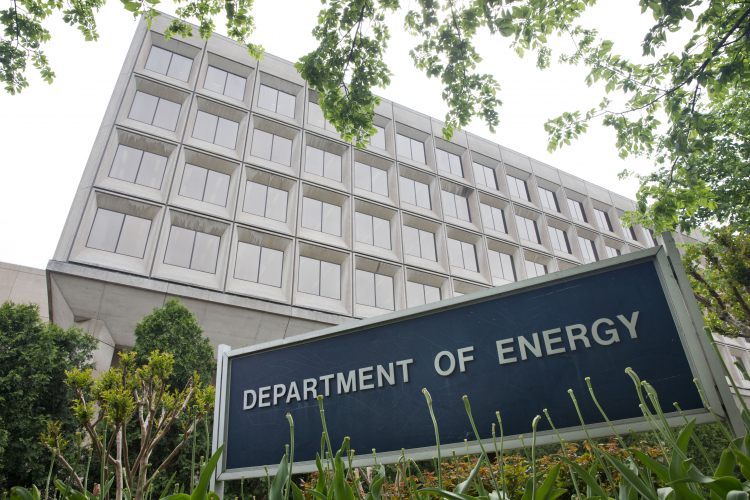
The IG said these various errors occurred because the office did not follow standard ethics regulations and internal policies. Yet the precise details of what happened in the decision-making process, and whether the loans the IG examined were among those canceled by the Trump administration, remain unclear because neither the individuals nor the companies were named.
RCI spoke with liberal government watchdog groups and current Department of Energy officials who insisted the report did not conclude anything specifically untoward had occurred. The IG listed three recommendations, which the department says it has already implemented. These include a staff lawyer dedicated to ensuring compliance with ethics regulations and resolutions of “the potential conflicts identified during the audit.”
But the Trump administration seems more interested in spending the money secured by the Biden administration than it is in revisiting the previous administration’s missteps.
“We have a clear vision with the right goals – to bring energy addition and not subtraction,” Beard said. “The office has restructured around a foundational mission to lower electricity prices, empower the private sector toA invest in the future, help win the AI race, strengthen American industry, lower electricity prices, and restore American energy dominance.”

No comments:
Post a Comment
Note: Only a member of this blog may post a comment.