AbbVie announced positive data from the Phase 2 CAPTIVATE study evaluating IMBRUVICA, or ibrutinib, in combination with VENCLEXTA in previously-untreated chronic lymphocytic leukemia/small lymphocytic lymphoma patients. Early results of the combination oral regimen suggest promising activity in treatment-naive CLL/SLL with 77% of the first 30 patients achieving responses with no detectable minimal residual disease after six cycles of the combination therapy. MRD is determined by measuring the number of cancer cells remaining and helps confirm depth of remission. The first 14 CLL/SLL patients to complete the clinical trial combination therapy of 12 cycles achieved responses with no detectable MRD in approximately nine out of 10 patients, with 93% achieving MRD negativity when measuring in peripheral blood and 86 percent with MRD negativity when measuring in the bone marrow. The most common AEs were diarrhea, fatigue, nausea, headache, upper respiratory tract infection and arthralgia. Grade 3 or higher AEs – occurring in greater than or equal to 3% patients – were neutropenia, hypertension, diarrhea and thrombocytopenia. No clinical tumor lysis syndrome occurred and lab TLS was seen in 1 of 164 patients. In treated patients with baseline LDi 5 cm or greater, LDi decreased to less than 5 cm in 43 of 53 patients after ibrutinib lead-in. TLS risk shifted from high to medium/low in 36 of 40 patients, and overall, the proportion of high-risk TLS decreased from 24% at baseline to 3% after ibrutinib lead-in.
Sunday, June 3, 2018

FDA wants to shorten new drug monopolies to cut costs
In an effort to increase competition and bring down prescription drug prices, FDA Commissioner Scott Gottlieb speaking at the American Society of Clinical Oncology Annual Meeting said he wants to speed approval times for rivals to promising new first-to-market medicines, according to Reuters. The U.S. Food and Drug Administration chief has made a commitment to speeding up approvals of cheap generic medicines, the report added.
Merck, Eisai detail expanded use of combo med for several cancers
Eisai and Merck announced results from presentations of new data and analyses of LENVIMA, an orally available kinase inhibitor discovered by Eisai, in combination with Merck’s anti-PD-1 therapy, KEYTRUDA, in four different tumor types: unresectable hepatocellular carcinoma, squamous cell carcinoma of the head and neck, advanced renal cell carcinoma, and advanced endometrial carcinoma. LENVIMA and KEYTRUDA are not approved for use in combination in any cancer types today. Early phase results from Study 116/KEYNOTE-524 support further investigation in unresectable HCC. Study 116/KEYNOTE-524 is a Phase 1b open-label, single-arm multicenter study evaluating the tolerability and safety of the combination of LENVIMA and KEYTRUDA in patients with unresectable HCC, Barcelona Clinic Liver Cancer stage B or C, Child-Pugh class A, and ECOG performance status of 0 or 1. The primary endpoint was safety; secondary and exploratory endpoints included overall survival, objective response rate, progression-free survival and time to progression using modified Response Evaluation Criteria in Solid Tumors criteria. Tumor assessments of complete or partial response were confirmed greater than or equal to four weeks after initial response. Part 1 evaluated tolerability by assessing dose-limiting toxicities during the first cycle of treatment in patients for whom no other appropriate therapy was available. After tolerability was confirmed, additional patients with no prior systemic therapy for unresectable HCC were enrolled. The expansion part of the study will evaluate ORR and duration of response as measured by mRECIST.
#ASCO18: Phase 3 trial: Many advanced kidney cancers don’t need surgery
A randomized phase III clinical trial showed that many people with advanced kidney cancer can avoid surgery to remove the kidney (nephrectomy), without compromising survival. The median overall survival for people who received only the targeted therapy sunitinib (Sutent®) was 18.4 months, compared to 13.9 months for those who received surgery followed by sunitinib, the current standard of care.
These findings will be presented in ASCO’s Plenary Session, which features four studies deemed to have the greatest potential impact on patient care, out of the more than 5,800 abstracts featured as part of the 2018 American Society of Clinical Oncology (ASCO) Annual Meeting.
“Until now, nephrectomy has been considered the standard of care for patients with kidney cancer who have metastatic disease when the cancer is first diagnosed. These cases account for about 20% of all kidney cancers worldwide,” said lead study author Arnaud Mejean, MD, a urologist at the Department of Urology, Hôpital Européen Georges-Pompidou – Paris Descartes University in Paris, France. “Our study is the first to question the need for surgery in the era of targeted therapies and clearly shows that surgery for certain people with kidney cancer should no longer be the standard of care.”
In addition to putting patients at risk for complications, including blood loss, infection, pulmonary embolism, and heart problems, nephrectomy delays medical treatment for people with advanced kidney cancer for weeks. In some cases, the cancer worsens so rapidly during this delay that there is no time to start systemic treatment.
About the Study: The CARMENA trial enrolled 450 patients with synchronous metastatic renal cell carcinoma (mRCC), meaning that metastases were already present when kidney cancer was first diagnosed. An estimated 40,000 to 50,000 people each year are diagnosed with this type of cancer.1,2
The patients were randomly assigned to receive surgery followed by sunitinib or sunitinib alone. In the surgery group, patients started sunitinib 4-6 weeks after surgery to allow time for recovery from surgery.
Key Findings: Patients were followed for a median time of 50.9 months. Survival was not worse with sunitinib alone than with surgery and sunitinib. This was true for the study population as a whole (median survival was 18.4 months without surgery vs. 13.9 months with surgery), as well as for subgroups with an intermediate (median survival was 23.4 months vs. 19 months) and poor prognosis (median survival was 13.3 months vs. 10.2 months) groups.
The difference in median survival seems to suggest a greater benefit with sunitinib alone. However, this cannot be concluded, as this trial was not designed to prove that one treatment is superior to the other, noted Dr. Mejean.
The rate of tumor response to therapy (tumor shrinkage) was the same in the two treatment groups (27.4% and 29.1%) and the median time until the cancer worsened was slightly longer for patients who received sunitinib alone compared with those who also had surgery (8.3 months vs. 7.2 months). Clinical benefit was experienced by 47.9% of patients treated with sunitinib only, compared with 36.6% of patients treated by surgery and sunitinib.
The authors remarked that kidney surgery is still the gold standard for people who do not need systemic therapy, such as those with only one metastasis. Those patients were not included in this clinical trial.
Next Steps: Some patients in the study had a very good response to sunitinib alone and received surgery after completing systemic treatment. The researchers plan to continue following outcomes in these patients, as well as in other subgroups of study participants. Genomic research on tumor tissue collected on the study is underway.
This study received funding from PHRC (French governmental grants for clinical research).
Study at a Glance
Disease: Metastatic Kidney Cancer
Trial Phase, Type: Phase III, Randomized
Patients on Trial: 450
Intervention Tested: Surgery followed by sunitinib (standard of care) vs. sunitinib alone
Primary Finding: mOS 13.9 months with standard of care vs. 18.4 months with sunitinib alone
Secondary Finding(s): mPFS 8.3 months with standard of care vs. 7.2 months with sunitinib alone
Disease: Metastatic Kidney Cancer
Trial Phase, Type: Phase III, Randomized
Patients on Trial: 450
Intervention Tested: Surgery followed by sunitinib (standard of care) vs. sunitinib alone
Primary Finding: mOS 13.9 months with standard of care vs. 18.4 months with sunitinib alone
Secondary Finding(s): mPFS 8.3 months with standard of care vs. 7.2 months with sunitinib alone
References:
1. Ferlay J, Shin HR, Bray F, Forman D, Mathers C, Parkin DM. GLOBOCAN 2008 v2.0, Cancer Incidence and Mortality Worldwide: IARC CancerBase No. 10 [Internet]. Lyon, France: International Agency for Research on Cancer; 2010. Available from: http://globocan.iarc.fr. Accessed July 16, 2013.
2. The epidemiology of renal cell carcinoma. Ljungberg B1, Campbell SC, Choi HY, Jacqmin D, Lee JE, Weikert S, Kiemeney LA. Eur Urol. 2011 Oct;60(4):615-21.
1. Ferlay J, Shin HR, Bray F, Forman D, Mathers C, Parkin DM. GLOBOCAN 2008 v2.0, Cancer Incidence and Mortality Worldwide: IARC CancerBase No. 10 [Internet]. Lyon, France: International Agency for Research on Cancer; 2010. Available from: http://globocan.iarc.fr. Accessed July 16, 2013.
2. The epidemiology of renal cell carcinoma. Ljungberg B1, Campbell SC, Choi HY, Jacqmin D, Lee JE, Weikert S, Kiemeney LA. Eur Urol. 2011 Oct;60(4):615-21.
#ASCO18: Prostate cancer combo med progresses to Phase 2
Abiraterone and enzalutamide improve survival for patients with metastatic castration resistant prostate cancer1,2. Unfortunately, 20-40% of patients have primary resistance abiraterone or enzalutamide, and essentially all patients develop secondary resistance3. Various mechanisms have been postulated for why patients develop cross resistance – one of which being the presence of androgen receptor splice variants. In particular, androgen-receptor splice variant 7 messenger RNA (AR-V7) has been well defined by as a variant which is associated with resistance to enzalutamide and abiraterone. Antonarakis and colleagues demonstrated prospectively that in a cohort of patients receiving enzalutamide, 53% of AR-V7 negative patients had a response compared to 0% of AR-V7 positive patients3.
In this small phase I study, Dr. Pan and colleagues utilized niclosamide in combination with abiraterone in patients with progressive castration resistant prostate cancer. Niclosamide, a salicylamide derivative, was originally an anti-helminthic drug but more recently has been explored in variety of malignancies including HCC, colon cancer, and ovarian cancer4-7. In ovarian cancer cell lines, niclosamide may impact the Wnt/beta-catenin, mTOR, and STAT3 pathways.
6 patients were treated with niclosamide/PDMX1001 at a dose of 1600 mg TID without any dose limiting toxicities. This is the dose that will be used as the phase II dose. At this dose, the trough was at least three times the target level of niclosamide. Of the 6 patients, two have had undetectable PSAs for 16 cycles with ongoing activity and two patients have a partial response with more than 50% PSA decline. One limitation to this study is the lack of a control arm – patients were compared against historical controls. A second limitation to this study is that abiraterone is highly active in this patients and it difficult to say if these patients would have had the same response without niclosamide.
The next step will be to test if niclosamide will be effective in the population of patients who have disease refractory to enzalutamide or abiraterone. Per Dr. Pan, the phase II study began enrolling patients last week and they will plan to enroll only patients who have progressed on enzalutamide.
Presented By: Chong-xian Pan, MD, PhD. University of California Davis Comprehensive Cancer Center
Written by: Jason Zhu, MD Fellow, Division of Hematology and Oncology Duke University Medical Center, Twitter: @TheRealdJasonZhu at the 2018 ASCO Annual Meeting – June 1-5, 2018 – Chicago, IL USA
Edgy #ASCO18 presentation stresses risk of Bristol, Nektar experimental med

On Saturday night, the controversy around the experimental cancer immunotherapy drug NKTR-214 ratcheted higher following a new data presentation at the American Society of Clinical Oncology annual meeting.
Nektar Therapeutics and Bristol-Myers Squibb, the owners of NKTR-214, are undertaking a hugely expensive program to run nearly two dozen clinical trials spanning 20 indications across nine types of solid tumors. Phase 3 studies in melanoma, kidney cancer, and urothelial cancer are starting soon.
The aggressive drug-development plan is based on a belief that NKTR-214 boosts the efficacy of Bristol’s checkpoint inhibitor Opdivo. Combining the two drugs will benefit more cancer patients, including those with tumors that do not respond to Opdivo on its own, Bristol and Nektar say. If they’re right, it will also make the companies billions of dollars in revenue.
The strategy is controversial, however, because there’s only a small amount of tumor response data from an early-stage, single-arm clinical trial to support the NKTR-214-Opdivo combination approach. An update of this trial on Saturday night at ASCO did little to settle the issue. If anything, the presentation raised more doubts.
In a group of 13 melanoma patients, treatment with NKTR-214 and Opdivo demonstrated a impressive tumor response rate of 85 percent. That means 11 of the 13 patients responded.
But then the companies enrolled another 15 melanoma patients, and the response rate dropped. In the update, 14 of the now 28 treated patients (50 percent) showed significant tumor shrinkage. That means only three of the 15 added patients responded — a concerning drop in the efficacy of the NKTR-214-Opdivo combination.
The study presented at ASCO on Saturday night also included a group of patients with kidney cancer. Here, the initial response rate was 64 percent. Seven of 11 patients responded. But then 15 more kidney cancer patients were enrolled and the response rate dropped to 46 percent. Like with the melanoma group, the falling response rate when kidney cancer patients were added raises questions.
Bristol and Nektar defended the results, saying tumor responses are expected to get better over time. The patients enrolled later in the study have not been followed long enough, but when they are, the companies expect more tumors to shrink, boosting the response rates.
The companies also pointed to data presented Saturday showing NKTR-214 may trigger tumor responses in so-called PD-L1 negative patients who don’t typically respond to Opdivo alone. Five of 12 melanoma patients with PD-L1 negative tumors (42 percent) responded to the combination of NKTR-214 and Opdivo. For the 17 PD-L1 negative kidney cancer patients, the response rate was 53 percent.
But these results are still coming from small numbers of patients, and as more patients are added, the response rates are falling. This makes it hard to determine if NKTR-214 is really improving the response rate that might be seen if Opdivo were used alone.
Running a randomized, controlled study where the combination of NKTR-214 and Opdivo is compared to Opdivo and a placebo is the only way to get definitive results. But Nektar and Bristol chose not to go this route early in the development process.
For Bristol, NKTR-214 is a risky, all-in gamble to save its troubled cancer immunotherapy franchise. Opdivo is Bristol’s crown jewel, with 2017 sales of $5 billion, but the drug has been losing market share to rivals, most notably Merck’s checkpoint inhibitor Keytruda. And Merck is not standing still. The pharma giant is already having great success with combinations of Keytruda and chemotherapy that could make even harder for Bristol and Nektar to win.
So, Bristol and Nektar are taking on a big risk that the response rates seen in the single-arm study of NKTR-214 and Opdivo are real and will improve over time. Meantime, they’ll spend hundreds of millions of dollars to run Phase 3 clinical trials, hoping their gamble — based on scant evidence — pays off when data reads out in several years.
#ASCO18: Trial 1st to show benefit of immunotherapy in some prostate cancers
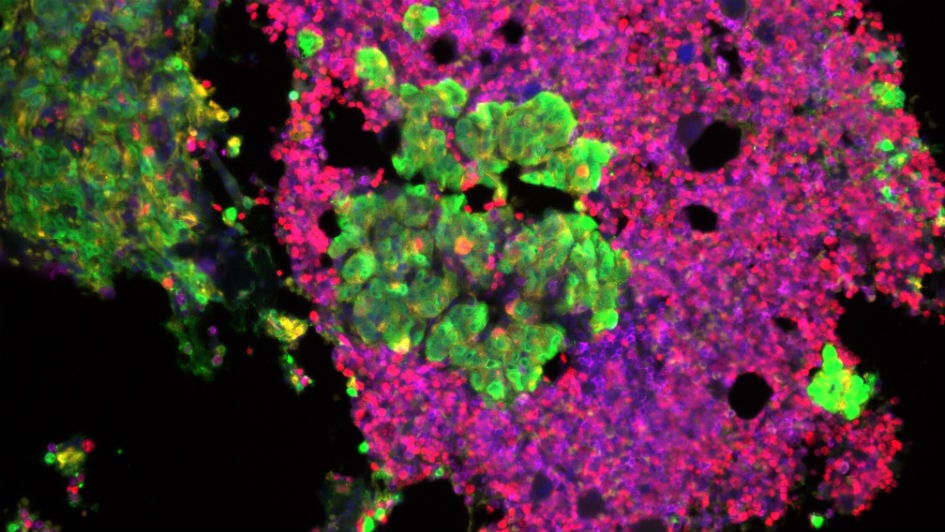
Prostate cancer cells (Credit: Mateus Crespo/Professor Johann de Bono, the ICR)
A major clinical trial has become the first to show benefits of immunotherapy in prostate cancer – for some men with advanced, otherwise untreatable disease.
Researchers showed that a subset of men who had run out of all existing options for treatment survived much longer than expected when taking immunotherapy.
Some 11 per cent of men with very advanced prostate cancer are still benefiting from the immunotherapy ‘checkpoint inhibitor’ pembrolizumab after a year – with many of them showing impressive remissions and prolonged disease control.
The international trial, led by a team at The Institute of Cancer Research, London, and The Royal Marsden NHS Foundation Trust, could lead to a subset of prostate cancers joining the list of cancers that can be treated with immunotherapy.
Of the 258 men on the trial with advanced prostate cancer receiving pembrolizumab, 38 per cent of men were still alive after a year and 11 per cent are still receiving the treatment a year after the trial began without seeing their cancer grow.
The research, presented at the American Society of Clinical Oncology annual meeting in Chicago, also revealed vital clues for how to pick out the subset of men who could benefit.
Previous trials of immunotherapy in prostate cancer had been unsuccessful – but the latest study looked back at the genetics of the tumours, and found there are some particular groups of patients that might benefit.
Overall, only 5 per cent of men in the trial saw their tumours actually shrink or disappear after treatment, but the proportion of responders was higher in a small group of men whose tumours had mutations to genes involved in repairing DNA.
The team at The Institute of Cancer Research (ICR) and The Royal Marsden believe that this subset of men with prostate cancer could benefit from immunotherapy, although more evidence is needed.
They are planning a new trial of pembrolizumab specifically to assess whether it is effective in men who have DNA repair mutations in their tumours.
Comparing the effectiveness of pembrolizumab
Tumours that have mutations in specific genes involved in repairing DNA may acquire more genetic mutations as they multiply than other cancers.
Researchers at the ICR and The Royal Marsden believe that these ultra-mutant cancer cells may be particularly easy for the immune system to recognise, since they will look different from healthy cells.
The findings are in line with data from other cancer types, such as bowel cancer, where tumours with defects in DNA repair mutations are more susceptible to immunotherapy.
The study, funded by Merck Sharp & Dohme, compared the effectiveness of pembrolizumab in men whose tumours had a protein called PD-L1 on the surface of their cancer cells and those whose tumours did not. Targeting PDL-1 activity with an immune checkpoint inhibitor takes the ‘brakes’ off the immune system, setting it free to attack cancer cells.
But the study found testing for PD-L1 was not sufficient to tell which patients would respond to treatment. There was some evidence that testing for another protein called PD-L2 could be a better marker of whether men will respond, but this will need to be tested in further clinical trials.
Immunotherapy can benefit a subset of men
Professor Johann de Bono, Director of the Drug Development Unit at the ICR, and at The Royal Marsden NHS Foundation Trust, said:
“In the last few years immunotherapy has changed the way we treat many advanced cancers – but up to now no one had demonstrated a benefit in men with prostate cancer.
“Our study has found that immunotherapy can benefit a subset of men with advanced, otherwise untreatable prostate cancer, and these are most likely to include patients who have specific DNA repair mutations within their tumours.
“We are planning a new clinical trial, specifically in men with prostate cancer whose tumours have mutations in DNA repair genes, to see if immunotherapy can become a standard part of their treatment.
“It’s exciting that immunotherapy could offer some men more time with their loved ones where they have such advanced disease that they have run out of existing treatment options.”
Professor Paul Workman, Chief Executive of the ICR, said:
“Immunotherapy has proven to be a smarter, kinder treatment for many types of cancer – but it still only works for a minority of patients. The challenges we now face are how to predict in advance who will benefit, and how to make immunotherapy work for more people.
“One of the major challenges with immunotherapy is that we don’t have many reliable tests to pick out who will benefit. This new trial has found that testing for mutations in DNA repair genes could be valuable marker of who will respond.
“If we can prove that in the planned new trial, it should be possible to provide some men with advanced prostate cancer with an exciting new treatment option.”
Personalising cancer treatment
Michael English, 72, was treated with pembrolizumab at The Royal Marsden’s West Wing Clinical Research Centre in 2016. He said:
“I was diagnosed with prostate cancer in 2005, and over a number of years I had hormone therapies, radiotherapy and chemotherapy, including treatment in research trials.
“Professor de Bono recommended pembrolizumab based on a genetic test and after only a few three-weekly cycles, we were astonished when scans showed that the tumour had become undetectable.
“As I responded so well to pembrolizumab, I was then able to have colorectal surgery (colostomy) for small holes (fistulas) in my intestine and today I’m effectively cancer-free.
“Personalising my treatment in this way, based on the genetic make-up of the tumour, essentially saved my life. With a fourth grandchild on the way, my wife and I can now plan for the next 20 years, instead of the next two.”
Subscribe to:
Posts (Atom)