Search This Blog

Saturday, July 7, 2018

What an Amazon Pharmacy Could Solve, and What It Won’t


Seamless refills and home delivery could help patients keep taking their drugs. Each year, failure to do so kills 125,000 Americans and costs over $100 billion.
If Amazon’s move to disrupt health care is going to make Americans any healthier, the improvement is most likely to take place in the business of getting prescription drugs to patients more reliably. For one thing, there’s plenty of room for improvement. Failure to take prescription drugs kills about 125,000 Americans a year, according to a recent review in the Annals of Internal Medicine, and this form of noncompliance costs the health care system $100 billion to $289 billion a year.
PillPack — the online pharmacy service that Amazon.com Inc. bought this week — already simplifies health care for its customers by pre-sorting multiple prescriptions. Amazon could do even more by cutting down on the 20 to 30 percent of prescriptionsthat are reportedly never filled, easing communications between doctors and patients, and helping the medical community collect useful data on side effects and customer satisfaction.
Physician and Harvard Medical School health policy professor Anupam Bapu Jena said he’s skeptical about Amazon’s ability to change the quality of doctor visits or hospital stays, but in prescription drugs, he can envision a number of big changes that would benefit patients.
There are two forms of noncompliance, he said. Some people get prescriptions filled but fail to take them, which is hard for Amazon to address. But many patients never fill the prescriptions at all, and here, Amazon could take away that step. Drugs would automatically arrive at patients’ homes.
Jena said there are a number of reasons people fail to take medications. One big factor he sees is that people are taking drugs to prevent illness, or to prevent complications from diabetes, asthma or other conditions. Because these drugs often don’t make patients feel better on a day-to-day basis, they are easy to forget or skip. It’s not like taking antibiotics or pain medications for a painful infection.
Cost is another factor. He considers this a minor effect. In one study, he said, researchers divided heart patients into two groups, one of which was charged the ordinary price for a prescription drug, while to the other got the drug for free. Free drugs improved compliance, he said, but only a little, moving it from around 50 percent to around 55 percent.
But in a broader survey done by the Commonwealth Fund, a third of Americans over 65 said they’d either skipped going to the doctor when sick or failed to fill prescriptions because they couldn’t afford the out-of-pocket costs. Because Amazon could function as a large buyer, Jena said, it might be possible for the company to negotiate lower drug prices from manufacturers.
My Bloomberg Opinion colleague Stephen L. Carter pointed out this week that access, affordability or both seem to contribute to compliance: “Living near a Walmart pharmacy significantly increases the likelihood that someone suffering from high blood pressure will take medication and decreases avoidable hospitalizations by a remarkable 6.2 percent.”
Jena sees even more potential in the world of data. In the future, patients could log into their Amazon accounts to track their prescription history, helping them better track their own health care. The company could also offer something like the “you might also like” recommendation engine, but more based on science than browsing history. A patient might indicate he has coronary heart disease and high cholesterol, for example. Amazon would also have data on the patient’s meds, and could recommend alternative treatments. Or Amazon might inform doctors that similar patients are getting a higher dose of the same drug.
Amazon would also have the capacity to collect data on side effects. Clinical trials are not big enough or run over a long enough time period to catch the less common side effects. Those tend to be identified after drugs go on the market and are widely used. But they might be identified faster if patients reported side effects the same way they write reviews of products. Not all reported complaints will be attributable to the drugs, but with enough data, patterns would emerge.
In the same way, and by tracking health outcomes, Amazon could also collect much-needed data on dangerous drug interactions — hazards that wouldn’t necessarily have been revealed in clinical trials. The more patients and their doctors know about side effects and interactions, the more likely patients will be to get the right prescription for their needs and the lower the risk of noncompliance.
And finally, Amazon’s online pharmacy can ask you about your experience the same way Amazon asks people how they liked the disposable diapers or cat food they ordered. People could report whether they finished a prescription, and if not, could check boxes to indicate the reason — whether it was related to cost, or side effects, or forgetfulness, or the perception that the drug wasn’t helping. An Amazon online pharmacy could transfer a lot of the power and responsibility of improving health care to patients themselves. Which is fine, because we’re the ones whose lives depend on it.

Death on foot: America’s love of SUVs is killing pedestrians


Robert and Karen Bonta, married 50 years last summer, explored all seven continents as they charged into their 70s.
So Amy Bonta Ferin didn’t worry about her parents each winter when they left their chilly Iowa home for the saguaro-dotted desert hills near Phoenix. Her mother, Ferin said, who also kept a bag packed to travel to events involving her three children and 10 grandchildren, lit up a room with her hopeful, smiling face.
“One of the hardest things to see was her in a casket,” Ferin said. “She didn’t have a smile on her face.”
Robert and Karen Bonta, 72 and 71 respectively, were killed after an SUV struck them March 13 in the desert community of Fountain Hills, Arizona.
A Ford Explorer driven by 27-year-old Alex Bradshaw hopped a curb and hit them as they stood on a sidewalk. Canadians Patti Lou and Ronald Doornbos, both 60, were also struck by the SUV as they walked toward the corner in a marked crosswalk. Patti Lou died immediately; Ronald died June 12.
The four deaths highlight a growing danger for America’s most vulnerable road users: Death by SUV.
The scene after a Ford Explorer jumped a curb, striking four people in Fountain Hills, Arizona, on March 13. Three people were killed and another…Show more
ROBERT GUNDRAN
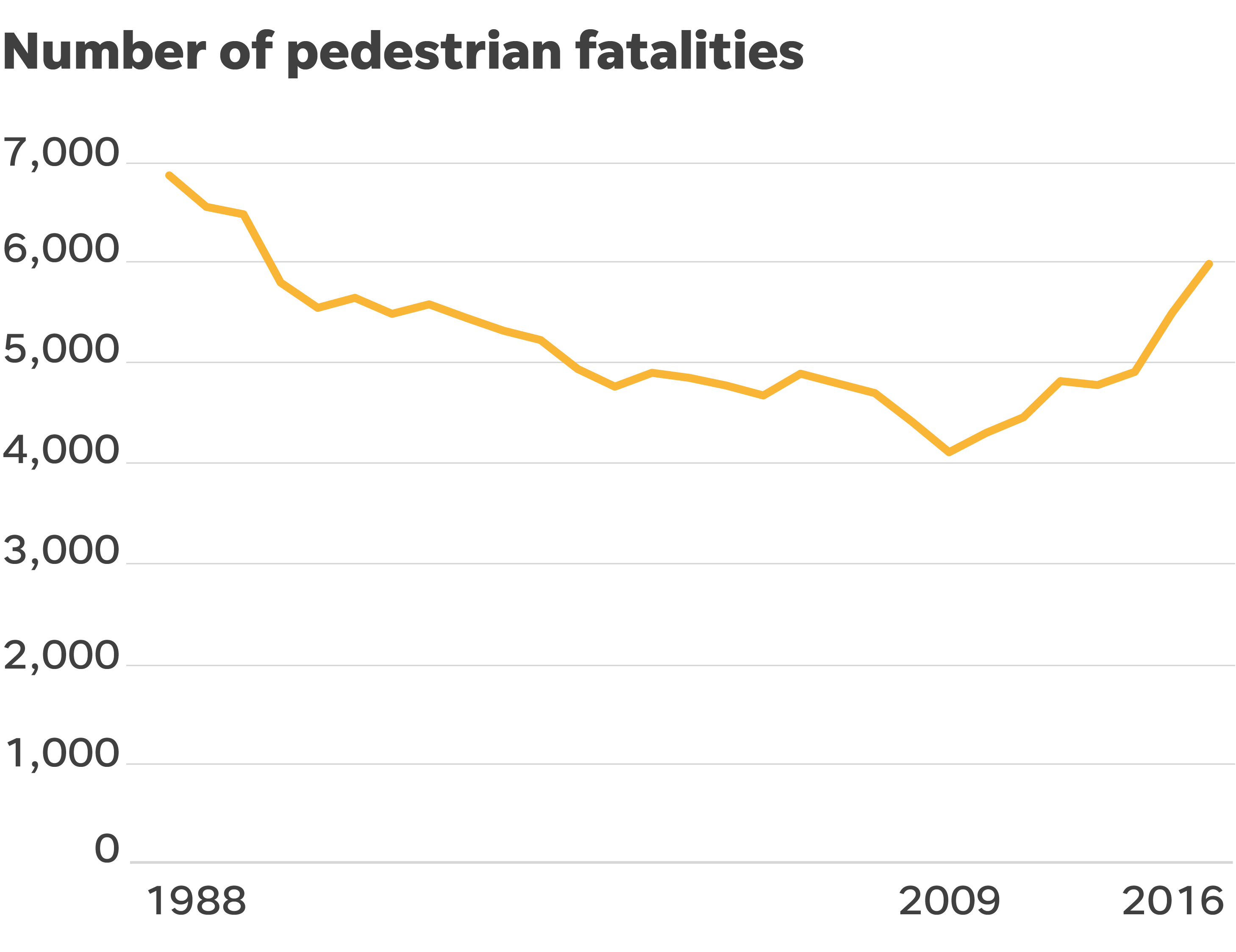
A Detroit Free Press/USA TODAY NETWORK investigation found that the SUV revolution is a key, leading cause of escalating pedestrian deaths nationwide, which are up 46 percent since 2009.
Almost 6,000 pedestrians died on or along U.S. roads in 2016 alone — nearly as many Americans as have died in combat in Iraq and Afghanistan since 2002. Data analyses by the Free Press/USA TODAY and others show that SUVs are the constant in the increase and account for a steadily growing proportion of deaths.
Our investigation found: 
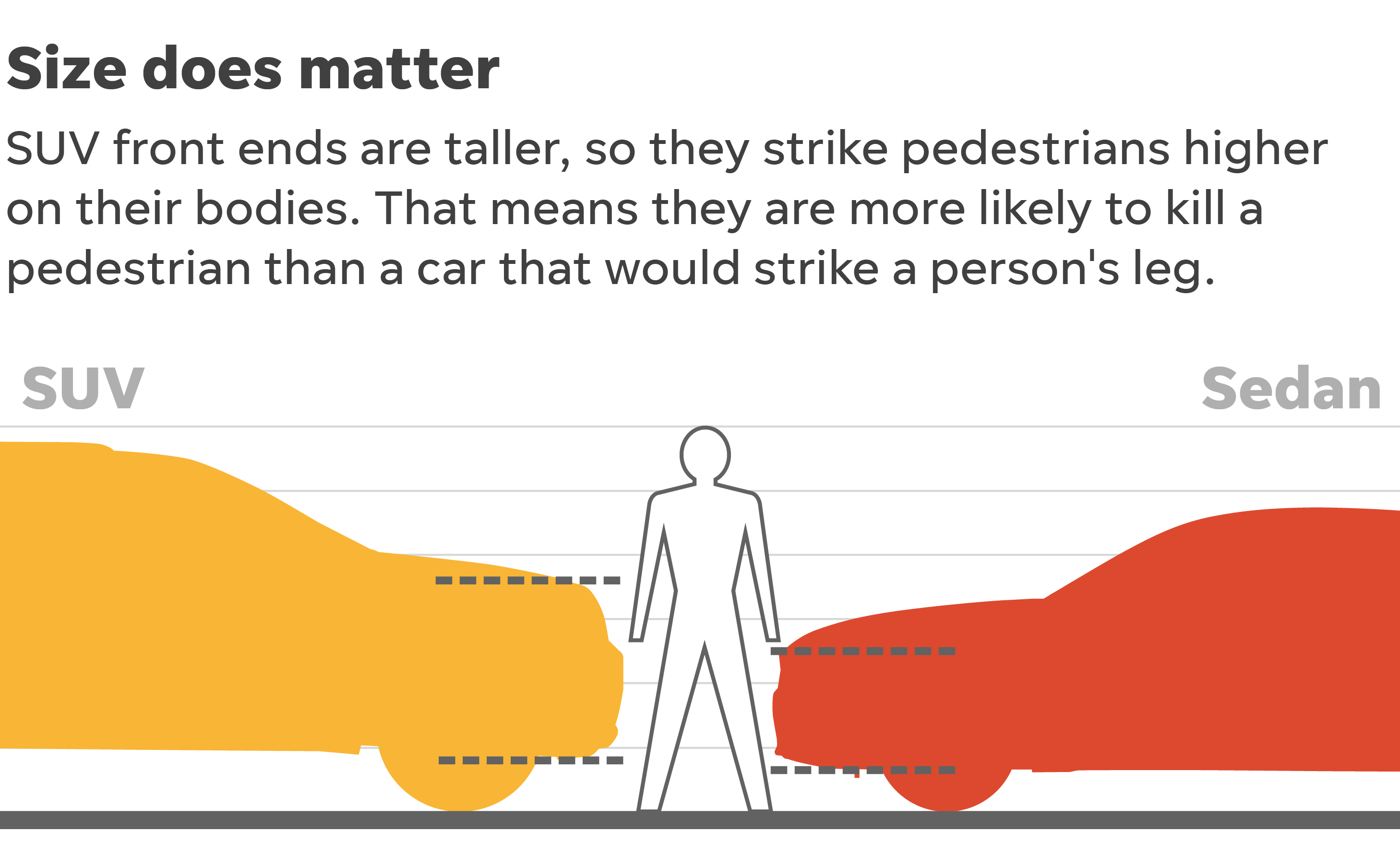
  • Federal safety regulators have known for years that SUVs, with their higher front-end profile, are at least twice as likely as cars to kill the walkers, joggers and children they hit, yet have done little to reduce deaths or publicize the danger.
  • A federal proposal to factor pedestrians into vehicle safety ratings has stalled, with opposition from some automakers.
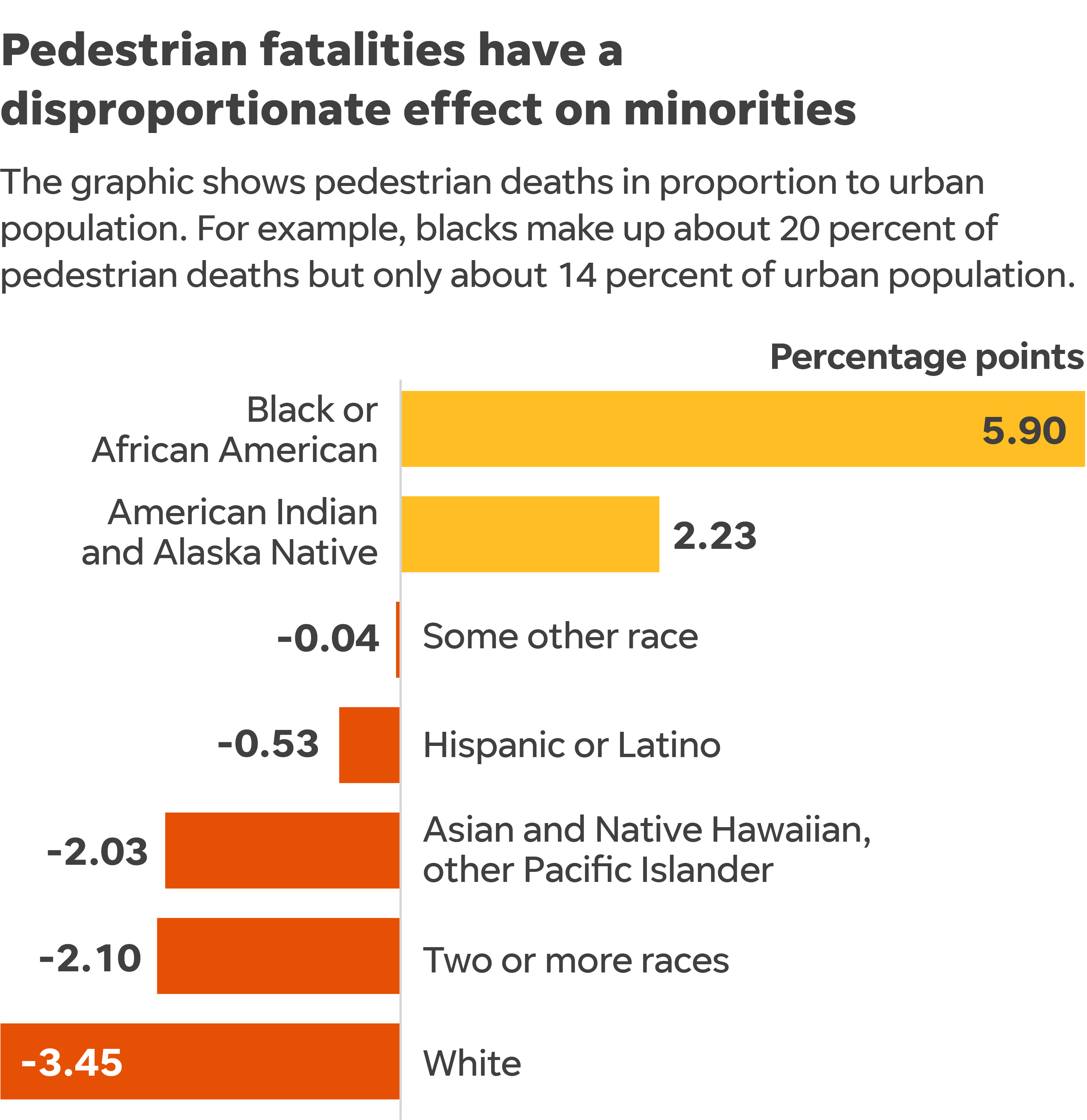
  • The rising tide of pedestrian deaths is primarily an urban plague that kills minorities at a disproportionate rate.
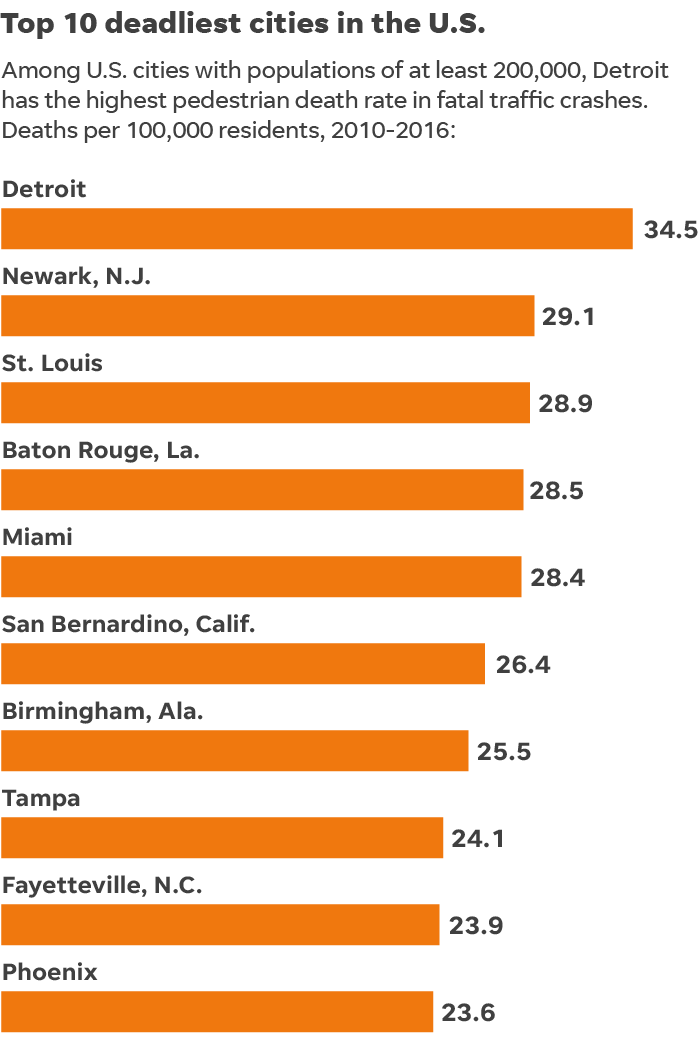
  • It is most prominent in cities both in the industrial heartland and warm-weather spots on the nation’s coasts and Sun Belt. Detroit; Newark, New Jersey; St. Louis; Baton Rouge, Louisiana; Miami, San Bernardino, California, Birmingham, Alabama; Tampa; Fayetteville, North Carolina; and Phoenix had the 10 highest per-capita death rates among cities with populations of at least 200,000 in 2009-16.
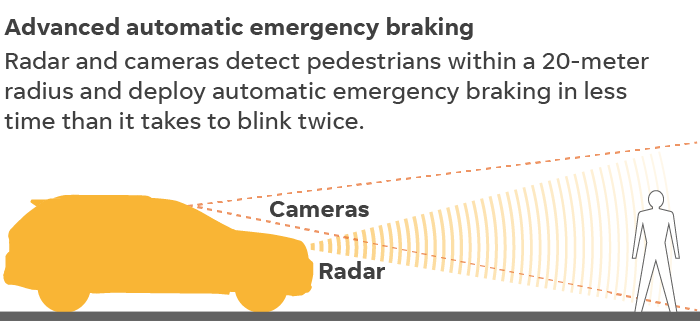
Vehicle safety measures, which the federal government says could save hundreds of pedestrian lives every year, are available but not widely employed by some automakers — nor are they required.
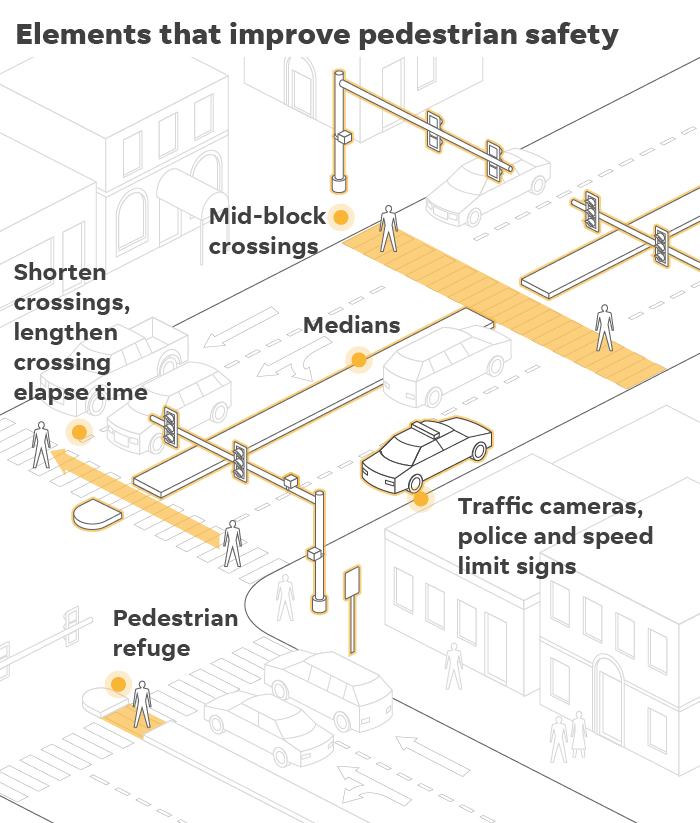
Along with automakers, cities can take action that saves pedestrians. New York City, for example, cut such deaths nearly in half in just four years. The need for steps such as lower speed limits, more midblock crosswalks and better lighting grows in urgency as automakers move strongly toward truck and SUV production.
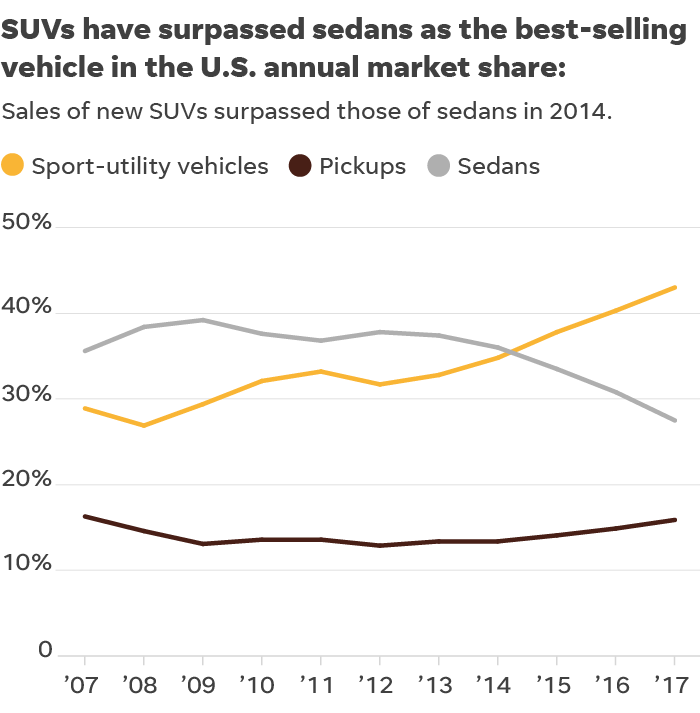
SUV sales topped sedans in 2014; pickups and SUVs now account for 60 percent of new vehicle sales. Ford recently announced plans to discontinue U.S. sales of most passenger cars, while Fiat Chrysler has already done so.

Distraction and other factors

It might seem obvious that a larger vehicle can cause more damage in a crash, whether to a smaller car or an unprotected skull, but some researchers have been hesitant to assign blame for the spike in pedestrian deaths to America’s love of SUVs, in part because various factors are at play in every crash.
Each of the 5,987 pedestrians who died in 2016, according to federal data, had his or her own tragic ending.
Many who died were males, were jaywalking or had alcohol in their systems on multilane roads in urban areas at night. Some might have been distracted, just as vehicle drivers could have been, by texting or talking on cellphones, although data is lacking to quantify distraction.
Some of these other factors also saw increases in recent years, but the SUV component stands out.
Data and safety experts verified that long-standing common factors in pedestrian deaths, such as alcohol and jaywalking at night, did not account for the growth.
A key factor consistently backed by data is growing involvement of higher-profile, blunt-nosed SUVs.
The Insurance Institute for Highway Safety calculated an 81 percent increase in single-vehicle pedestrian fatalities involving SUVs in 2009-16. The Free Press/USA TODAY analysis of the same federal data, counting vehicles that struck and killed pedestrians rather than the number of people killed, showed a 69 percent increase in SUV involvement. The assessment also showed increases each year in the proportion of fatal pedestrian crashes involving the popular vehicles.

Safety standards stalled

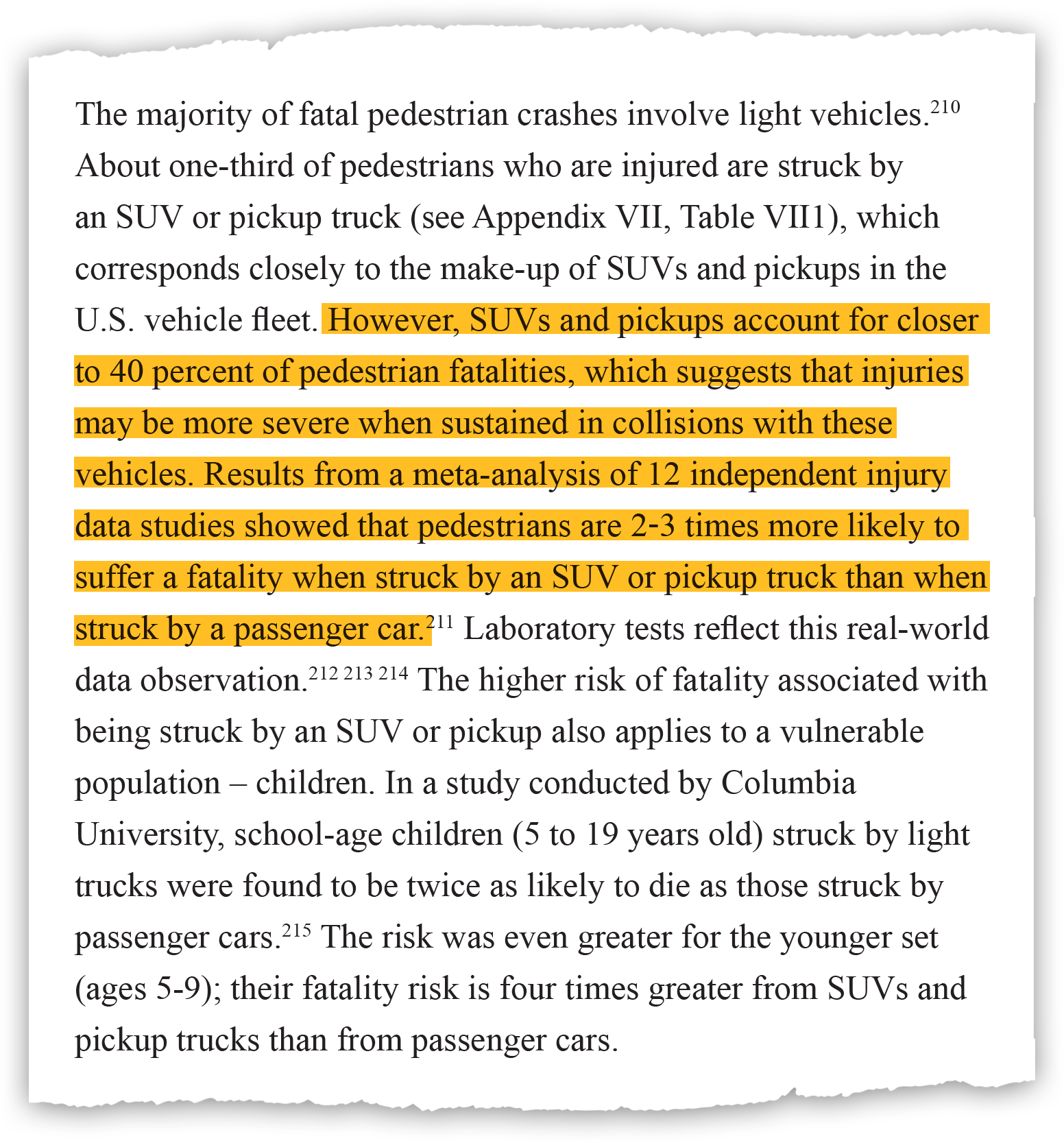
The National Highway Traffic Safety Administration made the connection in 2015 that SUVs were deadlier for pedestrians than cars, referenced on page 90 of a 195-page report. That report, citing 12 independent studies of injury data, said pedestrians are two to three times “more likely to suffer a fatality when struck by an SUV or pickup than when struck by a passenger car.”
That report also noted that SUVs and trucks were involved in a third of pedestrian injuries but 40 percent of deaths, indicating that injuries “may be more severe when sustained in collisions with these vehicles.” The proportion of SUVs on the road has only grown in the three years since.
NHTSA, citing the findings in December 2015, announced a plan to overhaul its vehicle-safety rating system to include a new score for pedestrian safety. The plan was to roll out an overhauled New Car Assessment Program, or NCAP, in 2018 for 2019 model-year vehicles.
But that hasn’t happened.
NHTSA did not respond to questions about what caused the delay, although the agency has been without a permanent administrator since President Donald Trump took office. In a statement to the Free Press this week, the agency said it is “working on a proposal for a standard that would require protection against head and leg injuries for pedestrians impacted by the front end of vehicles.”
The agency noted that it is studying interactions between motorists, pedestrians and bicyclists, distractions, and strategies that states can use to protect pedestrians and improve education on “this important topic.”
NHTSA said earlier that it “plans to continue our efforts to update NCAP by following our process for public engagement, including a public meeting during summer 2018.”
That meeting has not been scheduled and the SUV finding has not been widely shared. The Governors Highway Safety Association earlier this year, for example, reported on its estimates of pedestrian deaths in 2017 and did not cite SUVs as a factor, even speculating that legal marijuana has played a role.

A known factor

As early as 2001, researchers at Rowan University in New Jersey predicted a deadly trend that would reverse a historic drop in pedestrian fatalities, which are now the highest they have been since the George H.W. Bush presidency.
“In the United States, passenger vehicles are shifting from a fleet populated primarily by cars to a fleet dominated by light trucks and vans,” according to their research paper, referencing “light trucks,” which includes SUVs. “Because light trucks are heavier, stiffer and geometrically more blunt than passenger cars, they pose a dramatically different type of threat to pedestrians.”
Hampton Clay Gabler, a professor in the department of biomedical engineering and mechanics at Virginia Tech, wrote that paper with Devon Lefler. Gabler’s interest in the pedestrian issue came from research in other areas showing high death rates for those in cars struck by SUVs.
He described the vulnerability of pedestrians when struck by an SUV as a geometry problem of sorts because SUVs and pickups tend to be tall compared with pedestrians and have a blunter front end. That positioning is more likely to put someone’s head or chest in line to be struck during the initial impact with a vehicle.
“(Not to diminish leg injuries but) serious head and chest injuries can actually kill you,” Gabler said in a telephone interview.

More power

Size and profile are not the only vehicle factors involved in the increased fatalities. Power also increased. A report by the Insurance Institute noted that the trend toward more powerful vehicles could contribute to higher speeds, which, in turn, could lead to more crashes and more severe injuries.
“The increasing popularity of SUVs and higher vehicle speeds associated with more powerful vehicles could have contributed to how crashes involving pedestrians have become deadlier,” the study said.
And speed can clearly kill.
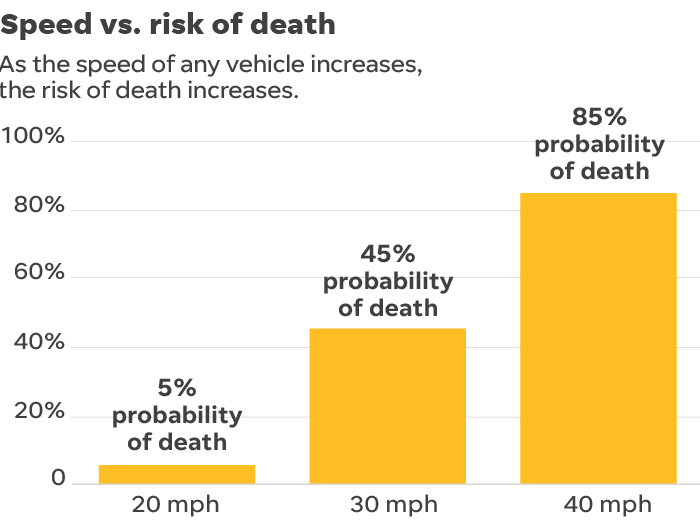
At crashes where a vehicle is traveling 20 mph, 5 percent of pedestrians die. At 30 mph, the percentage increases to 45 percent. At 40 mph, the percentage skyrockets to 85 percent, according to research from 1995 cited by the European Commission, an arm of the European Union.
“Speeding is the most important determinant of whether a pedestrian dies in a crash,” said John Wetmore, a national pedestrian advocate who hosts the public access program “Perils for Pedestrians.”
That belief is supported by Dr. Joe Patton, division head of trauma and acute care surgery at Henry Ford Hospital in Detroit, a doctor on the front lines of treatment for those injured in crashes.
“Speeding is the most important determinant of whether a pedestrian dies in a crash.
John Wetmore, national pedestrian advocate
“Certainly, big cars going fast are worse than little cars going fast, but the speed has a lot to do with it,” Patton said. “I really think the speed makes more of an impact than the size of the vehicle, so you’d rather get hit by a big car going real slow than a small car going real fast because the velocity and the energy of that velocity that it imparts on the person they hit probably plays a bigger role than the size of the car but certainly people are driving bigger cars now.”
Patton called it “intuitive” that bigger vehicles cause worse injuries.

Overall traffic fatalities drop

Pedestrians deaths are not a new phenomenon.
The toll that automobiles have taken on pedestrians dates to the beginnings of the automotive age. In 1896, Britain saw its first pedestrian death by a motor vehicle when a woman was struck in south London. That same year, the country raised its speed limit from 4 to 14 mph, according to Steve Parissien’s “The Life of the Automobile.”
The first U.S. pedestrian death by automobile came in 1899 when a man was struck and killed in New York after hopping off a trolley, Parissien noted.
The more than 8,000 pedestrians killed in the United States in 1979 represent a high point, according to the Insurance Institute, but more than 51,000 people died in motor vehicle crashes that year. Motor vehicle crash deaths had fallen to 37,461 in 2016, according to NHTSA data, as vehicle safety improved.
Pedestrians are not seeing the benefits of the lifesaving safety improvements that have helped reduce total traffic fatalities. Pedestrians represent 16 percent of those killed in traffic crashes in 2016, a steady increase over the past decade.
Those who die, however, are not simply statistics.
In Memphis, 70-year-old Lee Soult was one of eight pedestrians killed so far this year. Soult was struck by a pickup and killed as he crossed a city street outside a crosswalk on an April evening. His brother, Bob Soult, mourned the fact that Lee, who retired from a glove company in 2013, would not “get to enjoy his retirement and his life a little while longer.” The truck driver was not charged in the crash.
In Detroit, the 2016 death of 64-year-old Maurice Parker Mims prompted a campaign to track down the hit-and-run driver of a Chevrolet Impala, which struck Mims in a crosswalk on Veterans Day, authorities said. Mims, a Marine veteran and street artist in Detroit’s Greektown neighborhood, had been picked as metro Detroit’s “Most Outstanding Volunteer” by the American Red Cross.
Gilberto Ramon Ortiz, 23, was accused of taking the car to a repair shop to have the windshield replaced after the crash, according to the Wayne County Prosecutor’s Office. A jury trial on charges of tampering with evidence and obstruction of justice is scheduled for July.
Robert Bonta, 72, and Karen Bonta, 71, were avid travelers and visited every continent. The Iowa couple was killed in a crash in Fountain Hills,…Show more
AMY BONTA FERIN
Back in Phoenix, Karen Bonta died at the scene of the March crash. Her husband, Robert, died 61 minutes later at an area hospital.
Ronald Doornbos, whose wife was killed, died this month in Calgary, where his family said he had been “minimally conscious.”
The crash on a multilane road with a 35-mph speed limit came during a deadly stretch this spring for pedestrians in the nation’s fifth-largest metro area, with 10 people dying in nine days.
Authorities have said Bradshaw, the driver, didn’t appear to be impaired. They have not disclosed how fast they think he was driving, but whether he was distracted remains part of the investigation.
Tim Budnick, a business owner near where the crash happened, said he heard tires squealing and noise he thought was the SUV ramming into a concrete curb. When he walked outside, he learned the sound was actually the vehicle hitting people.
“When I saw them, I was expecting some of them to start getting up, saying things like ‘Oh, my wrist,’ or ‘My shoulder hurts,’ ” Budnick said. “I heard nothing. All four of them were lying there.”

Known safety measures

As the number of pedestrian fatalities has spiked, some communities have worked to change the narrative.
Pedestrian safety advocates have pointed to efforts like those in New York as examples for other cities. Through a combination of enforcement targeted at driver behavior, lowered speed limits and training for cab drivers, the city saw its pedestrian deaths last year drop to their lowest number, 101, since the city began tracking the statistic in 1910.
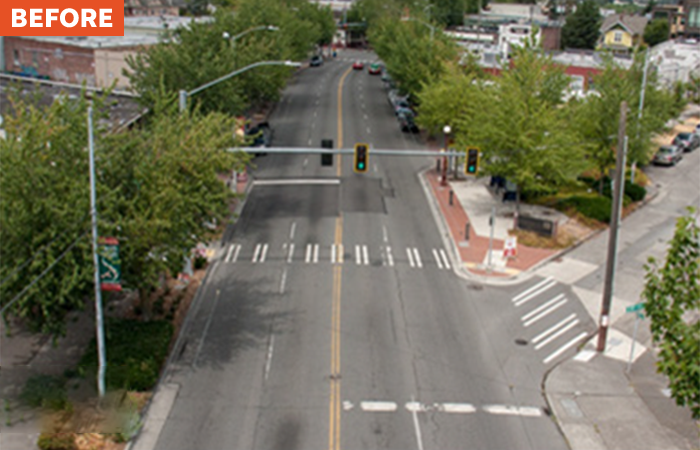
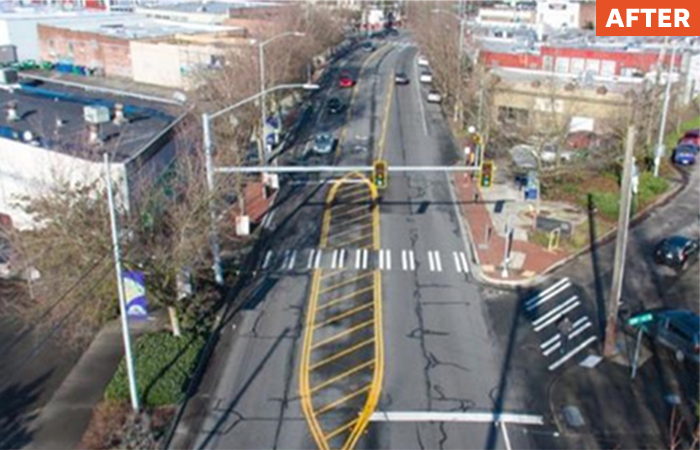
In Seattle, Rainier Avenue in 2015 was reduced from four lanes to three, enforcement was stepped up and other changes made it easier for pedestrians to cross. Eleven people died between 2004 and 2014 on one portion of the road, but no one has died in that section since the changes were made, according to a Seattle Department of Transportation report.
Infrastructure changes designed to better protect pedestrians by reducing traffic lanes, adding pedestrian refuge islands and midblock crossings are often credited with reducing speeds and improving safety. That’s part of the vision for a major thoroughfare on Detroit’s east side. East Jefferson Avenue, a multilane street that connects the city to the suburban Grosse Pointe communities, is undergoing a “road diet,” dropping from seven lanes to five, adding protected bike lanes and improving crosswalks.
In Detroit, which has the highest per-capita pedestrian death rate among large cities, deaths dropped in 2016, after the city, as part of its emergence from bankruptcy, added more than 60,000 new streetlights.
Nationally, speed and red-light cameras are also credited with making streets safer for pedestrians. As of May, 421 communities were using red-light cameras and 143 communities were using speed cameras to enforce traffic laws, according to the Insurance Institute.
Cities, including Honolulu and Montclair, California, have focused on pedestrians to reduce fatalities. Both cities passed laws against texting and walking when crossing streets. Honolulu council member Brandon Elefante told the Free Press in May that “the hope is more municipalities will adopt similar language looking at pedestrians and vehicles.”

Automatic braking

Vehicle safety features, however, are believed to be just as crucial to reducing pedestrian deaths.
Researchers at the U.S. Department of Transportation’s Volpe Center have found that the use of pedestrian crash avoidance/mitigation systems and features such as automatic emergency braking, could reduce up to 5,000 vehicle-to-pedestrian crashes and 810 fatal crashes per year.
Most automakers have voluntarily committed to installing low-speed automatic emergency braking systems by 2022, but the progress to date varies greatly, according to NHTSA.
Some brands make automatic emergency braking standard — Tesla (99 percent), Mercedes-Benz (96 percent), Volvo (68 percent) and Toyota (56 percent).
Others, as of last year, produced only a small portion of their fleet with the technology — Fiat Chrysler (6 percent), Mitsubishi (3 percent), Ford (2 percent) and Jaguar/Land Rover and Porsche (none). General Motors produced 20 percent of its fleet with AEB.
Fiat Chrysler spokesman Eric Mayne, said the automaker will meet the standard by 2022. He noted that automatic emergency braking is currently available on 15 models in nine segments.
Elizabeth Weigandt, a Ford spokesperson, said Ford began offering its pre-collision assist with AEB on the 2017 Fusion and now makes it available on seven other models.
“We will standardize AEB on 15 percent of vehicles in 2018 and are well ahead of meeting the agreement to standardize across our lineup by 2022,” she said.
General Motors spokesman Tom Wilkinson noted that “GM was part of the agreement to make AEB standard in the U.S. by the end of 2022 and we will meet that target. More than two-thirds of our models now have AEB available.”
Catherine Chase, president of Advocates for Highway and Auto Safety, said the voluntary nature of the 2022 commitment means automakers can walk away if they choose and pedestrian-specific crash avoidance technology might not be included.
“We think that they should be put in as standard equipment in all vehicles,” she said.
The group’s research director, Shaun Kildare, noted that it’s not simply a delay of a year or two. Because it takes about 10 years for the fleet to change, delays in implementing new technology can mean decades before the improvements are in most vehicles on the road.
“This is a fundamental technology to reaching autonomous vehicles. … Why isn’t every automaker putting these in so we know we’re not killing people needlessly?”
Shaun Kildare, research director, Advocates for Highway and Auto Safety
From a practical standpoint, automakers should be pushing forward because of the rush to develop autonomous vehicles, Kildare said.
“This is a fundamental technology to reaching autonomous vehicles. You need to know how your system is going to identify objects on the road and if you’re going to be able to respond to it,” Kildare said, noting the risks highlighted by this year’s fatal self-driving Uber crash in Arizona. “Why isn’t every automaker putting these in so we know we’re not killing people needlessly?”
But Chase said automakers tend to resist mandates, preferring to decide on their own what should and should not go into a vehicle. Some of that resistance involves concerns about cost.
Once a technology is in wide use, however, the cost tends to decrease, Chase said. That technology can also become a selling point, she said, using the example of backup cameras. Chase said there had been resistance to adding backup cameras, which became required on new vehicles in the U.S. in May, but drivers who are familiar with them now demand them.
The Alliance of Automobile Manufacturers, which represents the industry on policy issues, views advanced driver-assistance and crash avoidance technology “as a much better approach” to improving pedestrian safety than an overhauled New Car Assessment Program that had been proposed by NHTSA, spokeswoman Gloria Bergquist said in an email.
“These technologies are well researched and have proved to be beneficial,” Bergquist said.
The alliance’s members appear to be split on whether the pedestrian protection rating is a good move.
For example, General Motors told NHTSA regulators in a February 2016 letter that it did not support a separate rating for pedestrian safety, saying “an overall crash performance category is the appropriate place to address the crashworthiness elements of pedestrian protection.”
But Toyota enthusiastically supported the agency’s recommendation. It “will allow consumers to more easily understand a vehicle’s safety performance,” the Japanese automaker told NHTSA in its own February 2016 letter.

European standards

Automakers face a different landscape in Europe, where pedestrian safety is a key rating component. The rating agency Euro NCAP includes detailed information on its website about various vehicles. Color-coded images even show where pedestrian impact protection is good, such as on the hood (or bonnet) of a 2017 BMW 6 Series GT, or where it is poor on the same vehicle, such as along a strip above the grille.
This is an image from a video showing how vehicles are tested in Europe to determine pedestrian safety ratings. (Courtesy of Euro NCAP)
EURO NCAP
“Euro NCAP has encouraged vehicle manufacturers to consider pedestrian impacts in the vehicle design and this can be seen most commonly as space available beneath the hood of the vehicle, padding to bumper areas, and more (compliant) structures at the base of the windscreen and on the bonnet leading edge. The space between the hood and engine allows the bonnet to absorb the impact of the pedestrian’s head before it contacts the very hard engine structures beneath. A similar principle is also applied to the bumper/front end to protect the vulnerable knee joint of a pedestrian,” according to the agency
The agency said that the testing had led to innovative countermeasures such as the deployable hood, which can lift up slightly, and external airbags, both designed to cushion the blow.
“The technology is really going to be our savior. In the short term, we’ve been getting dumber faster than our cars have been making us smarter.”
Tom Mayor, industrial manufacturing strategy practice leader at KPMG
Euro NCAP, which recently added testing of emergency braking systems to cover cyclists, noted that about 25,000 people die in traffic crashes in Europe each year and almost half of those killed in 2017 were vulnerable road users.
“Moreover, for every person killed in traffic crashes, about five more suffer serious injuries with life-changing consequences. Serious injuries are common and often costlier to the society because of longtime rehabilitation and health-care needs. The majority of the seriously injured on Europe’s roads are vulnerable road users, i.e. pedestrians, cyclists and drivers of powered two-wheelers,” the agency said.
“The technology is really going to be our savior,” said Tom Mayor, industrial manufacturing strategy practice leader at the consulting firm KPMG, who has had discussions with auto companies about improving in-vehicle infotainment systems. “In the short term, we’ve been getting dumber faster than our cars have been making us smarter.”
Contact Eric D. Lawrence: elawrence@freepress.com. Follow him on Twitter: @_ericdlawrence. Jason Pohl of the Arizona Republic, Yolanda Jones of The (Memphis) Commercial Appeal, and Chris Woodyard and Zlati Meyer of USA TODAY contributed to this report.

Friday, July 6, 2018

Candidate AIDS vaccine passes key early test


 The near 40-year quest for an AIDS vaccine received a hopeful boost Saturday when scientists announced that a trial drug triggered an immune response in humans and shielded monkeys from infection.
Shown to be safe in humans, the candidate vaccine has now advanced to the next phase of the pre-approval trial process, and will be tested in 2,600 women in southern Africa to see whether it prevents HIV infection.
While the results so far have been encouraging, the research team and outside experts warn there are no guarantees it will actually work in the next trial phase dubbed HVTN705 or “Imbokodo” — the isiZulu word for “rock”.
“Although these data are promising, we need to remain cautious,” study leader Dan Barouch, a Harvard Medical School professor, told AFP.
Just because it protected two-thirds of monkeys in a lab trial doesn’t mean the drug will protect humans, “and thus we need to await the results of the… study before we know whether or not this vaccine will protect humans against HIV infection,” he said.
The results of the Imbokodo trial are expected in 2021/22.
“This is only the fifth HIV vaccine concept that will be tested for efficacy in humans in the 35+ year history of the global HIV epidemic,” added Barouch.
Only one so far, RV144, yielded some protection. RV144 was reported in 2009 to reduce the risk of HIV infection among 16,000 Thai volunteers by 31.2 percent — deemed insufficient for the drug to be pursued.
For the latest study, published in The Lancet medical journal, Barouch and a team tested the candidate drug on 393 healthy, HIV-free adults aged 18 to 50 in east Africa, South Africa, Thailand, and the United States.
The participants were randomly given one of seven vaccine combinations or a placebo “dummy” alternative. They received four shots each over 48 weeks.
– Needed ‘badly’ –
The study used so-called “mosaic” vaccine combinations.
These combine pieces of different HIV virus types to elicit an immune response — when the body attacks intruder germs — against virus strains from different regions of the world.
The vaccine “induced robust (high levels of) immune responses in humans,” said Barouch.
The tests also showed the vaccine was safe. Five participants reported side-effects such as stomach pain and diarrhoea, dizziness, or back pain.
In a separate study, the same vaccine offered complete protection from infection in two-thirds of 72 trial monkeys each given six injections with an HIV-like virus.
“I cannot emphasise how badly we need to have a vaccine… to get rid of HIV in the next generation altogether,” said Francois Venter of the University of the Witwatersrand Reproductive Health and HIV Institute in South Africa.
Approached for comment on the study, which he was not involved in, Venter urged caution.
“We have been here before, with promising candidate vaccines that haven’t panned out,” he told AFP.
“This one is novel in many ways so it is exciting, but we have a long way to go.”
– Could be ‘phenomenal’ –
Jean-Daniel Lelievre of France’s Vaccine Research Institute said the vaccine was likely not the “definitive” version, but may represent “a phenomenal advance.”
An estimated 37 million people live with HIV/AIDS, according to the World Health Organization.
There are about 1.8 million new infections and a million deaths every year.
Almost 80 million people are estimated to have been infected since the virus was first diagnosed in the early 1980s.
About 35 million have died.
A vaccine has proven elusive as the human immunodeficiency virus (HIV) mutates easily and can hide away in cells, evading the immune system, only to reemerge and spread years later.
For now, people infected with HIV rely on lifelong virus-suppressing anti-retroviral treatment (ART) to stay healthy.
Condoms are still at the frontline of efforts to prevent infection — mainly through sex and blood contact — though more and more people use ART as prophylaxis.
The latest results come ahead of the International Aids Conference to be held in Amsterdam from July 23 to 27.

Cancer diagnosis tied to increased risk of diabetes


People who get diagnosed with cancer may be more likely to develop diabetes, a Korean study suggests.
The study included 524,089 men and women, ages 20 to 70, who didn’t have cancer or diabetes at the start. By the time half the participants had been in the study for at least seven years, 15,130 people had developed cancer and 26,610 had developed diabetes.
Cancer patients were 35 percent more likely to develop diabetes than people without malignancies, the study found. The excess diabetes associated with tumors persisted even after accounting for other diabetes risk factors like obesity, smoking and drinking.
“The reasons why patients with cancer may be at increased risk of diabetes are unclear,” said senior study author Juhee Cho of Sungkyunkwan University in Seoul, South Korea.
In some cases, the cancer itself or treatments used to eradicate tumors might cause diabetes, Cho said by email.
Also, Cho said, “cancer is a highly stressful experience, associated with multiple high-stress episodes such as infections, bleeding episodes, and surgery, that may also increase the risk of diabetes.”
Worldwide, about one in 10 adults have diabetes.
Most have type 2 diabetes, which is associated with obesity and aging and happens when the pancreas can’t properly use or make enough of the hormone insulin to convert blood sugar into energy. Left untreated, diabetes can lead to nerve damage, amputations, blindness, heart disease and strokes.
In the current study, the risk of diabetes varied by cancer type.
With pancreatic cancer, the increased risk of diabetes was more than five-fold, while it was roughly doubled for liver and kidney malignancies.
Gallbladder and lung tumors were associated with at least a 70 percent greater risk of diabetes. Breast, thyroid and stomach malignancies were also tied to an increased risk of diabetes.
Time also played a role, with a 47 percent greater risk of diabetes in the first year or two after a cancer diagnosis. Six to ten years after the cancer diagnosis, the increased diabetes risk was 19 percent.
The study wasn’t a controlled experiment designed to prove whether or how cancer itself or tumor treatments might directly cause diabetes. It’s also possible that some people in the study had undiagnosed diabetes before they developed cancer, researchers note in JAMA Oncology.
“A significant number of people are living with diabetes, but do not know about it as they have no symptoms,” said Tahseen Chowdhury, a researcher at Royal London Hospital in the U.K. who wasn’t involved in the study.
Even so, the findings add to a growing body of evidence linking cancer to diabetes, Chowdhury said by email.
“Cancer therapies such as steroids, and many chemotherapy and radiotherapy regimes can increase glucose (or blood sugar) levels,” Chowdhury said. “This may in part explain the link.”
“A further important factor might be that many of these patients are being seen (by doctors) frequently and having lots of blood tests, which might mean their diabetes is picked up quicker than people who do not have lots of blood tests,” Chowdhury added.
SOURCE: bit.ly/2uagWsI JAMA Oncology, online June 7, 2018.

Predictive Modeling Highlights Value of Late-Life Healthcare Spending


End-of-life healthcare spending in the United States may not be the low-hanging fruit it’s often thought to be, according to a predictive modeling study recently published in Science.
As it turns out, death is “highly unpredictable,” and less than 5% of spending is accounted for by individuals with predicted mortality above 50%.
The findings offer new insight into the oft-quoted statistic that 25% of Medicare spending occurs in the last year of life, a fact seized upon by those looking for ways to eliminate waste and lower healthcare spending.
“I think we need to be more careful in drawing the distinction between a fact and its implications,” said economist Amy Finkelstein, PhD, from the National Bureau of Economic Research and Massachusetts Institute of Technology, both in Cambridge, Massachusetts.
“That one quarter of all Medicare spending occurs in the last 12 months of life is correct, but the implication that is commonly drawn from that —  that clearly this money is waste —  is incorrect because it presumes implicitly that at the time we are spending the money, we know with high probability that the recipient of the spending is going to die.”
Finkelstein and colleagues used Medicare claims data from a random sample of 20% of enrollees to build a machine-learning model of annual mortality risk. Machine learning extends traditional regression analysis to account for not just the independent effect of multiple variables but also for the interaction effect of multiple variables.
Their main analysis focused on enrollees alive on January 1, 2008, while a second analysis focused on the moment of admission to the hospital, “which is a more decision-relevant vantage because you’re admitting someone and you have to diagnose them and start spending a lot of money,” Finkelstein said.
Even from the vantage point of admission to hospital, where annual mortality was about 20%, the 95th percentile of annual death probabilities was still only 67%, and less than 4% of those who ended up dying in the subsequent year had a predicted mortality above 80% at the time of admission.
“What the study shows is that it’s not correct to look at people who died and compute their spending, but rather you need to look at people who are at high predicted risk of death and see how much spending happened on them and whether it affected outcomes,” Anupam Bapu Jena, MD, PhD, the Ruth L Newhouse associate professor of health care policy at Harvard Medical School, Boston, Massachusetts, told theheart.org | Medscape Cardiology. Jena was not involved in the study.
“You also need to ask how often it is that we really know a person is at death’s door, where a lot of money is spent. It turns out that the proportion of healthcare spending going to those people, where we might think spending is wasteful, is really low,” he explained.
“We have to recognize that our ability to predict isn’t that good, so even if there’s a 10% chance we could be wrong, that means that 1 out of 10 patients you see in the ICU [intensive care unit] and think isn’t going to make it and where you recommend to the family that they withdraw care, could have made it. For some doctors, that kind of error could occur once a week,” said Jena, who is also a hospitalist at Massachusetts General Hospital in Boston.
“Maybe 90% sounds good, but it’s not for a life-or-death situation.”

What Works and for Whom?

Rather than focusing on impressive-sounding statistics and rough averages, “we need to roll up our sleeves and do the hard work,” said Finkelstein.
“It would be easier if there was some global solution like cutting end-of-life spending, but it turns out it’s not so easy as to just say we’re spending a lot of money on people who die and maybe we should stop,” she said. “But rather, we actually need to do the important and challenging work that is, in essence, the work of health economists and medical researchers, of looking policy by policy and medical intervention by medical intervention at what kind of spending is actually generating value, saving lives, and improving quality of life, and what is not.”
To Jena, a follow-on trial to this study might be one that either randomly assigns patients — “which might be difficult for a variety of reasons” — or quasi-randomly assigns different individuals to different hospitals that vary in terms of intensity of the care they provide.
“Then you can stratify the analysis by these various risk groups that these researchers and others have studied and see what happens to patients who happen to be treated in a hospital or healthcare system that tends to be more intensive compared to one that is less intensive,” he said.
Jena added, however, that just looking at hospital care is “a bit of a red herring” because the costs explored in this analysis and reflected in the 25%-of-spending-in-the-last-year-of-life statistic represent both “inpatient and outpatient care, multiple hospitalizations and consultant visits, imaging, et cetera. So it would really be best to look at people exposed to two different healthcare systems that vary in their care intensity.”
Finkelstein and Jena declared no conflicts of interest related to this study.  
Science. 2018;360:1462-1465. Abstract

Marijuana odor seeps into Mojave towns as area becomes pot-growing mecca


Along a dusty dirt road in this Mojave Desert outpost 20 miles east of Barstow, U.S. postal worker Jessica Garcia stopped at the few houses dotting Morgan Lane and unloaded packages from the back of her 4-wheel-drive Jeep Wrangler.
On this day, the pungent odor of marijuana was not wafting in the air, at least not on Morgan Lane. But it certainly was elsewhere — at the all-too-familiar marijuana compounds with padlocked front gates and pot grows concealed by chain-link and plywood fencing and black or green mesh fabric screening.
“I have been working for the post office for a year now. Driving the route, you smell it while you’re driving by,” said Garcia, 39, delivering mail at a home that just a week before had been raided by San Bernardino County sheriff’s deputies. More than 1,000 pot plants and 16 pounds of processed marijuana were seized from the residence. Four people were arrested.
Although California law now allows the use of both recreational and medical marijuana, cultivation and sales of the drug can be strictly regulated by cities and counties. And in San Bernardino County, marijuana cultivation for commercial purposes is prohibited.
In the past five years, the San Bernardino County Sheriff’s Department’s Marijuana Enforcement Team has seized nearly half a million marijuana plants and nearly 17,000 pounds of processed marijuana from across the High Desert region, mostly in the areas of Newberry Springs, Phelan and Lucerne Valley — all pot-growing meccas for people seeking fortune in the booming industry.
“The High Desert area is definitely our busiest area for marijuana grows. They are spread throughout the county, but the highest concentration is the High Desert,” said Sgt. Rich Debevec, who heads the Marijuana Enforcement Team.
Remote location ideal for illegal pot farms
Since 2012, marijuana cultivation has ramped up in Newberry Springs, an alfalfa and pistachio farming community off Highway 40 known for the Bagdad Cafe, of the cult classic German film namesake. Debevec said the community’s remote location and cheap property make it ideal for illegal pot growing.
“They hear you can go to Newberry Springs and live and make some money,” Debevec said. “When you’re going to grow that many marijuana plants, it’s pretty easily detected, so the farther out, the better for them.”
Many locals appear indifferent to the increasing number of marijuana farms popping up in their community and are becoming immune to the presence of law enforcement, which shows up for raids in SUVs, pickups with trailers hitched behind and, sometimes, helicopters hovering overhead.
“They come in caravans,” said Bagdad Cafe employee Michael Wright, a 42-year resident of Newberry Springs. He said there is no escaping the strong odor of fresh-cut marijuana piled in trailers as law enforcement hauls it away for destruction after a raid.
“You can smell it as they drive by. Some of it’s flying out the top,” Wright said. Locals, he said, often scavenge for any trace of marijuana left behind at the raided properties.
In Phelan, about 16 miles west of Hesperia, a sheriff’s MET raid on June 21 netted more than 3,100 plants from four domed greenhouses, an outbuilding and an outdoor garden at a home on Pacific Road and 932 pounds of processed marijuana from three residences. Fifteen people were arrested by MET deputies assisted by the California National Guard Counterdrug Task Force.
Chinese immigrants arrested
Many of the growers arrested in recent years have been Chinese nationals, raising questions about why they are here, how they are recruited and who is financing their operations. During the raid in Phelan, deputies arrested Zhixue Fan, a 62-year-old Chinese citizen; Guoxo Yang, 48, of San Gabriel; and Jia Zhi Shi, 39, a Canadian citizen.
From August 2015 to June 6, sheriff’s deputies arrested dozens of Chinese immigrants during raids in Newberry Springs, where hundreds of pounds of processed marijuana were being packaged and shipped out across the country, mainly to the East Coast. Those arrested came from all over California and the rest of the country — Tennessee, Las Vegas, Porterville, Fresno and New York, among other cities.
Debevec could not say whether the growers are involved in a Chinese crime ring, but he has reached out to federal authorities. He would not elaborate.
In Northern California — Sacramento, Placer, Yolo and Yuba counties, specifically — Chinese marijuana cultivation operations at suburban homes have led to five indictments in the past five years and the seizure of more than 100 properties believed to have been purchased by a Chinese crime syndicate, court records show.
One indictment, filed in August 2017 in U.S. District Court in Sacramento, alleges that over a four-month period in 2016 one of 10 defendants received three wire transfers totaling $146,955 from China Construction Bank in Fujian, China. The money was used for down payments on homes to be used for marijuana cultivation.
“They were making large cash down payments on homes, usually 50 percent down, and the rest was financed by hard money lenders,” said Michael Anderson, supervising assistant U.S. attorney and head of the white collar crime division for the U.S. Department of Justice’sEastern District in Sacramento. “It’s a fairly interesting and direct link back to China. An unusual method of financing.”
Federal prosecutors allege that at least $6.3 million has been wired from Chinese banks to the U.S. in the past five years to purchase properties for commercial marijuana cultivation. Each wire transfer was for less than $50,000, the threshold at which financial institutions would have to report the transactions.
Human trafficking at play
Anderson said some of the Chinese nationals identified in the Northern California cases may have been working the marijuana grows to pay off a debt for their safe passage to the U.S.
“Indoor marijuana grows associated with criminal organizations raise significant concerns about human trafficking,” Anderson said. “Investigators pay particular attention to the individuals found at the grows, some of whom may be working to pay off debts to the criminal groups.”
The elusive culprits in all this are the “dragonheads” — those who fund and organize the marijuana growing operations, said Thomas Yu, a retired Los Angeles County sheriff’s detective who investigated Asian gangs for years. He said federal prosecutors have only scratched the surface, and to really make a dent they need to take down the ringleaders, or “dragonheads.”
“Those cases, for lack of a better word, they’re being prosecuted in a vacuum. They’re not prosecuting the guys who are the dragonheads at the top of the food chain,” Yu said.
He said the Chinese crime syndicates recruit skilled farmers from Fujian, China, to cultivate marijuana in the U.S., as well as electricians to bypass electricity needed to power the hydroponic equipment used for indoor cultivation. “They steal (electricity) from the power poles,” Yu said.
Unlike hard drugs such as cocaine and heroin, penalties for marijuana cultivation and distribution are particularly lenient in the U.S., especially in states like California, Washington and Colorado, where the drug is now legal for both medical and recreational use. Most offenders get off with probation and fines, which may be why Chinese crime syndicates are exploiting opportunities to cash in on the expanding and lucrative marijuana industry in the U.S., Yu said.
Debevec said another trend has emerged among marijuana growers in recent years that could explain the proliferation of pot farms in the High Desert: an exodus of growers from the San Bernardino Mountains, once a hot spot for large-scale marijuana cultivation.
“Our National Forest grows were huge. We’d get thousands of plants in a forest grow,” Debevec said. “That’s a federal crime and a 10-year mandatory minimum. They realize they can come down here into the valley and do it in smaller plots and face less charges if they get caught. It definitely wouldn’t be a federal charge, and, in a lot of cases it would be a misdemeanor.”
And so the marijuana growers continue flocking to the High Desert to harvest their crops, which has some, like Newberry Springs postal worker and resident Jessica Garcia, somewhat perturbed. She’s tired of the stink marijuana brings to her community, literally.
“I wish they’d go away,” she said.