Search This Blog

Sunday, January 6, 2019

CES 2019: Chinese tech firms lay lower amid trade tensions


The CES 2019 gadget show, which kicks off Sunday, will showcase the expanding influence and sway of China’s rapidly growing technology sector. But some of its firms are stepping back from the spotlight amid rising U.S. national-security concerns over Chinese tech and a trans-Pacific trade war launched by President Donald Trump.
Last year, a top executive of the Chinese telecom firm Huawei delivered a CES keynote address critical of AT&T’s abrupt cancellation of plans to sell a Huawei phone following espionage concerns raised by the U.S. government. This year, Huawei’s chief financial officer was arrested in Canada at the behest of the U.S.; Meng Wanzhou, daughter of Huawei’s founder, now awaits U.S. extradition . No Chinese technology executives will deliver CES keynotes in Las Vegas this week.
There are fewer Chinese entrepreneurs buying up booth space to show off their latest technology—more than 20 percent fewer exhibitors than last year, according to registration numbers tracked by the South China Morning Post. Chinese firms still account for more than a quarter of the conference’s 4,500 exhibitors, second only to the U.S. in sheer numbers. But some of the biggest names are taking a more subdued approach.
Internet company Baidu last year hosted a flashy event touting its self-driving software, but this year is sticking to a more conventional booth. E-commerce giant Alibaba is eschewing the big outdoor tent it helped erect last year in favor of quieter meetings marketing its voice assistant to business partners. The phone maker Xiaomi is simply skipping this year’s event altogether.
None of them are citing rising U.S.-China tensions, but it’s hard to ignore the geopolitical backdrop—even with a 90-day “cease-fire” on tariffs set to expire in March.
The U.S. and China have imposed import taxes on hundreds of billions of dollars of each other’s goods—and Trump has threatened more to come, including tariffs that could make devices like iPhones more expensive. The U.S. is also exploring new export restrictions that would target industries where China is hoping to get ahead, such as artificial intelligence and robotics. And the Justice Department brought charges last month against two Chinese citizens it accused of stealing American trade secrets and other sensitive information on behalf of Beijing’s main intelligence agency.
Of course, plenty of Chinese entrepreneurs are still eager to show off their innovations. Hosts of the 52-year-old trade event have sought to downplay the tensions, noting that they’ve weathered previous trade tensions, such as those that roiled U.S.-Japan relations in the 1980s.
CES 2019: Chinese tech firms lay lower amid trade tensions
In this Jan. 9, 2018, file photo the Huawei Mate10 Pro phone is displayed at the Huawei booth during CES International in Las Vegas. The CES 2019 gadget show, which kicks off Sunday, will showcase the expanding influence and sway of China’s …more
“The Japanese presence used to be very big and it was similar in that the U.S. was in a panic about it,” said Gary Shapiro, CEO of the Consumer Technology Association, which organizes CES. That ended when the Japanese “bubble” economy burst in 1991 and its tech industry began a long, slow decline.
“Japanese innovation from those companies shrunk and those companies consolidated,” Shapiro said. “These things are impermanent. So I don’t lose that much sleep over it.”
Shapiro said the trade dispute with China and the Meng arrest in Canada aren’t impacting attendance. CES organizers on Sunday wouldn’t confirm numbers showing a sharp drop in Chinese exhibitors, but said a decline in small Chinese companies on the show floor was made up by expanded booth presence from bigger firms.
Chinese tech firms are increasingly joining their American, South Korean and Japanese counterparts in using CES to build enthusiasm for up-and-coming electronics products, while also connecting with potential new international partners and suppliers. That’s especially true for electronics firms like Hisense and TCL, which have increasingly sought to sell their TVs in North America, and Lenovo, which is already a big player in the U.S. laptop market but is pushing to sell other internet-connected devices.
Hisense is making a splashier presentation this year as it invests in boosting its U.S. brand awareness, said Jim Ninesling, head of marketing for Hisense USA. Previously, the company, which has a large market share in China, mostly kept on the U.S. sidelines, branding some of its products under the name of the better-known Japanese firm Sharp.
Chinese electric carmaker Byton, a startup backed by internet giant Tencent, on Sunday is promising to unveil what it calls the “world’s most intuitive automotive interface,” which, according to a tease on Twitter , involves a touchscreen mounted on the steering wheel. AI firm iFlytek—sometimes described as China’s Siri or Alexa—is planning to showcase its latest advances in voice recognition and real-time translation services.
And a startup expo co-hosted by the Chinese government features a bevy of gee-whiz innovations, from indoor delivery robots and portable karaoke headsets to “smart” suitcases aided by computer vision.
CES 2019: Chinese tech firms lay lower amid trade tensions
In this Jan. 9, 2018, file photo a woman wears Huawei VR2 goggles at the Huawei booth during CES International in Las Vegas. The CES 2019 gadget show, which kicks off Sunday, will showcase the expanding influence and sway of China’s rapidly …more
In an ideal world, the tech industries in the two countries would be seen as complementary, said venture capitalist Kai-Fu Lee, who led Google’s subsidiary in China before the company withdrew over censorship and other concerns.
“The U.S. strength is deep technologists, universities, academics, people with superior experience,” he said. “China’s superiority is a larger market, more data, and very tenacious and hardworking entrepreneurs.”
Lee said his optimism for a more collaborative approach is now “merely a dream” because of the worsening trade dispute. But he said there could still be partnerships between U.S. firms and Chinese companies that, for now, mostly cater to Chinese consumers.
“Google feels much, much more threat from Amazon than any Chinese company,” he said. “That makes Tencent and Alibaba potential allies, especially when customer needs cross international boundaries.”

Neurocrine expects Q4 net product sales of $130M


Neurocrine Biosciences (NBIX) provided an update on its business performance, including preliminary net product sales results for 2018, and key clinical development programs for 2019. Kevin Gorman, Chief Executive Officer of Neurocrine, will discuss these updates as part of a webcast presentation at the 37th Annual JPMorgan Healthcare Conference in San Francisco on Monday. Based on preliminary unaudited financial information, the Company expects net product sales for the three months and full-year ended December 31, 2018 to be approximately $130M and $409M, respectively, compared to $64.5M and $116.6M for the same periods in 2017. Regarding 2019 milestones, the company expects “Talk About TD” disease state awareness campaign; execution of post-marketing clinical studies, including RE-KINECT; presentations at key scientific annual meetings; elagolix in collaboration with AbbVie (ABBV); continued launch of ORILISSA to treat endometriosis by AbbVie; Elagolix for uterine fibroids: planned 2019 New Drug Application submission Opicapone for Parkinson’s Disease; preparation for 2020 opicapone commercial launch; Phase IIa data for CAH – adults – in Q1 2019; Phase IIa initiation for CAH – pediatric – in Q2/Q3 2019; Pivotal study initiation for CAH – adults – in 2H 2019, pending Food and Drug Administration discussion in Q2; Investigational New Drug submission and initiation of a Phase I trial for a new, internally discovered program.

Exact Sciences expects FY18 revenue of $454M-$455M, consensus $438.39M


Exact Sciences expects to report Q4 revenue between $142.5M-$143.5M, an increase of 64% percent from the same quarter of 2017. Consensus at $126.98M. The company completed approximately 292,000 Cologuard tests during the fourth quarter of 2018, which represents 66% growth from the same period of 2017. For full-year 2018, the company anticipates reporting total revenue between $454M-$455M, a year-over-year increase of 71%. Consensus at $438.39M. Completed Cologuard test volume during 2018 was approximately 934,000 tests, a 64% increase from 2017. Nearly 15,000 health care providers ordered Cologuard for the first time during the fourth quarter of 2018. The number of providers who have ordered Cologuard since its launch increased to nearly 147,000 during 2018. Exact Sciences has not completed preparation of its financial statements for Q4 or FY18. The company plans to report 2018 financial results and provide guidance during its February 2019 earnings call.
https://thefly.com/landingPageNews.php?id=2844147

Key Dem:Trump Has Authority To Declare National Emergency, Build Wall


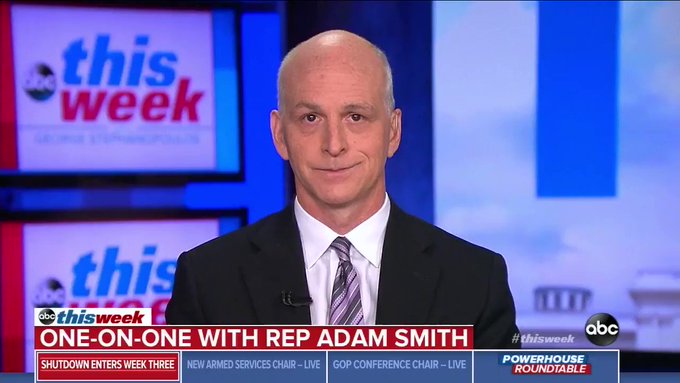
Democratic Rep. Adam Smith (D-WA), chair of the House Armed Services Committee, admitted that President Trump has the authority to declare a national emergency and have the military build a wall along the US-Mexico border.
ABC‘s “This Week” host George Stephanopoulos asked Smith “Does President Trump have the ability, have the authority to declare a national emergency and have the military build his wall?”
“Well, unfortunately, the short answer is yes,” replied Smith. “There is a provision in the law that says the president can declare an emergency. It’s been done a number of times, but primarily it’s been done to build facilities in Afghanistan and Iraq. In this case, I think the president would be wide open to a court challenge saying, where is the emergency? You have to establish that in order to do this. Beyond that, this would be a terrible use of Department of Defense dollars.
“The president spends most of his time talking about how we’re not spending enough on national security, now he wants to take $20 billion out of defense budget to build a wall. Which by the way, is not going to improve our border security. The president seems unaware of this, but we have actually already built a wall across much of the border, and all border security experts that I talk to say, where a wall makes sense, it’s already been built. We should have a conversation about border security, but first, we should we open the government and pay our border patrol agents and the federal agents that are furloughed,” Smith added.
Watch:
Embedded video
Rep. Adam Smith
✔@RepAdamSmith
I joined @ThisweekABC to discuss the government shutdown and the President’s plan to declare a nat’l emergency to pay for his proposed border wall. He is shutting down the gov’t to break his signature campaign promise – that taxpayers weren’t going to have to pay for the wall.

Praluent not worth the price, finds study


Sanofi and Regeneron’s Praluent may still not be cost effective compared to other cholesterol-lowering drugs despite a recent price cut, a new study has claimed.
The drug’s high price point has long been a sticking point for payers and in March 2018 the companies halved the price from $14,000 a year to $7,000 in the US.
But research published in the Annals of Internal Medicine concluded that, despite its effectiveness, the drug would need to be priced lower, at $874 to $2311, to be considered cost effective, depending on the regimen it is compared to.
Study author Dr Dhruv Kazi said that the availability of cheap, effective generic versions of statins and ezetimibe makes the price of Praluent (alirocumab) harder to swallow.
“Your additional drugs have to work harder to be cost-effective,” he commented.
The authors’ cost effectiveness analysis was based on results from the ODYSSEY OUTCOMES trial, which studied patients with a recent acute coronary syndrome and found that, compared with participants receiving statins alone, those receiving a statin plus Praluent had lower rates of a composite outcome including myocardial infarction (MI), stroke, and death.
Compared with a statin alone, the addition of Praluent cost $308 000 per quality-adjusted life year (QALY) gained. But the addition of ezetimibe cost $81 000 per QALY compared with a statin alone. Compared with the combination of statin and ezetimibe, replacing ezetimibe with Praluent cost $997 000 per QALY.
“We do think these drugs are useful to patients,” Kazi added, “and cost is a major barrier to access at this point.
“Perhaps the right thing here is to acknowledge the efforts the manufacturers have made to respond to these pricing pressures. But I don’t think we’re there yet.”
Regeneron said that it disagreed with the cost analysis, pointing out that its own analysis found that the drug would be cost-effective at an annual price of $6319 to $9346 for patients with serious heart problems and $13 357 to $19 805 for patients whose cholesterol levels were not reduced by other treatments.
“These results are well within the current price range paid for Praluent in the US, and aligned to our March announcement to lower the Praluent US net price to between $4,500 and $8,000 to payers who would allow for more straightforward, affordable patient access,” the company said in its statement.
Praluent’s main rival in the PCSK9 space, Amgen’s Repatha (evolocumab) also had a major price cut in October last year.

‘Regeneron Stock Is the Latest Biotech Bottle Rocket’


Regeneron was trading higher Friday, following an upgrade from Guggenheim.
Where we were: Regeneron fared better than some biotech peers last year, and is up 2.4% in the past 12 months.
Where we’re headed: Major drugs are doing well for Regeneron, and at the stock’s current levels, investors are basically getting its pipeline for free.
Just a few days into 2019 and biotech has already been in the headlines, with Celgene (CELG) leaping on a takeover offer from Bristol-Myers Squibb .Gilead Sciences (GILD) was also upgraded on Thursday, and Friday was Regeneron’s turn.
Guggenheim’s Adnan Butt boosted his rating on the stock to Buy from Hold, with a $461 price target, citing valuation, and more confidence that the company can overcome headwinds.
Butt writes that there were two major reasons he had been on the sidelines in terms of Regeneron stock, namely concerns about competition for its chemotherapy drug Eylea and sales trends for its eczema treatment Dupixent. Yet he’s feeling more upbeat about both. “Eylea competitors may be weaker than imagined and Dupixent launch trajectory is sound and likely to get better.”
The analyst’s estimates for Dupixent are above the Street’s for both this year and next, and he writes that most of the stock’s valuation can be supported by just these two drug franchises. That means investors are essentially getting its pipeline for free, not a bad deal considering that new product approvals could be a “meaningful driver” through 2020. Indeed, the company has some 20 drugs in clinical development at the moment, including eight in partnership with Sanofi (SNY). Butt also likes that Regeneron has a solid balance sheet.
Regeneron is up 6.4% to $396 in recent trading. The upgrade certainly helps, along with perhaps residual optimism following the Celgene deal. With a market cap of $40 billion, some investors may be hopeful that it too could be a takeover target, especially if much larger biotechs are being placed in the same category.

Solasia Initiates Phase III Program for Cancer Treatment Effect Med in Japan


Solasia Pharma K.K. (TOKYO:4597, Headquarters: Tokyo, Japan, President & CEO: Yoshihiro Arai, hereinafter “Solasia”) announced the initiation of Phase III clinical trial for PledOx® in Japan.
In November 2017, Solasia acquired exclusive development and commercialization rights for PledOx® in Japan, China, Hong Kong, Macau, South Korea and Taiwan from PledPharma.
This Phase III clinical trial in Asia (Japan, South Korea, Taiwan and Hong Kong) is an expansion of the Global Phase III trial led by PledPharma in the rest of the world where the first patient was included in the United States in November. The Asian region including Japan is now officially part of this Global Phase III clinical trial.
Following Japan, Solasia will also initiate in South Korea, Taiwan and Hong Kong successively.
This trial is for colorectal cancer patients treated with mFOLFOX6 (*1) which contains antioxidant drug “oxaliplatin” and to examine the effect of suppressing the development of peripheral neuropathy by administering PledOx®. Oxaliplatin is a platinum-based drug and is indicated for colorectal cancer, pancreatic cancer, gastric cancer etc.
Peripheral neuropathy is known as one of the serious side effects caused by administration of oxaliplatin, and one of the causes is that neurons develop by being damaged due to oxidative stress induced by the drug. Peripheral neuropathy is also known as the main side effect of other platinum-based drugs such as cisplatin. There are currently no drugs approved for the treatment of chemotherapy induced peripheral neuropathy. PledOx® is a superoxide dismutase analogue that is an enzyme that degrades active oxygen generated in cells and has the effect of protecting nerve cells from damage caused by drug-induced oxidative stress.
The initiation of this trial is a significant milestone for Solasia as this trial is positioned as a registration trial and its success is expected to contribute to patients suffering from peripheral neuropathy due to cancer chemotherapy.
Study description:
  • Phase III, International, multicenter, double-blind, randomized, placebo-controlled study
Purpose of the study:
  • The effect of reduce the peripheral neuropathy associated with administration of oxaliplatin by PledOx® administration compared with placebo.
Study design:
  • POLAR-M study: Colorectal cancer patients who undergo mFOLFOX6 therapy with distant metastases are included.
  • POLAR-A study: Colorectal cancer patients who undergo mFOLFOX6 therapy as an adjuvant therapy for postoperative surgery are included.
Primary outcome measures:
  • Both the POLAR-M and POLAR-A studies will evaluate the proportion of patients with moderate or severe chronic peripheral neuropathy at 9 months after (first day of FOLFOX therapy) the initial administration of PledOx®.
Estimated enrollment:
  • POLAR-M study: 420 patients (of which 120 patients in Asian region)
  • POLAR-A study: 280 patients (of which 80 patients in Asian region)
Solasia is a specialty pharmaceutical company based in Asia, with a mission of “Better Medicine for a Brighter Tomorrow”. In order to address the unmet medical needs within the oncology area, we develop innovative medicines to contribute to the patient’s healthy living and to provide treatment options for the healthcare providers. Additional information is available at http://www.solasia.co.jp/en/