Search This Blog

Tuesday, September 3, 2019

UK Health Watchdog Recommends Novartis Gene Therapy for Sight Disorder

A U.K. regulator said Wednesday that it is recommending that the National Health Service in England provides Luxturna, a gene therapy for an inherited eye disease developed by Switzerland’s Novartis AG (NOVN.EB).
In its decision, the National Institute for Health and Care Excellence noted that it was able to negotiate down the therapy from its list price of 613,410 pounds ($742,084) per patient. It didn’t disclose the final price it reached with Novartis.
“The company’s willingness to work with us early and constructively has allowed us to publish this guidance on a much faster timeline than normal which is good news for patients,” said Meindert Boysen, director of NICE’s Centre for Health Technology Evaluation.
The recommendation is for people with vision loss caused by inherited retinal dystrophy from a mutation in the RPE65 gene. The disease involves progressive loss of vision until near-total blindness.
Luxturna is a one-time treatment that is intended to provide patients with a working copy of the faulty gene. According to Novartis, it is able to restore vision in people with the retinal disease.
The Swiss pharmaceutical company estimates that some 86 patients are eligible for treatment in England. NICE said that the recommendation is currently at the draft stage. Barring appeals, it expects to publish its final guidance next month.

AstraZeneca Tagrisso OKd in China as 1st-line non-small cell lung cancer treatment

Tagrisso approved in China as a 1st-line treatment for EGFR-mutated non-small cell lung cancer
In the Phase III FLAURA trial, Tagrisso significantly increased the time patients lived without disease progression versus the comparator
Tagrisso is the only medicine demonstrating statistically-significant overall survival benefit in this setting
AstraZeneca today announced that it has received marketing authorisation from China’sNational Medical Products Administration (NMPA) for Tagrisso (osimertinib) as a 1st-line treatment for adults with locally-advanced or metastatic non-small cell lung cancer (NSCLC) whose tumours have the genetic mutations of epidermal growth factor receptor (EGFR) exon 19 deletions or exon 21 (L858R) substitutions.
The approval followed the Priority Review Pathway and is based on results from the Phase III FLAURA trial, which were published in The New England Journal of Medicine. (https://www.nejm.org/doi/full/10.1056/NEJMoa1713137)
Dave Fredrickson, Executive Vice President, Oncology, said: “The FLAURA trial has demonstrated the potential of Tagrisso as a new standard of care and as an important new 1st-line treatment option for non-small cell lung cancer patients in China, where approximately 30-40% are diagnosed with an EGFR mutation – more than any other country in the world.”
In the FLAURA trial, 1st-line use of Tagrisso provided a statistically-significant and clinically- meaningful improvement in progression-free survival (PFS), increasing the time patients lived without disease progression or death by a median of 18.9 months versus 10.2 months for those taking standard EGFR tyrosine kinase inhibitor (TKI) medicines (HR 0.46 [95% CI, 0.37-0.57], p<0.0001). This benefit was consistent across all patient subgroups including those with central nervous system (CNS) metastases.

OxyContin maker prepares ‘free-fall’ bankruptcy as settlement talks stall

OxyContin maker Purdue Pharma LP is preparing to seek bankruptcy protection before the end of the month if it does not reach a settlement with U.S. communities over widespread opioid litigation, three people familiar with the matter said, after some states balked at the company’s $10 billion to $12 billion offer in August to end their lawsuits as part of a negotiated Chapter 11 case.

On Friday, Purdue lawyers had documents prepared for a Chapter 11 filing at a moment’s notice, Reuters has learned. A federal judge, who expects plaintiffs to update him on settlement progress this week, wants 35 state attorneys general on board with a deal, a threshold that has not yet been reached, the people familiar with the matter said.
Purdue lawyers have told lead attorneys for local governments and some state attorneys general for weeks, and again in recent days, that the company will have to file for bankruptcy without a settlement if one is not reached soon, one of the people said. This approach is known as a “free-fall” bankruptcy filing because it lacks consensus on a reorganization beforehand.
Strong opposition from some attorneys general such as those in Massachusetts and New York emerged last week after confidential discussions on Purdue’s settlement talks became public in media reports, with Connecticut’s calling for Purdue to be “broken up and shut down,” and sold in parts. Their main sticking point is how much Purdue’s controlling Sackler family will pay, the people said.
Purdue faces more than 2,000 lawsuits from cities, counties and states alleging it helped fuel the U.S. opioid epidemic, and Reuters reported in March that the company and family began exploring bankruptcy options for Purdue to halt lawsuits and attempt to resolve litigation with plaintiffs rather than fight every single case.
Purdue and the Sacklers, who also face lawsuits, have denied the allegations.
One reason the Stamford, Connecticut company is determined to file for bankruptcy this month is an October 21 trial Purdue wants to avoid, the people said. The trial, stemming from widespread lawsuits largely brought by local governments that are consolidated in an Ohio federal court, risks a verdict with outsize damages that Purdue, currently carrying $500 million in cash, cannot withstand, one of the people said.
The bankruptcy timing could slip if Purdue reaches a settlement or the October trial is delayed, the people said. Ohio’s attorney general last week asked a federal appeals court to halt the trial.
Sackler representatives had no immediate comment regarding Purdue’s bankruptcy planning or the details of settlement talks.
In a statement, Purdue said it “has made clear that it prefers a constructive global resolution” as opposed to “years of wasteful litigation and appeals.” Purdue is “actively working with state attorneys general and other plaintiffs on solutions that have the potential to save tens of thousands of lives and deliver billions of dollars to the communities affected by the opioid crisis,” the company said.
A representative for a plaintiffs’ executive committee in the opioid litigation did not respond to a request for comment.
NEGOTIATED BANKRUPTCY VS. “FREE-FALL”
With a stable balance sheet and no significant debt, Purdue Pharma’s woes are legal, rather than financial. Purdue believes that it could put itself on firmer footing, and potentially restructure and resolve lawsuits in less time, if it were able to file for bankruptcy with a settlement in hand, the people said.
In recent negotiations to resolve the litigation, documents exchanged among the parties outlining possible settlement terms included Purdue’s plan to file for bankruptcy and become a public benefit corporation with a board selected by court-appointed trustees, the people said. The public trust would donate millions of doses of drugs the company developed to combat overdoses and addiction to U.S. communities, which Purdue values at $4.45 billion over 10 years.
The Sacklers, who amassed a multibillion-dollar fortune from OxyContin sales, would cede control of Purdue, they said.
On the other hand, a Chapter 11 filing without a deal could bring prolonged, more expensive bankruptcy proceedings and trigger even more litigation, the people said. Some states have said they will resist Purdue’s attempt to use bankruptcy proceedings to halt litigation.
The company is preparing for states to argue their lawsuits cannot be halted by a Chapter 11 filing because their legal actions were brought to enforce public health and safety laws—exempting them from the usual bankruptcy rules that would stop their complaints.
A free-fall bankruptcy could result in recoveries closer to $1 billion for U.S. communities suing the company as opposed to the up to $12 billion in value Purdue attaches to its current proposal, according to calculations the company’s lawyers have shared with plaintiffs.
Several state attorneys general contend the Sacklers’ proposed settlement contribution is too low, the people said. The family offered to pay $3 billion over seven years and to add $1.5 billion or more by eventually selling another business the family owns called Mundipharma, they said.
But these state officials do not want the additional $1.5 billion to be contingent on the Mundipharma sale, and prefer the Sacklers guarantee $4.5 billion, the people said. Another contentious point is the family’s proposal to pay small amounts of the $3 billion of cash initially and more later, other people familiar with the negotiations said.
Some state officials also want to know more about the family’s finances before agreeing to a deal, concerned more money could be available for a settlement, these other people said.
The Sacklers as of last week had not moved from their offer, according to the three people familiar with the talks.

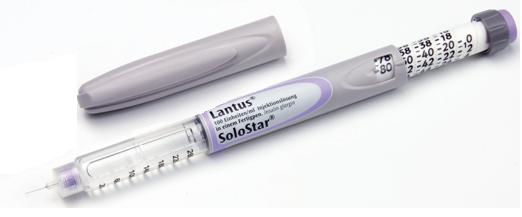
Mylan’s Lantus biosimilar held up by manufacturing issue

Mylan̢۪s Lantus biosimilar held up by manufacturing issue
Mylan’s hopes of grabbing a slice of the big US market for insulin glargine – the active ingredient in Sanofi’s Lantus blockbuster – have been dealt a blow.
The FDA has issued a second complete response letter (CRL) rejecting the marketing application for the biosimilar after uncovering quality problems at Biocon – Mylan’s partner for the drug – in a pre-approval inspection of one of its manufacturing facilities in Malaysia.
Biocon played down the implications of the compliance issue, saying in a statement that it doesn’t expect “any impact of this CRL on the commercial launch timing of our insulin glargine in the US” and that the FDA had no “outstanding scientific issues” with the marketing application.
It is however a near carbon-copy of the situation last year when the FDA issued its first CRL for the product, once again because corrective actions were needed at a Malaysian plant.
Mylan, which is due to merge with Pfizer’s Upjohn unit next year, is trying to bring the second Lantus copycat to market in the US after Eli Lilly and Boehringer Ingelheim’s Basaglar, which was approved by the FDA in 2014 and launched under an agreement with Sanofi at the end of 2016. It hasn’t released a statement on the latest CRL.
Sales of Lantus were around €6 billion (around $6.5 billion) at their peak but started to decline in 2014 after the first biosimilars were approved in Europe, and as downward pressure on insulin prices in the US started to take hold.
It’s still a big earner for Sanofi however, bringing in €3.6 billion last year – a drop of 19% on 2017 – and fell another 17% to €1.53 billion in the first six months of the year.
Lantus has been insulated thus far from the impact of biosimilar competition in the US with just one rival available, which is classed as a follow-on biologic rather than a direct biosimilar.
The distinction is important because it means Basaglar isn’t directly substitutable for Lantus. And of course having only one alternative has kept the price differential in check, and the fall-off in brand sales is expected to accelerate once true biosimilars become available.
Merck & Co/MSD had also been developing a Lantus biosimilar for the US market with South Korean biotech Samsung Bioepis, but decided to pull out of that partnership last year despite getting a tentative approval for the clone from the FDA.
At the time, it said the decision was taken after a look at the market opportunity for biosimilar Lantus, particularly in light of the anticipated pricing for the product, as well as the cost of production.
Sanofi meanwhile is still defending its last Lantus patent in the US which is due to expire next year, so Mylan’s biosimilar version of the drug still has some sizeable challenges to overcome before it can reach the market.

Vir Biotechnology on deck for IPO

Vir Biotechnology (VIR) has filed a preliminary prospectus for a $100M IPO.
The San Francisco, CA-based biotech develops immunotherapies for infectious diseases based on identifying rare antibodies in people who have been protected from or have recovered from these diseases. Pipeline candidates include treatments for HBV, influenza A, HIV and TB. Its HBV candidate, VIR-2218 is in Phase 1/2 development as is flu candidate VIR-2482.
2019 Financials (6 mo.): Revenue: $5.7M (+23%); Operating Expenses: $72.2M (+16%); Net Loss: ($62.6M) (-11%); Cash Consumption: ($53.8M) (-79%).

As Genfit readies liver drug for market, founding CEO makes way for new blood

As Genfit hopes for phase 3 trial successes and future filings for its liver disease drug, its long-term CEO and co-founder Jean-François Mouney is stepping aside and promoting his executive vice president of marketing and commercial development to the top job.
The focus has been on R&D up until this point, but in the next few years the biotech hopes approvals will come for elafibranor, and Pascal Prigent, with his experience on the marketing side, seems to dovetail with its potential future.
Prigent, who only joined last May and was formerly VP of marketing of GSK’s vaccines division, becomes the new chief in two weeks, and Mouney stays on as chair.

Loos, France-based Genfit is developing elafibranor for both nonalcoholic steatohepatitis (NASH), or fatty liver disease, and primary biliary cholangitis (PBC), an autoimmune disease of the liver.
Rival biotech Intercept Pharmaceuticals already markets a drug for this second rare condition, known as Ocaliva (and is also, along with seemingly almost every other biopharma, gunning for NASH), but Genfit is hopeful its attempt could be better.
A recent phase 2 linked the two tested elafibranor doses to 67% and 79% responses rates against the composite endpoint used in the pivotal Ocaliva trial. Ocaliva, meanwhile, came to market in PBC with a 47% response rate.

The bigger market opportunity is in NASH, which could yield billions annually for any company that gets it right, though nearly everyone in this area (and Genfit is one of the more advanced in terms of testing) has been hit by trial setbacks, Genfit included.
But sentiment has appeared to stay with the company; back in March, while already on the Euronext stock exchange, Genfit made the jump to the more lucrative Nasdaq with a healthy $135 million IPO.
Genfit earmarked $50 million of its IPO proceeds for the completion of its elafibranor program in NASH “through to, at least, the submission of an NDA to the FDA and EMA and the launch of a Phase 4 [postmarket] clinical trial,” it said in a recent SEC filing.
A readout of its late-stage data is expected later this year, the success of which, or lack thereof, will have a big impact on the biotech.
Mouney said in a release that his leaving is a “personal decision taken after thoughtful consideration, following two decades of intensive work dedicated to developing Genfit.”
He continued: “I’ve asked Pascal to accept the CEO position because I’m convinced he is best positioned to oversee our future corporate growth. Pascal has the right experience, the right skills, the right mindset and the right personality to help build Genfit for success in the years to come. I look forward to continuing my leadership as Chairman of the Board, including potentially recruiting new board members with international and diverse experience to best prepare us for the exciting years ahead.”
Prigent added: “I am honored to take on the role of Genfit’s CEO and look forward to working with Jean-François and the Board, as well as Dean and the highly skilled teams at Genfit. In the coming months, our Phase 3 RESOLVE-IT trial will have an interim read-out, and elafibranor could potentially become the first and only therapy to address NASH resolution without worsening of fibrosis. With our recent expansion into the United States and a solid cash position, we are preparing the company’s future as a commercial organization, to create long term value for our employees and shareholders, and for the NASH field overall, especially the patients.”
Analysts at ODDO put out a note to clients saying that while the timing may “cause confusion” with investors, it doesn’t believe the upcoming RESOLVE-IT data and the company’s CEO’s departure are linked.
“After a call with the company, we understand that this decision is unrelated to the future Phase 3 results of NASH (too early, results expected in Q4) and that this is a “personal decision taken with a great deal of objectivity and composure. … Our takeaway after contacting the company following this announcement is that the reorganization does not entail any changes to the group’s strategy. The teams and the targets will remain the same. The choice of Pascal Prigent makes sense in our view given his commercial experience and the fact that the company is potentially just some months from its commercial phase.
“Although the timing might cause some confusion with key clinical results for the group due out at the end of this year, there is no connection.”

Temple scientists identify promising new target to combat Alzheimer’s disease

Sometimes the more a person tries to fix a seemingly minor problem, the worse things become. Cells are no different, it turns out, though attempting to compensate for what begins as a minor deficiency or dysfunction can be dire. In the case of Alzheimer’s disease, Lewis Katz School of Medicine at Temple University (LKSOM) researchers now show that mitochondrial calcium transport remodeling – what appears to be an attempt by cells to compensate for flagging energy production and metabolic dysfunction – while initially beneficial, ultimately becomes maladaptive, fueling declines in mitochondrial function, memory, and learning.
The new research, published online in the journal Nature Communications, is the first to link maladaptive changes in calcium transport by mitochondria – the energy-generating powerhouses of cells – to the progression of Alzheimer’s disease.
“Amyloid-beta deposition and tau pathology are considered the major contributors to Alzheimer’s disease and, as a result, they have been the main focus of therapeutic development,” explained John W. Elrod, PhD, Associate Professor in the Center for Translational Medicine at LKSOM and senior investigator on the new study. “Large clinical trials targeting these pathways have universally failed, however.”
Altered calcium regulation and metabolic dysfunction have been suspected of contributing to neuronal dysfunction and Alzheimer’s development. “But up to now, no one has investigated the impact of altered calcium transport into and out of the mitochondria on the progression of Alzheimer’s disease,” Dr. Elrod noted. “Our current study provides a missing link between these two hypotheses of Alzheimer’s pathogenesis.”
Calcium transport into mitochondria plays an important part in many cellular functions and requires the involvement of multiple proteins to be carried out effectively. Among the key regulators of this process is a protein known as NCLX, which previously was discovered by Dr. Elrod’s laboratory to mediate calcium efflux from heart cells. NCLX expression is also important in mitochondrial calcium efflux in neurons.
In their new study, Dr. Elrod and colleagues examined the role of mitochondrial calcium uptake by neurons in Alzheimer’s disease. To do so, the team used a mouse model of familial Alzheimer’s disease in which animals harbored three gene mutations that give rise to age-progressive pathology comparable to Alzheimer’s progression in human patients.
As mice carrying the three mutations aged, the researchers observed a steady reduction in NCLX expression. This reduction was accompanied by decreases in the expression of proteins that limit mitochondrial calcium uptake, resulting in damaging calcium overload. NCLX loss was further linked to increases in the production of cell-damaging oxidants.
To better understand the physiological relevance of NCLX loss, Dr. Elrod’s team next completely eliminated NCLX expression in the forebrain of Alzheimer’s disease mice. In tests for memory and cognitive function, the animals exhibited significant impairments. Analyses of brain tissue from these mice showed that NCLX reduction and the consequent loss of calcium efflux from mitochondria accelerated the development of amyloid beta and tau pathology. When NCLX expression was restored, levels of harmful protein aggregates declined, neuronal mitochondrial calcium homeostasis was reestablished, and mice were rescued from cognitive decline.
“Our findings indicate that maladaptive remodeling of pathways to compensate for abnormalities in calcium regulation, which perhaps are meant to maintain energy production in cells, lead to neuronal dysfunction and Alzheimer’s pathology,” Dr. Elrod said. “Moreover, our data suggest that amyloid beta and tau pathology actually lie downstream of mitochondrial dysfunction in the progression of Alzheimer’s disease, which opens up a new therapeutic angle.”
Dr. Elrod and colleagues plan next to carry out a more detailed investigation of metabolic dysfunction that arises before Alzheimer’s disease pathology emerges.
###
Other investigators contributing to the new study include lead author, Pooja Jadiya, and co-authors Devin W. Kolmetzky, Dhanendra Tomar, Alyssa A. Lombardi, Jonathan P. Lambert, and Timothy S. Luongo, the Center for Translational Medicine, Department of Pharmacology, Lewis Katz School of Medicine at Temple University; Antonio Di Meco and Domenico Pratico?, the Center for Translational Medicine and the Alzheimer’s Center at Temple, Lewis Katz School of Medicine at Temple University; and Marthe H. Ludtmann of the Royal Veterinary College, Kings Cross, London.
The research was supported in part by National Institutes of Health grants R01HL136954, R01HL123966, 3R01HL123966- 05S1, and R01HL142271 and by Pennsylvania Department of Health CURE Award 420792.