Search This Blog

Thursday, October 17, 2019

SmileDirectClub stock falls anew as it files suit against California Dental Board

SmileDirectClub Inc. shares tumbled anew on Thursday, after the company filed a lawsuit against the California Dental Board and individual members, claiming that they attempted to intimidate its staff and customers in a series of raids on SmileShops across the state.
The suit, filed on behalf of Dr. Jeffrey Sulitzer, D.M.D., the company’s lead dentist, and his practice, along with the teeth-straightening startup, is seeking damages for what it calls a “campaign of harassment, intimidation, and anti-competitive conduct.”
The suit also says that Joseph Tippins, investigator in the enforcement unit of the Dental Board, told the company in 2017 that the Dental Board had an active investigation of SmileDirect’s SDC, -5.90%  operations. The company, however, which went public in September, did not make any disclosures regarding raids or investigations in its IPO documents.
“The Board, its Members, and Tippins have undertaken this campaign in an effort to squelch the competitive threat posed by the business model supported by SmileDirect, and not to protect any legitimate concern about the public health, welfare, and safety of consumers,” the suit alleges.
SmileDirect did not immediately respond to a request for comment. The California Dental Board said it does not comment on pending litigation.
The suit comes days after California Gov. Gavin Newsom signed a new law that changes the rules on ‘teledentistry,” the model used by SmileDirect. The bill includes protections for patients who undergo direct-to-consumer orthodontic treatment, such as that offered by SmileDirect, including a provision that allows them to submit complaints to the Dental Board, even if they have signed nondisclosure agreements.
Those protections were included after opposition to SmileDirect from dentists and orthodontists, who have been critical of the company’s business model. SmileDirect offers clear aligners by mail to customers using either a 3-D image of their teeth taken at a so-called SmileShop or from an impression made using an online kit. The company then develops and ships the clear aligners — a form of dental braces — and the customer undergoes a five- to 10-month treatment plan. Dentists say any orthodontic procedure requires a thorough exam because any mistake can cause permanent damage and even break teeth.
SmileDirect has faced strong opposition from medical organizations, including the American Dental Association and the American Association of Orthodontists, which have accused it of endangering patients and practicing medicine illegally.
Earlier this month, short seller Hindenburg Research published a report saying that the company has attracted more than 1,200 Better Business Bureau complaints in its five years of existence and that some of its practices have been deemed illegal by dental boards in Alabama and Georgia.

Hindenburg founder Nathan Anderson said customers have been forced to perform emergency dentistry on themselves and described an aggressive sales culture that pressures employees to “sell a new smile” to at least 70% of clients each month.
SmileDirect responded with a statement criticizing “organized dentistry” and its “anti-competitive legal actions.”
The suit was filed with the U.S. District Court for the Central District of California Western Division.
SmileDirect shares have struggled since the IPO and are down 50% in the past month, while the S&P 500 has fallen 0.3%. The stock dropped more than 10% in its trading debut and is 61% below its IPO price.
Nonetheless, a day after the Hindenburg report, all 10 banks on the IPO issued buy ratings on the stock.
https://www.marketwatch.com/story/smiledirectclub-stock-falls-anew-after-company-files-suit-against-california-dental-board-2019-10-17?siteid=rss&rss=1

Too Many Low-Skill Workers Are Failing Drug Tests, Texas Firms Say

Employers in Texas say too many low-skill workers are failing to pass drug tests needed to get hired.
Forty-eight percent of Texas firms who had difficulty finding low-skill workers cited their inability to pass a drug test or a criminal background check, a report from the Federal Reserve Bank of Dallas showed Thursday. That’s the most-cited of five reasons for disqualification of low-skilled employees, more than a lack of soft skills or experience.
As the U.S. labor market tightens with the unemployment rate at a five-decade low of 3.5%, employers continue to point out the difficulty in finding qualified workers. This has led some companies to relax drug policies. However, some high-risk sectors such as the oil industry are unable to do so because of safety regulations.
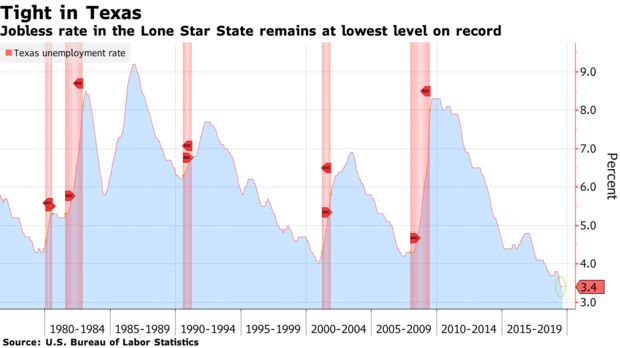
Jobless rate in the Lone Star State remains at lowest level on record
Low-skill jobs make up 43% of job postings in Texas, according to the report, which was based on an August survey of 385 business executives in the state. It also showed 72% of firms indicating they were having difficulty finding workers saying there was a lack of or no available applicants at all skill levels.
The Texas jobless rate stood in August at 3.4%, the lowest in records back to 1976, according to the U.S. Bureau of Labor Statistics.
https://www.bloomberg.com/news/articles/2019-10-17/too-many-low-skill-workers-failing-drug-tests-texas-firms-say

Is That Statin Doing You Any Good?

Many people who take cholesterol-lowering statins may not benefit from them, researchers say.
Drugs like atorvastatin (Lipitor) and fluvastatin (Lescol) provide little value to people without heart disease, new research shows. Yet these heart-healthy folks represent a sizable number of statin users.
While statins for people with heart disease isn’t controversial, their use in people without heart disease (known as “primary prevention”) is the subject of debate.
The use of statins for primary prevention “warrants more careful consideration,” concluded researchers led by Paula Byrne of the National University of Ireland Galway.
Used in this way, statins “may be an example of low value care and, in some cases, represent a waste of health care resources,” the study authors said.
Changes in clinical guidelines have increased the number of people eligible to take statins. In many countries, the majority of people taking the drugs do so for primary prevention.
For the study, Byrne’s team analyzed data from Ireland from 1987 through 2016. The investigators found that the proportion of adults older than 50 eligible for statins rose from 8% under 1987 guidelines to 61% under 2016 guidelines. That means a far greater number of lower-risk people became eligible for statin treatment.
The number of people who would need to be treated with statins to prevent one major cardiovascular event also increased substantially, from 40 at the lowest risk under 1987 guidelines to 400 at the lowest risk under 2016 guidelines.
As part of the study, the investigators also analyzed primary prevention data for people with an average age of 62 to 69, who were taking statins for one to five years.
Overall, there were significant reductions in death from any cause, cardiovascular deaths, and major coronary or cardiovascular events. However, when the baseline risk of developing heart disease was taken into account, most outcomes were not statistically significant, “raising uncertainty about the benefits of statins for primary prevention,” Byrne and her colleagues wrote.
The findings showed that none of the people classified as low or moderate risk in primary prevention would achieve acceptable levels of risk reduction to justify taking a daily statin. The results were published Oct. 16 in the BMJ.
“We need to assess and understand the evidence underlying these trends,” the study authors wrote in a journal news release.
Statins are one of the most commonly used medicines worldwide, with sales estimated to approach $1 trillion by 2020. But important clinical trial data on statins is not available for independent analysis, the researchers noted.
More information
The American Heart Association has more on cholesterol-lowering drugs.
SOURCE: BMJ, news release, Oct. 16, 2019
https://consumer.healthday.com/cardiovascular-health-information-20/statins-news-780/is-that-statin-doing-you-any-good-751274.html

J&J’s Tremfya shows long-term benefit in late-stage psoriasis study

Updated data from the open-label portion of a Phase 3 clinical trial, VOYAGE 1, evaluating Johnson & Johnson (NYSE:JNJ) unit Janssen Pharmaceutical’s TREMFYA (guselkumab) in patients with moderate-to-severe plaque psoriasis showed a sustained treatment benefit. The results are being presented at the Fall Clinical Dermatology Conference in Las Vegas.
Responses as measured by PASI 100 (100% clear skin), IGA0/1 (clear or almost clear skin) and IGA 0 (clear skin) observed at week 52 were sustained at week 204 (about four years). The proportions of responders with PSSD symptom scores of 0 (no psoriasis symptoms) were consistent at weeks 76 and 204.
No new safety signals were observed.
The FDA approved the IL-23 inhibitor in July 2017 for the indication.
https://seekingalpha.com/news/3506737-j-and-js-tremfya-shows-long-term-benefit-late-stage-psoriasis-study

Juul halts all U.S. sales of many flavored nicotine liquids

E-cigarette maker Juul Labs Inc said on Thursday it will completely halt U.S. sales of all flavors except tobacco, mint and menthol, as the company faces heightened scrutiny from regulators, lawmakers and state attorneys general over the appeal of its nicotine products to teenagers.
Thursday’s move, which ends online sales, means Juul’s mango, fruit, creme and cucumber nicotine pod flavors will no longer be available for sale anywhere in the United States. The company last year pulled those flavors from retail stores but continued to sell them on its website with what the company said were “strict age-verification controls.”
Juul’s new chief executive, K.C. Crosthwaite, a veteran of Marlboro maker Altria Group Inc, announced the move Thursday as the company attempts to repair its relationship with regulators.

The U.S. Food and Drug Administration last month warned Juul that it was misleading consumers by marketing its products as safer than cigarettes, and requested additional information on its nicotine blend. Soon after, the Trump administration announced plans to ban all flavored e-cigarette products, citing alarming growth in teenage use of the products.
Soon after, Juul’s former CEO, Kevin Burns, stepped down.
Crosthwaite said in a statement Thursday that the company needs to “reset the vapor category” by “earning the trust of society,” working “cooperatively” with regulators and policymakers.

He previously said the company would suspend all advertising in the United States, stop its support of a San Francisco ballot measure that would overturn an e-cigarette ban and refrain from lobbying the Trump administration on the proposed flavor ban.
Juul will continue to sell mint, menthol and tobacco flavors online and in stores, though a spokesman said Thursday “we continue to review our policies and practices” in advance of the FDA’s proposed flavor ban and “have not made any final decisions.” The company will “fully support and comply with the final policy when effective.”
https://www.reuters.com/article/us-juul-flavors/juul-halts-all-u-s-sales-of-many-flavored-nicotine-liquids-idUSKBN1WW2JO

Triple meeting – clinical data, and competition, loom for Mirati

Mirati pulls a rabbit out of its hat, but the conference will serve up three new competitors too.
Mirati investors fretting over the first disclosure of clinical data for the $3bn company’s KRAS inhibitor MRTX849 were left unsatisfied by yesterday’s unveiling of abstracts from the Triple meeting. The long-awaited Mirati presentation outlined nothing beyond pharmacokinetics and activity in cell lines.
It was thus left to the company itself to issue a statement this morning stressing that the Triple meeting would, after all, be the venue for its big clinical reveal, with October 28 being the big day. But the conference abstracts also describe at least three new projects that would be expected to compete against MRTX849 in KRAS-mutant cancers.
These include duelling SOS1 approaches from Bayer and Boehringer Ingelheim; until now the former was not known to be active in pursuing elusive KRAS-positive cancers, but it has now revealed early work on an asset coded BAY-293. The latter had hinted that it was looking to target KRAS mutations via SOS1, but beyond starting a clinical trial of BI 1701963 little is known about its work.
The third approach comes from the Bridgebio subsidiary Navire Pharma, in the form of the SHP2 inhibitor IACS-13909. This will also be of relevance to Novartis, whose own SHP2-targeting asset, TNO155, is in phase I; Bridgebio is separately working preclinically on a pan-KRAS inhibitor, BBP-454.
For now the abstracts relating to Bayer, Boehringer and Navire are, like Mirati’s, accounts of preclinical work, something that does not preclude hints of clinical activity being presented on the day. All will be revealed at the Triple meeting (the EORTC-NCI-AACR Molecular Targets and Cancer Therapies symposium), which takes place in Boston, US, on October 26-30.
KRAS-relevant presentations at 2019 Triple meeting
Project Mechanism Company Abstract
MRTX849 KRAS G12C inhibitor Mirati C069
BI-3406 KRAS-SOS1 interaction inhibitor Boehringer Ingelheim C133
BAY-293 KRAS-SOS1 interaction inhibitor Bayer CN05-03
IACS-13909 SHP2 inhibitor Navire (Bridgebio) C036
Source: EORTC-NCI-AACR Molecular Targets and Cancer Therapies symposium.
While Boehringer’s poster mentions BI 1701963 its main focus is actually a separate SOS1 inhibitor, BI-3406. This is described as a first-in-class, orally bioavailable SOS1:KRAS inhibitor.
SOS1 is a helper protein that turns KRAS from an “off” to an “on” state, so blocking it could be an easier way of inhibiting KRAS than trying to hit the kinase itself. The researchers claim that BI-3406 elicits activity against many KRAS variants, including all major G12 and G13 oncoproteins, and suggest combining with Mek inhibition.
Bayer, too, seems to be angling for a combinatorial approach, stating that BAY-293, a small molecule, might synergise with covalent inhibitors like ARS-853 or ARS-1620 that target mutant KRAS G12C. ARS-1620 is the result of a collaboration between Araxes and Johnson & Johnson, and is thought to have informed the design of Amgen’s AMG 510.
Expectations
So far AMG 510 has carried Mirati investors’ hopes of KRAS inhibition, despite Amgen’s latest data disappointing (Esmo 2019 – Kras springs a leak, September 28, 2019). A central question, therefore is what Mirati needs to show at the Triple meeting for its $3bn valuation to remain intact.
Presumably AMG 510’s 50% remission rate in NSCLC, including 100% in three subjects given the target dose, and an underwhelming 8% in colorectal cancer – all responses being partial – represents a baseline of sorts for MRTX849. More important, for Mirati and Amgen alike, will be the durability of any remissions.
Other KRAS approaches that might be sailing beneath the radar of Mirati bulls include SBT-100, a bispecific antibody targeting KRAS and Stat3 in development by the private group Singh Biotechnology. A phase I trial in triple-negative breast cancer is in preparation, the company tells Vantage.
Meanwhile, Navire’s approach is also based on the idea that SHP2 is required for RAS activation, though its Triple meeting abstract on IACS-13909 does not specifically mention KRAS mutations. Recently Mirati agreed to collaborate with Novartis to combine MRTX849 with TNO155, while other groups working on SHP2 include Revolution/Sanofi (RMC-4630/SAR442720) and Redx.
It seems that KRAS, once thought to be undruggable, is suddenly the subject of much work.
https://www.evaluate.com/vantage/articles/events/company-events/triple-meeting-clinical-data-and-competition-loom-mirati

SmileDirect drops after short-seller tweets about ‘raids’

SmileDirect Club (NASDAQ:SDC), now down 5.2%, fell as much as 13% after short-seller Hindenberg Research says via Twitter that the teledentistry company didn’t disclose to potential investors in its IPO filings that the company’s stores in California had been “raided” as part of an investigation.
The short-seller wrote, “The company knew of these raids and that an investigation that taken place in the largest state in the U.S., and investors did not.”
The post included an excerpt from a lawsuit filed today by SmileDirect against the Dental Board of California.
Neither the tweet nor the excerpt gave the timing of when the “raids” took place.
https://seekingalpha.com/news/3506655-smiledirect-drops-short-seller-tweets-raids