Search This Blog

Thursday, January 16, 2020

FDA panel split over approval of Durect’s non-opioid painkiller

Independent experts on an FDA advisory panel on Thursday were split over the approval of Durect Corp’s experimental non-opioid painkiller to manage post-surgical pain.
Six members voted in favor, while six others voted against the drug Posimir, a reformulated version of the anesthetic bupivacaine that aims to provide pain relief for up to three days after surgery.
The panel’s recommendation plays an influential role in the FDA’s final decision.

CVS To Renovate, Add HealthHUB Concept To 600 Stores In 2020


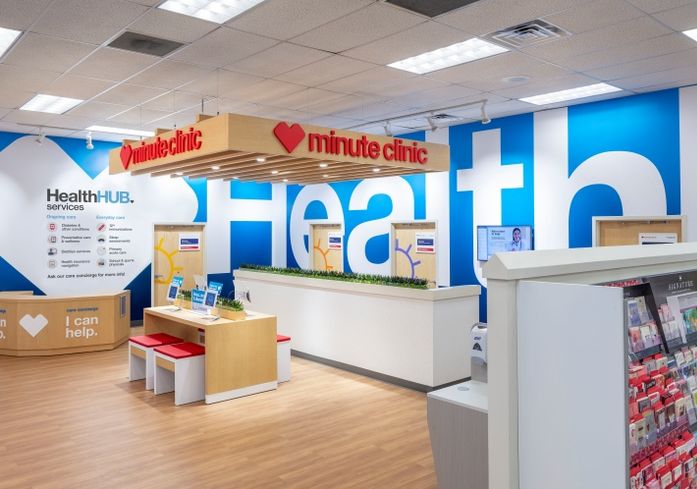
Cvs healthhub
One of the CVS HealthHUB locations in Houston. The company is planning to expand the concept.
CVS Health is leaning into the latter part of its name in a major way this year. The pharmacy giant plans to roll out its HealthHUB wellness and healthcare centers to 600 stores by the end of this year, CEO Larry Merlo told CNBC in a televised interview.
Merlo told CNBC he believes the company can open HealthHUBs at a pace of 12 per week, with the goal of opening 1,500 such locations by the end of 2021. CVS piloted HealthHUBs in Houston at three stores starting in the end of 2018, and expanded it last year to 50 locations across four markets, CNBC reports.
The hubs take up about 20% of the front-of-house space for an average-sized CVS, and replace some non-health-related shelves such as greeting cards or toys. HealthHUBs are staffed by healthcare professionals who can offer some diagnostic capabilities, testing and advice on managing chronic conditions. The staff is supplemented by digital kiosks for health and insurance questions.
CVS’ capabilities to offer expanded health services are bolstered by its acquisition of health insurance giant Aetna for $70B that was finalized at the end of 2018. Merlo claimed that the pilot locations have experienced boosts to both foot traffic and margins, but added the caveat that the small sample size is not necessarily predictive of widespread success, CNBC reports.
Among the first markets to be targeted in the 2020 rollout are Virginia, Maryland, Florida, North Carolina, Ohio, Boston and Dallas-Fort Worth.
Walgreens, CVS’ largest competitor in the U.S., has been carving out similar spaces called “health corners” to its own pharmacies since late 2018. The chain will be closing hundreds of stores as a way to offset the costs of its redevelopment program.
Though the two major chains are pursuing similar strategies, their fortunes have been heading in opposite directions, as shares of CVS increased in value by 13% last year, while Walgreens parent company Walgreens Boots Alliance lost about 25% of its value in the 12-month period ending in November.

BioMarin mulling price of $2M – 3M for hemophilia gene therapy

In an interview at JPMorgan’s Healthcare Conference, BioMarin Pharmaceutical (BMRN +0.1%) CEO Jean-Jacques Bienaimé said that the company is exploring pricing its hemophilia A gene therapy, valoctocogene roxaparvovec (valrox), at $2M – 3M, a price range apparently acceptable to insurers considering the therapy’s benefits.
In clinical trials, treated patients experienced reductions in bleeding episodes from an average of 16.5 to zero, an effect sustained for three years.
Mr. Bienaimé also said that the company is open to alternative payment schemes such as pay-for-performance, an approach many other biotechs are using for pricey meds.
By comparison, Roche’s Hemlibra (emicizumab-kxwh), a bispecific antibody approved in the U.S. for hemophilia A in October 2018, costs almost $500K per year following the initial dose but is less expensive versus prophylactic treatments.
Barring something unexpected, BioMarin expects the FDA nod sometime in Q3.
#JPM20

Abbott prevails in patent challenge by Edwards Lifesciences

The USPTO’s Patent Trial and Appeal Board has denied a petition from Edward Lifesciences (EW +0.3%) for an inter partes review of U.S. Patent No. 8,057,493 held by Abbott (ABT +0.4%) subsidiary Evalve. The PTAB determined that EW had not demonstrated a reasonable likelihood that the patent’s claims are unpatentable.
The ‘493 patent covers devices, systems and methods for tissue approximation and repair at treatment sites.

Glaxo: No immediate plans to spin off Pfizer joint venture

GlaxoSmithKline has made no plans to spin off or float its consumer healthcare joint venture with Pfizer, according to a top company executive.
Last year GSK and Pfizer merged their consumer healthcare businesses into a single joint venture, creating one of the largest over-the-counter companies in the world with major market share in important regions such as the US and China.
According to BNN Bloomberg Pfizer’s CEO Albert Bourla said this week he expects GSK to pursue an IPO in three to four years.
“This is the time that we will be able to exit from this partnership, and I’m sure that this business will have a fantastic IPO,” Bourla said.
The long-term plan has always been to spin off the joint venture into a new company, but for now that is a long way off according to GSK’s chief strategy officer.
In an interview at the JP Morgan Healthcare Conference in San Francisco, GSK’s chief strategy officer David Redfern said the UK pharma had made no firm plans for an IPO.
“No, actually we haven’t decided anything. We haven’t really thought about it,” Redfern said.
“We’ve said when we announced the deal, we expect it to separate within three years, but actually up to five years. And it’s entirely our decision.”
For now the focus is on integrating the business and growing sales, rather than a spin off or IPO.
“We don’t want it too distracted right now thinking about capital markets,” Redfern said. “Whether its an IPO or just a straight spin, all options are on the table. We’ve literally had no discussion (with Pfizer)”, he said.
The combined business has sales of about $13 billion and markets products including Advil painkillers, Tums stomach tablets, Sensodyne toothpaste, and Nicorette gum.
GSK is the majority owner and Pfizer has around a third of the business, which has been created to allow both pharma companies to focus on developing more novel drugs.

Syneos Health target upped to $74 from $62 by Baird

Maintains Outperform

Unitedhealth target raised to $343 from $312 by Oppenheimer

Maintains Outperform