Search This Blog

Thursday, January 16, 2020

A Novel Surveillance Tool for Flu: Fitbit

Fitbits, wearable devices that measure resting heart rate and sleep time, hold promise in measuring flu at the state level, researchers found.
Weeks during which deidentified Fitbit users in five states had elevated heart rates and more sleep time tended to be those when influenza-like illnesses (ILI) were most common in those states, reported Jennifer Radin, PhD, of Scripps Research in La Jolla, California, and colleagues, writing in The Lancet Digital Health.
When the Fitbit data were included in flu-intensity prediction models, Pearson correlations increased by an average 0.12 points (SD 0.07) over the original models, they said, adding, “Correlations of the final models with the CDC ILI rates ranged from 0.84 to 0.97.”
“Responding more quickly to influenza outbreaks can prevent further spread and infection, and we were curious to see if sensor data could improve real-time surveillance at the state level,” Radin said in a statement.
Google Flu Trends and social media tools like Twitter have attempted to capture real-time flu surveillance data, but the authors noted they have been less than successful, with Google Flu Trends missing early waves of the 2009 H1N1 pandemic strain, as well as overestimating activity during flu outbreaks. They lamented the lack of “objective data streams” to provide real-time flu activity information.
Enter wearable sensors. The authors hypothesized that fitness bands or smart watches “might be able to identify abnormal fluctuations indicting perturbations in one’s health, such as an acute infection.” They pointed out that acute infections often raise the resting heart rate, and sleep and activity patterns differ when someone is not feeling well.
Radin and colleagues obtained deidentified Fitbit data from a convenience sample of users from March 2016 to March 2018. Users wore a Fitbit for at least 60 days during the study and had only one Fitbit the entire time. The authors noted that to measure population-level changes, they included data from the five states with the most Fitbit use: California, Texas, New York, Illinois, and Pennsylvania.
The Fitbit data were then correlated with ILI reports from the CDC, which generates weekly estimates at the state level.
Overall, about 47,000 users had data included. Users were a mean age of around 43 and 60% were women. Fitbit data improved flu predictions in all five states, the researchers said, citing an improvement of 6% to 33% over baseline models.
“To our knowledge, this is the first study to evaluate the use of [resting heart rate] and sleep data in a large population to predict real-time [influenza-like illness] rates at the state level,” the authors wrote.
An accompanying editorial by Cecile Viboud, PhD, of the NIH, and Mauricio Santillana, PhD, of Boston Children’s Hospital, characterized the study as “a promising first step towards integrating wearable device measurements in predictive models of infectious diseases.”
“We anticipate that Fitbit data could be used as one of several external covariates in predictive models for influenza, along with other health, digital, and social media indicators,” the editorialists wrote. “Analysis of repeated individual biological measurements, such as those provided by Fitbit devices, is an enticing way to monitor population health, because measurements are passive, high volume, and noninvasive.”
However, they noted that due to interannual variability in flu, additional data would likely require a longer-term research agreement with Fitbit.
Limitations to the data include a lack of an activity variable, which the authors said could control for seasonal fitness or short-term activity changes. Weekly resting heart rate averages might incorporate data where a person is both sick and not sick, which could underestimate illness by lowering the weekly averages, they noted. They also cited sleep measuring devices’ low accuracy, though they said it is improving.
“In the future as these devices improve, and with access to 24/7 real-time data, it may be possible to identify rates of influenza on a daily instead of weekly basis,” Radin said.
This study was supported by the NIH National Center for Advancing Translational Health.
The authors disclosed no conflicts of interest.
Viboud and Santillana disclosed no conflicts of interest.

No, My Study Didn’t Find Medicare for All Would Lower U.S. Health Costs by $2T

Last year I published a study with the Mercatus Center projecting that enacting Medicare for All (M4A) would add at least $32.6 trillion to federal budget costs over the first 10 years. After the study was published, some advocates misattributed a finding to it, specifically that M4A would lower national healthcare costs by $2 trillion over that same time period. This misattribution has since been repeated in various press reports. Multiple fact-checking sites have pointed out that the study contains no such finding, as did a follow-up piece I published with e21 last year. However, because the mistake continues to appear occasionally, this article provides additional detail about how and why it is wrong.
First, some brief background on the study itself. The study estimated the federal budget costs of M4A, as this is an important number that would guide Congress’s procedural points of order if such legislation were considered. The study did not focus on aggregate changes to national health spending under M4A, in part because such estimates do not affect Congress’s legislative procedures. Whenever Congress considers legislation with budgetary significance, such as a new federal program or a tax cut, its procedures are affected by what the bill would do to federal spending, revenues, and deficits, but not private-sector spending. For example, no Congress would consider a large tax cut as having zero budgetary effect, based on the irrelevant rationale that the reduction in federal revenues would be offset by an equal gain in taxpayers’ after-tax income.
Accordingly, my study’s estimates, like any performed by the Congressional Budget Office, focused on M4A’s effects on the federal budget rather than on other areas of the U.S. economy. This is a primary reason why neither the $2 trillion figure nor any other such estimate appears in the study.
However, a critical additional reason why the attribution of $2 trillion in savings is wrong is that it is inconsistent with the study’s conclusions. Some have attempted to convert the study’s lower-bound federal cost estimate of $32.6 trillion into an estimate of savings in national health spending, arriving at the $2 trillion number. It is incorrect to do so, as the following analogy may help to explain.
Imagine that members of a family have separate cell-phone data plans that add up to $57 a month. Now imagine the following conversation:
Q: How much would it cost my mother to buy my cell-phone data for me instead of continuing to pay it for myself? I think she’s better than I am at negotiating a good deal.
A: Well, if she buys it and allows you to use it for free, your usage will typically go up. Even if she’s the brilliant negotiator that you say, it’s going to cost her at least another $33 a month on top of her current expenses. Most likely her extra costs would be between $33-$39, possibly more.
Q: But then it wouldn’t cost me anything, right? Don’t you have to think of it in terms of how much money everyone in the family, together, would pay? If she bought it, how much would my family as a whole be paying?
A: Well, she was already paying $22 each month, so altogether the family would pay at least $55, probably between $55-$61, again possibly more.
Q: But otherwise we’d pay $57. So, you’re saying we’ll save $2 a month because of her superior negotiating skills?
A: No, I didn’t say anything about her negotiating skills; you did. Her actual history shows a tendency to overspend. I’m just saying that even under your assumption, it’s going to cost the family at least $55, probably somewhere between $55-$61. It’s actually highly unlikely it would be as low as $55.
Q: Great, so you’re saying we’ll save $2!
Basically, what some advocates have done is the equivalent of the above. They’ve done this by taking my study’s lower-bound federal cost estimate and converting it into a claim of savings relative to currently projected national health spending. The study does indeed emphasize the lower-bound estimate, but it does so only by way of explaining that the federal costs of M4A would be at least $32.6 trillion over 10 years, and more likely substantially higher. The study does not present the $32.6 trillion number in a manner consistent with a finding of $2 trillion in national health cost savings.
The study is clear and explicit that the $32.6 trillion estimate is a lower-bound (best case) estimate, and repeats this caveat throughout the report. This point is made in the study’s abstract, on its first page of text, and in many other passages. To cite but some of the quotes from the study explaining the nature of the lower-bound estimate:
  • It is likely that the actual cost of M4A would be substantially greater than these estimates” (Abstract)
  •  “Conservative estimates” (Abstract); “conservative estimates” (p.3)
  • “It is likely that the actual cost of M4A would be substantially greater” (p. 3)
  • “These cost estimates essentially represent a lower bound” (p. 4)
  • “Actual savings (from lower drug prices) are likely to be less than assumed under these projections (p. 14)
  • “This is an aggressive estimate of administrative savings that is more likely to lead to M4A costs being underestimated than overestimated” (p. 14)
  •  “The resulting implicit estimates of national and federal spending on LTSS should be regarded as conservative” (p. 17)
  • “This study’s assumption of no net increase in LTSS benefit utilization. . . is an additional factor contributing to these projections’ being more likely to underestimate costs than to overestimate them” (p. 17)
The study does contain a couple of isolated references to scenarios in which national health spending would decrease relative to current projections. One such reference is preceded by a reminder that the actual cost of M4A would likely be “substantially greater” than this “lower bound” estimate, while the other one notes that this decrease would only occur “under the assumption that provider payments for treating patients now covered by private insurance are reduced by over 40 percent,” along with other aggressive assumptions, and that “whether providers could sustain such losses and remain in operation” was a “critically important” unanswered question.
In other words, the study emphasizes that the $32.6 trillion federal cost minimum cannot be accurately converted into a claim of $2 trillion in national health cost savings. Actual costs would likely be substantially greater (specifically, factors such as drug costs, health provider payment rates and long-term care utilization would probably all be greater than assumed in that lower-bound estimate). It is the same principle by which, if someone tells you that something now costing $57 would cost somewhere between $55-$61 after a policy change, it would be incorrect to claim thereafter that the person had concluded you would save $2.
It is not possible to correct every advocate’s mistaken claim that my study found that M4A would lower national health costs by $2 trillion over 10 years. But anyone interested in accurately understanding the study should be aware that it contains no such finding.
Charles Blahous is the J. Fish and Lillian F. Smith Chair and Senior Research Strategist at the Mercatus Center, a visiting fellow with the Hoover Institution, and a contributor to E21. He recently served as a public trustee for Social Security and Medicare.

MorphoSys and Incyte team up to advance tafasitamab in $2B deal

MorphoSys AG (NASDAQ:MOR) inks a global collaboration and licensing agreement with Incyte (NASDAQ:INCY) to further develop and commercialize anti-CD19 monoclonal antibody tafasitamab.
The companies will co-commercialize tafasitamab in the U.S. with MOR leading strategy and booking all sales but equally sharing profits and losses. Ex-U.S., INCY will have exclusive commercialization rights, lead strategy and book all sales (paying royalties to MOR). INCY and MOR will share development costs associated with global and U.S.-specific studies on a 55/45 basis with INCY covering 100% of development costs for studies specific to ex-U.S. countries.
Under the terms of the deal, MOR will receive $750M upfront, up to $1.1B in milestones and tiered mid-teen-to-mid-twenties royalties on net sales. INCY will also make a $150M investment in MOR via the purchase of American Depositary Shares.

JPM20: Tenet details plan to ‘aggressively’ scale outpatient surgery unit

Tenet outlined its long-term strategy to investors Tuesday during the annual J.P. Morgan Healthcare Conference in San Francisco, with plans to aggressively expand its outpatient surgery unit by allocating at least $175 million each year to buy ambulatory surgery centers throughout the country.
United Surgical Partners International “is tightly tied to our overall strategy,” Tenet CEO Ron Rittenmeyer told investors. “We are committed to thoughtfully and aggressively [scaling] this aspect of our business.”
The market is highly fragmented, he said, noting a robust pipeline of opportunities. About 60% of the nation’s surgery centers are operated independently. Tenet through USPI controls 5% and the rest are run by other national players, hospitals and smaller chains, he said.
Tenet’s long-term vision comes as hospital operators attempt to adapt to shifting demographics and demand at the same time payers and regulators are looking to change reimbursement to pay for quality. The landscape is also changing as more care is being delivered outside of hospitals in lower-cost settings.
The Dallas-based firm has broad reach across the country, operating 65 hospitals, 296 ambulatory surgery centers, 107 urgent cares, 77 imaging centers and more.
Facing these headwinds, Rittenmeyer said the company will continually examine how it can trim its hospital portfolio and invest in high-acuity lines of care for its remaining facilities.​ “I think it’s fair to say we’re a completely different company than we were in 2017,” he said Tuesday, citing the elimination of past processes and lax accountability.
Tenet has continued to divest hospital assets, most recently announcing a deal to off load its Memphis hospitals. The company reported a net loss of $245 million from continuing operations for the first nine months of 2019, a significant decline from net income of $113 million the year prior. The company attributed the decline to paying off debt earlier.​
So far the strategy is working, he said, noting admissions gains over the past three quarters. The company has relied on real-time data and predictive analytics to make informed decisions faster.
In one example, Rittenmeyer touted the use of predictive mid-month reports that allow the chain to take action in staffing by comparing what Tenet expected to what it’s actually experiencing.
Harnessing all this data has led to a more informed organization. “We now have a much richer view of our own consumer base in each market based on data and research,” he said.

UnitedHealthcare Medicare Part D CEO outlines Walgreens centers

A Las Vegas Walgreens will be the first to house one of 14 UnitedHealthcare Medicare service centers set to open this year.
The center’s grand opening is scheduled for Feb. 4, with a house call already booked for the first day the center opens, Mike Anderson, CEO of the Medicare Part D business at UnitedHealthcare, told Becker’s. The remaining 13 locations will open through the end of May, with two other sites coming to Las Vegas before the centers begin opening their doors in Phoenix, Cleveland, Denver and Memphis, Tenn.
“We have a vision for [the] services that we’re going to be delivering, and we think we have a lot of good intelligence to suggest that these are unmet needs that our consumers are seeking to have met locally,” Mr. Anderson said.
He said that vision, first announced Nov. 25, 2019, is three-pronged: to increase beneficiaries’ understanding of Medicare, to deliver clinical services and to educate consumers on Medicare plan options. For the clinical services, Mr. Anderson said a nurse practitioner will be on site at the centers certain days of the week for scheduled appointments with UnitedHealthcare Medicare beneficiaries. The appointments may include health assessments, health screenings and services to address identified care gaps.
But this won’t be a CVS Health-esque MinuteClinic, he said.
“Unlike what you see with other pharmacy settings, like a MinuteClinic, this won’t be available just for walk-in sort of services. It will be more structured, and it will be services that we’re scheduling with members of our Medicare Part D plan for very specific purposes,” Mr. Anderson said.
He added that the centers will focus more on chronic disease management than acute care needs.
“We expect to learn a lot this year, in close collaboration with Walgreens … and refine the model going forward,” Mr. Anderson said.

FDA panel split over approval of Durect’s non-opioid painkiller

Independent experts on an FDA advisory panel on Thursday were split over the approval of Durect Corp’s experimental non-opioid painkiller to manage post-surgical pain.
Six members voted in favor, while six others voted against the drug Posimir, a reformulated version of the anesthetic bupivacaine that aims to provide pain relief for up to three days after surgery.
The panel’s recommendation plays an influential role in the FDA’s final decision.

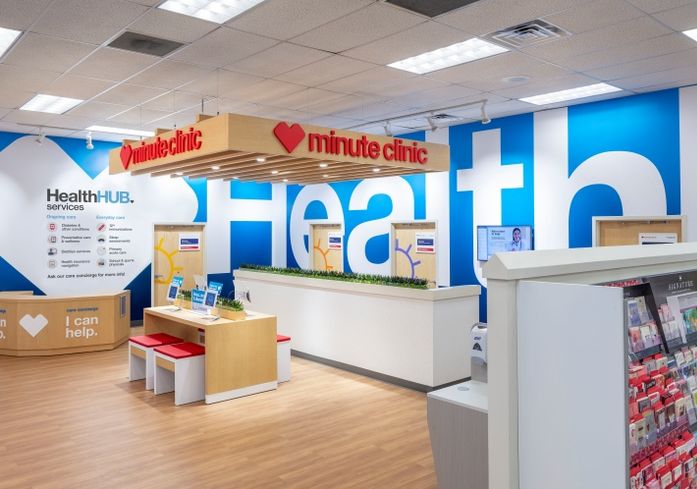
CVS To Renovate, Add HealthHUB Concept To 600 Stores In 2020


Cvs healthhub
One of the CVS HealthHUB locations in Houston. The company is planning to expand the concept.
CVS Health is leaning into the latter part of its name in a major way this year. The pharmacy giant plans to roll out its HealthHUB wellness and healthcare centers to 600 stores by the end of this year, CEO Larry Merlo told CNBC in a televised interview.
Merlo told CNBC he believes the company can open HealthHUBs at a pace of 12 per week, with the goal of opening 1,500 such locations by the end of 2021. CVS piloted HealthHUBs in Houston at three stores starting in the end of 2018, and expanded it last year to 50 locations across four markets, CNBC reports.
The hubs take up about 20% of the front-of-house space for an average-sized CVS, and replace some non-health-related shelves such as greeting cards or toys. HealthHUBs are staffed by healthcare professionals who can offer some diagnostic capabilities, testing and advice on managing chronic conditions. The staff is supplemented by digital kiosks for health and insurance questions.
CVS’ capabilities to offer expanded health services are bolstered by its acquisition of health insurance giant Aetna for $70B that was finalized at the end of 2018. Merlo claimed that the pilot locations have experienced boosts to both foot traffic and margins, but added the caveat that the small sample size is not necessarily predictive of widespread success, CNBC reports.
Among the first markets to be targeted in the 2020 rollout are Virginia, Maryland, Florida, North Carolina, Ohio, Boston and Dallas-Fort Worth.
Walgreens, CVS’ largest competitor in the U.S., has been carving out similar spaces called “health corners” to its own pharmacies since late 2018. The chain will be closing hundreds of stores as a way to offset the costs of its redevelopment program.
Though the two major chains are pursuing similar strategies, their fortunes have been heading in opposite directions, as shares of CVS increased in value by 13% last year, while Walgreens parent company Walgreens Boots Alliance lost about 25% of its value in the 12-month period ending in November.