PTC Therapeutics (PTCT+7%) says the FDA has approved its oral treatment for spinal muscular atrophy Evrysdi (risdiplam), which will available for U.S. patients within two weeks.
“Evrysdi showed clinically meaningful improvements in motor function and obtainment of developmental milestones across two trials in patients age two months and above and across all levels of disease severity, including types 1, 2, and 3 SMA.”
Russia boasts that it’s about to become the first country to approve a COVID-19 vaccine, with mass vaccinations planned as early as October using shots that are yet to complete clinical trials—and scientists worldwide are sounding the alarm that the headlong rush could backfire.
Moscow sees a Sputnik-like propaganda victory, recalling the Soviet Union’s launch of the world’s first satellite in 1957. But the experimental COVID-19 shots began first-in-human testing on a few dozen people less than two months ago, and there’s no published scientific evidence yet backing Russia’s late entry to the global vaccine race, much less explaining why it should be considered a front-runner.
“I’m worried that Russia is cutting corners so that the vaccine that will come out may be not just ineffective, but also unsafe,” said Lawrence Gostin, a global public health law expert at Georgetown University. “It doesn’t work that way. … Trials come first. That’s really important.”
According to Kirill Dmitriev, head of Russia’s Direct Investment Fund that bankrolled the effort, a vaccine developed by the Gamaleya research institute in Moscow may be approved in days, before scientists complete what’s called a Phase 3 study. That final-stage study, usually involving tens of thousands of people, is the only way to prove if an experimental vaccine is safe and really works.
Health Minister Mikhail Murashko said members of “risk groups,” such as medical workers, may be offered the vaccine this month. He didn’t clarify whether they would be part of the Phase 3 study that is said to be completed after the vaccine receives “conditional approval.”
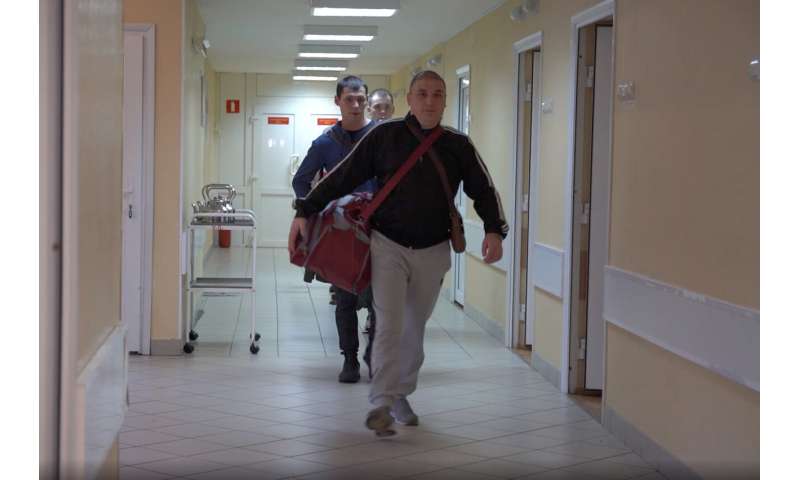
In this photo made from footage provided by the Russian Defense Ministry on Wednesday, July 15, 2020, a group of volunteers participating in a trial of a coronavirus vaccine leave their rooms at the Budenko Main Military Hospital outside Moscow, Russia. Russia is boasting that it’s about to be the first country to approve a COVID-19 vaccine, but scientists worldwide are sounding the alarm that the headlong rush could backfire. (Russian Defense Ministry Press Service via AP)
Deputy Prime Minister Tatyana Golikova promised to start “industrial production” in September, and Murashko said mass vaccination may begin as early as October.
Dr. Anthony Fauci, the top U.S. infectious disease specialist, questioned the fast-track approach last week. “I do hope that the Chinese and the Russians are actually testing a vaccine before they are administering the vaccine to anyone, because claims of having a vaccine ready to distribute before you do testing I think is problematic at best,” he said.
Questions about this vaccine candidate come after the U.S., Britain and Canada last month accused Russia of using hackers to steal vaccine research from Western labs.
Delivering a vaccine first is a matter of national prestige for the Kremlin as it tries to assert the image of Russia as a global power capable of competing with the U.S. and China. The notion of being “the first in the world” dominated state news coverage of the effort, with government officials praising reports of the first-step testing.
In April, President Vladimir Putin ordered state officials to shorten the time of clinical trials for a variety of drugs, including potential coronavirus vaccines.
In this photo made from footage provided by the Russian Defense Ministry on Wednesday, July 15, 2020, a group of volunteers participating in a trial of a coronavirus vaccine leave the Budenko Main Military Hospital outside Moscow, Russia. Russia is boasting that it’s about to be the first country to approve a COVID-19 vaccine, but scientists worldwide are sounding the alarm that the headlong rush could backfire. (Russian Defense Ministry Press Service via AP)
According to Russia’s Association of Clinical Trials Organizations, the order set “an unattainable bar” for scientists who, as a result, “joined in on the mad race, hoping to please those at power.”
The association first raised concern in late May, when professor Alexander Gintsburg, head of the Gamaleya institute, said he and other researchers tried the vaccine on themselves.
The move was a “crude violation of the very foundations of clinical research, Russian law and universally accepted international regulations” the group said in an open letter to the government, urging scientists and health officials to adhere to clinical research standards.
But a month later, the Health Ministry authorized clinical trials of the Gamaleya product, with what appeared to be another ethical issue.
Human studies started June 17 among 76 volunteers. Half were injected with a vaccine in liquid form and the other half with a vaccine that came as soluble powder. Some in the first half were recruited from the military, which raised concerns that servicemen may have been pressured to participate.
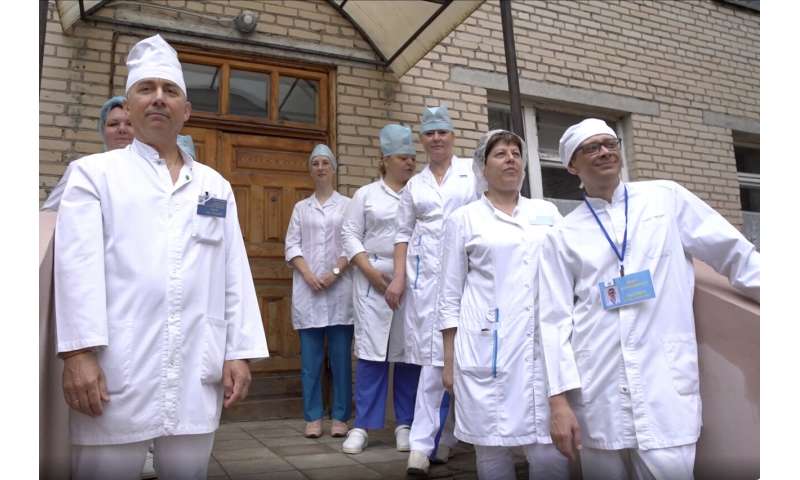
In this photo made from footage provided by the Russian Defense Ministry on Wednesday, July 15, 2020, medical workers look at volunteers participating in a trial of a coronavirus vaccine as they leave the Budenko Main Military Hospital outside Moscow, Russia. Russia is boasting that it’s about to be the first country to approve a COVID-19 vaccine, but scientists worldwide are sounding the alarm that the headlong rush could backfire. (Russian Defense Ministry Press Service via AP)
Some experts said their desire to perform well would affect the findings. “It’s no coincidence media reports we see about the trials among the military said no one had any side effects, while the (other group) reported some,” said Vasily Vlassov, a public health expert with Moscow’s Higher School of Economics.
As the trials were declared completed and looming regulatory approval was announced last week, questions arose about the vaccine’s safety and effectiveness. Government assurances the drug produced the desired immune response and caused no significant side effects were hardly convincing without published scientific data describing the findings.
The World Health Organization said all vaccine candidates should go through full stages of testing before being rolled out. “There are established practices and there are guidelines out,” WHO spokesman Christian Lindmeier said Tuesday. “Between finding or having a clue of maybe having a vaccine that works, and having gone through all the stages, is a big difference.”
Offering an unsafe compound to medical workers on the front lines of the outbreak could make things worse, Georgetown’s Gostin said, adding: “What if the vaccine started killing them or making them very ill?”
Vaccines that are not properly tested can cause harm in many ways—from a negative impact on health to creating a false sense of security or undermining trust in vaccinations, said Thomas Bollyky, director of the global health program at the Council on Foreign Relations.
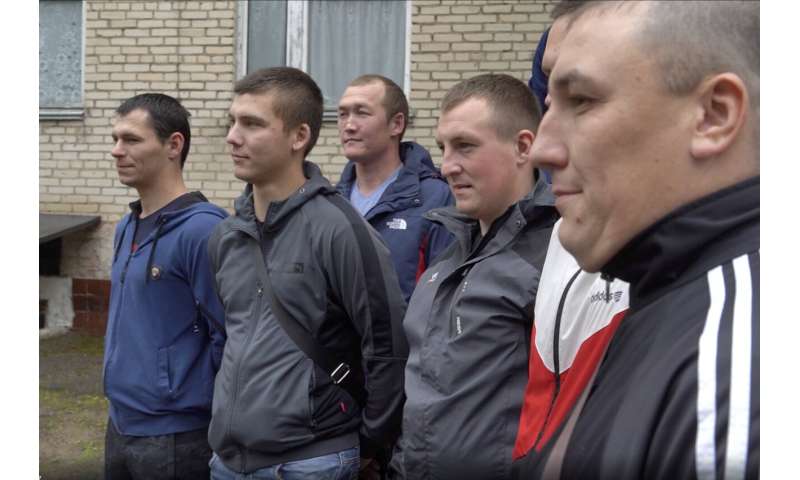
In this photo made from footage provided by the Russian Defense Ministry on Wednesday, July 15, 2020, a group of volunteers participating in a trial of a coronavirus vaccine pose for a photo as they leave the Budenko Main Military Hospital outside Moscow, Russia. Russia is boasting that it’s about to be the first country to approve a COVID-19 vaccine, but scientists worldwide are sounding the alarm that the headlong rush could backfire. (Russian Defense Ministry Press Service via AP)
“It takes several years to develop any drug,” said Svetlana Zavidova, executive director of Russia’s Association of Clinical Trials Organizations. “Selling something the Gamaleya (institute) tested on 76 volunteers during Phase 1-2 trials as a finished product is just not serious.”
Russia has not yet published any scientific data from its first clinical trials. The WHO’s list of vaccine candidates in human testing still lists the Gamaleya product as in Phase 1 trials.
It uses a different virus—the common cold-causing adenovirus—that’s been modified to carry genes for the “spike” protein that coats the coronavirus, as a way to prime the body to recognize if a real COVID-19 infection comes along. That’s similar to vaccines being developed by China’s CanSino Biologics and Britain’s Oxford University and AstraZeneca.
It’s not the first controversial vaccine Russia developed. Putin mentioned earlier this year that Russian scientists delivered an Ebola vaccine that “proved to be the most effective in the world” and “made a real contribution to fighting the Ebola fever in Africa.”
Russia’s Health Ministry authorized two Ebola vaccines for domestic use—one in 2015 and another one in 2018—but there is little evidence either was widely used in Africa.
In this photo made from footage provided by the Russian Defense Ministry on Wednesday, July 15, 2020, a group of volunteers participating in a trial of a coronavirus vaccine pose for a photo as they leave the Budenko Main Military Hospital outside Moscow, Russia. Russia is boasting that it’s about to be the first country to approve a COVID-19 vaccine, but scientists worldwide are sounding the alarm that the headlong rush could backfire. (Russian Defense Ministry Press Service via AP)
In 2019, the WHO considered the 2015 vaccine along with several others for use in Congo, but didn’t pick it. It pointed out that it had been approved for emergency use after Phase 1 and 2 trials, but not Phase 3. According to ClinicalTrials.Gov, a website maintained by the U.S. National Institutes of Health, a study among 2,000 people in Guinea and Russia was still ongoing last month.
The 2018 Ebola vaccine, according to the WHO, was tested on 300 volunteers in Russia and completed all three phases. The Associated Press couldn’t find any records of the studies in the Health Ministry’s registry of approved clinical trials. As of 2019, both Ebola vaccines were listed by the WHO as “candidate vaccines.”
Russia’s Health Ministry did not respond to numerous requests for comment, and the Gamaleya institute referred an interview request to the ministry.
It remains unclear whether Phase 3 trials, said to be carried out after the COVID-19 vaccine receives “conditional approval,” will wrap up by October, when health officials plan to start mass vaccinations, and how trustworthy the results will be. The study will supposedly involve 1,600 participants—800 for each of the two forms of the vaccine; in comparison, a similar Phase 3 trial in the U.S. includes 30,000 people.
According to Dmitriev, countries including Brazil and India have expressed interest in the vaccine.
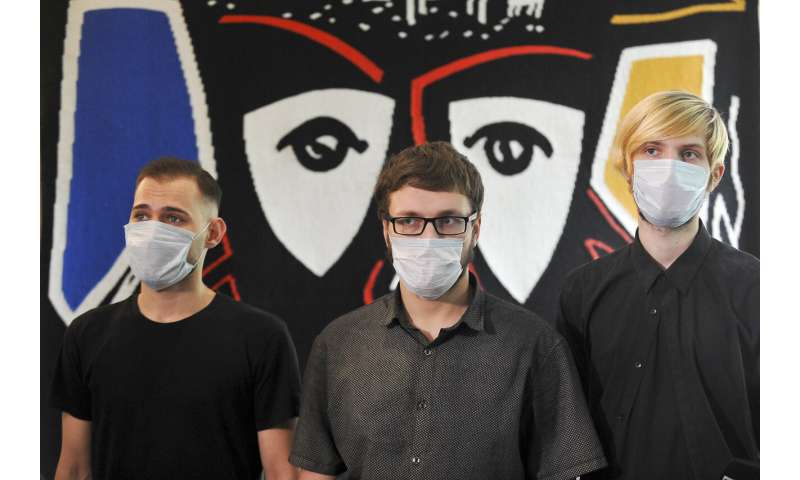
Volunteers Georgy Smirnov, Dmitry Tolkachev and Sergey Semenikhin pose for a photo after their joint news conference at Sechenov University in Moscow, Russia, Monday, July 20, 2020. Russia is boasting that it’s about to be the first country to approve a COVID-19 vaccine, but scientists worldwide are sounding the alarm that the headlong rush could backfire. (Alexander Avilov/ Moscow News Agency via AP)
For Lawrence Gostin, this is another cause for concern.
“There may be many people in the world who don’t care about the ethics and just want the vaccine,” he said.
Serum Institute of India (SII), the world’s largest vaccine manufacturer by volume has capped the price of Covid-19 vaccine at $3 per dose for low and middle income countries, including India as part of a new partnership with Gavi, The Vaccine Alliance and the Bill & Melinda Gates Foundation. SII will manufacture and deliver up to 100 million doses of the under development AstraZeneca/Oxford and Novavax COVID-19 vaccines for India and 92 other low- and middle-income countries (LMICs).
SARS-CoV-2 is highly susceptible to irradiation with ultraviolet light
•
High viral loads of 5 *106 TCID50/ml SARS-CoV-2 can be inactivated in 9 minutes by UVC irradiation
•
UVC irradiation represents a suitable disinfection method for SARS-CoV-2
Abstract
The coronavirus SARS-CoV-2 pandemic became a global health burden. We determined the susceptibility of SARS-CoV-2 to irradiation with ultraviolet light. The virus was highly susceptible to ultraviolet light. A viral stock with a high infectious titer of 5 × 10⁶ TCID50/ml was completely inactivated by UVC irradiation after nine minutes of exposure. The UVC dose required for complete inactivation was 1048 mJ/cm2. UVA exposure demonstrated only a weak effect on virus inactivation over 15 minutes. Hence, inactivation of SARS-CoV-2 by UVC irradiation constitutes a reliable method for disinfection purposes in health care facilities and for preparing SARS-CoV-2 material for research purpose.
Nano cap OpGen (OPGN+62.2%) rockets northward on a massive 74x surge in volume in apparent response to its post on social media that it is offering a 10-minute COVID-19 IgG/IgM test kit that the FDA has approved for emergency use during the pandemic. Shares were up 100% intraday before retracing.
The purchase of Livongo is the richest healthcare deal this year, but questions about reimbursement, competition and profitability remain.
Telemedicine was on the upswing even before the Covid-19 pandemic hit; under the current circumstances it is a crucial means of providing healthcare without putting patients and doctors at unnecessary risk. So Teladoc’s $18.5bn cash-and-stock acquisition of chronic care management provider Livongo is very much of the moment.
Both groups have enjoyed outstanding share price gains thanks to the pandemic – Teladoc’s value has tripled since the start of the year and Livongo’s is up nearly sixfold. But for the deal to prove successful the demand for app-mediated healthcare will have to be sustained even after the pandemic phase has passed.
On this point investors are sceptical: Teladoc and Livongo closed down 19% and 11%, respectively, after the merger was announced yesterday, although recovered some losses today.
There is no doubt that demand for telehealth services has soared. According to consultants at McKinsey, health systems and providers have moved fast to put remote health technologies in place and have seen between 50 and 175 times as many telehealth “visits” as in the pre-pandemic era. That said, investors should keep in mind McKinsey’s note that there is a disconnect between the 76% of consumers who say they are interested in telehealth and the 46% who actually use it.
A new customer base
Appetite for these services is likely to remain keen for the next 12-18 months – or however long it takes until a reliable vaccine is widely available. During this time telemedicine groups will work hard towards entrenching the technology within healthcare systems, hoping to persuade patients and payers of its benefits so they do not abandon the tech once it is safe to return to the doctor’s office.
This will mean getting governments on side. Currently, Teladoc offers a subscription service to insurers and employers under which their customers and employees can have video calls with doctors; Livongo’s services allows patients to manage long-term conditions like diabetes and hypertension, and is mainly paid for by employers (Keeping corporations healthy is good business for Livongo, December 2, 2019).
Making inroads with government programmes like Medicare will thus be crucial. Medicare does offer some reimbursement for telemedicine services, and currently at the same rate as the comparable in-person medical service, based on the current Medicare physician fee schedule. With older patients more vulnerable to the coronavirus and thus relatively keen to self-isolate, as well as more prone to the kind of chronic illnesses Livongo is geared towards, retirees could be a real source of growth for the combined company.
But there could be changes to the way government programmes reimburse telehealth services. Seema Verma, administrator of the Centers for Medicare & Medicaid Services (CMS), has written that “telehealth is here to stay”, but also cautioned that Medicare payment rates for these services outside of a public health emergency will need to be reassessed. If rates are cut, Teladoc could suffer.
Bigger and better?
Another concern about this deal is the small but significant chance that it could run into antitrust issues. Teladoc is the largest telemedicine company in the US, and last month closed its $600m acquisition of InTouch Health, another virtual healthcare provider. There are plenty of others – Heal, for example, or SnapMD – but Teladoc is highly acquisitive and could soon have the heft to corner a great deal of the market. Still, Livongo’s business is different from Teladoc’s, so the deal is far from a repeat of the Illumina-Pacbio situation.
Beyond the regulatory questions there are financial ones. Teladoc’s offer works out at $159 a share, 10% higher than Livongo’s closing share price on Tuesday. Had Teladoc pounced in early March, when a state of emergency was declared in its home city of New York, it could have got Livongo for less than $28 per share.
Furthermore the multiple of 60 times Livongo’s forecast 2020 revenue, according to sellside consensus compiled by EvaluateMedTech, looks hefty. And neither company is yet profitable. Livongo has previously said that it expects to break even in 2021, but when Teladoc might do so is still unclear.
Biohaven Pharmaceutical Holding Company Ltd. (BHVN+7.4%) inks an agreement with Royalty Pharma aimed at advancing its CGRP receptor antagonist program via the development of zavegepant (formerly vazegepant), in development for migraine and non-migraine indications in both oral and nasal spray formulations.
Under the terms of the deal, Royalty will pay Biohaven $150M at closing and $100M when Phase 3 development of the oral version begins. Royalty has also agreed to buy up to $200M of Biohaven’s Commercial Launch Preferred Equity over the period 2021 – 2024 to support the ongoing launch of Nurtec ODT (rimegepant), approved by the FDA in February for the acute treatment of migraine in adults.
In exchange, Royalty will receive a 0.4% royalty on global sales of Nurtec ODT and up to a 3.0% royalty on global sales of zavegepant, if approved, plus milestone payments ranging from 0.6x to 2.95x the amount of zavegepant funding depending on the number of regulatory nods achieved. The monies will be paid over a 10-year period.
Update: Biohaven has also secured $500M in debt financing with investment shop Sixth Street to support the Nurtec ODT launch. $375M will be available at closing and $125M will be available if net sales reach $45M in either of the first two quarters of 2021.