Search This Blog

Friday, April 9, 2021

Tenax Rises on Progress With Hypertension Treatment

 Tenax  (TENX) - Get Report shares spiked on Friday after the drugmaker reported progress in a Phase 2 study of levosimendan to treat pulmonary hypertension and heart failure.

The results come from a six-week study design that looked at "invasive cardiovascular hemodynamics as well as secondary clinical endpoints, including a six-minute walk test,” the Morrisville, N.C., company said in a statement.


Tenax said the drug, given by infusion, “effectively reduces pulmonary capillary wedge pressure across all exercise stages.” 

The study showed that “84% of patients responded to levosimendan during the open-label phase as 37 of 44 patients met responder criteria and were randomized to levosimendan.”

"The authors concluded that further study of levosimendan in PH-HFpEF patients is warranted since levosimendan is the first drug to demonstrate improved cardiovascular hemodynamics and a statistically significant increase in six-minute walk distance seen compared to placebo," the company said.

The study focused on n patients with pulmonary hypertension and heart failure with preserved ejection fraction. This "is a progressive and fatal disease with no effective medical treatments,” Tenax Therapeutics Chief Medical Officer Stuart Rich said in the Journal of American College of Cardiology: Heart Failure, which published the study.


“Previous attempts to identify an effective treatment from clinical trials using approved pulmonary vasodilators have all failed,” he said.

“Levosimendan has unique pulmonary vascular and cardiovascular properties which we identified as central to its clinical efficacy.”

Rich is the principal investigator of the study.

At last check Tenax shares were trading 18% higher at $2.10. The shares traded on Friday up as much as 39% at $2.47.

https://www.thestreet.com/investing/tenax-rises-as-it-announces-heart-failure-breakthrough-study

Over half of vaccine appointments go unfilled in NE Tenn., cases, hospitalizations rise

 Health leaders are worried a lack of demand for vaccines in Northeast Tennessee will delay the population from reaching herd immunity.

Anyone 16 and older in Northeast Tennessee has now been eligible for vaccination for two weeks. Currently, officials say the majority of available vaccine appointments offered by Ballad Health and county health departments under the Northeast Regional Health Office aren’t being filled.

Northeast Tennessee’s first dose vaccination rate per capita is still ahead of the state average, according to TDH data. But the region’s lead has narrowed significantly since the end of February, and less than 30 percent of the population had received a first dose as of April 6.

On Wednesday, Ballad reported 127 COVID-19 patients in its hospitals, an increase of 18 from their last report two days ago, and 44 more than they had two weeks ago.

Ballad’s scorecard report said 28 of those patients are currently being treated in intensive care units, with 14 on ventilators.

The latest case and hospitalization trends in the region have health officials pleading with the public to take advantage of open vaccine appointments and extended site hours.

Danielle Keasling, a Jonesborough resident pregnant with twins, found getting her shot at one of Ballad’s community vaccination centers to be a smooth process. She received her second dose of Pfizer at the Elizabethton site on Wednesday.

“You get your shot and it’s pretty quick, easy, painless,” said Keasling.

But the majority of patients eager to be vaccinated as soon as possible appears to be declining in the region.

“It’s been a disheartening week, I’ll be honest. As we’ve seen vaccine demand go down, we’ve seen cases and hospitalizations go up,” said Jamie Swift, Ballad’s chief infection prevention officer.

When 16+ eligibility first opened, Swift said the demand was high. But a couple weeks later, she says less than 50 percent of their available vaccine appointments are filled.

“Now that that first wave of people who are waiting is over, I literally can get you an appointment for tomorrow,” said Swift.

Local health departments are also seeing lower vaccine demand. Officials with the Northeast Regional Health Office told News Channel 11 about 40 percent of appointments are filled this week.

“We know many people are considering vaccination but have not made an appointment, so we are working on strategies to make it easier to get vaccinated.  We also want to make sure residents of our region are getting accurate information, including that the vaccine is safe and effective and is the best way to build immunity against COVID-19,” Medical Director Dr. David Kirschke wrote in an email.

“With registration levels down, we are working on having vaccination events that do not require registration and also focusing on vaccinating vulnerable populations such as farmworkers and the homeless, and inmate/detainees in jails,” Kirschke wrote.

In Sullivan County, Emergency Response Coordinator Mark Moody says he’s disappointed in the decreased volume of people coming to their health department sites as well.

“We just need people to come get vaccinated. Our numbers are dropping off some. There’s plenty of vaccine available,” said Moody.

At this point, Swift says the region isn’t close to herd immunity

“We need to reach people who don’t have the urgency, think maybe they’ll get it at some point. We really need those people to start making their appointments and coming in and getting vaccine,” she said.

To make appointments more accessible to groups like young professionals and high school students, Ballad officials have extended hours at their Kingsport and Elizabethton vaccination sites.

The Elizabethton center is open for first dose appointments Monday through Friday from 3 p.m. to 8 p.m. Kingsport’s center is open from 2 p.m. to 8 p.m. Monday through Thursday, and 9 a.m. to noon on Fridays.

https://www.wjhl.com/local-coronavirus-coverage/majority-of-available-vaccine-appointments-go-unfilled-in-northeast-tennessee-as-cases-hospitalizations-rise/

Making sense of how Texas ranks on coronavirus vaccinations: Look behind the numbers

 As Texas lumbers toward its goal of vaccinating most of its 22 million residents eligible for the COVID-19 vaccine, the state continues to show up in the lower half of some national rankings measuring states’ progress toward reaching herd immunity against the coronavirus.

Texas ranks 45th nationally in terms of the overall percentage of its population fully vaccinated, according to Becker’s Hospital Review, a business publication whose rankings are widely circulated. On Friday it ranked 36th in terms of how fast allocated doses are going into arms.

Looking only at the adult population, the state has fully vaccinated 23% of residents 18 and older, compared to 25% for the nation as a whole.

Meanwhile, Texas beats the national percentage of senior citizens who have been fully vaccinated.

Rankings are done by a variety of news organizations and health research groups and are usually based on statistics tracked by the U.S. Centers for Disease Control and Prevention.

The state’s vaccination effort has been plagued by geographical, demographic and data challenges, many of which are unique to Texas, including a higher-than-average number of people who are too young to get the vaccine and a sluggish data collection system that can take days to publicly report doses administered.

An average of 265,910 administered doses were reported in Texas each day in the last week, but state officials say potentially tens of thousands more may not be reported on a timely basis due to lag times and some providers still unable to report daily numbers.

Health organizations and statisticians say Texas’ own fractured distribution system can’t be let entirely off the hook for what appears to be, by many measures, a slower-than-average rollout.

But the various national rankings — which vary widely depending on which metric is used and where the data is coming from — can change quickly and are also subject to delays in reporting, state officials said. The February winter storm also created a domino effect, with providers unable to administer what officials said at the time could have been 1 million doses that week, which would have moved the state higher in the rankings.

For those reasons, officials say, rankings can tell an incomplete story about where Texas falls in comparison to the rest of the country.

CDC officials have said state data can lag and are not uniformly updated across every state, and federal vaccination programs may also report their administered doses on a separate timeline, which can lead to further undercounts or lags.

Texas’ vaccination effort has been successful in terms of lowering COVID-19 transmission rates, deaths and hospitalizations, even as some other states are seeing increases, which “shows how far we’ve come,” no matter what the rankings say, said Chris Van Deusen, spokesperson for the Texas Department of State Health Services.The state continues to streamline the process and reach more marginalized communities, he said, most recently through the creation of a centralized statewide registration site and hotline for health departments and community clinics.

“Vaccine providers across the state have done an excellent job getting shots into arms and are further picking up the pace,” he said.

Critics of Texas’ vaccine rollout say that rankings — however they are interpreted — are still useful when evaluating how Texas has managed its program and can identify weaknesses as the state participates in the largest vaccination program in U.S. history, said Gizem Nemutlu, assistant professor of data analytics at Brandeis International Business School.

“The total number of vaccines administered as a count is not terrible, but the coverage [of its overall population] is really low compared to other states,” she said. “So I think they [Texas] should look into the reasons why Texas is not operating well to serve its community and residents in a better way. I think it is an operational problem.”

https://www.texastribune.org/2021/04/09/texas-covid-vaccine-rankings/

Herd immunity 'probably not necessary to end pandemic'

 Though herd immunity has been widely touted as the indicator that the pandemic has come to an end, experts at a Wednesday panel said it is more likely that there will be a plateau in infection, with a decrease in prominence over time but continued circulation.

This view has wide support among the scientific community. Almost 90% of scientists surveyed by Nature in February said that COVID-19 will join influenza, malaria and other common diseases by becoming endemic, meaning that it will continue to exist in corners of the population but without propagating on a wide scale.

The event, which featured four keynote speakers, was organized by Knight Hennessy scholar Mallory Harris, a second-year biology Ph.D. student. Her frustration about the confusion and misconceptions around the idea of herd immunity led her to organize a panel of leading experts on the subject to overview key concepts and answer questions from the community.

Harvard epidemiology professor Marc Lipsitch said a view of herd immunity that is limited to the U.S. is insufficient — and once you look globally, it becomes more unclear how the world’s population will all be vaccinated.

“This virus is going to continue to circulate,” he said. “Global coverage is clearly going to be low and slow. The projections for distribution of doses, in the coming months, is in the hundreds of millions of dose range for a planet of billions of people. It’s just not going to be adequate.”

Biologist Lauren Ancel Meyers Ph.D. ’00 agreed: “Maybe the endgame is really not about herd immunity, but it’s the mild endemic state where the vaccines and prior infection have transformed COVID-19,” she said.

By a mild endemic state, Meyers is referring to the point in a population at which the rate of infection of a disease no longer grows or declines exponentially but still causes people to get sick on occasion.

This is in contrast to herd immunity, a phenomenon that occurs when enough of a population has gained immunity against a disease to confer protection to everyone in the population, as the disease has nowhere to spread.

Experts said that vaccines will still play a critical role in reaching that endemic stage, bolstered by encouraging results from vaccine trials.

The Johnson & Johnson vaccine data submitted to the Food and Drug Administration provides further evidence of a reduction in the viral load of those who get vaccinated, according to Lipsitch. The trial found asymptomatic infections to be 74% lower in those vaccinated. Likewise, he said that “the difference between unvaccinated and fully vaccinated people … comes to about a 97% reduction in the amount of viral RNA.”

As demonstrated in the study, Lipsitch explained that vaccinating those at the highest risk is likely to reduce severe outcomes, and the toll on the healthcare system since vaccine effectiveness is high against severe outcomes and in at-risk populations.

In situations where achieving herd immunity is possible, Lipsitch said it is important to keep in mind that that state is fluid: It’s a “continuous factor rather than a binary factor.” The quantity is not fixed; in other words, the goalpost can move.

What it takes for any given community to reach herd immunity will also vary. Meyers showed a map of east Austin ZIP code areas, which are majority Black and Latino, and most west Austin zip codes, which are majority white numbers. “East Austin is expected to have a higher herd immunity threshold just because of the intrinsic risks and suffer a far higher ratio of infections to vaccinations than west Austin,” Meyers explained.

Achieving herd immunity is not guaranteed, especially given complications like emerging variants, pockets of low vaccination coverage, hesitancy and lack of access. “But careful deconstruction of herd immunity can provide insights that get us to a safer, healthier and more equitable and open society in the months ahead,” she said.

Beyond those months, it is unclear how long the protection will last. Emory biology professor Rustom Antia said there will not be sustained immunity in adults and that it is important to empirically conclude whether infection and vaccination will provide protection in the long term.

Instead, the world will reach a point where COVID-19 is “an endemic disease of low pathogenicity in young children, which I think is probably the direction we’re going,” said Julie Parsonnet, a professor in medicine, epidemiology and population health at Stanford.

Rather than “worrying about that specific number,” she suggested focusing on the distribution of vaccines and following the recommendations of public health departments.

https://www.stanforddaily.com/2021/04/08/herd-immunity-probably-not-necessary-to-end-pandemic-experts-say/

World's first living donor lung transplant is to COVID-19 patient

 Doctors in Japan announced Thursday they have successfully performed the world's first transplant of lung tissue from living donors to a patient with severe lung damage from COVID-19.

The recipient, identified only as a woman from Japan's western region of Kansai, is recovering after the nearly 11-hour operation on Wednesday, Kyoto University Hospital said in a statement. It said her husband and son, who donated parts of their lungs, are also in stable condition.

The university said it was the world's first transplant of lung tissue from living donors to a person with COVID-19 lung damage. Transplants from brain-dead donors in Japan are still rare, and living donors are considered a more realistic option for patients.

Virus Outbreak Japan Lung Transplant
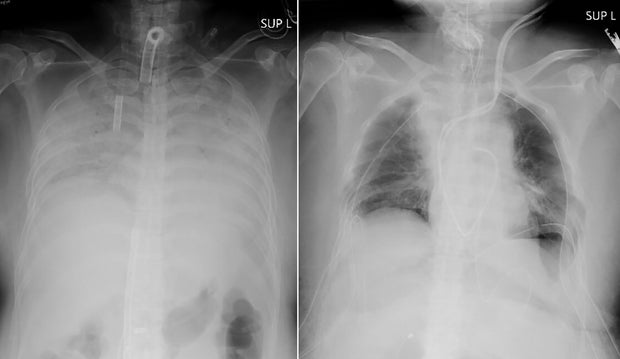
This combination of radiographs provided on April 9, 2021, by Kyoto University Hospital, shows the chest of a patient before the surgery, left, and after the surgery, right.KYOTO UNIVERSITY HOSPITAL VIA AP

"We demonstrated that we now have an option of lung transplants (from living donors)," Dr. Hiroshi Date, a thoracic surgeon at the hospital who led the operation, said at a news conference. "I think this is a treatment that gives hope for patients" with severe lung damage from COVID-19, he said.

Kyoto University said dozens of transplants of parts of lungs taken from brain-dead donors to patients with COVID-19-related lung damage have been carried out in the United States, Europe and China.

The woman contracted COVID-19 late last year and developed breathing difficulties that rapidly worsened. She was placed on a life support machine that works as an artificial lung for more than three months at another hospital because her lungs were so severely damaged.

Even after she was free of the virus, her lungs were no longer functional or treatable, and the only option for her to live was to receive a lung transplant, the university said.

Her husband and son volunteered to donate parts of their lungs, and the surgery was conducted at Kyoto University Hospital by a 30-member team headed by Dr. Date. Her husband donated part of his left lung, and son gave part of his right lung.

She is expected to be able to leave the hospital in about two months and return to her normal life in about three months, the university said.

The surgery marks the latest pioneering lung transplant during the coronavirus pandemic. In March, doctors at Northwestern Medicine in Chicago successfully transplanted both lungs on a COVID-19 patient using them from a donor who previously recovered from the virus. And last year,  surgeons at the hospital performed the first successful double lung transplant of a COVID-19 patient in the U.S.

https://www.cbsnews.com/news/living-donor-lung-transplant-covid-19-patient-japan/

Startup Behind Oxford-AstraZeneca Covid-19 Vaccine Files for U.S. IPO

 The biotech startup behind the Covid-19 vaccine jointly developed by AstraZeneca PLC and the University of Oxford filed Friday with U.S. regulators for a public share offering.

Vaccitech PLC said in a securities filing it plans to use the technology underpinning the vaccine to develop treatments targeting prostate cancer, hepatitis B and human papillomavirus. The Wall Street Journal reported Wednesday that the IPO filing could come as soon as this week. The U.K.-based company plans to list on New York's Nasdaq with the ticker symbol VACC.

https://www.marketscreener.com/quote/stock/ASTRAZENECA-PLC-4000930/news/Startup-Behind-Oxford-AstraZeneca-Covid-19-Vaccine-Files-for-U-S-IPO-32928864/

Former SEC Chair Sees SPAC Transactions Treated Like IPOs

 The U.S. Securities and Exchange Commision released a statement on Thursday signaling that special purpose acquisition companies could receive the same scruitiny as IPOs.

Former SEC chairman Harvey Pitt told CNBC's "Squawk Box" Friday that he's not surprised to see the statement, as there had been a building concern about the avoidance of some of the more rigorous aspects of IPOs. 

SPACs often provide forward-looking statements and rely on projections in investor presentations because many of the companies that have gone public via SPAC recently are pre-revenue.

This has been a recurrent theme, particularly with some of the electric vehicle companies that have become public entities, Pitt said.

CNBC's Andrew Sorkin asked if the former SEC chairman was talking about Lucid Motors and others.

"Yes," Pitt replied.

Lucid Motors announced its merger with Churchill Capital Corp IV CCIV 0.91% on Feb. 22. 

Moving forward, companies that use the SPAC approach will likely have to be far more circumspect about their projections, the former SEC chairman told CNBC. 

Pitt said the SEC has essentially said it will treat all of the SPAC transactions as equivalent to IPOs, which will disallow the companies from relying on the safe harbor exemption for forward-looking statements.

This should "bring to a halt" some of the more aggressive projections we have seen in recent months, he said. 

https://www.benzinga.com/news/21/04/20554900/former-sec-chairman-expects-spac-transactions-to-be-treated-like-ipos